
Meadowsweet (Spiraea alba)
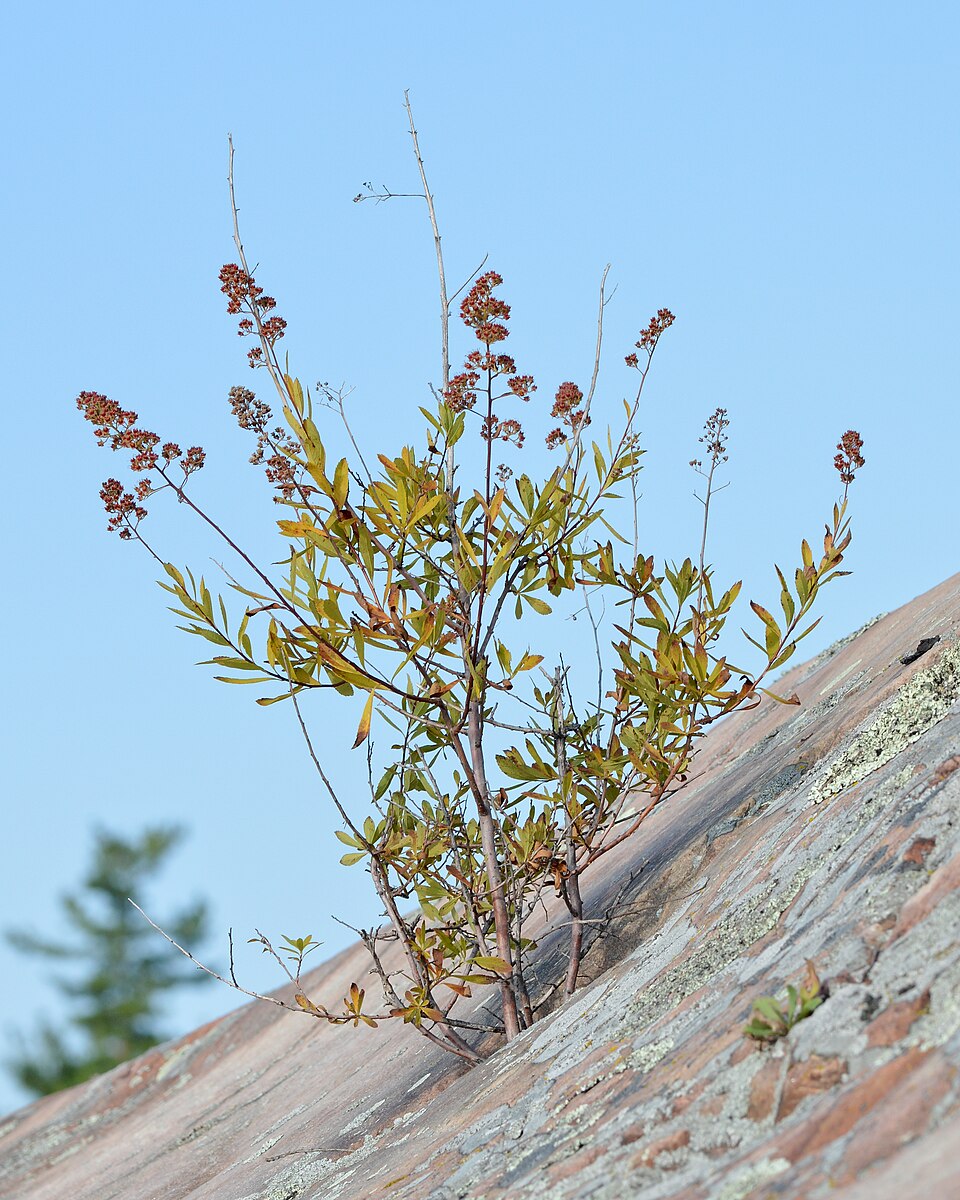
Spiraea alba, commonly known as Meadowsweet, White Meadowsweet, or Narrowleaf Meadowsweet, is a deciduous flowering shrub native to eastern and north-central North America that creates spectacular displays of creamy white flowers during summer months. This member of the rose family (Rosaceae) is one of the most widespread and adaptable native spiraeas, thriving in moist meadows, streambanks, prairies, and woodland edges from Canada to the southern United States.
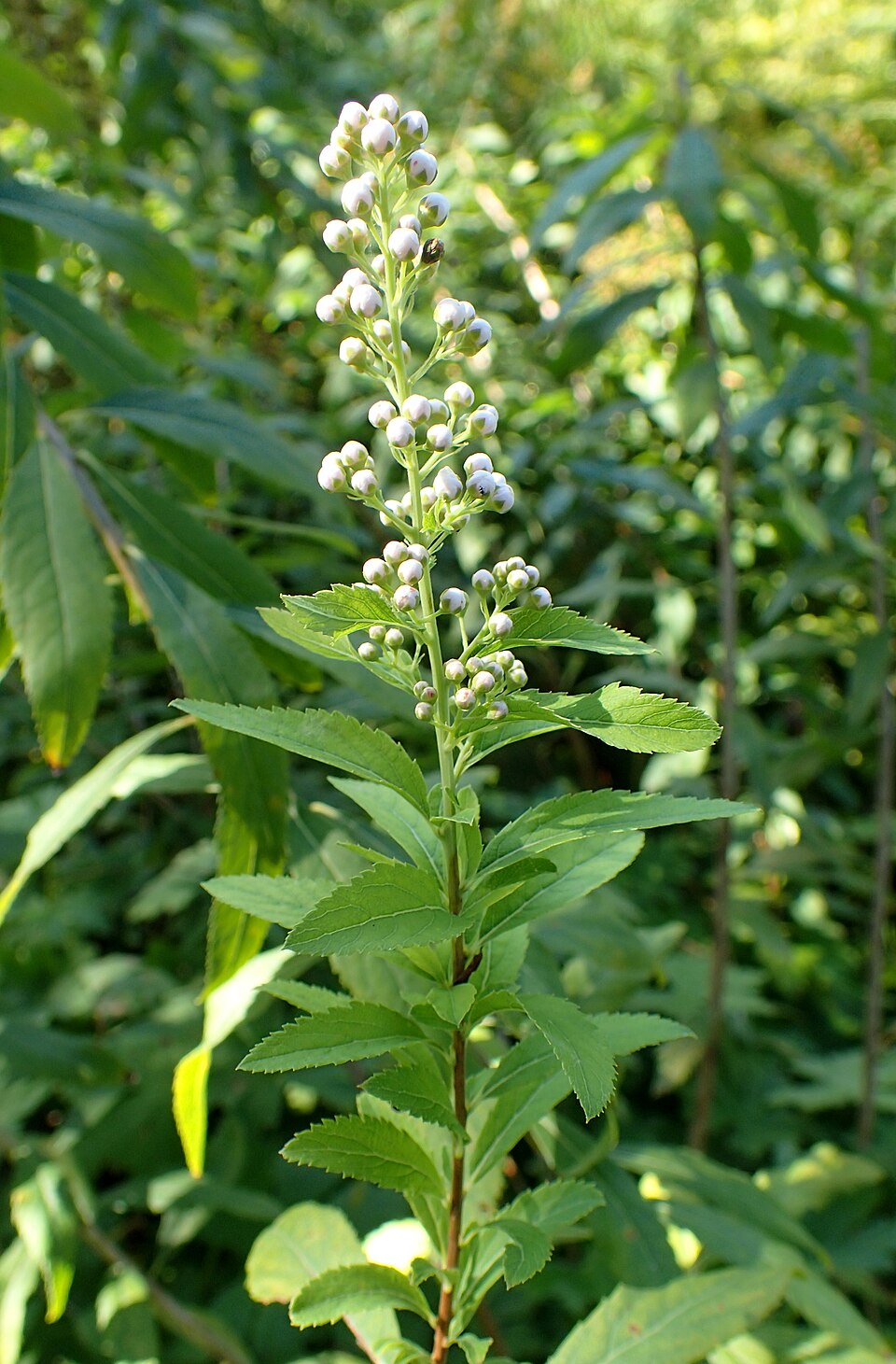
Growing 2 to 6 feet tall with an upright, dense growth habit, Meadowsweet forms attractive colonies through underground rhizomes, creating natural drifts that are particularly stunning when in full bloom. The plant’s narrow, finely serrated leaves provide an excellent backdrop for the profuse clusters of small, fragrant white flowers that appear from June through July. These dense, pyramidal flower clusters, called panicles, can reach 4 to 8 inches long and attract numerous pollinators including bees, butterflies, and beneficial insects.
Beyond its ornamental value, Meadowsweet plays an important ecological role in its native habitats. The dense shrub provides excellent cover for birds and small mammals, while its flowers support a wide variety of pollinators during the critical mid-summer period when many other native plants have finished blooming. The plant’s tolerance for both moist and moderately dry conditions, combined with its ability to spread naturally, makes it an excellent choice for naturalizing large areas, rain gardens, and wildlife habitat restoration projects.
Identification
Meadowsweet is easily recognized by its distinctive combination of upright growth form, narrow serrated leaves, and dense clusters of small white flowers. The shrub typically grows 3 to 5 feet tall and wide, though it can reach up to 6 feet under ideal conditions.
Stems & Growth Form
The plant produces numerous upright, woody stems that are reddish-brown to gray-brown in color. Young shoots are often reddish and may be slightly hairy. The shrub has a dense, rounded to oval growth habit and spreads slowly by underground rhizomes to form colonies. Winter branches show prominent pointed buds that are alternate and reddish-brown.
Leaves
The leaves are simple, alternate, and narrowly oval to lance-shaped, measuring 1½ to 3 inches long and ½ to 1 inch wide. They have finely serrated margins (small, sharp teeth) and are dark green above with a paler, sometimes slightly grayish-green underside. The leaves taper to a point at the tip and narrow gradually to a short petiole at the base. Fall color is typically yellow to orange-brown before leaves drop.
Flowers
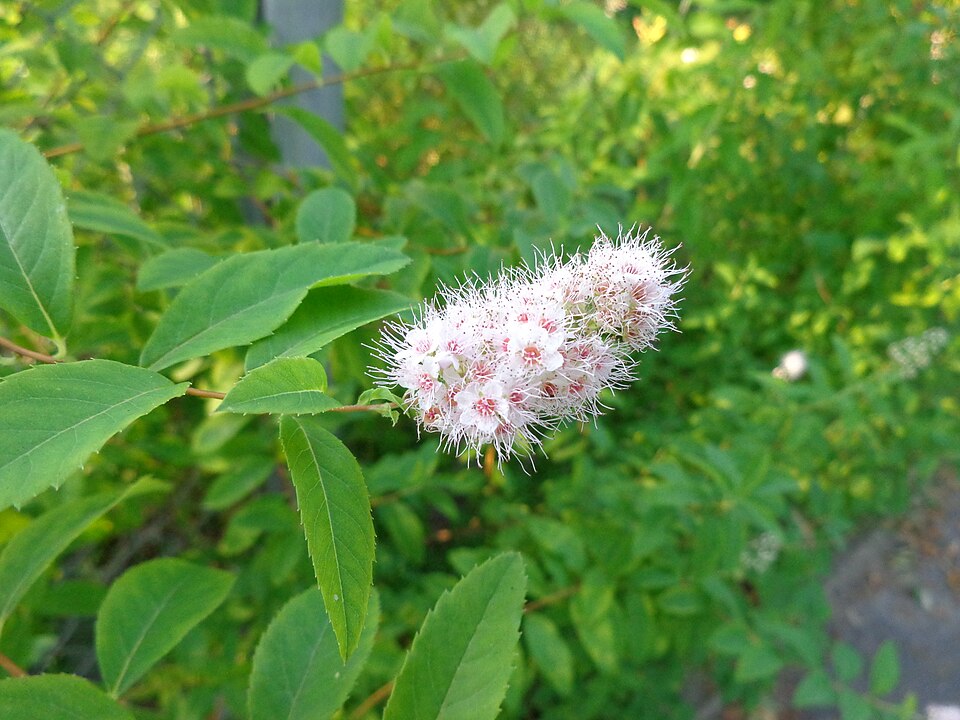
The most distinctive feature of Meadowsweet is its spectacular flower display. Flowers appear in dense, pyramidal clusters (panicles) at the ends of branches from June through July. Each cluster is 3 to 6 inches long and 2 to 4 inches wide, containing dozens of tiny individual flowers. Each flower is about ¼ inch across with five white petals and numerous prominent white stamens that give the clusters a fluffy, textured appearance. The flowers are mildly fragrant and attract numerous pollinators.
Fruit
Following pollination, the flowers develop into small, dry follicles (seed pods) that are about ⅛ inch long. These turn brown as they mature and split open to release tiny seeds. The seed heads persist into fall and provide some winter interest, though they are not particularly ornamental.
Quick Facts
| Scientific Name | Spiraea alba |
| Family | Rosaceae (Rose) |
| Plant Type | Deciduous Shrub |
| Mature Height | 4 ft |
| Sun Exposure | Full Sun |
| Water Needs | Moderate to High |
| Bloom Time | June – July |
| Flower Color | White |
| USDA Hardiness Zones | 3 – 8 |
Native Range
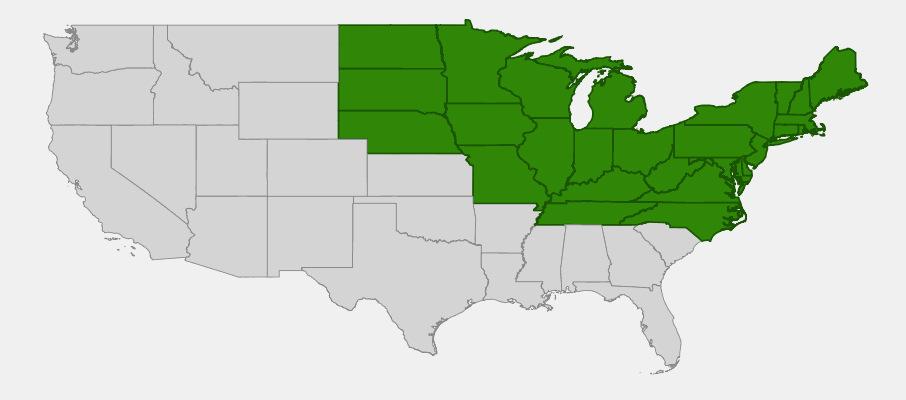
Meadowsweet is native to much of eastern and north-central North America, with a range extending from southeastern Canada south to North Carolina and west to the Great Plains. The species is most common in the northern and central portions of its range, particularly in the Great Lakes region, New England, and the northern Great Plains states including North Dakota, South Dakota, and Minnesota.
In its natural habitat, Meadowsweet is typically found in moist to wet soils along streambanks, in wet meadows, prairies, and at the edges of wetlands. It also occurs in partially shaded areas at woodland margins and in openings within deciduous and mixed forests. The plant is particularly common in areas with seasonal flooding or consistently moist soils, though established plants can tolerate moderate drought once their root systems are well-developed.
Historically, Meadowsweet was likely more abundant across its range, but habitat loss due to agricultural development and wetland drainage has reduced populations in some areas. However, the species remains common in suitable habitats and has shown good adaptability to disturbed sites where moisture levels are adequate.
📋 Regional plant lists featuring Meadowsweet: North Dakota, South Dakota & Western Minnesota
Growing & Care Guide
Meadowsweet is an excellent choice for gardeners seeking a low-maintenance native shrub that provides spectacular summer flowers and supports local wildlife. Once established, it is quite adaptable and requires minimal care while providing maximum impact in the landscape.
Light
Meadowsweet performs best in full sun, where it will produce the most abundant flowering and maintain a dense, compact growth habit. The plant can tolerate partial shade, particularly in areas with hot summers, but may become somewhat leggy and produce fewer flowers. In regions with intense afternoon sun, some protection during the hottest part of the day can be beneficial, especially in the southern portions of its range.
Soil & Water
While Meadowsweet is adaptable to a range of soil conditions, it thrives in moist, well-drained soils with consistent moisture availability. The plant naturally occurs in areas with high moisture levels and will perform best with regular watering, especially during dry periods. However, established plants show good drought tolerance once their extensive root system develops. Soil pH can range from slightly acidic to neutral (6.0–7.5), and the plant tolerates both clay and sandy soils as long as adequate moisture is maintained.
Planting Tips
Plant Meadowsweet in spring or fall for best establishment. Space plants 3 to 4 feet apart to allow for natural spreading, or closer if you want faster coverage. The shrub is excellent for mass plantings, rain gardens, and naturalizing areas where its colonizing nature is an advantage. When planting near water features or in consistently moist areas, Meadowsweet will establish quickly and provide immediate impact.
Pruning & Maintenance
Meadowsweet requires minimal pruning. The plant blooms on new wood, so any necessary pruning should be done in late winter or early spring before new growth begins. Remove dead or damaged wood, and thin older canes if the shrub becomes too dense. To encourage more compact growth and increased flowering, you can cut the entire shrub back by one-third in late winter every few years. The spent flower heads can be left on the plant for winter interest and to provide seeds for birds, or removed if a tidier appearance is desired.
Landscape Uses
Meadowsweet’s versatility makes it valuable in numerous garden situations:
- Rain gardens and bioretention areas — excellent moisture tolerance and attractive flowers
- Wildlife habitat gardens — supports pollinators and provides bird cover
- Naturalizing and meadow plantings — spreads to form attractive colonies
- Streambank and pond-side plantings — helps prevent erosion while providing beauty
- Native plant borders and mixed shrub plantings — provides mid-summer flowers
- Screening and informal hedges — dense growth provides privacy
- Cutting gardens — flowers make excellent fresh arrangements
Wildlife & Ecological Value
Meadowsweet is an exceptional native plant for supporting wildlife, providing resources for numerous species throughout the growing season and beyond.
For Pollinators
The abundant summer flowers of Meadowsweet are a magnet for a wide variety of pollinators. Native bees, including bumblebees, sweat bees, and leafcutter bees, are frequent visitors to the nectar-rich flowers. Butterflies, particularly smaller species like skippers and hairstreaks, also rely on the flowers for nectar. The timing of Meadowsweet’s bloom period is particularly valuable, as it provides a reliable nectar source during the mid-summer period when many spring flowers have finished and fall bloomers have not yet begun.
For Birds
Birds benefit from Meadowsweet in multiple ways throughout the year. The dense, twiggy growth habit provides excellent nesting sites and protective cover for smaller songbirds. The seeds produced after flowering attract finches, chickadees, and other seed-eating birds. During winter, the persistent seed heads continue to provide food when other sources may be scarce. The shrub’s tendency to form colonies creates particularly valuable habitat corridors for birds moving through the landscape.
For Mammals
Small mammals including rabbits and deer occasionally browse on Meadowsweet, though it is not a preferred food source. The dense shrub colonies provide excellent cover for small mammals, and the root system helps prevent soil erosion along waterways where many animals come to drink.
Ecosystem Role
Meadowsweet plays several important ecological roles in its native habitats. Its extensive root system helps stabilize soil along streambanks and in wetland areas, reducing erosion and improving water quality. The plant’s ability to colonize disturbed areas makes it valuable for natural restoration of degraded sites. As a member of the rose family, it supports specialized insects including several native bee species that depend on Spiraea species for pollen and nesting materials.
Cultural & Historical Uses
Meadowsweet has a rich history of use by Indigenous peoples across its native range, valued for both medicinal and practical applications. The plant contains salicin, the same compound found in willow bark that is chemically related to aspirin, making it useful for treating pain, fever, and inflammation. Various tribal nations prepared teas and poultices from the bark, leaves, and flowers to treat headaches, stomach ailments, and other conditions.
The flexible young stems were used in basket making and for binding materials, while the dried flower clusters were sometimes used in ceremonial contexts. The plant’s common name “meadowsweet” reflects its sweet fragrance and its typical habitat in meadows and wet areas. Early European settlers learned of its medicinal properties from Indigenous peoples and incorporated it into their own folk medicine practices.
During the 19th and early 20th centuries, Meadowsweet was occasionally cultivated in ornamental gardens, particularly in areas where its moisture requirements could be easily met. However, it was often overshadowed by showier introduced ornamentals. Today, there is renewed interest in Meadowsweet as gardeners recognize the value of native plants for supporting local ecosystems and creating sustainable landscapes.
In modern landscaping, Meadowsweet is increasingly valued for rain gardens and bioretention systems, where its natural adaptation to wet conditions makes it an ideal choice. Its role in supporting native pollinators has also made it popular among gardeners creating wildlife habitat and pollinator-friendly landscapes.
Frequently Asked Questions
How fast does Meadowsweet spread?
Meadowsweet spreads slowly to moderately through underground rhizomes. In ideal conditions, a single plant may expand 6-12 inches per year, but it typically takes several years to form substantial colonies. The spreading rate depends on soil moisture, with faster expansion in consistently moist conditions.
Is Meadowsweet invasive or aggressive?
No, Meadowsweet is not invasive. While it does spread by rhizomes, it does so at a controlled rate and is easily managed. The spreading habit is actually beneficial in naturalized settings where you want ground coverage and erosion control.
Will Meadowsweet bloom in partial shade?
Yes, but flowering will be reduced compared to plants in full sun. Plants in partial shade may also have a more open growth habit and could be more prone to flopping. For best flower production, provide at least 6 hours of direct sunlight daily.
How do I propagate Meadowsweet?
Meadowsweet is easily propagated by dividing established clumps in spring or fall. Simply dig up a portion of the colony including roots and rhizomes, and replant elsewhere. The plant can also be grown from seed, though germination rates may be variable and require cold stratification.
Does Meadowsweet need winter protection?
No, Meadowsweet is very cold hardy throughout its natural range and requires no winter protection. The plant naturally dies back to the ground in cold climates and regrows from the roots each spring. In milder climates, some woody structure may persist through winter.

Looking for a nursery that carries Meadowsweet?
Browse our native plant nursery directory: North Dakota · South Dakota · Minnesota