
Are Robotic Lawn Mowers Worth the Investment? A Cost-Benefit Analysis for Homeowners
We independently select all products and services. If you click through links we provide, Plant Native may earn a commission with no extra cost to you.
Last updated: November 14, 2026
Robotic lawn mowers have revolutionized lawn care, offering a hands-free approach to maintaining a well-manicured yard. These autonomous devices navigate your lawn, cutting grass to a specified height with minimal human intervention.
They operate on rechargeable batteries and can be programmed to mow at specific times, even during the night.
The appeal of robotic mowers lies in their ability to save time and effort. Traditional lawn mowing can be a time-consuming chore, especially for those with large yards or busy schedules.
Robotic mowers work continuously, maintaining a consistently neat lawn appearance without the need for weekly manual mowing sessions.
When considering a robotic lawn mower, key factors to evaluate include lawn size compatibility, battery life, cutting height options, and navigation capabilities.
The mower’s ability to handle slopes, obstacles, and different grass types is crucial for optimal performance.
We tested various robotic lawn mowers to determine which models offer the best balance of efficiency, reliability, and value for different lawn sizes and types.
Best Robotic Lawn Mowers
We’ve carefully evaluated and selected the top robotic lawn mowers on the market. Our list includes models that offer excellent performance, reliability, and value for homeowners looking to automate their lawn care routine.
Our top pick
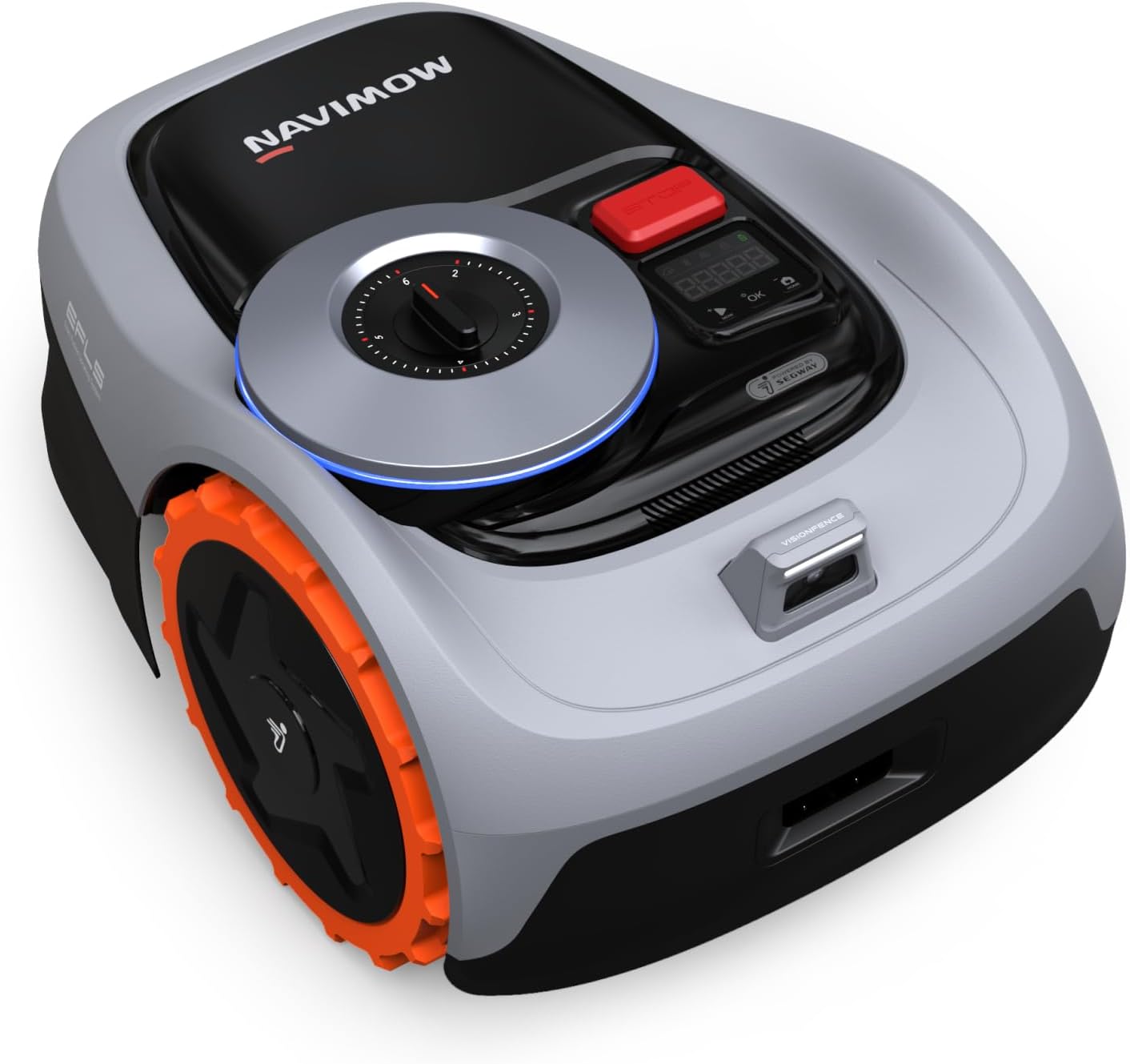
- No perimeter wire: RTK + vision positioning with AI-assisted mapping
- Camera recognizes 150+ obstacle types
- Up to 12 zones with separate schedules in the app; 3-year warranty
Cons
- Rated for lawns up to 1/8 acre (0.125 acre)
- Needs an RTK antenna installed
- 4G anti-theft tracking is an optional add-on
Bottom line: The Navimow i105N combines RTK satellite positioning with vision for centimeter-level navigation, even under trees or in narrow corridors. Setup is wire-free: you guide it around the lawn in the app to draw virtual boundaries, and AI-assisted mapping finds lawn edges automatically. It mows in planned patterns, changes direction after full coverage, recharges itself and resumes. The app manages up to 12 zones with their own schedules, and it runs at 58 dB(A). It covers up to 1/8 acre with a 7.1-inch cutting width and comes with a 3-year warranty, so it best suits small yards.
Best compact option
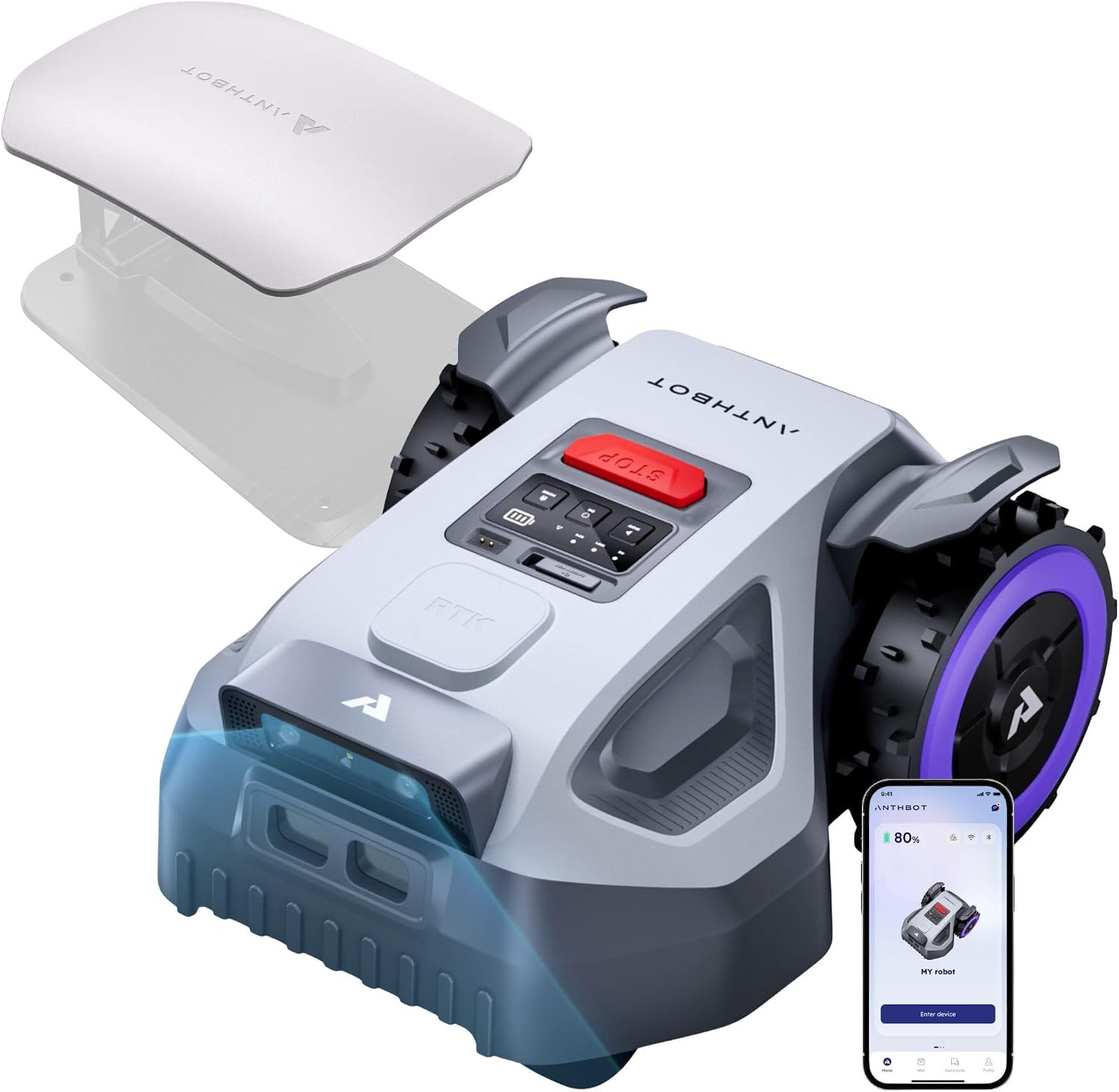
- Dual-camera AI vision plus NRTK, no perimeter wire
- Handles slopes up to 45%
- Garage included; runs at 58 dB or less
Cons
- Best for lawns of about 1/8 acre (0.15 acre max)
- Ships in multiple packages
- Requires an RTK reference station
Bottom line: The ANTHBOT M5 uses dual 150-degree HDR cameras and network RTK for centimeter-level positioning, and it builds a virtual map of the lawn in the app in about 10 minutes without perimeter wire. It recognizes over 1,000 common garden objects, handles slopes up to 45%, and offers a 1.2 to 2.7 inch cutting height with five free-rotating blades. The app manages up to 20 zones and no-go areas. The package includes the mower, a garage, the charging base and an RTK reference station. If you’re working with limited room, this is tailor-made for the job.
Best for lawns
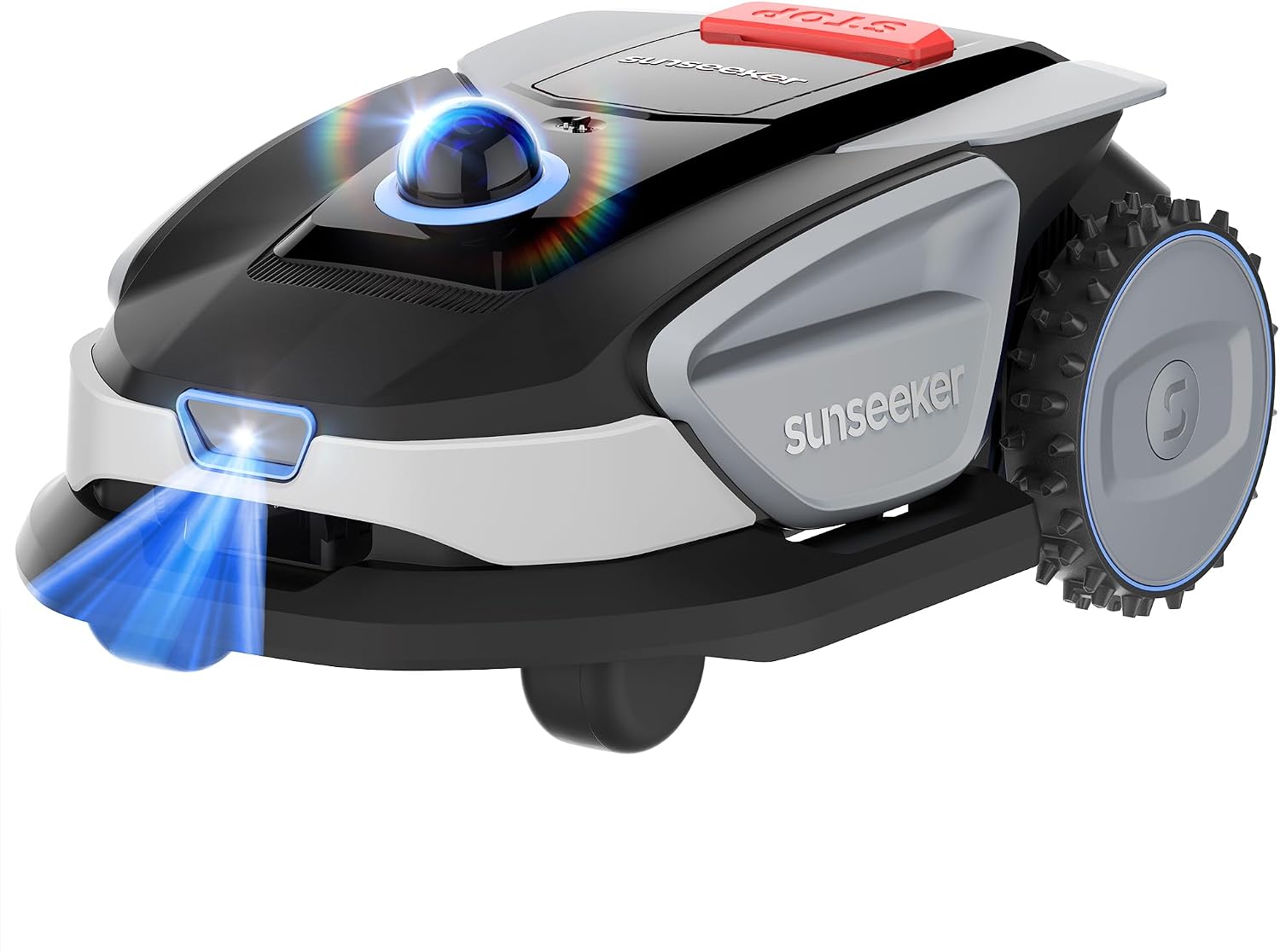
- Systematic parallel routes for better mowing efficiency
- Works in shade, low light and weak-signal areas
- App and voice control with real-time tracking and scheduling
Cons
- Rated for yards up to 0.25 acre
- Rear-wheel drive limits slopes to 22 degrees (42%)
- Narrow 7-inch cutting width
Bottom line: The Sunseeker S4 is built for 0.25-acre yards with trees, shade, narrow passages and multiple zones. Its 360-degree LiDAR and vision AI build a 3D map and plan parallel routes in daylight, low light or at night, and it maps wire-free by driving it in the app, with no base-station calibration. It saves 5 maps and up to 100 zones or no-go areas. Six blades cut a 7-inch path at a 1.6 to 3.2 inch height with a floating cut; if automatic blade adjustment matters to you, check the listing for how height is set. A ride-on-edge mode trims borders. The user-friendly app sets patterns and schedules, a rain sensor sends it home, and it runs at about 60 dB with a 2-year warranty.
Best for large gardens
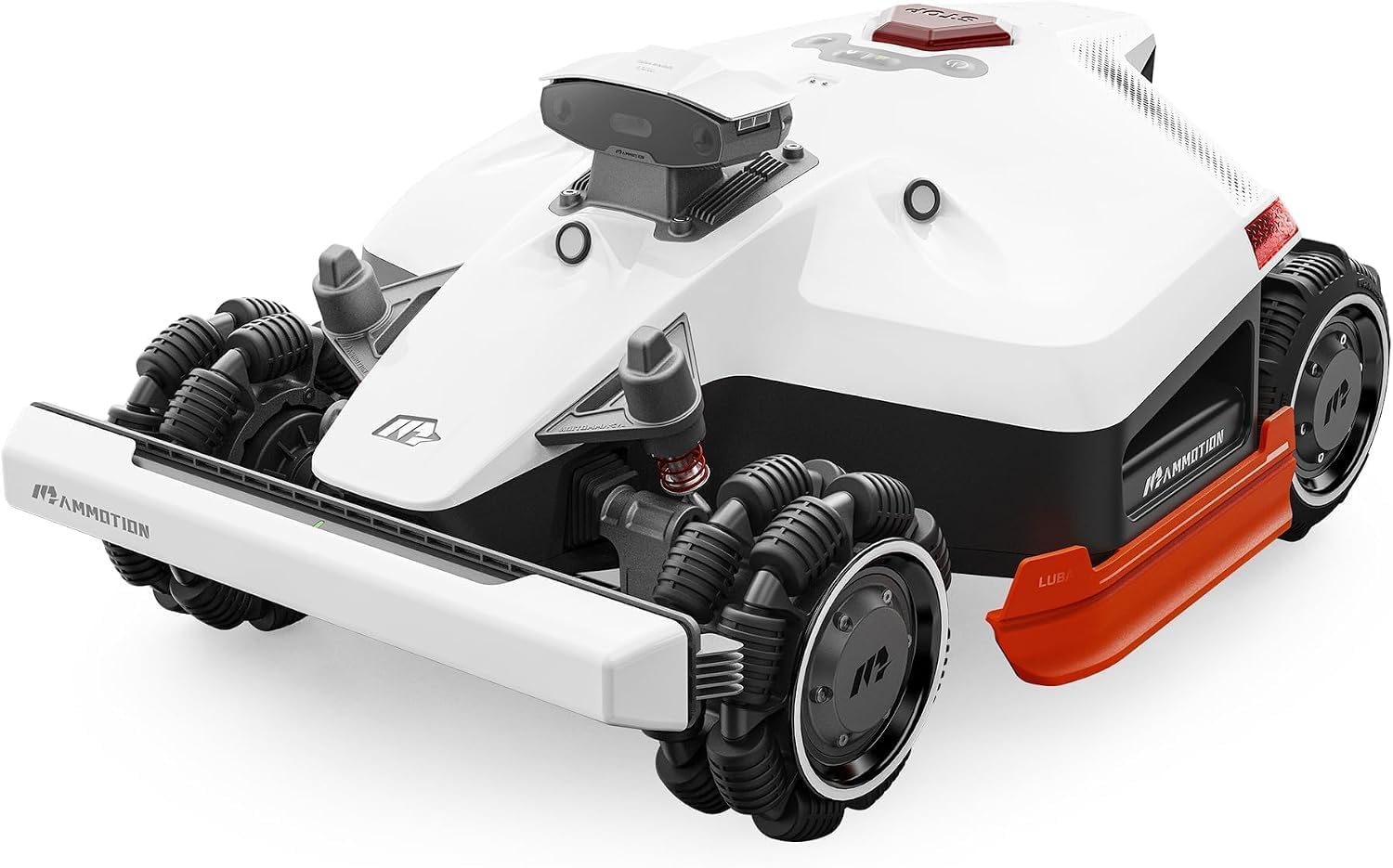
- All-wheel drive climbs 80% (38-degree) slopes
- RTK plus UltraSense AI vision, no perimeter wire, up to 30 zones
- Wide 15.7-inch dual-blade cut with 2.2-4.0 inch height
Cons
- Premium price
- Large, heavy machine for small yards
- Covers about 0.25 acre per charge
Bottom line: The LUBA 2 AWD 3000HX is rated for lawns up to 0.75 acre. A 165 W four-wheel-drive system climbs 80% (38-degree) slopes and handles potholes, rough terrain and thick grass. RTK navigation with UltraSense AI vision lets it mow under trees and cut right to the edge, and it recognizes 200+ obstacle types. Its dual-blade disk cuts a 15.7-inch swath at 2.2 to 4.0 inches, and the app manages up to 30 zones with patterns such as parallel, checkerboard and diamond grid. 4G, Bluetooth and Wi-Fi connectivity add GPS tracking and anti-theft protection. It’s built for bigger tasks, and it shows.
Also great
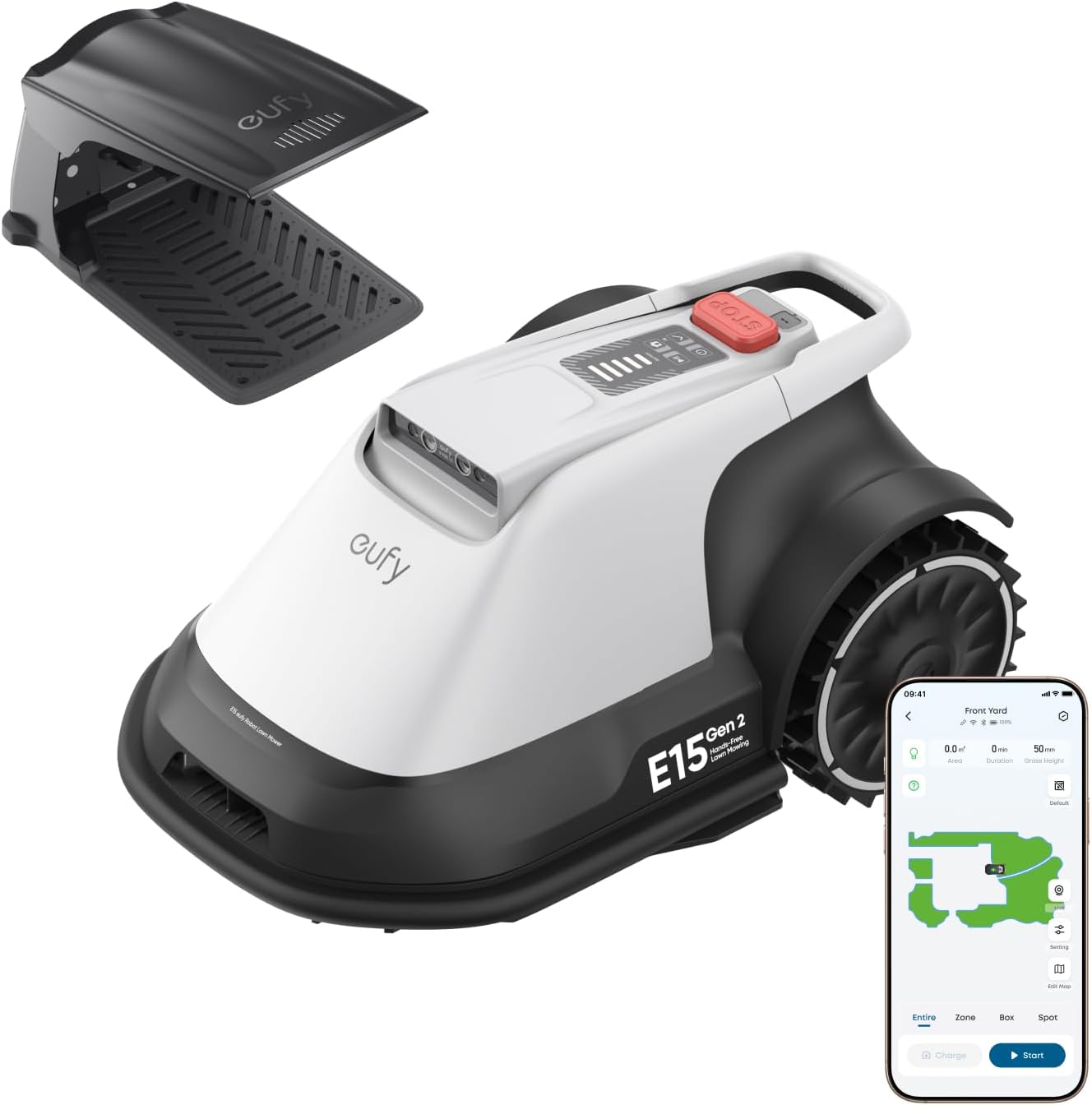
- Pure-vision navigation: no wires and no RTK station
- Maps while it mows; about 5-minute setup
- Avoids 500+ obstacle types; GPS + 4G anti-theft
Cons
- Higher upfront cost
- Rated for about 1,000 square meters (0.25 acre)
- Vision navigation depends on cameras staying clean
Bottom line: The eufy E15 Gen2 skips perimeter wires and RTK stations entirely: its TrueVision cameras map the lawn while it mows, so setup takes about five minutes. It handles front and back yards, including separate zones up to 60 meters apart. Dual cameras with AI identify and avoid more than 500 obstacle types, including furniture, toys, pets and kids, and ride-on-edge cutting with parallel mowing reduces trimming. GPS and 4G anti-theft and a remote camera view are included in the eufy app. Assess your lawn’s size and terrain first: it is rated for about 1,000 square meters.
Buying Guide
When shopping for a robotic lawn mower, there are several key factors to consider:
Lawn Size and Terrain
We recommend assessing your lawn’s size and terrain first. Most models specify the maximum area they can cover. Hilly or complex landscapes may require more advanced features.
Battery Life and Charging
Battery life is crucial for uninterrupted mowing. Look for models with:
- Long runtime
- Quick charging capabilities
- Automatic return to charging station
Cutting Height and Width
Consider the ideal grass length for your lawn. Choose a mower with adjustable cutting heights and an appropriate cutting width for efficiency.
Navigation and Obstacle Detection
Advanced navigation systems ensure thorough coverage. Obstacle detection prevents collisions and damage. We suggest prioritizing these features for safety and effectiveness.
Noise Level
Robotic mowers are generally quieter than traditional ones. However, noise levels can vary between models. Check the decibel rating if you have noise restrictions.
Weather Resistance
For durability, select a model with good weather resistance. This ensures operation in various conditions and prolongs the mower’s lifespan.
Smart Features and Connectivity
Many robotic mowers offer smartphone apps and smart home integration. These allow remote control and monitoring, enhancing convenience.
Price and Warranty
Compare prices and warranty terms. A longer warranty can provide peace of mind for this investment.
We independently select all products and services. If you click through links we provide, Plant Native may earn a commission with no extra cost to you. As an Amazon Associate I earn from qualifying purchases.

would like more on lawn size compatibility, since that seems to decide whether a robotic mower is worth it.
Fair point, Dee. Lawn size and terrain do change the math a lot. -Plant Native Team
Decent overview. If you’re just starting out this covers the basics well enough.