Ox-eye Sunflower (Heliopsis helianthoides)
Heliopsis helianthoides, commonly known as Ox-eye Sunflower, False Sunflower, or Smooth Ox-eye, is a brilliant native perennial that brings sustained summer color and exceptional wildlife value to gardens across much of North America. This robust member of the Asteraceae (sunflower) family is beloved by gardeners for its cheerful golden-yellow flowers that bloom reliably from summer through fall, and by ecologists for its remarkable ability to support butterflies, native bees, and seed-eating birds throughout the growing season.
Growing naturally in a variety of habitats from moist prairie edges to open woodlands, Ox-eye Sunflower forms sturdy clumps of upright stems reaching 3 to 4 feet tall, crowned with abundant daisy-like flowers that can span 2 to 3 inches across. Unlike its more aggressive cousin, Jerusalem Artichoke, Ox-eye Sunflower spreads at a manageable pace through short rhizomes, making it an excellent choice for perennial borders, prairie plantings, and naturalized areas where reliable color and low maintenance are priorities.
What makes Ox-eye Sunflower particularly valuable is its extended blooming period and remarkable drought tolerance once established. While many native wildflowers peak in spring or early summer, Ox-eye Sunflower reaches its prime in mid to late summer, providing critical nectar resources when many other sources are diminishing. The bright golden flowers attract Monarch butterflies, native bees, beneficial wasps, and other pollinators, while the abundant seeds that follow support goldfinches, chickadees, and numerous other bird species through fall and winter. This combination of beauty, reliability, and ecological value has made Ox-eye Sunflower a cornerstone species in sustainable landscaping and pollinator-friendly gardens throughout its extensive range.
Identification
Ox-eye Sunflower is a herbaceous perennial that forms clumps of sturdy, upright stems from a fibrous root system with short rhizomes. The plant typically reaches 3 to 4 feet tall at maturity, though it can occasionally grow taller in ideal conditions or reach only 2 feet in stressed environments. The overall form is upright and somewhat bushy, with multiple branching stems that create a full, rounded appearance.
Stems & Leaves
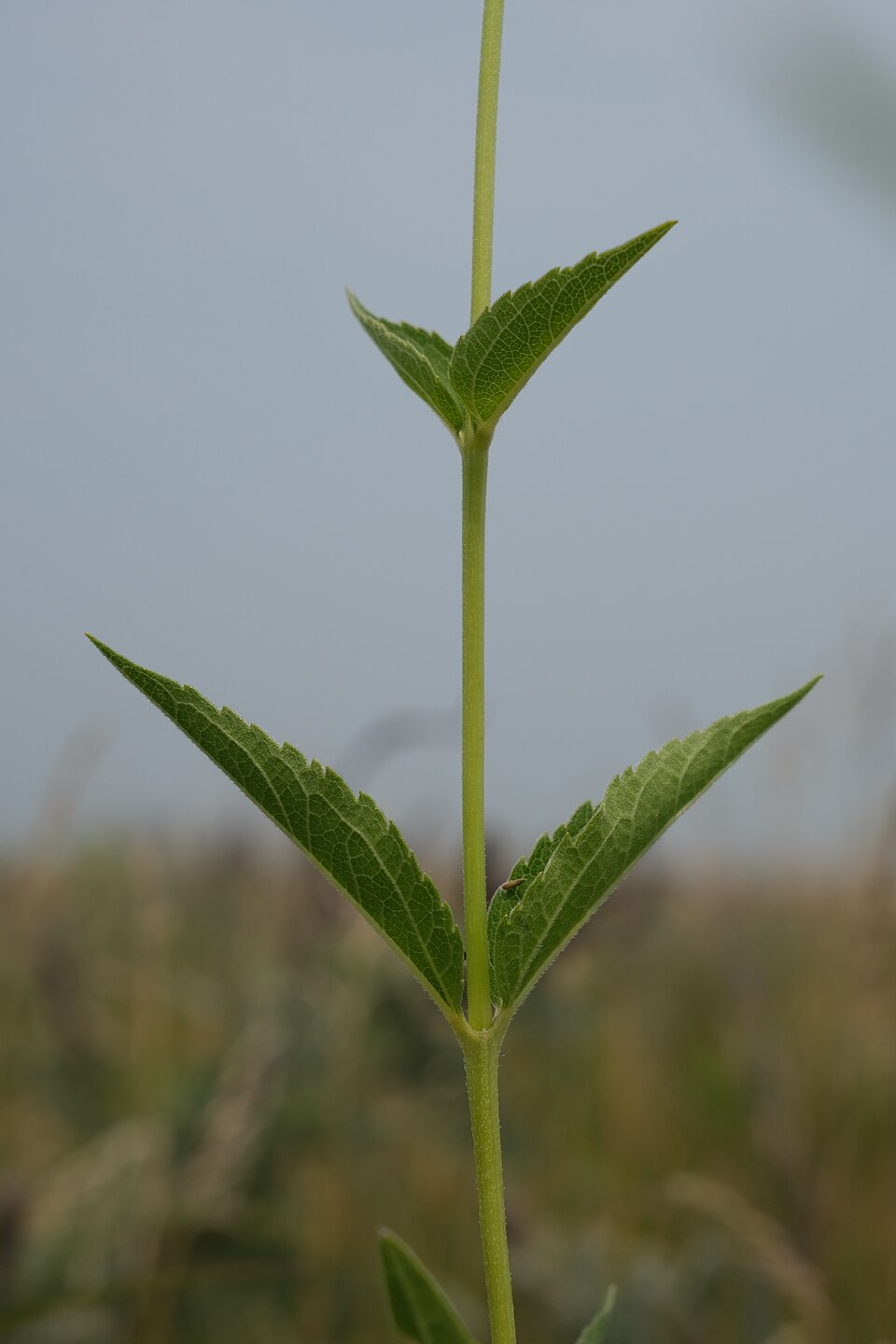
The stems are smooth, green to reddish-green, and generally hairless (glabrous) — a key distinguishing feature that separates it from the closely related Rough Ox-eye (Heliopsis helianthoides var. scabra). The leaves are opposite, simple, and ovate to lanceolate in shape, typically 3 to 6 inches long and 1 to 3 inches wide. They have a distinctive three-veined pattern with serrated margins and smooth surfaces on both sides. The leaves are a bright to medium green color and attach directly to the stem without petioles (sessile) or with very short leaf stalks.
Flowers
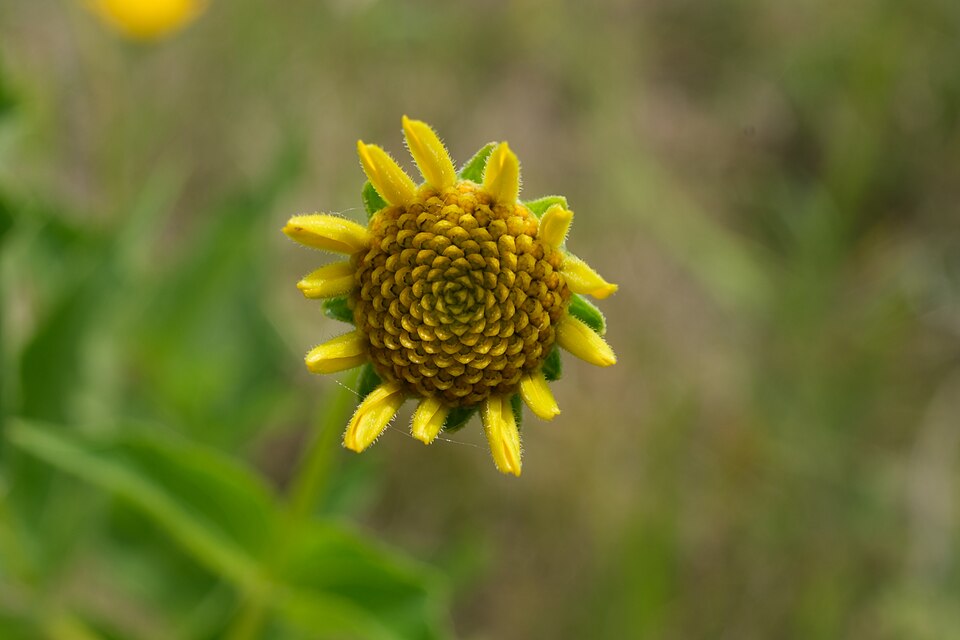
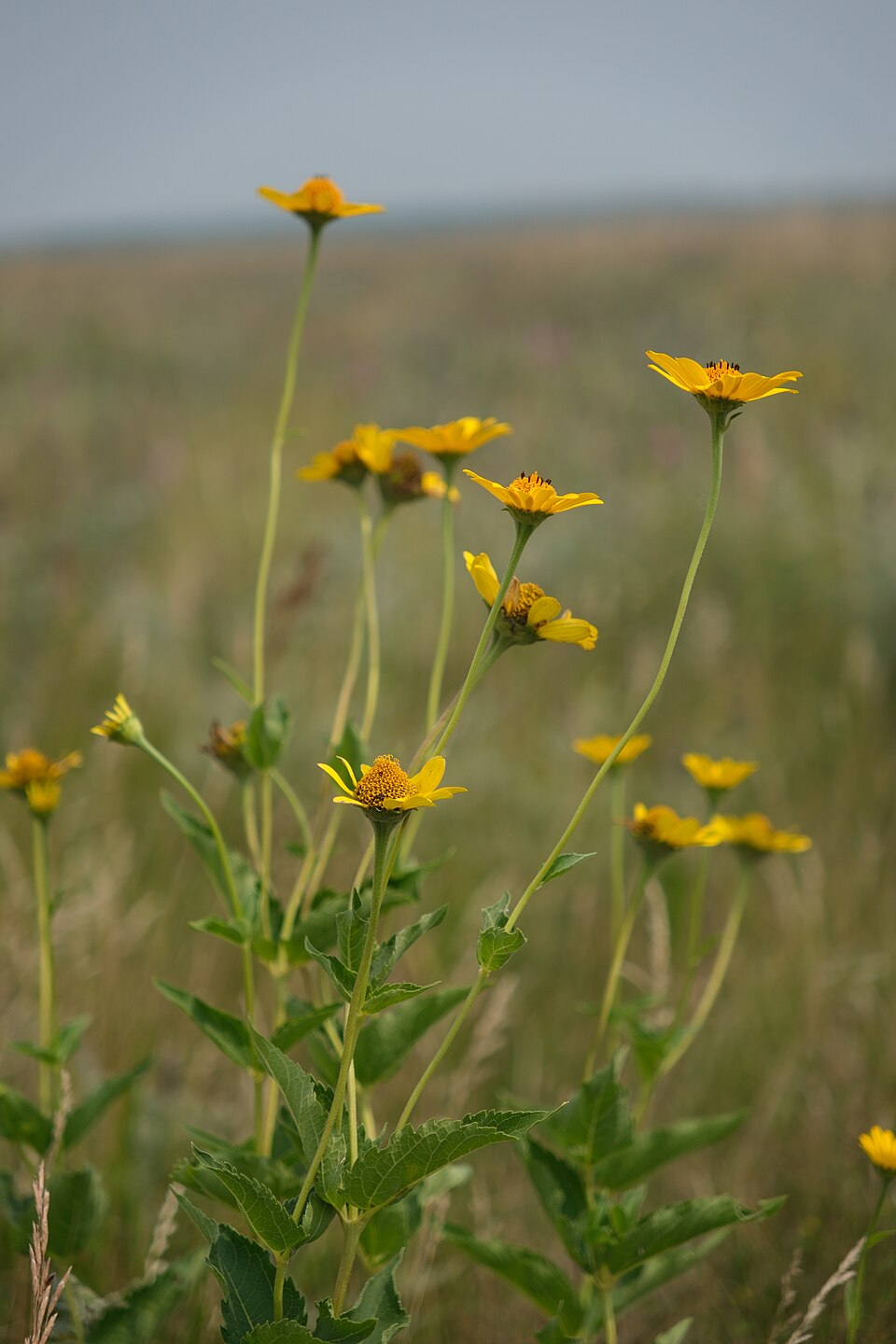
The flowers are the plant’s crowning glory — bright golden-yellow, daisy-like composite heads that measure 2 to 3 inches across. Each flower head consists of 10 to 16 yellow ray petals surrounding a raised, darker yellow to brownish central disc packed with tiny disc flowers. The ray petals are noticeably notched or slightly toothed at their tips, giving them a somewhat ragged appearance that adds to the flower’s charm. Blooming begins in mid-summer and continues through fall, with individual flowers lasting about a week but being constantly replaced by new buds.
Seeds
After flowering, Ox-eye Sunflower produces small, dark brown to black achenes (seed-like fruits) that are roughly triangular in shape and about ¼ inch long. Unlike true sunflowers, the seeds lack the prominent pappus (fluffy crown) that aids in wind dispersal. Instead, they are dispersed primarily by gravity and birds, who eagerly consume the nutritious seeds throughout fall and winter.
Quick Facts
| Scientific Name | Heliopsis helianthoides |
| Family | Asteraceae (Sunflower) |
| Plant Type | Herbaceous Perennial |
| Mature Height | 3–4 ft |
| Sun Exposure | Full Sun |
| Water Needs | Moderate |
| Bloom Time | July – October |
| Flower Color | Bright yellow |
| USDA Hardiness Zones | 3–9 |
Native Range
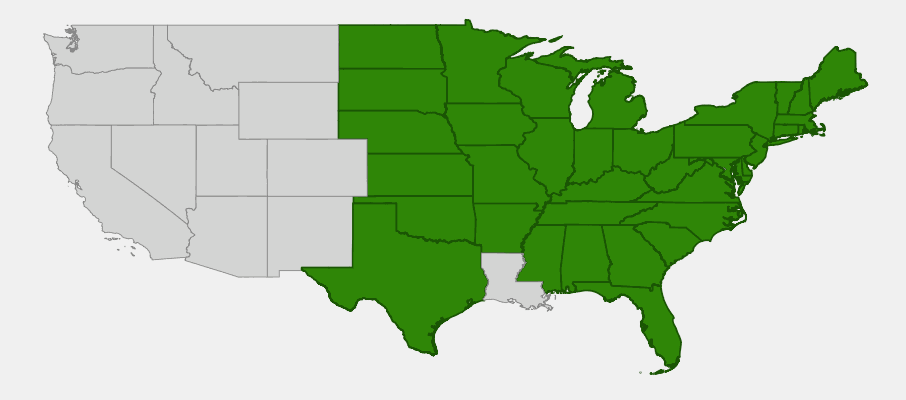
Ox-eye Sunflower has an extensive native range across much of eastern and central North America, stretching from southeastern Canada south to northern Florida and from the Atlantic Coast west to the Great Plains. This broad distribution reflects the species’ remarkable adaptability to diverse climate conditions and habitat types. The plant is most abundant in the prairie-forest transition zones of the Midwest, where it thrives in the dynamic edge environments between grasslands and woodlands.
In its natural habitat, Ox-eye Sunflower is found in a variety of environments including moist to dry prairies, open woodlands, woodland edges, old fields, and disturbed areas such as roadsides and abandoned agricultural lands. It shows particular affinity for areas with rich, well-drained soils but demonstrates impressive tolerance for both drought and periodic flooding. This ecological flexibility has allowed it to persist across its range despite centuries of habitat modification.
The species occurs from near sea level in coastal areas to moderate elevations in the Appalachian Mountains, typically below 2,000 feet elevation. It’s particularly common in the tallgrass prairie regions of the central United States, where it serves as an important component of the diverse wildflower community that supports the region’s rich pollinator fauna.
📋 Regional plant lists featuring Ox-eye Sunflower: North Dakota, South Dakota & Western Minnesota
Growing & Care Guide
Ox-eye Sunflower is among the most reliable and low-maintenance native perennials you can grow, combining exceptional drought tolerance with consistent blooming performance and minimal pest problems. Once established, it provides months of continuous color with very little intervention from the gardener.
Light
Ox-eye Sunflower performs best in full sun, where it develops the most compact growth habit and heaviest flowering. It can tolerate some light shade, particularly in southern regions where afternoon shade can be beneficial, but flowering decreases noticeably in anything less than 6 hours of direct sunlight daily. In partial shade, plants tend to become taller and more open, and may require staking to prevent flopping.
Soil & Water
One of Ox-eye Sunflower’s greatest assets is its adaptability to a wide range of soil conditions. It thrives in average garden soil but also grows well in clay, loam, or sandy soils. The plant prefers well-drained conditions but tolerates both periodic flooding and extended drought once established. It adapts to pH levels from slightly acidic to neutral (6.0–7.5). While it appreciates consistent moisture during its first growing season, established plants are remarkably drought-tolerant and rarely need supplemental watering except during extreme drought.
Planting Tips
Plant Ox-eye Sunflower in spring after the last frost, spacing plants 18 to 24 inches apart to allow for mature spread. It can be grown from seed, division, or nursery plants. Seeds can be direct-sown in fall or spring — they require light to germinate, so scatter them on the soil surface and barely cover. For spring sowing, stratify seeds in the refrigerator for 30 days before planting. Division is easy and should be done in early spring every 3–4 years to maintain vigor and control spread.
Pruning & Maintenance
Ox-eye Sunflower is virtually maintenance-free. Deadheading spent flowers will extend the blooming period and prevent excessive self-seeding, but many gardeners leave some seed heads for winter interest and bird food. The plant can be cut back by half in mid-summer if it becomes too tall or floppy, though this delays flowering by several weeks. Cut all stems to 4–6 inches in late fall or early spring.
Landscape Uses
Ox-eye Sunflower’s versatility makes it valuable in many garden situations:
- Perennial borders — provides reliable mid to back-of-border color
- Prairie and meadow plantings — classic component of naturalized grasslands
- Pollinator gardens — attracts butterflies, bees, and beneficial insects
- Cut flower gardens — long-lasting flowers excellent for arrangements
- Wildflower gardens — brings bright color to naturalized plantings
- Erosion control — fibrous roots help stabilize soil on slopes
- Rain gardens — tolerates both wet and dry periods
- Cottage gardens — cheerful, old-fashioned appeal
Wildlife & Ecological Value
Ox-eye Sunflower is a powerhouse of ecological value, supporting an impressive array of wildlife throughout its long growing season and providing critical resources when many other plants have finished their annual cycle.
For Birds
The abundant seeds produced by Ox-eye Sunflower are eagerly consumed by numerous bird species, particularly members of the finch family. American Goldfinches are especially fond of the seeds and can often be seen feeding directly from the flower heads in late summer and fall. Other frequent visitors include Pine Siskins, House Finches, Purple Finches, and various sparrows. Chickadees, nuthatches, and woodpeckers also consume the seeds, often caching them for winter use. The sturdy stems and seed heads provide winter structure and foraging opportunities long after other plants have been cut back.
For Mammals
While large mammals generally don’t browse heavily on Ox-eye Sunflower due to its somewhat coarse texture, small mammals including chipmunks and various mice species collect and store the nutritious seeds. The plant’s clumping growth habit provides cover for small rodents, rabbits, and ground-nesting birds.
For Pollinators
Ox-eye Sunflower is exceptional for pollinators, particularly during its extended mid-summer to fall blooming period when many spring flowers have finished. The large, flat flower heads provide easily accessible landing platforms for a wide variety of butterflies, including Monarchs, Painted Ladies, Pearl Crescents, skippers, and various fritillaries. Native bees, including bumble bees, sweat bees, and leafcutter bees, are frequent visitors, as are beneficial wasps, hover flies, and bee flies. The abundant pollen and nectar make this plant a critical resource during the late-season “nectar dearth” that occurs in many regions.
Ecosystem Role
In prairie and meadow ecosystems, Ox-eye Sunflower serves as both a mid-story structural element and a critical late-season nectar source. Its robust growth helps suppress weeds and provides nesting sites for beneficial insects. The plant’s ability to thrive in disturbed soils makes it valuable for habitat restoration projects, while its extensive root system helps prevent soil erosion and builds organic matter. As a member of the sunflower family, it also serves as a host plant for several specialist insects, contributing to the complex web of interdependencies that characterize healthy native plant communities.
Cultural & Historical Uses
While not as extensively documented as some other native plants, Ox-eye Sunflower has played a role in both Indigenous and settler cultures across its range. Various Native American tribes, including the Cherokee and other southeastern groups, used different parts of the plant for medicinal purposes. The leaves and roots were sometimes prepared as poultices for treating wounds, cuts, and skin irritations, while teas made from the plant were used to treat various internal ailments including fevers and digestive issues.
Early European settlers quickly recognized Ox-eye Sunflower’s ornamental value and began cultivating it in their gardens, making it one of the first North American wildflowers to be widely grown as a garden perennial. Its reliable blooming, bright flowers, and ease of cultivation made it popular in cottage gardens and farmstead plantings throughout the 19th century. The plant’s common name “False Sunflower” reflects early botanical confusion — settlers initially thought it was related to the common sunflower (Helianthus species) due to its similar appearance.
In addition to ornamental use, pioneer families sometimes used Ox-eye Sunflower practically around the homestead. The sturdy dried stems were occasionally used as kindling or incorporated into rough basketry, while the flowers were sometimes used to create yellow dyes for fabric, though the color was not particularly fast or vibrant compared to other dye plants. Children often played with the bright flowers, weaving them into chains or using them in games and decorations.
During the Great Depression and World War II, when many families grew “victory gardens” to supplement their food supplies, Ox-eye Sunflower was valued not just for its beauty but for its ability to attract beneficial insects that helped pollinate vegetable crops. Its drought tolerance also made it a reliable source of garden color during times when water conservation was essential.
In modern times, Ox-eye Sunflower has experienced a renaissance as native plant gardening and ecological landscaping have gained popularity. It’s now recognized as a cornerstone species for sustainable gardens, pollinator habitat, and prairie restoration projects. Its historical cultivation has actually aided its conservation — unlike many native plants that have suffered from habitat loss, Ox-eye Sunflower has maintained stable populations partly because it has been continuously cultivated in gardens throughout much of its range.
Frequently Asked Questions
How is Ox-eye Sunflower different from regular sunflowers?
Despite their similar appearance, Ox-eye Sunflower (Heliopsis) and true sunflowers (Helianthus) are different genera. Ox-eye Sunflower has opposite leaves, smaller flowers (2–3 inches vs. 6+ inches), and lacks the large, edible seeds that true sunflowers produce. It’s also generally shorter and more compact than most sunflowers.
Will Ox-eye Sunflower take over my garden?
No. Unlike some aggressive native plants, Ox-eye Sunflower spreads slowly and manageably through short rhizomes and self-seeding. It forms clumps that gradually expand over time, but it’s easy to control through division or by removing unwanted seedlings. It’s much less aggressive than plants like Jerusalem Artichoke.
Can I grow Ox-eye Sunflower in partial shade?
Yes, but it performs best in full sun. In partial shade, plants will be taller, less compact, and may produce fewer flowers. They might also require staking to prevent flopping. If you only have partial shade, it’s still worth trying — the plant is quite adaptable.
When should I divide Ox-eye Sunflower?
Divide clumps every 3–4 years in early spring, just as new growth begins to emerge. This keeps plants vigorous, prevents overcrowding, and gives you new plants to expand your planting or share with others. Division is easy — just dig up the clump and separate it into smaller sections with roots attached.
Are the flowers good for cutting?
Absolutely! Ox-eye Sunflower makes an excellent cut flower with good vase life (5–7 days). Cut stems early in the morning when flowers are fresh, and place immediately in cool water. The bright yellow flowers are perfect for summer and fall arrangements, and they pair beautifully with other native wildflowers like Purple Coneflower and Wild Bergamot.

Looking for a nursery that carries Ox-eye Sunflower?
Browse our native plant nursery directory: North Dakota · South Dakota · Minnesota