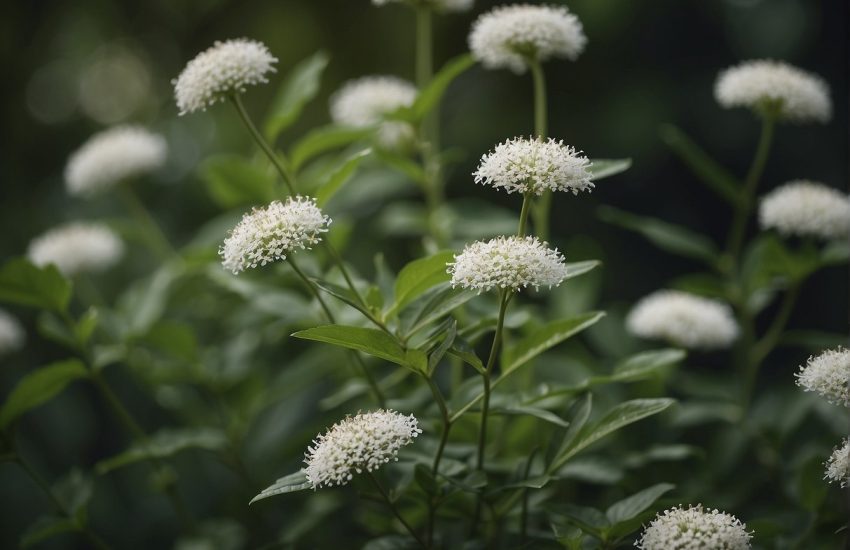
Tick-trefoil (Desmodium canadense)
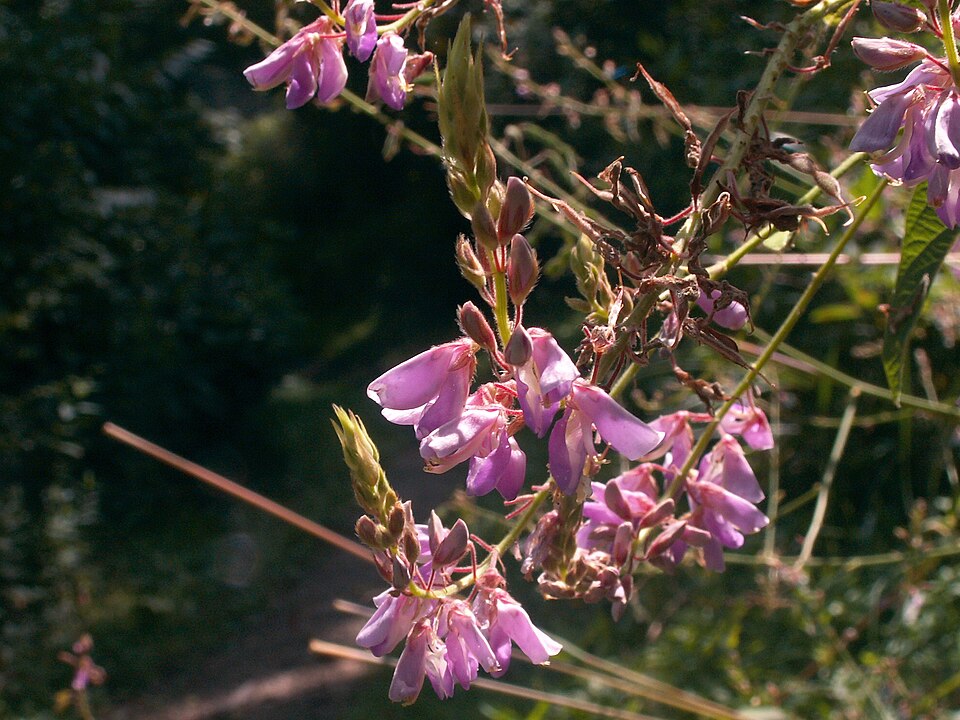
Desmodium canadense, commonly known as Tick-trefoil, Canada Tick-trefoil, or Showy Tick-trefoil, is a tall, graceful native perennial herb that brings elegant vertical structure and abundant wildlife value to prairie gardens and natural areas. This member of the Fabaceae (legume) family stands out with its distinctive three-leaflet compound leaves and dense terminal spikes of pink to purple pea-like flowers that bloom throughout the summer months, creating striking vertical accents in the landscape.
Growing 2 to 6 feet tall from deep taproots, Tick-trefoil demonstrates the classic legume ability to fix atmospheric nitrogen through symbiotic root bacteria, enriching the soil for surrounding plants. The species gets its common name from its distinctive segmented seed pods that break apart into small, flat segments that readily stick to clothing and animal fur — an efficient dispersal mechanism that has helped the plant spread across its extensive native range throughout eastern and central North America.
Beyond its ornamental value, Tick-trefoil serves as a crucial component of prairie and woodland edge ecosystems, providing high-quality nectar for butterflies, native bees, and other pollinators throughout the growing season. The protein-rich seeds feed numerous bird species, while the nitrogen-fixing roots improve soil fertility and support the broader plant community. This combination of beauty, ecological function, and soil improvement makes Tick-trefoil an excellent choice for naturalistic gardens, prairie restorations, and wildlife-friendly landscaping.
Identification
Tick-trefoil is easily recognized by its distinctive compound leaves, vertical growth habit, and characteristic flower and fruit structures. The plant typically reaches 2 to 6 feet in height, occasionally growing taller in ideal conditions, with a narrow, upright form that adds vertical structure to plant communities.
Stems & Growth Form
The stems are erect, sturdy, and typically unbranched below the flower clusters, giving the plant a distinctly vertical, architectural appearance. Stems are usually smooth or nearly smooth, green to reddish-green in color, and may have fine, scattered hairs. The plant grows from a deep taproot system and may develop into small clumps over time through short rhizomes, but it generally maintains a narrow, upright profile.
Leaves
The leaves are the most distinctive identifying feature — alternate, compound leaves with three leaflets (trifoliate), similar to clover but much larger. Each leaflet is oval to lance-shaped, typically 2 to 5 inches long and 1 to 3 inches wide, with smooth margins (entire edges) and a prominent central vein. The leaflets are arranged with two lateral leaflets and one terminal leaflet, all attached to a common leaf stalk. The leaves are medium to dark green, usually smooth on top but may have fine hairs on the undersides, and are attached to the stem by distinct petioles (leaf stalks).
Flowers
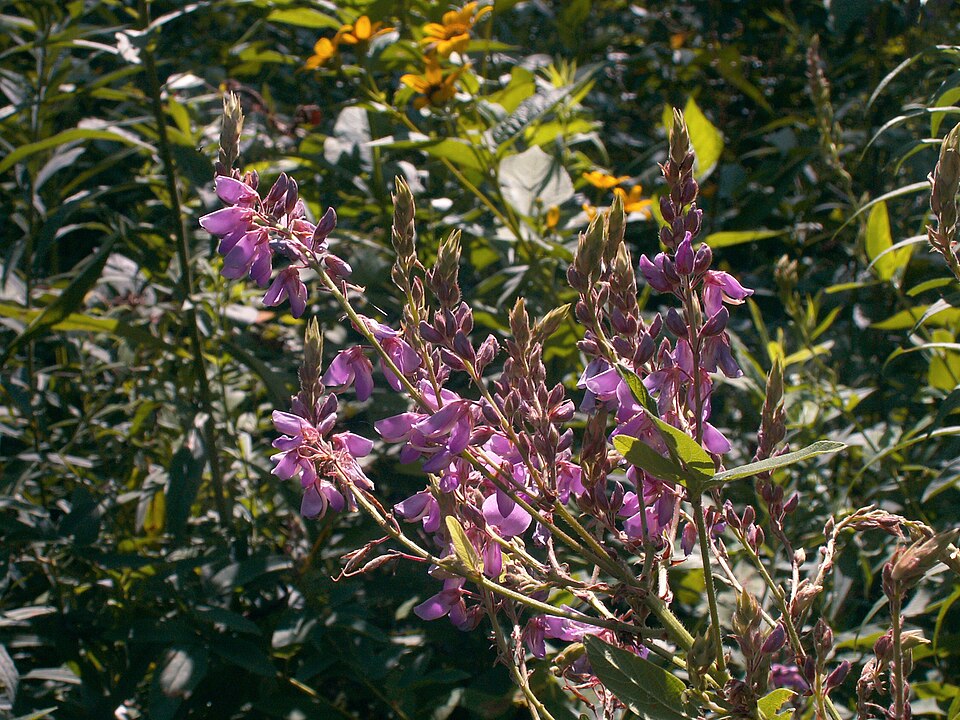
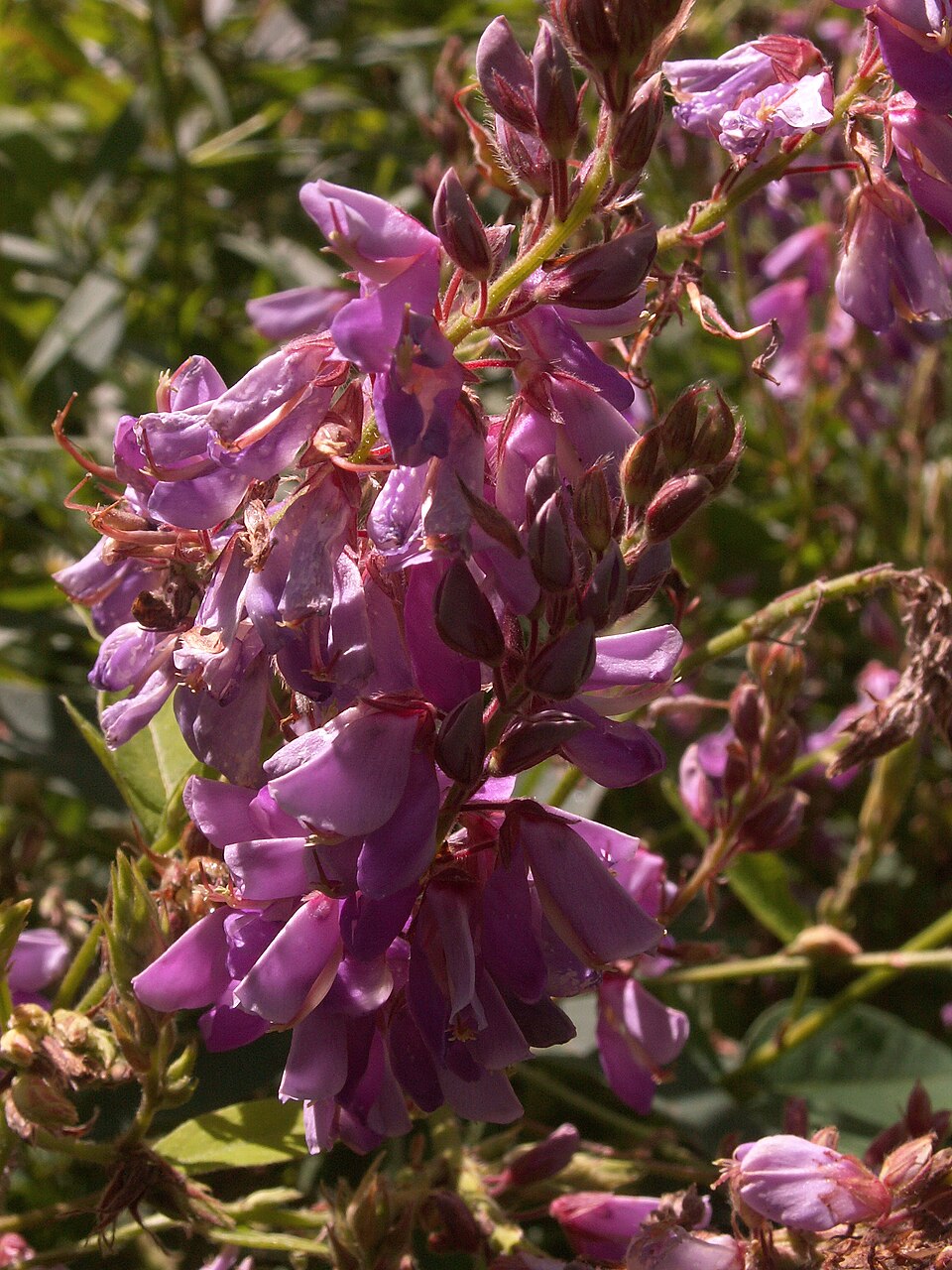
The flowers are arranged in dense, terminal spikes at the top of the stems, typically 4 to 8 inches long and about 1 inch wide. Individual flowers are small, about ¼ to ⅜ inch long, with the characteristic pea-like (papilionaceous) structure of legume flowers. The flowers are typically pink to purple, occasionally white, with the standard petal often showing darker purple veining. Flowers bloom from bottom to top along the spike, creating a long flowering period from mid-summer through early fall (July through September).
Fruit & Seeds
The most distinctive feature for identification is the segmented seed pod (loment) that gives the plant its “tick-trefoil” name. The pods are 1 to 3 inches long, flattened, and divided into 3 to 6 triangular segments, each containing one seed. When mature, these segments break apart and are covered with tiny hooked hairs that allow them to stick tenaciously to clothing, fur, and feathers — hence the “tick” in the common name, referring to how they attach like ticks. The segments are initially green, turning brown at maturity.
Quick Facts
| Scientific Name | Desmodium canadense |
| Family | Fabaceae (Legume/Pea) |
| Plant Type | Perennial Herb |
| Mature Height | 2–6 ft |
| Sun Exposure | Full Sun to Part Shade |
| Water Needs | Moderate |
| Bloom Time | July – September |
| Flower Color | Pink to Purple |
| USDA Hardiness Zones | 2–8 |
Native Range
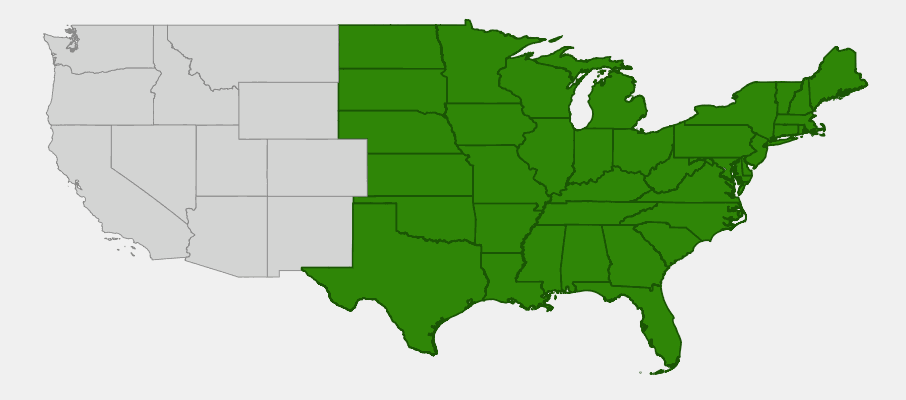
Tick-trefoil has an extensive native range across eastern and central North America, naturally occurring from southeastern Canada south to the Gulf states and west to the Great Plains. The species demonstrates remarkable adaptability, thriving in diverse habitats from moist woodlands and prairie edges to disturbed soils and roadsides throughout this broad range.
The species is particularly abundant across the Great Lakes region, upper Midwest, and northern Great Plains, where it serves as an important component of tallgrass prairie, oak savanna, and woodland edge communities. In prairie habitats, Tick-trefoil often grows alongside Big Bluestem, Indian Grass, Wild Bergamot, and Purple Coneflower. In woodland settings, it thrives in the dappled light of forest edges and openings, often associated with Wild Ginger, Bloodroot, and various fern species.
The plant’s tolerance for a wide range of soil conditions and its ability to fix nitrogen have allowed it to colonize disturbed areas and maintain populations even in landscapes modified by agriculture and development. This adaptability has helped Tick-trefoil remain common throughout much of its range, though populations have declined in areas where native habitats have been extensively converted to intensive agriculture or urban development.
📋 Regional plant lists featuring Tick-trefoil: North Dakota, South Dakota & Western Minnesota
Growing & Care Guide
Tick-trefoil is a relatively easy native plant to grow, requiring minimal care once established. Its nitrogen-fixing ability and adaptability to various conditions make it an excellent choice for naturalistic gardens and restoration projects.
Light
Tick-trefoil performs well in both full sun and partial shade, making it versatile for different garden situations. In full sun (6+ hours daily), plants tend to be more compact and produce more abundant flowers. In partial shade, plants may grow taller and have a more open, graceful appearance. The plant tolerates light shade well and can be used as an understory species in woodland gardens or along forest edges.
Soil & Water
This adaptable plant thrives in a wide range of soil conditions, from sandy loams to clay soils, and tolerates both slightly acidic to neutral pH levels (6.0-7.5). As a legume, Tick-trefoil actually prefers soils of average to below-average fertility — rich soils can cause excessive vegetative growth at the expense of flowering. The plant has moderate water needs and performs best with consistent moisture, but established plants show good drought tolerance due to their deep taproot system. Avoid waterlogged conditions, which can lead to root rot.
Planting Tips
Start from seed in fall or early spring, or plant nursery-grown specimens in spring after frost danger passes. Seeds benefit from cold stratification and may germinate sporadically over several seasons. Scarify hard seeds lightly before planting to improve germination rates. Space plants 2-3 feet apart in naturalistic plantings. The deep taproot makes transplanting mature plants challenging, so choose locations carefully. Tick-trefoil may self-seed moderately, with seedlings appearing in surrounding areas.
Pruning & Maintenance
Tick-trefoil requires minimal maintenance. Deadhead spent flower spikes to prevent the sticky seed segments from attaching to clothing if this is a concern, though leaving seeds provides valuable bird food. Cut plants back to 4-6 inches in late fall or early spring. The plant may spread slowly through short rhizomes but is not aggressive. In rich soils, taller plants may benefit from staking in windy locations, but this is rarely necessary in appropriate growing conditions.
Landscape Uses
Tick-trefoil’s vertical form and extended bloom period make it valuable in many garden applications:
- Prairie and meadow gardens — provides important vertical structure among grasses
- Butterfly and pollinator gardens — excellent nectar source throughout summer
- Woodland edges — thrives in the transition zone between woods and open areas
- Rain gardens — tolerates both wet and dry periods
- Naturalized areas — requires minimal care once established
- Restoration plantings — nitrogen fixation improves soil for other species
- Wildlife habitat gardens — seeds feed birds, flowers feed pollinators
Wildlife & Ecological Value
Tick-trefoil provides exceptional wildlife value throughout the growing season and beyond, serving multiple ecological functions that make it a cornerstone species for wildlife-friendly gardens and natural areas.
For Birds
The protein-rich seeds are consumed by numerous bird species, particularly those that specialize in small seeds. American Goldfinches, Pine Siskins, various sparrows (including Song, Field, and Tree Sparrows), Dark-eyed Juncos, and Cardinals all feed on the seeds. Wild Turkeys and Ruffed Grouse consume both seeds and foliage. The tall, sturdy stems provide perching sites and shelter, while the plant’s tendency to grow in colonies creates valuable cover for ground-nesting birds in prairie and grassland habitats.
For Mammals
White-tailed Deer browse the nutritious foliage, especially the young, tender growth in spring and early summer. Cottontail Rabbits consume both leaves and stems, while various small mammals harvest the seeds. The nitrogen-rich foliage makes Tick-trefoil particularly valuable as browse for wildlife during the growing season when protein needs are highest for reproduction and growth.
For Pollinators
Tick-trefoil is particularly valuable for butterflies, with its dense flower spikes providing excellent landing platforms and abundant nectar throughout the summer months. Regular visitors include Monarchs, various skippers, sulfurs, and hairstreaks. Native bees, including bumble bees, sweat bees, and long-horned bees, are frequent visitors and important pollinators. The extended blooming period — often lasting 6-8 weeks — provides consistent nectar resources during the critical mid to late summer period when many other wildflowers have finished blooming.
Ecosystem Role
As a nitrogen-fixing legume, Tick-trefoil plays a crucial role in soil improvement and ecosystem health. The symbiotic bacteria in its root nodules convert atmospheric nitrogen into forms available to other plants, essentially “fertilizing” the surrounding area and supporting the growth of associated species. This nitrogen fixation is particularly important in restored prairies and disturbed soils where fertility may be limited. The deep taproot also helps improve soil structure and brings nutrients from deeper soil layers to the surface through leaf drop, contributing to overall soil health and plant community diversity.
Cultural & Historical Uses
Tick-trefoil has a rich history of use by Indigenous peoples across its native range, with various tribes utilizing different parts of the plant for both medicinal and practical purposes. Many Native American groups, including the Ojibwe (Chippewa), Potawatomi, and other Woodland tribes, used root preparations as treatments for various ailments. The Ojibwe particularly valued the root tea as a treatment for lung problems and coughs, while other tribes used different preparations for digestive issues and as a general tonic.
The sticky seed segments that give the plant its common name also had practical applications. Some Indigenous groups used the adhesive quality of the mature seed pods as a primitive form of fastener or to remove thorns and splinters from skin. The plant was also valued as animal fodder, with the high protein content of the leaves making it particularly nutritious for livestock and wildlife.
European settlers and later herbalists adopted some of these traditional uses, and Tick-trefoil became incorporated into American folk medicine. Various Desmodium species, including D. canadense, were used in traditional remedies for respiratory ailments, though these uses were largely replaced by modern medicine. The plant’s common names reflect both its appearance and its tendency for the seeds to stick to clothing — “tick-trefoil” for the way the seed segments attach like ticks, and sometimes “beggar’s lice” or “sticktights” for similar reasons.
In modern times, Tick-trefoil has gained recognition primarily for its ecological value rather than its traditional uses. Conservation organizations and prairie restoration specialists value the plant as an important component of native grassland communities, both for its wildlife benefits and its soil-improving nitrogen fixation. The species has become a popular choice for sustainable landscaping, rain gardens, and pollinator habitat projects, representing a shift toward appreciating native plants for their ecological services rather than just their ornamental qualities.
Frequently Asked Questions
Why do the seed pods stick to clothing so tenaciously?
The seed segments are covered with tiny hooked hairs (called uncinate hairs) that function like microscopic Velcro, grabbing onto any fibrous material they contact. This is an evolutionary adaptation for seed dispersal — animals (and humans) carry the seeds to new locations where they eventually fall off and can establish new plants. The sticking mechanism is so effective that it inspired the invention of Velcro by Swiss engineer George de Mestral.
Is Tick-trefoil invasive or aggressive in the garden?
No, Tick-trefoil is not invasive or aggressive. While it may self-seed and spread slowly through short rhizomes, it forms well-behaved clumps and is easily managed. The seedlings that do appear are easy to identify and remove if unwanted. Unlike some non-native legumes, Tick-trefoil is a native species that belongs in North American ecosystems and provides important ecological benefits.
Do I need to inoculate the soil for nitrogen fixation?
Generally, no special inoculation is needed. The appropriate Rhizobia bacteria that form nitrogen-fixing nodules with Desmodium are usually already present in most soils, especially if other legumes have grown in the area previously. However, in heavily disturbed or sterilized soils, inoculation with appropriate bacteria can improve establishment and nitrogen fixation. Most native plant nurseries can advise whether inoculation is recommended for your specific location.
Can I grow Tick-trefoil from seed?
Yes, but be patient. Tick-trefoil seeds have hard seed coats and may require scarification (light scratching or nicking) to improve germination. Seeds also benefit from cold stratification over winter. Plant in fall for natural cold treatment, or stratify in the refrigerator for 30-90 days before spring planting. Germination can be sporadic and plants typically take 2-3 years to reach full flowering size.
How do I prevent the seeds from sticking to my clothes?
If you want to enjoy the flowers without dealing with sticky seeds, deadhead the spent flower spikes before the seeds mature and develop their hooked hairs. However, consider leaving at least some seed heads for wildlife — the seeds are an important food source for birds. You can also wear smooth fabrics when working around mature plants, as the seeds stick much less readily to slick surfaces than to rough or fuzzy materials.

Looking for a nursery that carries Tick-trefoil?
Browse our native plant nursery directory: North Dakota · South Dakota · Minnesota