Common Sneezeweed (Helenium autumnale)
Helenium autumnale, commonly known as Common Sneezeweed, is a cheerful, daisy-like perennial wildflower that lights up moist meadows and stream banks across nearly all of North America with masses of golden-yellow flowers from late summer through fall. Despite its unfortunate common name — which refers to a historical use of dried flower heads as snuff to induce sneezing, not to any allergy-causing properties — this member of the Asteraceae (aster) family is one of the most valuable and beautiful native wildflowers for wet-site gardens and prairie plantings.
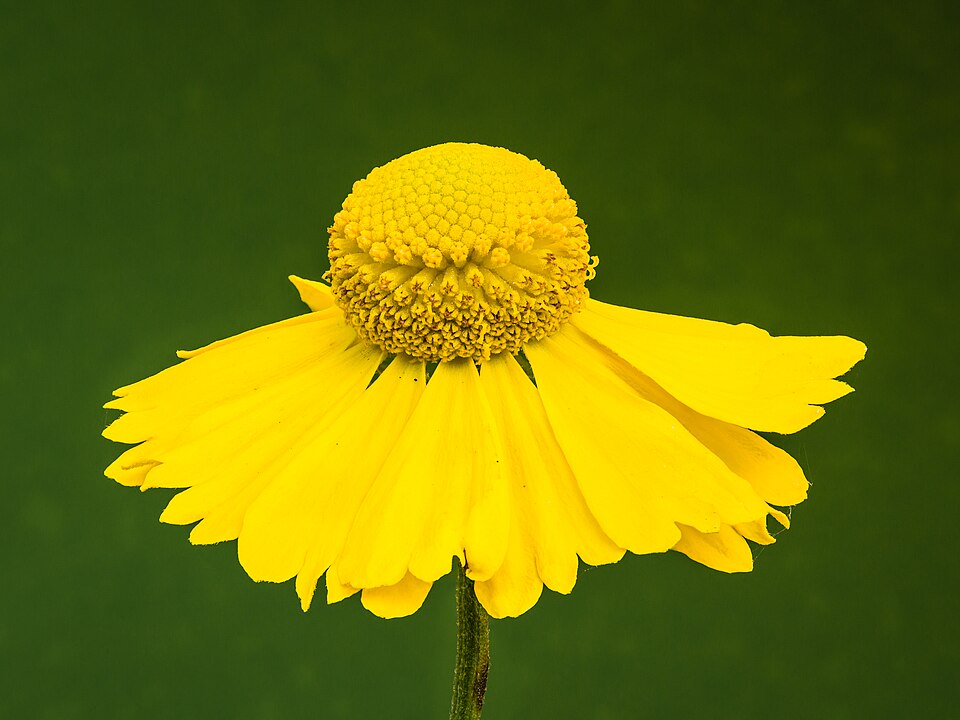
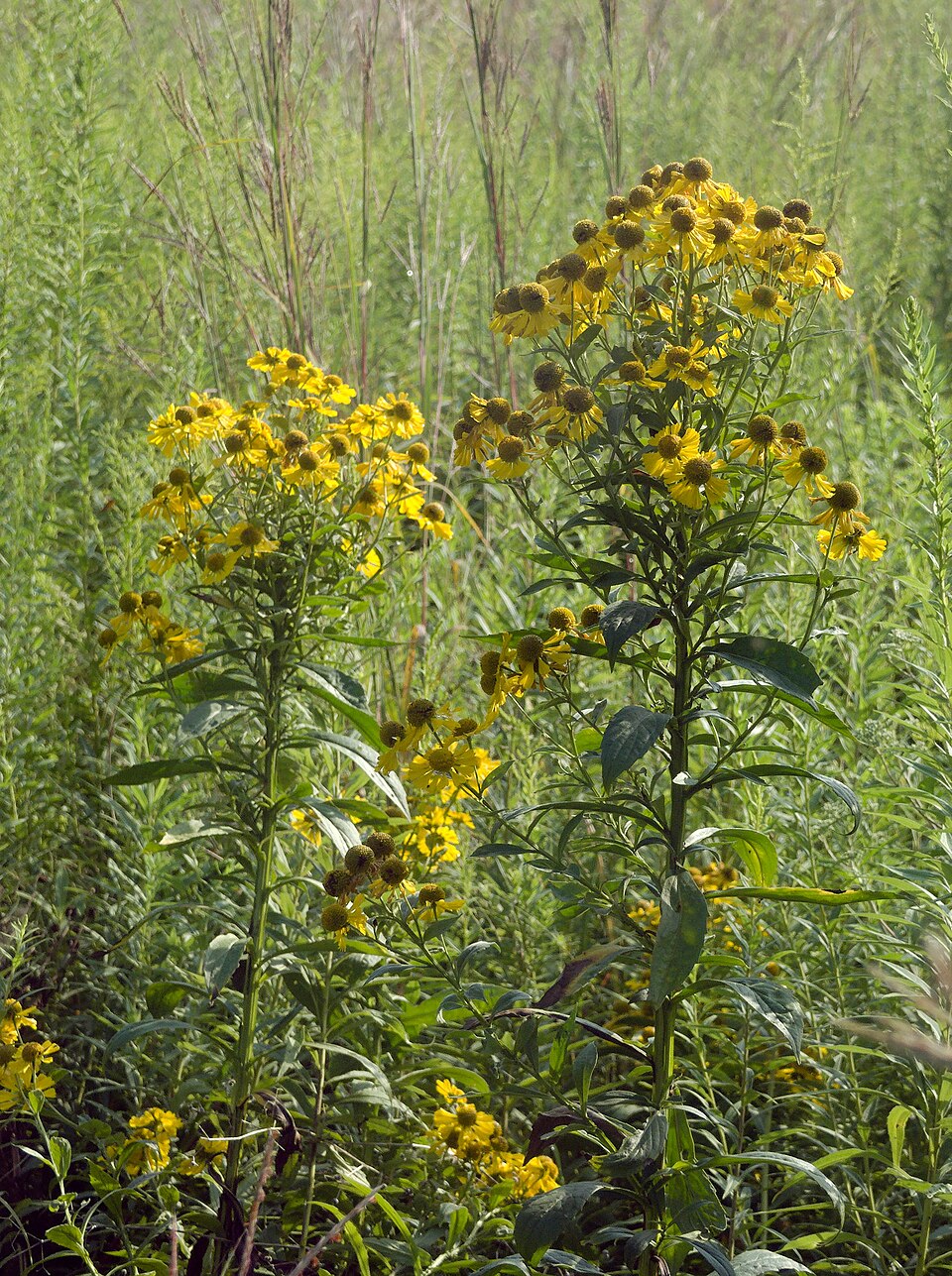
Growing 2 to 5 feet tall with an upright, branching habit, Common Sneezeweed produces abundant clusters of distinctive flowers with wedge-shaped, reflexed (downward-curving) yellow petals surrounding a prominent brown-gold, button-like center cone. Each plant can produce dozens to hundreds of flower heads over its long bloom period, creating a spectacular display that attracts hordes of butterflies, bees, and other pollinators. The winged stems and alternate, lance-shaped leaves add to its distinctive appearance.
For native plant enthusiasts in the Dakotas and western Minnesota, Common Sneezeweed is an excellent choice for moist, sunny sites — rain gardens, pond edges, low-lying areas, and any spot that stays damp through the growing season. Its late-season bloom fills the gap between summer and fall flowers, and its cheerful yellow color pairs beautifully with the purples and blues of asters and gentians blooming at the same time.
Identification
Leaves
The leaves are alternate, lance-shaped, 2 to 6 inches long, with toothed margins and a distinctive feature: the leaf bases extend down the stem as “wings,” giving the stems a winged or flanged appearance. This winged stem is one of the best identification features for Common Sneezeweed. The foliage is dark green and slightly rough-textured. Lower leaves may be larger and more broadly lance-shaped than upper ones.
Flowers & Fruit
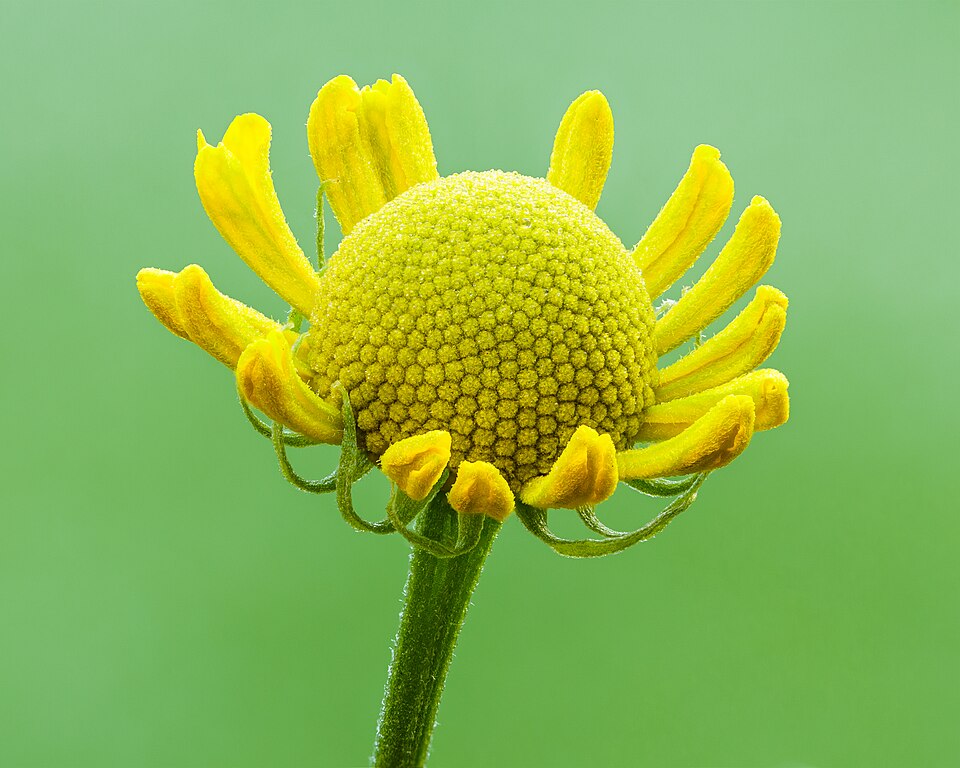
The flower heads are 1 to 2 inches across, with 10 to 18 wedge-shaped, three-lobed ray florets (petals) that curve downward, giving the flower a distinctive “skirted” look. The rays are bright yellow, sometimes with reddish-brown bases. The central disk is a prominent, nearly spherical, brown-gold button, ½ to ¾ inch across, covered with tiny tubular disk florets that attract pollinators. Flowers appear in loose, branching clusters at the tops of stems from August through October. Seeds are small achenes with a crown of papery scales that aid wind dispersal.
Quick Facts
| Scientific Name | Helenium autumnale |
| Family | Asteraceae (Aster/Daisy) |
| Plant Type | Herbaceous Perennial |
| Mature Height | 2–5 ft |
| Sun Exposure | Full Sun |
| Water Needs | Moderate to High |
| Bloom Time | August – October |
| Flower Color | Yellow with brown-gold center cone |
| USDA Hardiness Zones | 3–8 |
Native Range
Common Sneezeweed (Helenium autumnale) is native to a broad range across North America, growing naturally in wet meadows, stream banks, moist prairies, ditches, pond margins, floodplains. In the United States, it occurs in Nearly every U.S. state; native from coast to coast. The species is found from Sea level – 8,000 ft elevation, adapting to the local conditions within each region of its range.
Within its native range, Common Sneezeweed is associated with the Widespread across North American wetlands, prairies, and meadows ecoregion, where it grows alongside species such as Joe-Pye Weed, Boneset, Blue Lobelia, Cardinal Flower, Swamp Milkweed. These plant communities have co-evolved over thousands of years, forming the complex ecological relationships that characterize healthy native landscapes. The presence of Common Sneezeweed in a plant community is often an indicator of good site conditions and ecological integrity.
In the Dakotas and western Minnesota, Common Sneezeweed occurs naturally in suitable habitats and is well-adapted to the region’s continental climate with its cold winters, warm summers, and variable precipitation. Conservation efforts and native plant restoration projects are helping to maintain and expand populations of Common Sneezeweed throughout the region, ensuring that this valuable native species continues to thrive for future generations.
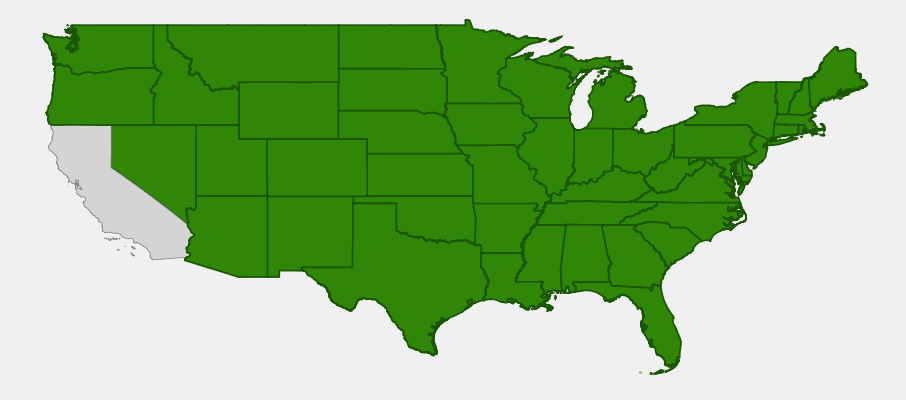
📋 Regional plant lists featuring Common Sneezeweed: North Dakota, South Dakota & Western Minnesota
Growing & Care Guide
Light
Common Sneezeweed requires full sun — at least 6 to 8 hours of direct sunlight daily. In shade, plants become leggy, floppy, and produce far fewer flowers. Choose the sunniest, most open location available for best performance.
Soil & Water
This species thrives in moist to wet soils and is an excellent choice for rain gardens, pond margins, and low-lying areas that stay damp. It tolerates heavy clay, loam, and even slightly sandy soils as long as moisture is consistent. It will not thrive in dry, well-drained sites. In the northern Great Plains, pair it with supplemental irrigation or site it where water naturally collects.
Planting Tips
Plant in spring or fall, spacing plants 18 to 24 inches apart. Common Sneezeweed is easy to grow from seed — sow in fall for natural stratification, or cold-stratify for 30 days and sow in spring. Seeds need light to germinate, so press into the soil surface without covering. Nursery transplants establish quickly and typically bloom the first year.
Pruning & Maintenance
Pinch or cut back stems by half in early summer (June) to promote bushier growth and reduce the tendency for tall plants to flop. This “Chelsea chop” technique delays blooming slightly but produces more compact, self-supporting plants with more flower heads. Deadhead spent flowers to extend blooming. Cut to the ground in late fall or early spring. Divide clumps every 3–4 years in spring to maintain vigor.
Landscape Uses
- Rain gardens and bioswales
- Pond and stream margins
- Moist meadow plantings
- Pollinator gardens — a late-season nectar powerhouse
- Cut flower gardens — long-lasting in arrangements
- Wet prairie restorations
Wildlife & Ecological Value
For Birds
The seeds of Common Sneezeweed are eaten by Goldfinches, Sparrows, and other seed-eating songbirds. The tall, sturdy stems provide perching sites for flycatchers and other aerial-foraging birds that hawk insects near wetlands. Standing dead stems in winter offer shelter and foraging surfaces for overwintering insects that woodpeckers and other birds feed upon.
For Mammals
Common Sneezeweed is generally avoided by White-tailed Deer, making it a good choice for deer-prone areas. The foliage contains sesquiterpene lactones that are mildly toxic and unpalatable to browsing mammals. This deer resistance is a significant advantage for gardeners in the Dakotas where deer pressure can be intense.
For Pollinators
Common Sneezeweed is one of the most important late-season nectar and pollen sources for native pollinators. The prominent disk flowers attract dozens of pollinator species including honeybees, native bumblebees, sweat bees, mining bees, hover flies, soldier beetles, and numerous butterfly species including Monarchs, Painted Ladies, and various skippers. The late bloom period makes it especially critical for pollinators building up energy reserves before winter.
Ecosystem Role
In wetland and moist meadow ecosystems, Common Sneezeweed contributes to the late-season nectar bridge that sustains pollinator populations through fall. Its dense root system helps stabilize wet soils along waterways. The plant often forms dense colonies in favorable habitats, creating important structural diversity in meadow ecosystems. Its mild toxicity to livestock historically gave it a negative reputation among ranchers, but in native landscapes, this chemistry helps the plant persist against browsing pressure.
Cultural & Historical Uses
Common Sneezeweed’s common name derives from a historical practice of drying the flower heads and grinding them into a powder used as snuff to induce sneezing. This practice was rooted in the folk medicine belief that sneezing could rid the body of evil spirits or disease — a form of sympathetic magic that was common in both European and Indigenous American healing traditions. The genus name Helenium is traditionally said to honor Helen of Troy, though the exact connection is debated.
Several Indigenous nations used Common Sneezeweed medicinally. The Cherokee made an infusion of the plant to treat colds, and the leaves were sometimes applied as a poultice. The Meskwaki (Fox) used the sneeze-inducing properties intentionally, creating a nasal snuff from dried flower heads that was believed to clear congestion and headaches. The Iroquois used a decoction of the plant in various medicinal preparations. However, the plant contains sesquiterpene lactones that can be toxic in large quantities, so traditional medicinal use was carefully controlled.
In modern horticulture, Common Sneezeweed has gained tremendous popularity as a garden perennial, with numerous cultivars developed in shades of yellow, orange, red, and bicolor. Cultivar names like ‘Mardi Gras,’ ‘Salsa,’ and ‘Siesta’ reflect the festive, warm colors breeders have achieved. However, the straight native species remains one of the best choices for ecological gardens and restoration, offering abundant nectar, a long bloom period, and perfect adaptation to local conditions. For gardeners in the northern Great Plains, the native form’s proven cold hardiness (Zone 3) and tolerance of heavy soils make it a more reliable choice than many cultivars bred in milder climates.
Frequently Asked Questions
Does Common Sneezeweed cause allergies or sneezing?
No. Despite its name, Common Sneezeweed is insect-pollinated and does not release airborne pollen that causes allergies. The name comes from an old practice of using dried flowers as snuff to intentionally induce sneezing. It is completely safe to grow near your home.
Is Common Sneezeweed toxic to livestock?
Yes, the foliage contains sesquiterpene lactones that can be toxic to cattle, horses, and sheep if consumed in large quantities. Livestock generally avoid it due to its bitter taste. In native pastures, it rarely causes problems, but heavily infested overgrazed pastures can pose a risk.
Why does my Sneezeweed flop over?
Tall plants in rich, moist soil often become top-heavy. Use the “Chelsea chop” technique: cut stems back by half in early June to promote shorter, bushier, self-supporting growth. Also ensure plants receive full sun — shade causes leggy, weak stems.
Can Common Sneezeweed grow in dry soil?
It strongly prefers moist to wet soils and will struggle in dry conditions. If your site is dry, consider alternatives like Black-Eyed Susan or Stiff Sunflower. For moist areas, Common Sneezeweed is one of the best choices available.
When should I divide Common Sneezeweed?
Divide clumps every 3–4 years in early spring when new growth is just emerging. Lift the entire clump, divide into sections with roots and shoots, and replant immediately. This maintains plant vigor and prevents the center of the clump from dying out.

Looking for a nursery that carries Common Sneezeweed?
Browse our native plant nursery directory: North Dakota · South Dakota · Minnesota