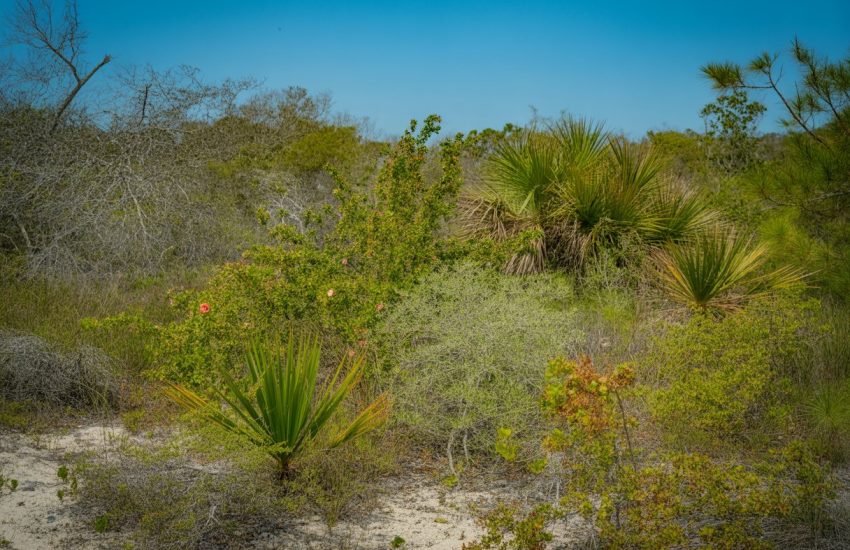
Evening Primrose (Oenothera biennis)
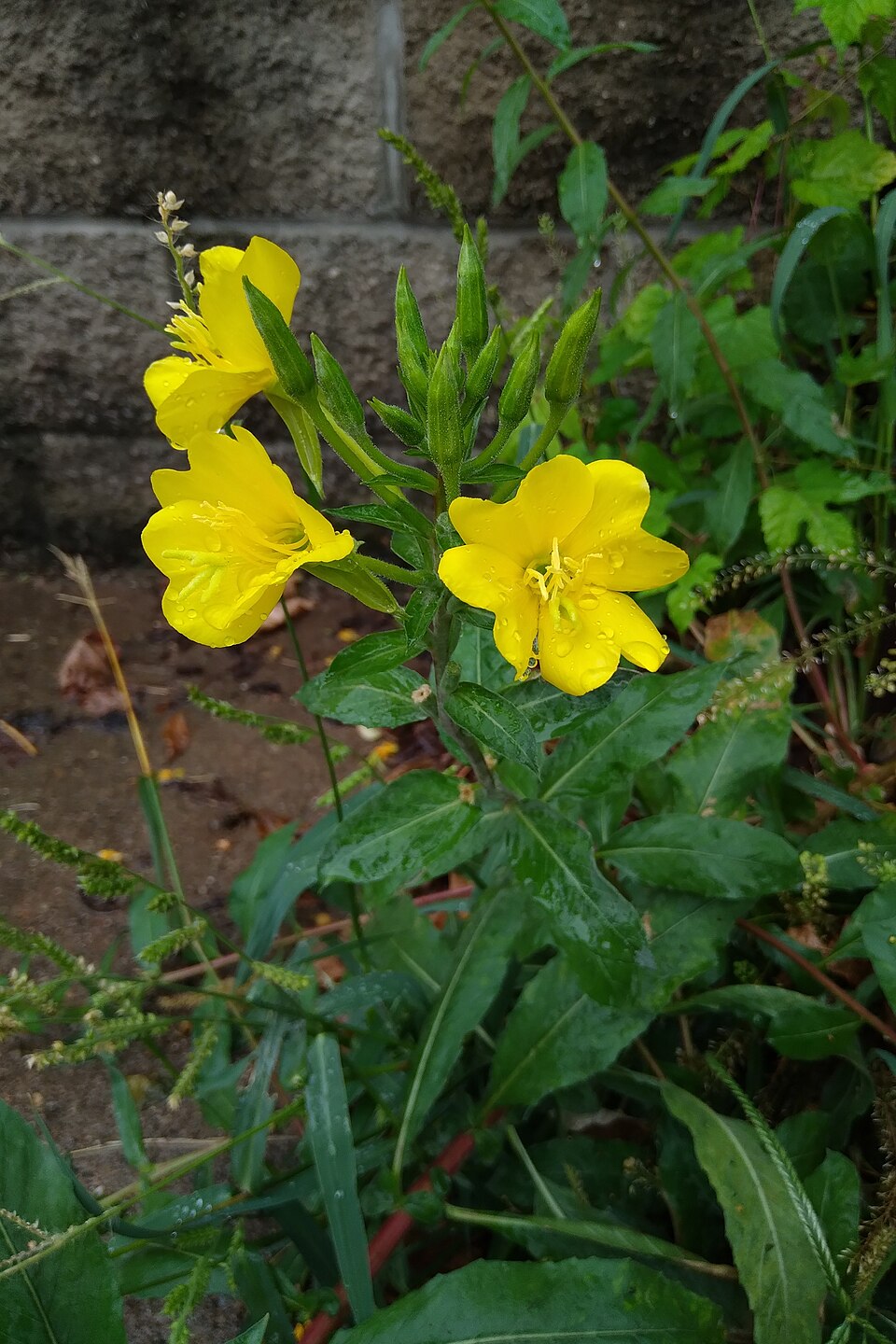
Oenothera biennis, commonly known as Evening Primrose or Common Evening Primrose, is a remarkable native wildflower that has earned its place as one of North America’s most adaptable and ecologically valuable plants. This tall, striking biennial herb belongs to the Onagraceae (evening primrose) family and is renowned for its spectacular display of bright yellow, four-petaled flowers that open in the evening and emit a sweet, lemony fragrance to attract night-flying pollinators. The species has become an icon of resilience and adaptability, thriving in disturbed soils, vacant lots, roadsides, and prairies from coast to coast.
Evening Primrose follows a distinctive two-year lifecycle that showcases nature’s patience and strategic timing. In its first year, the plant forms a flat rosette of lance-shaped leaves that hug the ground, building energy reserves in its substantial taproot. During the second year, it sends up a tall flowering stem that can reach 2 to 8 feet in height, crowned with dozens of bright yellow blooms that open sequentially from bottom to top throughout the summer and early fall. This dramatic transformation from ground-hugging rosette to towering flower spike makes Evening Primrose one of the most architecturally striking plants in the North American flora.
Beyond its visual impact, Evening Primrose holds tremendous cultural and ecological significance. Indigenous peoples across its range have used virtually every part of the plant — from the edible roots and leaves to the medicinal seeds rich in gamma-linolenic acid (GLA). The plant’s evening blooming habit and sweet fragrance create unique ecological relationships with night-flying moths and other nocturnal pollinators, while its abundant seeds provide food for numerous bird species. Today, Evening Primrose oil extracted from the seeds is valued worldwide for its therapeutic properties, making this native wildflower both a garden treasure and a commercially important crop.
Identification
Evening Primrose is easily recognizable by its distinctive growth pattern and unmistakable flowers. The plant exhibits a classic biennial growth habit, with dramatically different appearances in its first and second years that can sometimes confuse beginning botanists.
First-Year Rosette
During its first growing season, Evening Primrose forms a basal rosette of leaves that lie flat against the ground. These rosette leaves are 3 to 8 inches long, lance-shaped to oblanceolate, with prominent white midribs and subtle parallel veins. The leaf margins may be entire or have small, scattered teeth, and the surface is often slightly hairy. The rosette can reach 12 to 18 inches in diameter and persists through winter, storing energy in the plant’s thick, fleshy taproot.
Second-Year Flowering Plant
In its second year, Evening Primrose undergoes a dramatic transformation, sending up one or more erect, sturdy stems that can reach 2 to 8 feet tall. The stem is typically unbranched in the lower portion but may branch near the top to form a loose, elongated inflorescence. The stem is often reddish or purplish, especially toward the base, and covered with fine hairs.
Leaves
The stem leaves are alternate, lance-shaped, and gradually decrease in size toward the top of the plant. Lower leaves may be 4 to 6 inches long and 1 inch wide, while upper leaves are much smaller. The leaf margins are typically entire or with small, shallow teeth, and the surfaces are softly hairy. Unlike the rosette leaves, stem leaves do not have prominent white midribs.
Flowers
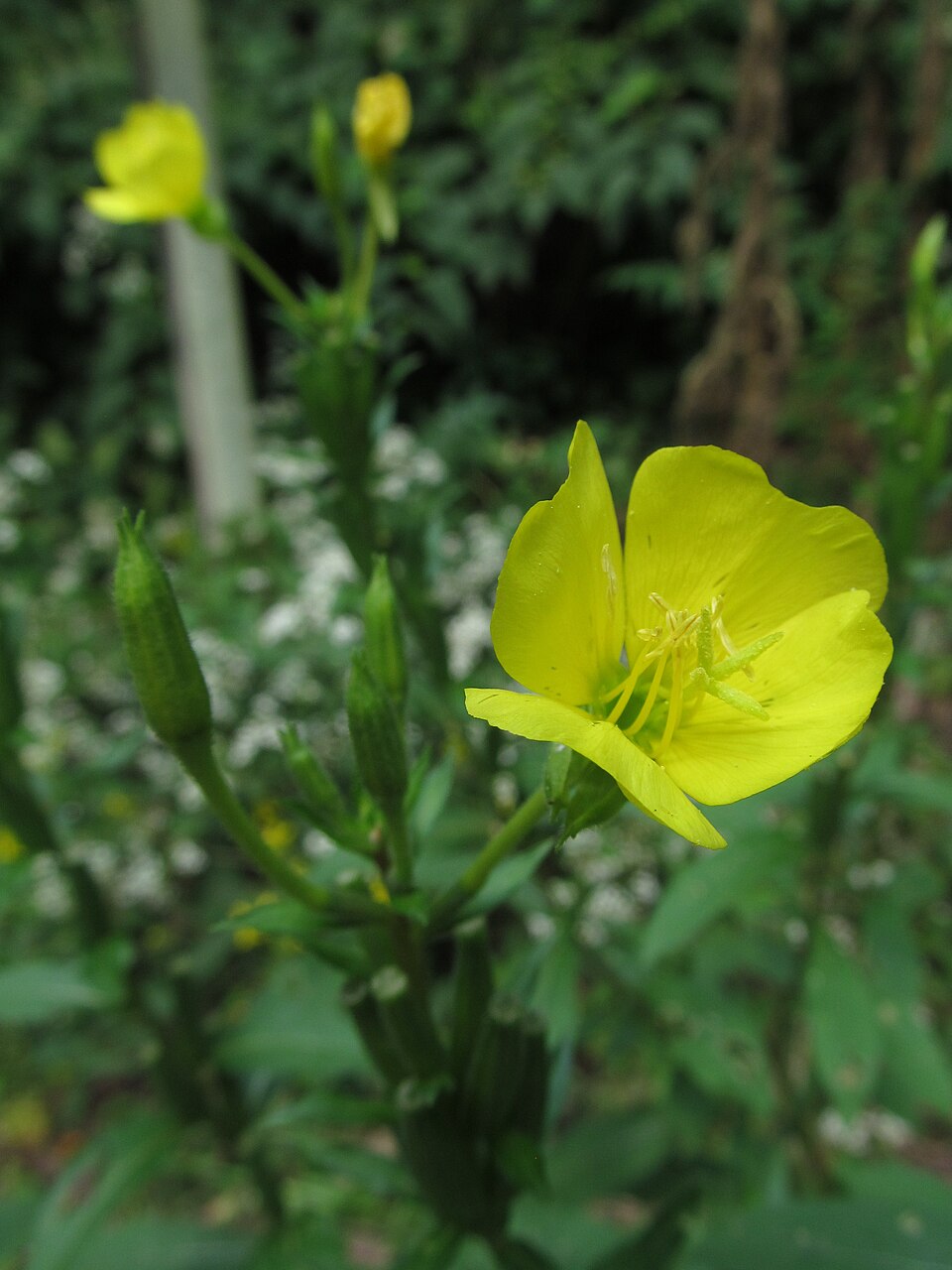
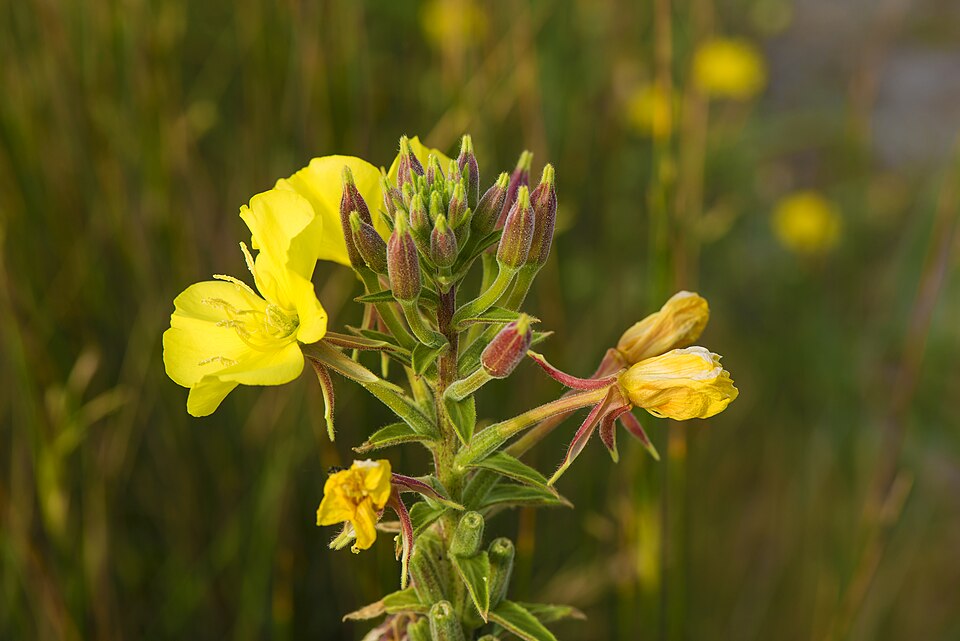
The flowers are Evening Primrose’s crowning glory — bright sulfur-yellow, four-petaled blooms that are 1 to 2 inches across. Each flower has four broad, heart-shaped petals that often overlap slightly, giving the bloom a full, rounded appearance. The flowers also feature four prominent, reflexed sepals, eight stamens with large yellow anthers, and a distinctive X-shaped stigma at the center.
The blooming sequence is one of nature’s most enchanting displays. Flowers open rapidly in the evening (usually between 6 and 8 PM), often accompanied by an audible “pop” as the petals unfurl. They remain open through the night, releasing their sweet, lemony fragrance to attract night-flying moths, then close the following morning, often taking on a pinkish or orange tinge as they fade. Individual flowers typically last only one night, but the plant produces dozens of buds that open in succession over several weeks.
Fruit & Seeds
After pollination, the flowers develop into distinctive four-chambered seed capsules (siliques) that are 1 to 2 inches long and cylindrical in shape. These capsules split open along four lines when mature, releasing hundreds of small, dark brown seeds. Each plant can produce 50,000 to 100,000 seeds, contributing to Evening Primrose’s success as a colonizer of disturbed habitats.
Quick Facts
| Scientific Name | Oenothera biennis |
| Family | Onagraceae (Evening Primrose) |
| Plant Type | Biennial Wildflower |
| Mature Height | 2–4 ft |
| Sun Exposure | Full Sun |
| Water Needs | Low to Moderate |
| Bloom Time | June – September |
| Flower Color | Bright Yellow |
| USDA Hardiness Zones | 3–9 |
Native Range
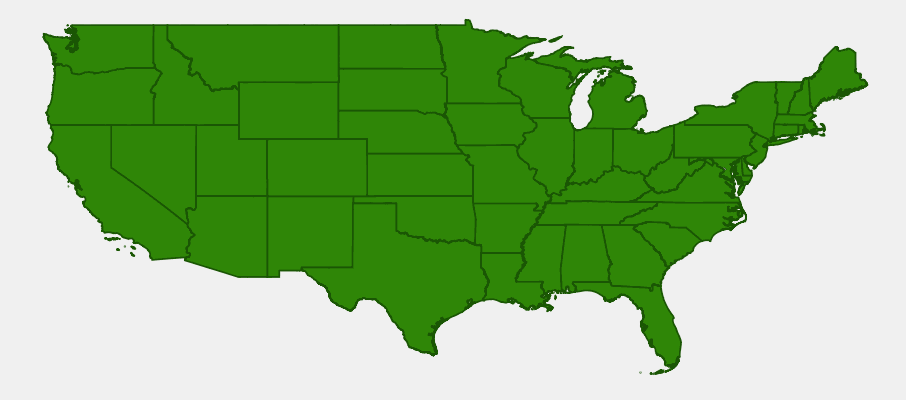
Evening Primrose enjoys one of the most extensive native ranges of any North American wildflower, stretching from coast to coast and from southern Canada to northern Mexico. This remarkable distribution reflects the species’ exceptional ecological adaptability and its evolutionary success in colonizing a wide variety of habitats across diverse climatic zones. The plant’s ability to thrive in disturbed soils and marginal sites has allowed it to maintain stable populations even as landscapes have changed dramatically over the past several centuries.
Throughout most of its native range, Evening Primrose occupies disturbed habitats including roadsides, old fields, vacant lots, railroad rights-of-way, and prairie margins. It shows a particular affinity for sandy or gravelly soils with good drainage, though it can adapt to clay soils when drainage is adequate. The species is often among the first plants to colonize areas following disturbance, earning it recognition as an important pioneer species in ecological succession.
The plant’s current distribution has likely been enhanced by human activities, as seeds readily disperse along transportation corridors and the species thrives in the disturbed soils created by construction and agriculture. However, genetic studies confirm that Evening Primrose was widely distributed across North America long before European settlement, with Indigenous peoples utilizing the plant throughout most of its current range.
📋 Regional plant lists featuring Evening Primrose: North Dakota, South Dakota & Western Minnesota
Growing & Care Guide
Evening Primrose is among the easiest native wildflowers to grow, requiring minimal care once established and actually preferring the lean, well-drained soils that challenge many garden plants. Understanding its biennial growth cycle and preference for full sun will help you successfully incorporate this spectacular bloomer into wildflower gardens, prairie restorations, or naturalistic landscapes.
Light
Evening Primrose performs best in full sun, where it develops sturdy stems, abundant flowers, and the most vibrant yellow blooms. While it can tolerate some light shade, plants grown in shadier conditions tend to become tall and leggy, may not flower as prolifically, and are more prone to lodging (falling over) in wind and rain.
Soil & Water
One of Evening Primrose’s greatest strengths is its ability to thrive in poor, well-drained soils. It actually prefers sandy, gravelly, or rocky soils with low fertility — conditions that mirror its natural habitat in disturbed areas and prairie margins. Rich, fertile soils often produce lush foliage at the expense of flowers and can make plants more susceptible to fungal problems.
The plant is highly drought-tolerant once established, thanks to its deep taproot that can extend several feet into the soil. However, consistent moisture during the germination and seedling stages improves establishment success. Avoid overwatering mature plants, as excessive moisture can lead to root rot and reduced flowering.
Planting Tips
Evening Primrose is most commonly grown from seed, which can be direct-sown in fall or early spring. Seeds need light to germinate, so scatter them on the soil surface and press lightly or cover with just a thin layer of fine soil. Germination typically occurs in 10 to 20 days when soil temperatures reach 60-70°F.
For controlled plantings, start seeds indoors 6 to 8 weeks before the last frost date. Use individual pots to minimize root disturbance, as Evening Primrose develops a taproot that doesn’t transplant well once established. Space plants 12 to 18 inches apart to allow for their mature size.
Maintenance
Evening Primrose requires virtually no maintenance once established. The plant self-sows readily, often creating naturalistic colonies over time. If you want to prevent spreading, deadhead the flowers before seeds mature, though this will eliminate one of the plant’s greatest wildlife benefits.
In favorable conditions, Evening Primrose may self-sow so successfully that it becomes weedy. Regular monitoring and removal of unwanted seedlings in spring helps maintain desired population levels. The plants are generally pest- and disease-free, though aphids occasionally infest young growth and spider mites may appear during hot, dry weather.
Landscape Uses
Evening Primrose’s adaptability makes it valuable in many landscape applications:
- Wildflower meadows and prairie gardens
- Pollinator gardens specifically designed for night-flying insects
- Naturalistic borders and informal landscape areas
- Disturbed site restoration and erosion control
- Cottage gardens and informal flower borders
- Moon gardens featuring fragrant, evening-blooming plants
- Wildlife habitat plantings for birds and beneficial insects
- Educational gardens demonstrating native plant ecology
Wildlife & Ecological Value
Evening Primrose provides exceptional wildlife value throughout its range, serving as a critical resource for specialized night-flying pollinators while also supporting numerous day-active species. Its evening blooming schedule and abundant seed production create unique ecological relationships that highlight the interconnectedness of native plant and animal communities.
For Night-Flying Pollinators
Evening Primrose has co-evolved with night-flying moths, particularly the Evening Primrose Moth (Schinia florida) and several sphinx moths (hawkmoths) including the Hummingbird Clearwing (Hemaris thysbe). The flowers’ evening opening time, sweet fragrance, and bright yellow color visible in moonlight make them perfectly adapted to nocturnal pollination. The large, sticky pollen grains adhere well to moth bodies, ensuring efficient pollen transfer between plants.
For Birds
The abundant seeds produced by Evening Primrose are consumed by numerous bird species, including American Goldfinches, House Finches, Purple Finches, Pine Siskins, and various sparrows. Dark-eyed Juncos and other ground-foraging birds clean up seeds that fall beneath the plants. The tall, sturdy stems also provide perching sites for small birds hunting insects in wildflower meadows.
For Day-Active Insects
While Evening Primrose flowers close during the day, they still attract various day-active insects to remaining nectar and pollen. Bees, butterflies, and beneficial insects visit the flowers in early morning before they close, while the foliage supports several specialized caterpillars including those of the Evening Primrose Moth and various cutworms.
Ecosystem Role
As a pioneer species, Evening Primrose plays a crucial role in ecological succession, often being among the first plants to colonize disturbed areas. Its deep taproot helps break up compacted soils and brings nutrients from lower soil layers to the surface through leaf decomposition. The plant’s ability to thrive in poor soils and disturbed conditions makes it valuable for soil stabilization and habitat restoration projects.
Evening Primrose also serves as a nurse plant for other species, providing wind protection and creating favorable microclimates for the establishment of less hardy wildflowers and grasses. Over time, as soil conditions improve and other species establish, Evening Primrose populations may decline naturally as part of the succession process.
Cultural & Historical Uses
Evening Primrose holds a distinguished place in the ethnobotanical history of North America, with Indigenous peoples across its range utilizing virtually every part of the plant for food, medicine, and practical purposes. The Ojibwe called it “onaabani-mashkosiw” (sits-up-all-night plant), referencing its evening blooming habit, while the Potawatomi knew it as “mskobinesak” and used it extensively in traditional medicine.
The thick, fleshy roots were particularly valued as a food source, especially during the plant’s first year when they are most tender and nutritious. Indigenous peoples would dig the roots in fall or early spring, preparing them by boiling, roasting, or drying for winter storage. The roots have a slightly sweet, nutty flavor and were often prepared like parsnips or added to stews. Young leaves were also consumed as cooked greens, particularly in early spring when few other fresh foods were available.
Medicinally, Evening Primrose was used to treat a remarkable variety of ailments. The Menominee used root preparations to treat diarrhea and stomach problems, while the Cherokee applied poultices of the plant to treat wounds and bruises. The Iroquois used it for gastrointestinal disorders, and many tribes recognized its value for women’s health issues. The plant’s high mucilage content made it useful for treating respiratory conditions and soothing irritated tissues.
European settlers quickly adopted Indigenous uses for Evening Primrose and brought it to Europe, where it became known as “King’s Cure-All” and was cultivated in monastery gardens. By the 17th century, it was established in European gardens and had begun naturalizing across the continent. The plant’s scientific name Oenothera comes from the Greek words “oinos” (wine) and “thera” (hunt), possibly referencing its use to treat ailments caused by excessive drinking.
Modern scientific research has validated many traditional uses for Evening Primrose, particularly the medicinal value of its seeds. Evening Primrose oil, extracted from the tiny seeds, contains high levels of gamma-linolenic acid (GLA), an essential fatty acid with anti-inflammatory properties. This has made Evening Primrose seed oil a valuable supplement in treating conditions ranging from eczema and arthritis to premenstrual syndrome and diabetic neuropathy. Today, Evening Primrose is cultivated commercially on thousands of acres worldwide specifically for oil production.
Frequently Asked Questions
Why do Evening Primrose flowers only last one night?
This brief flowering strategy is an evolutionary adaptation to attract night-flying moths, the plant’s primary pollinators. The rapid opening and closing cycle, combined with intense fragrance release at night, ensures maximum pollinator attention during peak moth activity hours. The short flower life also encourages cross-pollination as moths visit multiple plants each night.
Can I eat Evening Primrose from my garden?
Yes, all parts of Evening Primrose are edible, though they require proper preparation. First-year roots are best in fall or early spring, prepared like parsnips. Young leaves can be cooked as greens (they’re too bitter raw). The seeds can be used like poppy seeds in baking. However, start with small amounts as some people may experience digestive upset.
Will Evening Primrose take over my garden?
Evening Primrose can self-sow prolifically in favorable conditions, but it’s easy to control by deadheading flowers before seeds mature or by pulling unwanted seedlings in spring. The plants have shallow root systems (except for the main taproot) and are easy to remove when small. In rich garden soils, it may actually be less aggressive than in its preferred poor, disturbed habitats.
How can I attract moths to my Evening Primrose?
Plant Evening Primrose in clusters rather than single plants to create a stronger fragrance beacon. Avoid using lights near the plants during evening hours, as artificial lighting can disrupt moth navigation. Include other night-blooming plants like Four O’Clocks and Moonflowers to extend the nighttime pollinator buffet. Maintain some wild, unmowed areas nearby to provide daytime habitat for moths.
Is Evening Primrose the same plant used for supplements?
Yes, the Evening Primrose oil sold in health food stores comes from the seeds of this native wildflower, Oenothera biennis. However, commercial production typically uses selected cultivars bred for higher oil content and more uniform growth. The oil from wild plants contains the same beneficial compounds but in more variable concentrations.

Looking for a nursery that carries Evening Primrose?
Browse our native plant nursery directory: North Dakota · South Dakota · Minnesota