
Tall Meadow Rue (Thalictrum dasycarpum)
Thalictrum dasycarpum, commonly known as Tall Meadow Rue, is an elegant native perennial herb that brings an ethereal beauty to shaded gardens and natural areas throughout much of North America. This member of the Ranunculaceae (buttercup) family is renowned for its distinctive branched sprays of tiny, cloud-like flowers that bloom in early summer, creating an airy, almost otherworldly presence in the landscape. The flowers, though individually small, appear in such profusion that they form impressive plumes of purplish-white blooms that seem to float above the delicate, compound foliage.
Reaching 3 to 5 feet in height, Tall Meadow Rue is perfectly adapted to the partial to full shade conditions found in woodland edges, prairie swales, and moist meadows across its extensive native range. Its compound leaves are divided into numerous small leaflets that create a fine-textured appearance, while the plant’s upright, branching stems provide excellent vertical structure in naturalistic plantings. This species is dioecious, meaning individual plants are either male or female, with the male plants typically producing the most showy flower displays due to their prominent stamens.
Beyond its ornamental value, Tall Meadow Rue plays important ecological roles as a nectar source for small native bees and other pollinators, while its seeds provide food for various songbirds. The plant’s preference for moist, partially shaded conditions makes it an excellent choice for rain gardens, woodland gardens, and naturalized areas where it can spread slowly by underground rhizomes to form attractive colonies over time.
Identification
Tall Meadow Rue is a robust perennial herb that typically grows 3 to 5 feet tall, though exceptional specimens may reach 6 feet or more in ideal conditions. The plant emerges from a creeping rhizome system that allows it to form small colonies over time. One of its most distinctive features is its alternate, compound leaves that are divided two to four times into numerous small leaflets, creating an overall delicate, fern-like appearance.
Stems & Growth Habit
The stems are smooth, hollow, and somewhat succulent, ranging from green to purplish-green in color. They branch freely in the upper portions where the flower clusters develop, creating the plant’s characteristic open, airy appearance. The stems are sturdy enough to support the large flower panicles without staking, though they may lean slightly under the weight of heavy blooms or in windy conditions.
Leaves
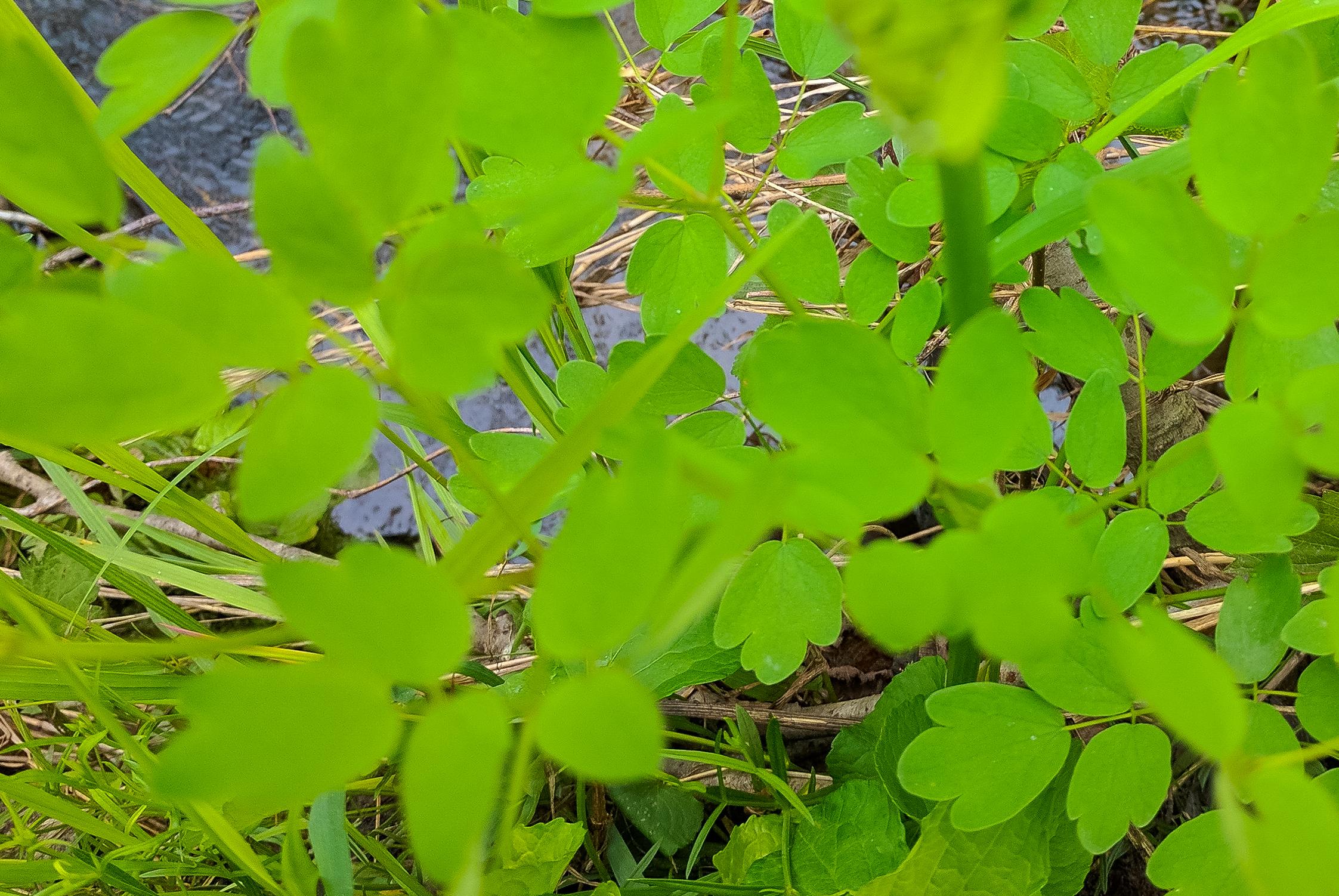
The leaves are the plant’s most distinctive vegetative feature—large, compound, and divided into numerous small leaflets (typically 3-lobed) that are roughly ½ to 1 inch long. Each leaflet is rounded to oblong with a distinctive blue-green to gray-green color and a slightly waxy texture. The leaflets often have a subtle silvery underside, and the overall leaf structure creates an almost cloud-like texture that provides an excellent backdrop for the flowers. The leaves are arranged alternately along the stem and decrease in size toward the top of the plant.
Flowers
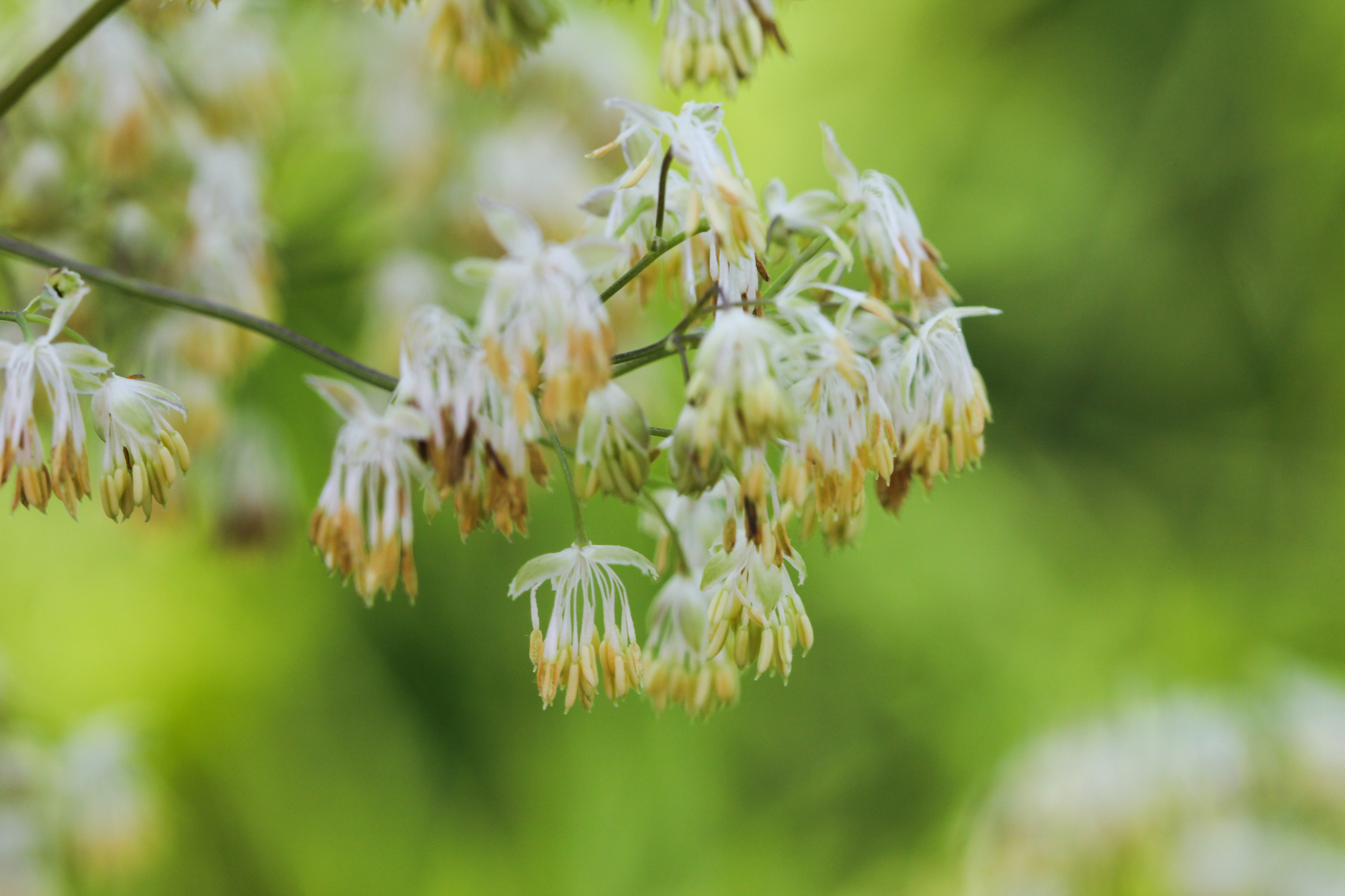
The flowers are the plant’s crowning glory—tiny individual blooms, each only about ¼ inch across, but arranged in large, branched, terminal panicles that can be 8 to 16 inches long. The flowers lack petals; instead, they consist of 4 to 5 greenish-white sepals that fall away quickly, leaving the showy stamens (in male plants) or pistils (in female plants) as the main attraction. Male flowers are typically more conspicuous due to their numerous white to purplish stamens that dangle gracefully from thread-like filaments. Female flowers are less showy, with greenish carpels that develop into the seed heads. The bloom period extends from late May through July.
Fruit
Following pollination, female plants develop small, ribbed achenes (dry, one-seeded fruits) that are roughly ⅛ inch long and equipped with a persistent style that aids in wind dispersal. The seeds mature from mid-summer through early fall and are an important food source for small songbirds.
Quick Facts
| Scientific Name | Thalictrum dasycarpum |
| Family | Ranunculaceae (Buttercup) |
| Plant Type | Perennial Herb |
| Mature Height | 3–5 ft |
| Sun Exposure | Part Shade to Full Shade |
| Water Needs | Moderate |
| Bloom Time | May – July |
| Flower Color | Purplish-white |
| USDA Hardiness Zones | 3–8 |
Native Range
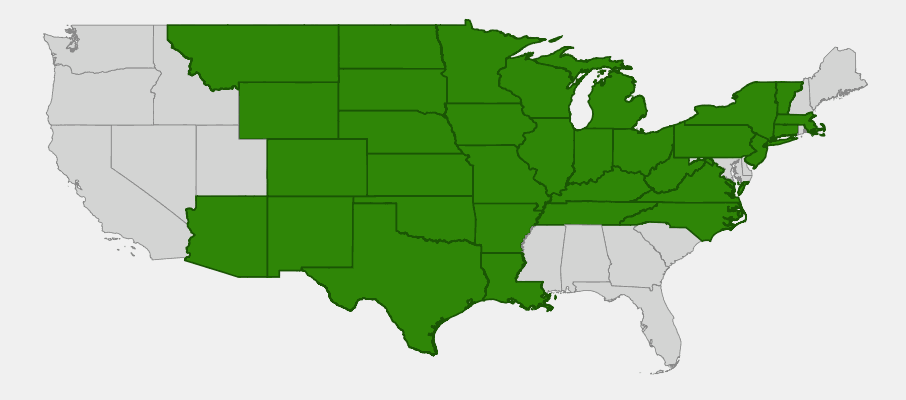
Tall Meadow Rue has one of the most extensive native ranges of any North American wildflower, stretching from southern Canada down into Mexico and from the Atlantic coast west to the Rocky Mountains. In the United States, it is native to much of the Great Plains, Great Lakes region, Northeast, Mid-Atlantic, and extends south into the Gulf Coast states and west into the mountain regions. This wide distribution reflects the species’ remarkable adaptability to different climate conditions and soil types.
Throughout its range, Tall Meadow Rue typically inhabits moist to moderately dry prairies, woodland edges, stream banks, and meadows where it can receive partial to full shade for at least part of the day. It is particularly common in prairie swales, oak savannas, and the transition zones between woodland and grassland ecosystems. The species shows a strong preference for calcareous soils but can adapt to a wide range of soil conditions as long as adequate moisture is available during the growing season.
Historically, Tall Meadow Rue was likely much more abundant across the Great Plains and prairie regions before widespread habitat conversion to agriculture. Today, it remains common in protected natural areas, state parks, and preserved prairie remnants, serving as an important indicator species for high-quality native plant communities.
📋 Regional plant lists featuring Tall Meadow Rue: North Dakota, South Dakota & Western Minnesota
Growing & Care Guide
Tall Meadow Rue is one of the easier native wildflowers to establish and maintain, making it an excellent choice for both beginning and experienced gardeners. Its adaptability to various growing conditions, combined with its low maintenance requirements and exceptional wildlife value, make it a standout addition to any native plant garden.
Light
While Tall Meadow Rue can tolerate full sun in cooler, moister climates, it performs best in partial shade to full shade conditions. In hot, dry regions, afternoon shade is particularly important to prevent leaf scorch and maintain the plant’s lush appearance. The ideal situation provides morning sun with protection from the intense afternoon sun, though the plant will thrive in full shade conditions as well, albeit with somewhat less prolific flowering.
Soil & Water
This adaptable species grows in a wide range of soil types but shows a preference for moist, well-draining soils with neutral to slightly alkaline pH. It performs exceptionally well in clay soils and can handle periodic flooding, making it ideal for rain gardens and low-lying areas. While established plants show good drought tolerance, consistent moisture during the growing season produces the best flowering and overall plant health. Mulching around plants helps retain soil moisture and suppress weeds.
Planting Tips
Tall Meadow Rue can be grown from seed or purchased as container plants. Seeds require cold stratification and are best sown in fall for spring germination. Container plants should be planted in spring after the last frost, spacing them 2 to 3 feet apart to allow for their mature spread. The plants spread slowly by rhizomes, so be patient as they establish their colony—full maturation typically takes 2 to 3 years.
Pruning & Maintenance
This low-maintenance perennial requires little care once established. Deadheading spent flowers can promote a second, smaller flush of blooms, though many gardeners prefer to leave the seed heads for wildlife and winter interest. Cut stems back to the ground in late fall or early spring. The plant may self-seed in ideal conditions, though not aggressively. Division is rarely necessary but can be done in early spring or fall to propagate new plants.
Landscape Uses
Tall Meadow Rue excels in several garden applications:
- Woodland gardens — provides vertical interest and airy texture
- Rain gardens — handles wet conditions and adds height
- Prairie restorations — authentic native component for savanna edges
- Pollinator gardens — excellent nectar source for native bees
- Cut flower gardens — long-lasting in arrangements
- Naturalized areas — low-maintenance option for larger spaces
- Shade borders — adds texture contrast to hosta and fern plantings
Wildlife & Ecological Value
Tall Meadow Rue provides significant ecological benefits throughout the growing season, supporting a diverse array of native wildlife from pollinators to songbirds. Its long bloom period and abundant nectar production make it particularly valuable in supporting native insect populations during the critical summer months.
For Pollinators
The abundant small flowers produce copious amounts of nectar and pollen, attracting a variety of small native bees, including sweat bees, small carpenter bees, and mining bees. The flowers are also visited by beneficial wasps, hover flies, and small butterflies. Because Tall Meadow Rue blooms during midsummer when many other native flowers have finished, it provides crucial late-season resources for pollinators preparing for winter or later breeding cycles.
For Birds
The small seeds are consumed by various songbirds, including American Goldfinches, Purple Finches, and various sparrow species. The plant’s tall, sturdy stems also provide perching sites for small birds, while the dense foliage offers cover for ground-dwelling species. The persistent seed heads continue to provide food sources well into winter.
For Other Wildlife
White-tailed deer and elk occasionally browse the foliage, though it’s not a preferred food source. Small mammals may eat the seeds, and the plant’s rhizomatous root system helps prevent soil erosion along stream banks and slopes. The dense colonies that form over time create important microhabitat for beneficial insects and small reptiles.
Ecosystem Role
As a key component of prairie and savanna ecosystems, Tall Meadow Rue helps maintain the structural diversity that supports healthy plant communities. Its deep root system improves soil structure and water infiltration, while its shade tolerance allows it to thrive in the transition zones between forest and grassland that are critical for many wildlife species but often overlooked in restoration efforts.
Cultural & Historical Uses
Tall Meadow Rue has a rich history of use by indigenous peoples throughout its native range, particularly among Plains and Woodland tribes who valued it both for its medicinal properties and ceremonial significance. Many tribes, including the Dakota, Ojibwe, and Potawatomi, used various parts of the plant to treat ailments ranging from digestive issues to fever and headaches. The roots were sometimes used to create yellow dye for textiles and ceremonial items.
The plant held particular significance among some Plains tribes, who used it in purification ceremonies and as a component in traditional smoking mixtures. The delicate, cloud-like flower clusters were sometimes incorporated into ceremonial decorations, symbolizing the connection between earth and sky. Some tribes also used preparations from the plant as a wash for treating skin conditions and wounds.
European settlers and early botanists were impressed by the plant’s beauty and began including it in ornamental gardens by the mid-1800s. Victorian-era gardeners prized it for its delicate texture and ability to thrive in shaded locations where few other flowering plants would grow. The plant was commonly featured in “wild gardens” and naturalistic plantings that became popular during the Arts and Crafts movement of the early 20th century.
In modern times, Tall Meadow Rue has found renewed appreciation among native plant enthusiasts, ecological restorationists, and pollinator garden advocates. Its role in supporting native bee populations has made it particularly valuable as awareness of pollinator conservation has grown. The plant is also increasingly used in sustainable landscaping projects where its low maintenance requirements and exceptional wildlife value make it an ideal choice for environmentally conscious gardeners.
Frequently Asked Questions
Are male and female Tall Meadow Rue plants different?
Yes, Tall Meadow Rue is dioecious, meaning individual plants are either male or female. Male plants typically produce more showy flowers with prominent white stamens, while female plants have less conspicuous flowers but produce the seeds. You need both types for seed production, though most gardeners can’t tell the difference until the plants flower.
How long does it take for Tall Meadow Rue to establish?
From seed, plants typically take 2-3 years to reach flowering size. Container-grown plants may flower the first or second year after planting, but will reach full maturity and maximum flower production by the third year. Be patient—the wait is worth it!
Will Tall Meadow Rue spread aggressively?
No, this species spreads slowly by underground rhizomes and is not considered aggressive. It forms attractive colonies over time but rarely becomes problematic. The spread can be easily controlled by division or by cutting through the rhizomes with a spade.
Can I grow Tall Meadow Rue from seed?
Yes, but the seeds require cold stratification (3-4 months of moist, cold treatment) to germinate reliably. Fall sowing outdoors provides natural stratification, with germination occurring the following spring. Fresh seed generally has better germination rates than stored seed.
What companions pair well with Tall Meadow Rue?
Excellent companions include Wild Bergamot, New England Aster, Wild Ginger, Canadian Wild Ginger, Jack-in-the-Pulpit, and various native ferns. In prairie settings, it pairs beautifully with native grasses like Little Bluestem and Prairie Dropseed. The key is choosing plants that share its preference for partial shade and moderate moisture.

Looking for a nursery that carries Tall Meadow Rue?
Browse our native plant nursery directory: North Dakota · South Dakota · Minnesota