Pussy Willow (Salix discolor)
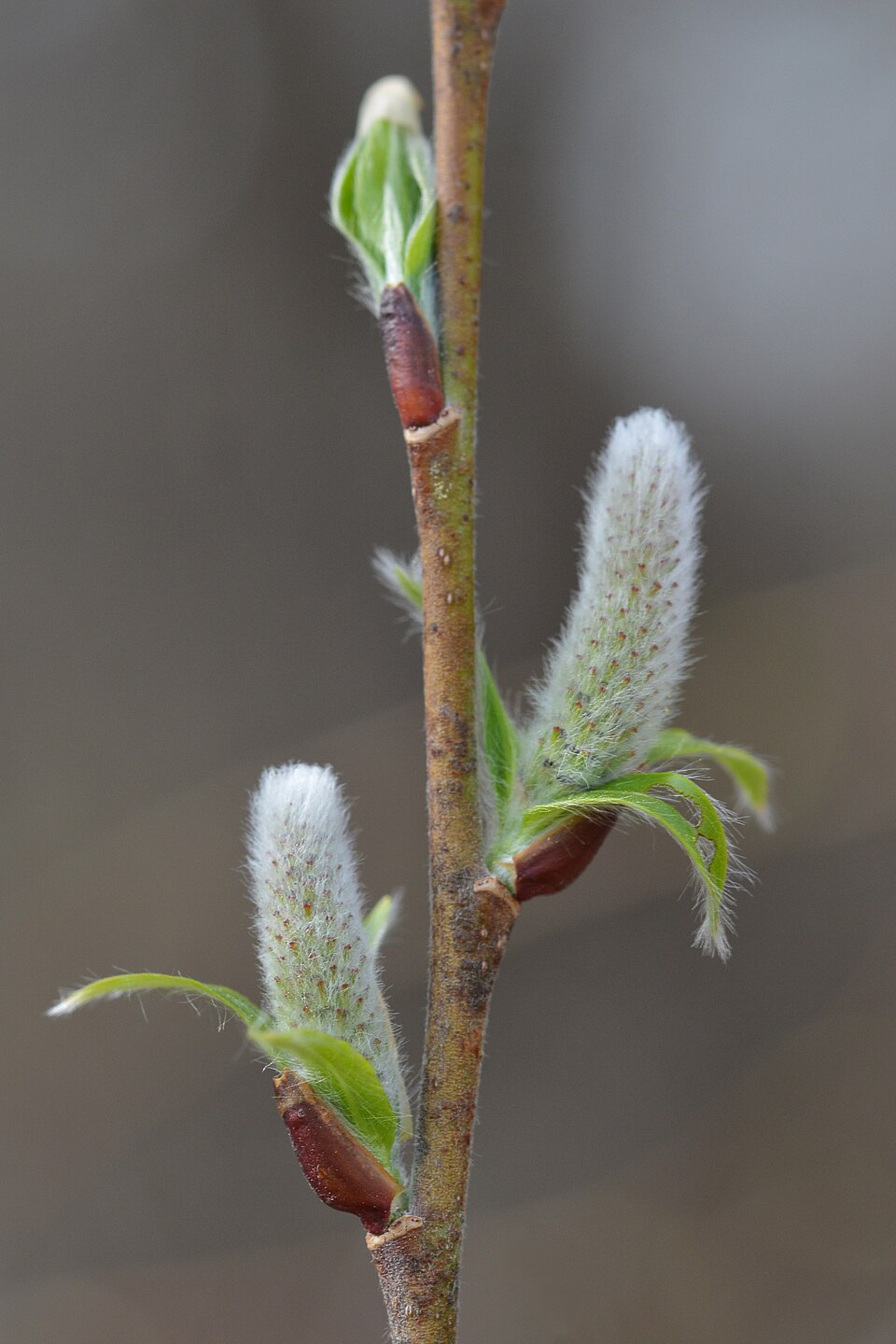
Salix discolor, commonly known as Pussy Willow, is one of North America’s most beloved native deciduous shrubs or small trees, cherished for its distinctive furry silver catkins that emerge in late winter and early spring before the leaves appear. This member of the Salicaceae (willow) family brings the first promise of spring to wetlands, stream banks, and moist woodlands across much of temperate North America. The soft, silky catkins — technically male flowers — have made Pussy Willow an enduring symbol of renewal and a favorite for floral arrangements and Easter decorations.
Growing naturally in wet to moderately moist soils, Pussy Willow typically reaches 15 to 30 feet in height as a large shrub or small tree with multiple stems. Its adaptability to a wide range of moisture conditions, from swamp edges to well-drained garden soils, combined with its spectacular early-season display and exceptional wildlife value, makes it an outstanding choice for native landscaping. The species is particularly valuable for supporting early pollinators when few other nectar sources are available, while its dense growth provides nesting habitat and cover for numerous bird species.
Beyond its ornamental appeal, Pussy Willow plays a crucial ecological role in riparian ecosystems, helping to stabilize soil along waterways while providing food and habitat for wildlife year-round. Its rapid growth and tolerance of harsh conditions make it ideal for restoration projects, wildlife gardens, and naturalized plantings where a touch of early spring magic is desired.
Identification
Pussy Willow typically grows as a large shrub or small tree, reaching 15 to 30 feet (4.5–9 m) tall with multiple stems arising from the base or a short trunk. The growth form is often dense and somewhat rounded, though it can become more open with age. The species is easily distinguished from other willows by its combination of broad leaves and exceptionally furry catkins.
Bark
The bark is smooth and grayish-brown on young stems, becoming slightly furrowed with age on larger trunks. Younger twigs are reddish-brown to purple-brown, often with a slight bloom, and are moderately flexible — less so than many other willow species. The inner bark is yellow-green and slightly bitter, containing salicin compounds similar to aspirin.
Leaves
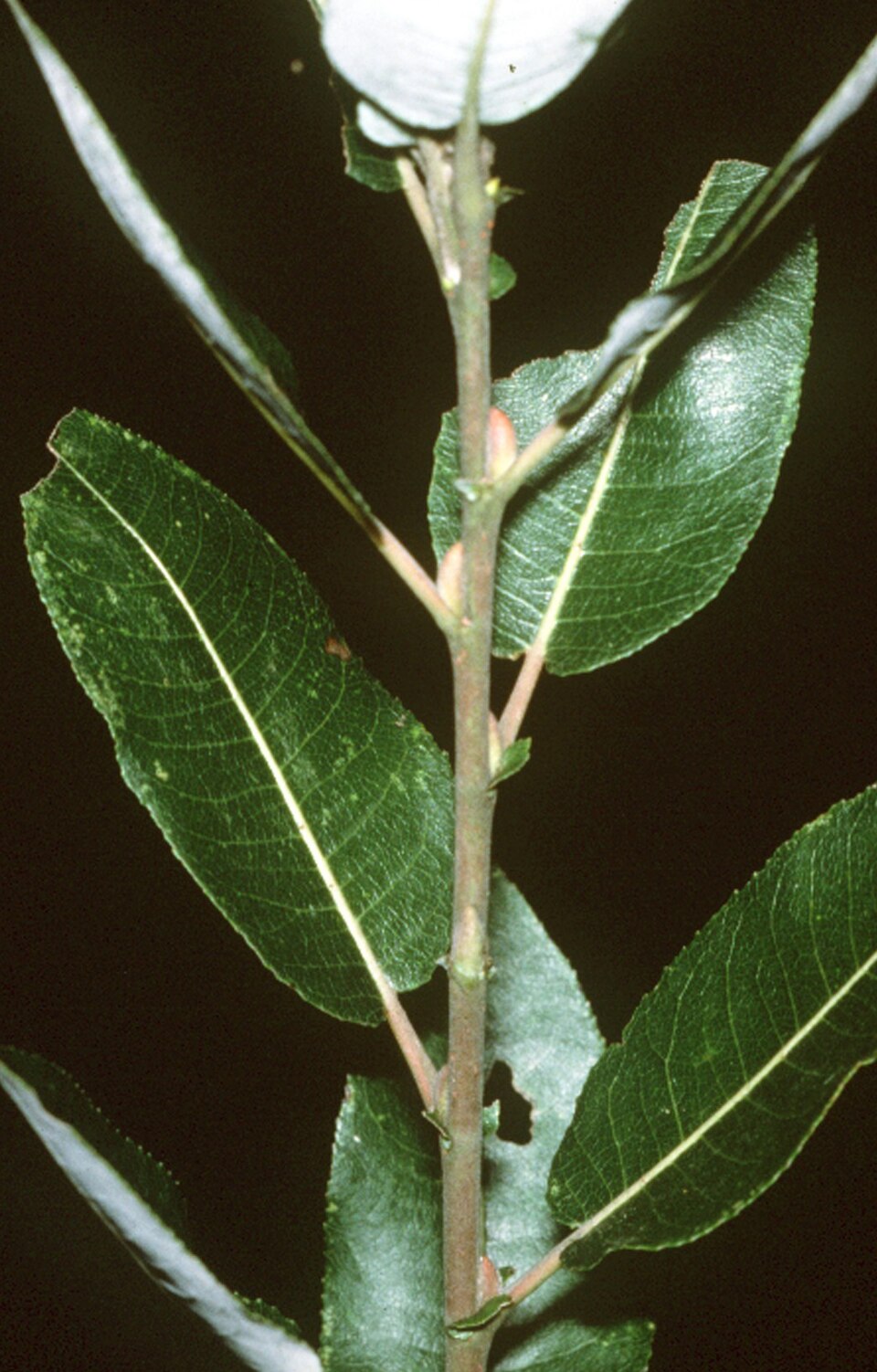
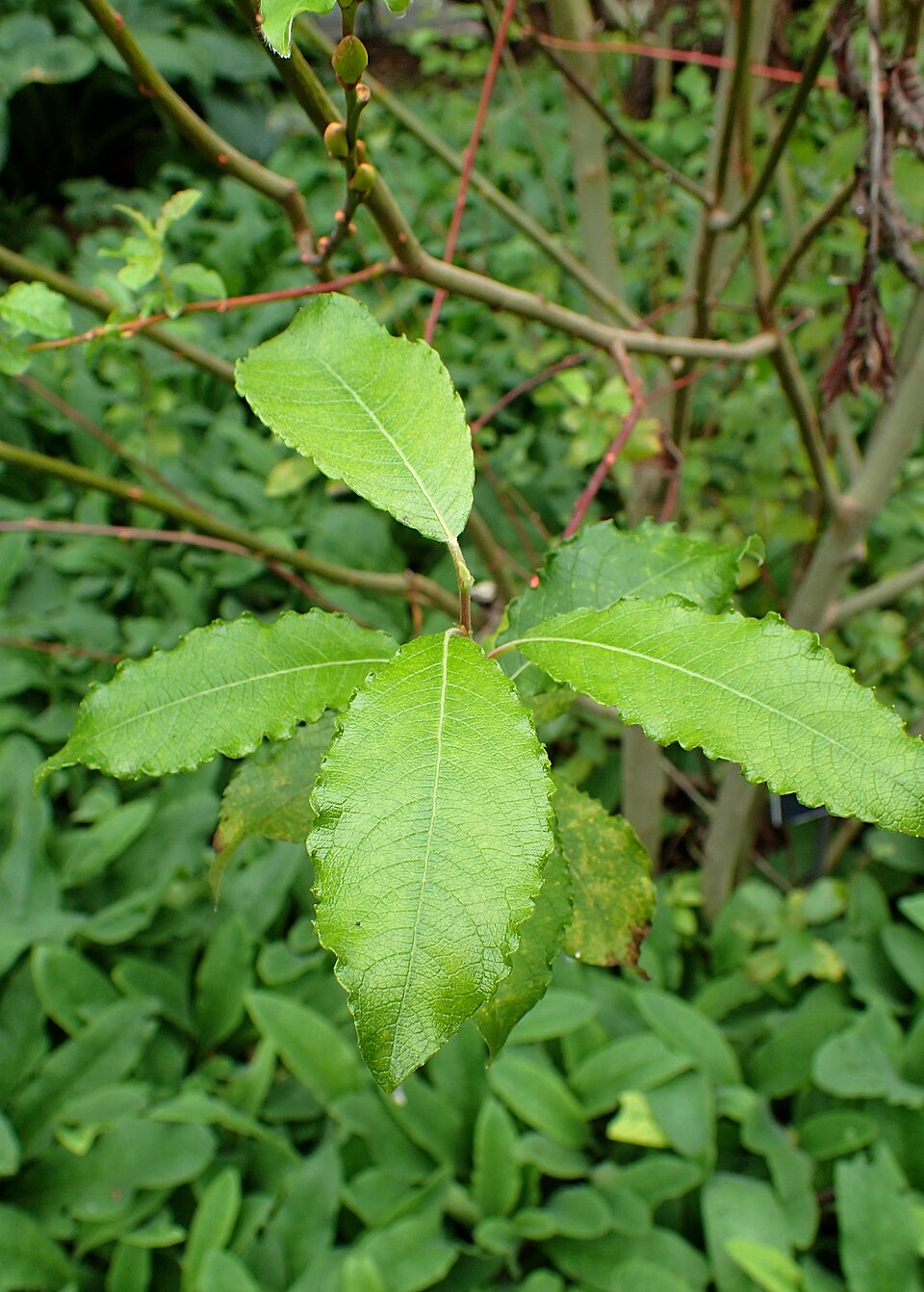
The leaves are simple, alternate, and distinctly broader than most other willows, measuring 2 to 4 inches (5–10 cm) long and 1 to 2 inches (2.5–5 cm) wide. They are oval to broadly elliptical with a pointed tip and rounded base, featuring prominent veins and fine serrated margins. The upper surface is dark green and somewhat glossy, while the underside is paler and may be slightly fuzzy when young. Leaves emerge after the catkins have already expanded, a key identification feature in early spring.
Flowers & Catkins
The flowers are the plant’s most distinctive feature — dense, furry catkins (technically called aments) that appear in late winter to early spring on bare branches. Male catkins are 1 to 2 inches (2.5–5 cm) long, oval-shaped, and covered in dense, silky silver hairs that give them their characteristic “pussy” appearance. As they mature, yellow anthers emerge from the fur, creating a beautiful two-toned effect. Female catkins on separate plants are smaller, greenish, and less showy. The catkins appear weeks before the leaves, making them one of the earliest sources of pollen and nectar for awakening pollinators.
Fruit
Female plants produce small capsules that split to release tiny seeds with silky white hairs that aid in wind dispersal. The seeds are produced in late spring to early summer, though many gardeners know the species primarily through its male catkins, which are more commonly cultivated and collected for decorative use.
Quick Facts
| Scientific Name | Salix discolor |
| Family | Salicaceae (Willow) |
| Plant Type | Deciduous Shrub / Small Tree |
| Mature Height | 15–30 ft |
| Sun Exposure | Full Sun |
| Water Needs | Moderate to High |
| Bloom Time | March – May (before leaves) |
| Flower Color | Silver-gray catkins with yellow anthers |
| USDA Hardiness Zones | 2–7 |
Native Range
Pussy Willow has one of the most extensive native ranges of any North American willow, spanning much of the continent from the Maritime provinces of Canada south to the Carolinas and Tennessee, and west to the Rocky Mountains and northern Great Plains. This broad distribution reflects the species’ remarkable adaptability to diverse climates and habitats, from the boreal forests of Canada to the temperate wetlands of the Mid-Atlantic states.
The species is most commonly found in wetland margins, stream banks, pond edges, and other areas with seasonal or permanent moisture, but it also thrives in upland sites with adequate rainfall or irrigation. In its native habitat, Pussy Willow often forms dense thickets that provide important early successional habitat following disturbances such as floods, beaver activity, or human land clearing.
Throughout its range, Pussy Willow serves as a keystone species for early-season pollinators and provides critical nesting and foraging habitat for numerous bird species. Its widespread distribution and ecological importance make it one of the most valuable native shrubs for restoration projects across much of temperate North America.
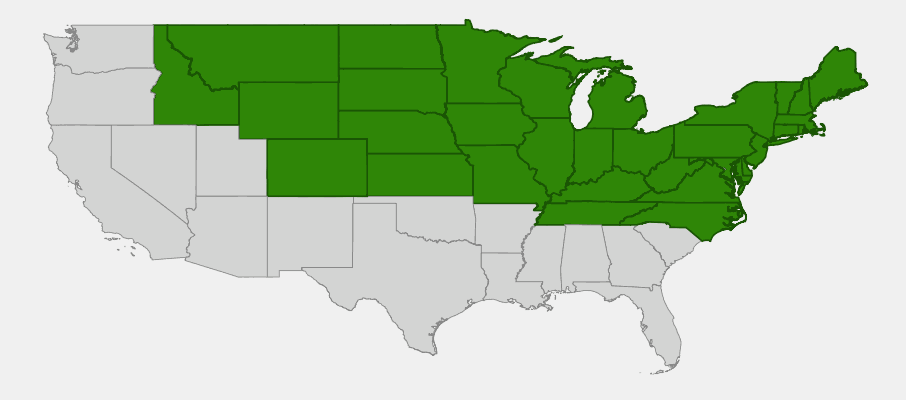
📋 Regional plant lists featuring Pussy Willow: North Dakota, South Dakota & Western Minnesota
Growing & Care Guide
Pussy Willow is one of the easiest native shrubs to grow, thriving in a wide range of conditions while requiring minimal care once established. Its adaptability and rapid growth make it an excellent choice for both novice and experienced gardeners looking to add early spring interest and wildlife value to their landscapes.
Light
Pussy Willow performs best in full sun but tolerates partial shade reasonably well, though flowering may be reduced in shadier locations. In full sun, the plant develops a denser, more compact form with abundant catkin production. Plants grown in partial shade tend to be more open and may lean toward available light.
Soil & Water
While naturally adapted to wetland conditions, Pussy Willow is remarkably tolerant of a wide range of soil types and moisture levels. It thrives in everything from consistently wet soils to well-drained garden conditions, though it performs best with consistent moisture during the growing season. The species tolerates clay, loam, and sandy soils, and is moderately salt-tolerant, making it suitable for roadside plantings in areas where winter road salt is used.
Planting Tips
Plant Pussy Willow in early spring or fall when the plant is dormant. Choose a location with adequate space for the mature size, as the shrub can spread 10–15 feet wide. For naturalistic plantings, space plants 8–12 feet apart; for screening, space them 6–8 feet apart. The species transplants easily and establishes quickly, often producing catkins the first spring after planting.
Pruning & Maintenance
Pussy Willow benefits from regular pruning to maintain shape and encourage vigorous catkin production. Prune immediately after catkins have faded (late spring to early summer) to avoid removing next year’s flower buds. Remove about one-third of the oldest stems annually to promote young growth, which produces the largest and most abundant catkins. For cut-flower production, harvest catkin-bearing branches in late winter when buds are swollen but before they open — they will continue developing indoors.
Landscape Uses
Pussy Willow’s versatility makes it valuable in many garden settings:
- Rain gardens and bioswales — excellent for managing stormwater runoff
- Wildlife gardens — provides early nectar for pollinators and year-round bird habitat
- Naturalized areas — ideal for pond edges, stream banks, and wetland plantings
- Privacy screening — fast-growing natural barrier
- Cut flower gardens — branches excellent for indoor arrangements
- Erosion control — stabilizes slopes and banks with its extensive root system
Wildlife & Ecological Value
Pussy Willow is among the most ecologically valuable native shrubs, providing critical resources for wildlife throughout the year, but especially during the challenging transition from winter to spring when few other food sources are available.
For Birds
The dense, multi-stemmed growth form of Pussy Willow creates ideal nesting habitat for numerous bird species, including American Goldfinch, Red-winged Blackbird, Song Sparrow, and various warblers. The early catkins provide essential protein-rich pollen for birds emerging from winter, while the seeds with their silky hairs are used as nesting material by many species. Year-round, the thickets provide thermal cover and protection from predators.
For Pollinators
Perhaps no other native plant provides more critical early-season support for pollinators than Pussy Willow. The catkins emerge when temperatures are still cool, often while snow remains on the ground, providing the first major pollen and nectar source of the year. Native bees, including bumblebee queens emerging from hibernation, depend heavily on willows for survival during this crucial period. Honeybees also visit the catkins extensively, making Pussy Willow invaluable for beekeepers.
For Mammals
Deer, moose, and rabbits browse the twigs and bark, especially during winter when other food sources are scarce. Beavers occasionally use the wood for dam construction and food, while the inner bark provides emergency food for various small mammals. The dense growth provides cover for small mammals throughout the year.
Ecosystem Role
As a pioneer species, Pussy Willow helps stabilize disturbed soils and creates conditions favorable for other native plants to establish. Its extensive root system helps prevent erosion along waterways, while its rapid growth and ability to form dense colonies makes it valuable for habitat restoration projects. The species also plays a role in nutrient cycling, adding organic matter to soil through leaf drop and helping to filter runoff in riparian areas.
Cultural & Historical Uses
Pussy Willow holds a special place in North American cultural traditions, bridging the gap between winter and spring in both Indigenous and European settler cultures. Native American peoples across the plant’s range used various parts of the species for both practical and medicinal purposes, taking advantage of the salicin compounds in the bark that have pain-relieving and anti-inflammatory properties similar to aspirin.
Many Indigenous groups, including the Ojibwe, used Pussy Willow bark tea to treat headaches, fever, and rheumatic pain. The flexible branches were woven into baskets and used for fish traps, while the soft catkins provided tinder for fire-starting. The timing of catkin emergence served as an important phenological indicator for seasonal activities such as maple sugar collection and fishing.
European settlers quickly adopted Pussy Willow into their spring traditions, using the catkin-bearing branches for Easter decorations and as symbols of resurrection and renewal. The practice of bringing branches indoors to force early blooming became widespread, and Pussy Willow remains a popular florist crop today. In rural areas, the appearance of catkins traditionally marked the time for certain agricultural activities, such as preparing seedbeds and planning spring planting.
The species has also played a role in American folk medicine, with settlers learning from Indigenous knowledge to use the bark for pain relief and fever reduction. While modern pharmaceuticals have largely replaced such uses, the historical importance of willows in medicine continues to be recognized — aspirin was first synthesized from willow bark compounds.
Frequently Asked Questions
When should I cut Pussy Willow branches for indoor arrangements?
Cut branches in late winter when the buds are swollen but before they open (usually February to early March, depending on your location). Place them in water indoors, and they will continue to develop, opening into full furry catkins within a week or two.
Are there separate male and female Pussy Willow plants?
Yes, Pussy Willow is dioecious, meaning individual plants are either male or female. The showy, furry catkins that most people know are the male flowers. Female catkins are smaller, greenish, and less ornamental. Most cultivated plants are male clones selected for their superior catkin display.
How fast does Pussy Willow grow?
Pussy Willow is a fast-growing species, typically adding 2–4 feet per year under favorable conditions. Young plants often reach flowering size within 2–3 years of planting, making it one of the quickest ways to add early spring interest to a landscape.
Can Pussy Willow become invasive?
While Pussy Willow can spread by root suckers and self-seeding, it is not considered invasive within its native range. It forms natural colonies that provide valuable wildlife habitat. However, like all willows, it can be aggressive in ideal conditions, so consider mature size when planting near buildings or in small gardens.
Does Pussy Willow need wet soil to survive?
While naturally adapted to wet conditions, Pussy Willow is quite drought-tolerant once established and will grow well in average garden soils with regular watering. However, it performs best with consistent moisture and may show stress during prolonged dry periods without supplemental water.

Looking for a nursery that carries Pussy Willow?
Browse our native plant nursery directory: North Dakota · South Dakota · Minnesota
Frequently Asked Questions
Is pussy willow native to North America?
Yes, the American pussy willow (Salix discolor) is native to North America. It naturally grows across a wide range from Nova Scotia to British Columbia and south through the northern and central United States. It thrives in wetland areas, stream banks, and moist meadows throughout its native range.
How fast does pussy willow grow?
Pussy willow is a fast-growing shrub or small tree that can grow 3 to 6 feet per year under ideal conditions. It typically reaches a mature height of 6 to 25 feet. Because of its rapid growth rate, regular pruning helps maintain a manageable size and encourages more catkin production the following spring.
When do pussy willows bloom?
Pussy willows bloom in late winter to early spring, usually between February and April depending on your climate zone. The iconic soft, silvery catkins appear on bare branches before the leaves emerge, making them one of the earliest signs of spring in the landscape.
Can you grow pussy willow from cuttings?
Yes, pussy willow is one of the easiest shrubs to propagate from cuttings. Simply cut 12- to 18-inch sections of healthy stems in late winter or early spring and place them in moist soil or even a jar of water. Roots typically develop within a few weeks, making this a reliable and cost-effective way to start new plants.
What growing conditions does pussy willow need?
Pussy willow grows best in full sun to partial shade and prefers moist to wet soil, though it adapts to average garden conditions. It is hardy in USDA zones 4 through 8. While it tolerates a range of soil types including clay, it performs best in consistently moist locations such as rain gardens, pond edges, or low-lying areas.
What wildlife benefits does pussy willow provide?
Pussy willow is an important early-season food source for pollinators, especially native bees and honeybees that depend on its pollen and nectar when few other plants are blooming. The dense branching provides shelter and nesting habitat for songbirds, and the plant supports numerous species of native moths and butterflies as a larval host.
Related: Read our complete guide on How to Care for Pussy Willow for detailed tips on pruning, propagation, and seasonal maintenance.