
Jack-in-the-Pulpit (Arisaema triphyllum)
Arisaema triphyllum, commonly known as Jack-in-the-Pulpit, is one of North America’s most distinctive and charismatic woodland wildflowers. This fascinating member of the arum family (Araceae) captivates observers with its unique “preacher in the pulpit” flower structure — a hooded spathe sheltering a central spike-like spadix that gives the plant its memorable common name. Found in rich, moist woodlands throughout much of eastern North America, Jack-in-the-Pulpit represents the perfect marriage of botanical intrigue and ecological importance in the native plant world.
What makes Jack-in-the-Pulpit truly remarkable is not just its striking appearance, but its complex life history and gender-switching ability. Individual plants can change sex based on energy reserves, with younger plants typically being male, mature plants female, and very large specimens sometimes reverting to male again. This fascinating biology, combined with the plant’s distinctive three-part leaves and remarkable transformation from spring flowers to bright red berries by late summer, makes it a cornerstone species for shade gardens and woodland restoration projects.
Growing 1–2 feet tall, Jack-in-the-Pulpit thrives in the dappled shade of deciduous forests, where its broad leaves efficiently capture filtered sunlight and its deep roots access consistent soil moisture. The plant’s tolerance for deep shade, coupled with its striking architectural presence and valuable wildlife benefits, makes it an excellent choice for naturalizing under mature trees, woodland gardens, and any shaded area where gardeners want to create a sense of wild, undisturbed forest.
Identification
Jack-in-the-Pulpit is instantly recognizable once you know its key features. The plant emerges from the ground in early spring as a single shoot that unfurls to reveal its characteristic three-part leaves and distinctive flower structure.
Leaves
The leaves are perhaps the easiest identification feature. Each plant produces one or two leaves (rarely three), with each leaf divided into three oval to lance-shaped leaflets. The leaflets are 3–6 inches long, smooth-edged (entire), and have prominent parallel veins running from base to tip. Young plants often have just one three-part leaf, while mature plants typically produce two leaves. The leaves emerge with a distinctive purplish or bronze coloration that gradually turns deep green as they mature.
Flowers (Spathe & Spadix)
The flower structure is unlike anything else in the North American flora. What appears to be a single flower is actually a specialized inflorescence consisting of a club-like spadix (the “Jack”) surrounded by a hooded spathe (the “pulpit”). The spathe is typically green with purple or brownish stripes, though color intensity varies considerably. The spathe forms a hood that curves over the spadix, creating a chamber-like structure. The actual tiny flowers are clustered at the base of the spadix, hidden within the spathe, with male flowers above female flowers on the same spadix.
Fruit
By late summer, female plants produce one of the most spectacular native fruit displays — a dense cluster of bright orange-red berries that gradually ripen from green through yellow to their final brilliant scarlet color. Each berry contains 1–5 large seeds surrounded by pulpy flesh. The berries persist into fall, creating a stunning focal point in the shaded woodland garden long after the spathe has withered away.
Underground Structure
Jack-in-the-Pulpit grows from a corm (a bulb-like underground storage organ) that can persist for many years, gradually increasing in size. The corm contains calcium oxalate crystals that make it extremely acrid and burning to taste — a powerful deterrent to herbivores but also the reason the plant was historically processed extensively before being used as food.
Quick Facts
| Scientific Name | Arisaema triphyllum |
| Family | Araceae (Arum) |
| Plant Type | Herbaceous Perennial |
| Mature Height | 1–2 ft |
| Growth Rate | Slow to Moderate |
| Sun Exposure | Part Shade to Full Shade |
| Water Needs | Moderate to High (consistently moist) |
| Soil Type | Rich, humusy, well-drained but moist |
| Soil pH | 5.5–7.0 (slightly acidic to neutral) |
| Bloom Time | March – May |
| Flower Color | Green with Purple Stripes |
| Fruit Color | Bright Orange-Red |
| USDA Hardiness Zones | 4–9 |
Native Range
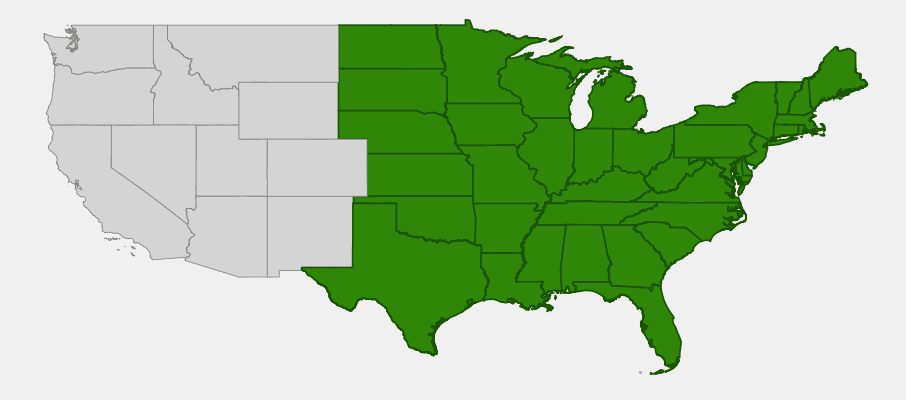
Jack-in-the-Pulpit has an extensive native range across eastern North America, occurring naturally from southern Canada south to Florida and from the Atlantic coast west to eastern Texas, Kansas, and eastern Nebraska. This broad distribution reflects the plant’s adaptability to diverse forest types and climatic conditions, from the boreal forests of Quebec to the humid bottomlands of the Gulf Coast. Throughout this range, Jack-in-the-Pulpit is typically found in rich, moist deciduous or mixed forests where deep, organic soils and consistent moisture create ideal growing conditions.
The species shows particular abundance in mature hardwood forests dominated by maple, oak, beech, and basswood, where the deep leaf litter and stable moisture conditions mirror its preferred habitat. Jack-in-the-Pulpit is also common in floodplain forests, ravine bottoms, and other areas where seasonal flooding or permanent springs maintain consistent soil moisture throughout the growing season. The plant’s tolerance for deep shade allows it to thrive in the forest understory where many other wildflowers cannot compete.
Climate change and forest fragmentation have affected some Jack-in-the-Pulpit populations, particularly at the edges of its range where temperature and moisture stress are increasing. However, the species’ long-lived corms and ability to remain dormant during unfavorable years help maintain stable populations across most of its historic range. Conservation of mature forest habitat remains crucial for supporting healthy Jack-in-the-Pulpit populations and the diverse woodland communities they represent.
📋 Regional plant lists featuring Jack-in-the-Pulpit: North Dakota, South Dakota & Western Minnesota
Growing & Care Guide
Jack-in-the-Pulpit is surprisingly easy to grow once you understand its basic requirements for shade, consistent moisture, and rich soil. The plant’s woodland origin means it thrives in conditions that many gardeners struggle with — deep shade and moist soil — making it invaluable for challenging shaded sites.
Light Requirements
Jack-in-the-Pulpit prefers partial to full shade, mimicking its natural woodland habitat. While it can tolerate some morning sun, particularly in northern climates, it performs best in the dappled light of deciduous trees or the consistent shade of evergreens. In too much sun, the leaves may scorch and the plant will go dormant early to conserve energy.
Soil & Moisture
The key to success with Jack-in-the-Pulpit is rich, consistently moist soil that never completely dries out. The plant thrives in soil high in organic matter — think woodland floor conditions with deep leaf mold and good drainage. While it needs consistent moisture, it cannot tolerate waterlogged conditions. A soil that stays evenly moist but drains freely after heavy rain is ideal. pH should be slightly acidic to neutral (5.5–7.0).
Planting & Establishment
Plant corms in fall, about 2–3 inches deep in prepared soil rich with compost or aged leaf mold. Choose a location that receives 2–4 hours of filtered sunlight at most, such as under mature deciduous trees. Space plants 12–18 inches apart if planting multiple corms. Newly planted corms may not emerge the first spring, so be patient — they’re developing their root system underground.
Seasonal Care
Jack-in-the-Pulpit requires minimal care once established. Apply a 2–3 inch layer of organic mulch (leaf mold, shredded leaves, or bark chips) to maintain soil moisture and suppress weeds. Water during extended dry periods, but avoid overwatering. The plant naturally goes dormant in mid to late summer, and the leaves will die back — this is completely normal behavior, not a sign of problems.
Propagation
Jack-in-the-Pulpit can be propagated by collecting fresh seeds from ripe berries in fall and sowing them immediately in pots or prepared garden beds. Seeds require a cold, moist stratification period over winter. Plants can also slowly spread by offset corms, though this process is very gradual. Be patient — plants grown from seed may take 4–7 years to reach flowering size.
Landscape Applications
Jack-in-the-Pulpit excels in specific landscape situations:
- Woodland gardens — perfect for naturalized forest floor settings
- Shade borders — architectural interest in deep shade where few plants thrive
- Native plant gardens — cornerstone species for eastern woodland restoration
- Rain gardens — tolerates periodic moisture fluctuations in shaded areas
- Educational gardens — fascinating biology makes it excellent for teaching
- Wildlife gardens — berries provide food for birds and small mammals
Wildlife & Ecological Value
Jack-in-the-Pulpit plays a crucial but often overlooked role in woodland ecosystems, providing both direct wildlife benefits and important ecological functions in forest communities. Its unique flower structure, nutritious berries, and dense leaf coverage create habitat and food resources for a variety of woodland species.
For Birds
The bright red berries of female Jack-in-the-Pulpit are consumed by various woodland birds, including Wood Thrushes, American Robins, and several warbler species. The berries ripen in late summer when many other food sources are becoming scarce, providing crucial nutrition during fall migration periods. Birds serve as the primary dispersal agents for seeds, carrying them to new woodland sites where they may establish new populations.
For Small Mammals
Chipmunks, mice, and squirrels also consume Jack-in-the-Pulpit berries, though the seeds’ journey through mammalian digestive systems can be more variable in terms of successful germination. The plant’s dense foliage provides cover for small woodland creatures, creating microhabitat in the forest understory that supports invertebrates and their predators.
Pollination Ecology
Jack-in-the-Pulpit has a fascinating pollination strategy involving small flies and gnats that are attracted to the spadix by its slightly warm temperature and subtle scent. Once inside the spathe chamber, small insects can become temporarily trapped, ensuring pollination before they find their way out through the bottom of the spathe. This complex relationship demonstrates the intricate ecological connections that make woodland communities so stable and resilient.
Ecosystem Functions
Beyond its direct wildlife value, Jack-in-the-Pulpit contributes to forest ecosystem health by helping maintain soil structure and nutrient cycling in woodland environments. The plant’s broad leaves intercept rainfall and help prevent soil erosion, while its annual leaf drop contributes to the organic matter that maintains healthy forest soil. The presence of Jack-in-the-Pulpit populations often indicates high-quality woodland habitat with stable moisture regimes and mature forest conditions.
Cultural & Historical Uses
Jack-in-the-Pulpit holds a prominent place in North American ethnobotanical history, serving as both food and medicine for Indigenous peoples throughout its range, though always with extensive processing to neutralize its intensely acrid properties. The Iroquois, Cherokee, and many other tribes developed sophisticated techniques for preparing the corms as food, typically involving multiple stages of drying, grinding, and cooking to break down the calcium oxalate crystals that make the raw plant burning and potentially harmful to consume.
Traditional preparation methods varied among different tribes but generally involved digging the corms in fall when their stored energy was at peak levels. After extensive drying — sometimes for several months — the corms would be ground into flour and further processed through boiling or baking. The resulting food was highly nutritious and could be stored for long periods, making it valuable for winter sustenance. Some tribes also used the processed corms to make a bread-like food by mixing the flour with other ingredients.
Medicinally, Jack-in-the-Pulpit was used externally for treating various skin conditions, wounds, and inflammations, though extreme care was required due to the plant’s caustic properties. The root was sometimes used in very small, carefully prepared doses for respiratory ailments, but this required extensive knowledge and experience to avoid harm. European settlers learned some of these uses from Indigenous peoples, leading to the plant’s inclusion in early American botanical medicine, though its use declined as safer alternatives became available.
In modern times, Jack-in-the-Pulpit has become primarily valued as a garden plant and symbol of wild woodland beauty. Its unique appearance has inspired countless nature writers, photographers, and artists, making it one of the most recognizable wildflowers in North American literature. The plant frequently appears in wildflower guides, nature centers, and educational programs as an example of the complex adaptations and ecological relationships that characterize mature forest ecosystems.
Frequently Asked Questions
Why didn’t my Jack-in-the-Pulpit come up this year?
Jack-in-the-Pulpit plants may skip a year (or more) if they don’t have adequate energy reserves, particularly after stressful conditions like drought, too much sun, or poor soil. The corm remains alive underground and will often emerge again when conditions improve. This dormancy behavior is completely natural and not necessarily a sign of plant death.
Can I eat Jack-in-the-Pulpit berries or roots?
No — all parts of Jack-in-the-Pulpit contain calcium oxalate crystals that cause intense burning, swelling, and potential respiratory distress if consumed raw. While Indigenous peoples developed extensive processing methods to make the roots edible, these techniques require specialized knowledge and are not recommended for casual foragers. Stick to appreciating the plant’s beauty and wildlife value.
How do I know if my plant is male or female?
Jack-in-the-Pulpit flowers are hidden inside the spathe, making gender difficult to determine during flowering. The most reliable way is to wait for fruit development — only female plants produce the bright red berry clusters in late summer. Individual plants can change sex based on energy reserves, with small plants typically male and larger, more vigorous plants female.
Will Jack-in-the-Pulpit spread in my garden?
Jack-in-the-Pulpit spreads very slowly through seed dispersal and occasional corm offsets. It’s not at all aggressive or invasive — in fact, most gardeners wish it would spread faster! If you want more plants, collect fresh seeds in fall and sow them in suitable habitat, but be prepared to wait several years for flowering-size plants to develop.
What should I plant with Jack-in-the-Pulpit?
Jack-in-the-Pulpit pairs beautifully with other native woodland plants that share its preference for shade and moist soil. Excellent companions include Trillium species, Wild Ginger, Bloodroot, Mayapple, Wild Columbine, and native ferns. These combinations create authentic woodland plant communities that support local wildlife and provide multi-season interest in shaded gardens.

Looking for a nursery that carries Jack-in-the-Pulpit?
Browse our native plant nursery directory: North Dakota · South Dakota · Minnesota