Summersweet (Clethra alnifolia)
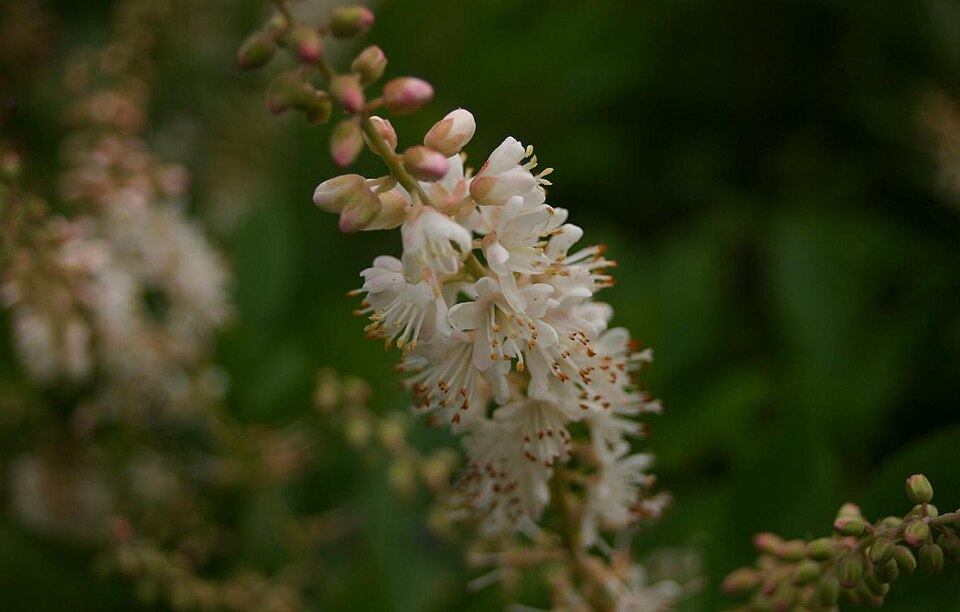
Clethra alnifolia, commonly called Summersweet, Sweet Pepperbush, or White Alder, is one of the most beloved and fragrant native shrubs of the eastern United States — a summer-blooming gem that fills the garden with sweet vanilla-spice fragrance during the “dog days” of July and August when most other shrubs have finished blooming. The long, upright spikes of small, intensely fragrant ivory-white flowers are irresistible to bees, butterflies, and other pollinators, and the fragrance carries on the air for considerable distances — a single established plant can perfume an entire garden section.
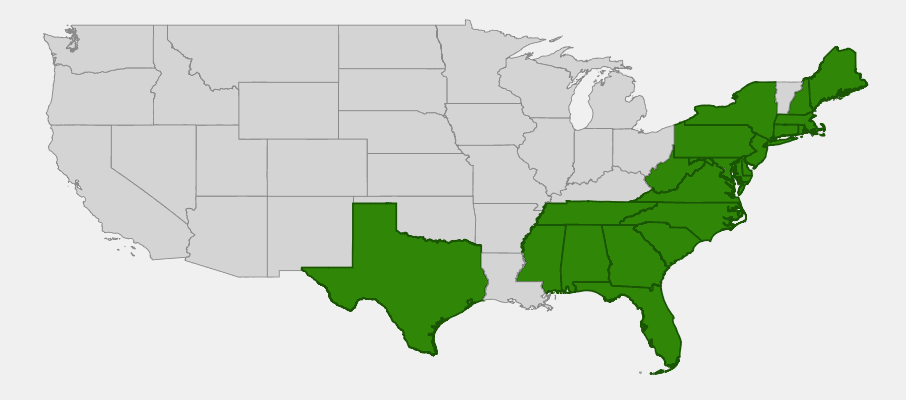
Summersweet is native to moist woodlands, streambanks, pond edges, and coastal plain wetlands from Maine to Texas along the Atlantic and Gulf coastal plain, where it grows in acidic, moisture-retentive soils. In the wild it forms dense, multi-stemmed colonies in wet, partially shaded habitats — but in cultivation it has proven remarkably adaptable, thriving in a much wider range of conditions than its native habitat might suggest. It is one of the few native shrubs that blooms reliably in significant shade, making it invaluable for shaded garden situations that challenge most flowering shrubs.
For New York, Pennsylvania, and New Jersey gardens, Summersweet is a near-perfect native shrub — beautiful in bloom, reliably fragrant, ecologically productive, adaptable to the wet, acidic soils common to the region, and utterly manageable in size. Whether planted at the edge of a rain garden, in a shade border, or along a foundation on the north side of a building, Summersweet delivers ornamental and ecological performance that makes it one of the most recommended native shrubs of the Northeast.
Identification
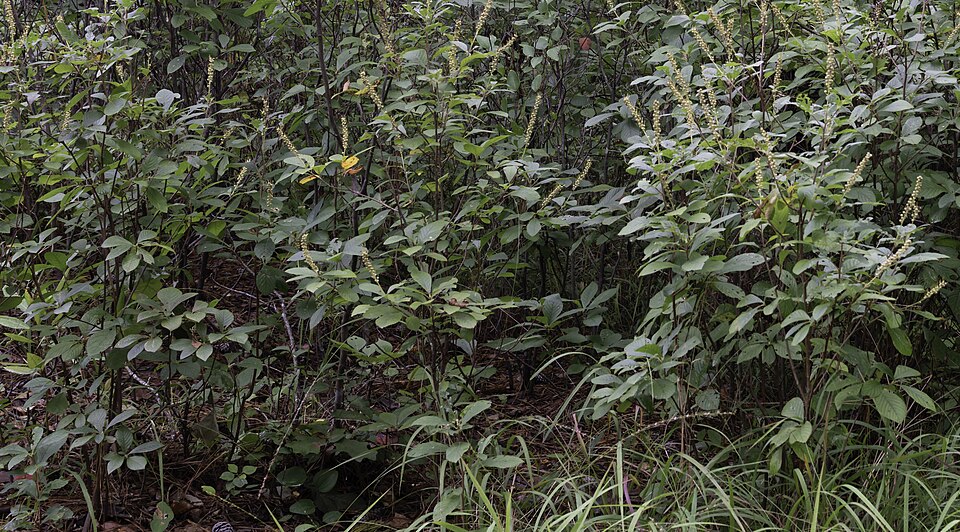
Summersweet grows as an upright, multi-stemmed deciduous shrub, typically 3–8 feet tall with an equal or slightly narrower spread. The compact cultivar selections commonly sold in nurseries typically range from 2–4 feet. It spreads slowly by root suckers to form clonal colonies over time. The plant has a neat, tidy appearance, with erect stems and alternate foliage creating a dense, attractive mass.
Bark & Stems
The bark is smooth and grayish to brownish, with a fine texture. Younger stems are slightly hairy and often have a reddish tint. The bark does not have distinctive features for identification, but the overall multi-stemmed, upright growth habit with erect flower spikes is highly characteristic. The dried seed capsules from the previous year often persist on the stems into the following spring, providing winter interest and identification help even without foliage.
Leaves
The leaves are alternate, simple, and obovate to elliptical — widest above the middle and tapering to a pointed base. They are 2–4 inches long and 1–2 inches wide, with serrated margins, a shiny dark green upper surface, and a slightly paler underside. The foliage turns attractive shades of yellow to orange in autumn, providing a secondary ornamental display after the summer bloom. Young leaves are somewhat hairy; mature leaves are smoother above. The leaf is similar to that of Alder (Alnus), which gives the species its name alnifolia — “alder-leaved.”
Flowers & Fruit
The flowers are the central attraction. They appear from July through September as dense, upright racemes (flower spikes) 3–6 inches long at the tips of new growth. Each individual flower is small — about ¼ inch — with five ivory-white petals and prominent stamens that give the spike a fluffy appearance. Some plants and cultivars have pink-tinged flowers. The fragrance is sweet, complex, and unmistakable — often described as a combination of vanilla, clove, and honey — diffusing from a blooming plant in waves that carry 20–30 feet on a still, humid summer evening. The fruit is a tiny round capsule that turns dark brown in fall and persists through winter.
Quick Facts
| Scientific Name | Clethra alnifolia |
| Family | Clethraceae (Clethra) |
| Plant Type | Deciduous Shrub |
| Mature Height | 2–4 ft (species to 8 ft in ideal conditions) |
| Sun Exposure | Full Sun to Part Shade |
| Water Needs | Moderate to High |
| Bloom Time | July – September |
| Flower Color | Ivory white (fragrant); pink in some cultivars |
| USDA Hardiness Zones | 4–9 |
Native Range
Summersweet is native along the Atlantic and Gulf coastal plain from Maine south to Florida and west along the Gulf Coast to Texas. Its range is closely tied to the Coastal Plain physiographic province, where it occupies low, poorly drained, acidic soils in coastal plain pine flatwoods, bay swamps, streamside thickets, and moist woodland understories. It reaches its highest abundance in the mid-Atlantic and southern states but is ecologically significant throughout its range.
In New York, Pennsylvania, and New Jersey, Summersweet is found primarily in the Coastal Plain and Piedmont transition zones, particularly in southern New Jersey’s famous Pine Barrens, where it is a dominant understory shrub in the distinctive acidic, wet flatwoods communities. In New York, it occurs in Long Island’s coastal plain communities and along moist woodland edges in the Hudson Valley. In Pennsylvania, it is most common in the southeastern lowlands and Delaware Valley area.
The plant’s affinity for acidic, moisture-retentive soils reflects its natural habitat in the organic-rich, tannin-stained waters and peaty soils of the Coastal Plain. In garden cultivation, it thrives best when these conditions are approximated — acidic, moist, organically rich soil. However, it has proven more adaptable than its specialist habitat suggests, performing well in amended garden soils considerably beyond its native range.
📋 Regional plant lists featuring Summersweet: New York, Pennsylvania & New Jersey
Growing & Care Guide
Summersweet is one of the most rewarding native shrubs to grow — reliable, fragrant, and ecologically valuable with minimal care requirements. Understanding its preferences for acidic, moist soil is the key to success.
Light
Summersweet blooms well in full sun to part shade. It is one of the few native shrubs that flowers reliably in significant shade — in part shade conditions (2–4 hours of direct sun, or consistent dappled light), it still produces excellent flower displays. In full sun with adequate moisture, it typically grows denser and more compact with even more abundant flowers. Avoid deep, dense shade (less than 2 hours of sun), which will significantly reduce flowering.
Soil & Water
Summersweet strongly prefers acidic soil (pH 4.5–6.0), which matches the conditions of its native Coastal Plain habitat. It thrives in moist to wet, organically rich soil and tolerates seasonal flooding well. This makes it ideal for rain gardens, pond edges, and boggy areas that are challenging for most shrubs. Avoid alkaline or limestone soils, which will cause yellowing and decline. Amend garden soils with peat moss, pine bark mulch, or composted leaf litter to increase acidity. Mulching with pine bark or wood chips helps maintain soil moisture and acidity.
Planting Tips
Plant in spring or fall, spacing plants 3–5 feet apart for hedge or mass plantings. Select a site with acidic, moist soil — near water features, rain gardens, or the north side of buildings where moisture is retained. Summersweet transplants well from container stock. If planting in a garden bed with non-acidic soil, amend generously with sulfur and organic matter to lower pH. The plant spreads slowly by root suckers — plant in a location where this gentle spread is welcome, or mow the perimeter periodically to contain the colony.
Pruning & Maintenance
Summersweet blooms on new wood (growth produced during the current season), so it can be pruned hard in early spring before growth begins without sacrificing the summer bloom. Prune out old, weak, or crossing stems to rejuvenate the clump and promote vigorous new flowering shoots. Some gardeners cut the entire plant back to 6–12 inches in late winter every 3–5 years to renew it completely — the plant responds with vigorous new growth and abundant bloom. Remove root suckers at the perimeter if you want to limit the colony’s spread.
Landscape Uses
- Rain garden and bioswale edges — thrives in wet, acidic conditions
- Shade borders — one of few native shrubs blooming well in shade
- Fragrance garden — exceptional summer perfume
- Foundation planting on north or east sides of buildings
- Streamside and pondside plantings in naturalistic landscapes
- Mixed native shrub borders with Highbush Blueberry and Swamp Azalea
- Pollinator garden anchor — heavily visited by bees and butterflies in summer
Wildlife & Ecological Value
Summersweet is one of the highest-value native shrubs for summer pollinators. Its mid-to-late summer bloom fills a critical gap in the native flower calendar when many spring-blooming plants have finished and fewer late-summer species are yet to open.
For Birds
The persistent seed capsules of Summersweet provide food for various sparrows and finches in autumn and winter. The dense, multi-stemmed growth provides excellent nesting cover for thicket-nesting birds including Gray Catbird, Common Yellowthroat, and Song Sparrow — all of which favor moist thicket habitats similar to Summersweet’s natural range. The insects attracted by the flowers in summer provide additional food for insectivorous birds during the breeding season.
For Mammals
White-tailed Deer occasionally browse Summersweet, but it is not a preferred browse species — the aromatic oils in the foliage appear to reduce palatability. The dense colonies provide cover for rabbits and small mammals in the shrub understory. The fragrant flowers attract moths at night, which provide food for bats foraging along forest edges and wetland margins.
For Pollinators
Summersweet is one of the most important native shrubs for summer pollinators. The fragrant flowers are heavily visited by bumblebees (Bombus spp.), which are particularly abundant at the blooms in July and August. Native sweat bees, metallic green bees, and various solitary bee species also visit frequently. Swallowtail butterflies — including Eastern Tiger Swallowtail and Spicebush Swallowtail — regularly nectar at the flowers, as do Monarchs, fritillaries, and many other butterfly species. The late bloom time makes Summersweet particularly critical for pollinators building their late-summer reserves before autumn.
Ecosystem Role
In its native coastal plain communities, Summersweet is a dominant understory component that shapes the structure and microclimate of the shrub layer. Its dense clonal colonies create stable, long-lived habitat patches that persist across decades, providing reliable food and cover resources. The plant’s affinity for wet, acidic soils means it occupies ecological niches unavailable to many other shrubs — its presence in these habitats contributes unique biological resources to the wetland shrub community.
Cultural & Historical Uses
Summersweet’s primary historical significance is as a medicinal plant in the Indigenous traditions of the eastern coastal plain. Several nations, including the Chippewa and various Algonquian-speaking groups of the mid-Atlantic coast, used preparations from the bark and leaves to treat skin conditions, stomach complaints, and as an astringent for wounds and sores. The leaves were sometimes incorporated into herbal preparations used in sweat lodges for purification ceremonies.
European colonists in the coastal plain regions of New England and the mid-Atlantic encountered Summersweet along the moist woodland edges and swamp margins near their settlements. Its remarkable fragrance in midsummer made it a noted natural feature — early colonial naturalists documented the sweet scent filling humid summer air near coastal swamps in New England and New Jersey. The plant was not widely harvested commercially but was occasionally transplanted into cottage gardens for its ornamental and fragrant qualities.
In the 20th century, Summersweet gained tremendous popularity as a native ornamental shrub, driven by its fragrance, shade tolerance, and adaptability. Numerous cultivars have been selected for compact size (‘Hummingbird,’ ‘Ruby Spice,’ ‘Sixteen Candles’), pink flowers, and superior fall color. Today, Summersweet is one of the most widely sold native shrubs in the northeast nursery trade and is frequently specified by landscape architects for rain gardens, shade borders, and naturalistic plantings — making it one of the native plant success stories of modern ecological landscaping.
Frequently Asked Questions
Why isn’t my Summersweet blooming?
The most common causes are insufficient light and alkaline soil. Summersweet needs at least 2–4 hours of sun to bloom reliably. It also strongly prefers acidic soil (pH 4.5–6.0) — test your soil pH and lower it with sulfur if needed. Recently planted shrubs may also take 1–2 years to establish before blooming freely.
How do I control the spreading?
Summersweet spreads by root suckers, gradually expanding the colony. Mow or cut suckers at the perimeter during the growing season to contain it. For formal plantings, installing a root barrier 12 inches deep controls spread effectively.
Is Summersweet deer resistant?
Somewhat. Deer occasionally browse it but it is not a preferred species due to its aromatic oils. In high deer-pressure areas, some protection may be needed for young plants in the first year or two.
Can Summersweet grow in a container?
Yes — compact cultivars like ‘Hummingbird’ (2–3 ft) and ‘Sixteen Candles’ (3–4 ft) work well in large containers. Use acidic potting mix, keep consistently moist, and fertilize with acidic fertilizer in spring. In colder zones, protect the container from deep freezing in winter.
How do I propagate Summersweet?
Easiest method is to dig and transplant root suckers in early spring. Softwood cuttings taken in June–July root readily under mist or in a humid propagation environment. Seeds can be surface-sown on moist acidic media in fall for spring germination, though cuttings and divisions are much faster.

Looking for a nursery that carries Summersweet?
Browse our native plant nursery directory: New York · Pennsylvania