
Boltonia (Boltonia asteroides)
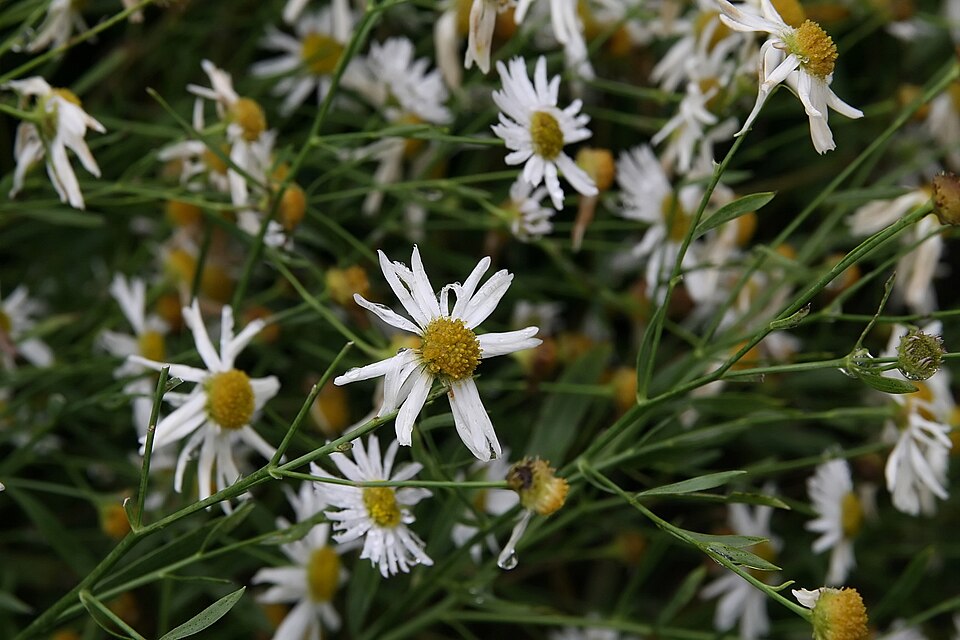
Boltonia asteroides, commonly known simply as Boltonia or False Aster, is a statuesque native perennial wildflower that delivers a spectacular show of daisy-like blooms in late summer and fall — precisely when most other garden plants are winding down. A member of the aster family (Asteraceae), Boltonia produces clouds of small white to pale pink flowers with yellow centers that closely resemble asters, earning it the nickname “False Aster.” The flowers cover the plant so completely in August through October that the foliage becomes nearly invisible beneath the floral display.
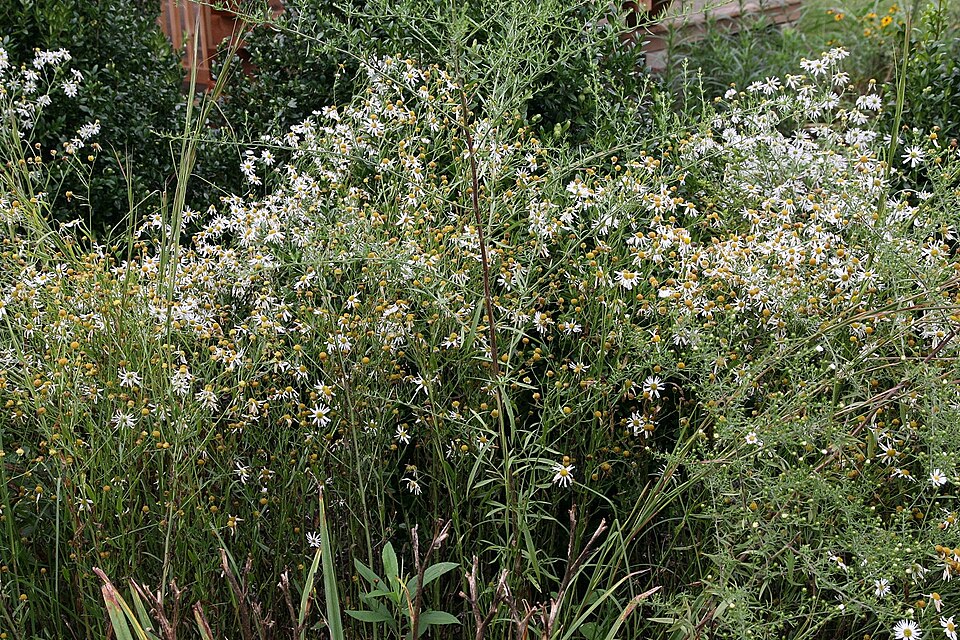
This is a tall, vigorous plant — reaching 4 feet or more in full sun and up to 6 feet in richer soils — with a naturally arching, vase-like form that becomes a dramatic focal point in the late-season garden. The narrow, lance-shaped, blue-green leaves have a somewhat glaucous (waxy) appearance that distinguishes Boltonia from true asters. Despite its impressive stature, Boltonia has excellent drought tolerance once established, thriving in average to dry soils that would stress many other late bloomers.
For wildlife gardens in New York, Pennsylvania, and New Jersey, Boltonia is an invaluable addition — its late-season flowers support migrating monarch butterflies, native bees stocking up for winter, and a host of other pollinators that depend on fall-blooming wildflowers. Combined with its adaptability, drought tolerance, and easy cultivation, Boltonia deserves far wider use in native plant gardens throughout the region.
Identification
Boltonia forms an upright, loosely branching clump reaching 3 to 6 feet tall in garden conditions, with a spread of 3 to 4 feet. The stems are smooth and somewhat glaucous, branching extensively in the upper half of the plant. Left unsupported, the stems may flop in rich soils or after heavy rain — pinching the plant back by one-third in late May will produce a shorter, sturdier plant that blooms slightly later but doesn’t require staking.
Leaves
The leaves are simple, alternate, and narrowly lance-shaped, 2 to 4 inches long with entire or slightly toothed margins. They have a distinctive blue-green, slightly glaucous color that distinguishes Boltonia from true asters and gives it an attractive appearance even before it blooms. The leaves are sessile (no petiole) and clasp the stem slightly. As the plant ages and blooms in late summer, the foliage becomes increasingly obscured by the mass of flowers above it.
Flowers & Fruit
The flower heads are small, ¾ to 1 inch in diameter, with 20 to 60 narrow white to pale pink ray florets surrounding a central yellow disc. They are produced in tremendous abundance in branched, flat-topped to dome-shaped clusters at the tips of the stems. Blooming runs from August through October, and peak bloom in late August and September creates a spectacular show. The fruits are small, flat achenes with a papery pappus that aids wind dispersal. Seeds are viable and the plant self-sows modestly in good conditions.
Quick Facts
| Scientific Name | Boltonia asteroides |
| Family | Asteraceae (Aster / Composite) |
| Plant Type | Herbaceous Perennial |
| Mature Height | 4 ft |
| Sun Exposure | Full Sun |
| Water Needs | Low to Moderate |
| Bloom Time | August – October |
| Flower Color | White to pale pink with yellow centers |
| USDA Hardiness Zones | 3–9 |
Native Range
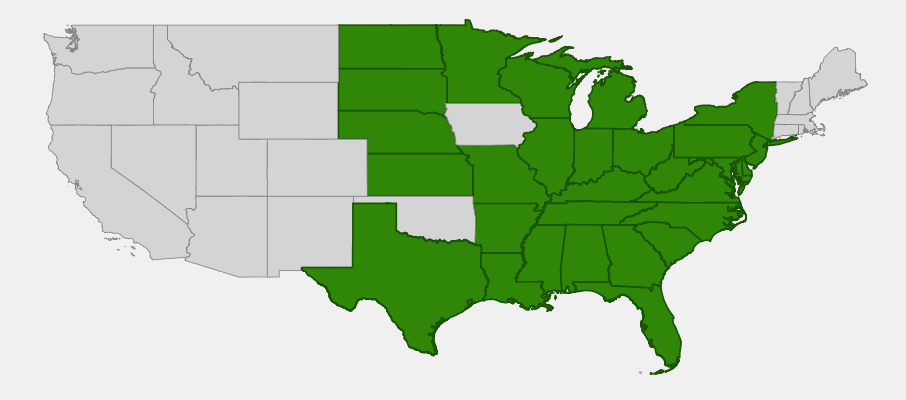
Boltonia asteroides is a widespread native of central and eastern North America, ranging from the Great Plains east to the Atlantic coast and from the upper Midwest south to the Gulf states. Its natural habitats include moist meadows, floodplain prairies, stream banks, and disturbed areas — places that are seasonally wet but may dry out in summer. The species is remarkably tolerant of environmental variation, from the rich floodplain soils of the Mississippi Valley to drier meadow conditions in the Northeast.
In New York, New Jersey, and Pennsylvania, Boltonia occurs naturally in wetland margins and moist meadows, often alongside cardinal flower, swamp milkweed, and Joe-Pye weed. It is not restricted to wet sites in cultivation — in the garden it performs well in average garden soil with moderate moisture — but its wild populations tend to cluster around seasonally moist areas. The variety latisquama is the most common garden selection and tends to be more compact and floriferous than wild-type plants.
Boltonia’s wide native range and tolerance for disturbed habitats make it a resilient and adaptable species. It has naturalized beyond its original range in some areas, particularly along roadsides and in old fields, but it is not considered invasive and does not out-compete native vegetation in established natural communities. In the garden, it spreads slowly by rhizomes and self-sows modestly, producing self-sustaining populations without becoming aggressive.
📋 Regional plant lists featuring Boltonia: New York, Pennsylvania & New Jersey
Growing & Care Guide
Boltonia is one of the easiest native perennials to grow — tough, adaptable, and reliably spectacular in late summer when many other plants are past their prime. Its main requirements are full sun and reasonable drainage; beyond that, it is forgiving of a wide range of soil conditions.
Light
Full sun is essential for the best performance. Boltonia in full sun produces the most compact growth habit, the strongest stems, and the most prolific flower production. In part shade (3–4 hours of direct sun), the plant will grow but becomes noticeably taller and more prone to flopping, with fewer flowers. Avoid shaded sites entirely — the plants will stretch dramatically toward light and produce a disappointing display.
Soil & Water
Boltonia is adaptable to a range of soils, from moderately moist to quite dry, as long as drainage is adequate. It actually performs better in average to lean soils — rich, fertile soils cause excessive, floppy growth that requires staking. Once established, Boltonia is notably drought tolerant, making it an excellent choice for areas that receive little supplemental irrigation. It also tolerates periodic flooding, reflecting its origin in floodplain habitats. Avoid heavy clay soils with poor drainage, which can cause root rot and reduce longevity.
Planting Tips
Plant Boltonia in spring or fall. Space plants 2–3 feet apart to allow for mature spread. To prevent flopping in rich soils, cut the plant back by one-third in late May — this produces a shorter, bushier plant that flowers about 2 weeks later but stands upright without staking. Boltonia spreads by short rhizomes and will slowly expand its clump over time; divide every 3–4 years in spring to keep the clump vigorous and prevent the center from dying out. Self-sown seedlings appear occasionally and can be relocated or shared.
Pruning & Maintenance
Beyond the optional late-May pinching, Boltonia requires little maintenance. Cut stems back to the ground in late winter or early spring before new growth begins. Leaving the seed heads standing through winter provides food for finches and other seed-eating birds and adds structure to the winter garden. Boltonia is generally free of serious pests and diseases — it is deer resistant, drought tolerant once established, and rarely troubled by insects or fungi.
Landscape Uses
- Back-of-border perennial — tall plant provides height and drama at season’s end
- Prairie or meadow planting — naturalizes beautifully in sunny meadow gardens
- Late-season pollinator garden — critical food source for fall-migrating monarchs and native bees
- Cut flower garden — stems hold well in arrangements
- Dry site planting — drought tolerance makes it valuable where irrigation is limited
- Rain garden edges — tolerates both dry and occasionally wet conditions
Wildlife & Ecological Value
Boltonia’s late-season bloom timing makes it an ecologically critical plant — it provides nectar and pollen when most other wildflowers have finished blooming and migrating pollinators need fuel most urgently.
For Birds
The abundant seed heads of Boltonia provide food for finches, sparrows, and other seed-eating birds through fall and winter. American Goldfinches are especially attracted to the seeds. The dense, branching structure provides cover and perching sites for small birds, and the insect diversity associated with the flowers supports insectivorous birds during the fall migration period.
For Mammals
Boltonia is not a significant mammal food source, but its dense structure provides cover for small mammals including meadow voles and rabbits. It is generally resistant to deer browsing — the bitter foliage is not preferred by deer, making it a good choice for high-deer-pressure landscapes.
For Pollinators
Boltonia is an exceptional pollinator plant precisely because of its late-season bloom. It supports a remarkable diversity of native bees — including bumble bees, sweat bees, mining bees, and leafcutter bees — that are building reserves for winter or raising final broods. Monarch butterflies on their southward migration are frequent visitors, fueling up on Boltonia nectar for the long journey to Mexico. Painted ladies, sulphurs, skippers, and other late-season butterflies also visit in numbers. The flowers are also visited by beneficial flies, parasitic wasps, and beetles that provide important ecosystem services as predators and parasitoids of garden pests.
Ecosystem Role
As a component of meadow and floodplain plant communities, Boltonia helps stabilize soil on stream banks and moist slopes, contributes organic matter as its stems decompose, and supports the food web by hosting a diverse community of insects that serve as prey for birds, reptiles, and small mammals. Its late-season flowering helps close the “nectar gap” that occurs when most spring and summer wildflowers have finished blooming and before winter closes in — a period when many pollinators are most nutritionally stressed.
Cultural & Historical Uses
Boltonia is named in honor of James Bolton (1735–1799), an English botanist and artist who produced detailed illustrated works on British fungi and ferns. The species epithet asteroides refers to the plant’s resemblance to the genus Aster, from the Greek meaning “star-like.” Despite its long recognition by botanists, Boltonia was not widely used by Indigenous peoples of the northeastern United States, largely because it was most common in the central and southern states where other aster-family plants were more abundant and better known.
In the 19th and early 20th centuries, Boltonia was occasionally grown in cottage gardens and farmstead plantings for its abundant fall bloom, but it fell out of fashion with the rise of highly bred hybrid asters and chrysanthemums. The native plant movement of the late 20th century brought renewed interest in Boltonia, and selected varieties such as ‘Snowbank’ and ‘Pink Beauty’ became commercially popular. These cultivars are more compact and floriferous than the wild type, though they retain the same ecological value for wildlife.
Today, Boltonia is recognized as a valuable plant for sustainable, low-maintenance landscaping in the eastern United States. Its drought tolerance, adaptability, and spectacular late-season performance have made it a favorite among landscape designers working with native plant palettes, and it is increasingly specified in public parks, corporate campuses, and rain garden installations where a reliable, wildlife-friendly fall performer is needed with minimal care requirements.
Frequently Asked Questions
Why is Boltonia called “False Aster”?
Boltonia’s flowers closely resemble those of true asters (Aster and Symphyotrichum species), with narrow ray florets surrounding a central yellow disc — but Boltonia is a distinct genus. The main differences are Boltonia’s glaucous blue-green foliage, its somewhat earlier and more prolific bloom, and its taller, more upright stature. Botanically, the two genera are closely related within the Asteraceae family.
Does Boltonia need staking?
In rich soils and part shade, Boltonia can become quite tall (5–6 feet) and may flop without support. The best solution is to pinch the plant back by one-third in late May, which produces a shorter, sturdier plant that stands upright without staking. In lean, dry soils and full sun, Boltonia typically stays compact enough to be self-supporting at 3–4 feet.
How quickly does Boltonia spread?
Boltonia spreads slowly by short rhizomes, gradually expanding a clump over several years. It also self-sows modestly. Neither spreading mechanism is aggressive, and Boltonia is not considered invasive. Divide clumps every 3–4 years to maintain vigor and control spread.
Is Boltonia deer resistant?
Yes — Boltonia is generally considered deer resistant due to its bitter foliage. While no plant is completely deer-proof, Boltonia is rarely browsed heavily and is a good choice for landscapes with significant deer pressure.
When should I cut back Boltonia?
Cut Boltonia back in late winter or early spring before new growth emerges. Leaving the seed heads standing through winter provides bird food and winter garden structure. Do not cut back in fall — the stems and seed heads are ecologically valuable and the plant needs its roots to remain undisturbed through winter.

Looking for a nursery that carries Boltonia?
Browse our native plant nursery directory: New York · Pennsylvania