Curl-leaf Mountain Mahogany (Cercocarpus ledifolius)
Cercocarpus ledifolius, commonly known as Curl-leaf Mountain Mahogany or Curlleaf Cercocarpus, is a remarkable native evergreen shrub or small tree that ranks among the most drought-tolerant and long-lived woody plants of the American West. A member of the Rosaceae (rose) family, it is distinguished by its distinctive curled or rolled leaves, deeply furrowed reddish-brown bark, and the ornamental feathery, spiraled seed plumes that adorn the plant in late summer and fall. This tough, slow-growing species can live for centuries on exposed, rocky ridgetops where few other trees can survive.
Perhaps most remarkable is the ecological role of Curl-leaf Mountain Mahogany in supporting wildlife — particularly mule deer and elk during winter. Its evergreen foliage remains nutritious and accessible even through deep snow, making Curl-leaf Mountain Mahogany stands critical winter range for ungulates across the Intermountain West. Wildlife managers in Utah, Nevada, Idaho, and surrounding states actively manage and protect Curl-leaf Mountain Mahogany communities for their importance to big game populations.
With age, Curl-leaf Mountain Mahogany develops a gnarled, sculptural form reminiscent of ancient junipers and bristlecone pines, with twisted trunks and spreading crowns of dark foliage that can persist for 1,000 years or more in undisturbed stands. This combination of ecological value, ornamental character, extraordinary longevity, and extreme drought tolerance makes it a standout native plant for dry-climate landscaping, restoration, and habitat projects throughout the western mountains.
Identification
Curl-leaf Mountain Mahogany typically grows 8 to 12 feet tall (occasionally to 20 feet), with a spreading, rounded crown that becomes increasingly gnarled and sculptural with age. Older specimens develop multi-stemmed trunks with deeply furrowed, reddish-brown bark that weathers to silver-gray with age. The bark is among the most distinctive features of mature plants — thick, deeply grooved, and often richly reddish or orange-brown.
Leaves
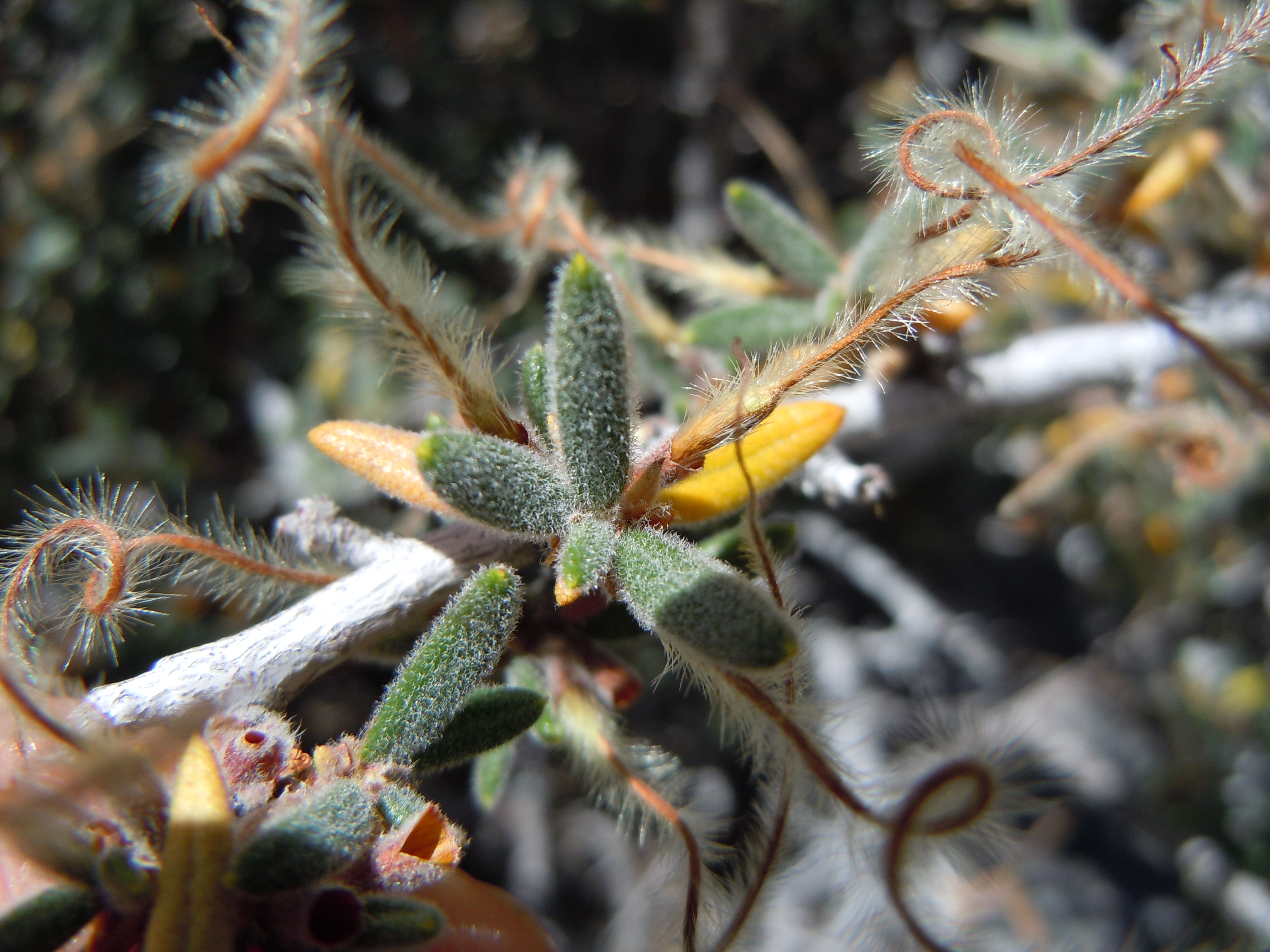
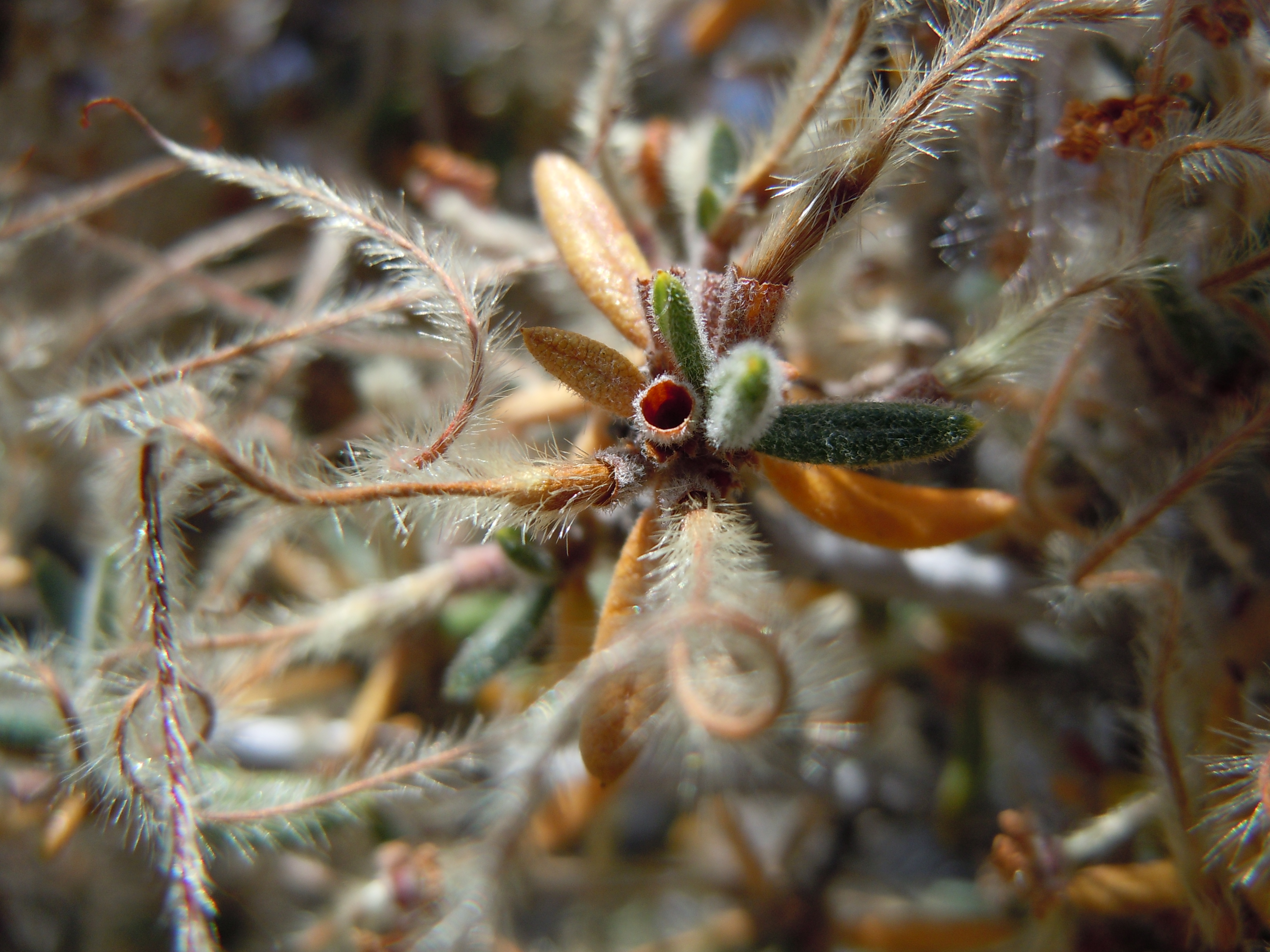
The leaves are the defining identification feature: narrow, lance-shaped, ½ to 1½ inches (12–38 mm) long, and distinctly curled or rolled under along the margins — a remarkable adaptation that reduces water loss in the dry mountain environments where it grows. The leaves are thick, leathery, and evergreen, dark glossy green above and whitish-hairy beneath. They persist year-round, providing winter browse even through heavy snow. The leaf margins are entire (untoothed) and the curled edges expose the pale, hairy underside.
Flowers
The flowers are small and inconspicuous — tiny, petal-less, yellowish-white trumpets that emerge in late spring. Unlike many showy members of the rose family, Cercocarpus species rely on wind pollination rather than insects, and the flowers are not ornamentally significant.
Fruit & Seed Plumes
The most ornamental feature is the fruiting achene, which is tipped with a long, feathery, spiraled awn 2 to 3 inches (5–8 cm) long that glistens silver in sunlight. These plumes persist on the plant for weeks in late summer and fall, creating a shimmering, smoke-like effect when a shrub is covered with them. The spiraling awn acts as a drill — when the achene lands on the ground, the feathery tail hygroscopically screws the seed into the soil as moisture levels change, aiding germination.
Quick Facts
| Scientific Name | Cercocarpus ledifolius |
| Family | Rosaceae (Rose) |
| Plant Type | Evergreen Shrub / Small Tree |
| Mature Height | 8–12 ft |
| Sun Exposure | Full Sun |
| Water Needs | Very Low (Xeric/Extremely Drought Tolerant) |
| Bloom Time | May – June |
| Flower Color | Yellowish-white (inconspicuous) |
| Ornamental Feature | Feathery silver seed plumes, sculptural bark |
| Longevity | Centuries; some individuals >1,000 years |
| USDA Hardiness Zones | 4–9 |
Native Range
Curl-leaf Mountain Mahogany is native to the dry mountains and foothills of the western United States, ranging from Oregon and Washington south through California and Nevada, east through Idaho, Utah, Colorado, Arizona, and New Mexico. It is a characteristic plant of the Great Basin ranges, pinyon-juniper woodlands, and lower montane zones from approximately 3,500 to 9,500 feet elevation. The species reaches its greatest abundance on rocky ridges, south-facing slopes, and limestone outcrops throughout the Basin and Range province.
In the wild, Curl-leaf Mountain Mahogany forms dense stands on exposed ridgelines and rocky slopes where harsh conditions limit competition from other plants. It is a dominant or co-dominant species in many pinyon-juniper woodland communities, particularly in the Great Basin. At higher elevations it grows with Singleleaf Pinyon (Pinus monophylla), Utah Juniper (Juniperus osteosperma), and Big Sagebrush (Artemisia tridentata). The oldest and largest specimens are typically found on inaccessible rocky outcrops that have been protected from fire and grazing.
Because of its critical importance as winter browse for mule deer and elk, Curl-leaf Mountain Mahogany stands have received considerable attention from wildlife and range managers. Populations have been reduced in some areas by overgrazing, fire suppression (which allows competing conifers to overtop and shade out mahogany), and browsing pressure itself during poor forage years. Active management including fire and mechanical treatments is used in some areas to maintain and restore stands.
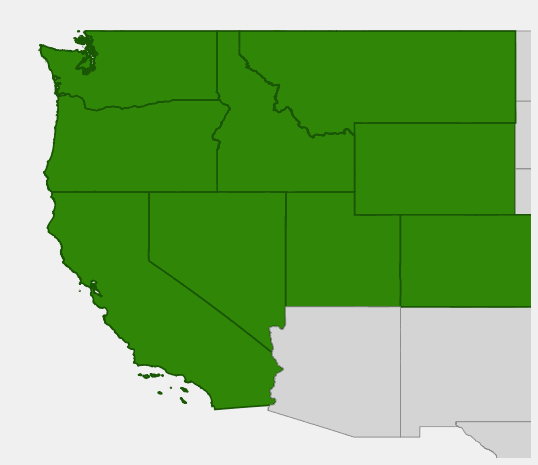
📋 Regional plant lists featuring Curl-leaf Mountain Mahogany: Intermountain West
Growing & Care Guide
Curl-leaf Mountain Mahogany is one of the most resilient and long-lived native shrubs available for dry-climate landscapes. Its slow growth rate is offset by its extraordinary longevity, minimal maintenance needs, year-round evergreen interest, and outstanding wildlife value. It is best planted where it can develop undisturbed for decades.
Light
Full sun is essential for Curl-leaf Mountain Mahogany. In the wild, it grows on the most exposed south- and west-facing slopes, ridgetops, and rocky outcrops where sunlight is intense and competition from shade-casting vegetation is minimized. Plant in the sunniest location available. It will not thrive in shade and will become weak and susceptible to disease without adequate direct sun.
Soil & Water
This species requires exceptional drainage and thrives in rocky, shallow, nutrient-poor soils — conditions that would kill most landscape plants. It is extremely drought tolerant once established, accessing water through deep taproots that penetrate rocky substrates. Avoid clay or compacted soils entirely. Established plants need no supplemental irrigation in their native range. During establishment (first 1–2 years), water deeply but infrequently — every 2–3 weeks. Do not overwater; root rot in moist soils is the most common cause of failure.
Planting Tips
Plant in fall or early spring from container stock. Choose the most well-drained, sunny, rocky location available. If planting in a formal landscape, amend the soil with 30–50% coarse gravel to ensure drainage. Space plants at least 6–10 feet apart to allow for the naturally spreading, rounded crown. Growth is slow — be patient. Curl-leaf Mountain Mahogany is not a plant for impatient gardeners, but its longevity makes it a multigenerational landscape investment.
Pruning & Maintenance
Minimal pruning is needed or recommended. The natural gnarled, sculptural form is one of this plant’s greatest ornamental assets — resist the urge to shape it into an artificial form. Remove dead wood as needed. The plant is very slow-growing, so pruning setbacks are felt for years. As with Bitterbrush, do not fertilize — nutrient-rich soils promote fast, weak growth and susceptibility to disease.
Landscape Uses
- Specimen planting — the sculptural form and feathery seed plumes are outstanding
- Dry slope stabilization on rocky hillsides where little else will grow
- Wildlife habitat — critical winter browse for deer and elk
- Xeriscape foundation plantings in full sun
- Naturalized areas and rock gardens with dry-climate natives
- Restoration of pinyon-juniper woodland and sagebrush steppe
Wildlife & Ecological Value
Curl-leaf Mountain Mahogany is of paramount importance to big game wildlife in the Intermountain West. Its evergreen leaves remain accessible and highly nutritious through the coldest winters, providing a lifeline for ungulate populations when snow covers other browse plants.
For Browsers & Mammals
Mule Deer (Odocoileus hemionus) and Elk (Cervus elaphus) are the primary users of Curl-leaf Mountain Mahogany for winter browse. In Utah, Nevada, and Idaho, wildlife biologists have documented that mule deer herds show strong fidelity to Curl-leaf Mountain Mahogany stands during winter — these stands are the primary factor determining whether animals survive the season. The protein-rich, evergreen foliage provides critical nutrition when energy demands are highest and other food sources are unavailable under snow.
For Birds
The dense, thorny branching of Curl-leaf Mountain Mahogany provides excellent nesting habitat and escape cover for many bird species. The seeds are consumed by various sparrows, towhees, and finches. The feathery seed plumes attract birds that feed on the insects and spiders associated with the fruiting structures.
For Pollinators
While the flowers are wind-pollinated and not significant nectar sources, the leaf surface hosts a variety of insects. The overall shrub community in which Curl-leaf Mountain Mahogany grows supports diverse pollinator communities, particularly in association with sagebrush and other flowering companions.
Ecosystem Role
Like other Cercocarpus species, Curl-leaf Mountain Mahogany is a nitrogen-fixing shrub through Frankia root associations, building soil fertility in nutrient-poor rocky environments. Its deep root system breaks up rocky substrates, facilitating water infiltration and soil development. The dense evergreen canopy intercepts snow and provides thermal cover for small mammals and ground-nesting birds. In the pinyon-juniper woodland ecosystem, it is a critical structural element that supports a wide variety of associated organisms.
Cultural & Historical Uses
Indigenous peoples throughout the Great Basin and Rocky Mountain region made extensive use of Curl-leaf Mountain Mahogany. The Shoshone, Northern Paiute, and Ute peoples used the hard, dense wood — one of the hardest native woods in the American West — for making digging sticks, bows, arrows, fire-making equipment, and various tools. The extreme hardness and density of the wood (it sinks in water) made it prized for tools that needed to withstand hard use. Bark preparations were used medicinally for treating infections, skin ailments, and fevers.
The feathery seed plumes were used decoratively by some Indigenous groups, and the plant’s distinctive silhouette on rocky ridgelines served as a landmark in traditional navigation. The importance of Curl-leaf Mountain Mahogany as wildlife forage was well understood by Indigenous hunters, who knew that deer and elk congregated in mahogany stands during winter — making these locations important hunting grounds.
Modern research has revealed that some Curl-leaf Mountain Mahogany individuals on undisturbed rocky ridges in the Great Basin may be among the oldest living woody plants in North America, with ages estimated at 1,000–1,350 years based on ring counts. These ancient individuals survived through centuries of drought, fire, and climate change, and their preservation has become a conservation priority in areas undergoing development or recreation pressure.
Frequently Asked Questions
How is Curl-leaf Mountain Mahogany different from regular Mountain Mahogany?
The two most common Mountain Mahoganies are Curl-leaf (Cercocarpus ledifolius) and Alderleaf or Birch-leaf Mountain Mahogany (Cercocarpus montanus). Curl-leaf has narrow, rolled leaves and is evergreen; Mountain Mahogany (C. montanus) has broader, more deciduous leaves. Curl-leaf grows on drier, rockier sites at higher elevations; Mountain Mahogany prefers slightly less extreme conditions at middle elevations.
Is Curl-leaf Mountain Mahogany hard to grow?
It is not difficult to grow if you provide the right conditions: full sun, excellent drainage, and very dry soil. The main challenge is patience — it grows slowly. Once established in a well-drained, sunny spot, it is virtually indestructible and requires minimal maintenance.
How long does Curl-leaf Mountain Mahogany live?
This is one of the longest-lived shrubs in North America. Individual plants on undisturbed rocky ridges have been documented at 1,000 to 1,350 years of age. Even in garden settings, Curl-leaf Mountain Mahogany can easily live for several centuries with appropriate care.
Does the wood of Mountain Mahogany resemble true mahogany?
Despite the common name, Cercocarpus species are not related to true mahogany (Swietenia spp.). The name refers to the dense, hard, reddish-brown wood — characteristics shared with true mahogany but resulting from convergent adaptation rather than botanical relationship. The wood is actually denser and harder than true mahogany.
When do the ornamental seed plumes appear?
The feathery, spiraling seed plumes appear in late summer (typically August–September) and persist on the plant for several weeks. A large specimen covered in silver plumes is one of the most striking sights in the dry-climate garden. This is the peak ornamental season for Curl-leaf Mountain Mahogany.