Ewa Hinahina (Achyranthes splendens)
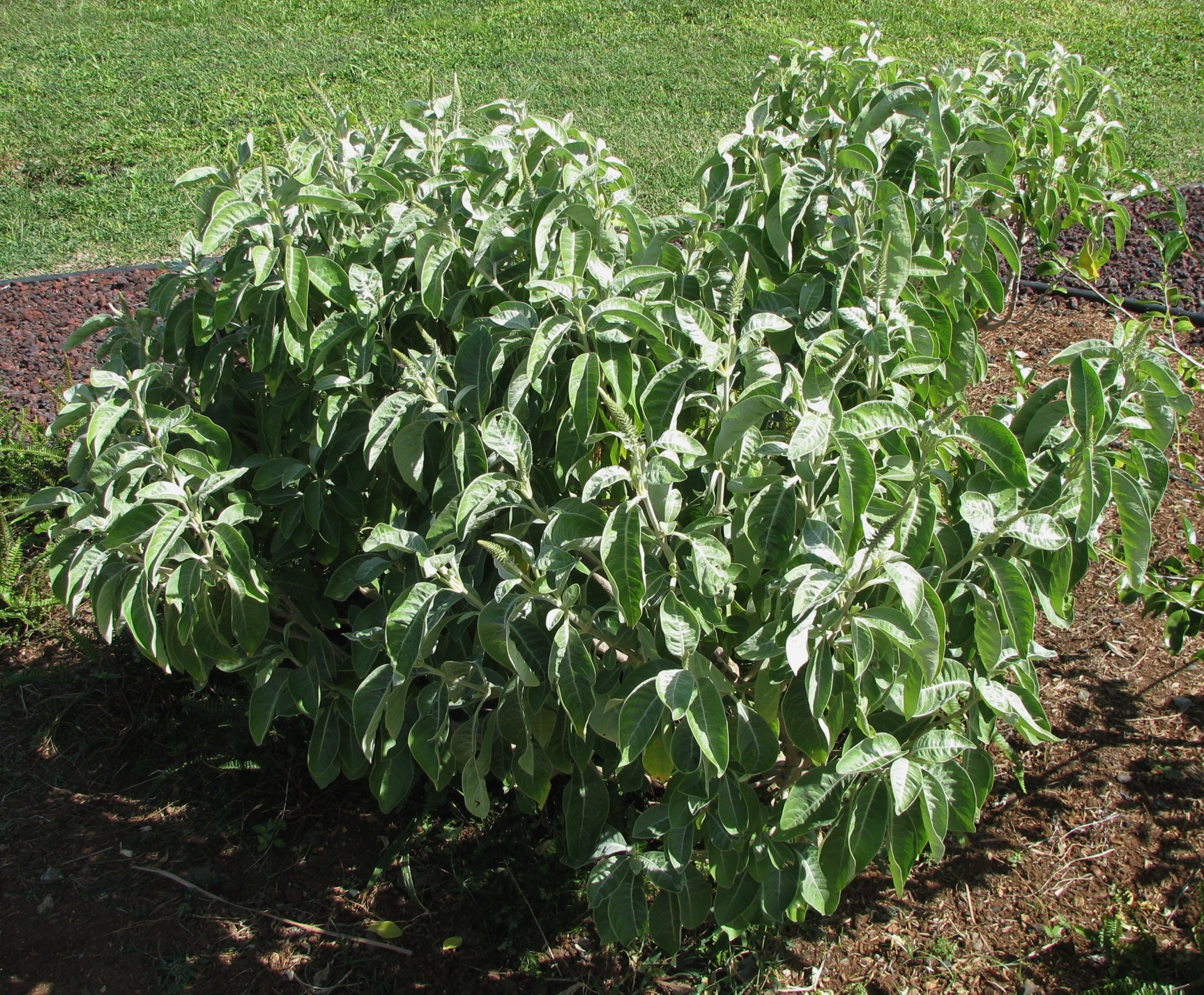
Achyranthes splendens, known as ‘Ewa Hinahina in Hawaiian, is one of the rarest and most striking native plants in all of Hawaiʻi — a small, silvery grey-green shrub that once grew abundantly in the dry lowland plains of the ‘Ewa district on the southwestern shore of O’ahu. A member of the Amaranthaceae (amaranth) family, ‘Ewa Hinahina is endemic to Hawaiʻi — found nowhere else on Earth — and is now considered critically endangered, with remaining wild populations confined to only a handful of sites on O’ahu.
The plant’s common name itself tells its story: ‘Ewa is the district on O’ahu where it was historically most abundant, and hinahina is the Hawaiian word for silver or grey — a perfect description of the plant’s most visible feature. Its leaves, stems, and even flower spikes are covered in dense silvery-white hairs (tomentum), giving the entire plant an otherworldly, metallic shimmer that sets it apart from virtually all other Hawaiian native plants. Growing 2 to 6 feet tall in its erect form, ‘Ewa Hinahina is a remarkable ornamental plant as well as a critical conservation species.
The story of ‘Ewa Hinahina is also the story of Hawaiian lowland dry shrubland — one of the most endangered ecosystems in the United States, where urbanization, agriculture, invasive weeds, and fire have eliminated most of the native plant communities of the ‘Ewa plain. Less than 1% of Hawaiian lowland dry forest and shrubland remains in anything approaching a natural condition, and ‘Ewa Hinahina has been reduced to near extinction as its habitat disappeared. Today, intensive conservation efforts — including seed banking, propagation, and restoration planting — are working to pull this extraordinary species back from the brink.
Identification
‘Ewa Hinahina is a small to medium shrub growing 2 to 6 feet (0.6–1.8 m) tall with a compact, rounded to somewhat spreading form. The most immediately striking characteristic is the dense silvery-white indumentum (covering of hairs) that coats all young stems, leaves, and flowering structures. Older stems develop a somewhat more woody and less hairy texture, but the plant retains its characteristic silvery-grey color throughout the growing season. There are several varieties of Achyranthes splendens recognized in Hawaiʻi; var. splendens (the ‘Ewa Hinahina) is the most threatened.
Leaves
The leaves are simple, opposite, and elliptic to ovate, typically 1 to 3 inches (2.5–8 cm) long. Both surfaces are covered with dense, appressed (flat-lying) silvery hairs, giving the leaves a woolly, silvery texture and a grayish-green to silver color. Leaf margins are entire (smooth). The combination of opposite arrangement and silver indumentum is diagnostic — few other Hawaiian native plants have these characteristics together.
Flowers & Fruit
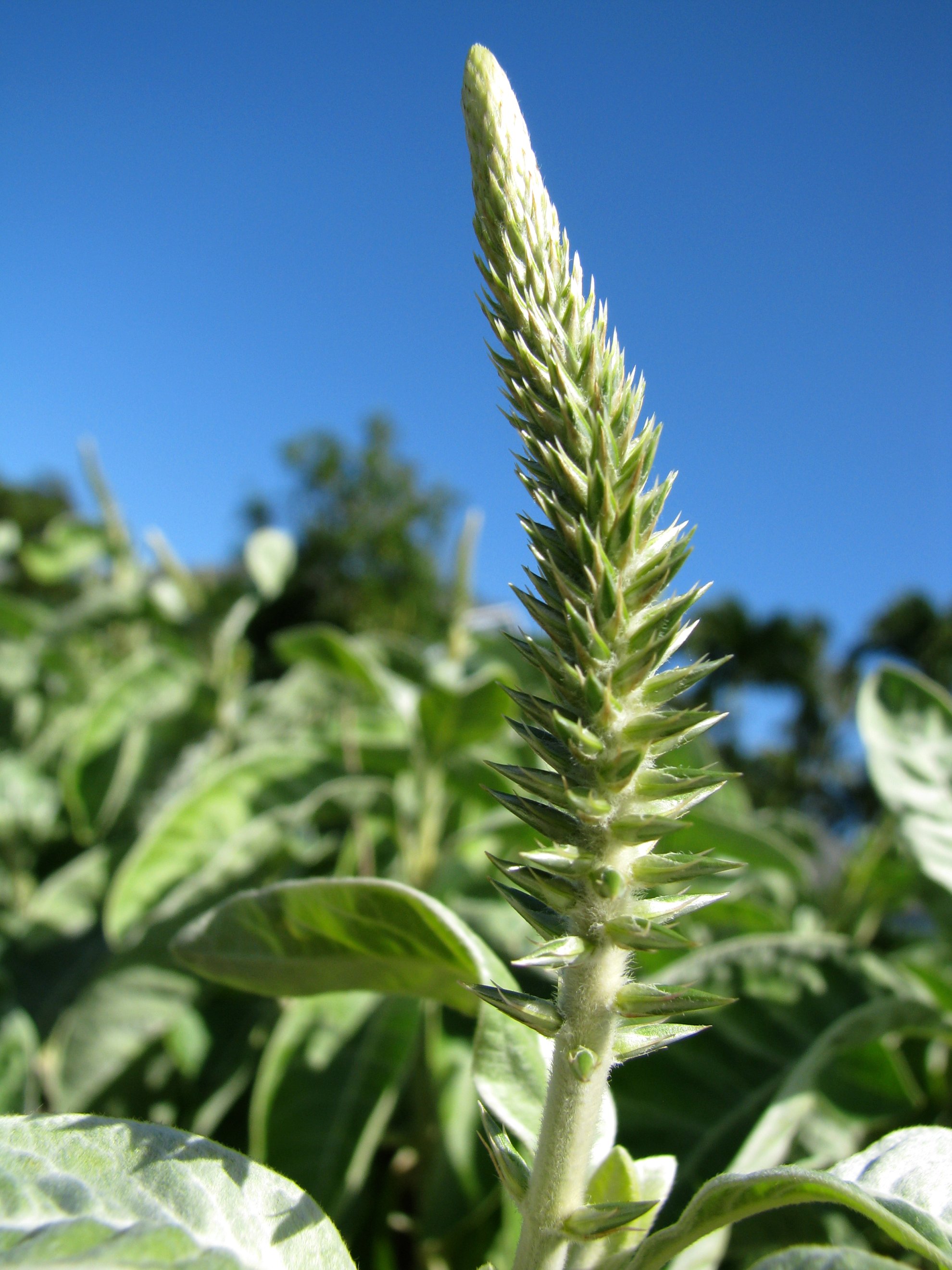
The flowers are tiny, inconspicuous individually, arranged in terminal and axillary spikes (elongated clusters) that can reach 3 to 6 inches long. Individual flowers are small with five papery tepals (undifferentiated petals and sepals), also silvery-hairy. The overall effect of the flowering spikes is a silvery, spiky appearance that adds texture without overwhelming the plant with color. Blooms occur mainly in late summer to fall. The fruit is a small, one-seeded utricle enclosed by the persistent, hardened tepals — with stiff, spine-like bracts that aid in seed dispersal by attachment to passing animals.
Quick Facts
| Scientific Name | Achyranthes splendens var. splendens |
| Family | Amaranthaceae (Amaranth) |
| Plant Type | Evergreen Shrub (critically endangered) |
| Mature Height | 2–6 ft |
| Sun Exposure | Full Sun |
| Water Needs | Low (Drought Tolerant) |
| Foliage Color | Silvery grey-green (distinctive) |
| Bloom Time | Late summer – fall |
| Flower Color | Silvery white (inconspicuous) |
| USDA Hardiness Zones | 10–12 |
Native Range
‘Ewa Hinahina (Achyranthes splendens var. splendens) is endemic to the Hawaiian Islands — it grows naturally nowhere else on Earth. Historically, it was most abundant in the dry lowland shrublands of the ‘Ewa plain on the southwestern shore of O’ahu, where its silvery-grey mounds were a characteristic feature of the native dry shrub community. The ‘Ewa plain — now covered by residential development, the city of Kapolei, and former agricultural land — was once one of the most extensive lowland dry shrubland ecosystems in Hawaiʻi.
Today, wild populations of ‘Ewa Hinahina are critically small. The species is listed as Federally Endangered under the U.S. Endangered Species Act, with remaining wild individuals concentrated primarily at Kalaeloa (the former Barbers Point Naval Air Station) on O’ahu, along with small populations at a few other protected sites. The total wild population numbers in the hundreds of plants — not thousands. Additional plants exist in botanical gardens, conservation nurseries, and planted restoration sites, but truly wild, self-sustaining populations are extremely limited.
The dramatic decline of ‘Ewa Hinahina reflects the broader collapse of Hawaiian lowland dry ecosystems. In the ‘Ewa district alone, urbanization, military land use, invasive grasses that increase fire frequency, and the introduction of goats, cattle, and pigs have systematically destroyed the native plant community that once characterized this part of O’ahu. Conservation biologists consider the surviving populations of ‘Ewa Hinahina to be among the highest-priority native plant recovery targets in Hawaiʻi.
📋 Regional plant lists featuring Ewa Hinahina: Hawaii
Growing & Care Guide
‘Ewa Hinahina is an excellent landscape plant for dry, sunny Hawaiian gardens — its striking silver foliage provides year-round ornamental interest, and its low water needs make it ideal for sustainable landscaping in dry, lowland settings. Planting ‘Ewa Hinahina in your garden also directly supports the recovery of a critically endangered species.
Light
‘Ewa Hinahina requires full sun to thrive. In its natural ‘Ewa plain habitat, it grows in open, exposed conditions with maximum sunlight year-round. Shade or partial shade causes the plant to become leggy, lose its characteristic compact form, and produce less vibrant silver foliage. Choose the sunniest, most open location available for best results.
Soil & Water
‘Ewa Hinahina is highly drought-tolerant and adapted to the rocky, nutrient-poor, well-drained soils of the ‘Ewa coastal plain. It grows in calcareous (limestone-influenced) soils and rocky volcanic substrates with minimal organic matter. Excellent drainage is essential — the plant will not tolerate waterlogged conditions. Once established, supplemental watering is rarely needed in coastal O’ahu settings. In drier or more inland gardens, occasional deep watering during extended droughts helps maintain plant health.
Planting Tips
Obtain plants from a reputable Hawaiian native plant nursery or conservation propagation program — never collect from wild populations. Plant in well-drained soil, amended with coarse sand or gravel if needed. Space plants 3–5 feet apart. Water regularly for the first 3–6 months to establish roots, then gradually reduce irrigation. ‘Ewa Hinahina is one of those rare plants that actually performs better with a little neglect — too much water and fertilizer can cause rapid growth that dilutes the silver foliage character and reduces drought hardening.
Pruning & Maintenance
Light pruning in late winter or early spring helps maintain a compact, bushy form. Remove dead or damaged stems. ‘Ewa Hinahina is naturally compact and doesn’t require heavy pruning. Avoid removing more than one-third of the plant at once. The plant has minimal pest issues, though slugs may occasionally damage young growth. It is generally resistant to the insects and diseases common in Hawaiian gardens.
Landscape Uses
- Silver accent plant — the foliage provides year-round color interest in dry gardens
- Xeriscape and drought-tolerant gardens — thrives with minimal water
- Native dry shrubland restoration — critical for rebuilding ‘Ewa plain ecology
- Rock garden and coastal landscapes — tolerates poor, rocky soils
- Educational plantings — a powerful teaching tool about Hawaiian endemic plants and conservation
- Mixed native hedge with ‘A’ali’i, ‘Ilima, and other dry-site natives
Wildlife & Ecological Value
As a critically endangered species, the wildlife and ecological value of ‘Ewa Hinahina is inseparable from its conservation significance. Every plant that survives and reproduces contributes to the recovery of the ‘Ewa lowland dry shrubland community.
For Pollinators
Though the flowers are small and inconspicuous, they attract native Hawaiian bees and other small pollinators. The endangered Hawaiian yellow-faced bees (Hylaeus spp.) of O’ahu’s coastal lowlands share the same imperiled habitats as ‘Ewa Hinahina, and supporting the plant population helps support these co-occurring endangered bees. The flowering spikes, while not showy, provide pollen and nectar in the late-summer dry season when few other native plants are flowering.
For Birds
The spiny fruits of ‘Ewa Hinahina can attach to bird feathers, potentially aiding seed dispersal. The dense, compact shrub structure provides perching, foraging, and potential nesting habitat for small native and non-native birds in the coastal lowland zone where little other shrub cover remains.
Ecosystem Role
‘Ewa Hinahina is a remnant of one of Hawaiʻi’s most critically endangered ecosystems. Each surviving plant represents a genetic resource and an ecological anchor in the devastated ‘Ewa coastal plain. In restoration sites, ‘Ewa Hinahina helps restore native plant community structure, reduces the competitive advantage of invasive grasses, and provides seed sources for ongoing natural regeneration. Its deep tap root also helps bind the calcareous coastal soils that characterize its native habitat.
Cultural & Historical Uses
‘Ewa Hinahina is not as well-documented in traditional Hawaiian cultural use as some other native plants, partly because it has always been restricted to a relatively small geographic area (the ‘Ewa plain of O’ahu) and may never have been particularly abundant. The name ‘Ewa Hinahina itself — literally “silver grey plant of ‘Ewa” — suggests the plant was recognized and named for its distinctive appearance and specific geographic occurrence rather than for widespread utility.
The ‘Ewa district of O’ahu has deep historical significance in Hawaiian tradition, associated with the ancient ahupua’a (land division) system and with early Hawaiian settlement. The lowland dry shrublands of ‘Ewa, where ‘Ewa Hinahina once thrived, were part of a diverse native landscape that included fishing villages, taro cultivation in valley streams, and extensive dry-land farming systems. The transformation of the ‘Ewa plain — from native dry shrubland to sugar plantation to military use and finally to suburban development — represents one of the most complete ecological transformations in Hawaiian history.
In contemporary Hawaiian culture, ‘Ewa Hinahina has become a symbol of conservation urgency and the effort to restore O’ahu’s long-degraded lowland ecosystems. Conservation organizations including the U.S. Fish and Wildlife Service, the Army Natural Resources Program at Schofield Barracks, and various native plant nurseries are working to propagate and restore ‘Ewa Hinahina to suitable sites. Planting this plant in your garden is a direct act of conservation — a way to contribute to the survival of one of O’ahu’s most distinctive and imperiled native species.
Frequently Asked Questions
Is Ewa Hinahina really endangered?
Yes — Achyranthes splendens var. splendens (‘Ewa Hinahina) is listed as Federally Endangered under the U.S. Endangered Species Act. Wild populations are extremely small, confined primarily to the Kalaeloa area on O’ahu. Habitat loss, invasive species, and fire have eliminated the vast majority of its historical range. It is one of the rarest native shrubs in Hawaiʻi.
Where can I find Ewa Hinahina plants?
‘Ewa Hinahina is available at some Hawaiian native plant nurseries, especially those that specialize in conservation-propagated native species. Check with nurseries participating in Hawaiian native plant restoration programs. Do not collect or transplant wild plants — all wild specimens are protected under federal law.
Why is the foliage silver?
The silvery color of ‘Ewa Hinahina’s foliage comes from dense hairs (trichomes) covering the leaves and stems. This is a common adaptation in plants of dry, sunny environments — the reflective hairs reduce leaf temperature by reflecting excess sunlight, and also reduce water loss by creating a boundary layer that slows air movement across the leaf surface. The silver coating is both beautiful and functional.
Can Ewa Hinahina grow in a container?
Yes — ‘Ewa Hinahina can be successfully grown in containers with excellent drainage. Use a well-drained mix with added coarse sand or perlite. Container plants need less frequent watering than you might expect — allow the mix to dry substantially between waterings. Container growing is also a good way to propagate and share this important conservation species.
What can I plant with Ewa Hinahina?
‘Ewa Hinahina looks stunning when planted with other Hawaiian dry-site natives that share its sun and drainage requirements: ‘A’ali’i (Dodonaea viscosa) for structure and red seed capsules, ‘Ilima (Sida fallax) for golden flowers, Naio (Myoporum sandwicense) for dark green contrast, and Pili grass (Heteropogon contortus) for a native groundcover. This combination recreates a simplified version of the native ‘Ewa lowland dry shrubland plant community.

Looking for a nursery that carries Ewa Hinahina?
Browse our native plant nursery directory: Hawaii