Ma’o Hau Hele (Hibiscus brackenridgei)
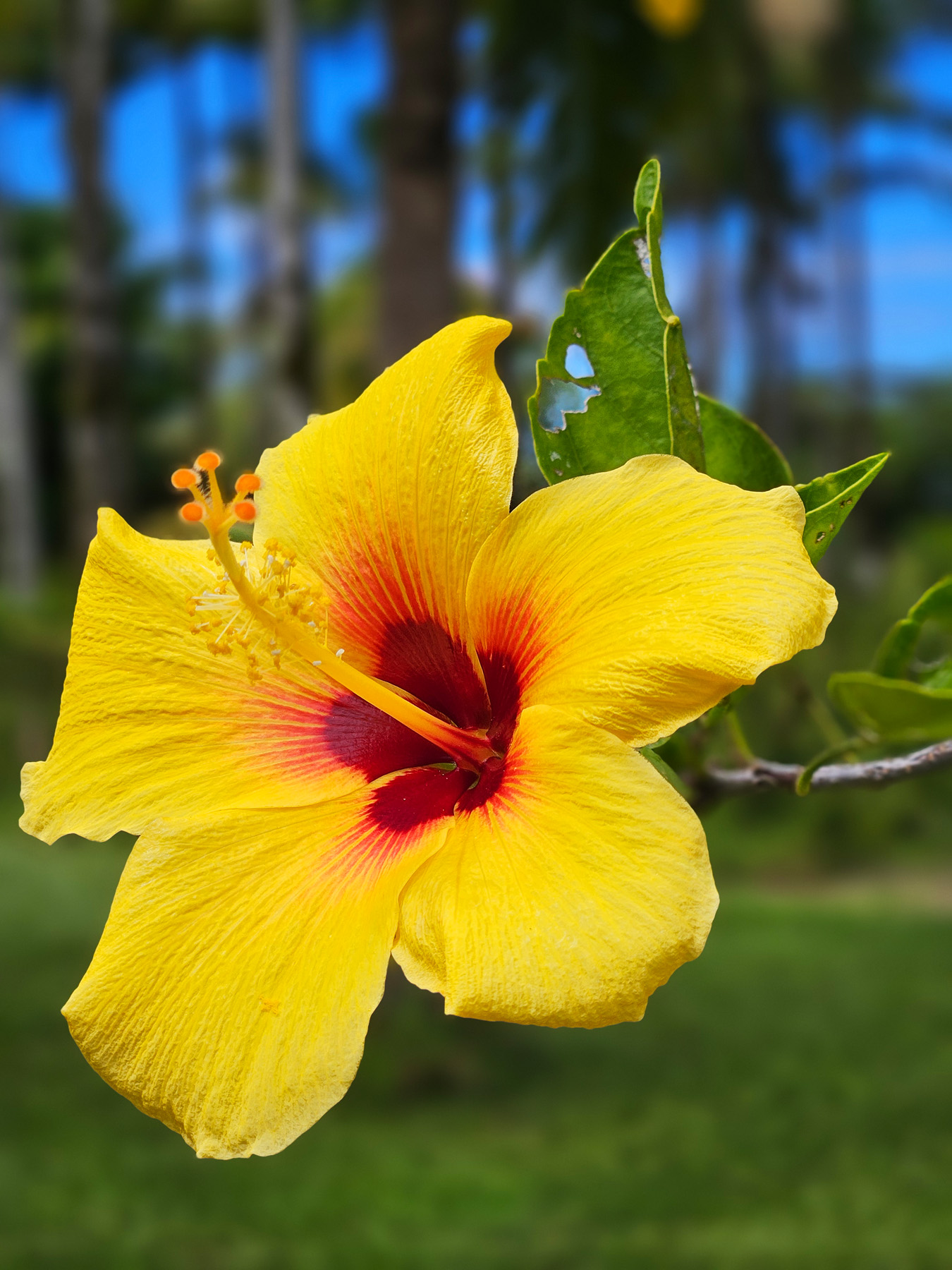
Hibiscus brackenridgei, known in Hawaiian as Ma’o Hau Hele (meaning “the traveling sun” or “the yellow spread”), is the official state flower of Hawaii and one of the most spectacular native flowering plants in the Hawaiian Islands. This endangered member of the Malvaceae (mallow) family produces brilliant golden-yellow flowers — up to 6 inches across — that are among the largest flowers of any native Hawaiian plant. Their impact on the landscape is dramatic and unmistakable, a burst of tropical gold against the gray-green foliage of Hawaii’s dry coastal and lowland scrub.
Ma’o Hau Hele is a native shrub or small tree growing 3 to 15 feet tall, with a somewhat open, leggy habit and large, deeply lobed, gray-green leaves covered in fine, velvety hairs. The plant is adapted to the dry, warm, low-elevation coastal and lowland habitats of the Hawaiian Islands, where it has evolved alongside the native ecosystem over millions of years. It is drought-tolerant and thrives in the lean, rocky soils of Hawaiian coastal scrubland — conditions that many plants cannot survive.
Despite being the state flower of Hawaii, Ma’o Hau Hele is a federally endangered species. Wild populations have been severely reduced by habitat loss, browsing by introduced ungulates (goats, deer, pigs), competition from invasive plant species, and historical clearing of lowland Hawaiian habitat for agriculture and development. Only scattered wild populations remain, primarily on Maui, Molokai, Lanai, and the Big Island. Growing Ma’o Hau Hele in your garden is not just beautiful — it is a direct act of conservation support for one of Hawaii’s most iconic and threatened native plants.
Identification
Ma’o Hau Hele is an upright to spreading shrub or small tree typically reaching 3 to 15 feet in height, though plants can occasionally reach greater size in favorable conditions. The overall appearance is somewhat open and airy, with large, distinctive leaves and spectacular yellow flowers that are immediately recognizable once seen. Two subspecies are recognized: Hibiscus brackenridgei subsp. brackenridgei (found on Maui, Molokai, Lanai, and Hawaii Island) and subsp. molokaiana (found primarily on Molokai).
Stems & Bark
Young stems are covered in star-shaped (stellate) hairs that give them a grayish, velvety appearance. As the plant matures, the stems become woody and more gray-brown in color. The bark is relatively smooth on younger wood, becoming slightly furrowed with age. Stems are brittle compared to many shrubs and can break in strong winds — a characteristic to consider when siting plants in exposed locations.
Leaves
The leaves of Ma’o Hau Hele are large, alternate, and deeply palmately lobed with 5 to 7 lobes, somewhat like a maple leaf but larger and more rounded. Each leaf is 3 to 6 inches across, with a heart-shaped base and toothed margins on each lobe. Both leaf surfaces are covered in fine, soft, star-shaped hairs that give the entire leaf a gray-green, velvety texture — an adaptation that reduces water loss in the dry habitats the plant occupies. Leaf stalks (petioles) are long and the undersides of leaves are noticeably paler than the upper surface.
Flowers & Fruit
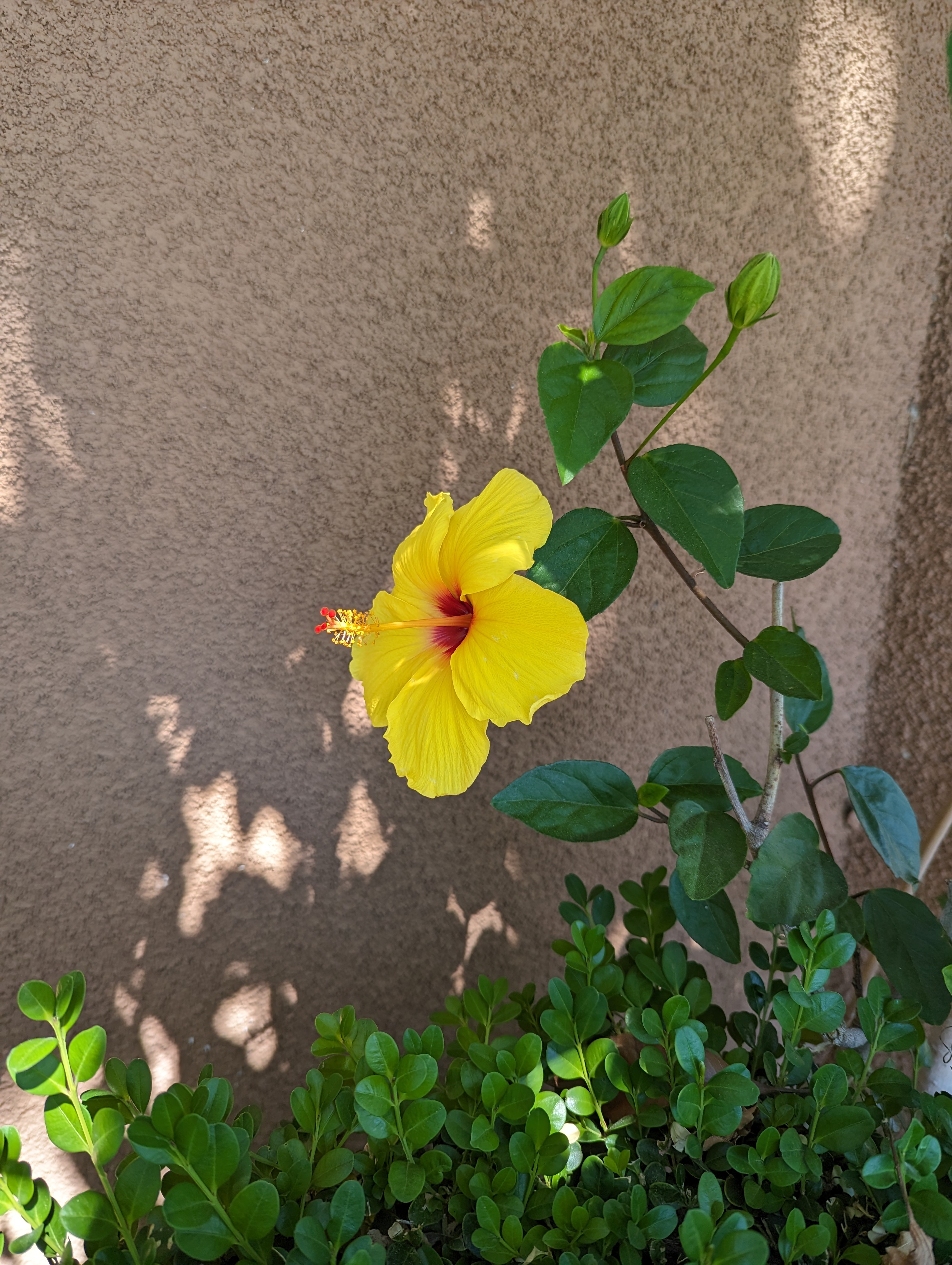
The flowers are the defining feature of this species — large, showy, five-petaled hibiscus blossoms measuring 4 to 6 inches across, with bright golden-yellow petals and a distinctive deep red or maroon center at the base of each petal. The staminal column (the fused column of stamens characteristic of the hibiscus family) extends from the center of each flower, topped with yellow anthers. Individual flowers open in the morning and close by late afternoon, lasting only a single day — but the plant produces new flowers over an extended season. In Hawaii’s warm climate, flowering can occur throughout much of the year, with peak bloom in spring and summer. The fruit is a five-chambered capsule that matures and splits open to release the seeds.
Quick Facts
| Scientific Name | Hibiscus brackenridgei |
| Family | Malvaceae (Mallow) |
| Plant Type | Evergreen Shrub / Small Tree |
| Mature Height | 3–15 ft |
| Sun Exposure | Full Sun |
| Water Needs | Low (Drought Tolerant) |
| Bloom Time | Year-round (peak spring – summer) |
| Flower Color | Golden yellow with red-maroon center |
| USDA Hardiness Zones | 10–12 |
Native Range
Ma’o Hau Hele is endemic to the Hawaiian Islands — it is found naturally nowhere else on Earth. Within Hawaii, it historically occurred on at least six of the main islands: Maui, Molokai, Lanai, Oahu, Kauai, and Hawaii Island. However, its range has contracted significantly due to habitat loss and browsing pressure from introduced ungulates, and it is now largely restricted to scattered wild populations on Maui (primarily West Maui Mountains), Molokai (particularly the dry cliffs and slopes), Lanai, and portions of Hawaii Island (Kohala Coast area).
In its native habitat, Ma’o Hau Hele grows in lowland dry forest, coastal scrub, and dry shrubland communities at elevations from near sea level to about 2,000 feet (600 m). It favors rocky, well-drained slopes and cliffs with thin soils — the kind of terrain that is inhospitable to many plants but suits this drought-adapted species perfectly. It is associated with other native dry forest species such as Wiliwili (Erythrina sandwicensis), ‘Ilima (Sida fallax), Pili grass, and various native shrubs in Hawaii’s most endangered ecosystem: the lowland dry forest.
The lowland dry forest community that Ma’o Hau Hele inhabits is considered one of the most critically endangered plant communities in the United States, with less than 10% of its original extent remaining. Protecting and restoring these communities — including their signature plant, the Ma’o Hau Hele — is a top conservation priority for Hawaii’s native plant and animal communities.
📋 Regional plant lists featuring Ma’o Hau Hele: Hawaii
Growing & Care Guide
Ma’o Hau Hele is an excellent garden plant for warm, dry Hawaiian locations and is well-suited to xeriscaping and dry native plant gardens. Its spectacular flowers and drought-tolerance make it one of the most rewarding native Hawaiian plants to grow, and cultivating it helps support conservation of this federally endangered species.
Light
Ma’o Hau Hele requires full sun — at least 6 to 8 hours of direct sunlight daily. In its native habitat, it grows in exposed, open, sunny locations, and shade will cause the plant to become sparse, leggy, and produce fewer flowers. Choose the sunniest location in your garden for best results. Even on overcast Hawaiian days, plants need the maximum available light.
Soil & Water
This species is highly drought-tolerant once established — one of its most valuable traits for Hawaiian garden conditions. It grows naturally in thin, rocky, well-drained soils and is adapted to the irregular rainfall of Hawaii’s dry coastal zones. In the garden, plant in well-drained or even gravelly soil. Avoid heavy clay or waterlogged soils, which will cause root rot. Once established (after the first year), Ma’o Hau Hele typically needs watering only during prolonged dry spells — perhaps once every 2 to 4 weeks in drier areas. Overwatering is a more common mistake than underwatering with this species.
Planting Tips
Plant Ma’o Hau Hele in spring or summer when soil temperatures are warm. Dig a hole twice the width of the container but no deeper. Amend heavy soils with coarse sand or perlite to improve drainage. Water thoroughly at planting and once weekly for the first 3 to 6 months to encourage establishment. After the first year, reduce watering frequency. Staking may be helpful in the first year for taller plants in exposed, windy locations. Mulch lightly (keeping mulch away from the stem) to help retain moisture during establishment.
Pruning & Maintenance
Light pruning after flowering helps maintain a compact, full shape and encourages new growth and repeat blooming. Remove dead branches at any time. Avoid heavy pruning into old wood, which recovers slowly. The velvety leaves are somewhat sticky and may attract dust in dry environments — occasional rinsing with water keeps the plant looking its best. Ma’o Hau Hele can be affected by scale insects, mealybugs, and whitefly in some garden settings. Treat infestations with neem oil or insecticidal soap sprays, which are safe for bees and other beneficial insects.
Landscape Uses
- Specimen plant for maximum visual impact — the flowers are showstoppers
- Xeriscape and dry native gardens in sunny Hawaiian locations
- Coastal dry garden on leeward slopes and rocky areas
- Butterfly and pollinator garden — flowers attract native bees and nectivorous birds
- Conservation garden — growing this endangered species supports its recovery
- Informal hedge or screen in warm, sunny locations
Wildlife & Ecological Value
Ma’o Hau Hele plays an important ecological role as a food source for native Hawaiian birds and pollinators, particularly in the increasingly rare lowland dry forest ecosystems it inhabits.
For Birds
The large, nectar-rich flowers of Ma’o Hau Hele are a critical resource for Hawaii’s native honeycreepers (Drepanidae), including the ‘Apapane (Himatione sanguinea) and ‘Amakihi (Chlorodacnis virens). These native birds co-evolved with native Hawaiian flowering plants and have bill shapes adapted for extracting nectar from specific flower types. The broad, open flowers of Ma’o Hau Hele are particularly accessible to native honeycreepers. As lowland dry forest becomes increasingly rare, the flowers of Ma’o Hau Hele become increasingly critical for sustaining native bird populations in these habitats.
For Pollinators
The large, showy flowers produce abundant nectar and pollen, attracting native Hawaiian yellow-faced bees (Hylaeus species), which are endemic to Hawaii and federally listed as threatened or endangered. The flowers are also visited by introduced honeybees, native moths, and carpenter bees. The extended blooming season provides a consistent nectar source through much of the year, making Ma’o Hau Hele a high-value plant for Hawaiian pollinator gardens.
Ecosystem Role
As a shrub of the critically endangered lowland dry forest, Ma’o Hau Hele contributes to the structural complexity of this ecosystem by providing nesting sites, perching habitat, and food resources for wildlife. Its deep taproot helps stabilize thin, rocky soils on slopes and cliffs, reducing erosion in an ecosystem that has already lost most of its vegetation cover to development and invasive species. Planting Ma’o Hau Hele in gardens that connect to or buffer natural lowland dry forest fragments can help build wildlife corridors and movement routes for native birds and invertebrates.
Cultural & Historical Uses
Ma’o Hau Hele holds a special place in Hawaiian culture as both the state flower of Hawaii and a plant with deep historical significance. The name “Ma’o Hau Hele” translates poetically as “the traveling sun” or “the yellow spread” — a reference to both the brilliant golden color of the flowers and the way the plant was once more widespread across the lowland areas of the Hawaiian Islands than it is today. In pre-contact Hawaii, the vibrant yellow flower was associated with royalty, and its color — pua melemele (yellow flower) — held symbolic significance in the Hawaiian cultural framework of plant colors and their associations with specific ali’i (noble) families and deities.
The flowers and leaves of Ma’o Hau Hele were used in traditional Hawaiian lei making, prized for their vivid color and the impressive size of the individual flowers. Yellow was a color of high cultural significance in old Hawaii, and garlands of Ma’o Hau Hele flowers were reserved for important ceremonial occasions and presented to ali’i as signs of honor and respect. The fibers of the plant’s stems were used in traditional Hawaiian cordage and fabric weaving, contributing to the broader textile traditions of the Islands.
Medicinally, various parts of Ma’o Hau Hele were used in traditional Hawaiian lā’au lapa’au (herbal medicine). The leaves and bark were used in preparations to treat skin conditions and as a general tonic. The mucilaginous quality of the plant’s tissues — characteristic of the mallow family — made it useful in soothing preparations for respiratory and digestive complaints. Today, Ma’o Hau Hele is primarily valued as a conservation priority and state symbol, and efforts to restore it to lowland Hawaiian landscapes represent both ecological and cultural restoration for the Hawaiian community.
Frequently Asked Questions
Is it legal to grow Ma’o Hau Hele since it’s a federally endangered species?
Yes — growing Ma’o Hau Hele in your garden from nursery-propagated plants is perfectly legal and encouraged. It is only the collection of wild plants that is restricted under the Endangered Species Act. Purchasing plants from licensed native plant nurseries in Hawaii is the appropriate way to acquire this species, and cultivating it in your garden helps support conservation efforts.
Why do the flowers only last one day?
This is typical of all Hibiscus species. Individual flowers open in the morning, are pollinated by visiting bees and birds during the day, and then close and drop in the evening. The plant compensates for this short individual flower life by producing new flowers continuously over a long season — a strategy that keeps pollinators coming back regularly and extends the plant’s reproductive period.
How do I get Ma’o Hau Hele to flower more?
Maximum flowering requires maximum sun, well-drained soil, and light pruning after each flowering flush to stimulate new growth. Avoid high-nitrogen fertilizers, which encourage vegetative growth at the expense of flowers. A light application of a balanced, slow-release fertilizer in early spring can help support both growth and flowering.
My Ma’o Hau Hele is getting leggy — what should I do?
Legginess is usually caused by insufficient light or lack of pruning. First, make sure the plant is getting full sun. Then prune back the long, bare stems by one-third to one-half in spring, just before the main growing season. This will stimulate branching and a fuller, more compact growth form. Regular light pruning throughout the growing season maintains the shape.
Can Ma’o Hau Hele grow on the mainland?
Ma’o Hau Hele is adapted to tropical conditions (USDA Zones 10–12) and requires year-round warmth. It can be grown as a container plant in warm, frost-free locations in Zone 9, brought indoors during cold snaps, but it will not survive frost. It can also be grown as a conservatory or greenhouse plant in colder climates, where its spectacular flowers are as impressive indoors as out.

Looking for a nursery that carries Ma’o Hau Hele?
Browse our native plant nursery directory: Hawaii