
How to Propagate Elderberry: A Step-by-Step Guide for Successful Growth
Last updated: September 4, 2026
Elderberry, a deciduous shrub from the Sambucus species, spreads easily through several tried-and-true methods. Taking cuttings from healthy, mature stems during the dormant season and rooting them in soil or water is the go-to method for most gardeners.
This approach lets new plants keep the qualities of the parent shrub.
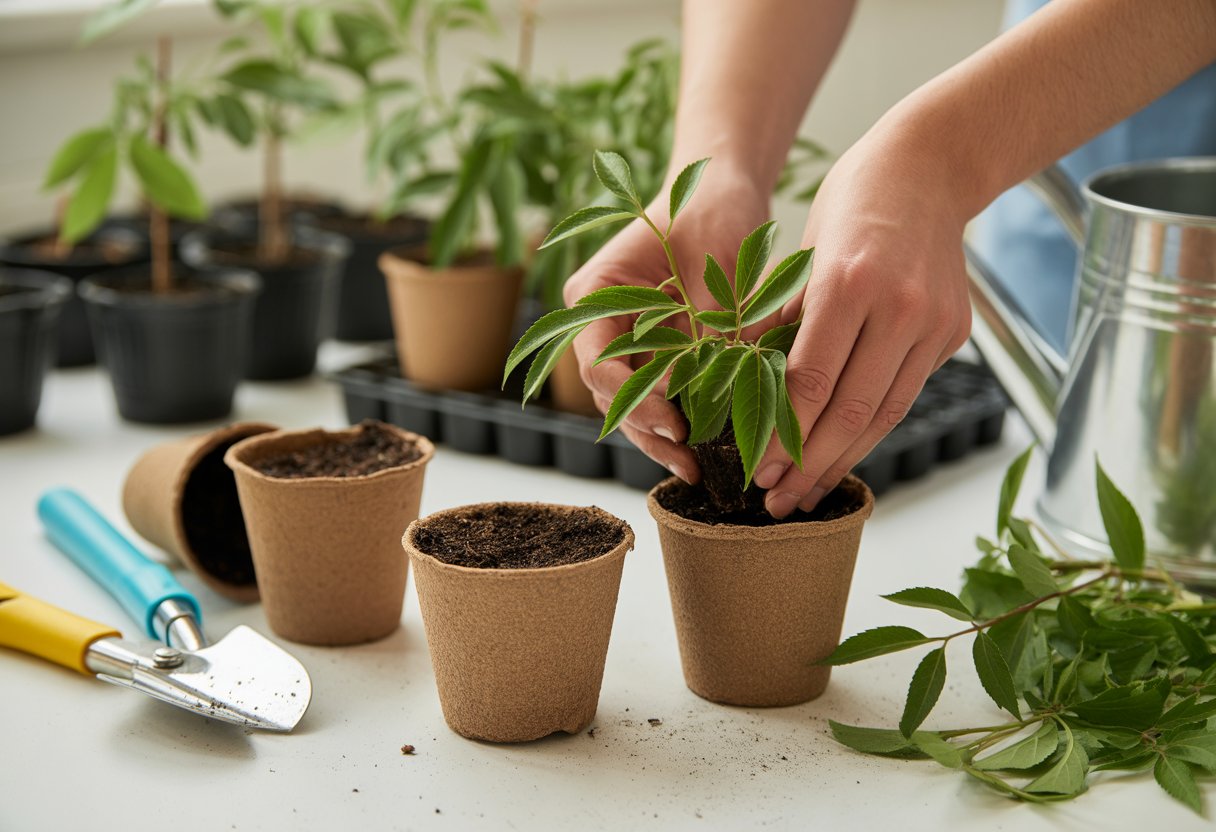
You can also propagate elderberry by layering or sowing seeds, but honestly, cuttings just work faster and more reliably. Timing and gentle handling of cuttings really make a difference for healthy, productive elderberry bushes.
Understanding Elderberry Varieties and Growth Requirements
Elderberries come in a surprising range of species and cultivars, each with their own quirks and preferences. They do best when you match them to the right soil, light, and moisture conditions.
Knowing these details gives you a leg up when propagating and caring for your plants.
Common Elderberry Species and Cultivars
Sambucus canadensis (American or black elderberry) is a North American favorite thanks to its big clusters of dark berries. It likes moist spots and copes well with anything from full sun to part shade.
Sambucus nigra (European or black elderberry) is grown all over for its edible berries and traditional remedies. Cooler climates suit it best, but it’s pretty adaptable.
There’s also red elderberry (Sambucus racemosa) and blue elderberry (Sambucus caerulea), which differ in berry color and where they grow best.
Cultivars can vary in yield, berry size, and disease resistance. ‘Adams’ and ‘Johns’ are two black elderberry types people pick for their reliable fruit production.
Optimal Growing Conditions
Elderberries want full sun to part shade—shoot for at least 6 hours of direct sunlight each day. They need steady soil moisture but hate soggy feet.
Most varieties are happiest between 55°F and 75°F. They’re pretty tough, but extreme heat or drought can stress them, so some protection helps.
Good air flow is key for keeping fungal diseases at bay. Pruning after harvest makes a big difference for next season’s growth.
Soil Type and Preparation
Elderberries like well-drained, fertile soils loaded with organic matter like compost or peat moss. Aim for a pH between 5.5 and 6.5—slightly acidic to neutral works great.
Mixing in perlite or vermiculite can help if your soil is heavy. Avoid planting in straight clay unless you seriously amend it.
Loosen the soil 12-18 inches deep before planting. A 2-3 inch layer of organic mulch on top keeps the roots happy and the moisture in.
Propagating Elderberry: Methods and Techniques
You’ve got a few solid options for propagating elderberry, depending on what you have on hand and how old the plant is. You’ll need basic tools like sharp pruning shears, a good potting mix or garden soil, and maybe some rooting hormone for extra insurance.
Growing Elderberry From Cuttings
Take hardwood cuttings during dormancy in late fall or winter. Cut 6-10 inch pieces with at least 3-4 buds each.
Dip the base in rooting hormone if you want to boost your odds. Stick the cuttings 3-4 inches deep in moist, well-draining mix or straight into your prepped garden bed.
Leave about 12-18 inches between cuttings so they have room to grow. Mulch helps keep things moist and weeds down.
Water regularly, but don’t drown them. Roots usually show up in 4-6 weeks.
Using Softwood Cuttings
For softwood cuttings, snip 4-6 inch pieces from new, flexible growth in late spring or early summer. Cut just below a leaf node.
Strip off the lower leaves and dip the ends in rooting hormone. Plant them in a moist potting mix that drains well.
A misting bottle keeps the humidity high—just don’t let the cuttings get soggy. Covering them loosely with a plastic bag helps, but make sure air can move so mold doesn’t take over.
Roots usually form in 3-5 weeks. After that, let the cuttings get used to outdoor conditions before transplanting.
Root Suckers and Division
Elderberries often send up root suckers, which are easy to dig up and move in early spring or fall. Pick suckers at least 6 inches tall with some roots showing.
Dig carefully to avoid breaking the roots. Plant in well-drained soil and leave 4-6 feet between them.
You can also divide an older shrub by digging it up and splitting off healthy root sections with shoots. It’s a bigger job, but it works for mature plants.
Mulch and water well to help them settle in.
Planting, Transplanting, and Early Care
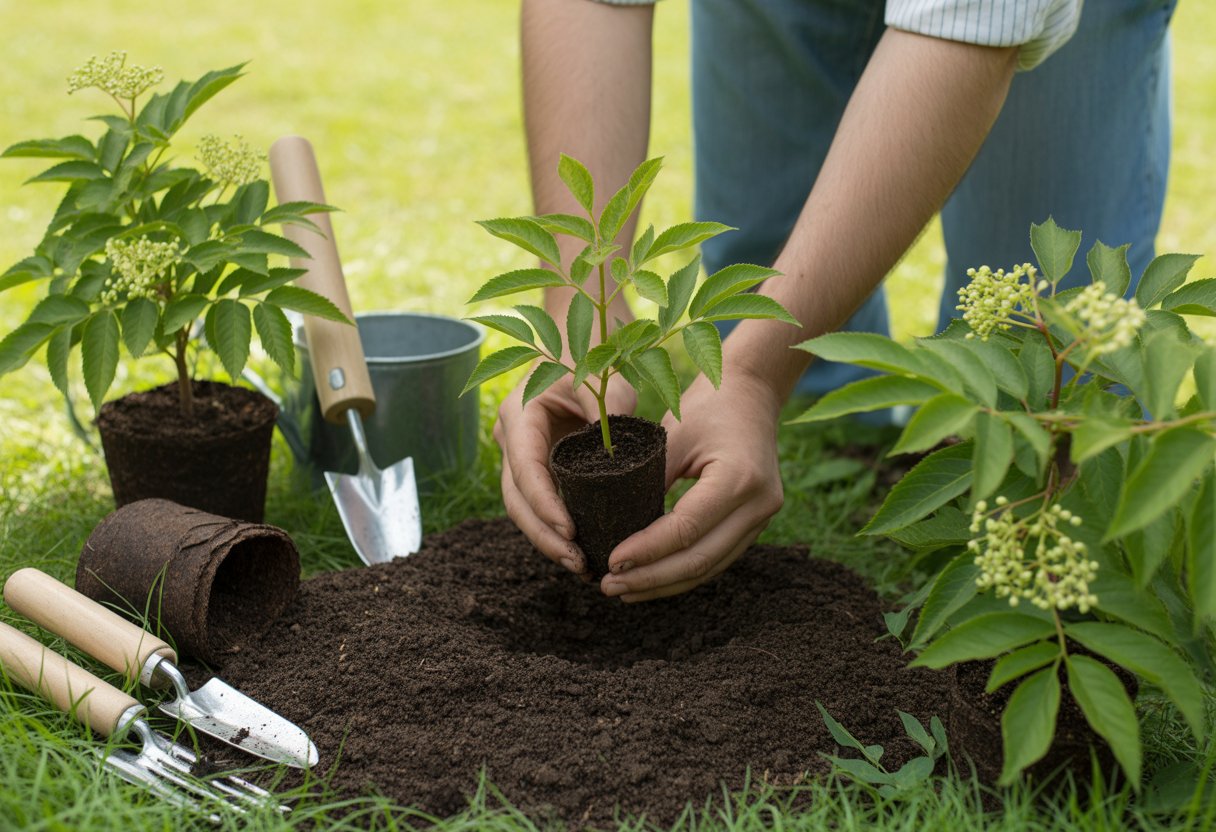
Elderberry likes well-drained, loamy soil and steady moisture while it gets established. Giving plants enough space and handling them gently helps avoid transplant shock.
Early on, the main thing is to keep the roots healthy and prevent rot.
Planting Propagated Elderberry
Pick a spot with full sun to partial shade and a pH between 5.5 and 6.5. Space plants 6 to 10 feet apart so they have room to breathe and grow.
Dig holes about twice as wide as the root ball, but don’t go deeper—too deep can cause water issues. Set the crown just above soil level.
Water thoroughly after planting and keep the soil moist (but not soggy) for the next few weeks.
A layer of mulch helps keep moisture in and weeds out. Once established, elderberry can handle a little drought, but regular watering during the first year really matters.
Transplanting Elderberry Successfully
Move elderberry in early spring or fall when it’s cooler to lower stress. Dig around the roots gently to keep as many intact as you can.
Trim any damaged or super long branches before transplanting. This helps the plant put energy into root recovery.
Plant in soil similar to where it came from. After transplanting, water deeply and mulch.
Watch for signs of shock like wilting or dropping leaves. If you spot trouble, extra water and a bit of shade can help.
Fertilization and Irrigation Best Practices
Use a balanced fertilizer, like 10-10-10, in early spring before new growth starts. Hold back on the nitrogen—too much can make stems weak and attract disease.
Give elderberry about 1 inch of water per week during dry spells. Drip irrigation or soaker hoses work well and keep water off the leaves, which helps prevent fungal problems.
Adjust how often you water based on your soil type. Sandy soils dry out fast and might need more frequent watering.
Check soil moisture regularly to avoid both drought and soggy roots. Either extreme can mess with plant health and fruiting.
Maintaining Healthy Elderberry Plants
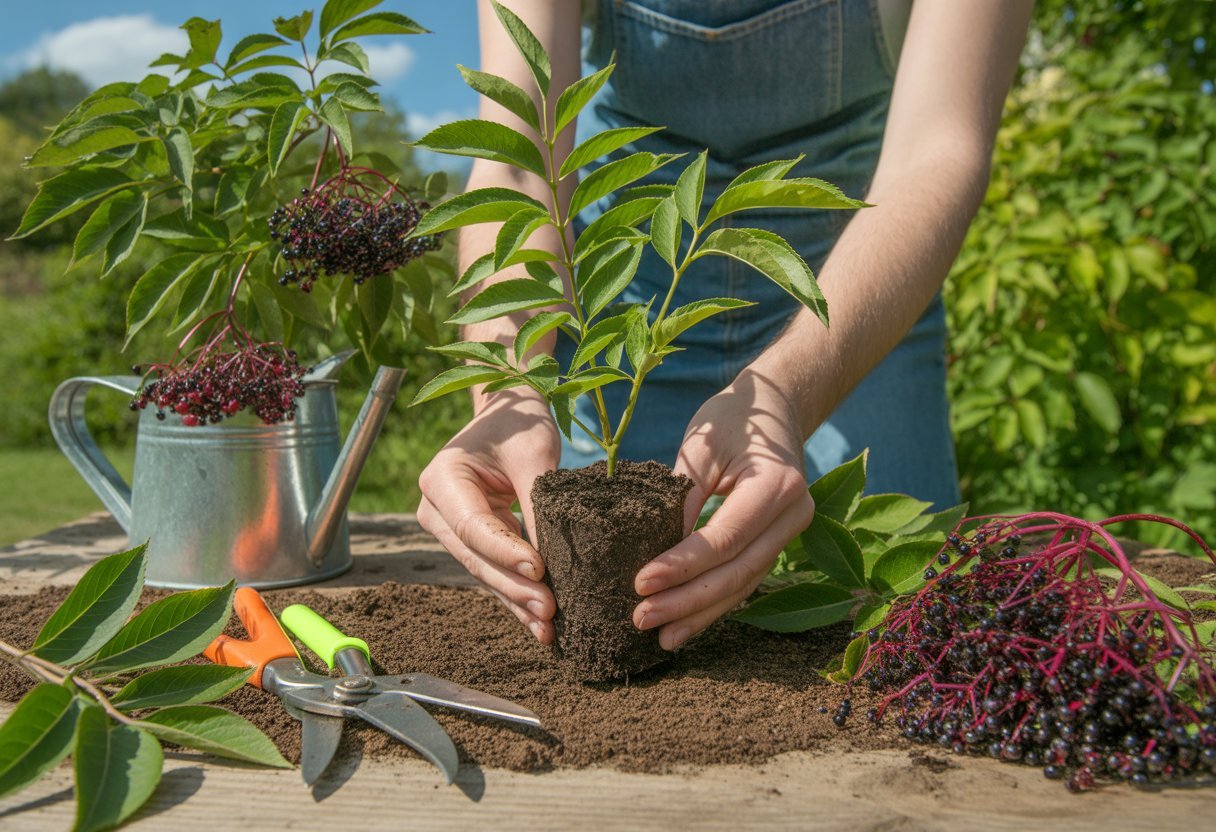
Taking care of elderberry means regular pruning, keeping an eye out for pests, and making sure pollinators can do their thing. These steps go a long way toward strong plants and a good berry harvest.
Pruning and Harvesting
Prune elderberry every year in late winter or early spring before new growth kicks in. Cut out dead, weak, or crossing branches to open up the plant for sun and air.
Harvest berries when they’re fully dark and just a bit soft—usually late summer to early fall. Snip off whole clusters to protect the plant for next year.
For dwarf elderberry, cutting back to six inches each year encourages fresh, strong shoots.
Always use clean tools to avoid spreading disease, especially powdery mildew. Pruning also keeps the plant manageable, which helps if you’re short on space.
Managing Diseases and Pests
Powdery mildew shows up as white, powdery spots on leaves. You can help prevent it by watering at the base and pruning for better air flow.
Aphids love elderberries and can spread viruses while sucking sap. Ladybugs and insecticidal soaps work well to control them.
Check your plants weekly during the growing season. The earlier you catch pests, the easier they are to manage.
Choosing resistant types like American black elderberry can make life easier. Keeping the area around your plants clean and free of debris helps cut down on fungal spores and pest hideouts.
Supporting Pollination and Cross Pollination
Elderberries need insect pollinators like bees if you want them to set fruit. When you plant elderberries near other flowering plants, you’ll see more pollinators stopping by.
Mixing different elderberry types can really kick up the berry size and yield. For instance, putting American black elderberry close to dwarf elderberry tends to boost fruit set.
Try to plant several clones or varieties within about 50 feet of each other. That mix helps keep the genetics strong for better pollination. Oh, and skip the systemic insecticides during bloom—pollinators need a break.
Not bad. I’d add that soil prep matters way more than most people think.
Appreciate the honest feedback, Joshua. Gardening is definitely more nuanced than any single article can cover. Local conditions play a huge role. -Plant Native Team