Best Hand Tools for Gardeners Essential for Efficient and Precise Gardening Tasks
Last updated: September 30, 2026
Gardeners really depend on the right tools to make their work smoother—and honestly, more enjoyable. The best hand tools for gardeners usually include a trowel, pruning shears, a hand fork, and a weeder. These cover most basic gardening needs, like digging, trimming, loosening soil, and yanking out those stubborn weeds.
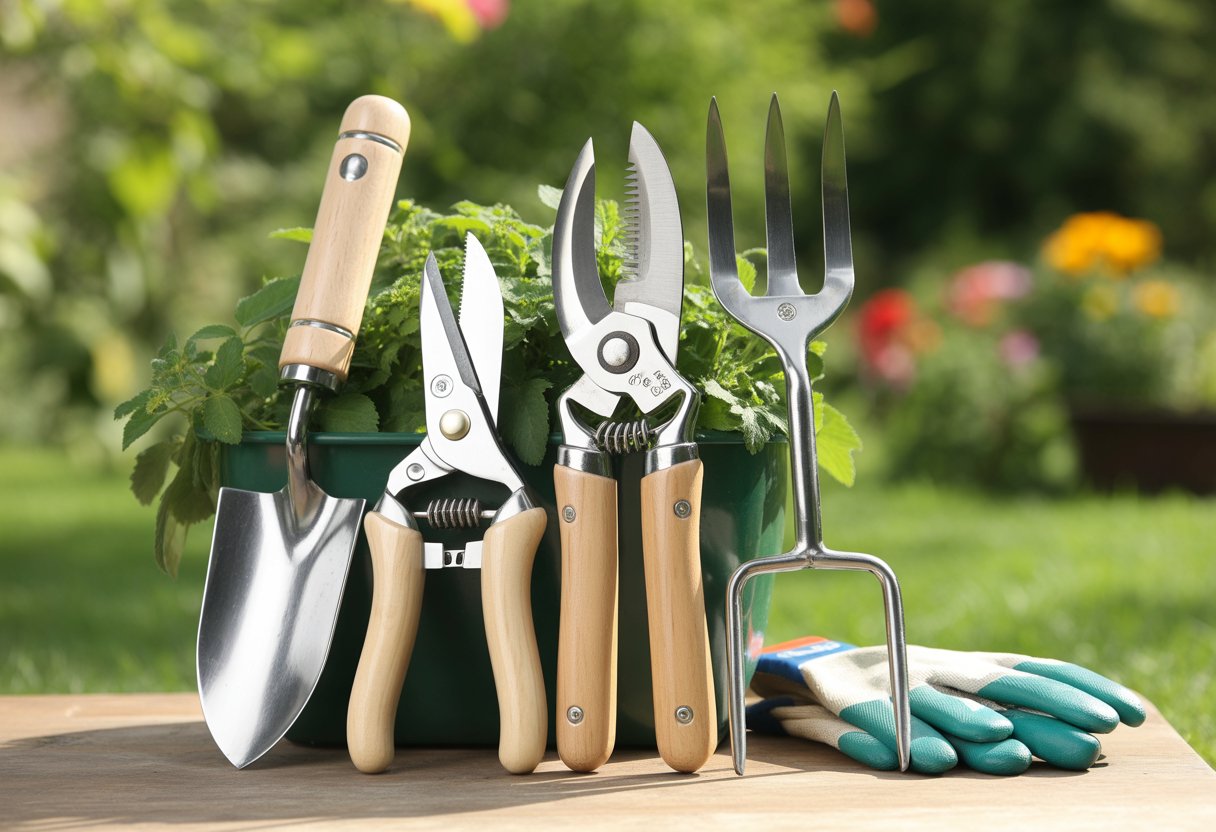
Picking reliable gardening tools really does improve precision and helps cut down on muscle strain. Whether you’re tending a tiny flower bed or a sprawling veggie patch, having the right tool in your hand just makes everything click.
Quality matters—a lot. Durability and comfort are huge too. Most gardeners I know reach for tools with sturdy materials and ergonomic handles, since nobody wants hand cramps after five minutes.
Essential Hand Tools Every Gardener Needs
Efficient gardening needs a handful of precise tools made for specific jobs. The right tool makes planting, pruning, prepping soil, and just general maintenance a lot less of a chore.
Trowel Selection and Usage
A trowel is a must-have for digging small holes, moving seedlings, and mixing up soil. Look for a trowel with a stainless steel blade—those hold up better and don’t rust as easily.
Most trowel blades run about 6 to 8 inches, which feels like a good balance between reach and control. Ergonomic handles are a lifesaver for your grip, especially if you’re out there for a while.
Sheaths or blade covers help keep the edge sharp. Every so often, sharpen the blade so it slices through dirt and roots without extra effort.
Pruners and Shears for Precise Cutting
Pruners (or secateurs, if you’re feeling fancy) are essential for trimming and shaping plants. Bypass pruners give clean cuts and work best on live branches. If you’re dealing with dry or dead wood, anvil pruners do a better job.
Shears handle leaves and lighter stems. Stainless steel blades stay sharp and don’t rust quickly, which is always a plus.
Clean and oil them regularly to keep rust at bay and make sure they keep cutting cleanly.
Shovel, Spade, and Garden Fork Functions
Shovels, spades, and garden forks each do something different. Shovels move loose stuff like soil and compost. Their rounded blades are great for scooping.
Spades have flat, rectangular blades that dig straight-edged holes and edge garden beds. The narrow shape cuts into turf or compacted dirt with less fuss.
Garden forks, with their sturdy tines, break up compacted soil and help aerate it before planting. They’re gentle on roots, which is honestly pretty important.
Rakes and Hoes for Soil Preparation
Rakes come in two main types: leaf rakes and garden rakes. Garden rakes, with their stiff metal tines, level soil and break up those annoying clumps.
Leaf rakes use flexible tines to gather debris. Hoes come in a few styles—draw hoes, scuffle hoes, and so on. They loosen soil, pull weeds, and shape planting rows.
A sharp, rust-resistant blade on a hoe makes soil prep way easier. Both tools save you a ton of effort when you’re getting beds ready.
Specialized Tools for Raised Beds and Vegetables
Raised bed gardening calls for a few specific tools that make planting and harvesting less of a headache. The right equipment makes transplanting seedlings, starting seeds, and gathering vegetables a lot gentler on both plants and soil.
Transplanting Seedlings and Seed Starting
Getting seedlings into raised beds takes a gentle touch and the right tool. A dibber or pointed trowel pokes holes for young plants without messing up their roots.
For seed starting, a mini hand rake or a small hand fork works well to loosen soil in trays or cell packs. These tools help roots breathe and keep moisture right, which is especially important in tight raised beds.
Comfortable, ergonomic handles mean less hand fatigue. A good grip is key when you’re moving fragile seedlings—nobody wants transplant shock.
Harvesting Tools for Vegetables
Harvesting veggies from raised beds needs tools that cut cleanly and don’t damage nearby plants. A sharp garden shear or a pair of scissors lets you snip leafy greens, herbs, and soft stems with precision.
For root crops like carrots or beets, a fork or claw cultivator loosens the soil so you can lift them out without snapping them. These tools also help keep the soil structure intact and avoid disturbing neighboring plants.
Corrosion-resistant blades are a smart pick, since raised beds often stay damp and can wear tools out faster.
The Hori Hori Knife
The hori hori knife is a favorite for raised beds and veggie gardens. It’s a digging knife, weeder, and cutter all rolled into one.
Its sturdy, serrated blade slices through tough roots and compacted soil with surprising ease. You can use it to dig, cut, or transplant without swapping tools every minute.
Some hori hori knives even have a measurement scale on the blade, so you can check planting depth. It’s a solid all-in-one tool for weeding, planting, and harvesting in tight garden spaces.
Caring for Your Garden with Hand Tools
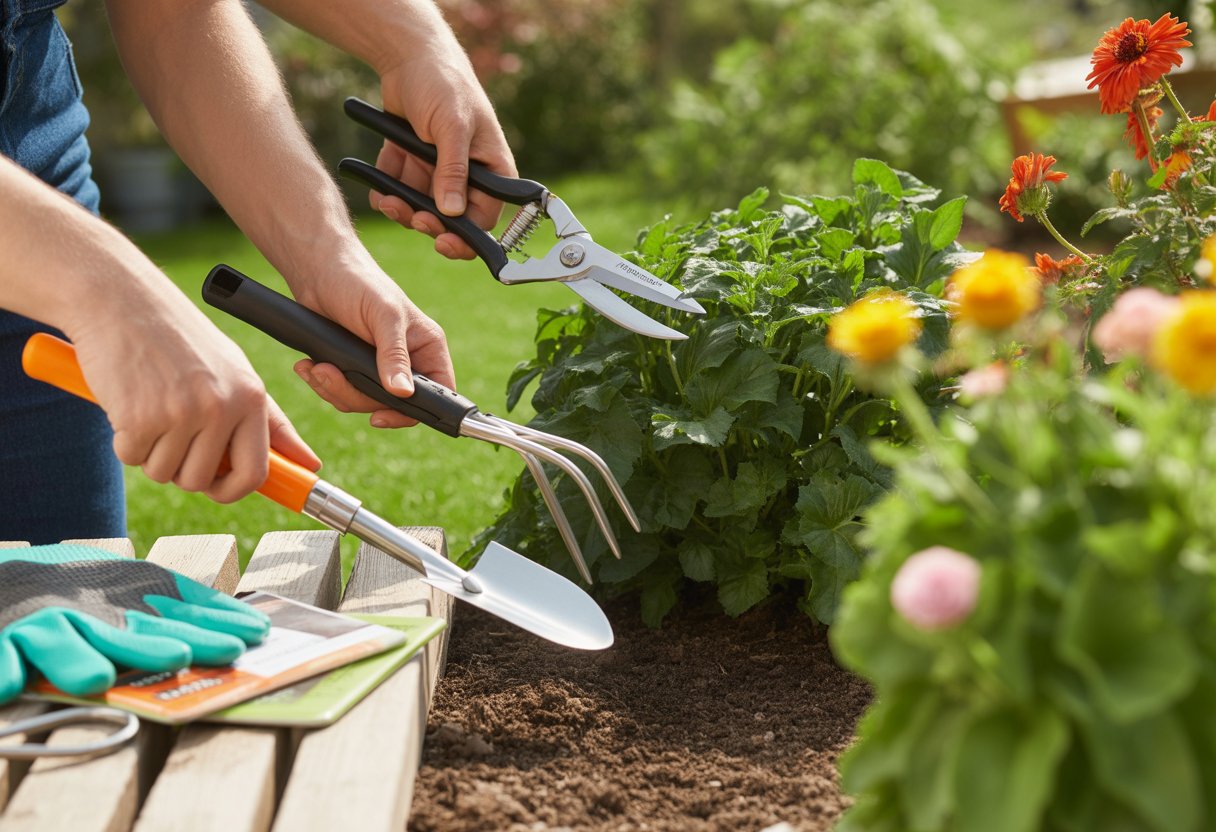
Keeping your garden in shape takes a steady hand and the right tools. Managing soil, plants, and watering well all add up to healthier plants.
Weeding and Mulching Techniques
Weeding matters if you want your plants to thrive. Gardeners use hoes and weeders to pull weeds out by the root, which keeps them from coming back. It’s way easier to pull weeds when the soil’s damp.
After weeding, tossing down some mulch around your plants helps keep moisture in and blocks new weeds. Organic mulches like bark or straw break down and improve the soil over time.
A 2-3 inch mulch layer usually works well—enough to control weeds without suffocating roots. Hand-weeding around delicate plants is safer than going in with big tools.
Watering by Hand
Hand watering gives you control, especially for young plants and container gardens. Watering cans or hoses with a gentle spray let you avoid splashing soil or damaging leaves.
When you water by hand, you’ll spot dry patches and can tweak your routine as needed. Deep watering, but not too often, encourages roots to grow down instead of staying shallow.
Containers dry out faster than garden beds, so they need more attention. Water until it drains out the bottom to make sure roots get enough, but don’t let pots sit in water.
Potting, Planters, and Container Maintenance
Taking care of pots and planters keeps them in good shape and helps your plants. Clean containers regularly to stop pests and diseases from taking hold.
Scrub pots with mild soap or a diluted bleach solution to get rid of algae and fungus. Pick a potting mix that drains well and matches your plant’s needs.
Change out the topsoil or repot now and then to prevent roots from crowding. Make sure drainage holes stay clear—standing water is a root killer.
Propping pots up a little improves airflow and drainage, especially if you’ve got them in shady or damp spots.
Choosing and Maintaining Quality Garden Tools
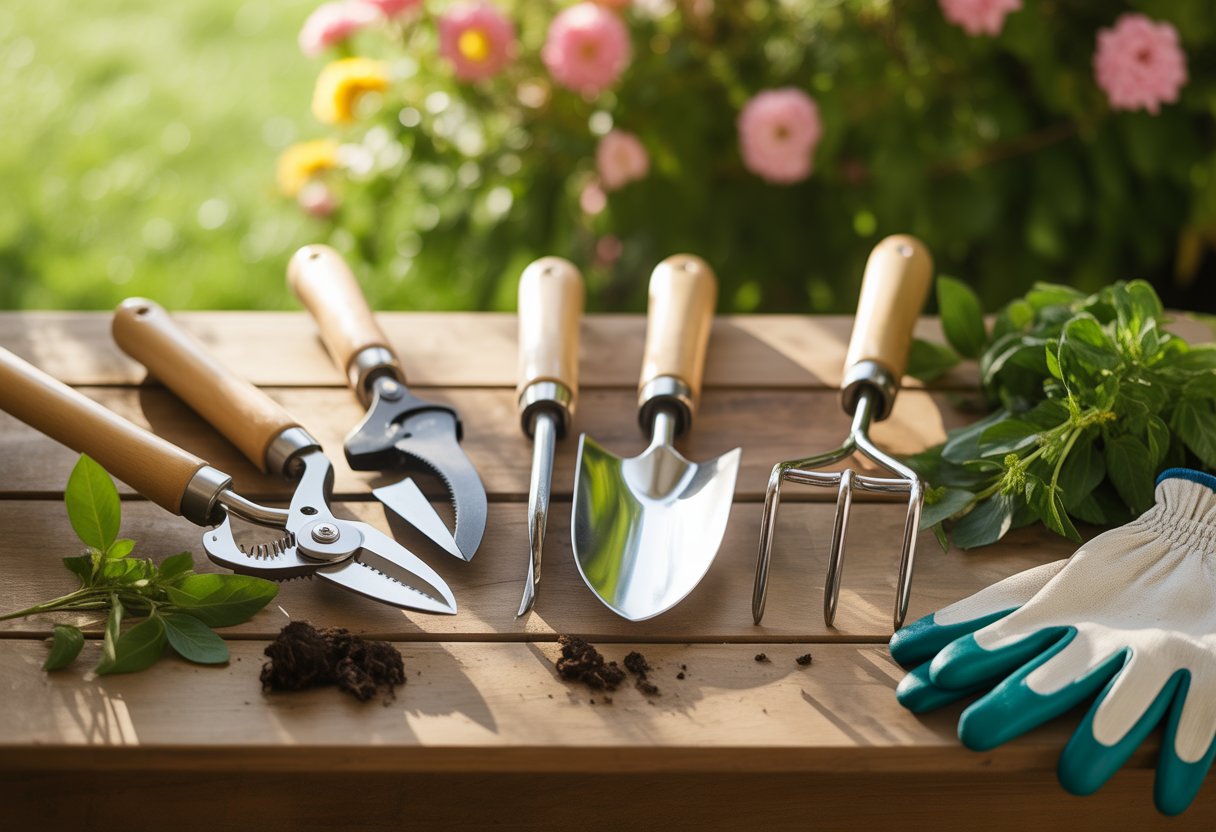
Buying durable garden tools saves you hassle down the road. Taking care of them means they’ll last and keep working like they should.
Selecting Durable Materials
Go for tools made from stainless steel, carbon steel, or forged steel—they hold up to rust and heavy use. Handles made from ash or hickory hardwood feel sturdy and comfortable, while fiberglass handles are lighter but still tough.
Skip tools with flimsy metal or plastic parts. Heavy-duty tools just put up with more abuse from soil and moisture. If you can, choose tools with a full tang (where the metal runs into the handle) for extra strength.
Proper Cleaning and Storage
Clean your tools right after using them to stop rust and buildup. Knock off dirt with a stiff brush or rag. Every so often, wash them with soap and water to get rid of residue and germs.
Dry tools well before putting them away. A thin coat of oil on metal parts helps prevent rust. Store them in a dry, airy spot—garage, shed, wherever you’ve got space.
Hang up tools or use racks to keep handles from warping. A bit of regular care keeps your tools safe and means you won’t need to replace them as often.
Where to Find the Best Deals
You’ll often spot the best deals on garden supplies during seasonal sales, especially right at the start of spring or as fall winds down.
Local garden centers sometimes clear out quality hand tools at steep discounts.
Online retailers make it easy to check out brands famous for durability, and you might just find lower prices there, too.
I always look at customer reviews and warranties before committing—no one likes a flimsy trowel or a broken rake.
Farm supply stores usually carry heavy-duty tools for just about any gardening job.
If you join gardening groups or forums, you might stumble across bulk discounts or get some real-world recommendations on which sellers to trust.
 Looking for a nursery that carries native plants?
Browse our native plant nursery directory