Jerusalem Artichoke (Helianthus tuberosus)
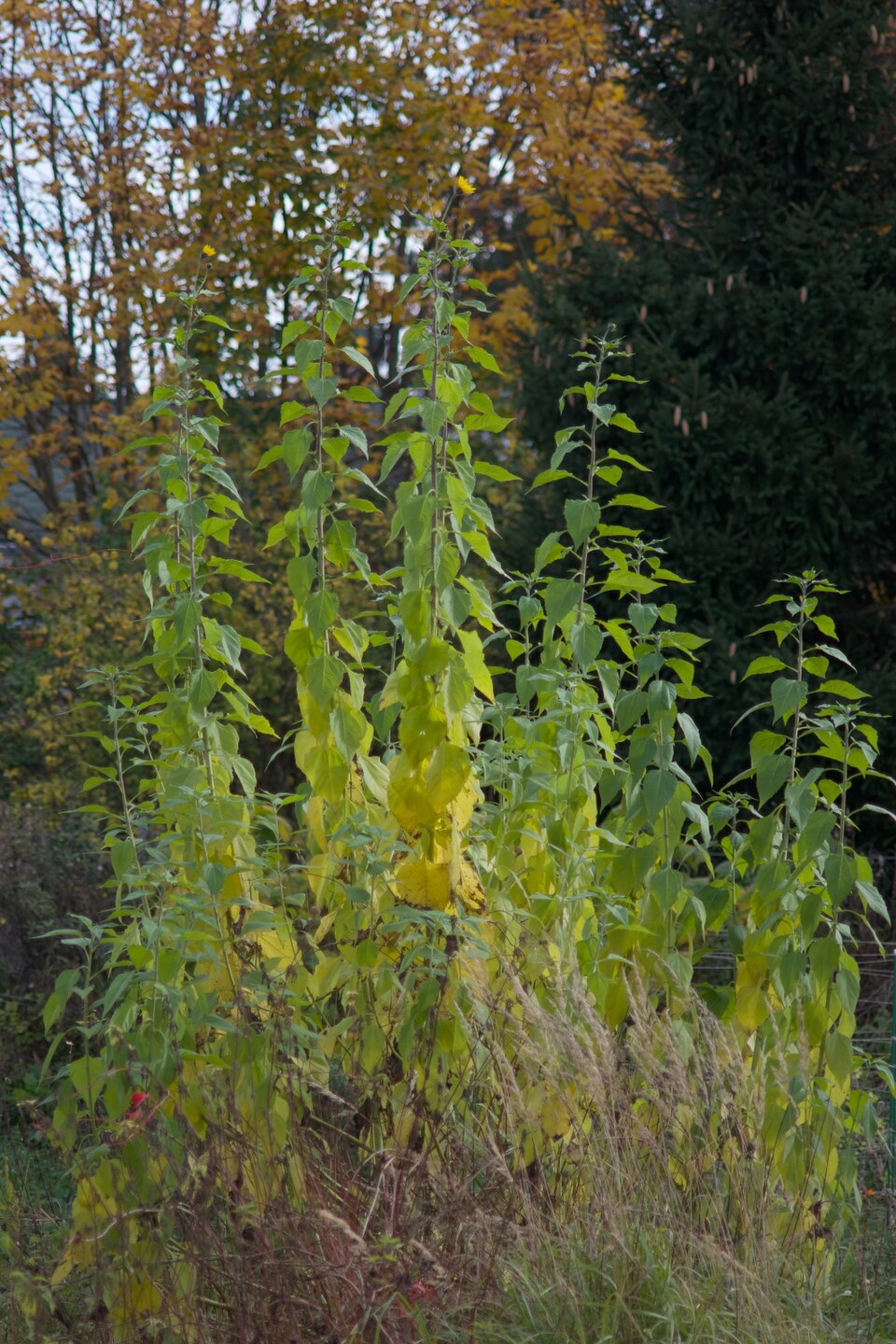
Helianthus tuberosus, commonly called Jerusalem Artichoke or Sunchoke, is a vigorous native perennial sunflower indigenous to central and eastern North America that offers a remarkable combination of ecological value, wildlife benefit, and human utility. A member of the Asteraceae (daisy) family, it stands 6 to 10 feet tall when flowering in late summer and autumn, producing a profusion of cheerful 2- to 3.5-inch bright yellow sunflower-like flowers that attract butterflies and native bees in impressive numbers. Despite its common name, the plant has no connection to Jerusalem — the name is likely a corruption of the Italian girasole (sunflower), reflecting the plant’s introduction into European gardens in the early 17th century as a food crop.
The plant is grown both as an ornamental native wildflower and as a food crop for its underground tubers — knobbly, potato-like rhizomes with a crisp, slightly sweet, nutty flavor that can be eaten raw or cooked. These tubers are rich in inulin, a prebiotic fiber, giving them their nutritional value as well as their reputation for, shall we say, digestive enthusiasm in some consumers. Native peoples across much of North America cultivated Jerusalem Artichoke for food for centuries before European contact, and it was one of the first North American food plants introduced to Europe, where it became an important crop before being largely displaced by the potato.
In the native landscape, Jerusalem Artichoke grows in moist to average soils along streams, in meadows, and at woodland edges, forming large, spreading colonies from its prolific tuber production. It is a powerful plant for attracting late-season pollinators — blooming in September and October when native bee populations are at their peak but many other flowers have ended — and the seeds are eaten by finches and other birds through winter. For Indiana and Ohio gardeners who want a dramatic, tall, wildlife-friendly native plant that also happens to produce edible tubers, Jerusalem Artichoke is an exceptional choice.
Identification
Jerusalem Artichoke is one of the tallest native wildflowers in the Indiana/Ohio flora, routinely reaching 6–8 feet in height, with exceptional specimens reaching 10 feet or more. The overall plant form is strongly upright, with stout, branching stems that become densely leafy toward the top before giving way to dozens of flower heads in the crown of the plant.
Leaves
The leaves are large, rough-textured, and sandpapery to the touch — one of the plant’s most diagnostic field characteristics. Lower leaves are opposite, broadly ovate to lance-ovate, 4–8 inches (10–20 cm) long, with a pointed tip, coarsely toothed margins, and a distinctive winged petiole. Upper leaves tend to be alternate, narrower, and smaller. All leaves are densely covered with stiff, rough hairs on both surfaces, giving them the characteristic sandpaper texture. The surface roughness serves to discourage most leaf-eating insects, giving the plant a degree of natural pest resistance. Leaves are deep green above, paler beneath.
Flowers & Fruit
The flower heads are produced in abundance at the tips of the upper branches from late August through October — the latest-blooming native sunflower in the Indiana/Ohio region. Each head is 2 to 3.5 inches in diameter, with 10–20 bright yellow ray florets surrounding a central disc of yellow tubular florets. The overall appearance is similar to a smaller, somewhat looser garden sunflower. The flowers are excellent for pollinators, producing abundant nectar and pollen through the autumn season. Unlike cultivated sunflowers, the seeds are small and primarily valuable for birds rather than human consumption.
Tubers
The plant produces knobbly, irregular tubers (actually swollen rhizome tips) at the ends of its underground rhizome network. These tubers range from the size of a small egg to several inches long, with a thin, reddish-brown to pale tan skin and crisp white flesh. They are produced in abundance — a single mature plant colony may yield 5–10 pounds of tubers per season. The tubers overwinter in the ground, providing a food source for wildlife, and sprout new shoots the following spring.
Quick Facts
| Scientific Name | Helianthus tuberosus |
| Family | Asteraceae (Daisy / Sunflower) |
| Plant Type | Native perennial wildflower / edible tuber crop |
| Mature Height | 7 ft (range: 5–10 ft) |
| Sun Exposure | Full Sun to Part Shade |
| Water Needs | Low to Moderate (Drought Tolerant once established) |
| Bloom Time | September – October |
| Flower Color | Bright yellow |
| Edible Parts | Tubers (raw or cooked) |
| Wildlife Value | High — butterflies, bees, birds; tubers for deer & small mammals |
| USDA Hardiness Zones | 3–9 |
Native Range
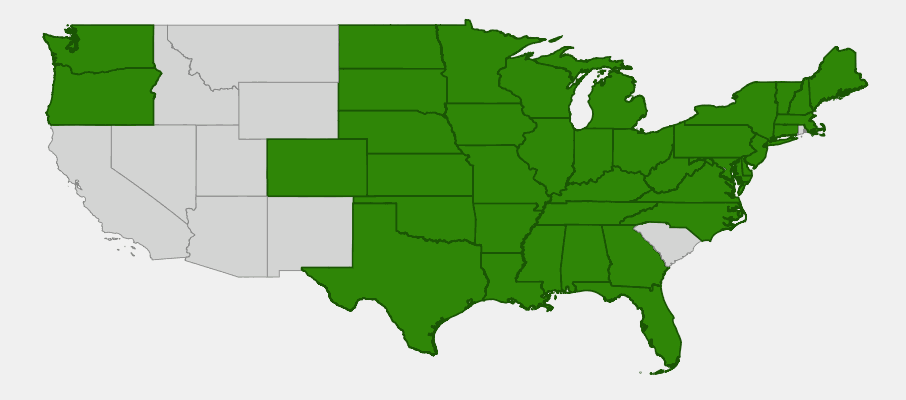
Jerusalem Artichoke is native to a broad range across the interior of North America, originally centered in the tallgrass prairie region of the central United States and extending east into the deciduous forest zone. The species’ original native range is somewhat difficult to establish with precision, as Indigenous peoples had cultivated and spread it widely across much of North America for food long before European contact, making the distinction between native populations and cultivated/escaped populations complex. It is generally considered native from the Great Plains east to the Atlantic coast, and from southern Canada to Florida and Texas.
In Indiana and Ohio, Jerusalem Artichoke is found in a variety of natural habitats including floodplain forests, stream corridors, moist prairie remnants, and disturbed areas near water. It is a characteristic species of the tall-forb community that develops in moist, rich soils along river and stream corridors throughout the region. Given its history of cultivation by Indigenous peoples, some populations in the region may represent naturalized escapes from former cultivation rather than original wild populations, though this distinction is largely academic from a native plant gardening perspective.
Across its range, the plant grows in moist to average soils in full sun to light shade, typically in disturbed, nitrogen-rich ground. It is one of the most adaptable and vigorous native sunflowers, capable of thriving in a wide range of conditions once established. Its drought tolerance, once roots are established, allows it to persist and even spread in drier conditions than its natural habitat preference might suggest.
📋 Regional plant lists featuring Jerusalem Artichoke: Indiana & Ohio
Growing & Care Guide
Jerusalem Artichoke is one of the easiest native plants to grow — almost too easy, in fact. Once established, it spreads vigorously and is essentially unstoppable without physical barriers. Plan its placement carefully, giving it space to expand or installing root barriers.
Light
Jerusalem Artichoke prefers full sun to part shade. In full sun (6+ hours), it produces the most flowers and the most robust tuber crop. In part shade (3–6 hours), the plant grows taller and more open, with somewhat reduced flowering, but remains vigorous. It will not flower well in deep shade.
Soil & Water
The plant is highly adaptable to soil conditions — it grows in sandy, loamy, or clay soils and is tolerant of both moderately dry and moist conditions. It prefers moist, fertile soil but adapts well to average garden conditions. Once established, it is quite drought-tolerant, making it suitable for low-maintenance plantings. Avoid extremely poor, dry sandy soils for best performance. The plant does not require supplemental fertilization.
Planting Tips
Plant tubers in spring, setting them 3–5 inches deep and 12–18 inches apart in rows, or scatter them 18–24 inches apart in a naturalized area. Tubers are available from native plant nurseries or specialty food suppliers (labeled as “sunchoke”). Growth emerges in mid-spring and accelerates rapidly through summer. The plant may take a year or two to reach full flowering size from small tubers. In the garden, plant in a dedicated bed or use buried root barriers (12–18 inches deep) to control spreading.
Managing the Colony
Jerusalem Artichoke is one of the most vigorous spreaders in the native plant palette — a single plant can colonize a wide area within a few years. Contain it by digging out tubers at the perimeter of the desired colony each fall, or harvest the tubers regularly for food, which naturally reduces the colony’s expansion. Once established in an unwanted location, complete eradication requires diligent multi-year effort to remove all tubers.
Landscape Uses
- Back of border or screen planting — the tall height provides structure and screening
- Rain gardens and bioswales — tolerates occasional flooding
- Wildlife meadows — exceptional for late-season butterflies and seed-eating birds
- Edible landscape — productive food crop alongside ornamental value
- Erosion control on slopes and stream banks
- Permaculture gardens — a staple of food forest understory plantings
Wildlife & Ecological Value
Jerusalem Artichoke is a wildlife powerhouse, providing food and habitat value from summer through winter across multiple animal groups.
For Butterflies
The blooms, appearing in September and October when few other native wildflowers remain, are exceptionally valuable for migrating and late-season butterflies. Monarchs, Eastern Tiger Swallowtails, Black Swallowtails, Painted Ladies, Red Admirals, and numerous skipper species nectar heavily on the flowers during autumn migration. In Indiana and Ohio, a patch of Jerusalem Artichoke in bloom can attract remarkable numbers of butterflies on warm autumn days, providing critical fuel for the southward migration.
For Native Bees
Late-season native bee populations — including native bumble bee species, sweat bees, long-horned bees, and mining bees — use Jerusalem Artichoke flowers heavily for both nectar and pollen collection as they provision final nests before winter. The abundant pollen is particularly important for bumble bee queens as they prepare for winter dormancy.
For Birds & Mammals
The seed heads are eaten by finches, sparrows, and other seed-eating birds. The tubers in the ground provide food for White-tailed Deer (which dig them up), Wild Turkey, and various small mammals including voles, moles, and raccoons. Dense Jerusalem Artichoke stands provide excellent cover for rabbits, pheasants, and other wildlife.
Ecosystem Role
As a tall, productive native plant that rapidly colonizes disturbed ground, Jerusalem Artichoke plays an important role in successional ecology — stabilizing eroded or disturbed sites while providing immediate habitat value. Its dense above-ground growth shades out many invasive weeds, and its substantial biomass contributes organic matter to the soil as it dies back each winter.
Cultural & Historical Uses
Jerusalem Artichoke was a critically important food plant for dozens of Indigenous nations across North America. Archaeological evidence suggests it was cultivated by Native Americans for at least 3,000 years. The Abenaki, Iroquois, Huron, Potawatomi, Ojibwe, and many other nations cultivated the plant for its tubers, which were eaten raw, roasted, boiled, dried, and ground into flour. The dried, powdered tubers could be stored through winter, providing a reliable carbohydrate source during lean months. For many woodland peoples of the Northeast and Great Lakes regions, sunchoke tubers were as important as corn, beans, and squash.
Samuel de Champlain, the French explorer, encountered sunchokes in New England around 1605 and brought them to France, where they quickly became a popular food crop in the 17th and 18th centuries. They spread rapidly across Europe, particularly in France, Italy, and Germany, where they were valued as both a vegetable and livestock feed. The name “Jerusalem artichoke” may derive from the Italian city of Terneuzen, where a significant shipment was received, or from the Italian word girasole (sunflower) corrupted by English speakers. The “artichoke” portion of the name reflects the somewhat similar flavor of the tubers to globe artichoke hearts.
Today, Jerusalem Artichoke (now more commonly marketed as “sunchoke”) is experiencing renewed culinary interest as a gourmet vegetable and health food. The tubers are rich in inulin — a soluble prebiotic fiber that feeds beneficial gut bacteria — making them prized in health-conscious diets. They can be eaten raw (sliced into salads), roasted, sautéed, or made into soups. Jerusalem Artichoke chips, dried sunchoke flakes, and inulin extracts are all commercially available. The plant is also being studied as a potential bioenergy crop due to its high biomass production and ease of cultivation without agrochemical inputs.
Frequently Asked Questions
Why is it called Jerusalem Artichoke if it’s from North America?
The name is a corruption of the Italian girasole (sunflower), and the “artichoke” portion refers to the similar flavor of the tubers to globe artichoke. The plant has no connection to Jerusalem, Israel, or the artichoke plant (Cynara scolymus).
Are Jerusalem Artichoke tubers safe to eat?
Yes, they are safe for most people. However, the inulin content causes significant digestive gas in many individuals, earning the plant its alternate nickname “fartichoke.” Cooking the tubers, especially roasting or slow-cooking, helps break down some of the inulin and reduces this effect. Start with small quantities if you are trying them for the first time.
Will Jerusalem Artichoke become invasive in my garden?
It can be extremely vigorous and difficult to contain. Any tuber fragment left in the ground will sprout a new plant. Plan for spreading or install physical root barriers before planting. If you want to enjoy the wildlife benefits without the spreading, plant it in a large container or in an area where spreading is acceptable, such as a dedicated naturalized bed or meadow area.
When should I harvest Jerusalem Artichoke tubers?
Tubers are best harvested after frost, which converts some inulin to fructose and sweetens the flavor. In Indiana and Ohio, harvest from October through March. They store well in the ground through winter in most years, or can be stored in a cool, moist location after harvest. Leave some tubers in the ground to regenerate the colony next year.
Does Jerusalem Artichoke need full sun to flower?
It performs best and flowers most abundantly in full sun. In part shade, flowering is reduced but still occurs. The plant will grow vegetatively in quite shady conditions but is unlikely to flower well with less than 4–5 hours of direct sun.