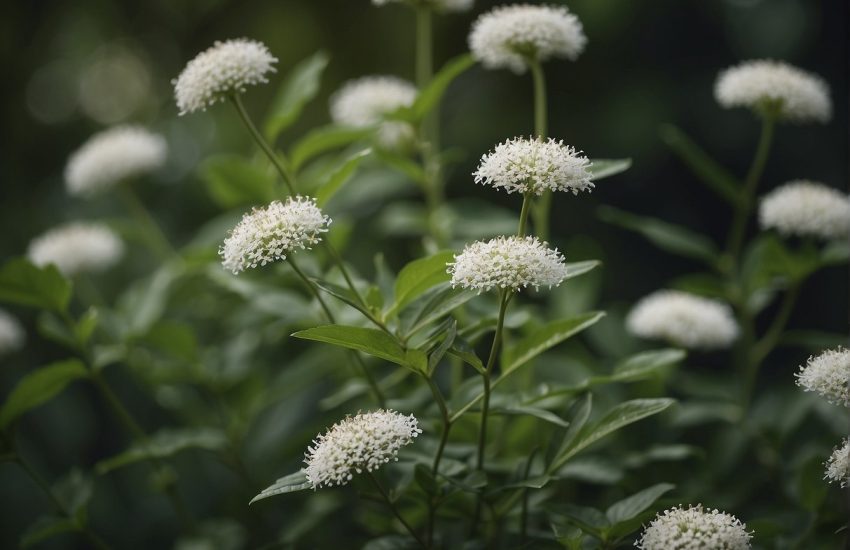
Sweet Flag (Acorus calamus)
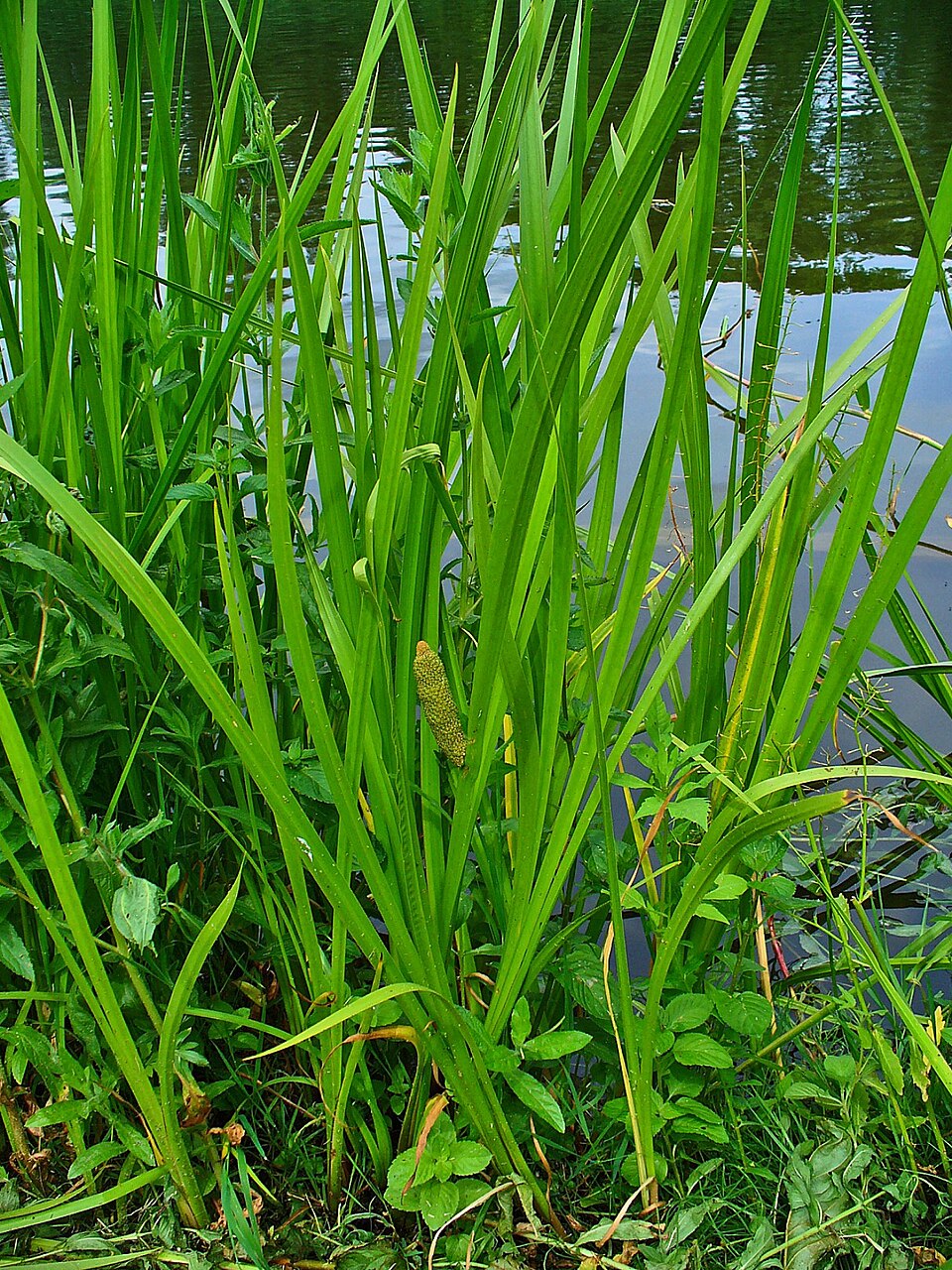
Acorus calamus, commonly known as Sweet Flag, Calamus, or Sweet Sedge, is a distinctive perennial emergent aquatic and wetland plant native to North America, Europe, and Asia. A member of the Acoraceae family — a small, ancient plant family of only two genera — Sweet Flag is recognized instantly by its long, sword-like leaves with a distinctive off-center midrib, its unusual angled flower spadix, and most memorably, by the extraordinarily spicy, sweet, and aromatic fragrance released when any part of the plant is crushed. This scent, variously described as spicy-sweet, cinnamon-like, or reminiscent of calamus root incense, permeates the air around wetland stands of the plant and has made it one of the most historically significant aromatic plants in human history.
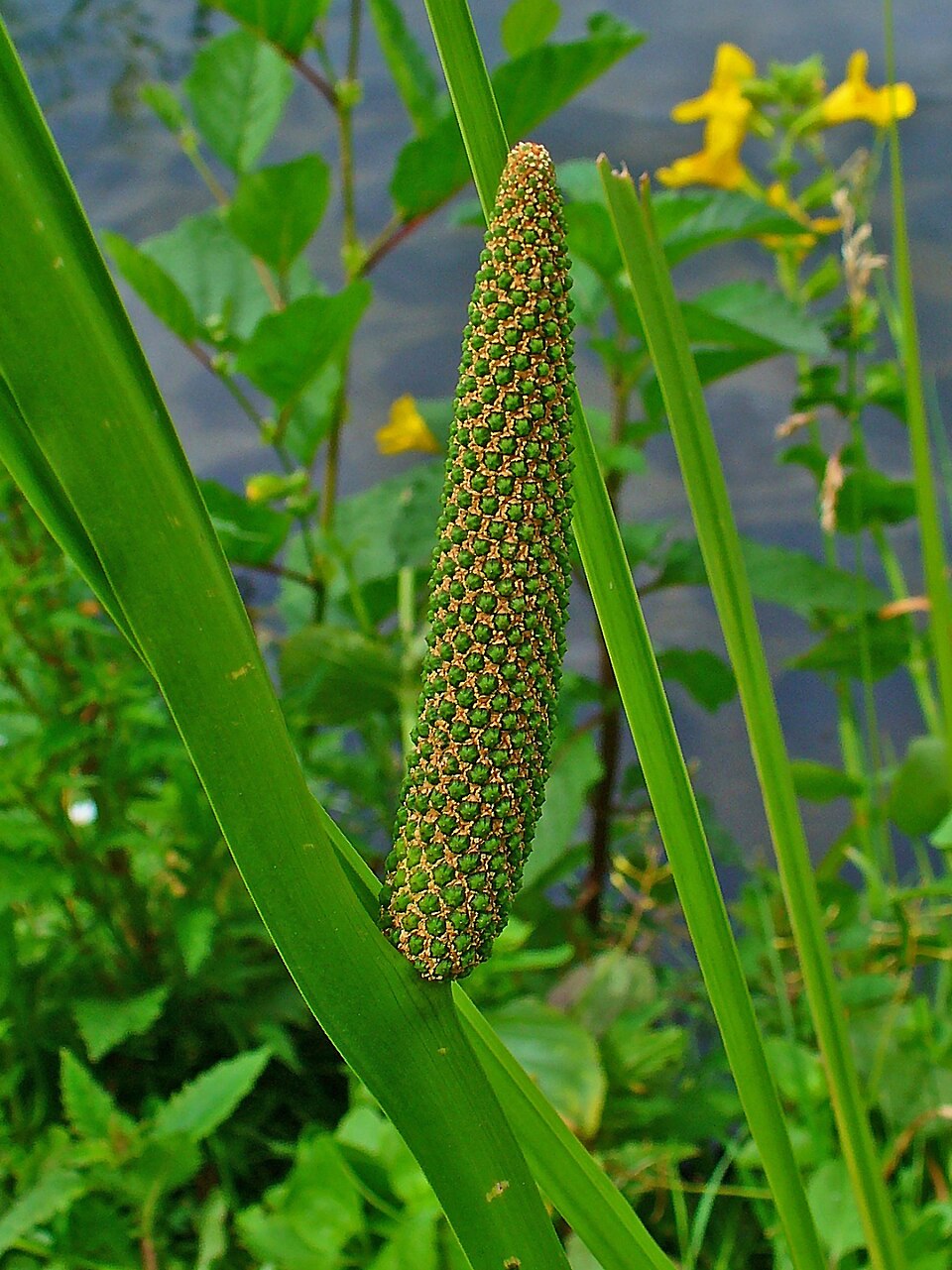
Growing in the shallow margins of streams, ponds, marshes, and lake shores, Sweet Flag forms large, spreading colonies from creeping aromatic rhizomes. The plant reaches 2 to 4 feet (sometimes up to 6 feet) in height in rich wetland conditions, producing masses of upright, narrow, iris-like leaves in a fresh, bright green. Unlike true sedges or irises which it superficially resembles, Sweet Flag can be distinguished by the characteristic off-center midrib that runs down one side of the blade (rather than the center), the distinctive fragrance of the crushed leaves, and the unique spadix flower — a cylindrical, tapering spike of tiny flowers that projects at an angle from mid-leaf, appearing as if it grew from the side of a leaf rather than from a separate stem.
For Indiana and Ohio water gardens, rain gardens, pond edges, and wetland restoration projects, Sweet Flag is one of the most valuable and ornamentally distinctive emergent plants available. Its fragrance, graceful form, ease of culture in wet conditions, and deep ethnobotanical history make it a plant with both functional and storytelling value in the landscape.
Identification
Sweet Flag is a perennial emergent aquatic plant forming dense clumps of upright, iris-like leaves arising from a thick, creeping, aromatic rhizome system just below the soil surface. The overall appearance is reminiscent of iris or cattail, but the distinctive fragrance and off-center midrib immediately distinguish it from similar plants.
Leaves
The leaves are the plant’s most prominent feature — sword-shaped (ensiform), upright, 2–4 feet (sometimes to 6 feet) long, and about ½ to 1 inch wide, with a crisp, firm texture. Leaves are bright to medium green, smooth and somewhat glossy. The most important identification feature is the off-center midrib — a raised midrib that runs along one side of the leaf (typically about one-quarter of the way across the blade width) rather than through the center. This off-center ridge is immediately visible on close inspection. When crushed, leaves release the characteristic sweet, spicy, aromatic scent. Leaves are arranged in flat fans arising from the rhizome, in a manner similar to iris.
Flowers & Fruit
The flowers are unusual and easily overlooked — they are borne on a spadix, a cylindrical, tapering spike 2–4 inches (5–10 cm) long, densely covered with tiny yellowish-green flowers. The spadix projects at a distinctive upward angle from the middle portion of what appears to be a leaf (actually a spathe-bract that resembles the other leaves). Flowering occurs from May through July. The fruit is a small, berry-like structure rarely produced by sterile triploid populations common in North America — most North American Sweet Flag populations are thought to be sterile triploids that reproduce vegetatively through rhizome spread rather than by seed.
Rhizomes
The rhizomes are horizontal, thick, fleshy, and highly aromatic — they are the primary source of the plant’s fragrance and the part most used historically. The rhizomes spread horizontally at or just below the soil surface, with feathery roots descending into mud. The inner rhizome tissue is white and spongy. When broken, the rhizome exudes the characteristic spicy-sweet scent in concentrated form. Rhizomes are the primary means of vegetative reproduction, allowing the plant to spread gradually into large colonies.
Quick Facts
| Scientific Name | Acorus calamus |
| Family | Acoraceae (Sweet Flag) |
| Plant Type | Native perennial emergent aquatic / wetland plant |
| Mature Height | 2–4 ft (up to 6 ft in ideal conditions) |
| Appearance | Grass-like / iris-like; grows in wet areas |
| Sun Exposure | Full Sun to Part Shade |
| Water Needs | High (wetland species; tolerates standing water) |
| Bloom Time | May – July |
| Flower | Inconspicuous yellowish spadix |
| Fragrance | Strongly aromatic — spicy-sweet when any part is crushed |
| USDA Hardiness Zones | 4–11 |
Native Range
The native status of Acorus calamus in North America is nuanced. The species has a circumboreal distribution spanning North America, Europe, and Asia, but North American populations are believed to be primarily triploid sterile forms that may represent pre-Columbian introductions by Indigenous peoples trading the plant across the continent, or remnant populations of an ancient natural range. The diploid form is considered native to eastern Asia, while the tetraploid is native to India. In practice, North American populations have been present for so long and are so well-integrated into native wetland ecosystems that they function ecologically as native plants and are included in many regional native plant lists.
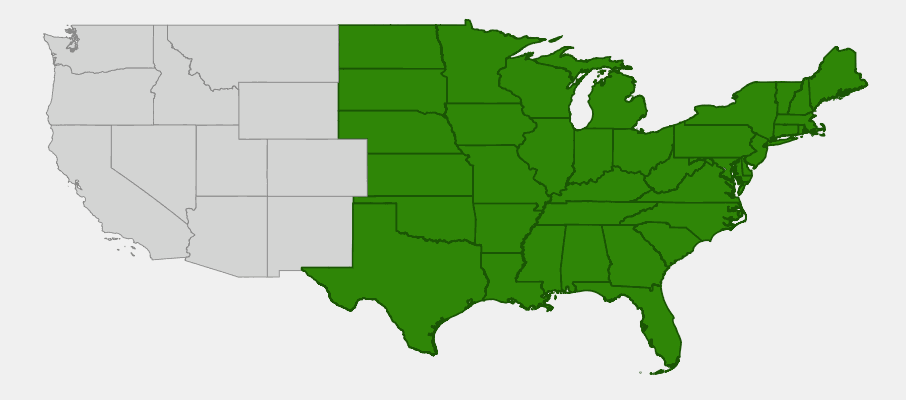
In the eastern and central United States, Sweet Flag is found along the margins of streams, ponds, lakes, marshes, and wet meadows from the Atlantic coast to the Great Plains, and from southern Canada to Florida and Texas. In Indiana and Ohio, it grows in a variety of wetland habitats including river margins, beaver ponds, marshes, and the edges of wet meadows, typically in the shallow water zone at the water’s edge or in saturated soils. It is frequently encountered as a component of the emergent wetland plant community alongside cattails (Typha spp.), sedges (Carex spp.), and Blue Flag Iris (Iris versicolor).
The plant colonizes wetland margins primarily by vegetative spread of its horizontal rhizomes, slowly expanding into large clonal colonies. In favorable conditions — shallow water with rich, mucky soil and full sun — colonies can eventually cover substantial areas. The plant is particularly common along slow-moving streams and rivers where rhizome fragments washed downstream can establish new colonies at considerable distances from the parent population.
📋 Regional plant lists featuring Sweet Flag: Indiana & Ohio
Growing & Care Guide
Sweet Flag is one of the most reliable and ornamentally effective plants for wet garden features — pond margins, rain gardens, bog gardens, and stream edges. It is easy to establish and essentially maintenance-free once sited correctly.
Light
Sweet Flag grows in full sun to part shade. In full sun it produces the most upright, dense growth and the most fragrant foliage. In part shade (3–5 hours of sun), the plant grows well but may be slightly less vigorous. Deep shade significantly reduces vigor. For water garden or pond margin use, an open, sunny position is ideal.
Soil & Water
Sweet Flag is a true wetland plant that thrives in consistently wet to saturated soils and can grow in standing water up to 4–6 inches (10–15 cm) deep. It prefers rich, mucky, loamy soil but adapts to a range of wet soil types. In the garden, it is ideal for planting in the shallow margins of water features, in rain gardens with poor drainage, in bog gardens, and along stream and pond edges. It will not survive in dry or even normally moist garden soils without supplemental irrigation — the soil must remain consistently moist to wet for best performance.
Planting Tips
Plant rhizome divisions or potted plants at the water’s edge or in shallow water (up to 4 inches deep) in spring or early summer. Space plants 18–24 inches apart for a naturalistic planting; colonies will fill in over time. In containers for water gardens, plant in heavy aquatic planting medium in a large pot with drainage holes, then submerge the pot to the appropriate depth at the pond edge. Division every 3–4 years keeps the colony vigorous and prevents it from becoming too thick.
Pruning & Maintenance
Sweet Flag is essentially maintenance-free. In late fall or early spring, old, brown leaves can be cut back to 2–4 inches above the rhizome to tidy the planting and allow fresh new growth to be the dominant visual element. The plant is very cold-hardy and the rhizomes require no special winter protection in USDA Zones 4–7.
Landscape Uses
- Pond and water garden margins — one of the most elegant emergent plants for shallow water
- Rain garden plantings in the lowest, wettest zones
- Stream bank restoration — rhizomes help stabilize soil at water’s edge
- Bog gardens as a structural, year-round foliage plant
- Fragrance gardens — plant where brushing the leaves releases the spicy-sweet scent
- Wetland restoration as a component of the emergent plant community
Wildlife & Ecological Value
Sweet Flag contributes to wetland ecosystems in multiple ways, providing structural habitat, food sources, and ecological services in aquatic environments.
For Birds
Dense stands of Sweet Flag provide nesting and escape cover for marsh birds including Red-winged Blackbirds, Marsh Wrens, and Common Yellowthroats. The upright stems are used as singing and nesting perches by marsh-dependent songbirds. During migration,various wading birds and shorebirds utilize shallow wetland areas where Sweet Flag grows as foraging habitat for invertebrates.
For Pollinators
The unusual spadix flowers attract small flies, gnats, and other tiny insects that serve as pollinators. While not a major nectar source, the flowers attract a diverse community of small wetland insects. The dense leaf growth provides hunting habitat for dragonflies and damselflies that perch on the upright stems between aerial forays.
Ecosystem Role
Sweet Flag plays an important ecological role in wetland stabilization and water quality. The dense rhizome network helps bind streambank and pond margin soils, reducing erosion. The upright leaves slow water velocity in shallow margins, facilitating sedimentation of fine particles. Like other emergent wetland plants, Sweet Flag contributes to water quality by taking up excess nutrients (nitrogen and phosphorus) from the water, making it valuable in biofilter and constructed wetland systems designed to improve water quality.
Cultural & Historical Uses
Sweet Flag has one of the most extensive and globally distributed ethnobotanical histories of any plant in the world. Its aromatic rhizomes have been used as medicine, food flavoring, incense, and strewing herb by Indigenous peoples of North America, as well as across Europe and Asia, for thousands of years. In North America, the Cree, Ojibwe, Potawatomi, Iroquois, Mohawk, and many other nations used the rhizomes as medicine and flavoring. The rhizomes were dried, powdered, and used to treat toothache, stomach ailments, fevers, and respiratory conditions. Small pieces of dried rhizome were chewed as a stimulant and tonic, similar to the use of ginger or ginseng in other traditions. The Cree people of northern Canada, among others, chewed calamus rhizome as an energy-boosting stimulant on long hunting trips.
In European herbal traditions, dating back to ancient Egypt and elaborated throughout medieval and Renaissance Europe, calamus root (Acorus calamus) was one of the most important aromatic drugs. It was used in perfumery, as a flavoring for cordials and beers, and as a medicinal plant for treating digestive disorders, fevers, and nervous conditions. The essential oil of calamus root was a prized ingredient in expensive perfumes and medicines. Calamus root was also used as a “strewing herb” — dried and spread on floors to release fragrance when walked upon — a common practice in churches and wealthy homes before the advent of modern sanitation and flooring.
In the late 20th century, concerns arose about the safety of calamus essential oil, particularly a constituent called beta-asarone, which was found to be carcinogenic in rodent studies. As a result, calamus-derived food additives and flavoring agents were banned in the United States and some other countries in the 1960s and 1970s. The plant is no longer used as a food additive, though it continues to be used in traditional medicine and herbal preparations in many parts of the world. Despite these concerns, the use of whole dried calamus root in traditional preparations is considered by many herbalists to involve lower exposure to concentrated beta-asarone than isolated essential oil fractions.
Frequently Asked Questions
Is Sweet Flag the same as Iris?
No — they look similar from a distance but are entirely unrelated. Sweet Flag is in the family Acoraceae while Iris is in Iridaceae. The key differences are: Sweet Flag has an off-center midrib on its leaf blade (Iris has a central midrib), the crushed leaves have a distinctive spicy fragrance (Iris leaves are odorless or slightly unpleasant-smelling), and Sweet Flag produces an unusual sideways-projecting spadix rather than a showy flower.
Can Sweet Flag grow in a pond?
Yes — it is excellent for pond margins and shallow water. Plant it in water 0–4 inches deep at the pond edge, or place a pot of it in shallow water at the margin. It grows vigorously in standing or slow-moving water and will gradually spread to form a colony along the waterline.
Is Sweet Flag fragrant?
Intensely so — the crushed or bruised leaves and particularly the rhizomes release a strong, sweet, spicy fragrance reminiscent of cinnamon, sandalwood, or exotic incense. Simply brushing past the plant in a water garden releases a noticeable scent. The dried rhizome is even more aromatic and was historically used as a strewing herb and in potpourri.
Is Sweet Flag truly native to Indiana and Ohio?
This is botanically nuanced. North American Sweet Flag populations are primarily sterile triploids that many researchers believe were introduced or spread by Indigenous peoples across North America before European contact. However, the plant has been present in Indiana and Ohio wetlands for so long, is so well-integrated into native wetland communities, and is so widely included in native plant lists that it is generally treated as native for gardening and restoration purposes.
Does Sweet Flag spread aggressively?
It spreads gradually by rhizomes but is generally not considered aggressive compared to plants like cattail or reed. In most garden settings, it forms a well-behaved colony that can be easily divided and contained. Division every few years keeps the planting vigorous.