Yellow Loosestrife (Lysimachia punctata)
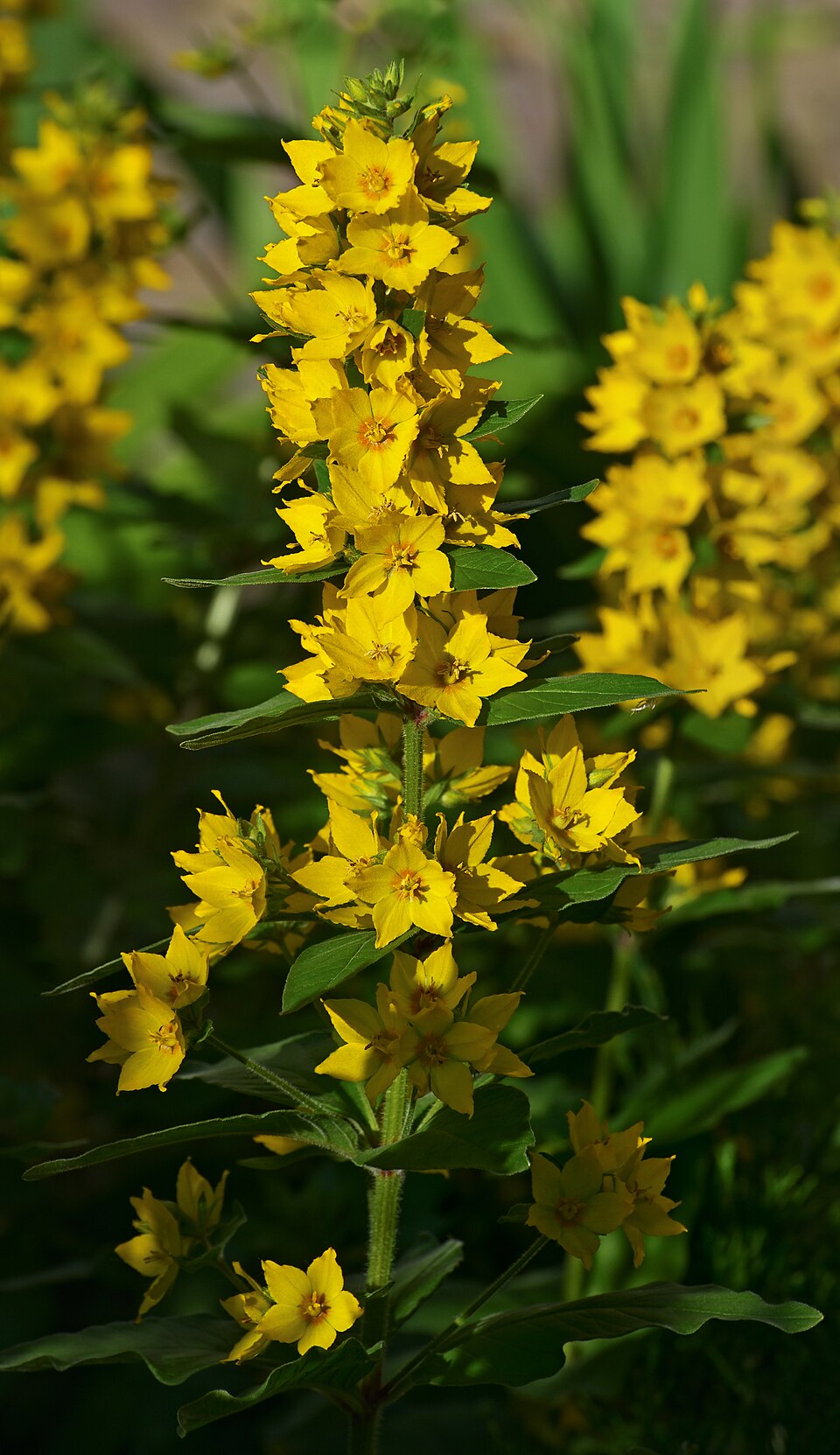
Lysimachia punctata, commonly known as Yellow Loosestrife, Garden Loosestrife, or Dotted Loosestrife, is a vigorous perennial herb of the Primulaceae family that produces striking upright spikes of brilliant yellow, star-shaped flowers from June through July. Long cultivated in cottage gardens and moist perennial borders, Yellow Loosestrife is widely grown throughout the eastern United States and has naturalized in many areas, making it a commonly encountered plant in Indiana and Ohio along stream banks, moist meadows, and garden escapes. Its bright, cheerful flowers, whorled foliage, and upright habit make it one of the most visually striking yellow-flowered plants for wet garden settings.
The plant grows 2 to 3 feet tall from spreading rhizomes that can form extensive colonies in moist soils. Its leaves are arranged in distinctive whorls of 3–5 along the upright stems, giving the plant a textured, layered appearance. The star-shaped yellow flowers, each about an inch across, are borne in the axils of the upper leaves, creating a tiered effect as they progress up the stem during the blooming period. The species name punctata (meaning “dotted”) refers to the minute glandular dots visible on the leaves and flower petals.
Yellow Loosestrife is one of the most reliably cheerful summer perennials for consistently moist or wet garden conditions in Indiana and Ohio, providing a bright yellow vertical accent at a time — June and July — when the native plant palette transitions from spring to late summer. For rain gardens, pond margins, stream banks, and other consistently moist sites, it provides excellent ornamental value while supporting native pollinators and forming a substantial, long-lived colony.
Identification
Yellow Loosestrife is a sturdy, upright perennial herb reaching 2 to 3 feet (60–90 cm) in height, with a strongly vertical habit when in flower. The plant forms spreading clumps and colonies from creeping rhizomes, often developing into a dense stand in favorable conditions. It can be distinguished from other yellow-flowered wetland plants by the combination of whorled leaves, star-shaped flowers in leaf axils, and the absence of any milky sap.
Leaves
The leaves are one of the most distinctive identification features. They are arranged in whorls of 3–5 (usually 4) around the stem — that is, multiple leaves attach at the same point on the stem rather than alternating. Each leaf is lance-ovate to elliptic, 2–4 inches (5–10 cm) long, with a pointed tip, smooth margins, and a short petiole or nearly sessile base. The leaf surface is medium green, somewhat glossy, and dotted with minute glands (the source of the punctata name) that are visible when held up to light. Leaves are smooth above and slightly hairy beneath in some forms.
Flowers & Fruit
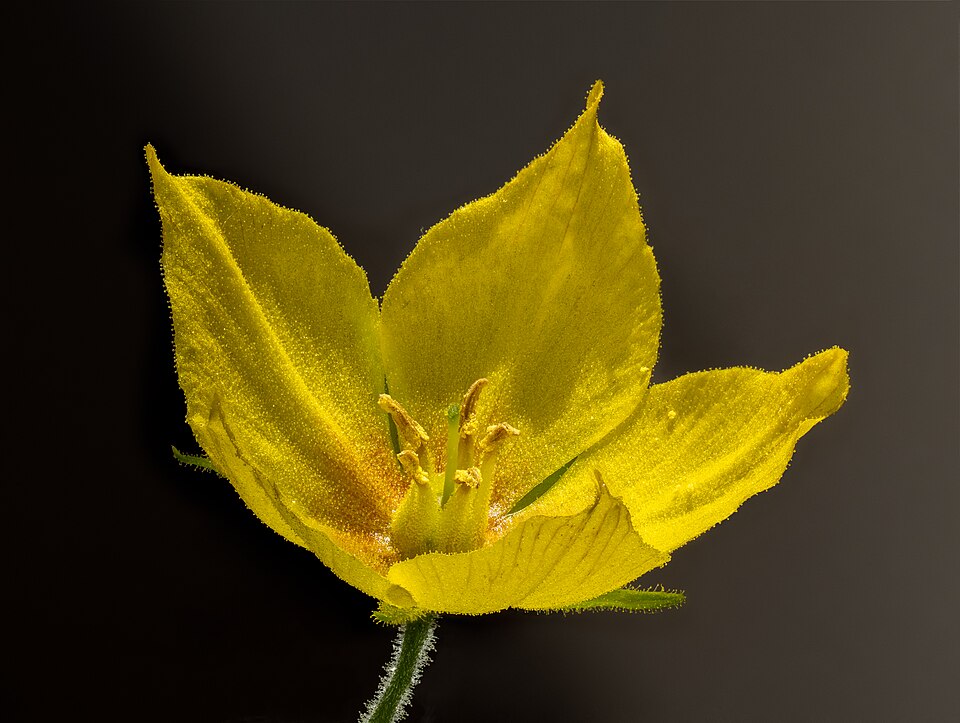
The flowers are produced from June through July (sometimes into early August) in the axils of the upper stem leaves, with one to several flowers per leaf whorl, creating a layered floral display up the length of the flowering stem. Each flower is about ¾ to 1 inch (2–2.5 cm) across with 5 bright yellow, spreading petals (giving the star-shaped appearance), fringed at the margins with minute glandular hairs. The central parts of the flower are yellow with orange-red markings. Flowers are held on short, slender pedicels. After fertilization, small rounded capsules form in the leaf axils, containing numerous small seeds.
Stems & Root System
Stems are erect, sturdy, and unbranched or sparingly branched, smooth to slightly hairy. The root system is a network of creeping, horizontal rhizomes that spread steadily in moist soil, allowing the colony to expand over time. Individual shoots arise from nodes on these rhizomes, creating a dense stand. The rhizomes are relatively shallow and can be divided easily in spring or fall to propagate or contain the colony.
Quick Facts
| Scientific Name | Lysimachia punctata |
| Family | Primulaceae (Primrose) |
| Plant Type | Perennial herb; widely naturalized in eastern North America |
| Mature Height | 3 ft |
| Sun Exposure | Full Sun to Part Shade |
| Water Needs | Moderate |
| Bloom Time | June – July |
| Flower Color | Bright yellow with orange-red center detail |
| Leaf Arrangement | Whorled (4 per node) — distinctive identification feature |
| Garden Use | Moist borders, pond margins, rain gardens, stream edges |
| USDA Hardiness Zones | 4–8 |
Native Range
Lysimachia punctata is native to central and southeastern Europe and western Asia, ranging from Turkey and the Caucasus region through Bulgaria, Hungary, Austria, Germany, and Poland, with populations extending into France and the British Isles. The plant has been in cultivation as a garden perennial since at least the 16th century, and has naturalized widely across temperate regions including North America, Australia, and New Zealand. In North America, it has established naturalized populations across the northeastern and north-central United States and southern Canada, where it grows along stream banks, roadsides, moist meadows, and garden escapes.
In Indiana and Ohio, Yellow Loosestrife is found both as a widely grown garden plant and as a naturalized species along stream corridors, wet roadsides, and moist disturbed ground. Populations have established along waterways where garden escapes have colonized suitable habitat. The plant is sometimes included in native plant lists for the region as a widely naturalized species that functions ecologically in moist habitats, supporting native pollinators and stabilizing streambanks with its rhizome network. It is distinguished from the federally noxious Purple Loosestrife (Lythrum salicaria) — an entirely different genus and family — with which it shares the “loosestrife” common name.
Within the Indiana and Ohio landscape, Yellow Loosestrife is most commonly encountered in consistently moist habitats: along the margins of slow-moving streams and drainage ditches, in wet meadows, at the edges of retention basins and ponds, and in persistently moist lowland areas. Its relatively moderate spread rate (compared to some other wetland colonizers) and high ornamental value have kept it in garden use while its naturalized populations provide value to wildlife in moist habitats throughout the region.
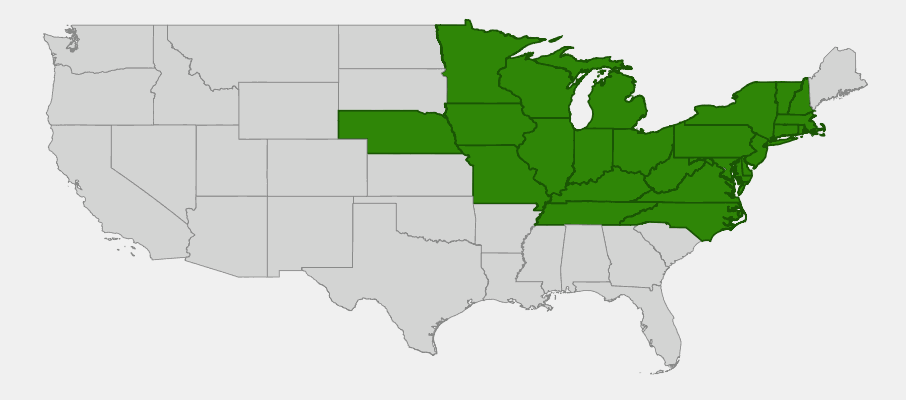
📋 Regional plant lists featuring Yellow Loosestrife: Indiana & Ohio
Growing & Care Guide
Yellow Loosestrife is an easy, reliable perennial for consistently moist to wet garden conditions. Once established, it is essentially self-sustaining and requires minimal attention beyond occasional division to manage its spread.
Light
Yellow Loosestrife grows well in full sun to part shade. In full sun with adequate moisture, it produces the most abundant, longest-lasting flower display and the most compact, upright plants. In part shade (3–5 hours of direct sun), flowering is somewhat reduced but the plant grows vigorously and produces attractive foliage. In deep shade, flowering is poor and the plant tends to become leggy.
Soil & Water
Consistently moist to wet soil is the key requirement for Yellow Loosestrife. It thrives in moist, humus-rich soil along streams, pond edges, and in rain gardens. It tolerates periodic flooding but grows best in consistently moist rather than waterlogged conditions. Adequate moisture is more important than soil type — it adapts to loam, clay, or sandy soils as long as they remain moist. In normal garden soil that dries out in summer, the plant will struggle and may decline. Mulching heavily helps retain soil moisture in drier sites.
Planting Tips
Plant container-grown plants or rhizome divisions in spring or fall. Space plants 18–24 inches apart, allowing room for the spreading colony to develop. The plant establishes quickly and may bloom in its first year if planted in spring from a well-established container. Division every 3–4 years in spring keeps the colony vigorous and manages its spread. Yellow Loosestrife is easy to propagate by dividing the spreading rhizome clump.
Managing Spread
Yellow Loosestrife spreads by rhizomes and can expand into a substantial colony over time in favorable conditions. In formal garden settings, divide and remove surplus plants at the colony edge annually or biennially. The spreading habit is manageable and much less aggressive than true invasive species — rhizome fragments are easy to remove when the soil is moist. In naturalized areas along streams or pond edges, the spreading habit is beneficial and the plant can be allowed to develop into a larger, natural-looking colony.
Landscape Uses
- Rain garden plantings in the wetter zones
- Pond and stream margins as an ornamental edging plant
- Moist perennial borders for mid-season yellow accent
- Cottage gardens with access to consistent moisture
- Bog garden plantings alongside native irises and sedges
- Naturalized stream bank plantings for erosion control and wildlife value
Wildlife & Ecological Value
Yellow Loosestrife provides meaningful ecological value in the moist habitats of Indiana and Ohio, supporting native pollinators and contributing to wetland edge ecosystems.
For Native Bees
The bright yellow flowers attract native bumble bees, sweat bees, and various solitary bee species. Lysimachia flowers are of particular interest to Macropis bees — small native bees in the family Melittidae that specialize on collecting Lysimachia floral oils (not nectar) to mix with pollen for provisioning their nests. These Lysimachia specialist bees are entirely dependent on plants in the genus Lysimachia for their oil collection, making Yellow Loosestrife an ecologically significant plant for supporting this specialized native bee guild in the Indiana/Ohio landscape.
For Other Pollinators
Beyond specialist Macropis bees, the flowers are visited by bumble bees, honeybees, various sweat bees, and some butterfly species. The timing of bloom in June–July bridges the gap between spring-blooming native wildflowers and the late-summer asters and goldenrods, providing a mid-season nectar source for generalist pollinators in moist garden settings.
For Birds & Other Wildlife
Dense stands of Yellow Loosestrife provide cover for ground-foraging birds, small mammals, and reptiles in moist habitats. The plant’s vigorous growth along stream banks and pond edges contributes to bank stabilization, reducing erosion and improving water quality. Like other tall perennials in wet habitats, it provides structural complexity in riparian ecosystems that benefits a diverse suite of wetland-associated wildlife.
Ecosystem Role
In the riparian and wetland edge habitats of Indiana and Ohio, Yellow Loosestrife contributes to the structural diversity of the vegetation and supports the specialized Macropis bee community that depends on Lysimachia oils. Its rhizome network helps bind moist streambank soils, and its large leaf canopy shades the ground, maintaining soil moisture and moderating soil temperatures in riparian corridors. As a mid-season bloomer in the ecological “gap” between spring and late summer native flowers, it serves as an important bridge species for pollinators.
Cultural & Historical Uses
Yellow Loosestrife has a long history in European cottage garden culture and in the folk medicine traditions of the regions where it is native. In its native range across central and southeastern Europe, the plant was used in traditional herbal medicine as an astringent, wound-healing herb and as a treatment for diarrhea and gastrointestinal complaints. The leaves were applied topically to wounds and skin irritations, while teas made from the plant were used to treat bleeding and diarrheal conditions. The plant contains tannins, saponins, and flavonoids that account for these traditional medicinal applications.
The common name “loosestrife” — shared with the entirely unrelated Purple Loosestrife (Lythrum salicaria) and several North American native Lysimachia species — derives from a medieval folk belief that the plant had the ability to “loose strife” — that is, to pacify or calm quarrelsome animals when used as a yoke or harness decoration. This tradition was described by the Roman scholar Pliny the Elder, who wrote that placing loosestrife on the yokes of oxen would prevent them from quarreling while working together in the field. This folk belief, while not scientifically grounded, reflects the plant’s long association with tranquility and domestic harmony in European culture.
Yellow Loosestrife has been widely grown as a garden ornamental in Europe and North America for centuries, valued for its cheerful yellow flowers, ease of cultivation in moist conditions, and architectural upright form. It was a staple of Victorian cottage gardens and continues to be popular in perennial garden design. In modern ecological garden design, it is valued for its support of specialist Macropis oil-collecting bees — a niche ecological role that makes it particularly valuable in biodiversity-focused landscapes. Its inclusion in native and naturalized plant lists for Indiana and Ohio reflects its long-established presence in the regional flora and its genuine ecological contributions to moist-ground plant communities.
Frequently Asked Questions
Is Yellow Loosestrife invasive?
Yellow Loosestrife (Lysimachia punctata) should not be confused with Purple Loosestrife (Lythrum salicaria), which is an aggressive invasive species. Yellow Loosestrife spreads moderately from rhizomes and has naturalized in parts of North America, but it does not reproduce by seed as aggressively as Purple Loosestrife and is generally considered manageable in garden settings. Monitor it in naturalized plantings near wetlands.
Does Yellow Loosestrife grow in dry soil?
No — it requires consistently moist soil to thrive. In dry or average garden soil that dries out in summer, the plant struggles, becomes stressed, and may die back. It is best suited to rain gardens, pond edges, stream banks, or any location with reliable access to moisture throughout the growing season.
What makes Yellow Loosestrife special for pollinators?
It is one of the host plants for Macropis bees — a small group of specialist native bees in the family Melittidae that collect floral oils from Lysimachia flowers instead of nectar. These bees are entirely dependent on Lysimachia plants for their oil supply, making Yellow Loosestrife ecologically important for supporting this unique native bee community in Indiana and Ohio.
How do I control Yellow Loosestrife from spreading too much?
Divide the colony in spring or fall every 2–3 years, removing surplus rhizomes at the edges. The rhizomes are shallow and easy to remove from moist soil. You can also install a physical root barrier (12–18 inches deep) when planting to define the colony boundaries. Regular division also keeps the planting vigorous and free-flowering.
When is the best time to divide Yellow Loosestrife?
Spring is the best time — when new shoots are just emerging from the rhizomes (typically April–May in Indiana/Ohio), dig up sections of the colony, separate into clumps of 3–5 shoots each, and replant at the desired spacing. Early fall (September) division also works well. Avoid dividing during summer heat and drought, which stresses the divisions.