Limber Pine (Pinus flexilis)
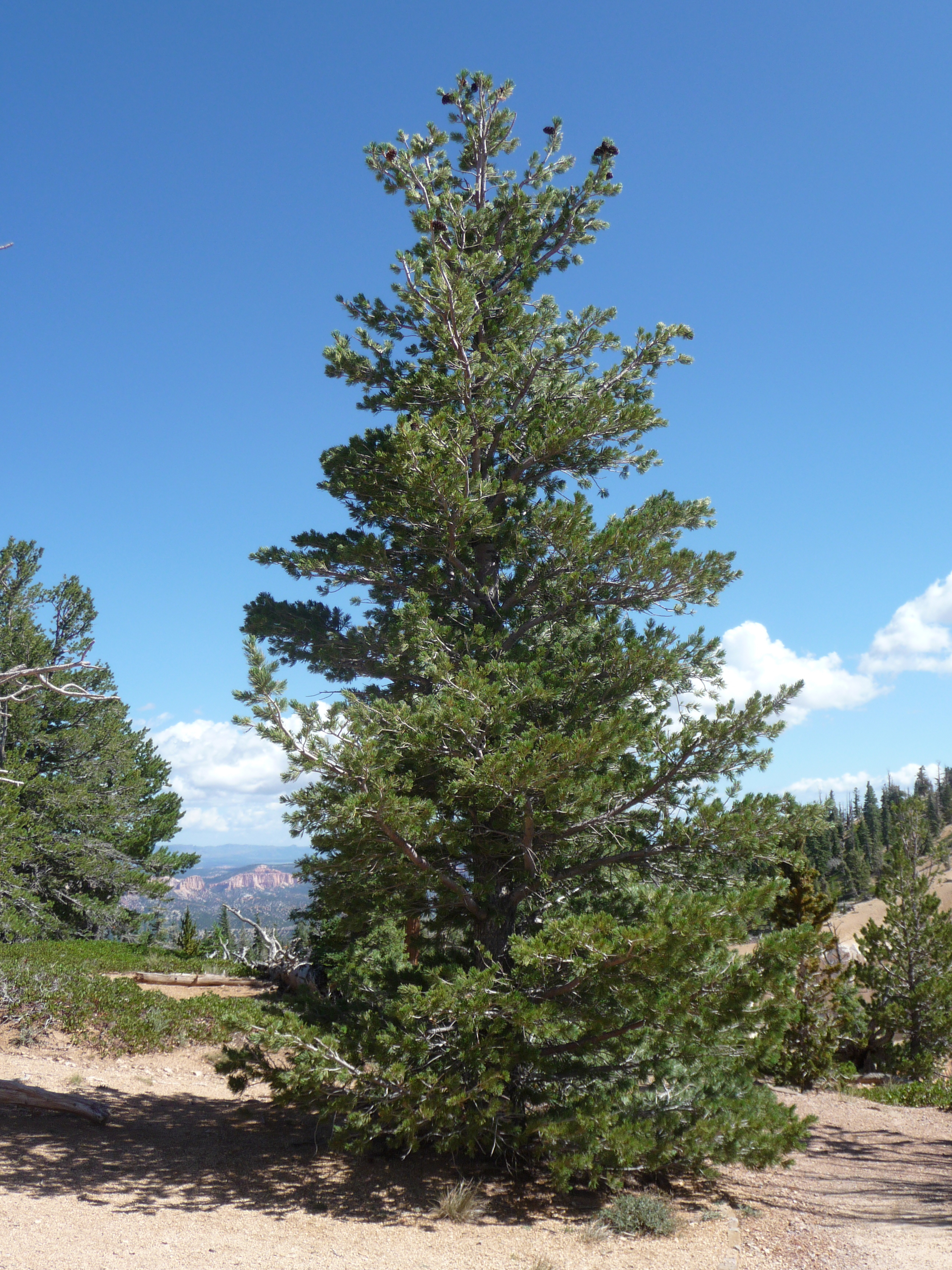
Pinus flexilis, commonly known as Limber Pine, is a tough, long-lived native pine of the Rocky Mountains and Great Basin, celebrated for its extraordinary resilience in some of the harshest environments in North America. The species name flexilis — Latin for “flexible” — refers to its remarkably pliant young twigs, which can be bent nearly double without breaking, an adaptation that allows branches to survive extreme snow loads and mountain winds. Limber Pine is a tree of windswept ridges, exposed mountain summits, and dry rocky slopes where few other conifers can persist.
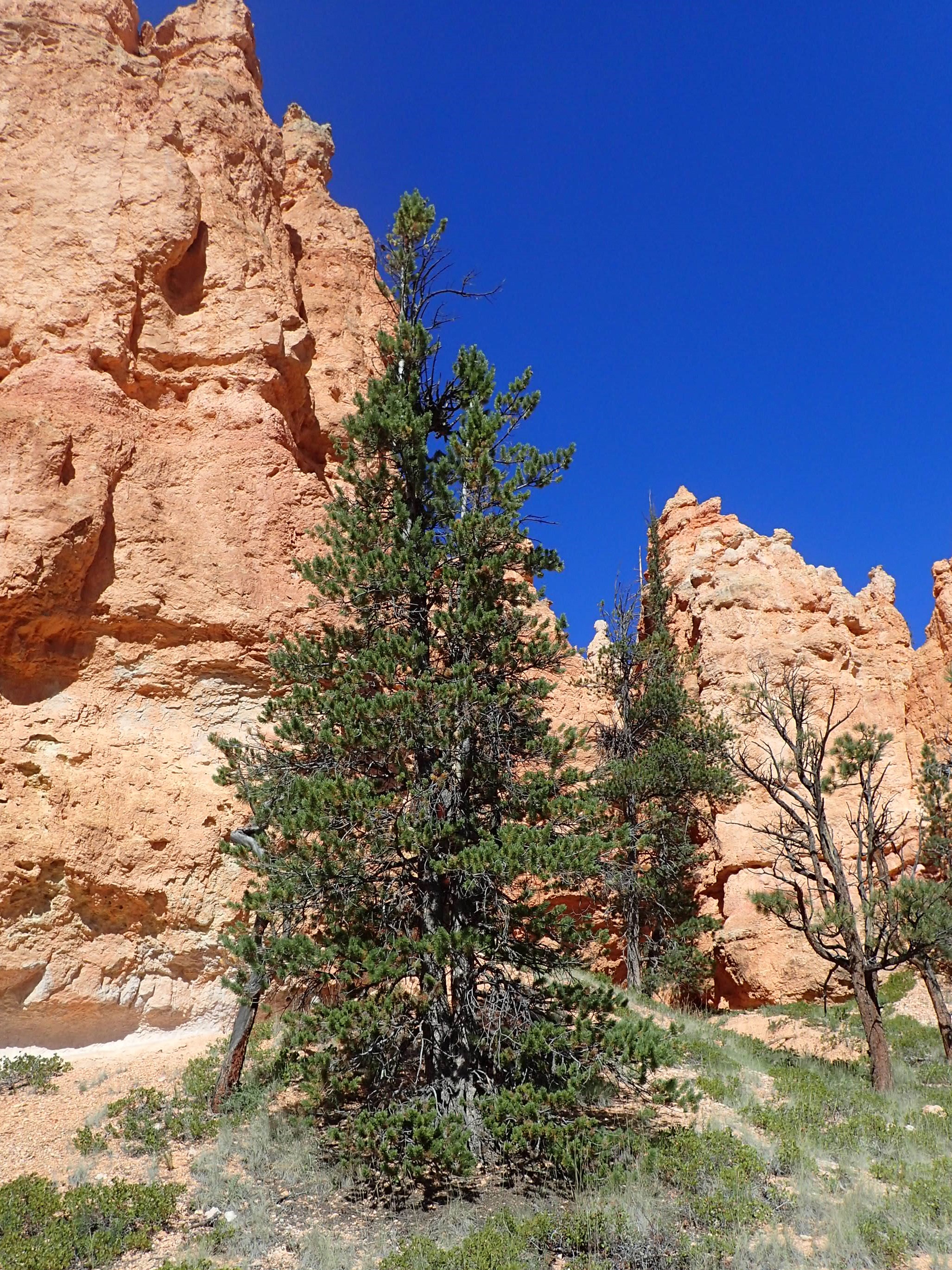
Growing typically 12 to 50 feet tall (though often much shorter at treeline), Limber Pine develops a striking, sculptural form shaped by centuries of mountain wind and weather. Young trees have a pyramidal shape; older specimens become broad-crowned, irregular, or even prostrate at the highest elevations where the tree grows in krummholz (wind-stunted) form. Its needles are bundled in groups of five, 1.5 to 3 inches long, and have a distinctive whitish bloom. The large cylindrical cones, 3 to 8 inches long, are among the largest produced by any five-needled pine in the Rockies.
Beyond its dramatic appearance, Limber Pine provides critical ecological services in high-elevation ecosystems. It is a foundational species of subalpine forests in Montana, Wyoming, Colorado, and Utah, providing seeds for the Clark’s Nutcracker — a bird that has co-evolved with Limber Pine and is its primary seed disperser. The relationship between Limber Pine and Clark’s Nutcracker is one of the most celebrated examples of mutualistic co-evolution in western ecology. Unfortunately, Limber Pine is now threatened by white pine blister rust (Cronartium ribicola), mountain pine beetle, and climate change, making restoration and cultivation of resistant individuals increasingly important.
Identification
Limber Pine is a medium-to-large pine with a highly variable form depending on elevation and exposure. At lower elevations, it grows as a symmetrical, pyramidal tree; at treeline, it may be a gnarled, multi-stemmed shrub. The key identification features are the five needles per bundle, exceptionally flexible young twigs, and large cylindrical cones.
Needles & Twigs
Needles are in bundles of 5, stout, 1.5 to 3.5 inches long, dark green with a bluish-white bloom from stomatal lines on all three surfaces. They persist on the tree for 5 to 6 years, giving the branches a dense, brushy appearance. The defining characteristic of the species is the extreme flexibility of the youngest year’s twigs — they can be tied in a knot without breaking. This is immediately apparent when you handle the tree. Older twigs are stouter, gray-brown, and rough with persistent leaf bases.
Bark
On young trees, the bark is smooth, thin, and whitish-gray to light gray. On older trees, it becomes gray to dark gray, broken into roughly rectangular, scaly plates. The bark does not develop the deep, furrowed ridges typical of ponderosa pine — it remains relatively smooth and plated throughout the tree’s life, giving old Limber Pines a distinctive gray, plated appearance.
Cones
The cones are among the most distinctive features of Limber Pine. They are large (3 to 8 inches long), cylindrical to narrowly egg-shaped, and light brown to tan at maturity. The cone scales are thick and sturdy with rounded, slightly thickened tips — not armed with sharp prickles like many other western pines. The seeds are large, wingless (or nearly so), nutritious, and eagerly sought by Clark’s Nutcrackers, Steller’s Jays, and squirrels. This lack of wings — unusual in pines — is an adaptation for animal dispersal rather than wind dispersal.
Growth Form
Growth form varies dramatically with elevation and wind exposure. Forest-grown trees are pyramidal in youth, becoming broad-crowned and irregular with age, reaching 30 to 50 feet. At upper treeline, trees may grow in prostrate, spreading krummholz mats only a few feet tall but many feet wide, responding to severe wind and snow damage by directing growth away from prevailing winds. Limber Pines are extremely long-lived — trees over 1,000 years old are documented, and some individuals in the Great Basin exceed 2,000 years.
Quick Facts
| Scientific Name | Pinus flexilis |
| Family | Pinaceae (Pine) |
| Plant Type | Evergreen Coniferous Tree |
| Mature Height | 12–20 ft (landscape); to 50 ft in forest |
| Sun Exposure | Full Sun |
| Water Needs | Moderate |
| Bloom Time | May – June (pollen cones) |
| Cone Maturity | August – September (second year) |
| USDA Hardiness Zones | 4–7 |
Native Range
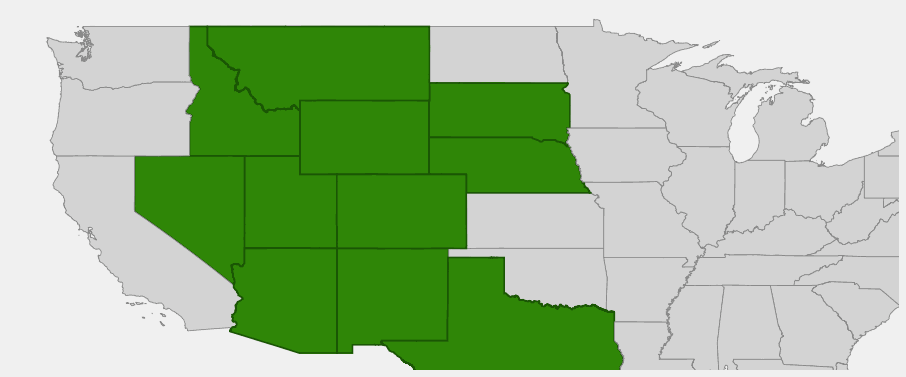
Limber Pine is native to the Rocky Mountain system and associated ranges from southern Alberta and Saskatchewan south through Montana, Wyoming, Idaho, Colorado, Utah, Nevada, Arizona, and New Mexico, with outlier populations in the Black Hills of South Dakota and Nebraska’s Pine Ridge. It is primarily a montane and subalpine species, occupying the zone between lower-elevation ponderosa pine forests and the upper treeline ecotone where trees give way to alpine tundra.
In Montana and Wyoming, Limber Pine is a characteristic species of dry, rocky ridges, limestone outcrops, and exposed subalpine slopes in the Front Range, Beartooth Plateau, Wind River Range, and other mountain systems. It often occupies sites too dry and exposed for Engelmann spruce or subalpine fir, filling a unique ecological niche at the margins of subalpine forest. It is commonly associated with Rocky Mountain juniper (Juniperus scopulorum), Douglas fir (Pseudotsuga menziesii), and whitebark pine (Pinus albicaulis) at various elevations.
The range of Limber Pine broadly overlaps with that of whitebark pine (Pinus albicaulis) at upper elevations, and the two species sometimes hybridize. Limber Pine generally occurs at somewhat lower elevations and on drier, more exposed sites than whitebark pine. Like whitebark pine, Limber Pine produces large, wingless seeds dispersed primarily by Clark’s Nutcracker, which caches thousands of seeds each fall as a winter food supply and inadvertently plants many that germinate the following spring.
📋 Regional plant lists featuring Limber Pine: Montana & Wyoming
Growing & Care Guide
Limber Pine is an outstanding native tree for high-elevation and mountain-adjacent gardens in Montana and Wyoming. Its extreme hardiness, drought tolerance, and sculptural beauty make it one of the most underutilized native conifers for western landscapes.
Light
Limber Pine requires full sun and performs best on open, exposed sites that replicate its natural habitat. It does not tolerate shade and will grow slowly and poorly beneath the canopy of other trees. In the landscape, site it where it receives unobstructed sunlight throughout the day. Its natural growth form — shaped by wind and exposure — develops most beautifully in open, windy settings.
Soil & Water
Limber Pine thrives in well-drained, moderately dry to moderately moist soils. It grows naturally on rocky, shallow, or gravelly soils where most trees cannot survive, and it is highly tolerant of nutrient-poor soils. Good drainage is essential — standing water or heavy, waterlogged soils are fatal. Once established (2 to 3 years after planting), Limber Pine is moderately drought tolerant, though it benefits from occasional deep watering during prolonged dry spells in lower-elevation gardens. It is extremely cold hardy and tolerates the extreme temperature swings, high winds, and heavy snow typical of Montana and Wyoming winters.
Planting Tips
Plant Limber Pine as a container-grown specimen in spring or fall. Handle the roots carefully — pines in general do not tolerate root disturbance well. Choose a site with excellent drainage and full sun. Avoid planting in heavy clay or areas where water stands. Stake young trees in exposed locations to prevent wind rock during the first year. Limber Pine grows slowly — typically 6 to 12 inches per year under good conditions — but this pace is appropriate for a tree that may live for centuries.
Pruning & Maintenance
Limber Pine requires minimal pruning. Remove dead or broken branches as needed. The natural, wind-sculpted form is part of this tree’s beauty — avoid shearing or formal pruning that would destroy the organic branching structure. In garden settings, light pruning of the candle growth (new shoots) in late spring can create a more compact form if desired. Monitor for white pine blister rust, which causes orange-yellow swellings on branches and needles — remove and destroy infected branches promptly. Select rust-resistant individuals or cultivars where available.
Landscape Uses
- Specimen tree — dramatic sculptural form for large gardens and open spaces
- High-elevation gardens — one of the best native conifers for mountain landscapes in Zones 4–7
- Windbreaks and screens — naturally adapted to extreme wind exposure
- Wildlife gardens — seeds are critical for Clark’s Nutcracker and other birds
- Rocky slopes and dry ridges where other conifers fail to establish
- Erosion control on exposed, well-drained slopes
- Bonsai and artistic cultivation — the naturally gnarled form of old specimens is highly prized
Wildlife & Ecological Value
Limber Pine provides some of the most critical high-elevation wildlife habitat in the Rocky Mountain West. Its large, nutritious seeds, dense canopy, and long-lived structure make it a keystone species for subalpine wildlife communities.
For Birds
The relationship between Limber Pine and Clark’s Nutcracker (Nucifraga columbiana) is one of the most celebrated examples of mutualism in western ecology. Clark’s Nutcracker harvests and caches thousands of Limber Pine seeds each fall, carrying up to 90 seeds at a time in a specialized throat pouch to caching sites up to 20 miles away. Seeds that are not retrieved germinate and regenerate the forest — essentially, Clark’s Nutcracker is the primary reforestation agent for Limber Pine. Other birds that consume Limber Pine seeds include Steller’s Jays, gray jays, and various woodpeckers. The dense, long-needled canopy provides excellent nesting and roosting cover for many mountain bird species.
For Mammals
Limber Pine seeds are a critical late-season food source for red squirrels, American black bears, and grizzly bears in the Rocky Mountains. Bears forage heavily on Limber Pine seed caches and directly on cones in late summer and fall, building the fat reserves needed for winter hibernation. Douglas squirrels, chipmunks, and deer mice also harvest and cache seeds. Mule deer and elk browse the foliage and young branches during winter, particularly on south-facing slopes where Limber Pine grows in accessible locations.
For Pollinators
As a wind-pollinated conifer, Limber Pine provides no nectar or floral resources. However, the open subalpine parks and forest edges created by Limber Pine communities support exceptional diversity of native bees, flies, and butterflies that forage on the native wildflowers growing in the understory and openings around the trees.
Ecosystem Role
Limber Pine is a pioneer species that colonizes rocky, exposed substrates where forest succession begins. In the subalpine zone, it often establishes in harsh, open areas long before Engelmann spruce or subalpine fir can gain a foothold, creating sheltered microsites that allow other species to establish. The long-lived, large-diameter trees provide snag habitat (dead standing trees) for cavity-nesting birds and mammals. The deep root systems stabilize soils on steep rocky slopes, and the nutrient-poor needle litter creates distinctive soil chemistry that supports specialized mycorrhizal fungi essential for forest ecosystem function.
Cultural & Historical Uses
Limber Pine was used by numerous Indigenous peoples throughout its range. The Blackfeet, Shoshone, Ute, and other Mountain West nations used the large, nutritious seeds as food — harvesting them from Clark’s Nutcracker caches or directly from the trees. The seeds were eaten raw, roasted, or ground into a meal used in cooking. The pitch was used medicinally as a wound dressing, for treating sore throats and respiratory conditions, and as a waterproofing agent for containers and canoes. Limber Pine wood, though not as commercially valuable as ponderosa or lodgepole pine, was used locally for fuel, fence posts, and small woodworking projects.
European-American settlers and miners in the Rocky Mountains used Limber Pine primarily for firewood and mine timbers at elevations where other large trees were scarce. The distinctive knobby, gnarled old-growth specimens were noted by early explorers and naturalists throughout the 19th century. John Muir described stands of Limber Pine in the Sierra Nevada with characteristic enthusiasm, noting their ability to survive conditions that would kill other trees.
Today, Limber Pine has taken on new cultural significance as a sentinel of climate change in the Rocky Mountains. Long-term studies of Limber Pine growth rings have produced some of the most important paleoclimate records in the western United States, extending detailed climate histories back 2,000 years or more. Simultaneously, Limber Pine populations are under increasing threat from white pine blister rust — an introduced fungal disease — and mountain pine beetle, with climate warming accelerating both threats. Conservation programs now focus on identifying and propagating blister rust-resistant Limber Pine individuals to restore threatened populations throughout the Rockies.
Frequently Asked Questions
How do I distinguish Limber Pine from Whitebark Pine?
Both are five-needled Rocky Mountain pines, but several features distinguish them. Limber Pine has extremely flexible young twigs (a definitive test); whitebark pine twigs are much stiffer. Limber Pine cones are pendant (hanging down) at maturity with thick, rounded scale tips; whitebark pine cones are upright and disintegrate on the tree rather than falling intact. Limber Pine tends to grow at somewhat lower elevations on drier, rockier sites.
Is Limber Pine threatened?
Limber Pine is listed as a Species of Concern in several western states and provinces due to threats from white pine blister rust, mountain pine beetle, and climate change. While not currently federally listed as endangered, population declines in many areas are significant. Planting Limber Pine and supporting conservation programs that develop rust-resistant individuals is an important contribution to the species’ long-term survival.
Can Limber Pine be grown at lower elevations?
Yes, Limber Pine can be grown at elevations much lower than its natural range, provided it has full sun, well-drained soil, and reasonable winter cold. It performs well in Colorado’s Front Range cities, Montana’s valleys, and similar lower-elevation western settings. Heat and humidity are its main limitations — it is not suitable for low-elevation gardens in hot, humid climates.
How long does a Limber Pine live?
Limber Pine is one of the longest-lived trees in North America. Trees over 1,000 years old are documented in Colorado and Nevada, and some Great Basin specimens may approach 2,000 years. Even under garden conditions, Limber Pine is expected to be a very long-lived tree lasting several centuries with appropriate care.
Why are Limber Pine seeds wingless?
Most pine seeds have a papery wing that helps them disperse on the wind. Limber Pine seeds are too large and heavy for wind dispersal to be effective, so they evolved to be dispersed by Clark’s Nutcracker instead. The large, nutritious, wingless seeds are an adaptation to attract and reward the birds that carry and cache them. This mutualistic relationship means the tree’s regeneration depends critically on Clark’s Nutcracker populations, making conservation of both species interconnected.