Mallow Ninebark (Physocarpus malvaceus)
Physocarpus malvaceus, commonly known as Mallow Ninebark or Malva-leaved Ninebark, is a compact, deciduous native shrub of the northern Rocky Mountains and Pacific Northwest — an often-overlooked gem that deserves far wider recognition in native plant gardens. Named for the resemblance of its broadly lobed leaves to those of mallows (family Malvaceae), and for the distinctive exfoliating, papery bark that peels off in multiple thin layers (the “nine bark” characteristic shared with related ninebarks), this graceful shrub combines attractive foliage, charming white flower clusters, and exceptional wildlife value in a manageable, landscape-friendly size.
Mallow Ninebark belongs to the rose family (Rosaceae) and is closely related to the better-known Pacific Ninebark (Physocarpus capitatus) of the lowland Pacific Northwest. However, Mallow Ninebark is distinctly adapted to the drier, more continental conditions of the northern Rocky Mountain foothills, ponderosa pine forests, and dry mixed-conifer slopes — making it the ninebark of choice for Montana, northern Idaho, and Wyoming. It thrives in partially shaded to fully sunny sites with moderate moisture and well-drained soils, tolerating the wide temperature swings and periodic summer drought characteristic of the inland Northwest.
In spring, Mallow Ninebark produces dense, rounded clusters of small white to pale pink flowers that cover the plant like snow and attract a remarkable diversity of native bees, butterflies, and beneficial insects. The lobed leaves provide summer interest, turning bronze-red to yellow in fall before dropping. Through winter, the attractive exfoliating reddish-brown bark and persistent reddish seed capsules add structure and color to the native garden. All of these qualities make Mallow Ninebark an outstanding candidate for wildlife gardens, native shrub borders, shaded slopes, and restoration plantings across the northern Rocky Mountain region.
Identification
Mallow Ninebark is a multistemmed, deciduous shrub typically growing 3 to 8 feet tall (though the source table records 2–3 feet for MT/WY populations, which may reflect the more compact growth in drier, exposed sites). The stems are erect to somewhat arching, with reddish-brown bark that peels and exfoliates in thin, papery sheets — the distinctive “ninebark” character. Young stems are covered with fine hairs, while older stems develop the characteristic exfoliating bark and a grayish-brown outer surface.
Leaves
The leaves are the most distinctive feature: broadly ovate, 3 to 5 lobed (resembling maple or mallow leaves), 1 to 3 inches long, with coarsely toothed margins and prominent veins from the base. The upper surface is dark green and sparsely hairy; the underside is lighter green and more densely covered with fine stellate (star-shaped) hairs. Leaves are arranged alternately on the stems. In fall, the foliage turns attractive shades of yellow, orange, and reddish-bronze before dropping. The star-shaped hairs visible under magnification are a key identification feature distinguishing this species from Pacific Ninebark.
Flowers & Fruit
The flowers are borne in dense, rounded corymbs (flat-topped clusters) at the tips of short side branches throughout the shrub in late spring to early summer. Each flower is small (about ⅓ inch across), with 5 white to pale pink petals and numerous prominent stamens that give the flower clusters a fluffy, frothy appearance. The overall effect of a blooming Mallow Ninebark is spectacular — the entire shrub appears covered in white foam. Following the flowers, the plant produces distinctive inflated reddish seed capsules (follicles) that turn from green to red and then tan-brown, persisting through much of the winter and providing structure and texture in the winter landscape.
Quick Facts
| Scientific Name | Physocarpus malvaceus |
| Family | Rosaceae (Rose) |
| Plant Type | Deciduous Shrub |
| Mature Height | 2–3 ft |
| Sun Exposure | Part Shade to Full Sun |
| Water Needs | Moderate |
| Bloom Time | May – June |
| Flower Color | White to pale pink |
| USDA Hardiness Zones | 4–8 |
Native Range
Mallow Ninebark is native to the northern Rocky Mountain region and Pacific Northwest of North America, ranging from southern British Columbia south through Idaho, Montana, and Wyoming to Nevada, with outlying populations in Oregon and Washington. Its core range is centered in the northern Rocky Mountain foothills and montane zones of Idaho, Montana, and adjacent British Columbia — exactly the region where ponderosa pine forests transition to dry mixed-conifer forests on slopes and canyon walls. It is one of the characteristic shrubs of this transitional zone.
Within this range, Mallow Ninebark typically grows in the understory and edges of dry to moderately moist mixed-conifer forests, on rocky slopes and canyon walls, along stream banks in drier forest settings, and in openings and forest margins. It tolerates a considerable range of moisture conditions, from relatively dry, rocky, well-drained slopes with ponderosa pine to moderately moist canyon bottoms with Douglas fir and grand fir. It frequently colonizes disturbed areas such as logged areas, roadsides, and old burns within its natural range.
In Montana, Mallow Ninebark is most common in the western and southwestern parts of the state — the Flathead Valley, Bitterroot Range, Clearwater drainage, and the mixed forests of the northern Rockies. In Wyoming, it occurs primarily in the Bighorn Mountains and the western, forested portions of the state. It is a characteristic component of native shrub communities in these regions, often growing alongside serviceberry, chokecherry, ocean spray, and snowberry.
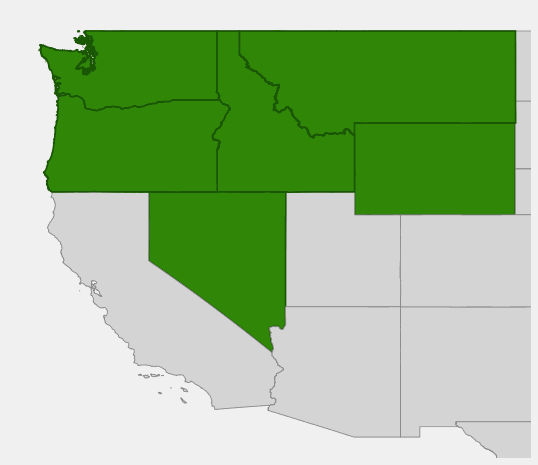
📋 Regional plant lists featuring Mallow Ninebark: Montana & Wyoming
Growing & Care Guide
Mallow Ninebark is an adaptable and undemanding shrub that rewards gardeners with beautiful flowers, attractive foliage, and outstanding wildlife value with minimal care. Once established in a suitable site, it needs little attention beyond occasional pruning to maintain its form. Its tolerance of both partial shade and full sun, combined with moderate drought tolerance after establishment, makes it versatile for a range of garden situations in the northern Rocky Mountain region.
Light
Mallow Ninebark grows well in part shade to full sun — one of its most valuable characteristics for challenging garden sites. It performs best in part shade (3 to 6 hours of direct sun), where it develops a graceful, open form and produces abundant flowers. In full sun with adequate moisture, it forms a more compact, densely flowered shrub. In deep shade, flowering is reduced and the plant may become sparse. It is particularly well-suited to the dappled shade at the edge of conifer plantings and in forest-edge garden designs.
Soil & Water
Mallow Ninebark prefers moderately moist, well-drained soils but shows considerable adaptability once established. It thrives in loamy to rocky soils and tolerates clay-loam. Like most native Rocky Mountain shrubs, it is more drought-tolerant once established than during its first growing season. Water regularly (once or twice per week) during the first growing season to establish a deep root system; after that, supplemental irrigation is rarely needed in most of Montana and Wyoming except during extended summer drought. Avoid planting in waterlogged or permanently wet soils, which can cause root rot.
Planting Tips
Plant Mallow Ninebark in spring or fall from container stock. Fall planting (early September through mid-October) is often preferred in the northern Rockies as it allows root establishment before winter dormancy. Dig the planting hole twice the width of the root ball and add organic matter to the backfill in very poor soils. Mulch generously with 3 to 4 inches of wood chips or leaf mulch to retain moisture and suppress weeds during the first seasons. Space plants 4 to 6 feet apart for a natural hedgerow or screen effect, or 6 to 8 feet apart if you want individual specimens to develop their natural arching form.
Pruning & Maintenance
Mallow Ninebark requires minimal pruning. To maintain vigor and maximize flowering, remove one-quarter to one-third of the oldest, woodiest canes at ground level in late winter or early spring every 2 to 3 years. This “renewal pruning” encourages vigorous new canes from the base, which produce the best flower display. Avoid shearing into a ball shape, which destroys the natural form and significantly reduces flowering. Dead wood can be removed at any time. The plant is generally resistant to insects and diseases when grown in appropriate conditions.
Landscape Uses
- Native shrub border — beautiful flowering accent in mixed shrub plantings
- Forest edge and understory — perfect for the dappled shade under conifers
- Wildlife hedgerow — provides nesting cover, flowers, and seeds for birds and pollinators
- Streamside and riparian planting — excellent for stabilizing moist, shaded stream banks
- Slope stabilization — fibrous root system anchors loose soils on rocky hillsides
- Restoration planting — excellent for disturbed site revegetation in forests and foothills
Wildlife & Ecological Value
Mallow Ninebark punches well above its weight in wildlife value, providing important resources for pollinators, birds, and small mammals across multiple seasons in the northern Rocky Mountain forest ecosystem.
For Pollinators
The dense clusters of white flowers in late spring and early summer are an important nectar and pollen source for a wide range of native pollinators. Native bees — including bumble bees, sweat bees, and mining bees — visit the flowers heavily, attracted by both the abundant pollen and the nectar at the base of the petals. The flowers are also visited by butterflies (especially swallowtails, whites, and blues), beetles, hover flies, and native wasps. In forest-edge environments where large flowering plants are relatively scarce, Mallow Ninebark provides a critical early-summer nectar source for pollinators emerging from their winter dormancy or colonies.
For Birds
The dense, multi-stemmed growth form of Mallow Ninebark provides excellent nesting habitat and escape cover for a variety of shrubland and forest-edge birds. The inflated seed capsules provide food for small seed-eating birds including finches, sparrows, and chickadees through fall and early winter. The shrub’s thicket-forming habit in suitable sites creates the dense cover preferred by species including MacGillivray’s Warbler, Common Yellowthroat, and various brush-nesting sparrows in the montane shrub zone of Montana and Idaho.
For Mammals
White-tailed deer and mule deer browse the foliage and young stems of Mallow Ninebark, particularly in spring when new growth is highly palatable. Elk also utilize it as browse. Small mammals including chipmunks and squirrels harvest the seeds from the persistent capsules. The dense thicket growth provides escape and thermal cover for various small mammals, including pikas (in rocky areas adjacent to ninebark stands) and American martens in the northern forest zone.
Ecosystem Role
As a native shrub of the northern Rocky Mountain forest understory and edge, Mallow Ninebark contributes to the structural diversity of forest communities that are critical for biodiversity. Its dense branching creates micro-habitats at the shrub layer that would otherwise be absent in the simpler canopy-to-ground profile of closed forests. As a member of the rose family, it supports specialist native bee species that forage exclusively on Rosaceous plants. Its rapid establishment from seed and its ability to resprout vigorously after disturbance make it an important early-successional species after fire, logging, or erosion events in its native range.
Cultural & Historical Uses
Mallow Ninebark was used by several Indigenous peoples of the northern Rocky Mountain and Pacific Northwest region for a variety of practical and medicinal purposes. The Flathead (Salish) people of western Montana used the tough, flexible stems of ninebark for basket-making and for constructing frameworks for shelters and fish traps. The distinctive exfoliating bark was used as tinder for fire-starting and was noted for its ability to peel in multiple thin layers — the characteristic that gave the entire ninebark genus its common name. Preparations of the leaves and bark were used by some nations for treating skin conditions, and a tea made from the bark was reportedly used as a general tonic and mild laxative.
Early European-American naturalists and botanists who explored the northern Rockies in the 19th century noted Mallow Ninebark’s abundance and distinctive appearance in the forest understory. The species was formally described by Thomas Nuttall, the English-American botanist who accompanied the Wyeth expedition through the northern Rockies in 1834, and the name “malvaceus” (meaning “mallow-like”) refers to the maple-mallow-like appearance of the lobed leaves that Nuttall described. Lewis and Clark may also have encountered the plant during their 1804–1806 expedition through Montana and Idaho, though their collections from this region were limited.
In the modern era, Mallow Ninebark has gained increasing recognition among native plant enthusiasts, restoration ecologists, and wildlife gardeners in the northern Rocky Mountain region. Its relative compactness compared to Pacific Ninebark makes it more suitable for smaller garden spaces and more easily managed in designed landscapes, while its tolerance of partial shade fills an important niche in forest-edge and understory plantings where sun-loving shrubs struggle. Conservation plantings in the region increasingly include it in mixed-shrub revegetation projects for wildlife habitat restoration, particularly in areas recovering from forest fires, mining disturbance, or timber harvest.
Frequently Asked Questions
What is the difference between Mallow Ninebark and Pacific Ninebark?
Pacific Ninebark (Physocarpus capitatus) is the larger species of the Pacific Coast, typically growing 6 to 12 feet tall and found in moist, lowland sites from California to Alaska. Mallow Ninebark (Physocarpus malvaceus) is a smaller species adapted to the drier, more continental conditions of the northern Rocky Mountains, typically reaching 3 to 8 feet (or compact 2–3 feet in exposed, dry sites). The leaves of Mallow Ninebark are more deeply lobed and covered with star-shaped hairs, while Pacific Ninebark has less deeply lobed leaves with simpler hairs.
Does Mallow Ninebark have fall color?
Yes — in fall the foliage turns attractive shades of yellow, orange, and reddish-bronze, providing seasonal interest before the leaves drop to reveal the ornamental exfoliating bark. The persistent reddish-brown seed capsule clusters also add winter interest to the bare stems and complement the warm tones of the bark.
Is Mallow Ninebark deer resistant?
No — Mallow Ninebark is readily browsed by both white-tailed and mule deer, especially in spring when the new growth is tender and highly palatable. In areas with high deer pressure, young plants may need protection with deer fencing or cage guards for the first few years until they are large enough to sustain browsing without significant damage.
How quickly does Mallow Ninebark grow?
Growth rate is moderate — expect 12 to 18 inches of new growth per year under favorable conditions (adequate moisture, good sun exposure). Plants establish relatively quickly from container stock, typically reaching flowering size within 2 to 3 years after planting. Growth may be slower in very dry, exposed sites or in deep shade.
Can I propagate Mallow Ninebark from cuttings?
Yes — Mallow Ninebark propagates readily from both softwood cuttings taken in early summer and hardwood cuttings taken in late fall. Softwood cuttings (tip cuttings taken from actively growing shoots in June) root readily in moist perlite or a rooting medium with a light application of rooting hormone. Seeds germinate well if stratified cold (3 months at 40°F) before sowing, and seedlings grow quickly to transplantable size in their first season.