Apple Serviceberry (Amelanchier grandiflora)
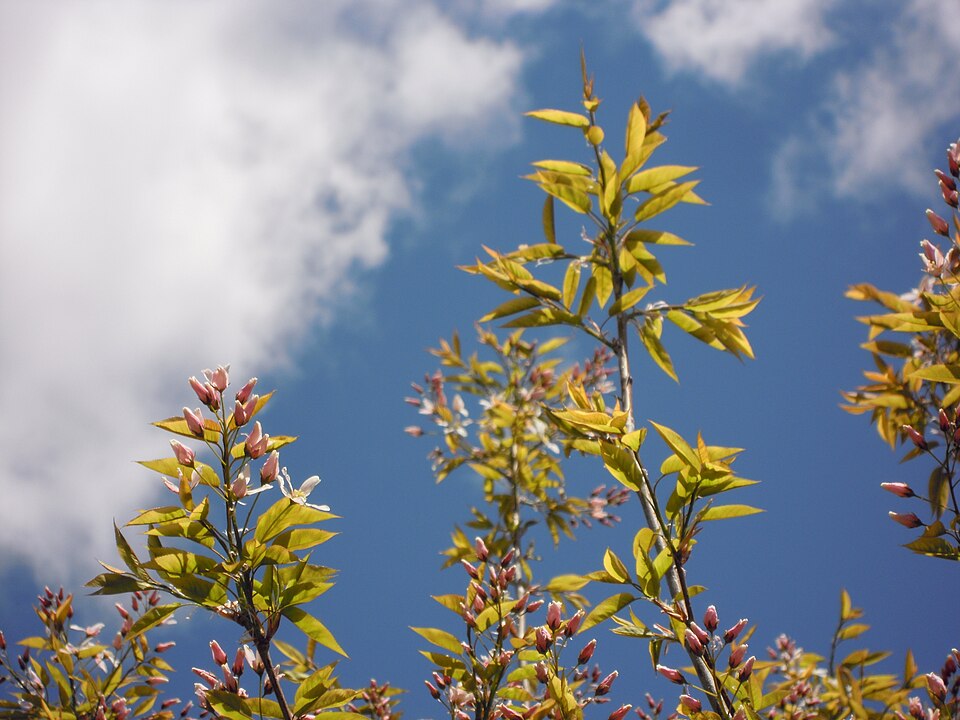
Amelanchier grandiflora, commonly known as Apple Serviceberry or Apple Shadblow, is one of the most spectacular native flowering small trees of the Great Lakes region and eastern North America. A naturally occurring hybrid between Amelanchier arborea (Downy Serviceberry) and Amelanchier laevis (Allegheny Serviceberry), it produces an extraordinary display of large, star-shaped white flowers in early to mid-spring — often before any other trees have leafed out — making it one of the most beloved native plants for four-season landscape interest.
Growing to 12–15 feet in typical landscape conditions (occasionally taller), Apple Serviceberry develops an attractive multi-stemmed or single-trunked form with smooth silver-gray bark that ages gracefully. The flowers give way to sweet, edible berries that ripen from red to dark purple in early summer — relished by dozens of bird species and wildlife. In autumn, the foliage transitions through brilliant shades of orange, red, and burgundy, making Apple Serviceberry a true four-season performer for Michigan, Minnesota, and Wisconsin gardens.
Native to disturbed forest edges, streambanks, and open woodland slopes throughout the Great Lakes region, Apple Serviceberry is remarkably adaptable in the garden. It tolerates a wide range of moisture conditions from dry to wet, grows in full sun to part shade, and asks for very little maintenance once established. For gardeners seeking a wildlife-friendly native small tree with extraordinary ornamental value, few choices match the versatility and beauty of Apple Serviceberry.
Identification
Apple Serviceberry is a deciduous large shrub or small tree reaching 12–15 feet tall with a spread of 10–15 feet in typical landscape settings, though specimens in ideal conditions can reach 20–25 feet. It typically develops a rounded to upright oval crown and may grow as either a single-trunked tree or a multi-stemmed clump, depending on site conditions and pruning history.
Bark & Twigs
The bark is smooth and silver-gray, developing subtle ridges and furrows with age. Young twigs are slender, reddish-brown, and slightly hairy when young, maturing to gray. The winter buds are distinctive — slender, pointed, and reddish-bronze, giving the bare branches a subtle beauty in the winter landscape.
Leaves
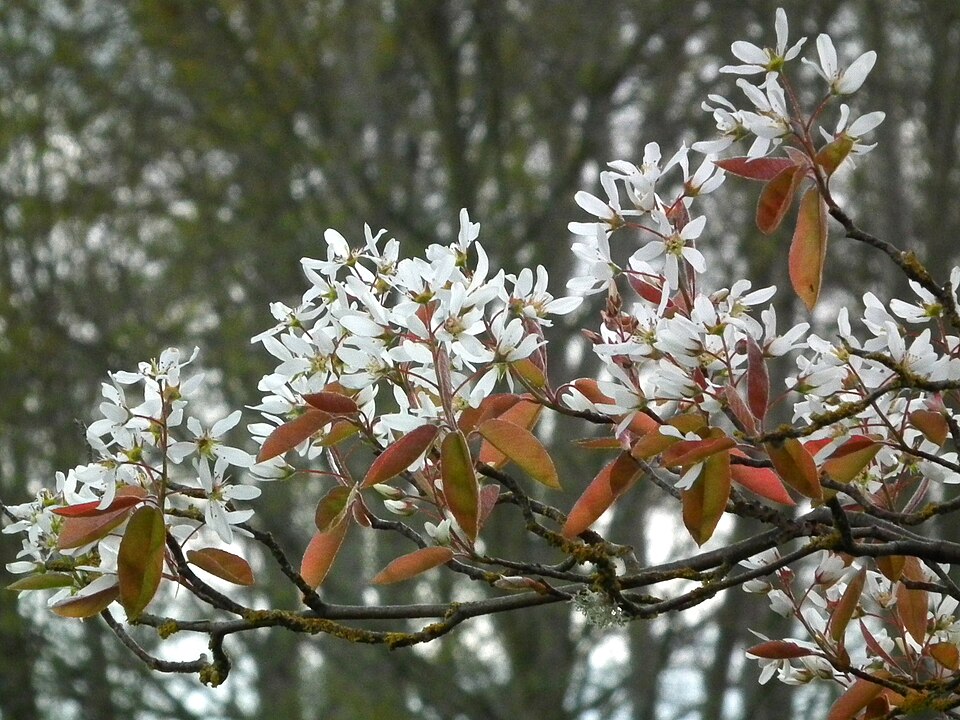
Leaves emerge bronze-tinged and slightly hairy in spring — simultaneously with or just after the flowers — then mature to medium green through summer. Each leaf is elliptical to oval, 1½ to 2½ inches long, with finely serrated margins and a rounded to slightly heart-shaped base. Fall color is outstanding: warm shades of orange, red, and burgundy that rival or surpass many cultivated trees.
Flowers
The flowers are the defining ornamental feature: large (up to ¾ inch across), pure white, with five narrow, strap-shaped petals in a starry arrangement. They are borne in loose, drooping racemes of 5–10 flowers at the tips of bare branches in early to mid-April (in the Great Lakes region), typically before the leaves fully emerge. The display lasts 7–10 days and is one of the most spectacular native flowering events of early spring. The flowers inherit their large size from both parent species, making them noticeably bigger than most other serviceberries.
Fruit
The fruit is a small pome (apple-like structure, as the common name implies), ¼ to ½ inch in diameter, ripening in late June through July. The berries progress from green through red to deep purple-black at full ripeness. They are sweet, juicy, and edible — excellent in pies, jams, and fresh eating — with a flavor reminiscent of blueberries with a hint of almond. Birds consume them enthusiastically, often stripping entire clusters within days of ripening.
Quick Facts
| Scientific Name | Amelanchier grandiflora (syn. Amelanchier × grandiflora) |
| Family | Rosaceae (Rose) |
| Plant Type | Deciduous Small Tree / Large Shrub |
| Mature Height | 12–15 ft |
| Sun Exposure | Full Sun to Part Shade |
| Water Needs | Moderate |
| Bloom Time | April – May |
| Flower Color | White |
| Fall Color | Orange, Red, Burgundy |
| Fruit | Sweet edible berries, red to dark purple |
| USDA Hardiness Zones | 4–9 |
Native Range
Apple Serviceberry is native to eastern North America, occurring naturally from the Great Lakes states east to the Atlantic coast and south through the Appalachians. As a hybrid species (A. arborea × A. laevis), it arises naturally wherever both parent species co-occur, particularly in the Great Lakes region — making it authentically native to Michigan, Minnesota, and Wisconsin. It grows from sea level to moderate mountain elevations throughout its range.
In its natural habitat, Apple Serviceberry is a characteristic species of forest edges, woodland borders, streambanks, and disturbed sites. It thrives at the transition zone between open fields and forest, where it receives good light while benefiting from protection of larger trees. It is equally at home in moist bottomlands and on dry, rocky slopes — a reflection of its impressive moisture adaptability. In the Great Lakes region, it often grows alongside Sugar Maple, White Oak, and American Basswood in mixed hardwood forests.
The name “serviceberry” derives from early American settlers who noted that the blooms appeared at the time rivers were thawing enough for circuit-riding preachers to conduct memorial services — the first opportunity to hold funerals for those who died during winter. “Shadblow” is another traditional name, referring to the simultaneous blooming with the shad fish runs in eastern rivers. These common names reflect the deep cultural ties between this plant and the rhythms of spring across eastern North America.
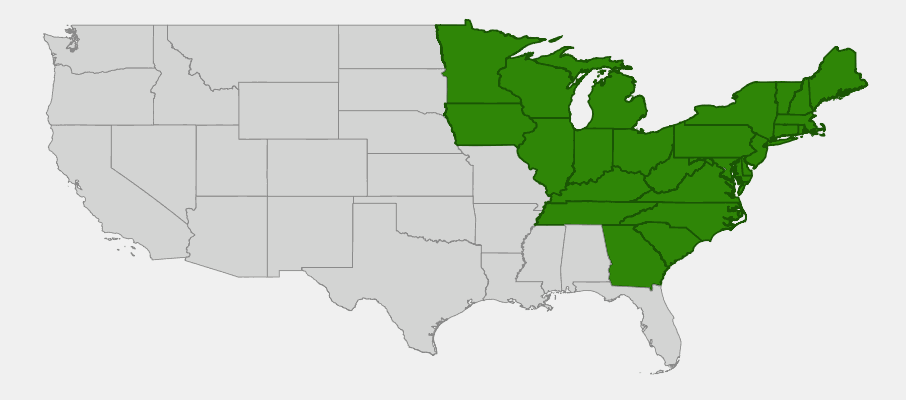
📋 Regional plant lists featuring Apple Serviceberry: Michigan, Minnesota & Wisconsin
Growing & Care Guide
Apple Serviceberry is one of the most accommodating native small trees for Great Lakes gardens. Once established, it requires minimal intervention and rewards gardeners with four full seasons of interest — spectacular spring bloom, summer berries, brilliant fall color, and attractive winter structure.
Light
Apple Serviceberry grows well in full sun to part shade (3–6 hours of direct sun daily). In full sun, it develops the densest flowering display and best fall color; in part shade, growth is slightly more open and flower production may be somewhat reduced, but the plant remains healthy and attractive. It performs well beneath high canopy or as an understory tree adjacent to taller deciduous trees.
Soil & Water
One of Apple Serviceberry’s greatest virtues is its impressive soil adaptability. The batch data codes it as W-D (wet to dry), accurately reflecting its ability to grow in everything from seasonally wet bottomlands to dry, rocky slopes. It performs best in moist, well-drained loamy soil but tolerates clay, sandy soils, and occasional flooding. Established plants are moderately drought tolerant. A 2–3 inch mulch layer helps retain soil moisture during dry summers, especially in the first 2–3 years after planting.
Planting Tips
Plant in fall or early spring for best establishment. Choose a site with good air circulation to minimize the likelihood of fungal diseases (such as cedar-apple rust, which occasionally affects foliage). Space plants 10–15 feet apart for single specimens; 6–8 feet for naturalistic groupings or hedgerows. Apple Serviceberry transplants readily from container stock — look for it at Great Lakes native plant nurseries in spring.
Pruning & Maintenance
Minimal pruning is required. Remove dead, damaged, or crossing branches in late winter while dormant. If you want a tree-like form, gradually remove lower branches over several years. Suckers may arise from the base — remove them if you want a single-trunked specimen, or allow them to develop for a naturalistic multi-stemmed clump form. Apple Serviceberry is generally pest- and disease-resistant, though cedar-apple rust (Gymnosporangium juniperi-virginianae) can cause orange spots on leaves in wet springs — largely cosmetic and rarely harmful.
Landscape Uses
Apple Serviceberry excels in many garden applications:
- Specimen tree — four-season interest, perfect for small yards
- Native woodland garden — forest edge, understory planting
- Wildlife garden — flowers feed pollinators; berries feed birds
- Screening or hedgerow — effective privacy planting in groups
- Streambank stabilization — tolerates wet, periodically flooded soils
- Rain garden border — handles fluctuating moisture levels well
- Foundation planting — refined appearance, appropriate scale for home landscapes
Wildlife & Ecological Value
Apple Serviceberry is one of the highest-value native small trees for wildlife in the Great Lakes region, providing critical resources across multiple seasons for a remarkable array of species.
For Birds
The sweet, nutritious berries ripen in late June and July — precisely when migrating birds need high-energy food and resident birds are feeding nestlings. Over 35 bird species are documented consumers of serviceberry fruit, including American Robin, Cedar Waxwing, Baltimore Oriole, Gray Catbird, Eastern Bluebird, Brown Thrasher, and numerous warblers. The berries are so popular that the entire crop is often consumed within a week or two of ripening. Dense, multi-stemmed specimens also provide excellent nesting habitat and cover.
For Mammals
White-tailed deer browse the foliage and twigs, particularly in winter. Black bears, foxes, raccoons, chipmunks, and squirrels readily consume the berries. The dense branching provides cover and nesting sites for small mammals. Humans also prize the berries — serviceberries were a critically important food source for Indigenous peoples and early settlers throughout the Great Lakes region, eaten fresh, dried, or baked into pemmican.
For Pollinators
The early spring flowers are a critical nectar and pollen source, blooming before most other plants are in flower. Native bees — including bumblebees (Bombus spp.), native mason bees (Osmia spp.), and mining bees (Andrena spp.) — are the primary pollinators. Honeybees also visit enthusiastically. The flowers provide some of the first pollen of the year when early-emerging pollinators are desperately hungry after winter. Specialist native bees (Andrena spp.) depend specifically on Amelanchier pollen during their brief flight season.
Ecosystem Role
Apple Serviceberry fills an important ecological niche as a native small tree/large shrub at the forest edge — a structural layer that provides habitat complexity absent from pure open areas or closed-canopy forests. Its early-flowering, early-fruiting habit places it at a critical point in the seasonal resource calendar, filling a gap when few other native food sources are available. As a native plant, it supports a full complement of native insects — over 100 lepidopteran species (moths and butterflies) use Amelanchier species as caterpillar host plants, creating abundant food for insectivorous birds.
Cultural & Historical Uses
Serviceberries hold an important place in the foodways and culture of Indigenous peoples throughout eastern North America. The Ojibwe (Anishinaabe) of the Great Lakes region knew the plant as “miskominagaawanzh” (various tribal spellings) and dried the berries for use in pemmican — a high-energy mixture of dried meat, fat, and berries that sustained hunters and travelers through long winters and journeys. The berries were also eaten fresh, cooked into sauces, and preserved by drying. Multiple tribes used the straight, hard twigs to make arrows, and various parts of the plant for medicinal purposes including treatments for fever and stomach ailments.
European settlers quickly adopted serviceberries as a food source, using them much as they would blueberries — in pies, jams, preserves, and wines. The wood, though small in diameter, is extremely hard and was used for tool handles, walking sticks, and small woodworking projects. The name “serviceberry” itself carries cultural weight: in Appalachian tradition, the blooming of the serviceberry marked the time when the ground had thawed enough to bury those who had died over winter — the “service” being a funeral service held in spring.
Today, Apple Serviceberry is widely cultivated as an ornamental plant throughout the Great Lakes region and beyond, with numerous named cultivars selected for specific characteristics such as upright form (‘Autumn Brilliance’), heavy fruiting (‘Princess Diana’), or disease resistance. It has become one of the most recommended native small trees for residential landscapes — praised equally by wildlife gardeners, naturalists, and ornamental horticulturists. Its combination of ecological value, ornamental appeal, and adaptability makes it a model example of what native plant gardening can achieve.
Frequently Asked Questions
Are serviceberry berries edible?
Yes — Apple Serviceberry berries are among the tastiest of all native fruits. They ripen in late June–July and taste like a cross between a blueberry and an almond-flavored cherry. Excellent fresh, in pies, jams, and dried. Birds typically beat gardeners to them, so pick promptly when they turn dark purple!
How big does Apple Serviceberry get?
In typical landscape conditions, Apple Serviceberry reaches 12–15 feet tall with a spread of 10–15 feet. Exceptional specimens in ideal conditions may reach 20–25 feet. It grows at a moderate rate of 1–2 feet per year when young, slowing as it matures.
Is Apple Serviceberry deer resistant?
No — deer readily browse serviceberry foliage and twigs, especially in winter when other food sources are scarce. Protect newly planted specimens with fencing or deer repellent for the first 2–3 years. Established plants typically recover from browsing, though heavy, repeated browsing can stress or kill the plant.
Does Apple Serviceberry get diseases?
The most common issue is cedar-apple rust (Gymnosporangium juniperi-virginianae), which causes orange spots on leaves in wet springs when eastern red cedars (Juniperus virginiana) are present nearby. The disease is cosmetic and rarely seriously harms the plant. Firefly beetles (Phyciodes spp.) occasionally cause minor leaf damage. Overall, Apple Serviceberry is a robust, low-maintenance plant.
When does Apple Serviceberry bloom?
In Michigan, Minnesota, and Wisconsin, Apple Serviceberry typically blooms in mid-April to early May — among the very first native trees to flower each spring. Bloom is triggered by temperature and day length; expect 7–10 days of peak flowering, with the display sometimes cut short by late frosts.