
5 Best Essential Field Roller for Professional Gardeners: Top Durable Tools for Efficient Lawn Care
We independently select all products and services. If you click through links we provide, Plant Native may earn a commission with no extra cost to you.
Last updated: November 8, 2026
Field rollers are essential tools for professional gardeners who want even soil surfaces and well-prepared seedbeds. By compressing the soil, these rollers boost seed-to-soil contact, cut down on erosion, and help seeds sprout more evenly.
You’ll find field rollers built from steel or heavy-duty plastic, and they come in all sorts of sizes and weights. Some have adjustable weights or crush bars to break up clumps, which is handy if your soil conditions change.
Choosing the right roller size and weight matters—too heavy, and you risk compacting the soil too much.
When picking a field roller, think about durability and how easy it is to push or pull. It also needs to work with whatever garden gear you already have. The balance between weight and size can make or break your experience, especially if you’ve got a big area to cover.
We researched a bunch of products and narrowed it down to five field rollers that professional gardeners will actually want to use.
Best Essential Field Rollers for Professional Gardeners
We’ve pulled together the top essential field rollers that real gardeners can count on. Each one is durable, efficient, and doesn’t require a degree in engineering to use.
Our top pick
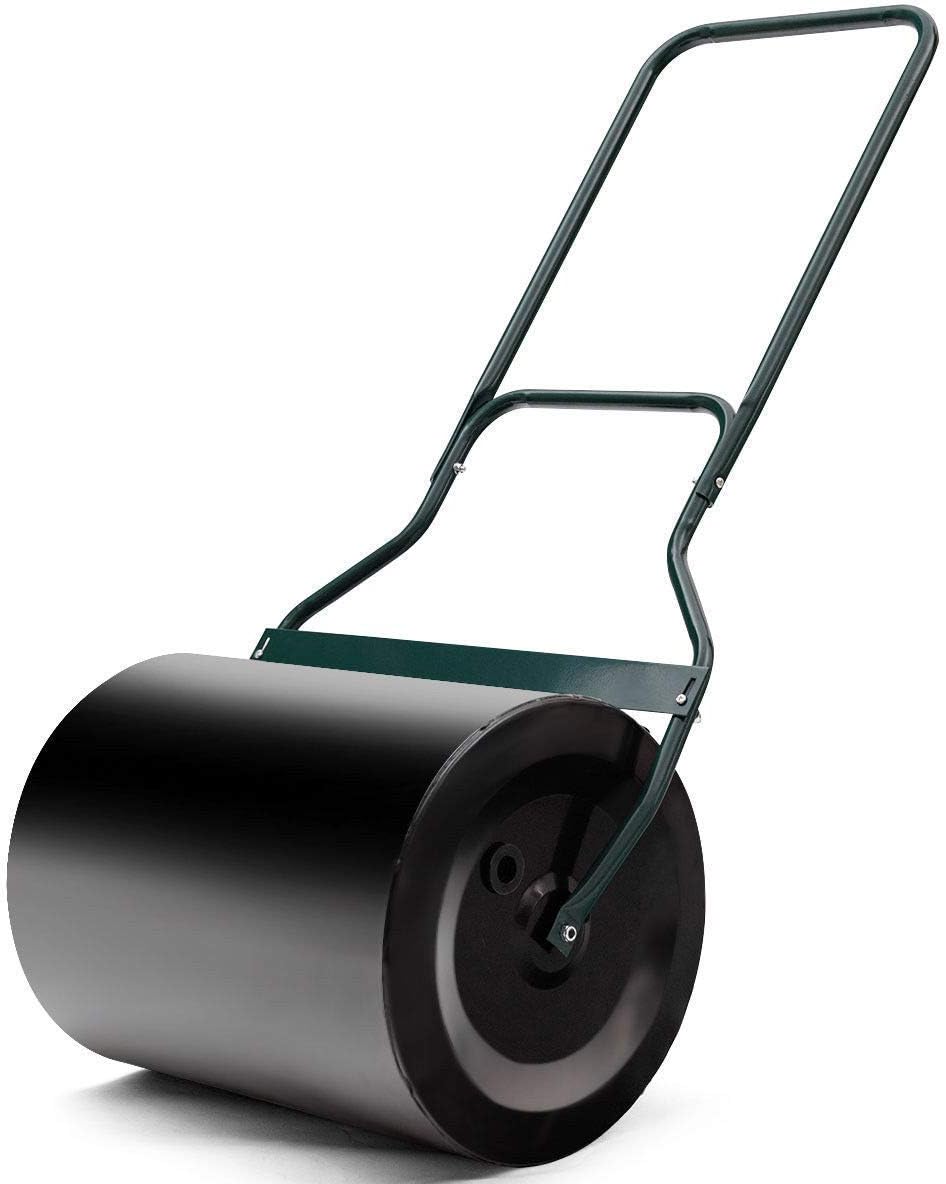
- Sturdy steel drum is spray-treated to resist rust
- Comfortable U-shaped handle makes pushing and pulling easier
- Removable drain plug for quick filling and emptying with water or sand
Cons
- About 155 lb filled with water—lighter than large tow-behind rollers
- 20-inch width means more passes on big areas
- Steel drum should be emptied and stored dry between uses
The Goplus roller is made for maneuvering, with a U-shaped handle that works for pushing, pulling or towing behind a mower.
The steel drum is spray-treated to fight rust and has rounded edges so it won’t tear up turf when you turn. It holds 16 gallons, roughly 155 pounds with water, so you can adjust the weight to the job.
It’s light when empty—under 20 pounds—so carrying it to the shed is no big deal, and it comes apart easily for storage.
It’s a solid pick for pros who want an easy-to-handle roller for flattening uneven ground or packing down new seed and sod.
Best runner-up

- Heavy-duty steel frame holds up in tough conditions
- Versatile attachment options for ATVs, trucks, and mowers
- Easy to assemble and store in limited space
Cons
- Some welds may show quality inconsistencies
- Heavier weight requires a powerful vehicle to tow smoothly
- Occasional slow customer service response
The Landzie Drag Harrow hooks up to ATVs, UTVs, trucks, mowers or lawn tractors with its 4-foot chain. The powder-coated steel frame is built for dragging over gravel, dirt and grass.
Assembly’s a breeze—pre-installed bolts and chains save time. It separates into two parts for compact storage, too.
With a 6-foot width, it covers a lot of ground fast. Just remember, it’s heavy, so you’ll need a capable vehicle to tow it easily.
Some buyers mention rough welds and slow customer service replies, so inspect it when it arrives.
Still, if you need a versatile, tough drag harrow, this Landzie model gets the job done on lawns or driveways.
Best budget option
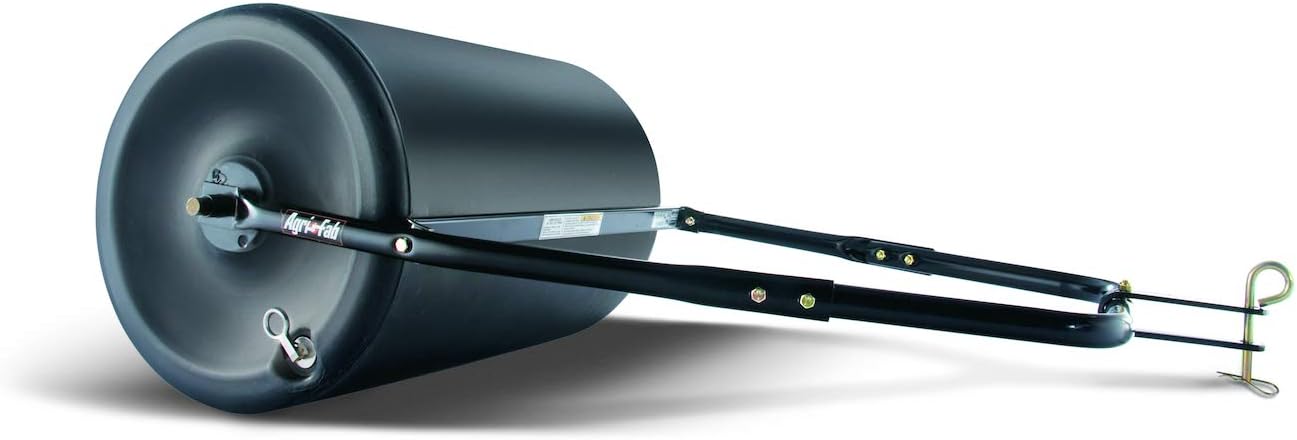
- Holds up to 250 lb when filled with water
- Poly drum won’t rust and is light when empty
- Push/tow design with drain/fill plug for a garden hose
Cons
- Some assembly required
- 24-inch drum means more passes on big areas
- Poly drum is lighter than steel when filled with sand
The Agri-Fab 45-0267 is an affordable way to firm up seedbeds and level small to mid-size lawns. Fill it with a regular garden hose for up to 250 pounds of rolling weight.
You can push it through tight spots or tow it behind a mower or tractor on open ground.
It’s light when empty for easy transport and storage, and Agri-Fab backs it with a 3-year limited warranty.
All in all, it’s a handy, low-cost roller for pros who want dependable results without much hassle.
Best premium choice
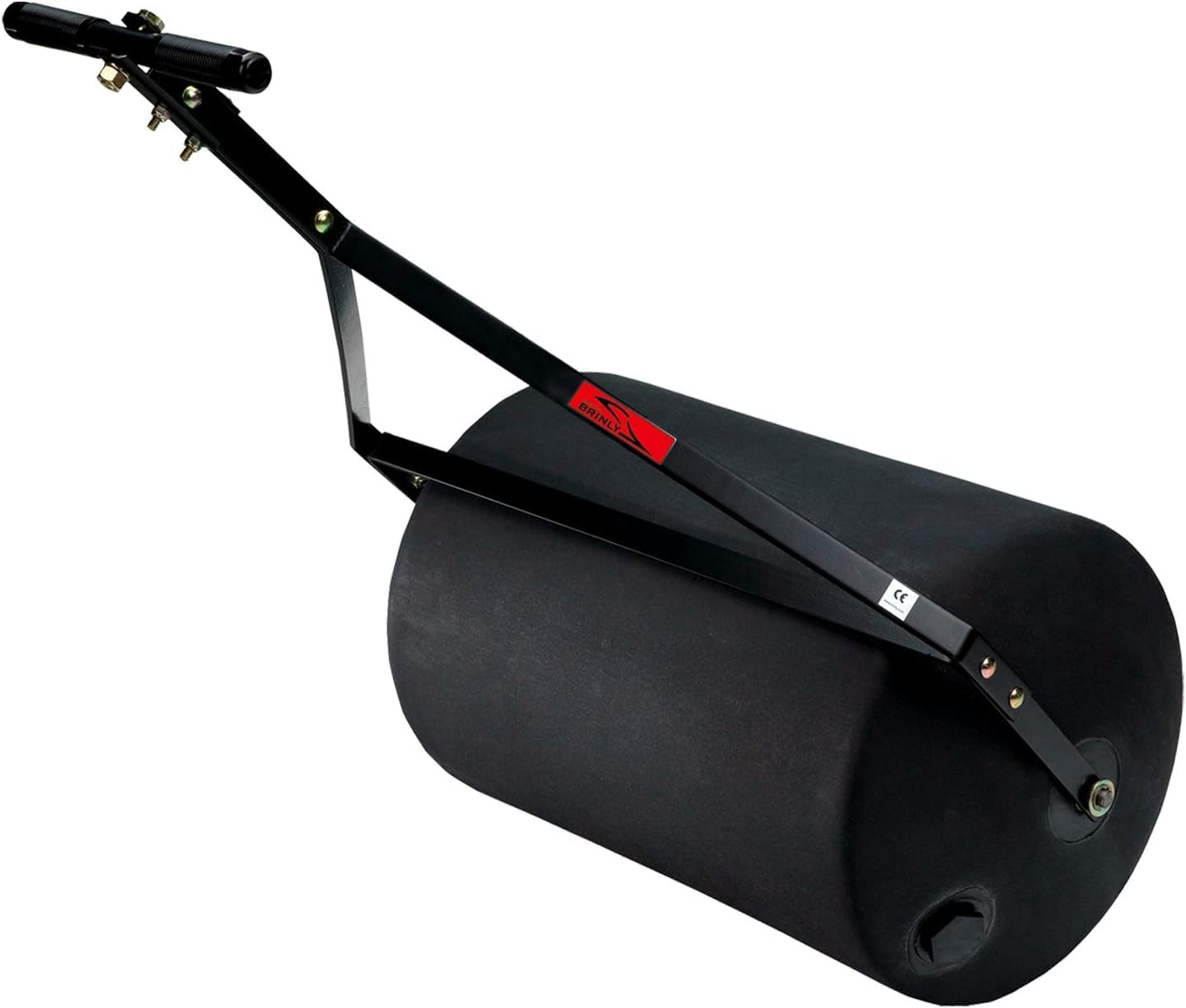
- 28-gallon drum holds up to 270 lb of water or sand
- Poly drum won’t dent or rust
- Easy-Turn tethered plug and extra-large fill opening
Cons
- 24-inch width means larger lawns take longer
- No aeration spikes—pair it with a separate soil aeration tool
- Pricier than basic push rollers
The Brinly roller is light enough to push through the yard yet rugged enough to tow behind a tractor, which makes it flexible for both tight areas and open spaces.
Its 28-gallon poly drum holds up to 270 pounds of water or sand and resists dents, rust and weather damage season after season.
The Easy-Turn tethered plug stays attached to the drum, and the extra-large opening speeds up filling and emptying with a garden hose. It’s a great tool for erasing mole and frost damage or packing down loose dirt, seed and sod.
Buying Guide
When you’re picking out the best essential field roller, a few features really matter for both performance and ease of use. Start with the roller weight—heavier rollers press the soil down more, but honestly, they can be a pain to move around.
Think about the material too. Steel rollers last a long time, but plastic or composite ones weigh less and don’t rust as easily.
Roller size changes how much ground you cover. Big rollers handle more space quickly, though they’re not as nimble in tight spots.
Handling matters more than you might expect. Look for an ergonomic handle or maybe adjustable height, so you don’t end up sore after a long day.
Maneuverability is huge, especially if your field isn’t perfectly flat. Wheels or a swivel feature can save you a lot of hassle.
| Feature | What to Look For | Why it Matters |
|---|---|---|
| Weight | Suitable for soil type | Effective compaction |
| Material | Steel, plastic, or composite | Durability and weather resistance |
| Size | Width and diameter | Coverage and job efficiency |
| Handle | Ergonomic and adjustable | User comfort |
| Maneuverability | Wheels or swivel options | Ease of transport and use |
We independently select all products and services. If you click through links we provide, Plant Native may earn a commission with no extra cost to you. As an Amazon Associate I earn from qualifying purchases.
I’ve heard you need to be careful about spacing. How far apart should I plant these?