Common Spiderwort (Tradescantia ohiensis)
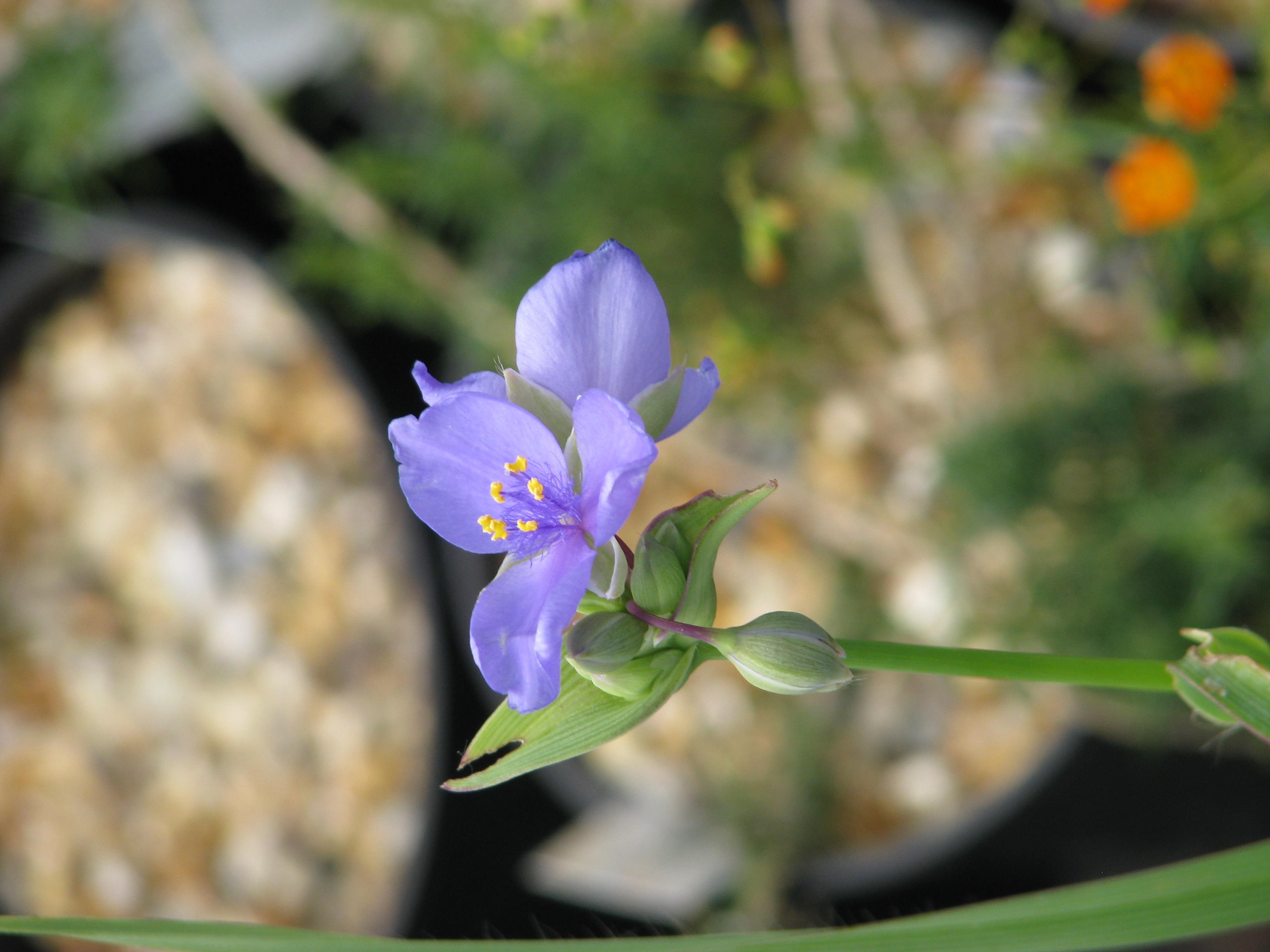
Tradescantia ohiensis, known as Common Spiderwort or Ohio Spiderwort, is one of the most striking native wildflowers of the Great Lakes region and eastern United States. Named after John Tradescant, gardener to Charles I of England, this bold perennial produces clusters of jewel-like, three-petaled flowers in intense shades of deep blue to blue-violet with bright yellow anthers — a color combination that stops visitors in their tracks. Despite its exotic appearance, Common Spiderwort is as tough and adaptable as any native plant, thriving in gardens from Minnesota to Florida.
Common Spiderwort grows 2–4 feet tall with long, strap-like leaves that give the plant a grass-like, architectural quality even when not in bloom. The flowers open in the morning and close by midday, but new buds open each day across a remarkably long bloom season — from late May through July in the Great Lakes region. Each flower lasts only a single morning, but the succession of new blooms keeps the show going for weeks. After blooming, the plant may be cut back to encourage a fresh flush of foliage and sometimes a second bloom in late summer.
In native plant gardens across Michigan, Minnesota, and Wisconsin, Common Spiderwort earns its place through a combination of bold, long-season color, adaptability to dry to moderate soils, and exceptional wildlife value. It establishes quickly, spreads modestly, and performs well in both naturalistic prairie-style plantings and formal mixed borders. Few native perennials offer such vivid color with so little care.
Identification
Common Spiderwort is an upright to slightly arching herbaceous perennial growing 2–4 feet tall. The plant forms clumps of attractive, linear leaves and produces its flowers at the branch tips in compact, umbel-like clusters called “cymes.” Even without flowers, the long, channeled, grass-like leaves and smooth, jointed stems make it recognizable.
Leaves & Stems
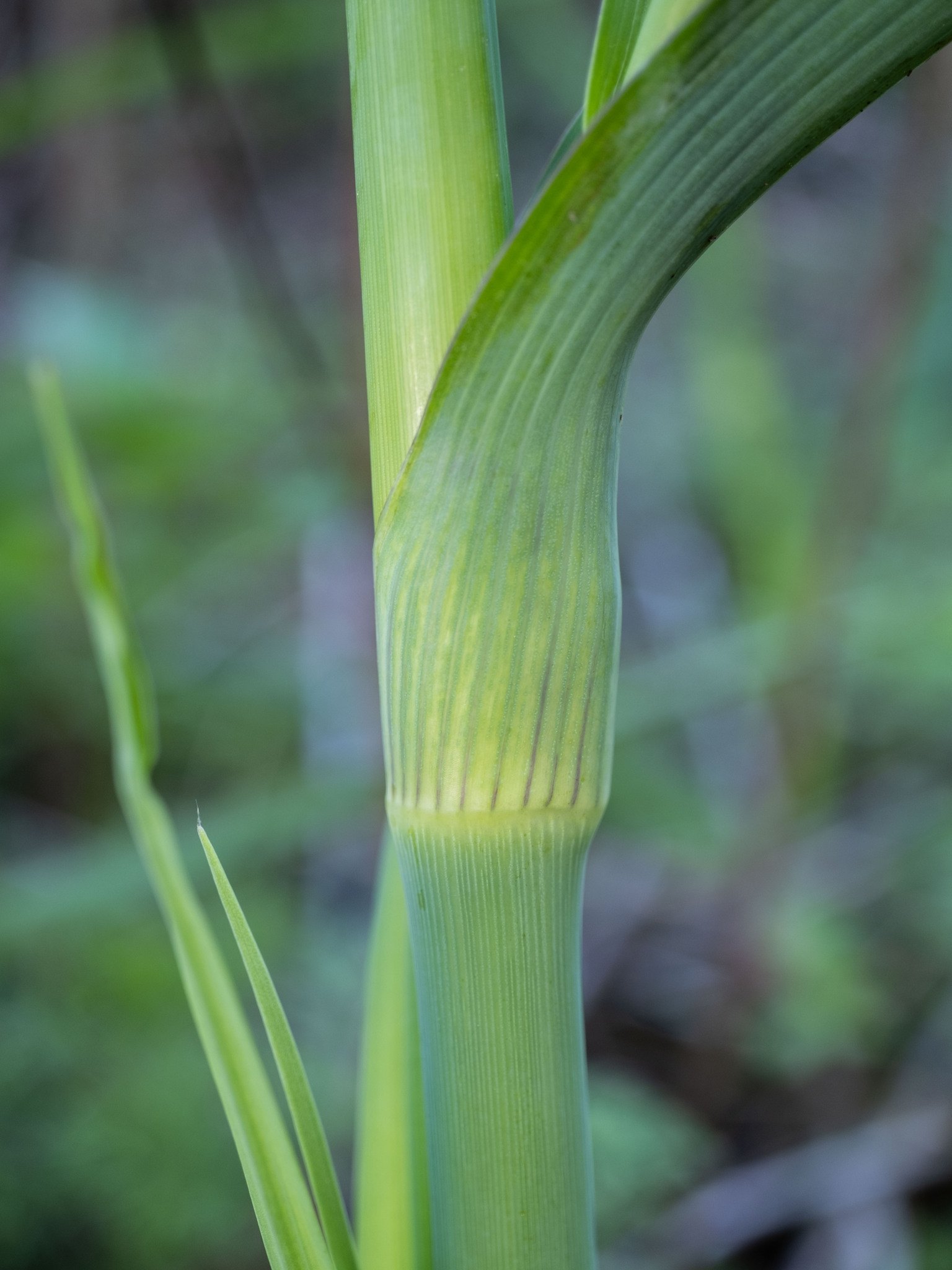
Leaves are long, linear, and grass-like — 6–15 inches long and ½ to ¾ inch wide — with a distinctive folded (conduplicate) channel along the midrib. They are smooth, green, and strap-like, clasping the stem at their base. The stems are round, smooth, and often slightly glaucous (with a grayish, waxy bloom). At each node, the stem is distinctly jointed — a characteristic family trait. When the stem or leaves are broken, they exude a sticky, mucilaginous sap that forms long strings — one proposed origin of the name “spiderwort.”
Flowers
The flowers are produced in compact, terminal clusters (cymes) subtended by leaf-like bracts. Each flower has three rounded petals, typically deep blue to blue-violet (occasionally pink or white in nature), each about ¾ inch across. The six stamens bear bright yellow anthers on distinctive, hairy blue filaments — the hair is beaded, giving it a unique appearance under magnification. Each individual flower opens for a single morning, closing permanently by midday. However, multiple buds are present in each cluster, extending the display season for weeks.
Fruit & Seeds
After pollination, three-chambered capsules develop, each containing two rows of seeds. The seeds ripen in late summer and fall, and the plant self-sows modestly in favorable conditions. Spiderwort also spreads slowly by rhizomes, forming gradually expanding clumps over time.
Quick Facts
| Scientific Name | Tradescantia ohiensis |
| Family | Commelinaceae (Dayflower) |
| Plant Type | Herbaceous Perennial Wildflower |
| Mature Height | 2–4 ft |
| Sun Exposure | Full Sun to Part Shade |
| Water Needs | Moderate to Low (Drought Tolerant) |
| Bloom Time | Late May – July (occasionally reblooms in fall) |
| Flower Color | Deep blue to blue-violet |
| Soil Preference | Well-drained to moderately dry; tolerates poor soils |
| Deer Resistance | Moderate (sticky sap deters some deer) |
| USDA Hardiness Zones | 4–9 |
Native Range
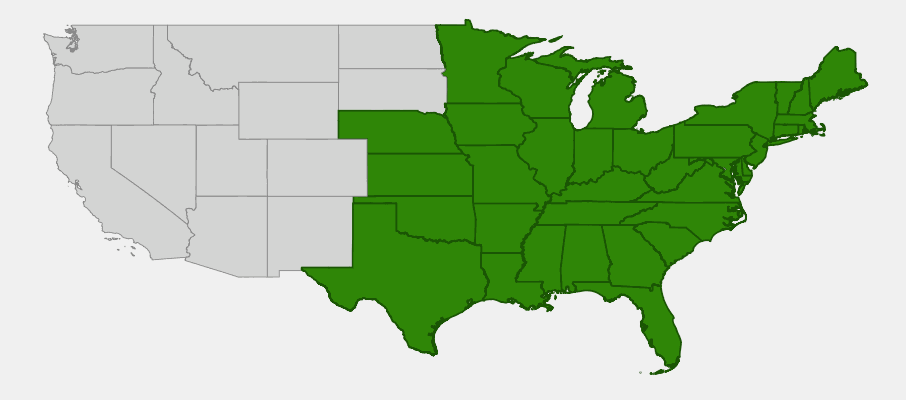
Common Spiderwort is native to the eastern and central United States, with a remarkably broad natural range extending from New England west to Nebraska and Kansas, and south to Florida and Texas. It is found naturally throughout the Great Lakes states — Michigan, Minnesota, and Wisconsin — where it grows in prairies, savannas, forest edges, and disturbed areas. The species is one of the most wide-ranging native spiderworts, tolerating a broader range of soil and moisture conditions than most of its relatives.
In its native habitats, Common Spiderwort is characteristic of open, sunny to partially shaded sites with moderately dry to moderately moist soils. It thrives in prairie openings, oak savannas, forest margins, roadsides, and disturbed areas. Its ability to colonize disturbed ground makes it a useful plant for restoration projects and erosion control on dry to moderate sites. In the Great Lakes region, it commonly grows alongside Black-eyed Susan, Purple Coneflower, and various native grasses in remnant prairie and savanna habitats.
Tradescantia ohiensis takes its species name from Ohio, where it was first formally described for science — though the plant is equally common in states to the north, south, east, and west. Throughout its range, Common Spiderwort has been noted for its remarkable ability to serve as a natural indicator of radiation and certain chemical pollutants: the hairs on the stamens turn pink when exposed to ionizing radiation or certain mutagens, a property that has been studied by scientists as an early warning bioindicator.
📋 Regional plant lists featuring Common Spiderwort: Michigan, Minnesota & Wisconsin
Growing & Care Guide
Common Spiderwort is an excellent low-maintenance native perennial that establishes quickly, blooms prolifically, and asks for very little once settled. It is especially valuable for dry to moderate sites where many other showier perennials would struggle.
Light
Common Spiderwort performs best in full sun to part shade. In full sun, plants are more compact and floriferous; in part shade, stems tend to be slightly taller and more lax, but the flowers are produced reliably. Deep shade reduces flowering significantly. For maximum bloom performance in the Great Lakes region, a site with at least 4–6 hours of direct sun is ideal.
Soil & Water
One of Common Spiderwort’s best qualities is its tolerance of dry to moderately moist soils. It excels on well-drained to moderately dry sites — sandy, gravelly, or rocky soils that many other perennials find challenging. It does not like wet, waterlogged conditions. Once established (typically after the first full growing season), it is quite drought tolerant and needs little or no supplemental watering in normal years. Avoid over-rich, overly moist soils, which encourage floppy, rank growth and reduce bloom quality.
Planting Tips
Plant in spring or fall, spacing plants 18–24 inches apart to allow for gradual clump expansion. Container-grown plants establish readily; bare-root divisions also transplant well. Common Spiderwort self-sows modestly — deadhead spent flower clusters if you want to limit self-seeding, or allow it to naturalize by leaving seed heads in place. Young seedlings are easily transplanted while small.
Pruning & Maintenance
After the main bloom period (typically July in the Great Lakes region), cut plants back by one-half to two-thirds — this removes the often-floppy post-bloom stems and stimulates a fresh flush of attractive foliage. A second, smaller bloom may occur in late summer or fall in favorable conditions. Divide overcrowded clumps every 3–5 years in spring or fall to maintain vigor. Common Spiderwort is essentially pest-free and disease-free in appropriate growing conditions.
Landscape Uses
Common Spiderwort shines in:
- Prairie and meadow gardens — stunning in mass plantings
- Dry to moderate native plant borders — reliable long-blooming color
- Savanna restoration — thrives under open oak canopy
- Rain garden borders and dry swales — handles fluctuating moisture
- Naturalistic cottage gardens — bold, textural presence
- Roadside and utility plantings — tough, adaptable, and self-sustaining
Wildlife & Ecological Value
Common Spiderwort is a valuable native plant for a range of pollinators and wildlife, despite its individual flowers lasting only a single morning.
For Birds
While birds do not consume the seeds or berries of Common Spiderwort directly, the plant supports abundant insect life that provides food for insectivorous birds. Nesting birds forage among the foliage for the insects attracted to the flowers. The dense clumps also provide some nesting cover for ground-nesting birds in prairie and savanna settings.
For Mammals
White-tailed deer occasionally browse Tradescantia, though the sticky, mucilaginous sap provides some deterrence. The plant is not a primary food source for most mammals, but provides habitat structure in prairie and savanna settings.
For Pollinators
Common Spiderwort’s flowers are particularly attractive to native bumblebees (Bombus spp.), which collect both nectar and abundant pollen. Halictid bees (sweat bees), small native bees, and syrphid flies also visit regularly. The stamens’ distinctive hairy filaments have been shown to attract and direct specific pollinator groups. The extended bloom season — with new flowers opening daily over many weeks — makes this plant an exceptionally reliable, long-duration pollen and nectar source for early summer pollinators.
Ecosystem Role
In prairie and savanna ecosystems of the Great Lakes region, Common Spiderwort is a characteristic early-summer bloomer that bridges the gap between spring wildflowers and the midsummer prairie peak. Its tolerance of dry, poor soils allows it to thrive in habitats that support relatively little other vegetation, contributing plant cover and ecosystem services to marginal sites. As a native plant, it supports specialized native insects that have co-evolved with Tradescantia species over millions of years.
Cultural & Historical Uses
Common Spiderwort has a long history of use among Indigenous peoples of eastern North America. The Potawatomi used the mucilaginous sap of the plant as a treatment for skin ailments and inflammation. The Cherokee used various Tradescantia species medicinally for kidney ailments and as a poultice for insect stings. The young shoots and leaves are edible and were gathered as a spring green vegetable by various Indigenous groups — the mucilaginous texture makes them useful as a thickener in soups and stews. The flowers and leaves can also be eaten raw in salads.
The plant’s common name, “spiderwort,” has several proposed origins. One theory holds that the sticky, thread-like sap that forms when the stem is broken resembles a spider’s web or silk. Another tradition suggests the plant was used as a supposed remedy for spider bites. Yet another etymology connects “wort” (the Old English term for plant) with the spider-like radiating form of the leaf bases at the stem nodes. All of these explanations reflect the human tendency to attach meaning and memory to plants through their observable characteristics.
Scientifically, Common Spiderwort has earned distinction as a natural radiation detector. In the 1970s and 1980s, researchers discovered that the stamen hairs (which are normally blue-purple) turn pink in response to ionizing radiation and certain chemical mutagens. This property has been used to monitor nuclear facilities and sites of chemical contamination, making Tradescantia ohiensis a living scientific instrument. Today, Spiderwort is widely grown as an ornamental in native plant gardens, cottage gardens, and naturalistic landscapes across its range and beyond.
Frequently Asked Questions
Why do Common Spiderwort flowers only last one day?
Each individual flower of Tradescantia ohiensis opens for a single morning, typically closing by noon. However, each flower cluster (cyme) contains multiple buds that open in succession over many days. Because a healthy plant produces numerous flower clusters simultaneously, the overall bloom period can last 4–8 weeks, making Common Spiderwort one of the longer-blooming native perennials.
Is Common Spiderwort invasive?
Native Common Spiderwort self-sows modestly and spreads slowly by rhizomes, but is not invasive in the same sense as non-native ornamental Tradescantias. It is well-behaved in most garden settings — easily controlled by pulling unwanted seedlings or dividing clumps. In very moist, disturbed soils it can spread more aggressively; in drier garden settings it stays compact and clump-forming.
Can I grow Common Spiderwort in shade?
Yes — Tradescantia ohiensis tolerates part shade and will grow and bloom in sites receiving 3–4 hours of direct sun. In deeper shade, flowering is reduced and stems become taller and laxer. Full shade is not suitable. For best ornamental effect, choose a full sun to bright part shade location.
How do I encourage a second bloom?
After the main flush of bloom (typically late June or July in the Great Lakes region), cut plants back by half to two-thirds. This removes the often-floppy post-bloom stems and stimulates a fresh rosette of attractive foliage. In favorable conditions — adequate moisture and moderate temperatures — a second, smaller bloom may appear in late summer or early fall.
What does Common Spiderwort look like after bloom?
After blooming, Common Spiderwort can become somewhat floppy and untidy, with yellowing lower leaves. This is normal and expected. Cutting back the spent stems solves the problem and refreshes the plant’s appearance. The new growth that follows is compact and attractive through fall.