Different Types of Chillies: A Quick and Easy Guide
Last updated: September 1, 2026
Chillies are a popular ingredient in many cuisines around the world. They are known for their fiery taste and can add a unique flavor to any dish. However, not all chillies are created equal. There are many different types of chillies, each with its own distinct characteristics.
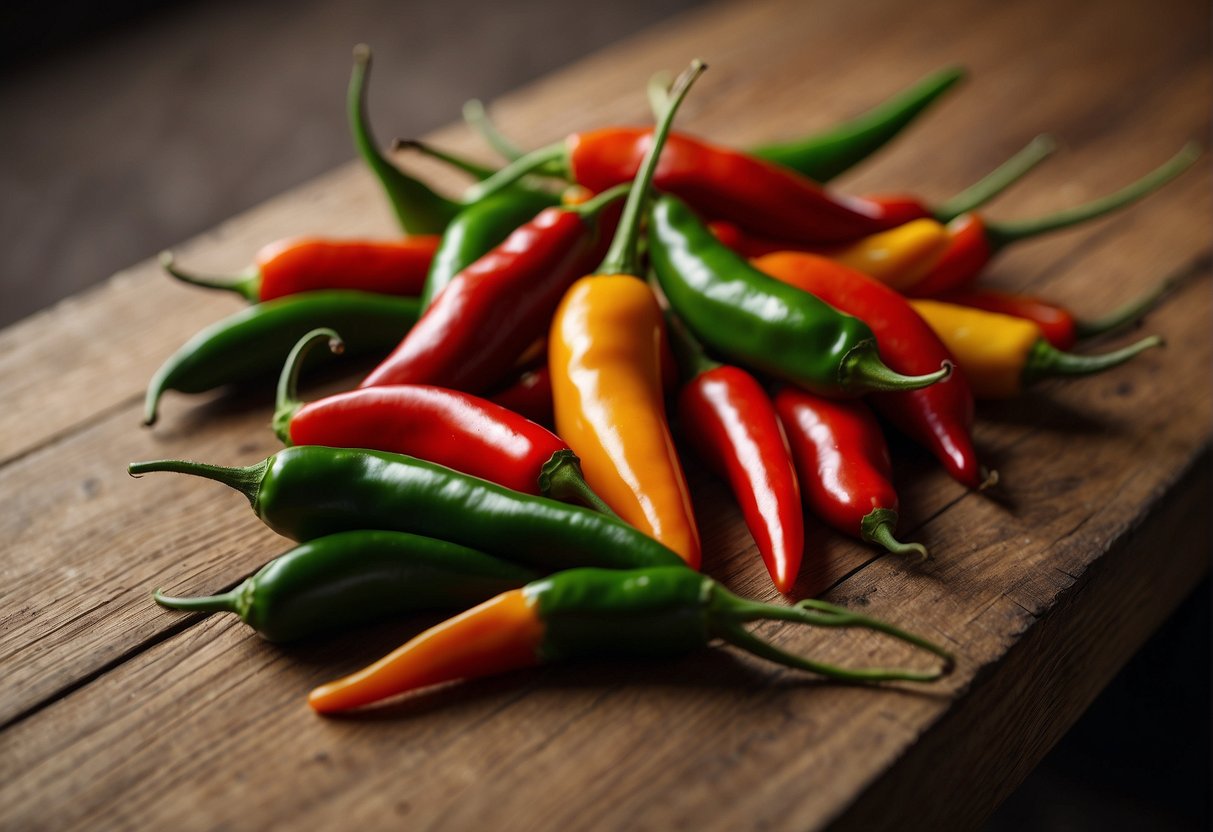
One of the most well-known types of chillies is the habanero. This small, orange or red pepper is one of the hottest chillies in the world, measuring between 100,000 and 350,000 on the Scoville scale. It is often used in Caribbean and Mexican cuisine, and can add a spicy kick to salsas, sauces, and marinades.
Another popular chilli is the jalapeño. This medium-sized pepper is milder than the habanero, measuring between 2,500 and 8,000 on the Scoville scale. It is commonly used in Mexican and Tex-Mex dishes, and can be stuffed, pickled, or sliced and added to nachos, tacos, and burritos.
Overall, understanding the different types of chillies can help you choose the right pepper for your desired level of heat and flavor. From the mild bell pepper to the fiery habanero, each chilli has its own unique characteristics that can add depth and complexity to any dish.
Scoville Scale and Heat Levels
Understanding the Scoville Scale
The Scoville Scale is a measure of the pungency or heat of chilli peppers. It was developed by Wilbur Scoville in 1912 and is measured in Scoville Heat Units (SHU). The scale ranges from 0 (no heat) to over 2 million (extremely hot). The heat of a chilli pepper is determined by the amount of capsaicin it contains. Capsaicin is the chemical compound responsible for the spicy sensation when consumed.
Categories of Heat
Chilli peppers can be categorized into mild, medium, and hot based on their Scoville rating. Mild chillies have a rating of 0-1000 SHU, medium chillies have a rating of 1000-10,000 SHU, and hot chillies have a rating of 10,000 SHU or higher.
Notable Hot Chillies
Some of the hottest chillies in the world include the Carolina Reaper, Bhut Jolokia (Ghost Pepper), Scotch Bonnet, Habanero, and Serrano. The Carolina Reaper currently holds the Guinness World Record for being the hottest chilli pepper in the world with a rating of 1.5-2.2 million SHU. The Bhut Jolokia (Ghost Pepper) was the previous record holder with a rating of 1-1.5 million SHU.
The Scotch Bonnet is a popular chilli pepper in Caribbean cuisine and has a rating of 100,000-350,000 SHU. The Habanero is commonly used in Mexican cuisine and has a rating of 100,000-350,000 SHU. The Serrano is another popular chilli pepper in Mexican cuisine and has a rating of 10,000-23,000 SHU.
Conclusion
Understanding the Scoville Scale and heat levels of different chilli peppers can help individuals choose the right pepper for their desired level of heat in their dishes. It is important to handle hot chillies with care as capsaicin can cause irritation to the skin and eyes.
Culinary Uses and Flavor Profiles
Flavor Spectrum
Chillies come in a wide range of flavors, from sweet and fruity to smoky and crisp. They can also be tangy, nutty, or citrusy. The flavor of a chilli depends on the variety, the color, and the level of spiciness. Some chillies are mild and sweet, while others are fiery hot.
Cooking with Chillies
Chillies are a versatile ingredient that can be used in a variety of dishes. They are commonly used in soups, curries, and stews to add heat and flavor. They can also be roasted, pickled, or used fresh in salads and salsas. When cooking with chillies, it’s important to handle them with care, as the oils can irritate the skin and eyes.
Global Chilli Varieties
Chillies are grown all over the world, and each region has its own unique varieties. Some of the most popular chilli peppers include the bell pepper, banana pepper, poblano pepper, Anaheim pepper, cayenne pepper, serrano pepper, and Tabasco pepper.
Other varieties, such as the piri piri and bird’s eye chilli, are popular in African and Asian cuisine. The aji amarillo is a popular chilli in South America, while the Scotch bonnet is a staple in Caribbean cooking.
Chilli peppers come in a range of colors, including purple, white, orange, yellow, green, and red. They can be dried or used fresh, and their size and shape can vary widely. Some chilli peppers are so spicy that they are only used in small amounts, while others are mild enough to be eaten whole.
The Puckerbutt Pepper Company, founded by Ed Currie, is known for producing some of the world’s hottest chillies, including the Carolina Reaper. However, most chillies are not quite as spicy and can be enjoyed by people with a range of spice tolerances.
Overall, chillies are an essential ingredient in many cuisines around the world. They add heat and flavor to dishes and can be used in a variety of ways. With so many different varieties to choose from, there’s a chilli pepper for every taste and cooking style.
Complete Chilli Heat Chart: 40+ Varieties Ranked
The table below ranks over 40 types of chillies from mildest to hottest, with their Scoville Heat Units (SHU), origin, and best culinary uses.
| Chilli Variety | Heat (SHU) | Heat Level | Origin | Best Uses |
|---|---|---|---|---|
| Bell Pepper | 0 | None | Central America | Salads, stir-fry, stuffing |
| Banana Pepper | 0 – 500 | Mild | South America | Pickling, sandwiches, salads |
| Pimento (Cherry Pepper) | 100 – 500 | Mild | South America | Pimento cheese, stuffing olives |
| Pepperoncini | 100 – 500 | Mild | Italy/Greece | Pizza, antipasto, sandwiches |
| Shishito | 50 – 200 | Mild | Japan | Blistered, tempura, appetizers |
| Padron | 500 – 2,500 | Mild | Spain | Blistered, tapas |
| Anaheim | 500 – 2,500 | Mild | New Mexico, USA | Chiles rellenos, green chili sauce |
| Poblano | 1,000 – 2,000 | Mild | Puebla, Mexico | Stuffing, mole sauce, rajas |
| Ancho (dried Poblano) | 1,000 – 2,000 | Mild | Mexico | Mole, enchilada sauce, chili |
| Pasilla | 1,000 – 2,500 | Mild | Mexico | Sauces, mole negro |
| Guajillo | 2,500 – 5,000 | Medium | Mexico | Salsa, stews, adobo |
| Jalapeno | 2,500 – 8,000 | Medium | Veracruz, Mexico | Salsa, nachos, poppers, pickling |
| Fresno | 2,500 – 10,000 | Medium | California, USA | Ceviche, hot sauce, salsa |
| Chipotle (smoked Jalapeno) | 2,500 – 8,000 | Medium | Mexico | Adobo sauce, BBQ, marinades |
| Hungarian Wax | 5,000 – 10,000 | Medium | Hungary | Pickling, stews, goulash |
| Aleppo | 10,000 | Medium | Syria/Turkey | Finishing spice, kebabs, dips |
| Serrano | 10,000 – 23,000 | Hot | Puebla/Hidalgo, Mexico | Pico de gallo, salsa verde |
| Manzano | 12,000 – 30,000 | Hot | South America | Fresh salsa, stuffing, roasting |
| Cayenne | 30,000 – 50,000 | Hot | French Guiana | Powder, hot sauce, Cajun cooking |
| Tabasco | 30,000 – 50,000 | Hot | Tabasco, Mexico | Hot sauce, Bloody Mary, Creole |
| Bird’s Eye (Thai Chilli) | 50,000 – 100,000 | Very Hot | Southeast Asia | Thai curry, stir-fry, som tam |
| Piri Piri (African Bird’s Eye) | 50,000 – 175,000 | Very Hot | Africa/Portugal | Grilled chicken, hot sauce |
| Rocoto | 30,000 – 100,000 | Very Hot | Peru | Rocoto relleno, salsa |
| Dundicut | 55,000 – 65,000 | Very Hot | Pakistan | Curry, chutneys, pickles |
| Habanero | 100,000 – 350,000 | Very Hot | Yucatan, Mexico | Hot sauce, jerk seasoning, salsa |
| Scotch Bonnet | 100,000 – 350,000 | Very Hot | Caribbean | Jerk chicken, pepper sauce |
| Datil | 100,000 – 300,000 | Very Hot | St. Augustine, Florida | Hot sauce, relish, jelly |
| Fatalii | 125,000 – 325,000 | Very Hot | Central Africa | Hot sauce, fruit salsas |
| Red Savina Habanero | 350,000 – 580,000 | Extreme | California, USA | Extreme hot sauce, dares |
| Ghost Pepper (Bhut Jolokia) | 855,000 – 1,041,427 | Extreme | Northeast India | Extreme hot sauce, challenges |
| Naga Viper | 1,349,000 | Extreme | England (hybrid) | Extreme hot sauce |
| Trinidad Scorpion Butch T | 1,463,700 | Extreme | Trinidad/Australia | Extreme hot sauce, tiny amounts |
| 7 Pot Douglah | 923,000 – 1,854,000 | Extreme | Trinidad | Extreme hot sauce, chili |
| Komodo Dragon | 1,400,000 – 2,200,000 | Extreme | England | Extreme hot sauce |
| Trinidad Moruga Scorpion | 1,200,000 – 2,009,231 | Extreme | Trinidad | Record-holder until 2013 |
| Carolina Reaper | 1,400,000 – 2,200,000 | Extreme | South Carolina, USA | Former Guinness record holder |
| Dragon’s Breath | 2,480,000 | Extreme | Wales | Research, not for eating |
| Pepper X | 2,693,000 | Extreme | South Carolina, USA | Current Guinness record holder |
| Kashmiri | 1,000 – 2,000 | Mild | Kashmir, India | Tandoori, rogan josh, color |
| Gochugaru (Korean) | 4,000 – 8,000 | Medium | Korea | Kimchi, gochujang, stews |
| Aji Amarillo | 30,000 – 50,000 | Hot | Peru | Ceviche, aji sauce, causa |
| Aji Limo | 30,000 – 50,000 | Hot | Peru | Ceviche, tiradito, salsas |
| Malagueta | 60,000 – 100,000 | Very Hot | Brazil | Molho de pimenta, feijoada |
| Cascabel | 1,500 – 2,500 | Mild | Mexico | Salsas, soups, stews |
Heat levels can vary within the same variety depending on growing conditions, soil, and climate. Peppers grown in hotter, drier climates tend to produce more capsaicin. Always start with small amounts when cooking with unfamiliar chilli varieties.
Frequently Asked Questions
What is the hottest chilli in the world?
Pepper X holds the Guinness World Record at 2.69 million Scoville Heat Units (SHU), created by Ed Currie. The Carolina Reaper comes in at 2.2 million SHU. For comparison, a jalapeno is only 2,500-8,000 SHU.
What makes chillies hot?
Capsaicin, a compound found in the white pith and seeds. It binds to pain receptors (TRPV1) in the mouth, creating a burning sensation. The amount of capsaicin determines the pepper’s Scoville rating.
Are chillies good for you?
Yes. Chillies are rich in vitamins A and C, and capsaicin has anti-inflammatory and metabolism-boosting properties. Studies link regular chilli consumption to longer lifespan and reduced heart disease risk.
How do you reduce chilli heat in cooking?
Remove seeds and white pith where most capsaicin concentrates. Dairy products (milk, yogurt) neutralize capsaicin most effectively. Water and beer actually spread the burn and make it worse.
How many types of chillies are there?
There are over 4,000 known varieties of chillies worldwide, all belonging to the Capsicum genus. They are generally grouped into five domesticated species: Capsicum annuum (jalapenos, bell peppers), Capsicum chinense (habaneros, ghost peppers), Capsicum frutescens (tabasco), Capsicum baccatum (aji peppers), and Capsicum pubescens (rocoto). Heat levels range from 0 SHU for sweet peppers to over 2 million SHU for the hottest varieties.
What is the Scoville scale and how does it work?
The Scoville scale measures the heat level of chillies in Scoville Heat Units (SHU). It was created by pharmacist Wilbur Scoville in 1912. The scale ranges from 0 SHU for bell peppers to over 2 million SHU for the hottest peppers like Pepper X. Modern testing uses high-performance liquid chromatography (HPLC) to measure capsaicin concentration, which is then converted to SHU for a standardized heat rating.