Rough-leaved Dogwood (Cornus drummondii)
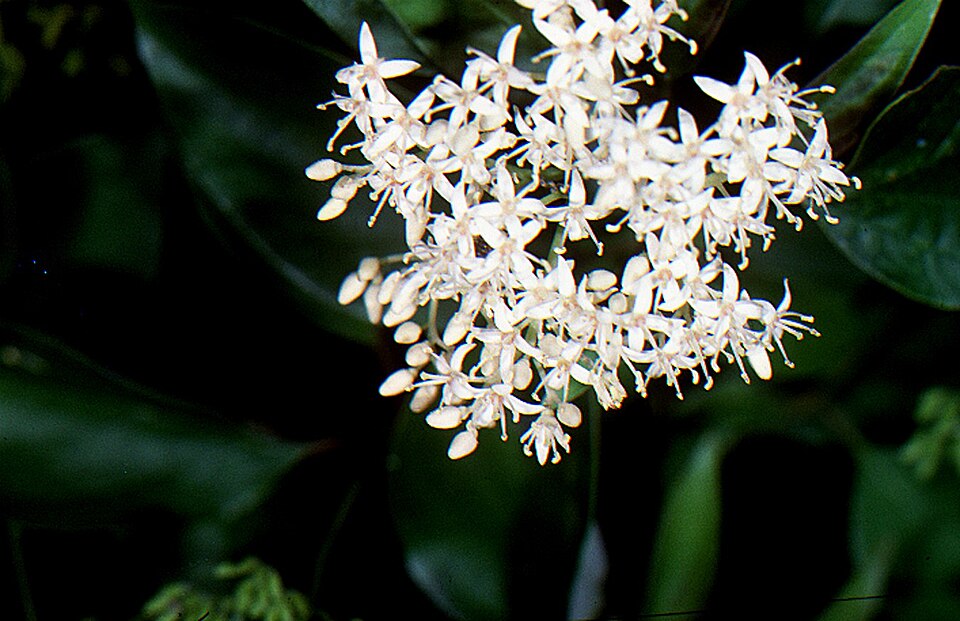
Cornus drummondii, commonly known as Rough-leaved Dogwood or Roughleaf Dogwood, is a tough and versatile native shrub of central and eastern North America that plays an essential ecological role in shrubby thickets, woodland edges, and disturbed habitats across the Great Lakes region. Named for the distinctly rough, sandpaper-like texture of its leaf surfaces — caused by the upward-pointing stiff hairs covering both sides — this dogwood is among the most adaptable and drought-tolerant members of the native dogwood family, performing strongly in the dry, challenging conditions where many of its close relatives would struggle.
Blooming in May and June, Rough-leaved Dogwood produces flat-topped clusters (corymbs) of small white flowers that are fragrant, nectar-rich, and highly attractive to pollinators. These blooms are followed by round white to cream-colored drupes in summer — eagerly consumed by dozens of bird species — and the shrub’s foliage turns attractive shades of red and burgundy in autumn before dropping. Growing to approximately 20 feet tall in optimal conditions, it typically forms multi-stemmed clumps that spread by stolons to create dense thickets providing exceptional wildlife habitat.
For gardeners and restorationists in Michigan, Wisconsin, and Minnesota seeking a tough, drought-tolerant native shrub for challenging sites, Rough-leaved Dogwood is an excellent choice. It stabilizes eroding slopes, creates wildlife corridors, and thrives on roadsides and in full sun conditions that would challenge its moisture-loving relatives like Red-osier Dogwood. Its combination of spring flowers, summer fruit, fall color, and winter structure gives it four-season ornamental interest while delivering extraordinary ecological value.
Identification
Rough-leaved Dogwood is a multi-stemmed, colony-forming deciduous shrub distinguishable from other native dogwoods primarily by the distinctly rough, sandpaper-textured surface of its leaves — a feature produced by closely spaced, stiff, upward-pointing hairs on both leaf surfaces.
Bark
The bark of mature stems is gray-brown, becoming slightly furrowed and roughened with age. Young stems are reddish-brown, contrasting with the gray stems of mature wood. Unlike the brilliant red winter stems of Red-osier Dogwood, Rough-leaved Dogwood’s winter stems are a muted grayish-brown — an important distinguishing feature. Inner bark is white to cream-colored.
Leaves
Leaves are opposite (paired on the stem), oval to elliptic, 2 to 4 inches long, with 4 to 6 pairs of arcuate (curving) veins characteristic of the dogwood family. Both leaf surfaces are covered with short, stiff hairs that point upward, giving the leaf a very distinctive rough, sandpaper-like texture — the key field identification feature of this species. This roughness is immediately apparent when a leaf is rubbed between the fingers. Leaves are dark green in summer, turning red to burgundy in autumn.
Flowers & Fruit
Flowers are tiny (¼ inch) with 4 white petals, borne in flat-topped clusters (corymbs) 1.5 to 3 inches across at the tips of the current year’s growth in May and June. Flower clusters are fragrant and attract a wide variety of pollinators. Fruit are small (¼ inch) round drupes, white to cream-colored when ripe in late summer, borne on red pedicels (fruit stalks) that create an attractive two-toned display. Birds consume the fruit rapidly after ripening.
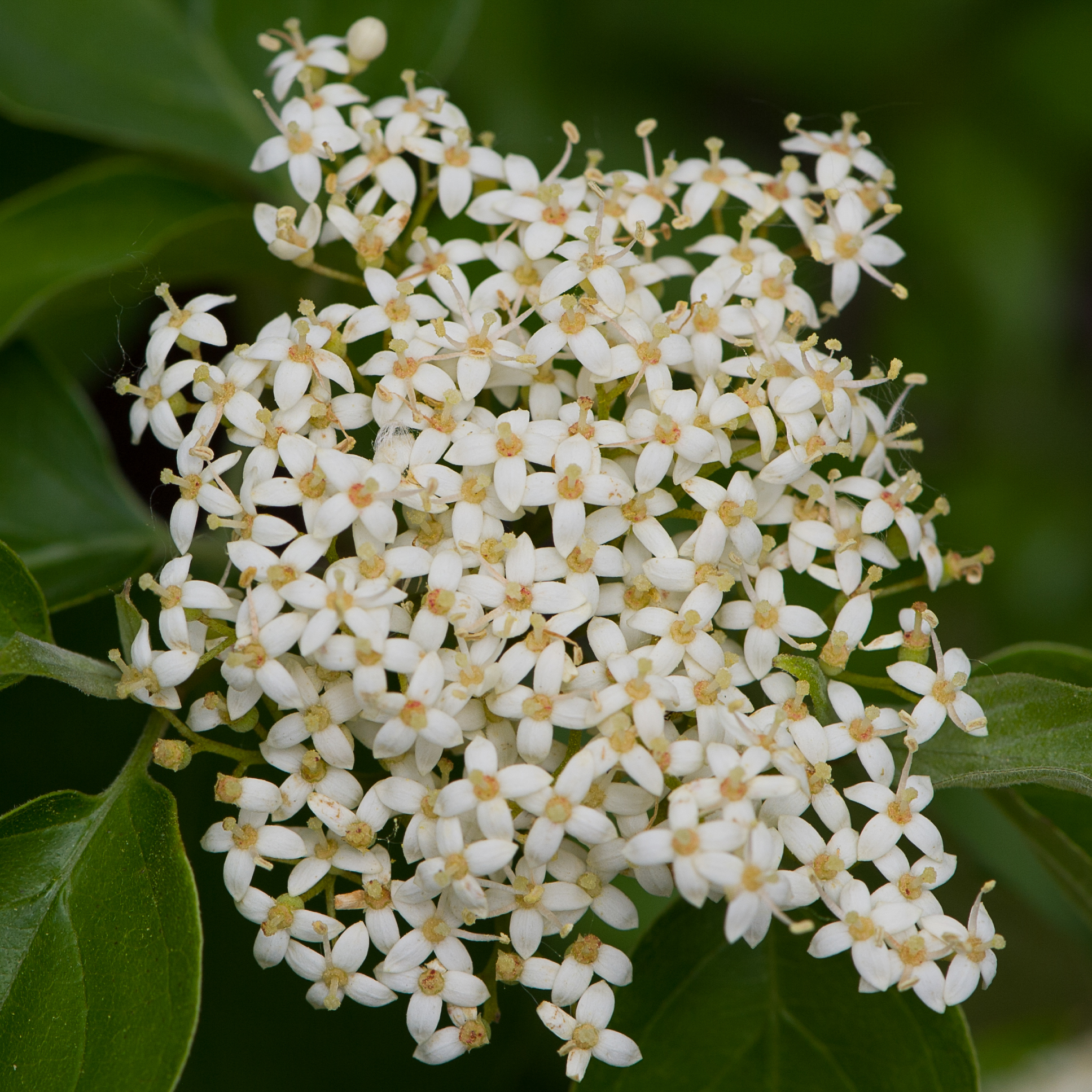
Quick Facts
| Scientific Name | Cornus drummondii |
| Family | Cornaceae (Dogwood) |
| Plant Type | Deciduous Shrub / Small Tree |
| Mature Height | 20 ft |
| Sun Exposure | Full Sun |
| Water Needs | Low (Drought Tolerant) |
| Bloom Time | May – June |
| Flower Color | White (flat-topped clusters) |
| Fruit | White to cream drupes on red stalks (summer) |
| USDA Hardiness Zones | 4–9 |
Native Range
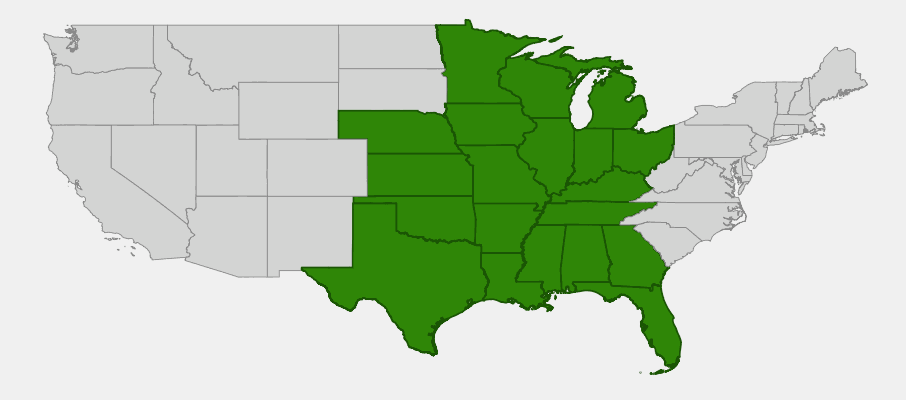
Rough-leaved Dogwood is native to the central and eastern United States, with its core range centered on the Great Plains and Midwest, extending eastward into the Appalachian states and southward to the Gulf Coast. Its distribution closely follows the transition zones between forest and prairie, and it is characteristic of the shrubby edge habitats that once separated these two biomes across the continent’s interior.
In the Great Lakes region, Rough-leaved Dogwood occurs naturally in Michigan, Wisconsin, and Minnesota, where it is found in open shrubby areas, forest margins, roadsides, and disturbed habitats on drier, well-drained soils. It is significantly more drought tolerant than the other native dogwoods of this region (particularly Red-osier Dogwood, which prefers moist to wet conditions), filling an important ecological niche in drier upland settings.
Rough-leaved Dogwood thrives in disturbed areas and is considered an early successional species — one of the first woody plants to colonize old fields, burned areas, and roadsides. Its ability to spread rapidly by stolons allows it to form dense thickets that can stabilize soil and resist invasion by exotic species. However, in the absence of periodic disturbance (fire or cutting), it may eventually be overtopped and shaded out by taller trees in natural succession.
📋 Regional plant lists featuring Rough-leaved Dogwood: Michigan, Minnesota & Wisconsin
Growing & Care Guide
Rough-leaved Dogwood is one of the most adaptable native shrubs available to gardeners in the Great Lakes region — drought tolerant, sun-loving, cold hardy, and capable of thriving in difficult sites where other native shrubs struggle.
Light
Full sun is ideal for Rough-leaved Dogwood, producing the densest growth, heaviest flowering, and best fruit production. It tolerates light shade but becomes open and less floriferous in shadier conditions. Unlike many of its dogwood relatives, this species evolved in open, sunny conditions at prairie margins and performs best when given direct sunlight for most of the day.
Soil & Water
Rough-leaved Dogwood is remarkably drought tolerant — one of its most valuable characteristics in the landscape. It grows well in dry, well-drained soils ranging from sandy loam to heavy clay, and tolerates rocky, compacted, and nutrient-poor conditions that would challenge many other shrubs. Once established, it rarely needs supplemental watering. It does not perform well in consistently wet or poorly drained sites; adequate drainage is the one non-negotiable requirement. Soil pH can range from mildly acidic to slightly alkaline.
Planting Tips
Plant Rough-leaved Dogwood in spring or fall. Container-grown plants establish readily. Space plants 6–10 feet apart if you want individual specimens; space them 4–6 feet apart if creating a wildlife hedge or thicket planting. Be aware that this species spreads by underground stolons to form multi-stemmed colonies — this is ecologically desirable for wildlife plantings but may require management in formal garden settings. A single initial planting can expand into a substantial thicket over 5–10 years.
Pruning & Maintenance
Rough-leaved Dogwood is a low-maintenance shrub that requires minimal pruning. Remove dead wood in late winter. For rejuvenation, cut the entire shrub to within 6–12 inches of the ground every 5–7 years in late winter — it will regenerate vigorously from the root system. To control spread, remove unwanted stolons/suckers at the soil line in spring. The species has no serious pest or disease problems.
Landscape Uses
- Wildlife hedgerows and screening — forms dense, impassable thickets with wildlife value
- Slope and erosion control — stoloniferous roots stabilize steep, dry banks
- Roadside plantings — thrives in compacted, dry roadside soils
- Prairie and savanna restorations — natural component of prairie-edge communities
- Naturalized borders — low-maintenance background shrub in naturalized areas
- Bird gardens — white drupes are highly attractive to frugivorous birds
Wildlife & Ecological Value
Rough-leaved Dogwood provides exceptional wildlife value, particularly for birds, making it one of the top native fruiting shrubs for the Great Lakes region.
For Birds
The white fruit of Rough-leaved Dogwood is among the most sought-after bird food in the shrubby thicket community. Documented consumers include American Robin, Gray Catbird, Northern Mockingbird, Eastern Kingbird, Red-eyed Vireo, Cedar Waxwing, Yellow-rumped Warbler, various thrushes, and many sparrow species. Migrating songbirds in fall particularly depend on dogwood fruits to fuel their southward journeys. The dense, multi-stemmed thickets provide excellent nesting cover, with dozens of bird species documented nesting within Rough-leaved Dogwood colonies.
For Pollinators
The spring flower clusters are highly attractive to pollinators, providing an abundant source of nectar and pollen during May and June. Native bees of many species visit the flowers, including bumble bees, mining bees, sweat bees, and various small native bees. The flat-topped flower clusters make nectar and pollen easily accessible to smaller insects as well — making Rough-leaved Dogwood especially valuable for supporting the full diversity of native pollinators, not just the larger species.
For Mammals
Cottontail rabbits use dense dogwood thickets as critical escape cover and consume bark and twigs in winter. White-tailed deer browse the foliage and twigs. The thicket habitat created by Rough-leaved Dogwood supports a diverse small mammal community including mice, voles, and shrews.
Ecosystem Role
Rough-leaved Dogwood is an early successional species that plays an important role in colonizing disturbed habitats and initiating the recovery of native shrubby communities. Its stoloniferous spread helps stabilize soil on disturbed slopes and roadsides. As a fruiting shrub, it serves as a keystone food source for fruit-eating birds during migration and winter. The dense thickets it creates increase structural complexity in otherwise simple landscapes, harboring a diverse community of invertebrates, small mammals, and nesting birds.
Cultural & Historical Uses
Rough-leaved Dogwood was used medicinally by several Native American peoples across its range. The Comanche people are documented as using the inner bark in tobacco blends, while other tribes in the central and eastern plains region used various parts of the plant for medicinal preparations. Dogwood bark across multiple species was used by various Indigenous peoples to treat malaria-like fevers, as it contains compounds that act similarly to quinine, the anti-malarial compound derived from cinchona bark. The white berries, while consumed by wildlife, are not palatable to humans and have historically not been used as a food source.
Early European settlers in the Great Plains and Midwest recognized the value of Rough-leaved Dogwood as a functional shrub for hedgerow planting, where its thicket-forming habit, drought tolerance, and bird-attracting fruit were well appreciated. It was planted along fence rows and field margins throughout the agricultural Midwest in the late 19th and early 20th centuries as part of the living-fence tradition that combined agricultural function with wildlife habitat. Many of these historic plantings still persist in the rural landscape today, providing important habitat islands in otherwise intensively managed agricultural areas.
In modern native plant horticulture, Rough-leaved Dogwood is increasingly valued for its exceptional adaptability to difficult sites — particularly dry, compacted urban soils that defeat moisture-loving dogwood relatives. Its use in highway and roadside plantings, urban naturalization projects, and prairie restorations has grown substantially as awareness of its ecological value and its site adaptability has spread within the native plant community. Its white-fruited fall display is particularly striking in the landscape and contributes to its growing popularity.
Frequently Asked Questions
How does Rough-leaved Dogwood differ from Gray Dogwood?
Rough-leaved Dogwood (C. drummondii) and Gray Dogwood (C. racemosa) are closely related and similar in appearance, but can be distinguished by leaf texture — Rough-leaved Dogwood has obviously rough, sandpaper-textured leaves, while Gray Dogwood leaves are smooth or only slightly hairy. Additionally, Rough-leaved Dogwood typically grows taller (to 20 ft) and is more drought tolerant; Gray Dogwood is better adapted to moister sites.
Will Rough-leaved Dogwood spread and take over my garden?
This species does spread by stolons and can form expanding colonies over time. In naturalized or wildlife garden settings, this spreading habit is beneficial. In more formal garden settings, manage spread by removing unwanted suckers at the soil line each spring. It is not considered invasive and is readily controlled with periodic maintenance.
Does Rough-leaved Dogwood grow in clay soil?
Yes — Rough-leaved Dogwood tolerates heavy clay soil better than many other native shrubs, provided the site has adequate drainage and is not consistently waterlogged. It is one of the best choices for dry clay banks and difficult upland sites in the Great Lakes region.
Are the white berries edible?
The white drupes of Rough-leaved Dogwood are not palatable to humans — they have a bitter, oily taste and are not used as food. They are, however, highly valuable wildlife food and are eagerly consumed by many bird species. Do not confuse them with edible fruits.
How quickly does Rough-leaved Dogwood grow?
Rough-leaved Dogwood is a moderate to fast grower, typically adding 1–2 feet per year under favorable conditions. It begins flowering and fruiting within 3–4 years of planting from container stock. Stoloniferous spread allows the colony to expand at a moderate pace, creating a substantial thicket over 5–10 years.