Harebell (Campanula rotundifolia)
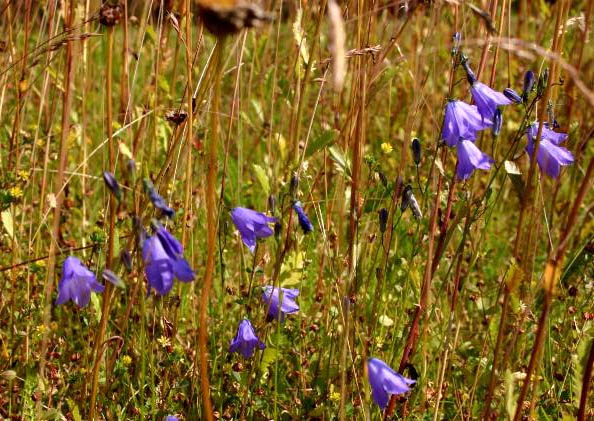
Campanula rotundifolia, known as Harebell, Bluebell, or Scottish Bluebell, is one of the most enchanting wildflowers of the northern hemisphere — a delicate, fairy-tale plant of windswept meadows, rocky ledges, and open forest glades. The name “rotundifolia” (round-leaved) refers to the small, round basal leaves that appear briefly in spring before the plant’s long, slender stem leaves develop. Despite its delicate appearance, Harebell is one of the toughest and most cold-hardy native wildflowers of the Great Lakes region, surviving harsh winters and thriving on rocky, nutrient-poor soils where more demanding plants would fail.
Growing 6–18 inches tall on wiry, thread-like stems, Harebell produces a succession of nodding, blue-violet bell-shaped flowers (corollas) from midsummer through fall — an unusually long bloom season for a native perennial of the north. The flowers are borne singly or in loose clusters at the tips of slender, branching stems that sway gracefully in the wind, adding a sense of movement and lightness to the garden. In Scotland, Harebell is the national flower — the famous “bluebell of Scotland” — and it carries deep cultural resonance across its circumboreal range.
For native plant gardeners in Michigan, Minnesota, and Wisconsin, Harebell is a gem for difficult sites: thin, rocky soils, dry slopes, sandy lake margins, and other challenging locations where it will naturalize into beautiful, low-maintenance colonies. Its late-season bloom, cold hardiness, and deer resistance make it especially valuable for Upper Midwest gardens seeking native alternatives to non-native fall bloomers.
Identification
Harebell is a slender, delicate-looking herbaceous perennial with wiry stems growing 6–18 inches tall (occasionally taller in rich, moist soils). It spreads by slender rhizomes to form loose colonies over time. The plant’s graceful form and nodding blue bells are unmistakable, though the absence of round basal leaves in midsummer (when the plant is in full bloom) often surprises first-time observers — the basal leaves wither early in the season, leaving only the linear stem leaves.
Leaves
The species epithet “rotundifolia” (round-leaved) refers to the small, heart-shaped to round basal leaves that emerge in spring — typically ¼ to ¾ inch wide, on long petioles. These are often absent or withered by the time the plant blooms. The stem leaves (cauline leaves) are entirely different: long, narrow, grass-like, and linear — ½ to 3 inches long and just 1/16 to ⅛ inch wide. This striking difference between basal and stem leaves is a distinctive Harebell characteristic that puzzles many botanists encountering it for the first time.
Flowers
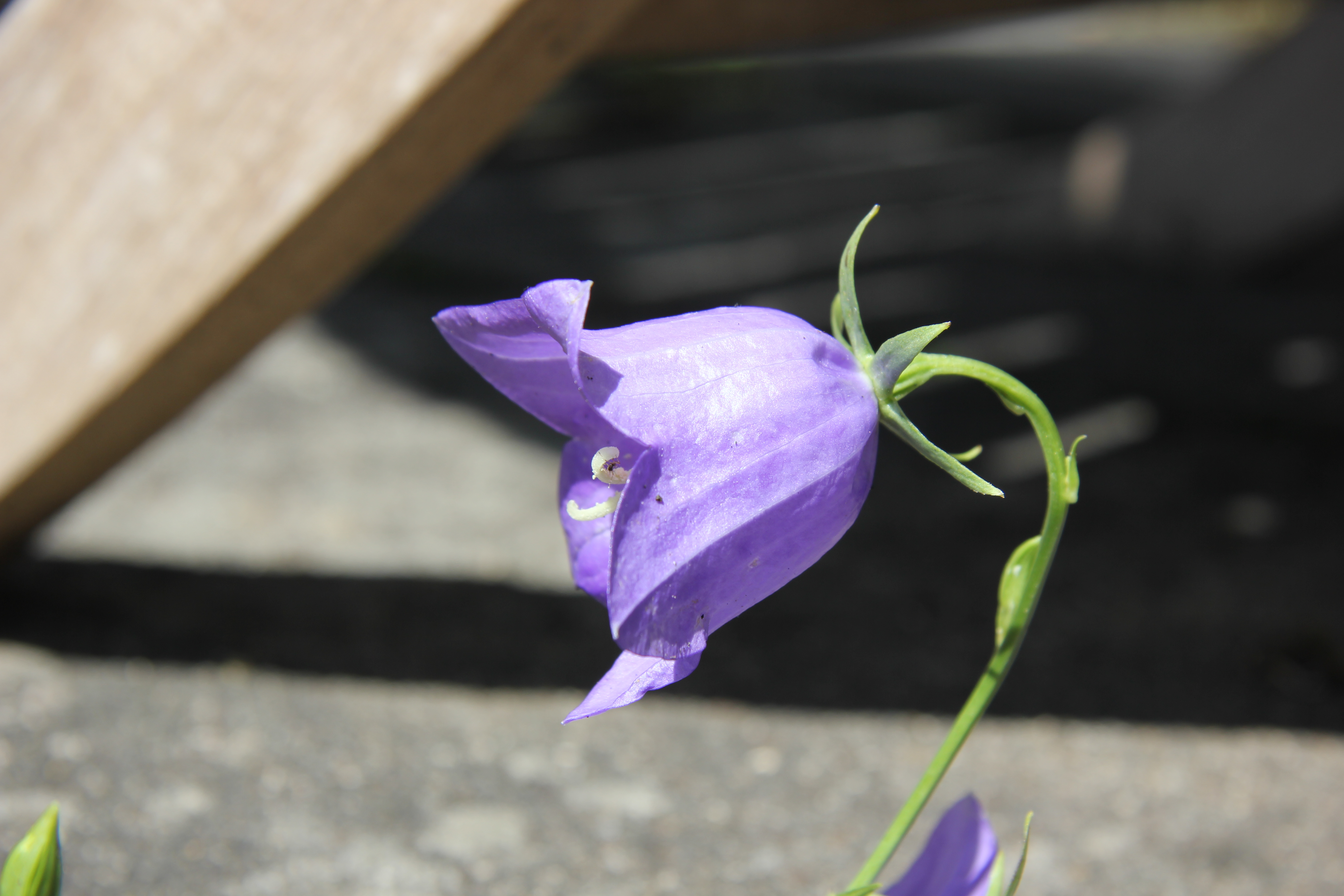
The flowers are the plant’s defining glory: five petals fused into a nodding, bell-shaped corolla about ¾ to 1 inch long, blue-violet to lavender-blue in color (rarely white), with five pointed lobes flaring outward at the tip. They are borne singly or in loose, few-flowered clusters at the tips of slender, branching stems. The flowers nod on slender pedicels and sway in the slightest breeze. Bloom season extends from June through September (and sometimes October) — an exceptionally long period for a northern native wildflower.
Seeds & Spread
The fruit is a nodding capsule that opens through small pores at the base, releasing tiny seeds that are dispersed by wind and rain. The plant also spreads vegetatively via slender, horizontal rhizomes, gradually forming loose colonies. It self-sows freely in rocky or gravelly soils with minimal ground cover competition.
Quick Facts
| Scientific Name | Campanula rotundifolia |
| Family | Campanulaceae (Bellflower) |
| Plant Type | Herbaceous Perennial Wildflower |
| Mature Height | 6–18 in |
| Sun Exposure | Full Sun to Part Shade |
| Water Needs | Low to Moderate (Drought Tolerant) |
| Bloom Time | June – September |
| Flower Color | Blue-violet to lavender (rarely white) |
| Soil Preference | Well-drained to rocky, sandy, or gravelly; tolerates poor soils |
| Deer Resistance | High |
| USDA Hardiness Zones | 3–9 |
Native Range
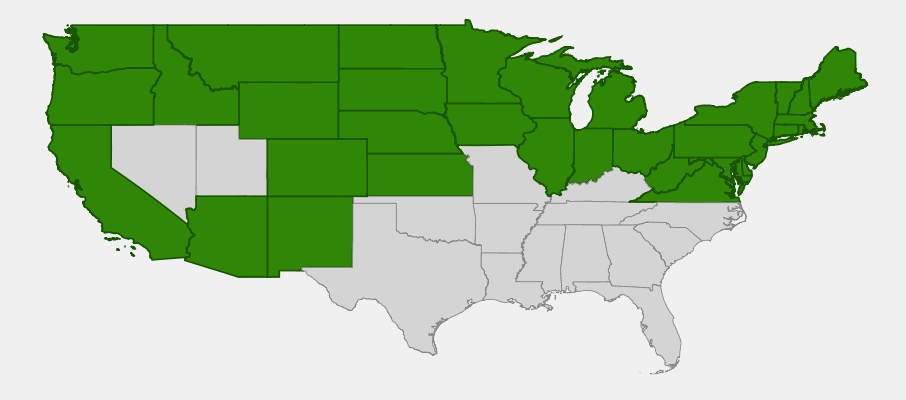
Harebell holds the distinction of being one of the most widely distributed wildflowers in the world — a circumboreal species native to northern Europe, Asia, and North America. In the United States, it is native across the northern tier of states from the Atlantic coast to the Pacific, as well as in many western mountain states, ranging from Alaska to Arizona along the mountains. In the Great Lakes region, it is a characteristic plant of rocky shores, open glades, sandy barrens, and cliff faces — any place with good drainage, open sun or light shade, and minimal competition from taller vegetation.
In Michigan, Minnesota, and Wisconsin, Harebell is found on rocky and sandy lake shores, limestone outcrops, open glades in jack pine barrens, and cliff faces along Lake Superior and the Great Lakes shoreline. It is particularly abundant on the rocky shorelines of Lake Superior’s north shore in Minnesota, where it colonizes crevices in exposed bedrock. In the northern reaches of the Great Lakes region, it grows to the very edge of the boreal forest, surviving winters that would kill most ornamental perennials.
The plant’s circumboreal distribution reflects its extraordinary cold hardiness and adaptability to poor, thin soils. It has been documented at elevations above 13,000 feet in the Rocky Mountains and on arctic tundra in Alaska — testament to a toughness that belies its delicate appearance. Despite the fragility suggested by its thread-like stems and nodding flowers, Harebell is one of the most climatically resilient native wildflowers of the northern hemisphere.
📋 Regional plant lists featuring Harebell: Michigan, Minnesota & Wisconsin
Growing & Care Guide
Harebell is one of the easiest native wildflowers to grow on challenging sites. Its key requirement is good drainage — given that, it is remarkably self-sufficient and asks for almost nothing from the gardener.
Light
Harebell grows in full sun to part shade. In the Great Lakes region, it performs best with at least 4–6 hours of direct sun, producing the most flowers and most compact growth. In part shade, it blooms reliably but with slightly fewer flowers and taller, more open stems. It can tolerate the dappled light under open-canopy oak and pine trees, making it useful in sandy savanna and woodland edge settings.
Soil & Water
Good drainage is the single most important factor for Harebell success. It thrives on rocky, sandy, gravelly, or thin soils that many other plants find too harsh. Rich, moist garden soils tend to encourage rank growth and reduce longevity. Once established, Harebell is drought tolerant — it is adapted to the thin, fast-draining soils of rocky outcrops and sandy lake shores where moisture is never guaranteed. Avoid heavy clay or persistently wet soils, which will cause root rot and plant decline.
Planting Tips
Plant in spring, spacing plants 8–12 inches apart to allow for natural colony formation. In rock gardens, tuck plants into crevices where the roots can extend into cool, protected soil. Harebell transplants readily from container stock when young; it is also easy to grow from seed sown directly on the soil surface in fall or spring (seeds need light to germinate — do not cover). Allow plants to self-sow freely for the most naturalistic effect.
Pruning & Maintenance
Harebell requires almost no maintenance. Deadheading spent flowers may slightly extend the bloom period, but is not necessary — the plant blooms for months regardless. In winter, leave the fine stems and dry seed capsules in place; they add subtle winter texture and shelter small insects. Divide overcrowded colonies every 4–5 years in spring to maintain vigor and rejuvenate the planting.
Landscape Uses
Harebell excels in:
- Rock gardens — incomparable for crevices, outcrops, and stone walls
- Sandy or gravelly dry borders — thrives where drainage is excellent
- Great Lakes shoreline gardens — authentic native of rocky lake margins
- Alpine and northern meadow plantings — true cold-hardy native
- Edging and pathway borders — delicate texture at the garden’s edge
- Cottage-style native garden — charming, long-blooming filler
- Pollinator gardens — valuable late-season nectar source
Wildlife & Ecological Value
Harebell is a quiet but consistent contributor to native pollinator communities, providing nectar over an unusually long season from June through September in the Great Lakes region.
For Birds
The tiny, wind-dispersed seeds of Harebell are occasionally eaten by small seed-eating birds including Dark-eyed Juncos and American Goldfinches. The plant’s primary wildlife value lies in its role as a nectar and pollen source for insects that in turn feed insectivorous birds.
For Mammals
Harebell is notably deer resistant — a significant advantage in Great Lakes gardens where deer pressure is high. The plant’s thin stems and small size also make it relatively unattractive to rabbits compared to broader-leaved perennials. This deer resistance, combined with its drought tolerance, makes it especially suitable for unattended or difficult-to-protect garden areas.
For Pollinators
Bumblebees (Bombus spp.) are among the most frequent visitors to Harebell flowers, collecting both nectar and pollen from within the bell-shaped corolla. Various small native bees, sweat bees (Halictidae), and bee flies (Bombylius spp.) also visit regularly. The long bloom season — continuing into September when many other native flowers have finished — makes Harebell especially valuable for supporting late-season pollinators preparing for winter. It is a consistent late-summer nectar source in northern gardens where fall-blooming options are limited.
Ecosystem Role
In rocky and sandy habitats of the Great Lakes region, Harebell serves as a pioneer species — one of the first plants to colonize exposed rock faces, disturbed gravel, and thin soils where other vegetation cannot yet establish. Its ability to thrive in these extreme microhabitats gives it an outsized ecological significance relative to its small stature. It stabilizes thin soils, provides early-colonizer food resources for pollinators and seed eaters, and contributes to the gradual succession of bare rock or sand toward more complex plant communities.
Cultural & Historical Uses
Harebell holds a cherished place in the folklore and culture of the northern hemisphere. In Scotland, where it is the national flower, it is called “bluebell” — the quintessential symbol of Scottish highland meadows and rocky moors. It features prominently in Scottish poetry and literature, including the works of Robert Burns. The plant’s common name “Harebell” derives from old British folk tradition associating the plant with hares — the bells were said to grow in meadows frequented by hares, or alternatively, the plant was thought to be used by witches to transform themselves into hares (a common supernatural association in British folklore).
Indigenous peoples of North America used Harebell medicinally in various ways across different cultural traditions. Some Great Plains tribes used root preparations to treat heart and lung ailments. The Blackfoot used the plant in preparations related to healing ear ailments. Among the Ojibwe of the Great Lakes region, various Campanula species were used in steam baths and smudges for healing purposes. The plant’s delicate beauty also made it a common subject for decorative art among Indigenous cultures who lived within its range.
In the modern native plant garden movement, Harebell has emerged as an essential plant for Great Lakes rock gardens and dry native landscapes. Its authenticity as a circumboreal native plant — equally at home on Scottish moors and Minnesota rocky shores — gives it an ecological credibility that non-native bellflowers (such as the invasive Campanula rapunculoides) entirely lack. For gardeners seeking a true native alternative to ornamental bellflowers, Harebell offers all the charm with genuine ecological value.
Frequently Asked Questions
Is Harebell the same as the “bluebell of Scotland”?
Yes — Campanula rotundifolia is the “bluebell of Scotland,” the national flower of Scotland. It is also native to North America and Asia, making it a circumboreal wildflower with cultural significance across the northern hemisphere. In England, “bluebell” refers to Hyacinthoides non-scripta (a completely different plant), which is why the common name “Harebell” is used for Campanula rotundifolia in North America to avoid confusion.
Why does Harebell have round-leaved in its name but no round leaves?
The species name “rotundifolia” (round-leaved) refers to the small, round-to-heart-shaped basal leaves that emerge in early spring. By the time the plant blooms in midsummer, these basal leaves have typically withered and disappeared, leaving only the long, narrow stem leaves. This confusing discrepancy between name and appearance has puzzled botanists and naturalists for centuries.
Does Harebell spread aggressively?
No — Harebell spreads slowly and modestly by rhizomes and self-seeding. It gradually forms loose, naturalistic colonies in suitable conditions but is not aggressive or invasive. In most garden settings, it is easily kept in bounds by pulling unwanted seedlings. It is particularly well-behaved in dry, rocky soils where its spread is naturally limited by competition and soil conditions.
Can Harebell grow in clay soil?
Harebell strongly prefers well-drained to rocky or sandy soils and generally does poorly in heavy, poorly-drained clay. If your soil is clay, amend it with grit, sand, or gravel before planting, or choose a naturally well-drained spot such as a slope, raised bed, or the top of a retaining wall. Good drainage is the single most important requirement for long-term success with Harebell.
When does Harebell bloom in Michigan and Minnesota?
In Michigan, Minnesota, and Wisconsin, Harebell typically begins blooming in late June and continues through August or September — one of the longest bloom periods of any native perennial in the region. In open, sunny sites on rocky north-shore exposures, it may bloom into early October. Individual plants produce new flowers continuously throughout this period.