White Cedar (Thuja occidentalis)
Thuja occidentalis, commonly known as White Cedar or Arborvitae (from the Latin arbor vitae, “tree of life”), is one of the most widely recognized native conifers of northeastern North America — and one of the most historically significant. This medium to large evergreen tree, reaching 60 feet in height in forest settings, is the quintessential native conifer of the Great Lakes region, forming vast, cathedral-like cedar swamps in Michigan, Minnesota, and Wisconsin that serve as critical winter refuge for white-tailed deer and other wildlife.
With its distinctive flat, fan-like sprays of scale-like leaves arranged in flattened, overlapping rows, White Cedar produces an aromatic, resinous foliage that is immediately recognizable. The tree has been continuously valued by both Indigenous peoples and European settlers for its exceptionally durable, rot-resistant wood — one of the most rot-resistant of any North American tree — and for its compact, columnar growth form that makes it one of the most popular hedge and screen plants in temperate horticulture. The cultivar ‘Emerald Green’ alone is one of the best-selling landscape plants in North American history, yet wild White Cedar in its natural settings is among the most majestic and ecologically irreplaceable trees of the northern forest.
For gardeners and restorationists in Michigan, Minnesota, and Wisconsin, planting native White Cedar serves both aesthetic and conservation purposes. The species tolerates alkaline soils, wet conditions, and severe cold better than most conifers, and while its cultivated forms are ubiquitous in landscaping, the true wild species has a graceful, irregularly shaped natural form that is far more beautiful and ecologically appropriate than the stiffly sheared hedges it is often reduced to in conventional landscapes.
Identification
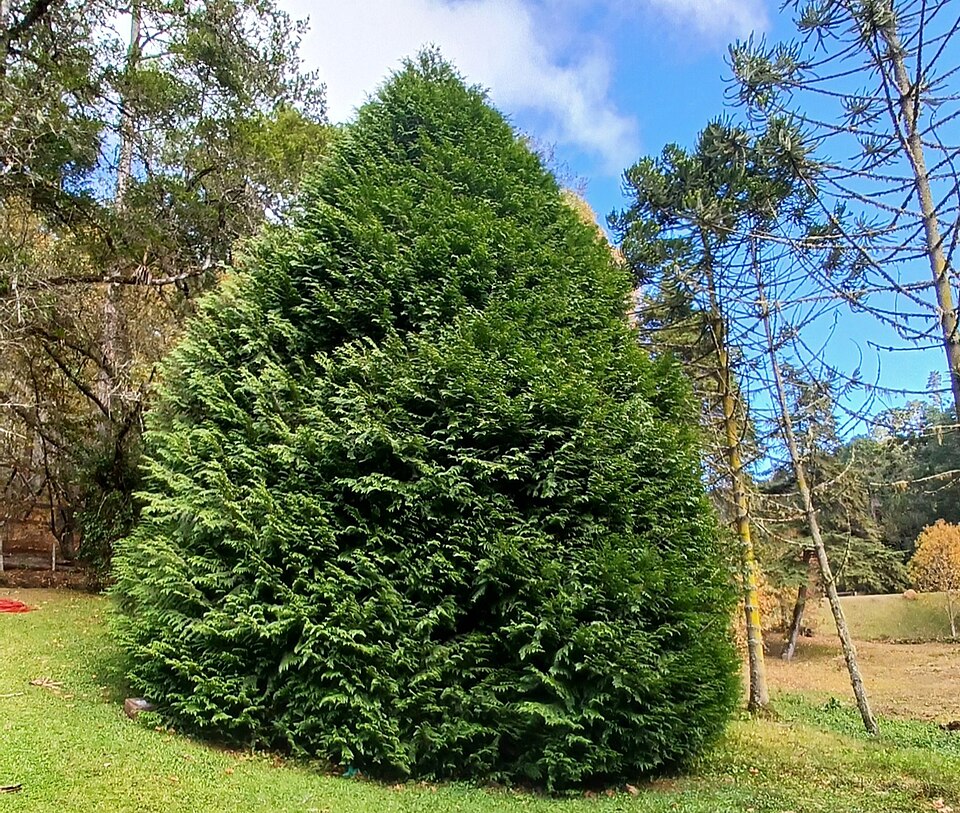
White Cedar is a medium to large evergreen conifer with highly distinctive flat, scale-like foliage arranged in fans, small brown cones, and reddish-brown fibrous bark. In the wild it typically develops a straight to gently tapering trunk with a broadly conical crown that becomes more irregular with age.
Bark
The bark is thin, reddish-brown to grayish-brown, and distinctly fibrous — it peels in long, narrow, longitudinal strips, giving mature trunks a shaggy, rope-like appearance that is distinctive and attractive. The bark’s fibrous quality was historically important to Indigenous peoples, who used the shredded bark for fire-starting and insulation. The inner bark is aromatic when cut or crushed, with a characteristic cedary smell derived from its essential oils.
Leaves
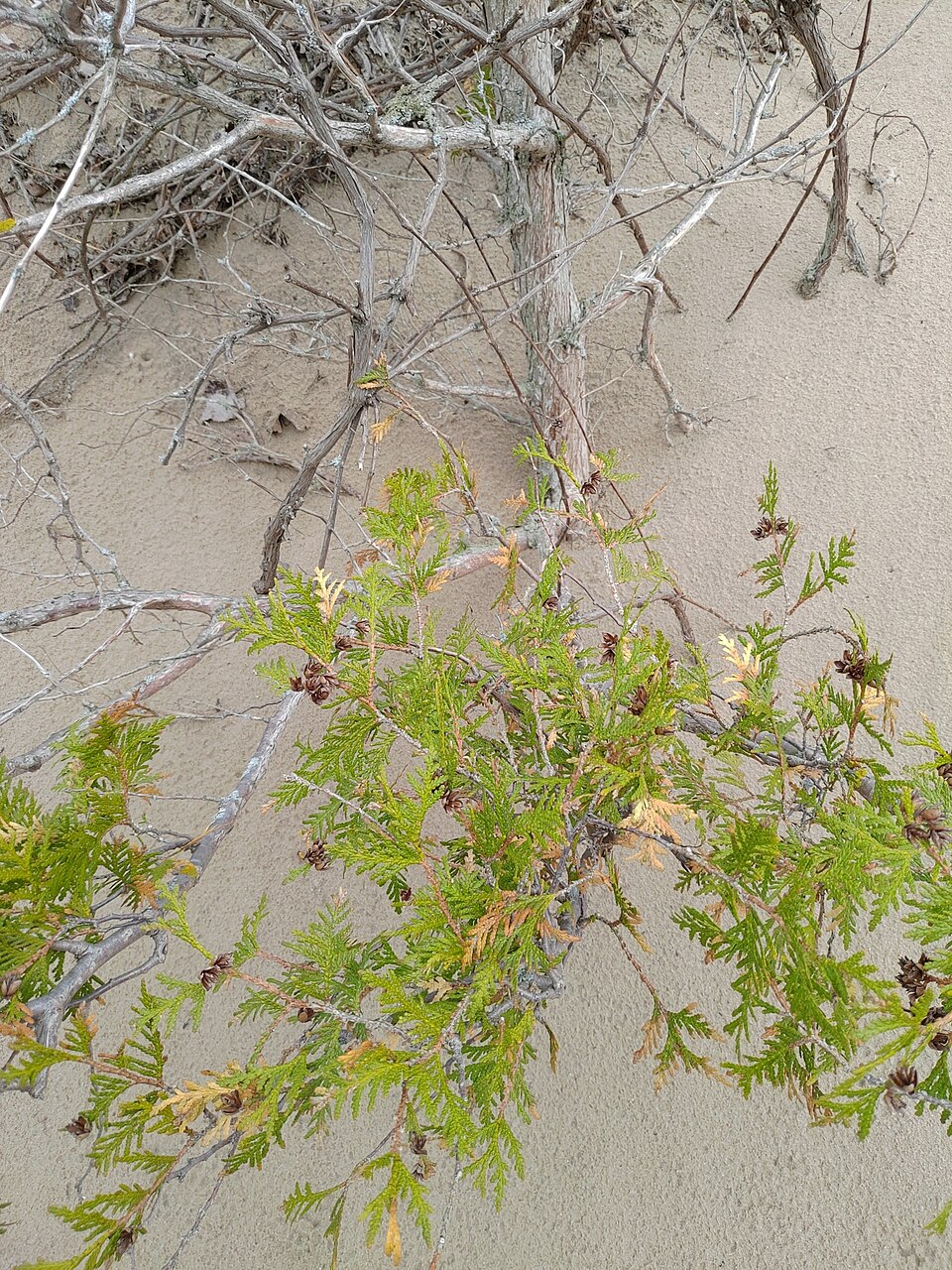
White Cedar produces scale-like leaves (not needle-like), about 1/8 inch long, arranged in flat, fan-like sprays that overlap like roof shingles. The upper surface is bright yellow-green to dark green; the undersides have faint white markings. The foliage may bronze or turn brownish in extreme cold, especially in exposed locations, but remains on the tree year-round and returns to green with warming temperatures. The leaves produce a strong, pleasant cedar aroma when crushed.
Cones & Seeds
Cones are small (½ inch), narrowly oval, with 8–12 thin scales, and arise in small clusters near the tips of branches. They are pale green when young, ripening to light brown in autumn. Each scale bears 2 narrow-winged seeds. Cone production varies by year, with some years producing abundant cones and others producing very few.
Quick Facts
| Scientific Name | Thuja occidentalis |
| Family | Cupressaceae (Cypress) |
| Plant Type | Evergreen Conifer / Tree |
| Mature Height | 60 ft |
| Sun Exposure | Full Sun to Part Shade |
| Water Needs | Moderate |
| Foliage | Evergreen; scale-like, aromatic, flat-fan sprays |
| Cones | Small (½ in), pale brown, in clusters |
| Special Feature | Tolerates alkaline soil; useful hedge plant |
| USDA Hardiness Zones | 2–8 |
Native Range
White Cedar is native to eastern North America, with its range extending from the Maritime provinces of Canada westward through Quebec and Ontario, south through New England, the Mid-Atlantic states, the Great Lakes region, and along the Appalachian Mountains to Tennessee. It is one of the dominant tree species of the Great Lakes region, particularly abundant in Michigan, Wisconsin, and Minnesota, where vast cedar swamps occupy extensive areas of lowland terrain.
In its natural habitat, White Cedar grows most abundantly on moist to wet sites — along streams, in swamp depressions, on rocky lakeshores, and in low-lying areas with high water tables. However, it also commonly grows on thin, rocky, calcareous (limestone-based) soils where its tolerance for alkaline conditions gives it a competitive advantage. This dual adaptation to wet lowlands and thin alkaline uplands reflects White Cedar’s remarkable ecological flexibility.
The most ancient White Cedar trees grow on the Niagara Escarpment in Ontario, where specimens growing on exposed cliffs have been dated to over 1,000 years of age — among the oldest trees in eastern North America. These ancient trees have been studied for their remarkable longevity and their potential to yield centuries of climate data from their tree rings. Their survival on seemingly inhospitable cliff faces is attributed to the combination of alkaline bedrock, freedom from competition, and protection from fire in this unusual microhabitat.
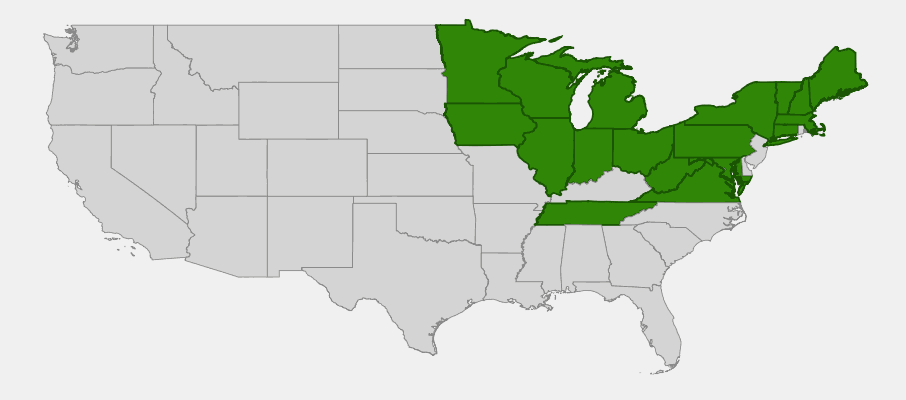
📋 Regional plant lists featuring White Cedar: Michigan, Minnesota & Wisconsin
Growing & Care Guide
White Cedar is one of the most versatile and adaptable native conifers for landscape use in the Great Lakes region. Its tolerance of a wide range of soil conditions — including alkaline soils that defeat most other conifers — and its adaptability to both full sun and part shade make it valuable across many planting situations.
Light
White Cedar grows in full sun to part shade. In full sun it develops the densest, most compact form and the best color retention through winter. In part shade (2–4 hours of direct sun), it remains healthy but grows more open and may have less dense foliage coverage. Avoid deep shade, which results in very sparse, leggy growth. It is more shade-tolerant than most conifers, which is one reason it succeeds as an understory tree in mature forest settings.
Soil & Water
White Cedar is adaptable to a remarkable range of soil conditions. It grows naturally in wet, boggy soils as well as thin, rocky, alkaline soils — an ecological paradox that few other species can match. In the landscape, it performs best in moderately moist, well-drained soils, but tolerates periodic flooding and poorly drained conditions better than most conifers. It is especially useful on alkaline soils where many other conifers struggle. The batch data indicates average (moderate) moisture needs for landscape applications — consistent moisture, especially through the first two years, supports best establishment. Once established, it is moderately drought tolerant.
Planting Tips
Plant White Cedar in spring or fall from container stock. For screening or hedge use, space plants 5–8 feet apart if using the wild species (which will grow broad); use cultivar-specific spacing for narrow cultivars. For naturalizing as a specimen tree, allow at least 15–20 feet of space. Mulch heavily around the base to retain moisture and protect the shallow root system, which is sensitive to soil compaction and drought stress during establishment.
Pruning & Maintenance
Wild-type White Cedar requires little pruning if given adequate space. Shearing for hedges is done after new growth flushes in spring; never cut into bare wood beyond the green foliage zone, as White Cedar does not regenerate from old wood. It is one of the most winter-hardy conifers available for northern gardens and needs no winter protection in Zones 2–8. The main maintenance concerns are deer browsing (significant in the Upper Midwest) and bagworm infestations in some areas.
Landscape Uses
- Privacy screens and hedges — the classic Arborvitae hedge use; also works for noise reduction
- Windbreaks — dense evergreen foliage provides year-round wind protection
- Wildlife refuge planting — cedar swamp replication for winter deer cover
- Specimen tree — wild-type has naturally graceful, irregular form
- Wetland and shoreline planting — tolerates seasonal flooding
- Alkaline soil situations — excellent choice where soil pH exceeds 7.5
Wildlife & Ecological Value
White Cedar provides some of the most critical winter wildlife habitat in the northeastern and Great Lakes region, making it an essential tree for any wildlife-focused landscape or restoration project.
For Birds
White Cedar’s dense, year-round evergreen foliage provides critical thermal cover and roosting habitat for birds throughout winter. Species that depend heavily on cedar cover in winter include ruffed grouse, wild turkey, American robin, and numerous overwintering sparrows and finches. The small winged seeds are consumed by redpolls, pine siskins, and other winter finches in significant quantities. The tree also hosts a large diversity of insects that serve as food for insectivorous birds throughout the year.
For Mammals
White Cedar is perhaps best known for its role as the primary winter food and shelter tree for white-tailed deer across the Great Lakes region. Deer congregate in cedar swamps during winter (“deer yards”) for thermal protection and to browse on the lower branches of White Cedar, which remain accessible above the snow pack. Snowshoe hares browse on foliage and twigs. Porcupines eat the bark and young twigs. The dense thickets created by cedar swamps shelter a diverse community of small mammals including mink, muskrat, and various small rodents.
For Pollinators & Insects
White Cedar hosts a moderate diversity of insects, including various scale insects, cedar bark beetles, and moth species. The aromatic oils in the foliage deter many pest insects, making it relatively pest-resistant, but a community of specialist insects has evolved to tolerate and exploit these defensive compounds. The bagworm moth (Thyridopteryx ephemeraeformis) is the primary insect pest, building distinctive hanging bags of plant material along the branches; hand-removal is the recommended management approach.
Ecosystem Role
White Cedar is a foundational species of the Great Lakes wetland forest ecosystem. Cedar swamps are among the most biologically rich and ecologically important wetland communities in the region, providing winter thermal refuge for deer and other large mammals, year-round habitat for forest interior bird species, and complex hydrological functions including water filtration, flood attenuation, and groundwater recharge. The extremely rot-resistant wood of fallen White Cedar trunks creates critical habitat for wood-dependent invertebrates and amphibians long after the living tree has died.
Cultural & Historical Uses
White Cedar holds one of the most remarkable places in North American ethnobotanical history. The Haudenosaunee (Iroquois) people provided an extract of White Cedar bark and foliage to the crew of Jacques Cartier’s expedition during the winter of 1535–36 at present-day Quebec City, where the crew was dying of scurvy. The cedar preparation, rich in Vitamin C, saved the lives of Cartier’s men — an event that may have been the first documented case of European contact with a Native American medicine that proved medically significant. Cartier named the tree “Arborvitae” — “tree of life” — in recognition of this lifesaving property.
Indigenous peoples across the Great Lakes and northeastern regions used virtually every part of White Cedar. The extremely durable wood was used for canoe frames, toboggans, poles, and posts — its resistance to rot making it ideal for any application involving contact with soil or water. The inner bark was shredded for insulation, fire-starting, and fiber for weaving. The foliage was used medicinally as a steam treatment for rheumatism and respiratory ailments, as a natural insect repellent, and as an ingredient in ceremonial purification practices. Thuja essential oil, derived from the foliage, is still used in modern aromatherapy and traditional medicine, though it must be used with caution as it contains thujone, a compound that is toxic in large quantities.
White Cedar was one of the first North American trees introduced to European horticulture, arriving in France in the early 16th century. By the 19th century, it had spawned hundreds of cultivated varieties selected for various forms — dwarf, columnar, golden-foliaged, and weeping. Today, cultivars such as ‘Emerald Green’, ‘Techny’, and ‘Nigra’ are among the most commonly planted landscape plants in temperate North America, a testament to the extraordinary utility and adaptability of this native tree.
Frequently Asked Questions
Is White Cedar (Thuja occidentalis) the same as Arborvitae?
Yes. White Cedar and Arborvitae are the same species — Thuja occidentalis. “Arborvitae” (Latin for “tree of life”) is the name most commonly used in the nursery industry, while “White Cedar” is the common name used in forestry and natural communities. The hundreds of cultivated varieties (Emerald Green, Techny, etc.) are all derived from this one native species.
Does White Cedar tolerate wet soil?
Yes — White Cedar is one of the few conifers that tolerates periodic flooding and wet, poorly drained soils. In nature, it is a dominant species of cedar swamps. In the landscape, it handles wet sites far better than most other conifers, though it performs best with consistently moist rather than constantly flooded conditions.
Will deer eat my White Cedar?
Deer browsing is a serious issue for White Cedar in much of its native range. Deer will browse the lower foliage, sometimes severely, especially in winter when other food is scarce. This is a natural behavior — White Cedar is their primary winter browse in the Great Lakes region. Fencing young plantings or using repellents may be necessary in high-deer-pressure areas until plants grow above browse height.
Does White Cedar tolerate alkaline soil?
Yes — tolerating alkaline soil is one of White Cedar’s notable advantages over other conifers. Many conifers require acidic conditions, but White Cedar grows naturally on calcareous (limestone) bedrock and performs well in landscapes with high soil pH. The batch data notes that it “tolerates alkaline soil” as a key feature for gardeners with challenging soil chemistry.
How large does a wild White Cedar get compared to landscape cultivars?
Wild-type White Cedar can reach 60 feet tall and 15–20 feet wide, with an irregularly shaped, naturally graceful crown that differs greatly from the stiffly sheared hedge look of most landscape cultivars. In urban and suburban settings, more compact cultivars are typically used, but for ecological restoration and natural landscape settings, the wild-type species is the appropriate choice.