Steeplebush (Spiraea tomentosa)
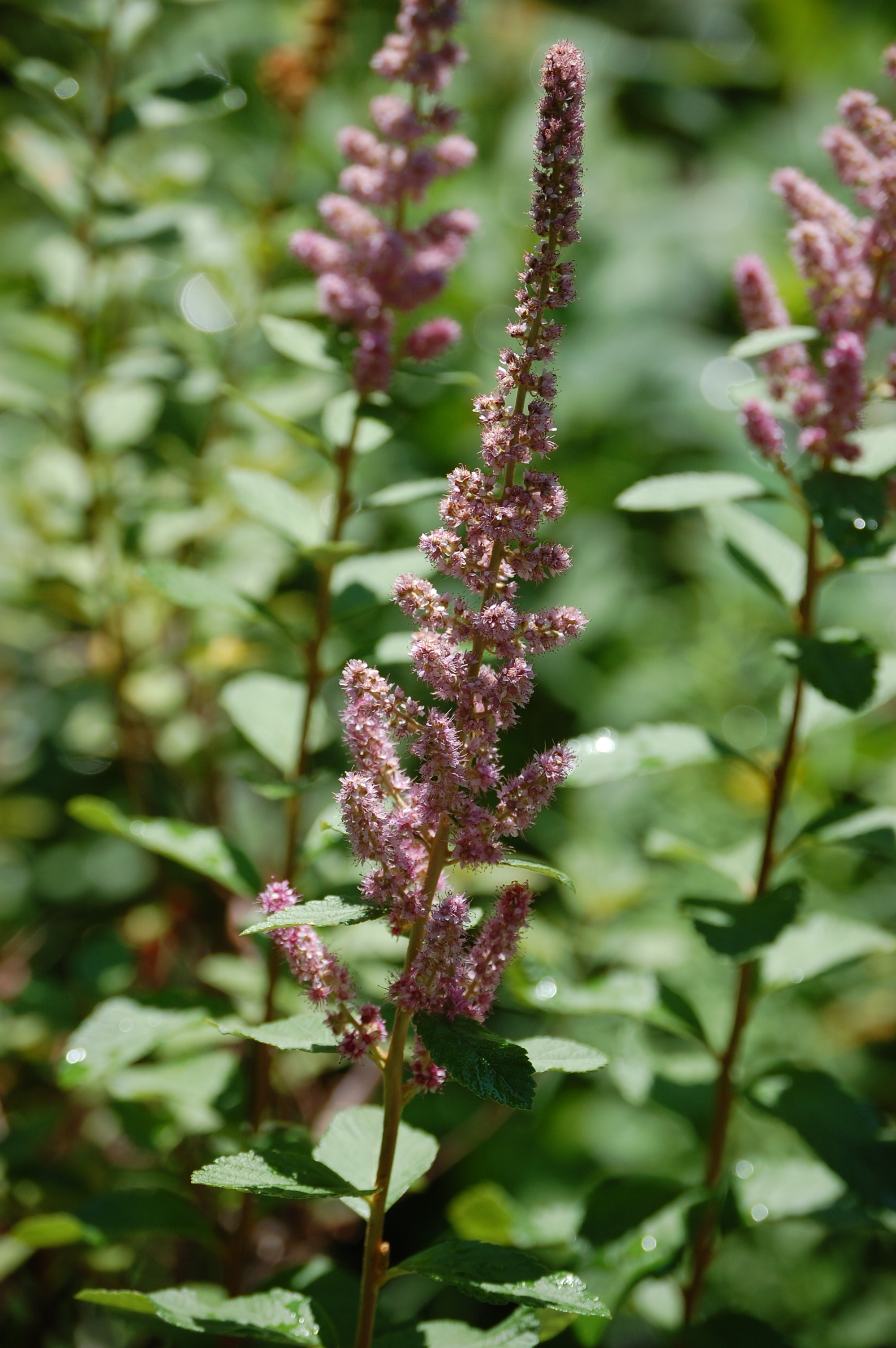
Spiraea tomentosa, known as Steeplebush or Hardhack, is a native deciduous shrub of eastern North America celebrated for its spectacular late-summer blooms — dense, steeple-shaped spires of vivid rose-pink flowers that tower above wetland meadows and bog margins from July through September. The common name “Steeplebush” perfectly captures the plant’s most distinctive ornamental feature: the pointed flower spike, narrow and upright, mimics the steeple of a country church rising above the summer meadow. “Hardhack” is an old name referring to the difficulty of cutting through the plant’s stiff, tough stems with a scythe.
Growing 2–4 feet tall, Steeplebush is a compact native shrub that forms dense colonies by root suckering, gradually naturalizing into mass plantings that provide exceptional wildlife habitat and visual impact. The leaves are distinctive — dark green above, covered with dense rust-colored to whitish woolly fuzz (tomentum) below — the species name “tomentosa” means “woolly” in Latin, referring to this characteristic fuzzy leaf backing. In autumn, the foliage turns warm shades of orange and red before dropping, and the dried flower spikes persist through winter, providing subtle structure and seed sources for birds.
In Michigan, Minnesota, and Wisconsin, Steeplebush is a valuable native shrub for moist to wet, full-sun sites — a habitat niche where native shrub options are limited. It thrives in wet meadows, boggy margins, streambanks, and poorly-drained areas where it provides late-season color, wildlife habitat, and ecological function that few other native plants can match.
Identification
Steeplebush is a compact, upright deciduous shrub growing 2–4 feet tall (rarely to 6 feet in ideal conditions) and spreading 2–4 feet wide. It spreads steadily by root suckers, forming dense colonies over time. The combination of woolly-backed leaves, distinctive steeple-shaped pink flower spires, and moist-habitat preference make it distinctive among Great Lakes native shrubs.
Bark & Stems
Young stems are covered with dense, rust-colored to grayish woolly hairs — the same tomentum that covers the leaf undersides. This woolly coating gives even the bare stems a distinctive appearance in winter. Older stems become smooth and brown to gray, developing slight ridges. The stems are notably tough and wiry for the plant’s size — characteristic of the common name “Hardhack.”
Leaves
Leaves are alternate, oval to ovate, 1–2½ inches long, with coarsely toothed margins. The upper surface is dark, somewhat dull green; the lower surface is densely covered with woolly, rust-colored to whitish hairs (tomentum) — a feature immediately visible when a leaf is turned over. This woolly underside is one of the most reliable identification features for Steeplebush. The leaves turn orange to red in autumn, adding fall interest to the planting.
Flowers
The flowers are the plant’s glory: tiny, five-petaled, deep rose-pink to magenta flowers densely packed into narrow, elongated terminal racemes (flower spikes) 3–6 inches long. The spike is narrow and pointed — steeple-shaped — and densely packed with blooms. Multiple spikes may be produced on a single plant, with blooms opening from the bottom of the spike upward. Bloom period is July through September — one of the longest late-summer bloom periods of any native Great Lakes shrub. The plant blooms at the same time as the end of most summer color, providing vibrant pink when few other native shrubs are still flowering.
Quick Facts
| Scientific Name | Spiraea tomentosa |
| Family | Rosaceae (Rose) |
| Plant Type | Deciduous Shrub |
| Mature Height | 2–4 ft |
| Sun Exposure | Full Sun to Part Shade |
| Water Needs | Moderate to High |
| Bloom Time | July – September |
| Flower Color | Deep rose-pink to magenta |
| Fall Color | Orange to red |
| Soil Preference | Moist to wet; tolerates periodic flooding |
| USDA Hardiness Zones | 3–8 |
Native Range
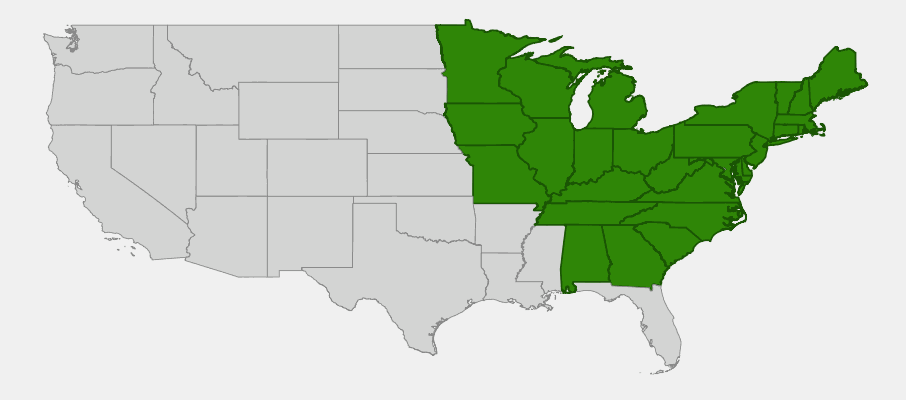
Steeplebush is native to eastern North America, ranging from Nova Scotia and New England south to Georgia and Alabama, and west to the Great Lakes states and beyond. In Michigan, Minnesota, and Wisconsin, it is a characteristic shrub of wet meadows, sedge meadows, bog margins, and streambanks — particularly common in the northern portions of these states where cool, moist conditions prevail. It grows from near sea level in the northeast to moderate elevations in the Appalachians.
In its natural habitat, Steeplebush is a characteristic species of open, sunny wetland margins and poorly-drained areas. It is most common in sphagnum moss-dominated bog margins, sedge meadows, wet fields, and the edges of forested wetlands. It tolerates both seasonally saturated soils and brief dry spells, making it adaptable within its preferred moist-habitat range. In the Great Lakes region, it is often found growing with Bog Rosemary (Andromeda polifolia), Leatherleaf (Chamaedaphne calyculata), Swamp Loosestrife (Decodon verticillatus), and various native sedges and rushes.
Steeplebush is an important indicator of remnant wetland and bog habitat quality in the Great Lakes region. Its presence in a wetland community often signals relatively intact hydrological conditions and native soil biota — it tends to be excluded from degraded or heavily disturbed wetlands where invasive species have taken hold. Conversely, its establishment in restoration projects is a positive indicator of improving wetland conditions.
📋 Regional plant lists featuring Steeplebush: Michigan, Minnesota & Wisconsin
Growing & Care Guide
Steeplebush is a low-maintenance native shrub that thrives on neglect once established in the right conditions. The key is providing adequate moisture — without it, the plant struggles; with it, it is one of the most rewarding native shrubs for late-summer color in the Great Lakes region.
Light
Steeplebush grows best in full sun, where it produces the most prolific flower display and the most compact growth form. In part shade (3–4 hours of direct sun), it will grow and bloom but with somewhat reduced flower production and more open, leggy stems. For maximum floral impact in wet native gardens and meadow plantings, full-sun positions are strongly preferred.
Soil & Water
Consistent moisture is essential. Steeplebush thrives in moist to wet soils — wet meadows, seasonally flooded areas, bog margins, and streambanks are its preferred habitats. It tolerates periodic flooding and standing water for short periods. It does not thrive in consistently dry soils. In rain garden plantings, locate Steeplebush in the wet zone, not the dry margin. Soil pH tolerance is fairly broad, including the acidic conditions of bog margins and the near-neutral pH of streambank deposits.
Planting Tips
Plant container-grown plants in spring or fall, spacing 3–4 feet apart for naturalistic mass planting or 5–6 feet apart for individual specimens. Steeplebush spreads by root suckers and will gradually form dense colonies — plan for expansion in the initial design. It establishes readily without special soil preparation if the site is suitably moist. Avoid planting in dry areas regardless of soil amendments — consistent moisture is non-negotiable for long-term success.
Pruning & Maintenance
Steeplebush benefits from annual or biennial rejuvenation pruning — cut all stems to 6–12 inches in late winter before growth begins. This removes the previous year’s flower stalks, stimulates vigorous new growth, and maintains a compact, dense form. Without pruning, the plant becomes twiggy and open, with reduced flowering. Allow the dried flower stalks to persist through winter for bird seed and winter structure, then prune in late February or March.
Landscape Uses
Steeplebush is especially valuable for:
- Wet meadow restoration — native component of meadow mixes for moist soils
- Rain garden center zone — tolerates seasonal inundation
- Streambank and wetland margin planting — stabilizes wet, boggy banks
- Late-season color — blooms when most other native shrubs have finished
- Native butterfly garden — outstanding late-summer pollinator magnet
- Bog garden — thrives in sphagnum moss-dominated, acidic conditions
- Naturalistic mass planting — spreads to fill large wet areas
Wildlife & Ecological Value
Steeplebush is a significant wildlife plant, particularly for native pollinators seeking late-summer resources and for birds dependent on moist wetland habitats.
For Birds
The small seeds held in persistent capsules through fall and winter are eaten by various seed-eating birds including finches and sparrows. The dense, multi-stemmed structure of Steeplebush colonies provides excellent low-elevation nesting habitat for wetland-associated songbirds including Common Yellowthroat, Swamp Sparrow, and Willow Flycatcher. The abundant insects associated with Steeplebush — particularly caterpillars feeding on the foliage — are important food for insectivorous birds during the breeding season.
For Mammals
White-tailed deer occasionally browse Steeplebush but the tough stems and woolly foliage make it less palatable than many other native shrubs. The dense colony structure provides escape cover and shelter for small mammals including meadow voles and shrews in wet meadow habitats. Cottontail rabbits use the thickets for shelter.
For Pollinators
Steeplebush’s late bloom season — July through September — makes it extraordinarily valuable for pollinators at a time when many spring and early summer native plants have finished blooming. The densely packed flower spires are visited by bumblebees (Bombus spp.), sweat bees (Halictidae), small native bees, butterflies, and moths. Hairstreak butterflies and various skipper butterflies are regular visitors. It is one of the most productive late-season native pollinator plants for moist habitats in the Great Lakes region, filling a seasonal gap when few other wetland shrubs are in bloom.
Ecosystem Role
In wet meadow and bog margin ecosystems, Steeplebush provides structural complexity — a shrub layer between herbaceous sedge/rush meadows and taller alder/willow thickets. This structural diversity increases habitat complexity and species richness. The dense colonies provide nesting habitat for wetland birds, shelter for small mammals, and foraging habitat for invertebrates. As a native plant, Steeplebush supports native insect communities (caterpillars, gall makers, leaf miners) that are critical food sources for birds throughout the food web.
Cultural & Historical Uses
Steeplebush has a modest but interesting history of human use. The plant’s tough, wiry stems — celebrated in the common name “Hardhack” — were occasionally used for tool handles and other small woodworking applications where hardness was more important than size. The fibrous bark was sometimes used for cordage and binding. The Abenaki and other northeastern Indigenous peoples used preparations of the plant medicinally, including bark tea for various ailments and leaf preparations for skin conditions.
European botanical explorers of the 18th century noted Steeplebush’s spectacular late-summer bloom in the bogs and wet meadows of eastern North America. The botanist Peter Kalm, traveling through the Great Lakes region in the 1740s at the invitation of Linnaeus, documented the plant extensively. It was subsequently introduced to European gardens as an ornamental curiosity — European botanists and gardeners were fascinated by the intensity of the flower color and the distinctive woolly leaf backing.
Today, Steeplebush is experiencing a renaissance in native plant gardening across the Great Lakes region and eastern United States. As appreciation for late-season native plants has grown — particularly among gardeners seeking to support native pollinators through the critical late-summer and fall periods — Steeplebush’s exceptional bloom season and pollinator value have earned it increasing recognition. It is now available from many Great Lakes native plant nurseries and is regularly included in native wetland meadow seed mixes.
Frequently Asked Questions
Is Steeplebush the same as Spirea?
Yes — Steeplebush (Spiraea tomentosa) is a native American member of the Spiraea genus, which also includes many non-native ornamental spireas widely sold in garden centers (such as Japanese Spirea, Spiraea japonica, which is invasive in parts of the eastern US). The native Steeplebush is ecologically valuable and non-invasive; it is distinguished from non-native spireas by its woolly leaf undersides, tall steeple-shaped flower spires, and preference for moist to wet soils.
How wet does the soil need to be for Steeplebush?
Steeplebush thrives in moist to wet soils — anywhere from consistently moist but well-drained streambanks to seasonally flooded wetland margins. It does not require standing water but performs best where the soil never dries out significantly. Rain garden applications work well — site it in the wet zone that receives and holds water after rain events. It will struggle in any consistently dry location.
Does Steeplebush spread aggressively?
Steeplebush spreads steadily by root suckers and can form dense colonies over time — this is desirable in naturalistic mass plantings and wetland restoration, but may require management in smaller gardens. Unwanted suckers can be removed by digging, or the colony perimeter can be managed by mowing or trimming the surrounding area. In appropriate moist conditions, plan for gradual colony expansion in your initial landscape design.
When should I prune Steeplebush?
Prune Steeplebush in late winter (February or March) before new growth begins. Cut all stems back to 6–12 inches above the ground — this rejuvenates the plant, removes old twiggy growth, and stimulates vigorous new stems that will bloom more prolifically. Leave the dried flower stalks in place through winter for bird seed and winter structure; prune in late winter before they interfere with new growth.
Will Steeplebush grow in Minnesota and northern Wisconsin winters?
Yes — Steeplebush is reliably hardy to USDA Zone 3, making it suitable for even the coldest parts of Minnesota and Wisconsin. It is native to the boreal margins of the Great Lakes region and has evolved to handle severe winters. The root system is cold hardy, and the plant resprouts vigorously each spring from the crown. Annual pruning in late winter keeps it in excellent condition regardless of winter severity.