Carolina Buckthorn (Rhamnus caroliniana)
Rhamnus caroliniana (syn. Frangula caroliniana), commonly known as Carolina Buckthorn, is a handsome native deciduous shrub or small tree of the Eastern and South-Central United States, valued for its multi-season ornamental interest and significant wildlife value. Unlike its invasive European relative (Rhamnus cathartica), Carolina Buckthorn is a well-behaved, ecologically beneficial native species that deserves far greater use in the landscape. It is sometimes called Indian Cherry or Yellow Buckthorn, and its Latin name honors the Carolinas where it was first formally described for science.
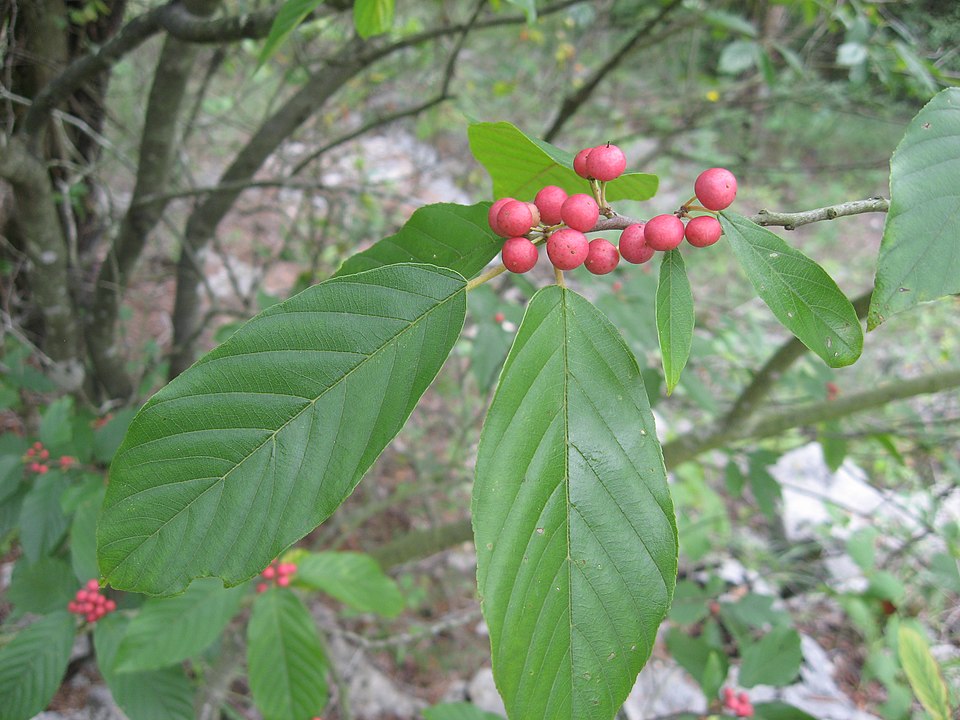
Growing as a large shrub or small tree reaching 12 to 15 feet tall, Carolina Buckthorn earns a place in the landscape through three seasons of interest: attractive glossy dark-green foliage in summer, small but plentiful greenish-yellow flowers attractive to pollinators in spring, and a spectacular fruit display as the drupes change color sequentially from green to red to deep black through summer and fall — often displaying all three colors simultaneously on the same plant. In autumn, the foliage turns a warm yellowish-golden color before dropping.
Carolina Buckthorn is a plant of remarkable site adaptability. In the wild, it grows in both sun and deep shade, in well-drained upland soils and in the rich bottomland soils along streams and rivers. This flexibility, combined with its moderate size, ornamental appeal, and outstanding wildlife value — the fruit is consumed by at least 30 species of birds — makes it an excellent choice for woodland gardens, naturalized areas, rain garden edges, and wildlife plantings across the South-Central and Southeastern United States.
Identification
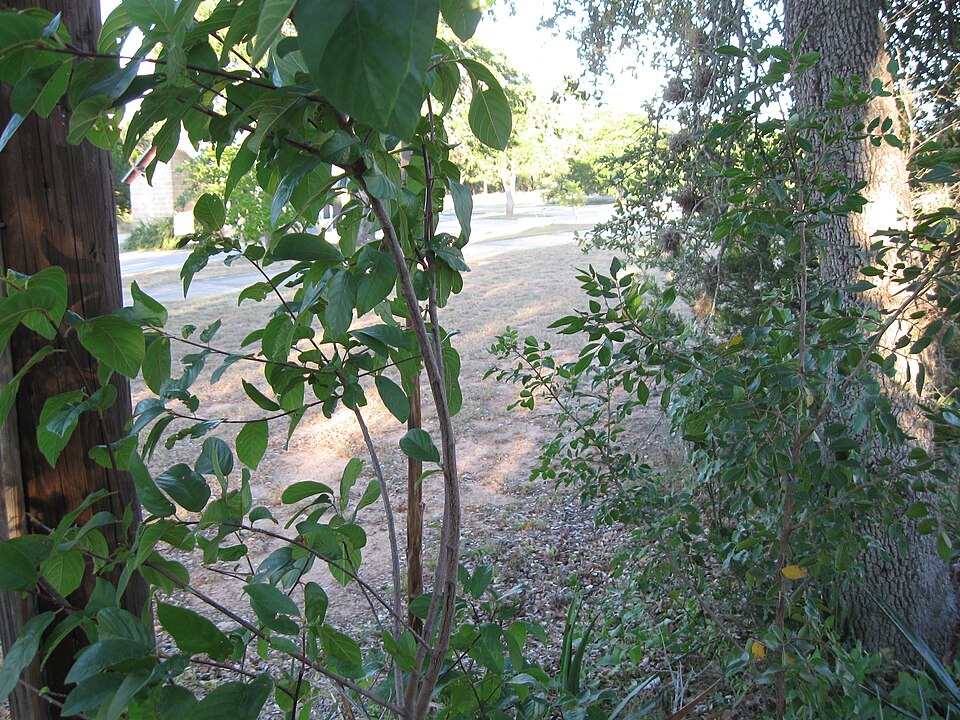
Carolina Buckthorn typically grows as a multi-stemmed large shrub or occasionally as a single-trunked small tree, reaching 12 to 15 feet at maturity, with a spread of 6 to 10 feet. The growth habit is upright-arching, creating an attractive vase-like form. It lacks the thorns found on many other buckthorn species — an important identification feature and a plus for landscape use near pathways and human activity.
Bark
The bark on young stems is smooth and grayish-brown, becoming slightly roughened and developing shallow fissures on older trunks. The inner bark is yellowish — characteristic of the buckthorn family and the origin of the common name “yellow buckthorn” used in some parts of its range. Mature trees develop an attractive, smooth silvery-gray trunk bark that adds winter interest to the landscape.
Leaves
The leaves are among the most attractive features of Carolina Buckthorn through the growing season. They are elliptic to oblong, 2 to 5 inches long, with finely toothed margins and 8 to 10 pairs of prominent parallel veins that give them a distinctive quilted or corrugated appearance similar to those of Cascara buckthorn. The upper surface is glossy and dark green; the underside is paler and may be softly hairy. Leaves are arranged alternately. In autumn, the foliage turns a pleasant yellowish to amber before dropping.
Flowers & Fruit
The flowers are small and inconspicuous — tiny greenish-yellow, 5-petaled clusters that appear in leaf axils from April through June. While not showy in aggregate, they are reliable nectar sources for early pollinators, including native bees and beneficial flies. The fruit is a round drupe, approximately ¼ to ⅜ inch in diameter, which goes through a distinctive and decorative color progression: green when immature, turning bright red, then ripening to deep purple-black in late summer and fall. Multiple color stages often appear simultaneously on a single plant, creating a striking two-toned or three-toned fruit display. The black drupes persist on the plant into winter and are eagerly eaten by birds.
Quick Facts
| Scientific Name | Rhamnus caroliniana (syn. Frangula caroliniana) |
| Family | Rhamnaceae (Buckthorn family) |
| Plant Type | Deciduous Shrub / Small Tree |
| Mature Height | 12–15 ft |
| Sun Exposure | Part Shade to Full Shade |
| Water Needs | Moderate |
| Bloom Time | April – June |
| Flower Color | Greenish-yellow (small clusters) |
| Fruit | Red ripening to purple-black drupes |
| Fall Color | Yellow to amber |
| Deer Resistant | Moderately |
| USDA Hardiness Zones | 5–9 |
Native Range
Carolina Buckthorn has a broad native range across the Eastern and South-Central United States, from New Jersey south through the mid-Atlantic states and Appalachian foothills, across the Coastal Plain to Florida, and westward through the Gulf states to eastern Texas and northeastern Mexico. It extends northward along the Mississippi drainage into Missouri, Illinois, Iowa, and Kansas. In Kentucky and Tennessee, it is a native component of both the Cumberland Plateau and the Highland Rim regions, often found in calcareous soils on limestone outcrops and along woodland streams.
Within its range, Carolina Buckthorn occupies a variety of habitats, from moist bottomland forests and floodplain woods to drier upland limestone glades and cedar-hardwood forests. It is particularly associated with calcareous soils derived from limestone parent material — sites where soil pH is near neutral to slightly alkaline — though it also grows in acidic soils. This tolerance for a range of soil chemistry makes it one of the more site-adaptable native shrubs in its region. In Kentucky, it is often found in association with Eastern Red Cedar, Bur Oak, and Chinquapin Oak on limestone outcrops and cedar glades of the Pennyroyal Plateau.
The species is shade-tolerant and often found as a mid-layer understory shrub in mixed mesophytic forests dominated by Sugar Maple, Beech, Tulip Poplar, and White Oak. It is also found along the margins of cedar-hardwood woodlands and in the openings of deciduous forest edges where it receives more direct sunlight and produces the most abundant fruit crops.
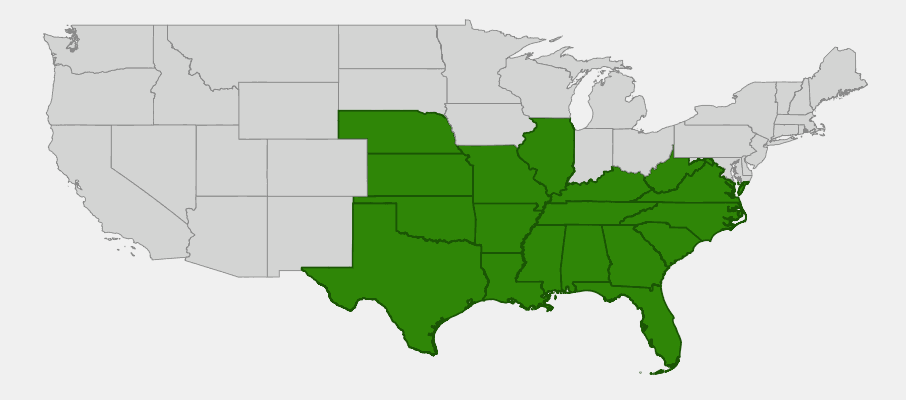
📋 Regional plant lists featuring Carolina Buckthorn: Kentucky & Tennessee
Growing & Care Guide
Carolina Buckthorn is an excellent low-maintenance shrub or small tree for naturalistic landscapes, woodland gardens, and wildlife plantings. Its shade tolerance and adaptability to both moist and moderately dry sites give it unusual versatility for a woody native plant.
Light
This species performs well in part shade to full shade — it is naturally an understory plant in dense hardwood forests. It will also grow in full sun if given adequate moisture, developing a denser, more compact form with heavier fruit production in sunnier sites. For most landscape situations, a shaded or partly shaded location replicates its natural conditions best. It is one of the few fruiting native shrubs that performs reliably in the shade of mature deciduous trees.
Soil & Water
Carolina Buckthorn grows in a wide range of soil types, from moist, rich bottomland loams to dry, calcareous upland soils derived from limestone. It has a moderate affinity for calcareous (limestone-derived) soils and performs especially well where soil pH is near neutral (6.0–7.5). It tolerates moderate drought once established but grows more vigorously with consistent moisture. It does not like prolonged waterlogging, though brief flooding is tolerated. Sandy, excessively drained soils may limit growth without supplemental irrigation.
Planting Tips
Plant in fall or early spring. Carolina Buckthorn transplants easily from container stock. Space multiple plants 8–10 feet apart for a naturalistic grouping. It pairs beautifully with Spicebush (Lindera benzoin), Wild Hydrangea (Hydrangea arborescens), and Pawpaw (Asimina triloba) for a diverse native understory planting. Mulch with 2–3 inches of shredded leaves or bark to retain soil moisture and moderate soil temperature.
Pruning & Maintenance
Carolina Buckthorn requires minimal pruning. It naturally develops an attractive multi-stem form. Remove dead, damaged, or crossing branches in late winter. If a more tree-like form is desired, selectively remove lower branches and competing stems to develop a single or few-trunk structure. This reveals the attractive gray bark and creates a more formal small tree appearance. Avoid heavy pruning after early spring when flowers have set, as this reduces that year’s fruit crop.
Landscape Uses
- Shade garden anchor — one of the best-fruiting shrubs for shaded sites
- Woodland understory planting under tall hardwoods
- Native shrub border for multi-season interest (flowers, fruit, fall color)
- Wildlife habitat garden — attracts dozens of bird species with its berries
- Screening and privacy — dense foliage through the growing season
- Limestone glade restoration — particularly appropriate for calcareous soils
- Rain garden edges — tolerates periodic wet conditions
Wildlife & Ecological Value
Carolina Buckthorn is an excellent wildlife plant — its fruits, flowers, and foliage support a broad range of species through multiple seasons.
For Birds
The berries are a high-value food source for at least 30 bird species, including American Robin, Northern Mockingbird, Cedar Waxwing, Hermit Thrush, Swainson’s Thrush, Eastern Bluebird, Yellow-rumped Warbler, White-throated Sparrow, and many others. The sequential fruit ripening — red in summer, black in fall — extends the period of food availability and attracts birds from late July through winter. The dense shrub structure also provides protective cover for nesting and roosting.
For Mammals
White-tailed deer browse the foliage and consume the fruit. Raccoons, opossums, and foxes consume the berries, especially after they soften with the first frosts. Small mammals use the dense shrub cover for shelter and travel corridors.
For Pollinators
The spring flowers attract native bees — particularly mining bees (Andrena spp.) and sweat bees (Halictus spp.) — as well as beneficial flies and small butterflies. Carolina Buckthorn also serves as a larval host for the Gray Hairstreak butterfly (Strymon melinus) and several moths.
Ecosystem Role
As a shade-tolerant understory species with broad habitat adaptability, Carolina Buckthorn plays an important structural role in Eastern forest ecosystems. It fills the mid-canopy niche in shaded woodland interiors where few other fruit-producing shrubs can thrive, providing a food resource at a height accessible to both ground-foragers and aerial feeders. Its calcareous soil tolerance makes it an important colonizer of limestone glades and cedar-hardwood margins — habitats that support specialized plant and animal communities found nowhere else.
Cultural & Historical Uses
Carolina Buckthorn shares a family with Cascara (Rhamnus purshiana), whose bark was North America’s most widely used laxative for over a century. Like its Pacific Northwest relative, Carolina Buckthorn’s bark and berries contain anthraquinone glycosides — compounds with significant laxative properties. Indigenous peoples, including the Cherokee and Choctaw, used the bark and root bark as a purgative medicine and to treat constipation, though with considerably more caution than the milder Cascara.
The berries are not safe for human consumption in any significant quantity, as they cause severe gastrointestinal distress. This property led to the plant being called “Indian cherry” in some historical contexts — a name that reflected both its appearance and the Indigenous peoples who knew its properties. The wood was occasionally used for small tool handles and fence posts, though the plant rarely grows large enough to provide significant lumber. Early European settlers in the Carolinas and Virginia noted the plant’s medicinal uses and its value as wildlife habitat, but it was never commercially exploited to the degree that led to the near-exhaustion of Cascara in the Pacific Northwest.
Today, Carolina Buckthorn is valued primarily as a native landscape plant and wildlife garden component. It is increasingly recommended by native plant nurseries and conservation organizations throughout the Southeast as an alternative to invasive exotic buckthorns (Rhamnus cathartica and Frangula alnus), which have escaped cultivation and now aggressively invade natural areas across the Midwest and Northeast. Planting Carolina Buckthorn instead of its invasive relatives provides all the wildlife value with none of the ecological downsides.
Frequently Asked Questions
Is Carolina Buckthorn the same as European Buckthorn?
No. European Buckthorn (Rhamnus cathartica) is an invasive exotic that is spreading aggressively through natural areas in the Midwest and Northeast. Carolina Buckthorn is a native species that has none of the invasive tendencies. It also lacks thorns, unlike the spiny European species.
Do I need multiple plants for fruit production?
Carolina Buckthorn plants are self-fertile and will produce fruit even with a single specimen. However, planting two or three plants increases fruit production and genetic diversity, benefiting both the plants and the wildlife that depend on them.
Why does my Carolina Buckthorn have berries of different colors at the same time?
This is perfectly normal and one of the plant’s most attractive features. The drupes ripen progressively over several weeks — green first, then red, then deep purple-black — and fruits at different stages of development coexist on the plant simultaneously, creating a colorful multi-toned display.
Will Carolina Buckthorn grow in heavy clay soils?
Yes, it tolerates moderately heavy clay soils, especially if drainage is adequate. In poorly drained clay that stays wet for extended periods, performance will be reduced. Adding organic matter to clay soils at planting improves drainage and root development.
What is the difference between Carolina Buckthorn and Cascara?
Both are native American members of the buckthorn family (Rhamnaceae) with similar fruit and foliage. Cascara (Rhamnus purshiana) is native to the Pacific Northwest and grows larger (up to 39 ft), while Carolina Buckthorn is native to the Eastern and South-Central US and tops out around 15 ft. Both have been used medicinally as laxatives, though Cascara was far more commercially important.