
Top Rated Cultivator For Modern Farmers: Efficient Tools for Today’s Agriculture
We independently select all products and services. If you click through links we provide, Plant Native may earn a commission with no extra cost to you. As an Amazon Associate I earn from qualifying purchases.
Last updated: September 13, 2026
Cultivators are a must-have for modern farmers looking to boost soil health and prep fields efficiently. They break up soil, control weeds, and mix in fertilizers or compost—making a real difference in crop productivity.
Among all the options out there, the powered cultivator really stands out. It covers more ground with less sweat compared to manual models, which, honestly, is a relief for anyone with a decent-sized plot.
Modern cultivators come in all shapes and sizes—engine power, tine setup, adjustable depth and width, you name it. Picking the right one depends on your land size, soil type, and what you’re growing.
Durability, easy maintenance, and fuel efficiency matter too. No one wants a tool that breaks down mid-season or guzzles gas.
We’ve put in the hours researching and testing a bunch of models. Our focus? Performance, reliability, and value that actually help out today’s farmers.
Top Rated Cultivators for Modern Farmers
We researched the details and tested a range of cultivators. Here are the most reliable and efficient tools we found for farmers who need gear that works as hard as they do.
Our top pick

- Super light, so maneuvering it is a breeze
- Honda 4-cycle engine—no mixing fuel, just go
- Speed control lets you dial things in for different soil conditions
Cons
- Not great with really tough or compacted soil
- Small size isn’t ideal for big tilling jobs
- The kickstand is useful but takes up extra space
We liked how the Mantis 7940 handled—just 24 pounds and ergonomic handles made it feel nimble. It surprised us by tearing through sod and compacted dirt better than expected. If you only buy one, this should be it.
Best for small spaces

- Strong 13.5-amp motor chews through tough soil
- Adjustable wheels give solid depth control
- Folds up for easy storage and moving
Cons
- Corded—so you’ll need an extension for big areas
- A little assembly before first use
- Can feel heavy if you’re using it for a long time
The folding handle is a nice touch if you’re short on storage. We got the Sun Joe set up pretty quickly, and it powered through compacted soil without much effort. Overall, it’s a practical pick for everyday garden chores.
Best adjustable option
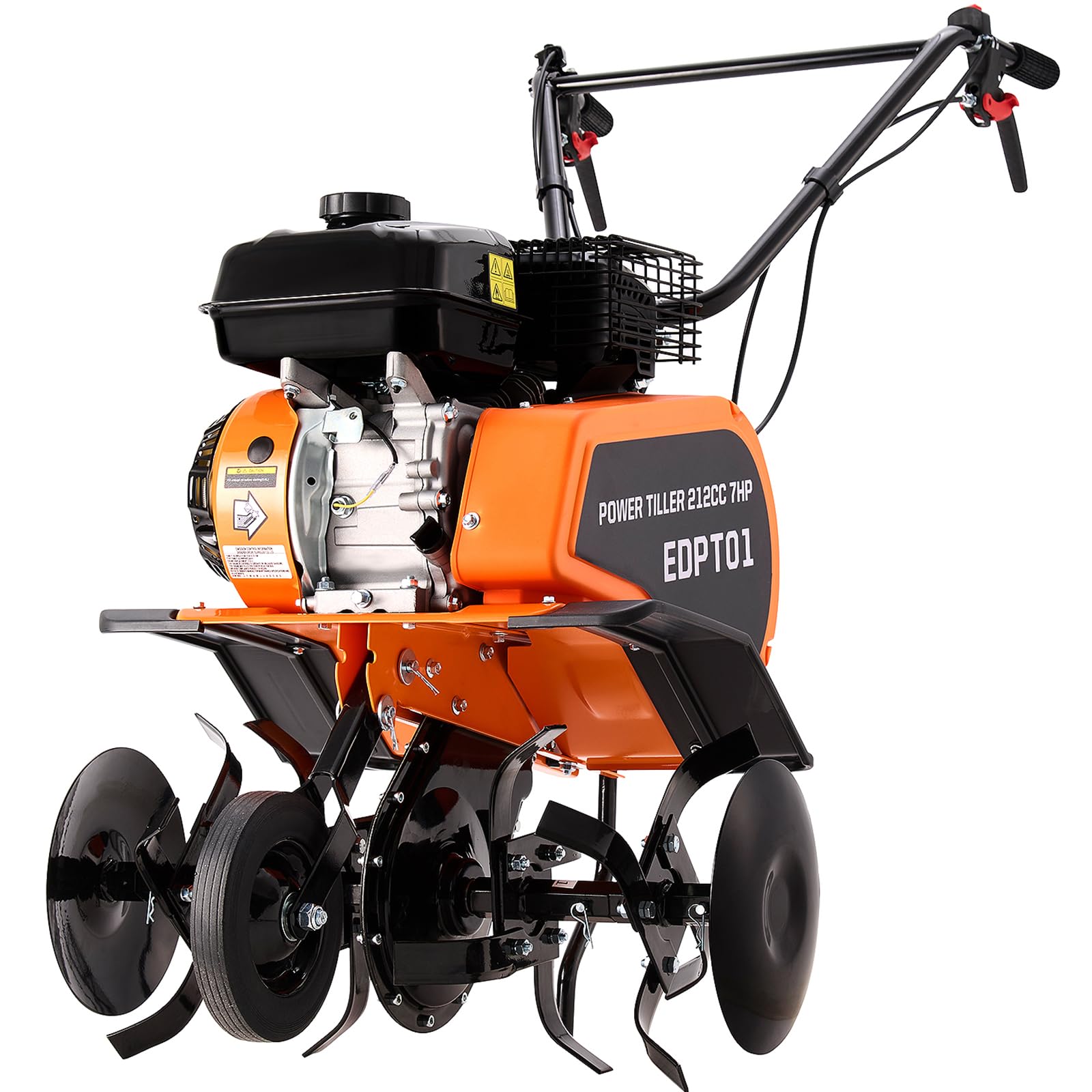
- Big 212cc engine rips through hard-packed soil
- Adjustable depth and width—super versatile
- Safety features protect both you and the machine
Cons
- Heavier than smaller tillers, so not as portable
- Takes a bit to assemble
- Controls take a little getting used to
We liked tweaking the blade depth and width for different jobs. The HUSHLIGHT impressed us with how it handled compacted ground. It’s a good mix of power and user comfort.
Best lightweight option

- Light and easy to steer, even in tight spots
- Adjustable tilling width fits different garden layouts
- Battery lasts long enough for most garden jobs
Cons
- Takes some muscle on tough soil
- Stops if it hits rocks, which can get annoying
- Battery recharge can slow you down if you’re working a big area
We liked the 40V power—it loosened up compacted soil without the noise or hassle of a gas engine. If you want to go longer, you’ll need a spare battery or take a break to recharge. This cultivator is great for folks who want a simple, low-maintenance tool that gets the job done.
Best compact design

- Cordless—move around easily, no cords to wrangle
- Steel tines work through compact soil pretty well
- Light and adjustable handle keeps things comfortable
Cons
- Battery life isn’t endless—spares help for big jobs
- Not built for heavy-duty or really large plots
- Some cleaning after use; soil tends to stick
On the other hand, lighter models work great for softer soil. It made working in tight spots or awkward corners way easier. It’s proof that great things really do come in small packages.
Buying Guide
When picking out a cultivator, we really pay attention to the size and power of the machine. It just makes sense—big farms usually demand more muscle, while a compact model is fine for a small plot.
The type of soil matters a lot too. If you’ve got rocky or hard-packed ground, you’ll want something with tough tines and a strong engine.
On the other hand, lighter models work great for softer soil. They use less fuel and don’t wear out as fast.
We always check out the tine configuration and adjustability. Having options for different widths and depths lets us fine-tune things, whether we’re after a certain soil texture or just trying to keep weeds down.
Fuel efficiency and easy maintenance are big factors for us. If we can get to the parts easily and do basic fixes ourselves, that’s a win—less downtime, fewer headaches.
Durability’s another thing we never ignore. We want strong frames and materials that can handle weather and tough terrain without rusting out.
Key Features to Consider
| Feature | Importance | Why It Matters |
|---|---|---|
| Power Output | High for large farms, moderate for small | Matches soil resistance and size |
| Tine Type | Rigid vs. flexible | Determines soil penetration ability |
| Adjustability | Depth and width settings | Enhances versatility and control |
| Weight | Heavier for tougher soils | Provides pressure for better tilling |
| Maintenance | Ease of access and part availability | Minimizes operational downtime |
Helpful article, thanks!
We appreciate that, Doug! Happy gardening! 🌿 -Plant Native Team
What about watering? I always seem to overdo it or not do enough.
Hi Wendy, you might have luck at local nurseries or online suppliers. Check out our nursery directory for options near you: https://plantnative.org/category/nursery/ -Plant Native Team