Prairie Onion (Allium stellatum)
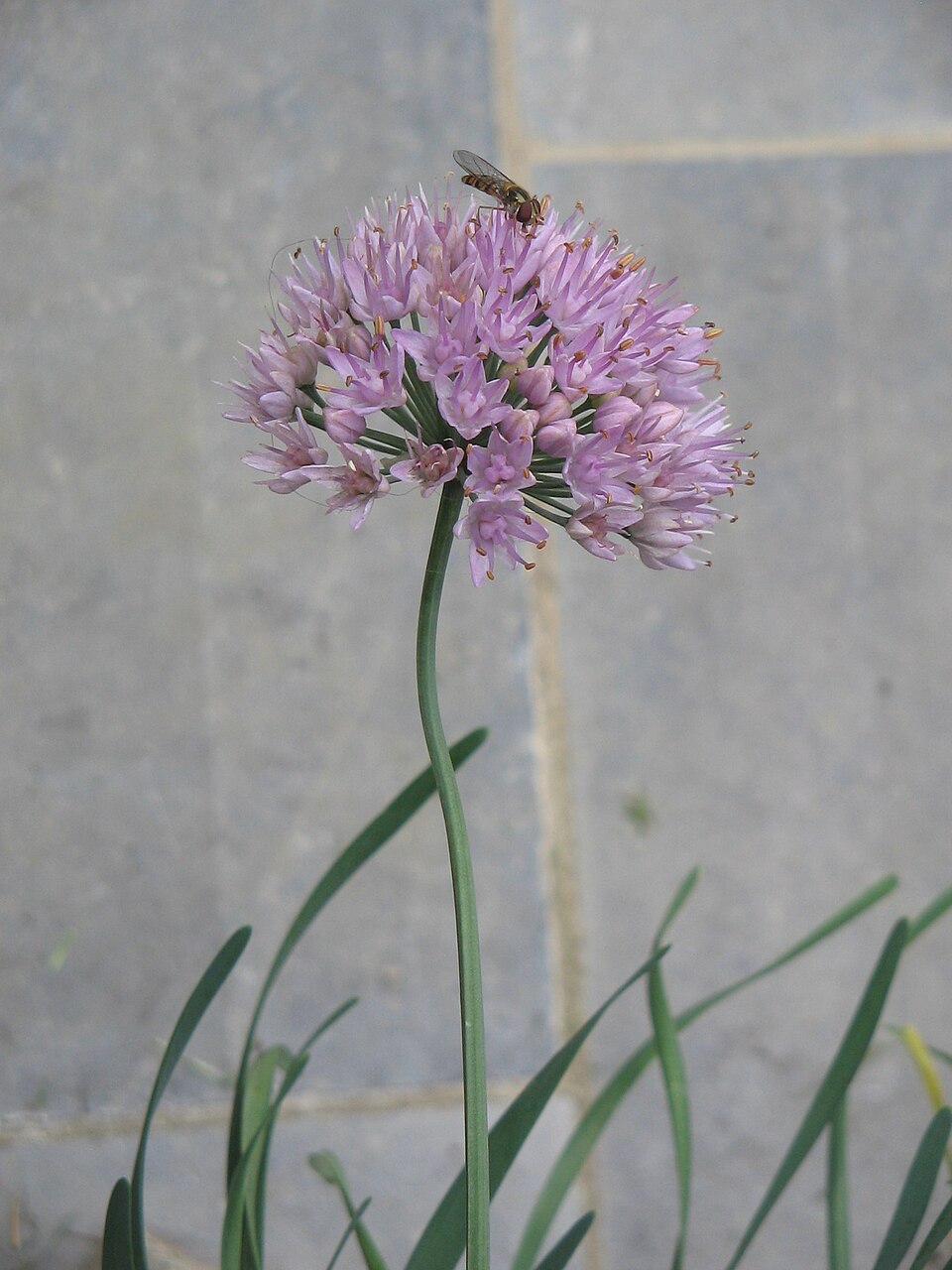
Allium stellatum, commonly known as Prairie Onion, Pink Wild Onion, or Autumn Wild Onion, is a charming native bulb wildflower of the central Great Plains that brings a final burst of late-summer color to prairie gardens and restored grasslands. A member of the Amaryllidaceae family (formerly Alliaceae), this diminutive native onion grows just 1 to 2 feet tall but produces perfectly rounded clusters of star-shaped lavender to deep pink flowers atop leafless, slender stems — a bloom display that is both delicate and visually striking in the prairie landscape. The species name stellatum means “star-shaped” in Latin, referring to the six-petaled flowers that form perfect stars when viewed from above.
Unlike many of its wild onion relatives, Prairie Onion is adapted to seasonally dry, rocky, and calcareous soils — the kind of thin, challenging substrates found on prairie bluffs, limestone outcrops, and well-drained hillsides throughout Nebraska and Kansas. It thrives where competition is reduced by thin soils and periodic drought, forming tight clumps of grass-like leaves in spring that die back by midsummer, followed by the dramatic emergence of the bare flower stalks in July and August. This “naked” flowering habit — blooming after the leaves have withered — is characteristic of many fall-blooming bulbs and gives Prairie Onion a distinctive, architectural quality in the late-summer garden.
Prairie Onion is ecologically important as a late-season nectar source and is widely eaten by wildlife. Its bulbs are nutritious and were a significant food resource for Native American peoples across the Plains. For contemporary native plant gardeners, it is a low-maintenance, drought-tolerant bulb wildflower that naturalizes beautifully in prairie gardens and rock gardens, adding reliable late-summer interest with virtually no care.
Identification
Prairie Onion is a small, bulb-forming herbaceous perennial growing 8 to 24 inches (20–60 cm) tall. Like all wild onions, it has a characteristic onion odor in all parts — crush a leaf or dig a bulb, and the smell is unmistakable. The plant goes through two distinct phases: a leafy spring phase and a leafless flowering phase in late summer.
Leaves & Bulb
The leaves emerge in early to mid-spring and are grass-like, flat, and slightly channeled, 6 to 18 inches long and just 1/8 to ¼ inch wide. They are green to slightly blue-green and have a distinct onion scent. The leaves typically wither and die back to the ground by June or July — well before the flowers appear. Beneath the ground, the plant produces a small oval to elongated bulb, ¾ to 1 inch long, with a brownish, fibrous outer coat (tunic). The bulbs are edible and have a mild onion flavor.
Flowers
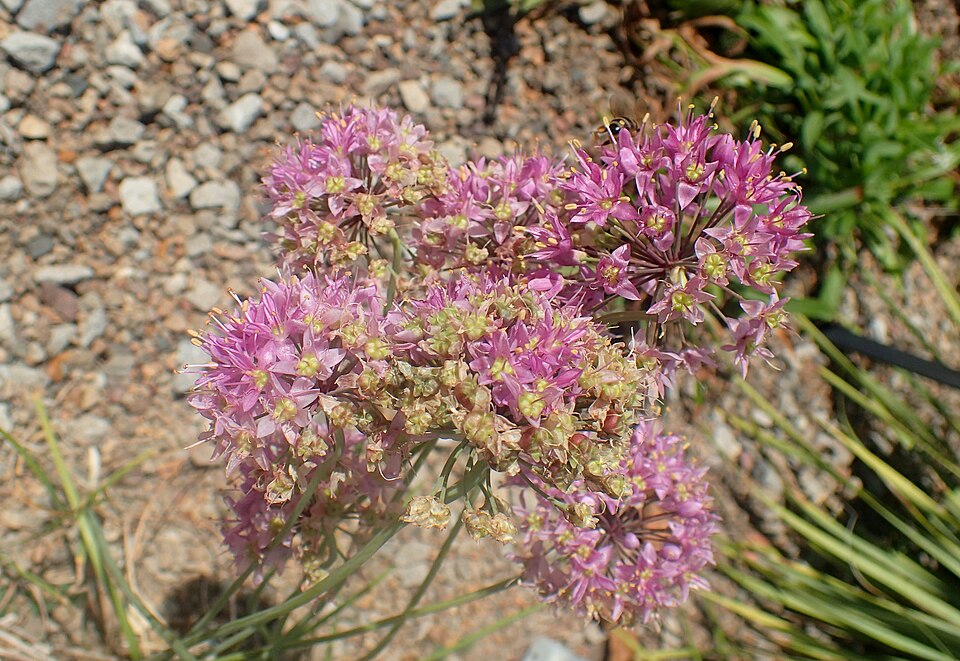
The flowers are the plant’s glory — appearing in July and August on leafless, slender, round stems (scapes) 12 to 24 inches tall. Each scape terminates in a globose umbel of 15 to 30 (sometimes more) individual star-shaped flowers, the whole cluster 1 to 2 inches across. Each flower has six lavender to deep pink tepals (petals and sepals identical in color), six stamens with yellow or white anthers, and a superior ovary. When fully open, the flowers face upward and outward in a perfect sphere, creating a display that is elegant and intricate when viewed closely.
Fruit & Seeds
After pollination, the flowers are replaced by small, three-celled seed capsules. Seeds are black, angular, and released in fall. The plant also multiplies by offset bulblets produced at the base of the parent bulb, allowing it to form clumps over time.
Quick Facts
| Scientific Name | Allium stellatum |
| Family | Amaryllidaceae (Amaryllis Family) |
| Plant Type | Native Bulb / Herbaceous Perennial |
| Mature Height | 1–2 ft |
| Sun Exposure | Full Sun to Part Shade |
| Water Needs | Moderate |
| Bloom Time | July – September |
| Flower Color | Lavender to deep pink (star-shaped, in rounded clusters) |
| Soil Type | Well-drained; rocky, sandy, or loamy; tolerates thin soils |
| Deer Resistant | Yes (strong onion scent deters deer and rabbits) |
| USDA Hardiness Zones | 4–8 |
Native Range
Prairie Onion is native to the central prairie region of North America, with its core range in the Great Plains states from Nebraska and Kansas west to Colorado and east through the Midwest to Indiana, Ohio, and Michigan. It extends north into the Dakotas, Minnesota, and Wisconsin, and south into Missouri, Arkansas, Oklahoma, and Texas. It is found in scattered locations in the eastern plains region but is most characteristic of the tallgrass and mixed grass prairie landscapes of the central United States.
In Nebraska and Kansas, Prairie Onion is characteristically found on rocky, calcareous (limestone) bluffs and slopes, dry open prairies, and rocky outcrops where thin soils and good drainage create conditions favorable to bulb survival. It is particularly common in the Flint Hills of Kansas — one of the largest remaining intact tallgrass prairie regions in North America — where rocky, thin soils have prevented conversion to cropland, preserving significant Prairie Onion populations in high-quality native grassland.
Prairie Onion occupies a distinct ecological niche from its close relative Wild Garlic (Allium canadense), which prefers moister, richer soils. The preference of A. stellatum for dry, rocky, well-drained substrates reflects its evolutionary specialization and makes it a reliable indicator of high-quality dry prairie remnants when found in natural settings.
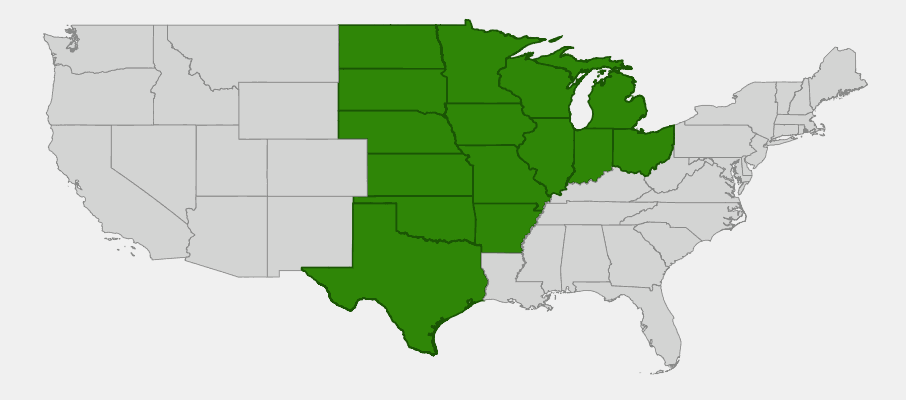
📋 Regional plant lists featuring Prairie Onion: Nebraska & Kansas
Growing & Care Guide
Prairie Onion is one of the most care-free native wildflowers available for Great Plains gardens. Once established in the right conditions, it requires virtually no attention and reliably delivers late-summer color year after year.
Light
Prairie Onion performs best in full sun to part shade. In full sun, it produces the most prolific flower display and maintains compact, upright scapes. In part shade (3–5 hours of direct sun), the plant will still bloom but with somewhat reduced flower production and slightly taller, more open growth. Full shade is not suitable.
Soil & Water
Well-drained to dry soil is essential. Prairie Onion is adapted to rocky, thin, calcareous soils with excellent drainage — it will not tolerate chronically wet or waterlogged conditions. Sandy, rocky, or lean loamy soils are ideal. Once established, the bulbs are drought-tolerant, consistent with their natural occurrence in seasonally dry prairie habitats. In garden settings, avoid heavy clay or constantly moist soils, and do not overwater.
Planting Tips
Plant bulbs in fall (September–October) at a depth of 2 to 3 inches, spacing them 4 to 6 inches apart for a natural-looking colony. Container-grown plants can be set out in spring. Choose the sunniest, best-drained location in your garden. Prairie Onion looks best planted in groups of at least 7–10 bulbs for visual impact. Allow the foliage to die back naturally in early summer — resist the urge to cut it before it yellows completely, as the dying leaves are feeding the bulb for next year’s flowers.
Pruning & Maintenance
Prairie Onion requires minimal maintenance. Deadhead spent flower clusters if you wish to prevent self-seeding, or leave them in place to allow natural seed dispersal and colony expansion. The dried seed heads also provide food for birds through fall. Cut the dried flower scapes to the ground after they become unsightly. Divide crowded bulb clumps every 5–7 years to maintain vigor — dig in late summer or fall, separate the bulblets, and replant promptly.
Landscape Uses
- Prairie and meadow gardens — a signature late-summer wildflower
- Rock gardens and rocky slopes — thrives in thin, dry soils
- Xeriscape and drought-tolerant plantings
- Pollinator gardens — excellent late-season nectar source
- Deer-resistant plantings — the onion scent repels deer
- Mixed bulb plantings for sequential bloom
- Front of dry borders — compact size and late bloom fills gaps
Companion Plants
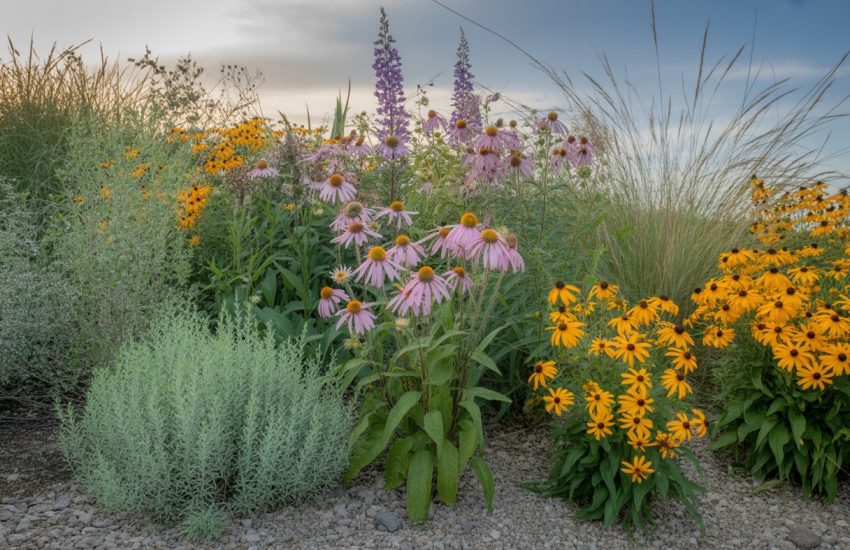
Prairie Onion pairs beautifully with other late-summer prairie natives including Silky Aster (Symphyotrichum sericeum), Prairie Blazingstar (Liatris pycnostachya), and Prairie Dropseed (Sporobolus heterolepis). Its late bloom, after the foliage has died back, allows early-season companions to occupy the same space without crowding — making it an efficient use of limited garden real estate.
Wildlife & Ecological Value
Prairie Onion is a valuable late-season resource in native prairie ecosystems, supporting pollinators, seed-eating birds, and mammals through its nectar-rich flowers and edible bulbs.
For Pollinators
The star-shaped flowers are attractive to a wide range of native bees, including sweat bees (Lasioglossum spp.), small halictid bees, bumble bees, and metallic green bees. Several specialist native bees in the genus Halictus show particular affinity for wild onion flowers. Butterflies — including skippers, fritillaries, and sulfurs — regularly visit the flowers for nectar. The late July–September bloom period is especially valuable as late-season resources become scarce.
For Birds
The black seeds of Prairie Onion are consumed by seed-eating birds including American Goldfinch, House Finch, and various sparrows in late summer and fall. The dried seed heads persist on the plant and provide food through early winter. Ground-foraging birds also consume bulblets exposed by frost heaving or animal activity.
For Mammals
The bulbs were historically an important food source for bears, badgers, ground squirrels, voles, and other mammalian foragers. The mildly pungent onion odor of the foliage deters deer and rabbits — an important practical benefit in native plantings where deer pressure is a significant concern. Bison historically grazed wild onion populations throughout the Great Plains.
Ecosystem Role
As a late-season bloomer in dry prairie communities, Prairie Onion bridges the nectar gap between midsummer and fall blooming species, maintaining pollinator populations through the late growing season. Its tolerance of rocky, thin soils allows it to occupy ecological niches where few other forbs can establish — contributing to plant community diversity and soil stabilization in harsh microhabitats.
Cultural & Historical Uses
Wild onions — including Prairie Onion — were among the most widely used food plants across all Native American cultures of the Great Plains. The bulbs were eaten raw, cooked, or dried and stored for winter use. They were eaten mixed with bison meat, ground corn, and other foods as a flavoring agent. The Lakota, Omaha, Pawnee, and many other nations gathered wild onions seasonally, and the plants were so important that they appear in oral traditions and ceremonial contexts throughout the region.
Native peoples also used wild onion medicinally as an antiseptic, cold remedy, and treatment for insect stings. The juice of the bulbs was applied topically to bee and wasp stings, and decoctions were used to treat chest congestion and respiratory ailments. Wild onion bulbs were also used to repel insects — rubbing the crushed bulbs on skin and clothing provided some protection against mosquitoes and biting flies.
Early European settlers and explorers also relied on wild onions as a trail food and vitamin C source during long prairie crossings. Meriwether Lewis and William Clark recorded finding and eating wild onions (likely Allium stellatum and related species) during their expedition, and noted their value as a food supplement. The plant’s distinctive aroma made it easily identifiable even to those unfamiliar with native plants — an important practical quality in a landscape without labeled trail markers. Today, Prairie Onion is treasured by native plant gardeners for its striking late-summer flowers, ecological value, and historical connection to the Great Plains landscape.
Frequently Asked Questions
Can I eat Prairie Onion?
Yes — the bulbs, leaves, and flowers are all edible and have a mild onion flavor. They can be eaten raw, cooked, or used as a flavoring agent. However, exercise caution: wild onion can be confused with death camas (Zigadenus spp.), which is toxic. The key identification rule is simple — if it doesn’t smell like onion when crushed, don’t eat it. Death camas has no onion odor.
Why do the leaves die before the flowers appear?
Prairie Onion is what botanists call a “hysteranthous” plant — one where the leaves and flowers appear at different times. The leaves emerge in spring, photosynthesize and build up energy in the bulb, then die back in early summer. The stored energy then powers the flowering phase in late summer. This strategy allows the plant to avoid the hottest, driest part of summer and bloom during the late-season period when other forbs are declining.
How do I prevent Prairie Onion from spreading too aggressively?
Prairie Onion spreads moderately by both seed and bulblet offsets. To prevent excessive spread, deadhead the flower clusters before seeds ripen. To control bulblet spread, divide clumps every few years and replant only as many as you want. In most garden contexts, its spread is not aggressive enough to be problematic.
Is Prairie Onion deer-resistant?
Yes, strongly so. Deer generally avoid all plants with strong onion or garlic scents. Prairie Onion’s pungent odor makes it one of the most reliably deer-resistant native wildflowers available for Great Plains gardens — an important consideration where deer browsing is a persistent problem.
What’s the difference between Prairie Onion and nodding wild onion (Allium cernuum)?
Nodding Wild Onion (Allium cernuum) is a closely related species with a similar appearance but its flower cluster nods or droops to one side, while Prairie Onion’s cluster stands upright. Nodding Wild Onion also prefers slightly moister conditions and typically blooms a few weeks earlier (June–July). Both are excellent native plants for prairie gardens.