Silky Aster (Symphyotrichum sericeum)
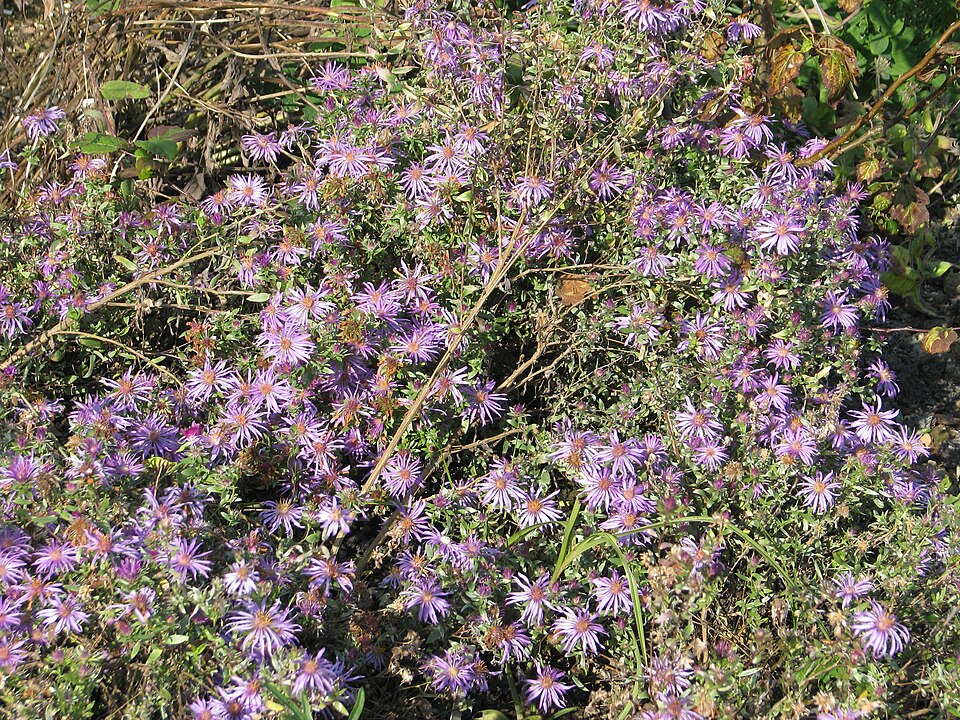
Symphyotrichum sericeum (formerly Aster sericeus), commonly known as Silky Aster or Western Silver Aster, is one of the most distinctive and beautiful native asters of the central Great Plains. What sets it apart from the many other asters in the prairie landscape is its extraordinary foliage: the leaves are covered in dense, silvery-silky hairs that give the entire plant a shimmering, metallic appearance in sunlight — completely unlike the typical green-leaved prairie asters. Paired with its characteristic pale lavender-purple flowers, curved and pointed petals (ray florets), and compact 1 to 2 foot stature, Silky Aster is immediately recognizable and unforgettable once encountered in the wild.
A member of the Asteraceae (sunflower/daisy) family, Silky Aster blooms from late August through October — making it one of the last native wildflowers of the prairie season and a critical late-season resource for migrating butterflies and native bees preparing for winter. In Nebraska and Kansas, its peak bloom coincides with the spectacular fall migration of Monarch butterflies, making it an essential planting for Monarch waystation gardens and native landscapes designed to support migratory pollinators.
Silky Aster is adapted to dry, well-drained, rocky, or sandy soils of the Great Plains — conditions that challenge most garden plants but are perfectly suited to this tough prairie native. Its compact size, drought tolerance, shimmering silvery foliage, and late fall bloom make it one of the most desirable native asters for small native gardens, prairie restorations, and pollinator plantings throughout the region.
Identification
Silky Aster is a low, branched, woody-based perennial growing 8 to 24 inches (20–60 cm) tall. It typically forms spreading mounds or low colonies from a branching, rhizomatous base. The most immediately distinctive feature is the silvery-silky foliage — the leaves and stems are covered in dense, appressed (flat-lying), silver-gray hairs that create a striking metallic sheen visible from several feet away.
Leaves & Stems
The leaves are alternate, sessile (clasping the stem without a petiole), and highly distinctive in texture. They are elliptic to ovate, about ½ to 1½ inches long, with entire (smooth) margins and a rounded to slightly pointed tip. The upper surface is covered in dense silvery hairs, while the lower surface is similarly silky — giving both surfaces a shimmering appearance. The stems are slender and reddish-brown to purplish, also somewhat silky-hairy, and branch repeatedly toward the top to produce a multi-flowered display. The foliage color contrasts beautifully with the flowers and with neighboring green-leaved plants.
Flowers
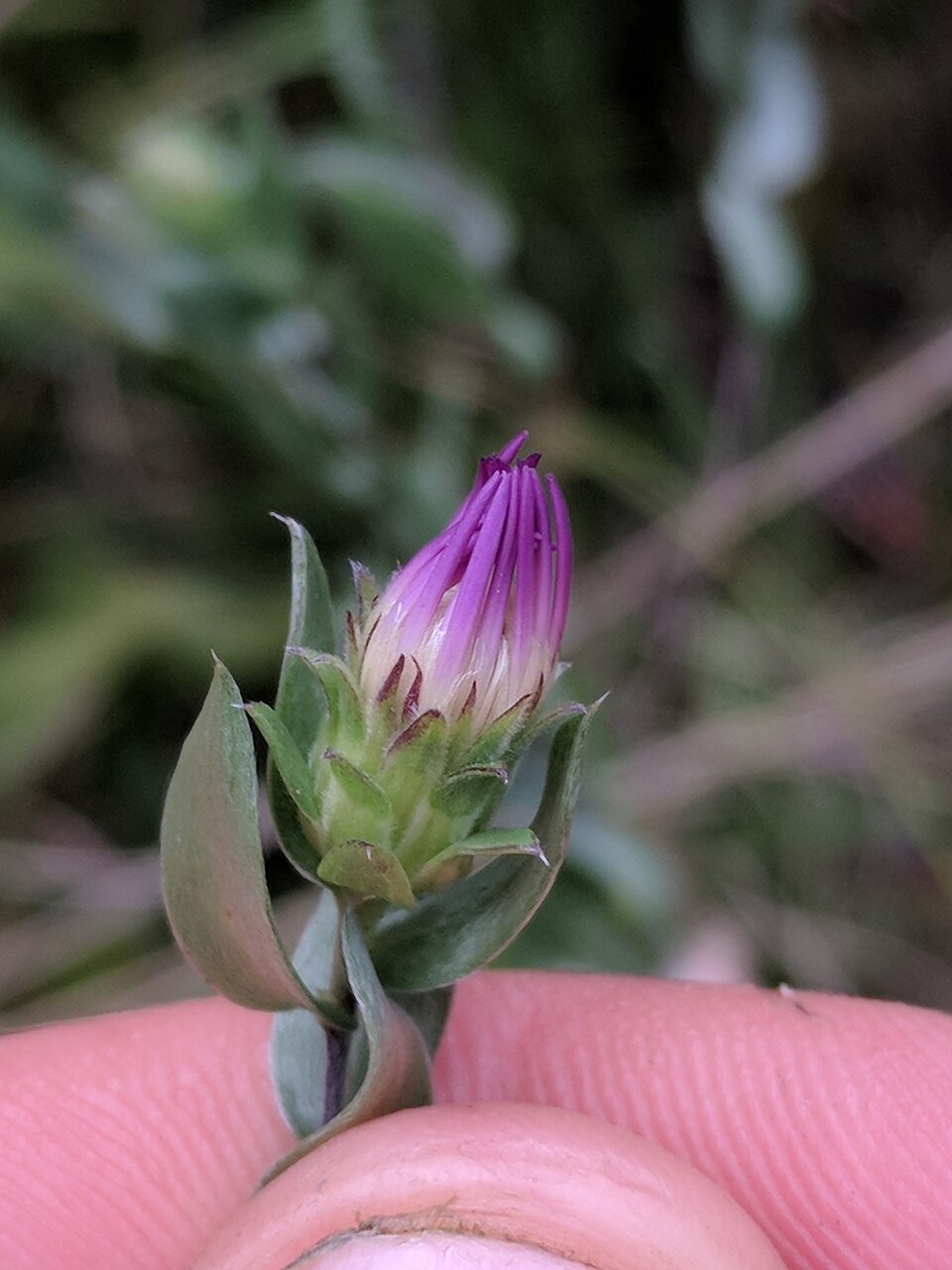
The flower heads are daisy-like and 1 to 1½ inches across, with 16 to 20 ray florets (the “petals”) surrounding a central disk of tubular yellow florets that age to purple-red as they mature. The ray florets are pale lavender to blue-violet, strongly recurved (curved backward) and notably pointed at their tips — a combination that gives the flower a distinctive “pinwheel” or “windswept” look quite different from most other asters. The flower heads are produced in open, branched clusters (corymbs) covering the upper third of the plant in full bloom, creating a spectacular fall display.
Fruit & Seeds
Like all asters, the seeds are small achenes with a tuft of white pappus bristles (the “parachute”) that facilitate wind dispersal. The seeds ripen in October–November. Silky Aster does not self-seed aggressively in most garden conditions.
Quick Facts
| Scientific Name | Symphyotrichum sericeum (syn. Aster sericeus) |
| Family | Asteraceae (Sunflower / Daisy Family) |
| Plant Type | Herbaceous Perennial Wildflower |
| Mature Height | 1–2 ft |
| Sun Exposure | Full Sun to Part Shade |
| Water Needs | Low to Moderate |
| Bloom Time | Late August – October |
| Flower Color | Pale lavender to blue-violet with yellow disk, recurved pointed petals |
| Distinctive Feature | Dense silvery-silky hairs on leaves and stems |
| Soil Type | Well-drained; rocky, sandy, or dry loam |
| Deer Resistant | Yes (hairy foliage deters browsing) |
| USDA Hardiness Zones | 3–8 |
Native Range
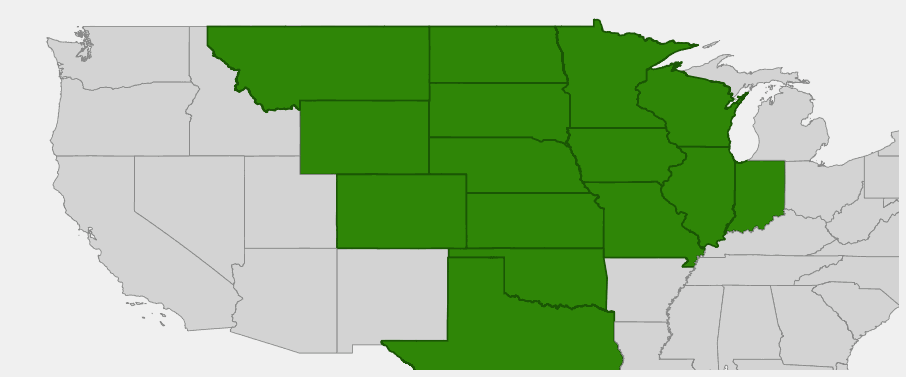
Silky Aster is native to the central interior of North America, with its core range in the Great Plains states from Nebraska and Kansas west to Colorado and east through the tallgrass prairie region to Wisconsin, Illinois, Indiana, and parts of Missouri. It extends north into the Dakotas, Minnesota, and Montana, and south into Oklahoma and Texas. This range is largely coincident with the mixed grass and tallgrass prairie biomes of the central United States.
In Nebraska and Kansas, Silky Aster is found in dry to moderately moist open prairies, rocky bluffs, and well-drained hillsides. It is a characteristic species of high-quality dry and mixed grass prairie remnants, where its tolerance of thin, rocky soils allows it to grow in locations that resist succession to taller vegetation. It is particularly common on south- and west-facing slopes where soil temperatures are higher and moisture is lower — conditions that favor its dry-adapted nature.
Silky Aster’s distribution has been fragmented by agricultural conversion of native prairie, and it is less common in intensively farmed landscapes. It persists primarily in intact prairie remnants, railroad rights-of-way, rocky bluffs, and areas managed for prairie preservation. Identifying and protecting these remnant populations — and planting Silky Aster in restored native gardens — helps maintain the genetic diversity and ecological presence of this distinctive prairie wildflower.
📋 Regional plant lists featuring Silky Aster: Nebraska & Kansas
Growing & Care Guide
Silky Aster is a low-maintenance, drought-tolerant native wildflower that thrives with minimal care in the right conditions. Its main requirements are full sun and excellent drainage — given those, it is remarkably trouble-free and rewards the gardener with a spectacular fall show year after year.
Light
Full sun is strongly preferred — at least 6 to 8 hours of direct sun per day. Silky Aster grows in full sun to part shade in nature, but in garden settings, full sun produces the most compact, floriferous plants. In shade or partial shade, plants become leggy, may lean, and produce fewer flowers. Site it in your garden’s sunniest spots for the best performance.
Soil & Water
Well-drained to dry soil is essential. This is a plant that evolved on the rocky bluffs and dry slopes of the central Plains, and it performs best in sandy, rocky, or lean loamy soils with excellent drainage. Heavy clay or chronically moist soils will cause the plant to decline. Silky Aster is drought-tolerant once established and rarely needs supplemental watering in its native range — overwatering is one of the most common causes of failure in cultivation. In rich, moist garden soil it may grow too tall and flop; lean, dry conditions produce the most compact and attractive specimens.
Planting Tips
Plant in spring from container stock or by seed. Choose the best-drained, sunniest spot available. Do not amend the soil with compost or fertilizer — lean soil is preferable and produces sturdier plants. Space plants 12 to 18 inches apart for natural-looking colonies. Silky Aster self-seeds moderately, so allow some seed dispersal to build populations over time. It may be slow to establish in the first year but grows more vigorously in subsequent years as the root system develops.
Pruning & Maintenance
Cut plants back by one-third in late June (the “Chelsea chop”) to encourage branching and a more compact, floriferous plant with less tendency to flop. Cut all stems to the ground in late fall or early spring. Divide clumps every 3–5 years in spring to maintain vigor. Silky Aster is generally pest- and disease-free when grown in the right conditions with good air circulation.
Landscape Uses
- Prairie gardens and restorations — a true Great Plains signature species
- Rock gardens — thrives in rocky, dry conditions
- Butterfly and Monarch waystation gardens — outstanding fall nectar source
- Dry mixed borders — stunning late-season color and silver foliage
- Xeriscape plantings — one of the most drought-tolerant native asters
- Deer-resistant plantings — hairy foliage is unappealing to browsers
- Ornamental grass companions — the silver foliage and fall flowers complement prairie grasses beautifully
Wildlife & Ecological Value
Silky Aster is one of the most ecologically valuable late-season native wildflowers in the Great Plains, providing critical resources at a time when most other plants have finished blooming and wildlife is preparing for winter.
For Pollinators
As a late bloomer (August–October), Silky Aster provides nectar and pollen at a time when few other prairie forbs are still in bloom. This makes it especially valuable for bumblebee queens building fat reserves before hibernation, native bees provisioning late-season nests, and fall-flying butterflies. Sweat bees, mining bees, and small metallic-green bees are frequent visitors. The yellow disk florets are particularly rich in pollen.
For Monarchs & Migrating Butterflies
The fall bloom period of Silky Aster coincides precisely with the Monarch butterfly migration through Nebraska and Kansas (September–October). Monarchs require abundant nectar during migration to fuel their journey to Mexico, and late-blooming asters like Silky Aster are among their most important fuel sources. Painted Ladies, Cloudless Sulphurs, Question Marks, and various fritillaries also make extensive use of Silky Aster during fall migration.
For Birds
The seeds of Silky Aster are consumed by goldfinches, chickadees, and various sparrows through fall and winter. The plant’s bushy form provides low cover for ground-foraging birds. The insect community associated with the flowers — including specialist bees and numerous lepidopteran larvae — provides important protein for nesting songbirds earlier in the season.
Ecosystem Role
In dry prairie communities, Silky Aster occupies a distinct niche as a late-season, dry-site flowering plant. Its tolerance of rocky, calcareous, thin soils — and its late bloom — fill ecological roles that few other plants in the community can serve. Its distinctive silver foliage changes the visual texture of the prairie plant community and may reduce solar heating of the plant surface, helping it conserve water in hot, dry conditions — an adaptation shared with many other hairy-leaved plants of arid environments.
Cultural & Historical Uses
Wild asters, including Silky Aster, were recognized and used by Native American peoples throughout the Great Plains. The Lakota used asters in the smoke from fires lit to attract bison — the burning aster was believed to have spiritual properties that would draw bison herds closer to hunting camps. The Cherokee, further east, used related asters medicinally as a general tonic and in treatments for nervous conditions. Several Plains nations recognized the distinctive silky-leaved aster as a marker of specific prairie microhabitats and used it as a landmark in their geographic knowledge of the land.
The genus Symphyotrichum was formerly lumped into the vast genus Aster, and many gardeners and botanists still use the old name Aster sericeus for this plant. The genus was split based on molecular and morphological studies, separating the North American asters (now Symphyotrichum) from the European and Asian species that retain the name Aster. The species name sericeum derives from the Latin for “silky” — a direct reference to the plant’s most distinctive feature.
In contemporary native plant gardening and prairie restoration, Silky Aster is increasingly recognized as an outstanding ornamental as well as an ecological powerhouse. Its unique silvery foliage provides season-long interest, while the late fall bloom fills a critical gap in the native garden calendar and supports the most vulnerable stage of the Monarch butterfly migration. For native plant gardeners in Nebraska and Kansas, Silky Aster is an essential component of any fall pollinator planting.
Frequently Asked Questions
How is Silky Aster different from other prairie asters?
Silky Aster is immediately distinguishable from all other prairie asters by its silvery-silky foliage — no other native aster in the Great Plains has the same densely hairy, metallic-silver leaves and stems. The recurved, pointed ray florets are also distinctive. Once you’ve seen it, you’ll never confuse it with any other aster.
Why is my Silky Aster flopping over?
Flopping is almost always caused by too much moisture and/or too much shade. Silky Aster evolved in dry, sunny, lean prairie conditions — in rich, moist garden soil or partial shade, it grows too tall and lush and cannot support itself. Move it to the driest, sunniest spot available, stop fertilizing and watering (once established), and try the Chelsea chop (cut back by 1/3 in late June) to encourage compact growth.
Is Silky Aster good for Monarchs?
Absolutely — it’s one of the best. The fall bloom period (August–October) coincides perfectly with Monarch migration through Nebraska and Kansas. Monarchs need abundant nectar to fuel their journey to Mexico, and Silky Aster provides it at exactly the right time. Including Silky Aster in your native garden is one of the most impactful things you can do for Monarch conservation in the Great Plains.
Does Silky Aster spread aggressively?
No. Silky Aster spreads slowly and moderately by both rhizomes and seed. It is not aggressive or invasive in typical garden settings. In dry, lean soils (its preference), spread is even slower. It is a well-behaved garden plant that fills in gradually to form attractive clumps without overwhelming neighbors.
Can I grow Silky Aster from seed?
Yes. Seeds benefit from cold stratification (60–90 days at 35°F, moist) before sowing. Direct sowing in fall, allowing natural winter stratification, is the easiest approach. Germination is not always reliable, but seeds that do germinate establish readily if given full sun and well-drained soil. Named cultivars are typically propagated by division to maintain consistency.