Flowering Spurge (Euphorbia corollata)
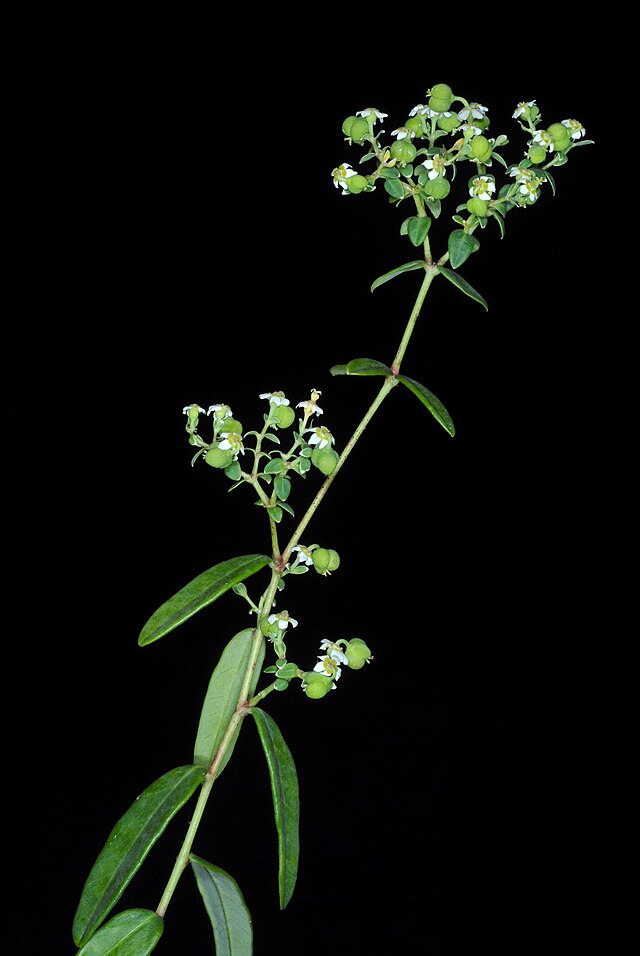
Euphorbia corollata, commonly known as Flowering Spurge, is a delicate and graceful native perennial wildflower of the central and eastern United States. Despite belonging to the large and diverse spurge family (Euphorbiaceae) — which includes the tropical poinsettia, castor bean, and dozens of succulent species — Flowering Spurge stands apart with airy white flowers and refined prairie elegance that belies its tough constitution. Found throughout the Great Plains and Midwest on prairies, roadsides, and dry open woodlands, it blooms prolifically from June through September, producing a cloud-like spray of tiny white flowers that hovers over the landscape like botanical snow.
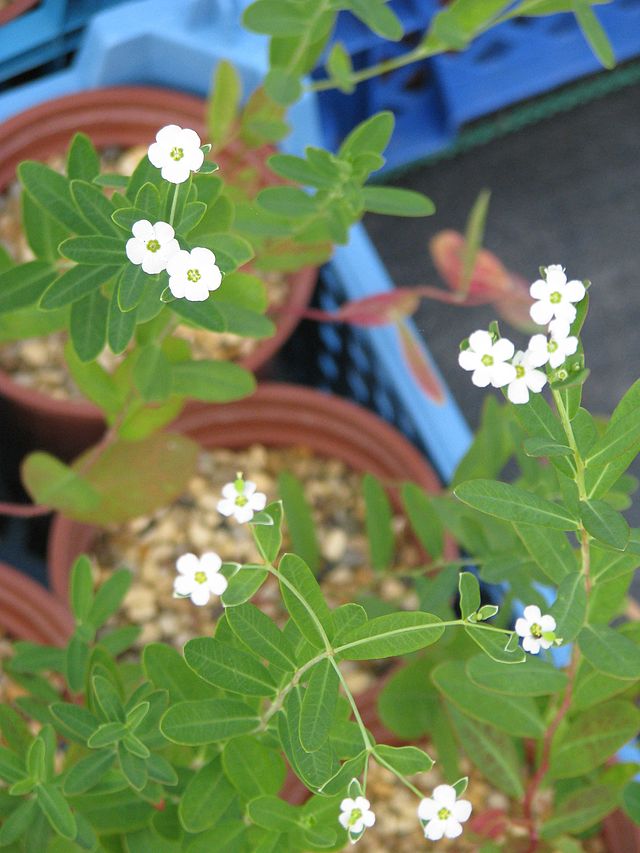
The floral architecture of Flowering Spurge is botanically unique. Like all euphorbs, the plant doesn’t produce true flowers in the traditional sense — instead, it bears structures called cyathia, in which tiny male and female reproductive organs are surrounded by five showy white appendages (technically modified glands) that mimic the look of petals. At the center sits a small green or yellow nectary, giving the flowers their distinctive appearance of white petals with green-yellow centers. The overall effect, especially when dozens of stems bear hundreds of these tiny “flowers” simultaneously, creates a display that rivals baby’s breath (Gypsophila) in garden beauty and is arguably far more ecologically valuable.
Like all members of Euphorbiaceae, Flowering Spurge contains a milky white latex sap throughout its stems and leaves. This latex is caustic, irritating to skin and eyes, and toxic if ingested — serving as a highly effective chemical defense that makes the plant largely unpalatable to deer and most browsing herbivores. Despite this toxicity to vertebrates, Flowering Spurge supports a range of native pollinators and specialist insects that have co-evolved with the plant over millennia. Its combination of drought tolerance, low maintenance requirements, and exceptional mid-summer bloom time make it one of the most valuable native wildflowers for prairie restorations and native plant gardens throughout the Great Plains and Midwest.
Identification
Flowering Spurge grows as an erect perennial from a deep, stout taproot. Plants typically measure 1 to 3 feet tall at maturity, with a single main stem (or occasionally a few stems from the base) that branches profusely in the upper half or two-thirds of the plant to produce the characteristic airy flower clusters.
Stems & Sap
The stems are slender, wiry, and smooth, colored pale green to bluish-green. A key identifying feature is the milky white latex sap that flows immediately when any part of the plant is broken or cut. This sap is an important diagnostic characteristic that distinguishes Flowering Spurge from superficially similar white-flowered plants. The latex is caustic and can cause skin irritation and severe eye irritation — handle plants with gloves if sensitive. The branching in the upper plant is typically arranged in a spreading, flat-topped to slightly rounded pattern, forming what botanists call a “dichotomous cyme” — where each branch splits into two at each node.
Leaves
The leaves are simple, alternate on the lower stem, and whorled or sub-opposite near the branching points. They are oval to oblong or slightly spatulate, 1 to 2 inches long, and ½ to 1 inch wide, with smooth (entire) margins and a slightly waxy, blue-green color above. The leaves are sessile (without stalks) or nearly so. At each branch point in the upper stem, a pair of smaller, rounded leaves (bracts) appears just below the flower clusters, adding to the plant’s visual complexity.
Flowers & Fruit
The flowers (cyathia) are borne in numerous small clusters (cymes) at the ends of each branch. Each cyathium is tiny — just ¼ inch wide — but structurally intricate: five white, petal-like appendages (glands with white margins) surround a tiny cup-like structure containing minute male flowers and a central female flower. The overall color effect is bright white with a green-yellow center. Flowering Spurge blooms from June through September, with peak bloom in July and August. The fruit is a small, smooth, 3-lobed capsule approximately ¼ inch across, containing three rounded, grayish seeds. The capsules split forcibly at maturity, ejecting seeds several feet from the parent plant.
Quick Facts
| Scientific Name | Euphorbia corollata |
| Family | Euphorbiaceae (Spurge) |
| Plant Type | Native Perennial Wildflower |
| Mature Height | 1–3 ft |
| Sun Exposure | Full Sun |
| Water Needs | Moderate |
| Bloom Time | June – September |
| Flower Color | White with green-yellow center |
| Deer Resistant | Yes (toxic latex sap) |
| USDA Hardiness Zones | 3–9 |
Native Range
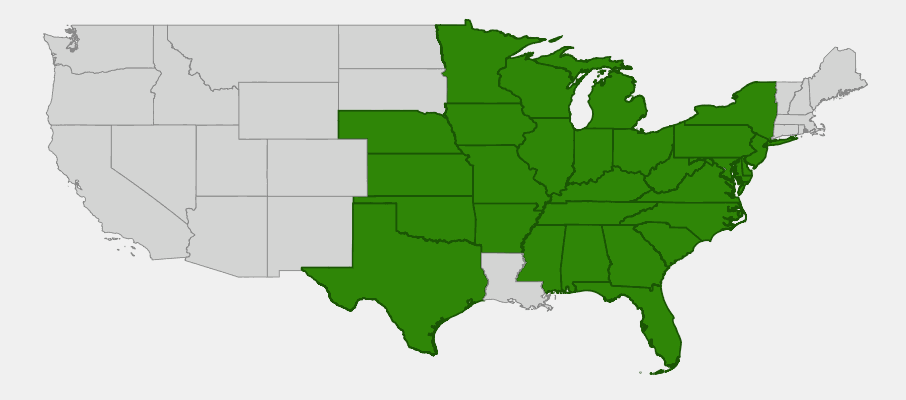
Flowering Spurge is native to a broad swath of the central and eastern United States, ranging from Minnesota and Wisconsin east to New York and New Jersey, south to Florida, and west to Nebraska, Kansas, Oklahoma, and Texas. It is most abundant in the Midwest and Great Plains, where it is a characteristic component of dry and mesic prairies, oak savannas, and open upland forests. Within this broad range, Flowering Spurge tends to favor well-drained soils — sandy, loamy, or gravelly — where moisture is moderate and competition from taller grasses and forbs is reduced.
In Nebraska and Kansas, Flowering Spurge is a familiar sight along roadsides, railroad right-of-ways, and in remnant prairies throughout both states. It typically blooms from late June through September, providing one of the most sustained displays of summer color among native wildflowers of the region. It often grows alongside other native prairie plants including Purple Coneflower (Echinacea purpurea), Black-eyed Susan (Rudbeckia hirta), and various grasses of the mixed-grass and tallgrass prairie systems.
In the southeastern portion of its range, Flowering Spurge extends into longleaf pine savannas and open sandy woodlands of the Atlantic Coastal Plain, where it thrives in nutrient-poor, fire-maintained habitats. This ecological flexibility — from Great Plains prairies to southeastern pine savannas — speaks to the plant’s extraordinary adaptability and its success across a wide range of environmental conditions.
📋 Regional plant lists featuring Flowering Spurge: Nebraska & Kansas
Growing & Care Guide
Flowering Spurge is one of the easiest native wildflowers to grow in a prairie or naturalistic garden. Once established, it is essentially self-sufficient, requiring no supplemental watering, no fertilization, and minimal maintenance. Its long bloom season — June through September — makes it exceptionally valuable for filling the mid-summer gap when many spring bloomers have finished and fall bloomers have not yet begun.
Light
Flowering Spurge performs best in full sun (6 or more hours per day). In shadier conditions, the plant becomes leggy, produces fewer flowers, and may lean toward available light. For best performance, site it where it will receive direct sun for most of the day. It thrives alongside other sun-loving prairie plants and is an excellent companion for purple coneflower, black-eyed Susan, and native grasses.
Soil & Water
This species has a strong preference for well-drained soils. It does particularly well in sandy or gravelly soils where moisture drains freely, and can suffer from root rot in poorly drained, waterlogged conditions. Despite preferring moderate water availability, it is remarkably drought tolerant once its deep taproot is established — typically after the first growing season. In its natural habitat, it persists through mid-summer droughts that would wilt many other perennials. Avoid amending soil with excessive organic matter or compost, as overly rich soil leads to rank, floppy growth with fewer flowers.
Planting Tips
Flowering Spurge can be started from seed sown in fall (for natural cold stratification) or from transplants. When working with plants, wear gloves to avoid contact with the latex sap, which can irritate sensitive skin. Space plants 12–18 inches apart in prairie plantings. Avoid planting in areas where children or pets might come into regular contact with broken stems, due to the toxic sap. The plant establishes slowly in its first year (focusing on developing the taproot) but blooms freely from the second year onward.
Pruning & Maintenance
Minimal pruning is needed. If plants become floppy (usually a sign of too much shade or overly rich soil), cut back by one-third in early June to promote more compact branching. Deadheading is not necessary for the plant’s health, but leaving seed heads provides winter food for birds and allows natural self-seeding to expand the planting. Cut plants back to the ground in late fall or early spring. Flowering Spurge self-seeds readily in open, disturbed soil, so plant it where you want it to naturalize.
Landscape Uses
Flowering Spurge is exceptionally versatile in the native plant landscape:
- Prairie plantings — a classic component of dry to mesic prairie mixes
- Pollinator gardens — long bloom season attracts bees and butterflies
- Dry borders and slopes — excellent for challenging dry sites
- Cut flower gardens — the airy sprays are excellent fillers in arrangements (wear gloves, sear stem ends)
- Deer-resistant gardens — latex sap deters deer browsing
- Roadside and right-of-way plantings — extremely tough once established
Wildlife & Ecological Value
Despite the toxicity of its latex sap to vertebrates, Flowering Spurge supports a meaningful array of native wildlife, particularly specialized insects that have co-evolved with euphorbs over millions of years.
For Pollinators
The small, open flowers of Flowering Spurge are accessible to a wide range of native bees, wasps, and small beetles. The nectar-producing glands are particularly attractive to small sweat bees (Halictidae), mining bees (Andrenidae), and various native flies and wasps. Several specialist bee species in the genus Lasioglossum are known to visit Euphorbia flowers. Butterflies — including hairstreaks, skippers, and small checkered-skipper — also visit the flowers for nectar. The extended bloom period from June to September makes Flowering Spurge a particularly valuable nectar source during the mid-summer period when many other prairie flowers have finished blooming.
For Birds
The small seeds of Flowering Spurge are consumed by ground-feeding birds, particularly sparrows and doves that forage in prairie habitats. Mourning Doves, Field Sparrows, Grasshopper Sparrows, and Chipping Sparrows are known to feed on the seeds. The plant’s upright, branching structure — even after it goes to seed — provides perching points and some cover for small birds in open grassland habitats.
For Insects & Ecosystem
Several specialist insects are associated with Euphorbia species, including the euphorb hawkmoth (Hyles euphorbiarum) and various euphorb-specialist leaf beetles (Aphthona spp.). The plant’s persistence in prairie restorations helps maintain open-ground microsites important for ground-nesting native bees. As a component of diverse native plantings, Flowering Spurge contributes to the structural complexity and floral diversity that support healthy prairie invertebrate communities throughout the growing season.
Deer Resistance
The white latex sap contains diterpenoid esters and other toxic compounds that are highly irritating to mucous membranes. Deer and most other mammalian herbivores will not browse Flowering Spurge, making it an excellent choice for landscapes where deer pressure is high. This resistance does not extend to insects — euphorb specialists have evolved mechanisms to tolerate or sequester the toxins.
Cultural & Historical Uses
Flowering Spurge has a rich history of medicinal use among Indigenous peoples of the central and eastern United States. The plant’s powerful pharmacological properties — concentrated in the latex sap — were recognized and carefully employed by numerous Native American nations. The Meskwaki (Fox) people used the root to treat gonorrhea, while the Ojibwe applied the dried, powdered root as a remedy for various skin ailments. The Cherokee used the root as a strong purgative and cathartic — a property that reflects the plant’s general class as a drastic irritant to mucous membranes throughout the digestive system.
European settlers and early American physicians adopted some of these uses, incorporating Euphorbia corollata into the American folk medicine tradition. The plant appeared in various 19th-century botanical medical references as “wild ipecac” — a comparison to ipecacuanha, which shares the property of inducing vomiting in sufficient doses. Medical practitioners prescribed small doses of the root in cough syrups and expectorants, noting that the plant’s irritating properties could help loosen mucus when administered carefully. However, the toxic nature of all euphorb latex meant that overdose was a significant risk, and the plant fell out of medical favor as safer alternatives became available.
In the landscape tradition, Flowering Spurge was recognized early as an ornamental plant. Its resemblance to baby’s breath made it popular in Victorian-era bouquets and wildflower arrangements, though handlers quickly learned to treat the cut stems with flame or boiling water to stop the flow of latex before including it in arrangements. Today, Flowering Spurge is valued primarily as an ecological garden plant — a beautiful, tough, and long-blooming native perennial that connects modern landscapes to the prairie heritage of the central and eastern United States. Its inclusion in prairie restorations and native seed mixes has increased significantly as interest in low-maintenance, wildlife-friendly landscaping has grown.
Frequently Asked Questions
Is Flowering Spurge toxic to humans and pets?
Yes. All parts of Flowering Spurge contain a milky white latex sap that is caustic and toxic. Contact with the sap can cause skin irritation and severe eye irritation. Ingestion can cause vomiting, diarrhea, and severe gastrointestinal distress. Keep children and pets from ingesting any part of this plant. When working with it in the garden, wear gloves and avoid touching your face. Despite these precautions, Flowering Spurge is safe in a well-managed garden where people don’t handle it carelessly — it’s been grown in American gardens for centuries.
Is Flowering Spurge the same as baby’s breath?
No — they’re completely different plants from different families. Baby’s breath (Gypsophila paniculata) is a European member of the pink family (Caryophyllaceae). Flowering Spurge is a North American native in the spurge family (Euphorbiaceae). They do look remarkably similar in flower, which is why Flowering Spurge is sometimes marketed as a native alternative to baby’s breath for cut flower gardens.
How do I tell Flowering Spurge apart from other white wildflowers?
Break a stem and look for the milky white latex sap — this immediately identifies it as a euphorb. No other common white prairie wildflower produces milky sap. Additionally, the tiny flower structure (cyathium with white appendages surrounding a central green-yellow nectary) is unique to euphorbs.
Does Flowering Spurge spread aggressively?
It self-seeds moderately in open, disturbed soil, but is not considered aggressively invasive. In established prairie plantings with dense vegetation, seedling establishment is naturally limited. In newly disturbed or bare soil, it can colonize readily — which is often desirable in prairie restoration contexts.
Can I use Flowering Spurge as a cut flower?
Yes, with care. Cut stems in the morning, immediately sear the cut ends in flame for 3–5 seconds (or dip in boiling water for 30 seconds) to stop latex flow, then place in cool water. Wear gloves throughout. The resulting stems last well in arrangements and provide an excellent filler similar to baby’s breath.