Bluets (Houstonia caerulea)
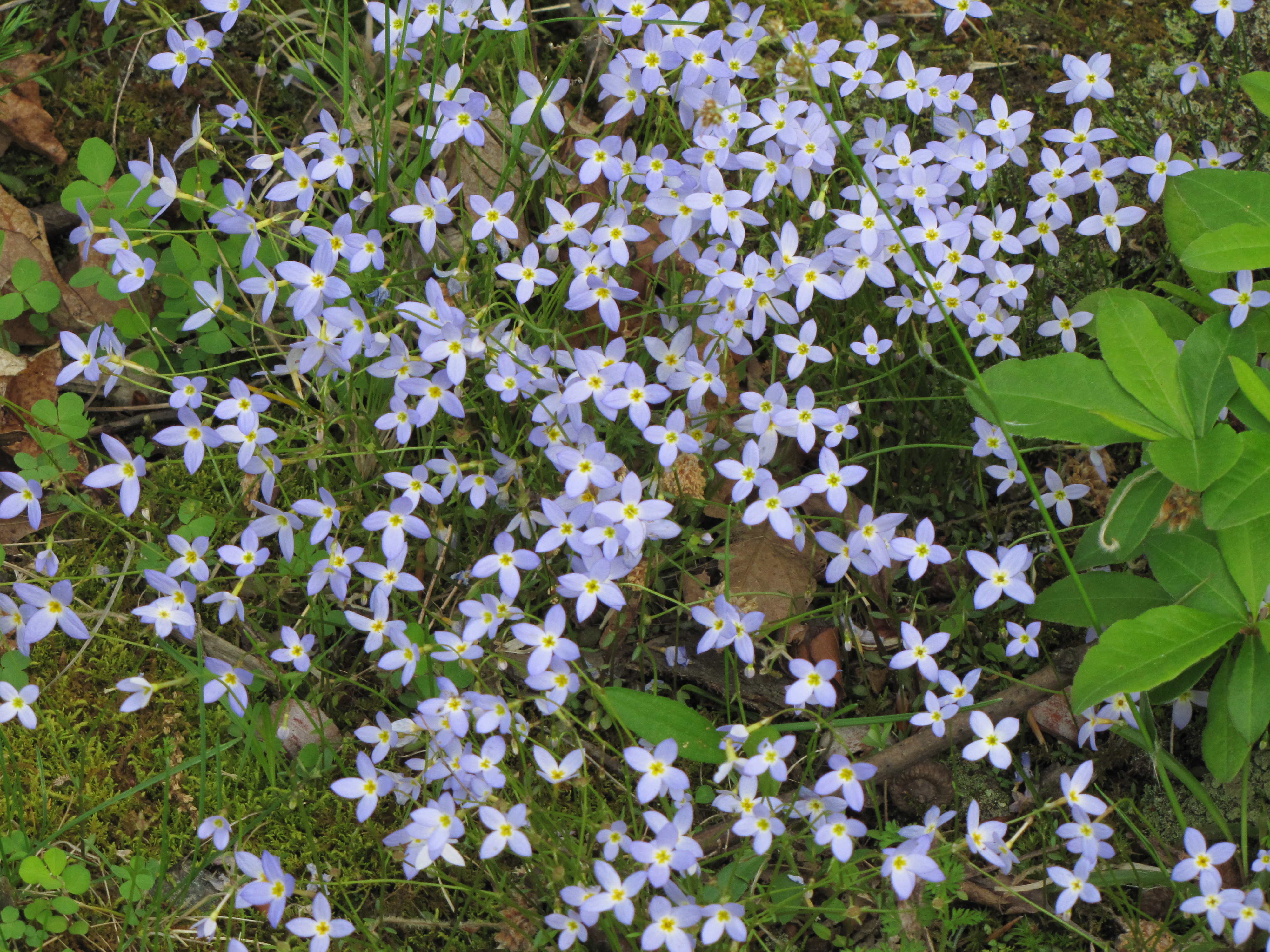
Houstonia caerulea, commonly known as Bluets, Azure Bluets, or Quaker Ladies, is one of eastern North America’s most beloved spring wildflowers. Despite being easy to overlook individually — each plant stands barely 2 to 6 inches tall — Bluets appear in such spectacular numbers in early spring that they transform meadows, forest edges, and lawns into shimmering seas of pale blue. This diminutive member of the Rubiaceae (coffee) family is native across much of the eastern United States and Canada, thriving in the thin, acidic soils of open woodlands, grassy balds, and disturbed roadsides where other plants struggle to compete.
The name “Bluets” refers to the distinctive pale blue to white four-petaled flowers, each barely a quarter-inch across, with a tiny yellow center that acts as a landing pad for visiting pollinators. “Quaker Ladies” is an older folk name, perhaps inspired by the flowers’ delicate modesty. Despite their tiny size, Bluets play an important ecological role as early pollinators — their flowers appear in March and April when few other wildflowers are in bloom, providing critical nectar for newly emerged native bees, small butterflies, and flies. The plant is also a larval host for several moth species in the genus Eupithecia.
Bluets are perennial wildflowers that spread slowly through a combination of seed and vegetative growth, often forming dense colonies over time. They have an unusual reproductive strategy known as heterostyly — plants produce either long-styled (pin) or short-styled (thrum) flowers, a mechanism that promotes cross-pollination between genetically different individuals. This fascinating adaptation, shared with primroses and wood sorrel, makes Bluets not just beautiful but ecologically sophisticated. For native plant gardeners in New England and the Mid-Atlantic, establishing a colony of Bluets in a thin-soiled, semi-shaded spot can provide decades of spectacular early spring color with virtually no maintenance.
Identification
Bluets are tiny, mat-forming perennial herbs with very slender, branching stems that rise 2–6 inches (5–15 cm) from a small basal rosette. The plant grows in colonies from slender rhizomes, often forming dense patches several feet across in favorable conditions. Individual plants are so small that they can be missed when not in bloom, but the spring flowering display — when dozens of plants bloom simultaneously — is unmistakable.
Leaves
The basal leaves are small — only ¼ to ½ inch long — oval to spatula-shaped, and arranged in a flat rosette close to the ground. Stem leaves are even smaller and appear in opposite pairs along the slender flowering stems. All leaves are smooth, hairless or nearly so, bright medium-green above with a single midvein visible. The small leaf size and thin stems give the plant an almost ethereal, delicate appearance.
Flowers
Each flower is borne singly on a slender pedicel and consists of four petals fused at the base into a short tube, then spreading into a flat, cross-shaped bloom about ¼ to ½ inch (6–12 mm) across. The petals range from pale lavender-blue to nearly white, often with subtle veining. The center of each flower bears a small, vivid yellow “eye” of fused stamens and stigma. Flowers are dimorphic: “pin” flowers have a long, protruding stigma with short anthers inside the tube; “thrum” flowers have short stigmas and long, exposed anthers. This heterostylous arrangement promotes cross-pollination.
Fruit & Seeds
After pollination, each flower develops a small, two-lobed capsule about ⅛ inch long containing several tiny, smooth seeds. The capsules split open at maturity to release seeds, which are distributed locally by wind and rain splash. Seeds require a period of cold stratification to germinate, germinating in the following spring after overwintering in the soil.
Quick Facts
| Scientific Name | Houstonia caerulea (syn. Hedyotis caerulea) |
| Family | Rubiaceae (Coffee / Madder) |
| Plant Type | Perennial Herbaceous Wildflower |
| Mature Height | 2–6 in (5–15 cm) |
| Sun Exposure | Full Sun to Part Shade |
| Water Needs | Moderate |
| Bloom Time | March – June |
| Flower Color | Pale blue to white with yellow center |
| Soil Type | Thin, well-drained; sandy or rocky loam; tolerates poor soils |
| Soil pH | 4.5–6.5 (acidic to slightly acidic) |
| Deer Resistant | Yes (generally unpalatable) |
| USDA Hardiness Zones | 4–8 |
Native Range
Bluets are native across eastern North America, with a range extending from Nova Scotia and Quebec south through the Appalachian Mountains to Georgia and Alabama, and west to Ohio, Indiana, and Missouri. The species is particularly abundant in the Mid-Atlantic and New England states, where it is among the earliest and most conspicuous spring wildflowers. In the southern Appalachians, Bluets can be found on mountain balds and grassy summits at elevations exceeding 6,000 feet, often growing in spectacular abundance.
Throughout their range, Bluets favor open to partly shaded habitats with thin, well-drained, acidic soils low in nutrients. They are commonly found in old fields, roadsides, lawns (especially in thin, acidic turf), open rocky outcrops, woodland paths and edges, and mountain meadows. In New England, Bluets are a classic companion of Trailing Arbutus (Epigaea repens), Common Blue Violet (Viola sororia), and early woodland spring ephemerals. The species is notably absent from rich, fertile soils where competition from taller vegetation would overwhelm it.
Bluets are often one of the very first wildflowers to bloom in spring, sometimes appearing even before the last frosts have fully passed. This early emergence is an adaptation to the brief window of high light availability in deciduous forest understories before the tree canopy leafs out. In favorable locations, populations of Bluets can persist for decades with little change, making them excellent indicators of stable, relatively undisturbed natural areas.
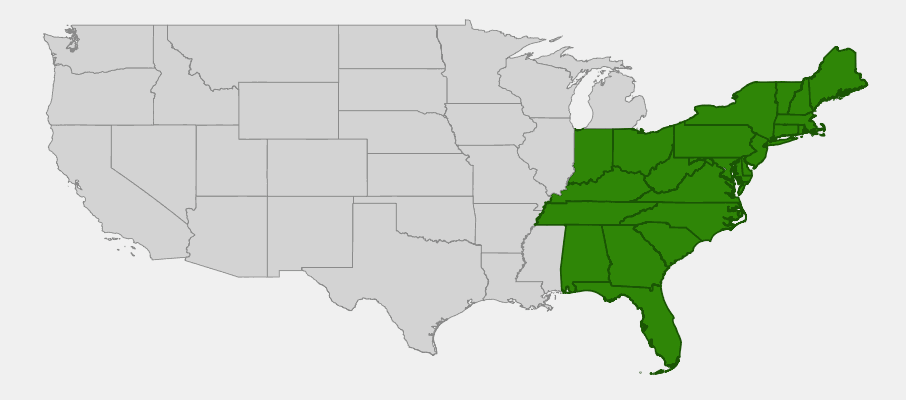
📋 Regional plant lists featuring Bluets: Southeastern U.S.
Growing & Care Guide
Bluets are among the most rewarding native wildflowers to establish — once happy in their spot, they require virtually zero maintenance and will self-sow and spread gently over the years. The key is matching their very specific preference for thin, acidic, well-drained soils. Rich garden soil is actually a disadvantage for Bluets, as it encourages competition from weeds and more aggressive plants.
Light
Bluets thrive in full sun to part shade. They perform best in dappled or morning sun with afternoon shade, especially in the southern part of their range where summer heat can be intense. In New England and the mid-Atlantic, full sun sites with moist-but-not-wet soil work well. In woodland settings, the ideal location is along a sunny path edge or in a forest clearing where they receive at least 4–6 hours of direct sun daily.
Soil & Water
The single most important factor for success with Bluets is soil: they need thin, well-drained, acidic soil (pH 4.5–6.5) that is low in nutrients. They are intolerant of heavy clay soils, compaction, and waterlogging. Sandy loam, rocky soil, or thin turf over gravelly substrate are ideal. In areas with alkaline soil, they will struggle or fail to establish. Amending soil with sulfur to lower pH, or simply choosing naturally acidic sites, makes establishment much more reliable. Once established, Bluets are moderately drought-tolerant; consistent moderate moisture during their brief spring growing season is all they need.
Planting Tips
The best approach is to start with potted plugs from a native plant nursery, planting them in early spring or fall. Space plants 4–6 inches apart and avoid disturbing the soil unnecessarily. Bluets establish slowly the first year as they develop their root system, but reward patience with increasingly robust colonies in subsequent years. They can also be grown from seed: surface-sow on dampened soil in fall and allow natural stratification through winter. Transplanting wild populations is discouraged and often unsuccessful.
Pruning & Maintenance
Bluets require essentially no maintenance. After flowering, allow the seed capsules to ripen and scatter naturally to encourage colony expansion. Avoid mulching immediately around plants, as Bluets need bare or thin-turf soil for seedling establishment. They can be lightly mown after flowering if grown in a lawn situation, but the plants themselves should not be repeatedly mown during the growing season. Fertilizing is counterproductive — it stimulates competitive weeds while providing nothing Bluets need.
Landscape Uses
Bluets are versatile little wildflowers that suit several garden niches:
- Woodland path edges — planted along shaded or dappled paths where foot traffic won’t overwhelm them
- Rock gardens — perfect in crevices and thin-soiled pockets between rocks
- Naturalized lawns — in thin, acidic turf areas where grass is sparse, Bluets can colonize beautifully
- Forest understory — excellent groundcover beneath oaks, hickories, and pines
- Slope stabilization — excellent for rocky slopes with thin, acidic soil
- Spring bulb companions — their bloom period coincides beautifully with early tulips, daffodils, and Scilla
- Pollinator gardens — among the first flowers available for early spring bees and butterflies
Wildlife & Ecological Value
Despite their tiny size, Bluets make an outsized contribution to spring ecology in eastern North American forests and meadows. They are among the earliest flowering plants in their range, blooming before most insects have fully emerged, and their nectar-rich flowers are eagerly sought by early-flying pollinators.
For Pollinators
The small, tubular flowers of Bluets are shaped to accommodate native bees of appropriate tongue length, including small mining bees (Andrena spp.), masked bees (Hylaeus spp.), and sweat bees (Lasioglossum spp.). Their early bloom period — March through May — is critical for early-emerging queen bumblebees and other native bees that need nectar before other flowers are available. The heterostylous flower structure ensures that pollinators carry pollen from one flower type to another, enhancing genetic diversity.
For Butterflies & Moths
Bluets serve as a larval host plant for several moth species in the loopers genus (Eupithecia), particularly the Bluets Pug (Eupithecia absinthiata) and related species. The tiny caterpillars feed on flowers and developing seed capsules, perfectly camouflaged against the plant. Small butterflies including Eastern Tailed-Blue, Spring Azure, and various skippers also nectar on Bluets early in the season.
For Birds
While Bluets are too small to offer significant food resources for birds directly, the insects they support — both pollinators and herbivores — provide food for insectivorous songbirds during the critical spring breeding season. Dense colonies of Bluets also contribute to the diverse herbaceous layer that characterizes healthy woodland ecosystems used by ground-nesting birds.
Ecosystem Role
Bluets are important indicators of ecosystem health in northeastern forests. Their presence signals thin, acidic soils that have not been heavily disturbed or over-fertilized — conditions associated with intact native plant communities. As early successional wildflowers that colonize disturbed rocky or sandy areas, they play a role in stabilizing bare soil and providing early nectar resources after disturbance events such as trail construction, logging, or fire.
Cultural & Historical Uses
Bluets have a rich history of folk and Indigenous use across eastern North America. Several Native American tribes, including the Cherokee and the Iroquois Confederacy, used preparations of Bluets medicinally. The Cherokee used a root tea of Bluets to treat bed-wetting in children — an application recorded in ethnobotanical accounts from the 19th century. The Iroquois reportedly used the plant for similar urinary complaints and as a general tonic. While these uses are not part of modern herbal medicine, they reflect the deep ecological knowledge and medicinal experimentation of Indigenous peoples across the Appalachians.
In 19th-century American culture, Bluets were celebrated in poetry and nature writing as quintessential symbols of spring’s arrival. Henry David Thoreau wrote fondly of Bluets (which he called “Innocents”) in his journals, noting their appearance as a reliable calendar marker for the beginning of spring in Concord, Massachusetts. Thoreau observed that even a single warm day in late March could bring them into bloom, and that their abundance in certain areas was extraordinary — “enough to whiten the hillside,” as he wrote. This tradition of using Bluets as spring phenology markers continued well into the 20th century among amateur naturalists in New England.
The folk name “Quaker Ladies” reflects their demure, modest appearance — the pale, simple four-petaled flowers with their small yellow centers were thought to resemble the plain dress of Quaker women. Another folk name, “Innocents,” speaks to the flower’s delicate, child-like quality. Bluets have also been used as a source of light blue dye by some Indigenous communities, though the color produced is relatively pale. Today, Bluets are celebrated primarily as ornamental native plants and ecological keystones of spring-flowering meadow and woodland communities.
Frequently Asked Questions
Why won’t my Bluets spread?
Bluets are very particular about soil conditions. They need thin, well-drained, acidic soil (pH 4.5–6.5) low in nutrients. If your soil is rich, clay-heavy, or has a higher pH, Bluets will struggle to establish and spread. Try areas with poor, sandy soil or rocky substrate, and avoid amending with compost or fertilizer.
Can Bluets grow in a regular lawn?
Yes, but only in thin, acidic turf that is not heavily fertilized. In many New England and Mid-Atlantic lawns with naturally acidic, sandy soil, Bluets will colonize sparse grass areas on their own if populations exist nearby. Avoid liming and heavy fertilization if you want to encourage them. Mowing should be delayed until after flowering (late May or June) in areas where Bluets grow.
How do I start Bluets from seed?
Surface-sow fresh Bluets seed on moist, acidic potting mix in late summer or fall. Seeds need cold stratification (8–12 weeks of moist cold) to germinate, so outdoor sowing or refrigerator stratification is required. Germination occurs in spring and seedlings are very tiny — keep them moist and in bright indirect light. First flowering usually occurs in the second year.
Are Bluets deer resistant?
Yes, Bluets are generally left alone by deer. Their tiny size and lack of nutritional significance make them unattractive to browsing deer, and their early bloom period often concludes before deer feeding pressure peaks in spring. Rabbits may occasionally nibble young plants, but Bluets are not a preferred food source for most mammalian herbivores.
What is the difference between pin and thrum flowers in Bluets?
Bluets are heterostylous — plants produce either “pin” flowers with long styles (pistils) and short stamens, or “thrum” flowers with short styles and long stamens. This ensures that pollinators carrying pollen from one type deposit it on the stigma of the other type, promoting cross-pollination between genetically different plants. You can observe this difference with a hand lens: pin flowers have the stigma protruding from the flower tube, while thrum flowers show the stamens prominently instead.

Looking for a nursery that carries Bluets?
Browse our native plant nursery directory: Virginia · North Carolina · Georgia