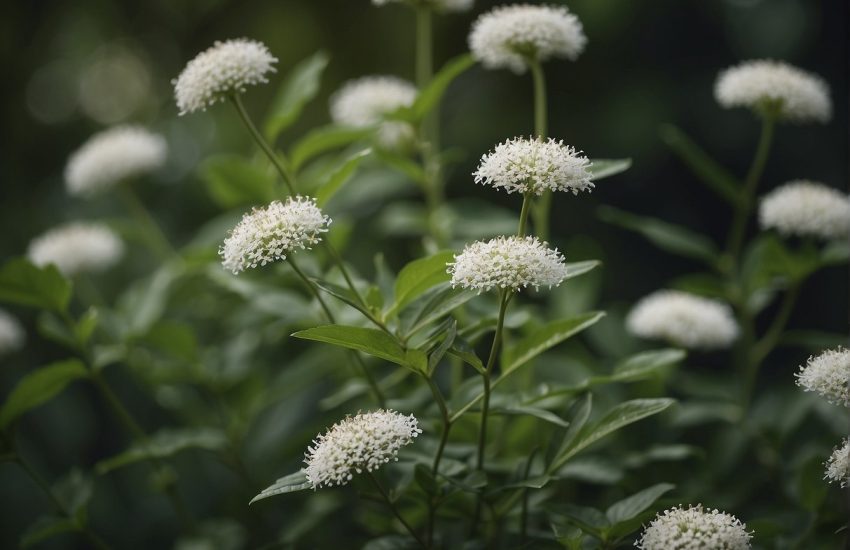
Rice Cut Grass (Leersia oryzoides)
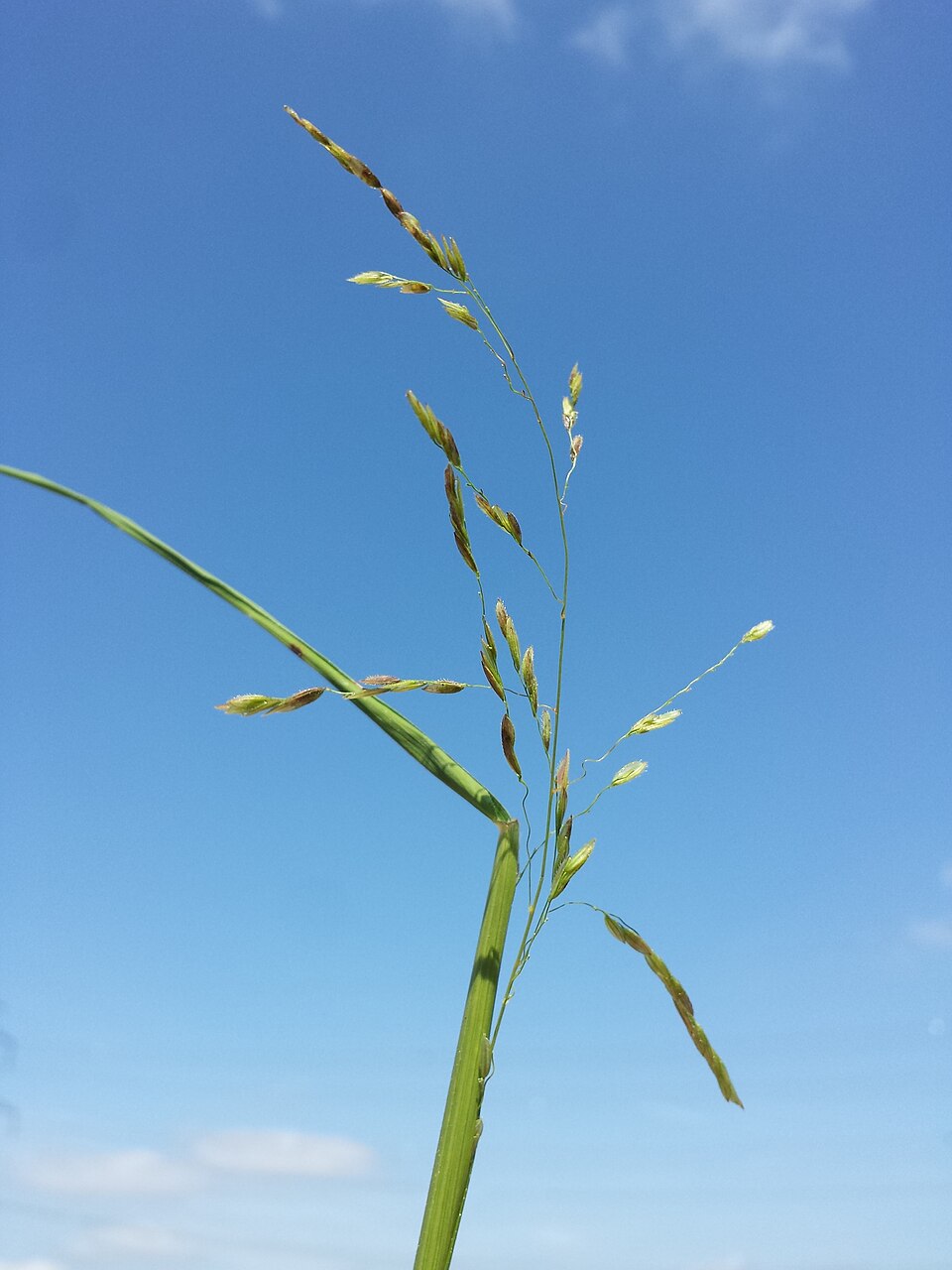
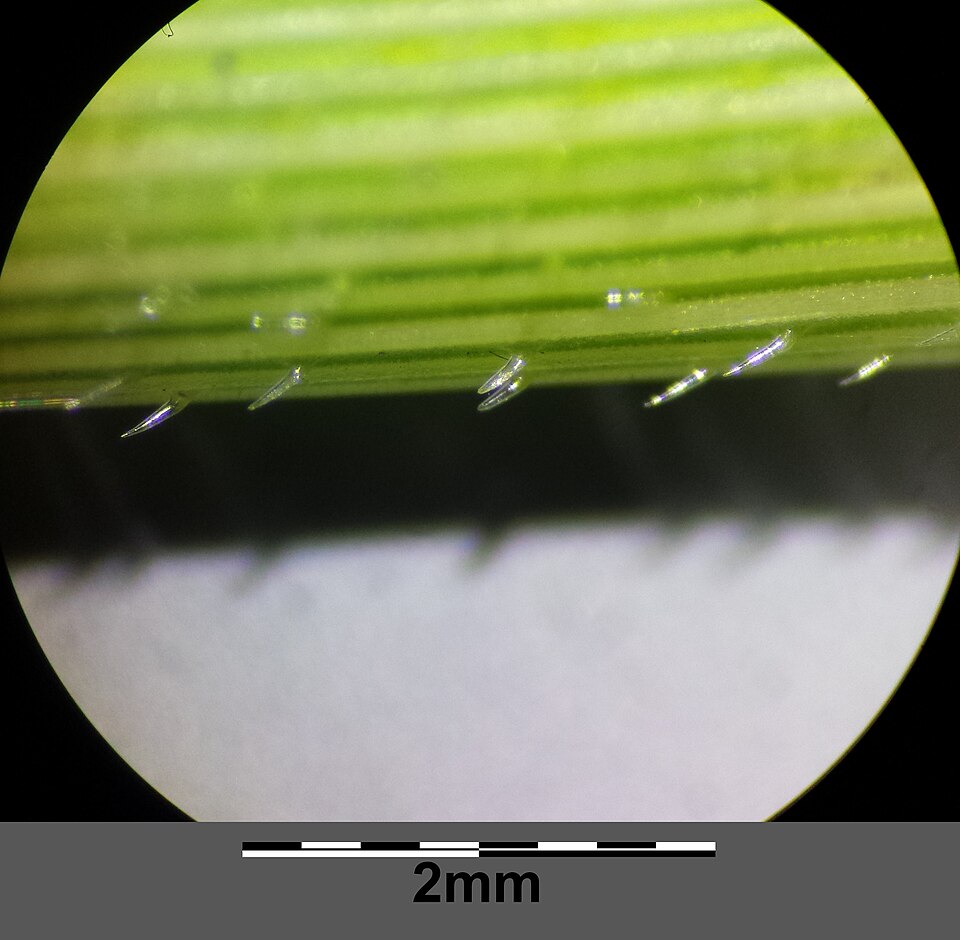
Leersia oryzoides, commonly known as Rice Cut Grass or Rice Cutgrass, is a native perennial grass of freshwater wetlands found across a vast range of North America, from the Atlantic Coast to the Pacific and from southern Canada into Mexico. A member of the Poaceae (grass) family and close relative of cultivated rice (Oryza sativa), Rice Cut Grass is named for two distinctive characteristics: its resemblance to rice plants in flower and seed, and the microscopically tiny, recurved teeth along the edges of its leaf blades that cut the skin of unwary observers who try to pull the blades through their fingers — hence “cut grass.” This cutting ability is a notable botanical feature that makes the plant instantly identifiable once you’ve been nicked by it.
Rice Cut Grass is a creeping perennial with flat, yellow-green leaves that forms dense mats along the margins of streams, rivers, ponds, marshes, and wet ditches across much of the eastern and central United States. It is a characteristic plant of the wetland fringe — colonizing the transition zone between open water and dry land — and its dense, spreading growth provides important habitat structure and food resources for wetland wildlife, particularly waterfowl. In Maryland, Virginia, and West Virginia, it occurs widely in freshwater wetland margins throughout the Coastal Plain, Piedmont, and lower-elevation valleys.
While Rice Cut Grass is not typically planted as a garden ornamental — its growth habit is spreading and somewhat aggressive, and the leaf edges are literally cutting — it is an exceptionally important native grass for wetland restoration, stormwater management, and wildlife habitat creation. Its prolific seed production supports migrating waterfowl, its dense growth provides cover for marsh birds and amphibians, and its extensive rhizome network stabilizes wetland margins against erosion. For naturalistic pond edges and restoration plantings, it is a foundational native species of the freshwater emergent plant community.
Identification
Rice Cut Grass is a robust, spreading perennial grass with a creeping, mat-forming habit. Plants typically stand 2 to 5 feet (60–150 cm) tall, though the stems often sprawl and lean over water before producing upright tips. The overall texture is light and airy, with the fine-textured seed heads nodding gracefully in the wind. Key identification features include: flat, light yellow-green blades with rough, cutting margins; sheaths and blades with distinctive retrorsely scabrous (backward-pointing teeth) texture; and an open, delicate panicle inflorescence resembling miniature rice.
Leaves
The leaves are the most characteristic feature of Rice Cut Grass. The blades are flat, 4 to 10 inches (10–25 cm) long and 6 to 12 mm wide, distinctly yellowish-green (lighter than most other wetland grasses), with a rough to harshly scabrous texture on both surfaces and along the margins. The margins bear minute, recurved teeth that are sharp enough to scratch or cut the skin — run a blade through your fingers against the grain to feel the cutting sensation. The sheaths are also scabrous (rough). The ligule (the membranous structure where the blade meets the sheath) is membranous and relatively prominent — a useful technical identification feature.
Flowers & Seeds
The inflorescence is an open, delicate panicle, 3 to 8 inches (8–20 cm) long, with slender, spreading branches bearing spikelets that strongly resemble small rice grains. Spikelets are flattened, 4 to 6 mm long, with roughened lemmas and paleas. The flowers are often chasmogamous (open-pollinated) on exposed panicles, or cleistogamous (self-pollinated, never opening) on concealed panicles partially enclosed in the leaf sheaths — both types producing viable seed. This dual reproductive strategy ensures prolific seed production under a variety of environmental conditions. Seeds ripen July through October.
Quick Facts
| Scientific Name | Leersia oryzoides |
| Family | Poaceae (Grass) |
| Plant Type | Perennial Grass (emergent/wetland) |
| Mature Height | 2–5 ft |
| Sun Exposure | Full Sun to Part Shade |
| Water Needs | Moderate to High |
| Bloom Time | August – October |
| Leaf Color | Yellow-green (distinctive) |
| USDA Hardiness Zones | 3–9 |
Native Range
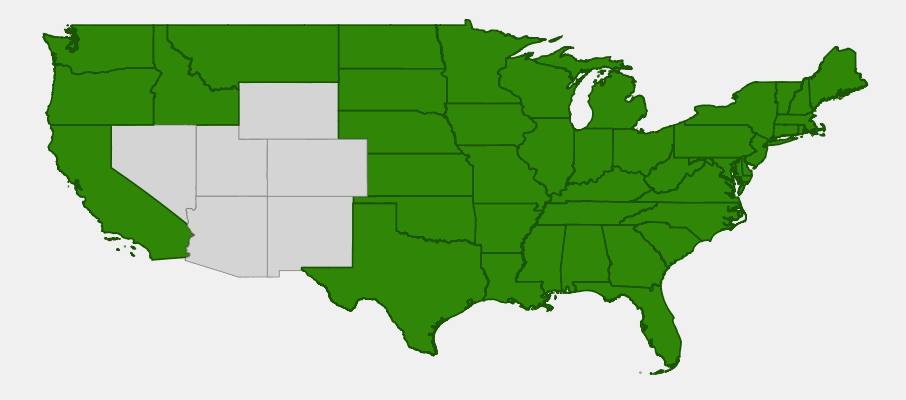
Rice Cut Grass is one of the most geographically widespread native grasses in North America, occurring across nearly the entire continental United States and southern Canada. Its range extends from Nova Scotia and Quebec south through all of the eastern states, west through the Great Plains, and to the Pacific Coast in Oregon and Washington, with isolated populations in California and the Southwest. It is found throughout Maryland, Virginia, and West Virginia in appropriate wetland habitats at all elevations from sea level to about 3,000 feet.
In the Mid-Atlantic region, Rice Cut Grass is a common and characteristic species of freshwater wetland margins, occurring along stream banks, pond edges, tidal freshwater marshes, wet meadows, and seasonally flooded areas throughout the Coastal Plain, Piedmont, and lower Appalachian valleys. It is tolerant of a range of water chemistry conditions, from clear headwater streams to nutrient-enriched agricultural drainages, and is one of the most adaptable native wetland grasses in the region.
Beyond North America, Leersia oryzoides is also native to much of Europe, Asia, and parts of Africa — one of the relatively few grass species with a truly circumboreal distribution. This cosmopolitan range reflects the species’ exceptional ecological adaptability and efficient seed dispersal via waterfowl — a duck that eats Rice Cut Grass seeds in Maryland may deposit viable seeds in a wetland hundreds of miles away during its fall migration.
📋 Regional plant lists featuring Rice Cut Grass: Maryland, Virginia & West Virginia
Growing & Care Guide
Rice Cut Grass is a vigorous, self-sustaining wetland grass that requires little management once established in appropriate conditions. Its primary landscape applications are in ecological restorations and naturalistic pond and stream margin plantings rather than formal garden settings, where its spreading habit may be too aggressive for smaller spaces.
Light
Rice Cut Grass grows in full sun to partial shade. It is most productive and vigorous in full sun, where it produces the most seed and provides the densest cover. However, it is notably tolerant of partial shade — more so than many other native wetland grasses — making it useful for shaded stream edges under overhanging trees or for the partially shaded margins of wooded ponds. In deep shade, it becomes sparse and less productive but will still persist.
Soil & Water
The plant requires consistently moist to wet soil and grows best in standing water up to 12 inches deep. It thrives in the silty, organic-rich soils of natural stream banks and pond margins but is adaptable to a range of soil textures. It is tolerant of fluctuating water levels — thriving in areas that may be dry in midsummer and flooded in winter and spring — which makes it excellent for seasonal wetlands and stormwater retention areas. It tolerates moderate nutrient enrichment, making it useful in constructed wetlands for wastewater treatment and agricultural runoff filtration.
Planting Tips
Plant Rice Cut Grass from potted nursery stock, divisions, or seeds in spring or early summer. Set plants at the water’s edge or in shallow water (up to 6 inches), pressing rhizomes firmly into wet soil. Space 12 to 18 inches apart in restoration plantings; the plant spreads rapidly by rhizome and will fill in quickly. For habitat plantings, it can be used in large masses as a matrix grass alongside other wetland species such as Pickerelweed, Soft Rush, and Blue Flag Iris.
Pruning & Maintenance
Rice Cut Grass requires essentially no maintenance in naturalistic settings. It dies back in winter and re-emerges vigorously in spring. If it spreads beyond desired areas, cut rhizomes at the colony edge with a spade in spring. Wear gloves and long sleeves when working with this plant — the leaf margins are genuinely sharp and can cause many small cuts on exposed skin. There are no significant pest or disease problems.
Landscape Uses
- Wetland restoration — an important component of created and restored freshwater wetland communities
- Pond and stream margin stabilization — dense rhizome mats resist erosion effectively
- Stormwater wetlands — tolerant of fluctuating water levels and nutrient loading
- Constructed treatment wetlands — used in wastewater and agricultural runoff polishing
- Waterfowl habitat — one of the most important native grass seed sources for ducks and marsh birds
- Tidal freshwater marsh restoration — a characteristic species of Chesapeake Bay tidal marsh margins
Wildlife & Ecological Value
Rice Cut Grass is one of the most ecologically important native wetland grasses in eastern North America, providing exceptional wildlife food and habitat value across the entire growing season.
For Birds
The seeds of Rice Cut Grass are among the most important waterfowl foods in the eastern United States. Mallards, Black Ducks, Wood Ducks, Teal (Blue-winged and Green-winged), Pintail, and many other duck species consume the seeds voraciously during fall migration and winter. Rails — Virginia Rail, Sora, King Rail — forage extensively in Rice Cut Grass stands for both seeds and invertebrates. Marsh Wrens, Red-winged Blackbirds, and Swamp Sparrows nest in and around dense stands. The Bobolink — a declining grassland-nesting bird — uses Rice Cut Grass stands as feeding areas during fall migration.
For Mammals
Muskrats consume Rice Cut Grass rhizomes, stems, and seeds throughout the year, and dense stands provide essential muskrat runway and lodge-building material. Beavers may use the stems. Meadow Voles and other small mammals forage in dense stands and use them for cover. White-tailed Deer browse the foliage where it is accessible at dry margins.
For Pollinators
As a wind-pollinated grass, Rice Cut Grass is not a significant nectar source for bees. However, the pollen is available to pollen-collecting bees, and the structural habitat of dense grass stands provides nesting substrate for stem-nesting bees and hunting habitat for predatory wasps and beetles that control insect pest populations in nearby gardens and crops.
Ecosystem Role
Rice Cut Grass plays a critical role in freshwater wetland ecology. Its dense growth intercepts and filters agricultural runoff, capturing nitrogen, phosphorus, and sediment before they reach open water — a natural water quality service of significant economic value in the Chesapeake Bay watershed. The extensive rhizome network stabilizes banks and margins against erosion by water and wave action. Decomposing Rice Cut Grass biomass feeds the aquatic detrital food web, supporting the invertebrate communities that fish, amphibians, and wetland birds depend on.
Cultural & Historical Uses
Rice Cut Grass has a well-documented history of use as waterfowl food — not by humans harvesting the plant deliberately, but through the ecological connection between the plant and the ducks that Indigenous hunters pursued. Indigenous peoples across eastern North America managed wetlands partly by understanding which plant communities supported the most waterfowl, and the association between Rice Cut Grass stands and large numbers of ducks was certainly recognized. Wetland habitats rich in Rice Cut Grass were among the most productive hunting grounds for Indigenous communities throughout the eastern United States.
In the 19th and early 20th centuries, market hunters and sport hunters similarly recognized the value of Rice Cut Grass stands for attracting and holding ducks. Detailed notes on duck food plants in hunting literature of the era invariably included Rice Cut Grass among the top seed-producing grasses. Duck clubs in the Chesapeake Bay region actively managed wetland vegetation to promote Rice Cut Grass and other duck food plants — one of the earliest forms of systematic native wetland habitat management in the United States.
In contemporary wetland restoration science and practice, Rice Cut Grass has become a standard component of freshwater emergent wetland seed mixes and planting palettes. Its rapid establishment, prolific seed production, and exceptional waterfowl value make it a first-choice grass for wetland creation and enhancement projects throughout its range. Research on constructed treatment wetlands has documented its effectiveness in nutrient uptake, making it useful not only for wildlife but for water quality management in agricultural and urban watersheds.
Frequently Asked Questions
Why is it called “cut grass”?
The name comes from the tiny, backward-pointing teeth on the edges and surfaces of the leaf blades that can scratch or cut exposed skin. If you try to pull a leaf blade through your fingers from tip to base (against the grain of the teeth), you will feel the cutting sensation — similar to running your hand along the edge of a very fine serrated blade. Always wear gloves when handling large amounts of the plant.
Is Rice Cut Grass related to cultivated rice?
Yes — Leersia oryzoides is closely related to cultivated rice (Oryza sativa) and wild rice (Zizania aquatica). All are members of the grass family (Poaceae) and tribe Oryzeae. The species name oryzoides means “rice-like” in Latin, referring to the strong resemblance of the seed heads to rice grains.
Can Rice Cut Grass be used in a garden pond?
It can, but it is better suited to naturalistic ponds and restorations than formal water gardens, due to its vigorous spreading habit and the fact that the leaf margins can cut skin. In a naturalistic pond, it provides excellent wildlife value and erosion control. For formal water gardens, better-behaved native wetland plants such as Pickerelweed or Blue Flag Iris may be preferable.
When does Rice Cut Grass produce seeds?
Seeds ripen from August through October. The peak seed availability for waterfowl coincides with the fall migration — September and October — making Rice Cut Grass one of the most important native plants for supporting migrating ducks in the Mid-Atlantic region.
Is Rice Cut Grass native throughout the United States?
Rice Cut Grass is native to most of the contiguous United States, making it one of the most geographically widespread native grasses in North America. It is also native to Europe, Asia, and parts of Africa, making it one of the few native North American plants that is also native on other continents.

Looking for a nursery that carries Rice Cut Grass?
Browse our native plant nursery directory: Maryland · Virginia · West Virginia