Desert Wolfberry (Lycium andersonii)
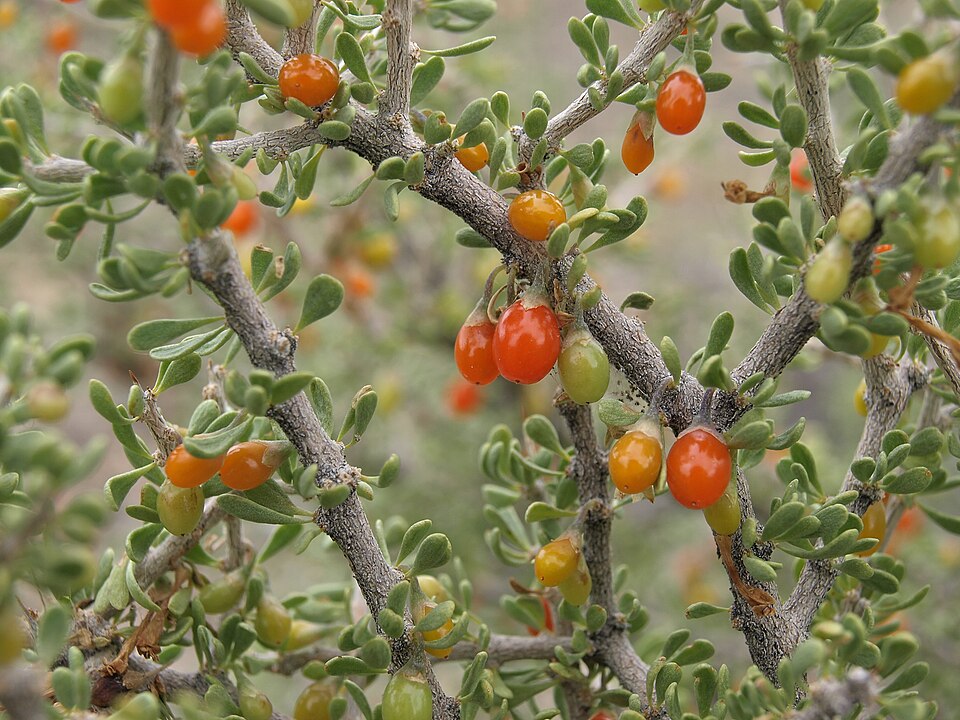
Lycium andersonii, commonly known as Desert Wolfberry or Anderson’s Wolfberry, is one of the most ecologically valuable native shrubs of the Mojave and Sonoran deserts — a spiny, compact shrub that rewards wildlife gardeners with a long season of brilliant red berries that attract birds from miles around. Growing 3 to 6 feet tall and equally wide, Desert Wolfberry forms dense, twiggy, thorny clumps that bloom profusely in late winter and early spring with masses of small, pale lavender to white tubular flowers, then matures an impressive crop of juicy, bright red, grape-like berries through summer and fall.
Native to desert washes, rocky slopes, and alluvial fans throughout the Mojave Desert of California, Nevada, and Utah, and the Sonoran Desert of Arizona and northern Mexico, Desert Wolfberry is supremely adapted to the extreme heat, drought, and alkaline soils of the low desert. Its small, succulent leaves drop during the hottest, driest periods and quickly regrow when moisture is available — a drought-deciduous strategy that allows the plant to minimize water loss while maintaining the capacity to photosynthesize rapidly during favorable growing conditions. The berries, which are closely related to goji berries (from Asian Lycium species), are nutritionally rich and edible, though smaller and more seedy than cultivated goji.
From an ecological standpoint, Desert Wolfberry is a keystone shrub in desert wash communities. Its dense, thorny branches provide safe nesting sites for birds seeking protection from predators, while its abundant berries feed a remarkable diversity of desert wildlife from Cactus Wrens to Coyotes. The early spring flowers are among the first nectar resources available to emerging native bees and hummingbirds after winter, making Desert Wolfberry an important early-season pollinator plant as well as a fruiting plant of exceptional wildlife value.
Identification
Desert Wolfberry is a compact, much-branched, thorny shrub with small, succulent leaves and small, tubular flowers followed by conspicuous red berries. It resembles several other Lycium species but can be identified by its combination of leaf size, flower structure, and geographic range. The genus Lycium comprises about 90 species worldwide, with several occurring in the American Southwest.
Stems & Thorns
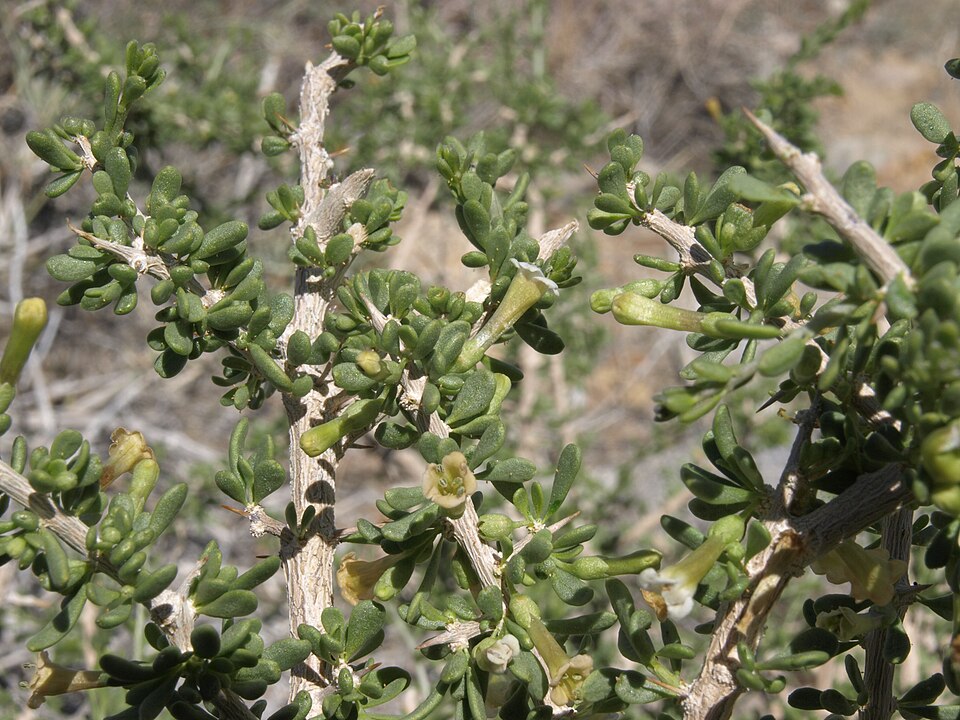
Stems are gray-white to pale gray, stiff, and intricately branched, with many branch tips modified into sharp spines. The spines are slender, 0.5 to 1 inch long, and effective at deterring browsing animals and providing protection for nesting birds. Young stems are slightly succulent and greenish; they become whitish-gray and woody with age. The overall branching pattern is very dense and twiggy, giving the shrub a somewhat broom-like appearance when leafless.
Leaves
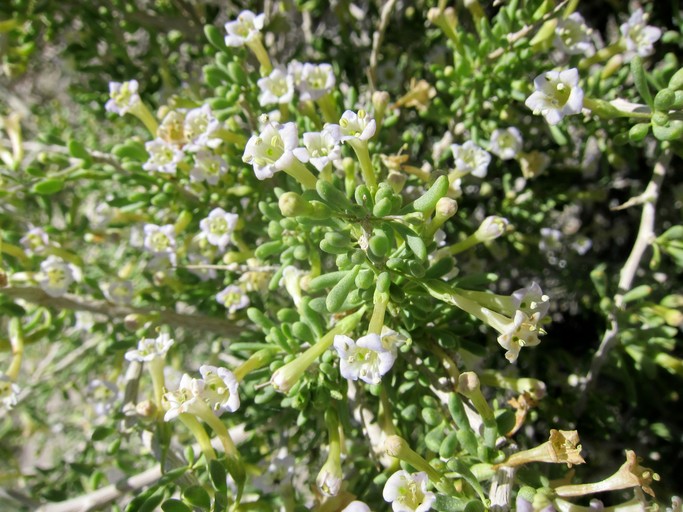
Leaves are very small (0.3 to 0.8 inches long), succulent, oblanceolate (wider toward the tip), bright green, and arranged in small clusters along the stems. They are drought-deciduous, dropping during extended dry periods and quickly regrowing when moisture returns. The succulence of the leaves helps the plant store water during drought periods. Leaves are slightly salty in taste, reflecting the plant’s tolerance for alkaline, sometimes saline desert soils.
Flowers & Fruit
Flowers are produced in leaf axils, 1 to 3 per node, from late winter through spring (January to April). Each flower is tubular, 0.4 to 0.6 inches long, with 4 to 5 lobes that flare outward from the tube. The color is white to pale lavender, often with faint purple veining in the tube. Stamens protrude beyond the floral tube. The flowers produce abundant nectar and are visited by hummingbirds, native bees, and various other pollinators. Following pollination, the plant produces small, oval berries 0.3 to 0.5 inches long that ripen from green to brilliant red through summer and fall. The berries are edible — mildly sweet with several small seeds — and are an exceptionally important food source for desert birds and mammals.
Quick Facts
| Scientific Name | Lycium andersonii |
| Family | Solanaceae (Nightshade) |
| Plant Type | Deciduous to Semi-evergreen Shrub |
| Mature Height | 6 ft |
| Sun Exposure | Full Sun |
| Water Needs | Low (Drought Tolerant) |
| Bloom Time | January – April; sometimes again in fall |
| Flower Color | White to pale lavender |
| USDA Hardiness Zones | 8–11 |
Native Range
Desert Wolfberry (Lycium andersonii) is native to the warm desert regions of the American Southwest, ranging from the Mojave Desert of California, Nevada, and Utah east through southern Arizona and New Mexico, and south into Sonora and Baja California, Mexico. It is one of the most widely distributed native Lycium species in North America, occurring across a broad elevation range from near sea level in the lowest desert basins to about 5,000 feet in desert mountain foothills.
Within its range, Desert Wolfberry occurs in desert washes, rocky bajadas, alluvial fans, dry slopes, and roadsides in communities dominated by Creosote Bush, Brittlebush, Palo Verde, Saguaro, Ironwood, and other classic Sonoran and Mojave Desert plants. It is particularly common in desert wash systems where it often forms dense thickets with Desert Hackberry, Thornbush, and native willows. The plant thrives in the alkaline, calcium-rich soils typical of desert wash and bajada environments.
Desert Wolfberry is among the most drought-tolerant native shrubs in the Sonoran Desert, capable of surviving years with less than 4 inches of rainfall. Despite this extreme drought tolerance, it benefits significantly from the additional moisture available in desert washes and at the base of rocky slopes where occasional runoff concentrates. This flexibility in moisture tolerance allows it to colonize a wide range of desert microhabitats from the driest hillside exposures to the relatively moister wash margins.
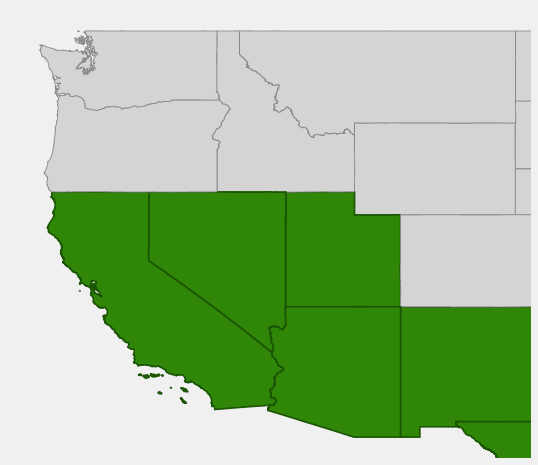
📋 Regional plant lists featuring Desert Wolfberry: Arizona
Growing & Care Guide
Desert Wolfberry is one of the top native shrubs for Arizona wildlife gardens — its early spring flowers and abundant red berries attract an exceptional diversity of birds and pollinators while requiring minimal care. It thrives on neglect once established and is among the most reliable fruiting shrubs for low-water desert gardens.
Light
Desert Wolfberry demands full sun. It is adapted to the intense solar radiation of the Sonoran and Mojave deserts and will not thrive in shade. Choose an open, sunny location with maximum sun exposure. It handles the reflected heat of south- and west-facing walls and paved surfaces without difficulty — conditions that would stress most other plants.
Soil & Water
Plant in any well-drained desert soil — rocky, sandy, gravelly, or loamy. Desert Wolfberry tolerates alkaline and even slightly saline soils better than most plants, making it ideal for the high-pH soils common in Arizona. Once established (after about 1 year), water every 3 to 4 weeks in summer only, or rely on monsoon rainfall (8–12 inches July–September is usually sufficient). Established plants in natural rainfall areas often need no supplemental irrigation at all. The plant is extremely heat tolerant — it actively grows through the hottest summer months when monsoon moisture is available.
Planting Tips
Plant in fall or early spring. Choose a location away from high-traffic areas where the thorns could be problematic. Space plants 5 to 8 feet apart for a wildlife thicket or hedge. Use heavy gloves when handling. Desert Wolfberry grows relatively quickly once established — expect 1 to 2 feet of new growth per year under good conditions. The plant can also be grown from cuttings, and nursery-grown stock establishes readily from containers.
Pruning & Maintenance
Minimal pruning is needed. The natural, open, multi-stemmed form is the most attractive and ecologically valuable. Prune out dead or damaged branches in spring. The plant can be selectively thinned to improve air circulation and reduce the risk of fungal diseases in humid areas. Avoid heavy shearing, which destroys the natural form and reduces berry production. Desert Wolfberry is essentially maintenance-free once established.
Landscape Uses
Desert Wolfberry is effective in multiple landscape settings:
- Wildlife garden anchor — one of the best birds-and-bees native shrubs for the low desert
- Natural hedge or barrier — the thorns create an effective living fence
- Desert wash restoration
- Slope stabilization — deep roots hold desert soils
- Hummingbird garden — a key early-spring nectar plant
- Low-water xeriscape
- Quail habitat — outstanding cover and food for Gambel’s Quail
Wildlife & Ecological Value
Desert Wolfberry is a keystone wildlife plant in the Sonoran and Mojave desert ecosystems, providing early-spring nectar and abundant late-summer fruit that supports dozens of bird and mammal species.
For Birds
The brilliant red berries of Desert Wolfberry are among the most eagerly sought fruits in the desert landscape. Gambel’s Quail, Cactus Wrens, Curve-billed Thrashers, Northern Mockingbirds, American Robins, Cedar Waxwings, and various orioles, flycatchers, and warblers all consume the berries enthusiastically. The early spring flowers provide important nectar for hummingbirds — particularly Costa’s Hummingbird, which is resident in the Sonoran Desert and often visits Desert Wolfberry as a primary nectar source during late winter and early spring. The thorny thicket provides excellent nesting cover for Cactus Wren, House Finch, Verdins, and Black-tailed Gnatcatchers.
For Mammals
Coyotes, Desert Foxes, Ringtail Cats, and various other desert carnivores consume the berries. Jackrabbits and Desert Cottontails browse the leaves and stems. The berries were traditionally eaten by various Indigenous peoples throughout the Sonoran Desert region, and the nutritionally rich fruit is an important food source for desert wildlife throughout the summer and fall. Javelina (Collared Peccary) may root around the base for fallen berries.
For Pollinators
The early spring flowers of Desert Wolfberry are among the first nectar sources available to emerging native bees after winter, making them especially important for early-season pollinators including Andrena ground bees, Mason Bees, and Bumblebees. The tubular flower shape is well-suited to long-tongued native bee species. The abundant nectar production also attracts hoverflies, small wasps, and various other beneficial insects.
Ecosystem Role
In desert wash ecosystems, Desert Wolfberry contributes to the structural complexity that supports high wildlife diversity. Its thorny thickets create protected microhabitats within the otherwise exposed desert, and its early spring blooming bridges the gap between winter dormancy and the summer monsoon growing season when nectar sources are scarce. The plant’s deep root system stabilizes desert wash banks against flash flood erosion, contributing to the long-term ecological stability of these dynamic environments.
Cultural & Historical Uses
Desert Wolfberry berries have been eaten by Indigenous peoples throughout the Sonoran and Mojave desert regions for thousands of years. The Tohono O’odham, Pima, Cahuilla, Chemehuevi, and various other desert peoples collected and ate the berries fresh or dried them for winter use. The berries are nutritionally rich, containing significant levels of vitamins C and A, iron, and antioxidants — properties that have made the closely related Asian goji berry (Lycium spp.) a popular health food in recent decades. The connection between Desert Wolfberry and goji berries reflects the close relationship between the North American and Asian species of this widespread genus.
Medicinally, Desert Wolfberry has been used by various Indigenous groups for treating skin conditions, eye problems, and fevers. Root infusions have been used as a general tonic. The Seri people of coastal Sonora used Desert Wolfberry wood for fuel and the berries as food during desert crossings. Various Pueblo peoples of New Mexico incorporated wolfberry leaves and roots into medicinal preparations for treating urinary problems and as a gynecological medicine. These uses reflect the plant’s widespread recognition as an important resource across the many cultures of the American Southwest and northern Mexico.
In contemporary native plant gardening, Desert Wolfberry has attracted growing interest as a wildlife garden plant, particularly in the Sonoran Desert region of Arizona. Its extraordinary value for birds — combining early-season nectar for hummingbirds and abundant summer/fall berries for songbirds — makes it a top recommendation by birding and wildlife organizations for low-water, wildlife-friendly landscaping. Several native plant nurseries in Arizona now produce Desert Wolfberry for the landscape trade, and it is increasingly featured in municipal and county demonstration gardens showcasing drought-tolerant native plants.
Frequently Asked Questions
Are Desert Wolfberry berries edible?
Yes — Desert Wolfberry berries are edible and have been eaten by Indigenous peoples of the Southwest for thousands of years. They have a mildly sweet flavor similar to cultivated goji berries (a related Asian species). However, they contain several small seeds and the flesh is thin. Leave most of the berries for wildlife, but sampling a few won’t hurt. Do not consume any plant you haven’t positively identified.
Is Desert Wolfberry related to goji berries?
Yes! Desert Wolfberry (Lycium andersonii) is in the same genus as the Asian goji berry (Lycium barbarum and L. chinense). The berries have similar nutritional profiles and appearance, though cultivated goji varieties have been selected for larger berries with more flesh. Desert Wolfberry is the native North American cousin of the commercially cultivated goji berry.
How do I care for Desert Wolfberry?
Desert Wolfberry is extremely low-maintenance. Plant in full sun, well-drained soil. Water occasionally the first year. After establishment, most plants in monsoon-rainfall areas need no supplemental irrigation. The plant is heat-tolerant, drought-tolerant, and essentially pest-free. The only maintenance is occasional removal of dead branches. Wear gloves when pruning due to sharp thorns.
When does Desert Wolfberry bloom?
Desert Wolfberry blooms primarily in late winter to early spring (January through April), depending on winter temperatures and rainfall. In warm, mild winters, blooming can begin as early as January in the low desert. Some plants produce a second, lighter flush of blooms in fall. The early spring bloom timing is especially valuable for emerging pollinators and wintering hummingbirds.
Does Desert Wolfberry attract hummingbirds?
Yes — Desert Wolfberry is an excellent hummingbird plant, particularly for Costa’s Hummingbird which is resident in the Sonoran Desert year-round. The tubular, lavender-white flowers produce good nectar during the January-April bloom period when many other nectar sources are scarce. Anna’s Hummingbirds and Rufous Hummingbirds also visit during migration.

Looking for a nursery that carries Desert Wolfberry?
Browse our native plant nursery directory: Arizona