Wright Buckwheat (Eriogonum wrightii)
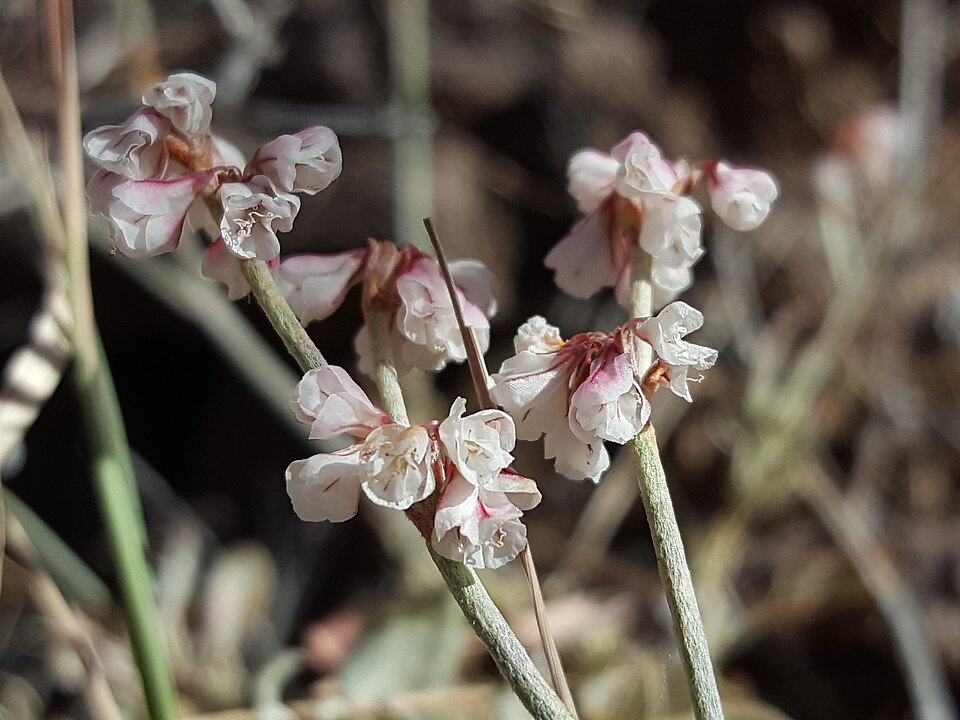
Eriogonum wrightii, commonly known as Wright Buckwheat or Bastardsage, is a charming and ecologically important native perennial subshrub of the desert Southwest that offers an extended season of delicate white to pink flowers from July through October — a critical late-season nectar resource for native pollinators when many other desert plants have finished blooming. Named for the 19th-century botanist Charles Wright, who collected specimens during his explorations of the Chihuahuan Desert borderlands in the 1840s–1850s, Wright Buckwheat forms compact, woody-based mounds of small, white-woolly leaves topped by airy, branching flower stalks covered in clusters of tiny, pale flowers.
Native to rocky desert slopes, mesas, and canyon margins throughout the Chihuahuan Desert and surrounding high desert regions of Arizona, New Mexico, Texas, California, Nevada, Utah, and Colorado, Wright Buckwheat is one of the most widespread members of the enormous and ecologically important genus Eriogonum. Growing just 1 to 1.5 feet tall but spreading 2 to 3 feet wide, it fits perfectly into rock gardens, desert borders, and low-water naturalistic plantings where a low, spreading, long-blooming native plant is needed. Its requirements are minimal: full sun, excellent drainage, and minimal water.
Like other native buckwheats, Wright Buckwheat is extraordinary for pollinator conservation. Native bee specialists in the genus Perdita (tiny sand bees) are oligoleges — collecting pollen exclusively from Eriogonum species. Many other native bee, butterfly, and beneficial insect species also visit the flowers, making Wright Buckwheat a keystone plant for native pollinator habitat restoration across the desert Southwest. The plant blooms from July through October, filling the critical late-monsoon to early-fall nectar gap in the desert garden.
Identification
Wright Buckwheat is a low, spreading, woody-based perennial subshrub with white-woolly foliage and branching flower stalks covered in small clusters of tiny white to pink flowers. It is distinguished from other Arizona buckwheats by its leaf size and shape, its white-tomentose (woolly) leaf undersides, and its habitat and range in the Chihuahuan Desert region. The species is variable and several varieties are recognized across its range.
Habit & Stems
Wright Buckwheat forms a low, spreading mound 1 to 1.5 feet tall and 2 to 3 feet wide. The base is woody and persistent; the branching flower stalks are slender and semi-woody. The leaves are mostly basal (clustered near the woody base), with bare or nearly bare branching stems rising above. The overall appearance is of a neat, compact, silver-gray mound topped by an airy cloud of branching, flower-bearing stems. Old woody stems are grayish; newer growth is white-woolly, giving the plant a silvery appearance. The plant often self-seeds in open ground nearby.
Leaves
Leaves are small, 0.3 to 1 inch long and 0.15 to 0.4 inches wide, elliptic to oblong or spatula-shaped, and distinctively white-woolly to gray-tomentose on the undersurface — a feature that reflects solar radiation and reduces water loss. The upper leaf surface is green to gray-green. Leaf margins are smooth (entire). Leaves are mostly basal or on short, leafy branches at the plant base, becoming progressively smaller on the flower stems. They are evergreen in mild winters, persisting year-round in warm desert locations, which provides the plant’s distinctive woolly-gray ground-level appearance through all seasons.
Flowers & Seeds
Flower stalks are slender and much-branched, rising 6 to 18 inches above the foliage. Individual flower clusters (involucres) are very small, produced at the branch tips and branch forks in loose, open arrangements. Each tiny flower is 6-lobed, white to pale pink on the inside and often white-hairy on the outside. Flowers open progressively from late summer through fall (July to October), providing an extended nectar season. As they mature, the flowers turn increasingly pink, then rust-red to burnt-orange — a characteristic color progression shared with other native buckwheats. The dried, russet-colored seed heads persist through winter, providing food for birds and winter garden interest. Seeds are small achenes enclosed in the dried, papery perianth.
Quick Facts
| Scientific Name | Eriogonum wrightii |
| Family | Polygonaceae (Buckwheat) |
| Plant Type | Evergreen Perennial Subshrub |
| Mature Height | 1.5 ft |
| Sun Exposure | Full Sun |
| Water Needs | Low (Drought Tolerant) |
| Bloom Time | July – October (peak August – September) |
| Flower Color | White to pale pink, aging to russet-red |
| USDA Hardiness Zones | 5–11 |
Native Range
Wright Buckwheat (Eriogonum wrightii) is native to a broad swath of the desert Southwest, ranging from western Texas and southern New Mexico west through Arizona, and north through Nevada, Utah, and Colorado to the eastern edges of California. It is one of the most widespread members of its genus in the interior West, occurring in a variety of dry, rocky habitats across an enormous elevation range from about 2,000 to 8,000 feet. Several botanical varieties are recognized across this range, with slight differences in leaf shape and plant size reflecting local adaptation.
Within Arizona, Wright Buckwheat is found throughout the central and southern portions of the state on rocky slopes, canyon walls, desert grassland margins, and open mesas between approximately 2,500 and 7,000 feet elevation. It is particularly common in the Chihuahuan Desert grassland zone of southeastern Arizona and in rocky desert scrub on the Colorado Plateau of central and northern Arizona. The plant occurs on a wide range of rocky substrate types including limestone, granite, sandstone, and volcanic rock, always requiring excellent drainage and full sun exposure.
The broader Eriogonum genus is considered one of the most ecologically important plant genera in the American West, containing approximately 250 species ranging from annual wildflowers to perennial shrubs. The genus is particularly diverse in the Great Basin, Mojave, and Sonoran deserts, where various species fill key ecological roles as pollinator plants, soil stabilizers, and wildlife food sources. Wright Buckwheat is one of the most widespread and adaptable members of this ecologically crucial genus.
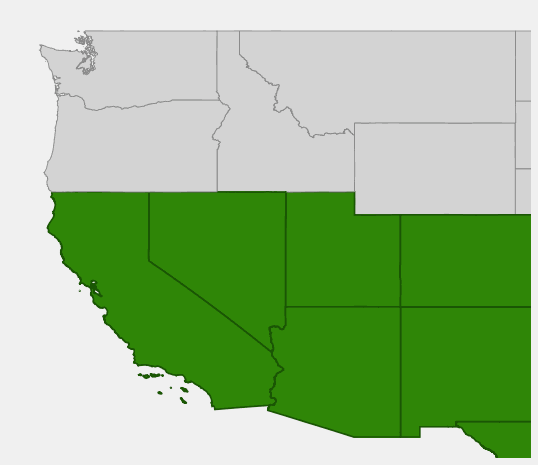
📋 Regional plant lists featuring Wright Buckwheat: Arizona
Growing & Care Guide
Wright Buckwheat is one of the most rewarding and low-maintenance native plants for the Arizona landscape. Its compact size, long bloom season, silvery-gray foliage, and exceptional pollinator value make it an outstanding choice for rock gardens, dry borders, and pollinator-focused native plantings. Plant it and let it be — it thrives on minimal attention.
Light
Full sun is essential for best growth and blooming. Wright Buckwheat is adapted to intense desert sunshine and is not shade-tolerant. In partial shade, the plant becomes sparse and produces fewer flowers. Choose the sunniest location available, including south- and west-facing slopes with intense reflected heat.
Soil & Water
Rocky, sandy, or gravelly soils with excellent drainage are ideal. Wright Buckwheat is one of the most drought-tolerant native plants available — established plants often survive on 10 to 14 inches of annual rainfall without supplemental irrigation. During the establishment period (first growing season), water every 2 to 3 weeks in summer. After establishment, most plants in monsoon rainfall areas need no supplemental water. The plant is very tolerant of alkaline soils and performs well on thin, rocky, native desert substrates. Never plant in clay or poorly drained soils.
Planting Tips
Plant in fall or spring in well-drained, native soil or lightly amended gritty soil. Do not over-enrich the planting site — lean conditions produce the most floriferous plants with the most compact form. A gravel mulch is ideal. Space plants 2.5 to 3 feet apart for a naturalistic grouping. Wright Buckwheat can also be direct-seeded in fall — broadcast seed on bare, well-drained soil and press lightly. Seeds germinate with winter moisture and seedlings grow through spring and summer.
Pruning & Maintenance
Leave the dried, russet-colored flower stems on the plant through winter — they provide bird food and visual interest. In early spring, cut the flower stems back to the foliage mound to encourage fresh, compact regrowth. Do not cut back into the woody base beyond the green foliage zone. Every few years, a harder cutback in late winter can rejuvenate aging plants. Wright Buckwheat self-seeds freely in open ground nearby; seedlings can be left to naturalize or potted up for transplanting.
Landscape Uses
Wright Buckwheat is excellent for:
- Rock gardens and dry stone wall plantings
- Pollinator gardens — one of the best late-season native bee plants
- Low-water borders and xeriscape edges
- Butterfly waystation plants
- Slope erosion control
- Desert grassland restoration plantings
- Companion plant for native cacti, agaves, and desert grasses
- Winter interest from persistent russet seed heads
Wildlife & Ecological Value
Wright Buckwheat is a critical pollinator plant across its broad range in the desert Southwest, providing nectar and pollen through a long late-summer and fall bloom season that fills a vital ecological niche when many other native plants are dormant or finished blooming.
For Native Bees
Like other native buckwheats, Wright Buckwheat is one of the most important native bee plants in the desert Southwest. Specialist bees in the genus Perdita are oligoleges that collect pollen exclusively from Eriogonum species — these tiny, colorful native bees are entirely dependent on buckwheat plants for their larval food supply. Many other native bee genera including Halictus, Lasioglossum, Andrena, and Colletes visit the flowers to collect nectar and pollen. The late-season bloom (July through October) is especially critical, providing abundant resources to bees rearing their final generation of the year and building winter stores.
For Butterflies
Several butterfly species use Eriogonum wrightii as a larval host plant, including various Hairstreaks and the Square-spotted Blue. As a nectar plant, it attracts Painted Ladies, Skippers, Blues, Hairstreaks, and various other late-summer and fall butterfly species. The extended bloom season and accessible flower structure make Wright Buckwheat a dependable butterfly nectar source through the monsoon season and into early fall.
For Birds
The rust-red to brown dried seed heads that persist from fall through winter are eaten by finches (particularly Lesser and American Goldfinches), sparrows, and other seed-eating birds. The low, spreading growth provides cover for ground-nesting and ground-foraging birds. The insects attracted to the flowers during bloom provide food for insectivorous birds including flycatchers, warblers, and gnatcatchers.
Ecosystem Role
Wright Buckwheat, like other Eriogonum species, supports a uniquely specialized community of native insects — particularly specialist bees that cannot survive without access to buckwheat pollen. By maintaining buckwheat populations in the landscape, we maintain the populations of these specialist pollinators, which in turn support the pollination of many other native plant species. The plant’s deep taproot stabilizes rocky desert soils, and its year-round, low evergreen growth provides consistent microhabitat for ground-dwelling invertebrates through all seasons.
Cultural & Historical Uses
Wright Buckwheat is named for Charles Wright (1811–1885), a Connecticut schoolteacher turned botanical explorer who accompanied several U.S. government survey expeditions into the Southwest during the 1840s and 1850s. Wright collected over 2,000 plant specimens in Texas, New Mexico, and Arizona during these expeditions, which were sent to the great Harvard botanist Asa Gray for identification and description. Gray described and named dozens of new species from Wright’s collections, including this buckwheat, cementing Wright’s botanical legacy across the flora of the American Southwest. The historical importance of these early botanical surveys in documenting the extraordinary plant diversity of the region cannot be overstated.
Various Indigenous peoples of the Southwest used native buckwheats (Eriogonum spp.) extensively. The Navajo used buckwheat plants in ceremonial contexts and as medicine for treating headaches, diarrhea, and other ailments. Hopi people used various Eriogonum species in food preparation and medicine. The Cahuilla and other southern California peoples ground buckwheat seeds into flour for flatbreads and mush. While specific ethnobotanical documentation of E. wrightii use is limited compared to some other buckwheat species, the widespread cultural use of the genus across Indigenous peoples of the Southwest suggests that Wright Buckwheat was recognized and utilized by the peoples who lived within its range.
In contemporary native plant gardening and conservation, Wright Buckwheat is increasingly recognized as one of the most important and versatile native plants for pollinator support in the desert Southwest. Conservation organizations including the Xerces Society highlight native buckwheats as priority plants for supporting specialist native bee communities — bees that are not supported by non-native garden plants no matter how abundant. The message that native buckwheats like Wright Buckwheat provide habitat that exotic garden flowers simply cannot replicate has become a central theme in native plant advocacy across the region.
Frequently Asked Questions
How is Wright Buckwheat different from Flat-topped Buckwheat?
Both are native Eriogonum species for Arizona gardens, but they differ in range, habit, and bloom timing. Flat-topped Buckwheat (E. fasciculatum var. poliofolium) is native primarily to lower, hotter desert areas of western Arizona and blooms spring through summer. Wright Buckwheat (E. wrightii) is more characteristic of the Chihuahuan Desert and higher desert grassland zones of southeastern Arizona and blooms late summer through fall (July–October). Both are outstanding pollinator plants with similar care requirements.
Does Wright Buckwheat bloom every year?
Yes — Wright Buckwheat is a perennial that blooms reliably every year from late summer through fall. Unlike agaves that bloom once and die, or some wildflowers that bloom only under specific conditions, Wright Buckwheat puts on a consistent show every season once established. Plants become more floriferous with age as the woody base expands.
How do I care for Wright Buckwheat in winter?
Leave the plant undisturbed through winter. The dried, russet-colored seed stems provide wildlife food and visual interest. In very cold winters (below 10°F), some foliage tip burn may occur, but the plant will resprout from the woody base in spring. Cut back dead growth in early spring to encourage fresh new growth. In warm desert winters, the plant may remain nearly fully evergreen.
Is Wright Buckwheat a good companion plant for agaves?
Yes — Wright Buckwheat and Palmer Agave or other native agaves make excellent companions in the landscape. Both prefer the same full-sun, well-drained, rocky desert conditions. The low, spreading mound of Wright Buckwheat complements the bold, upright form of agave rosettes beautifully, and their bloom seasons are completely different (Wright Buckwheat in fall, agave in summer), providing year-round interest. The pollinator populations supported by Wright Buckwheat also benefit the broader garden ecosystem.
Can I use Wright Buckwheat for erosion control?
Yes — Wright Buckwheat is an excellent choice for erosion control on dry, rocky slopes. Its deep taproot and fibrous lateral roots bind rocky soils effectively, and its spreading low mound provides protective soil cover. It is included in many native seed mixes for desert slope restoration. Direct seeding in fall is the most economical way to establish it for erosion control on large areas.

Looking for a nursery that carries Wright Buckwheat?
Browse our native plant nursery directory: Arizona