Banana Yucca (Yucca baccata)
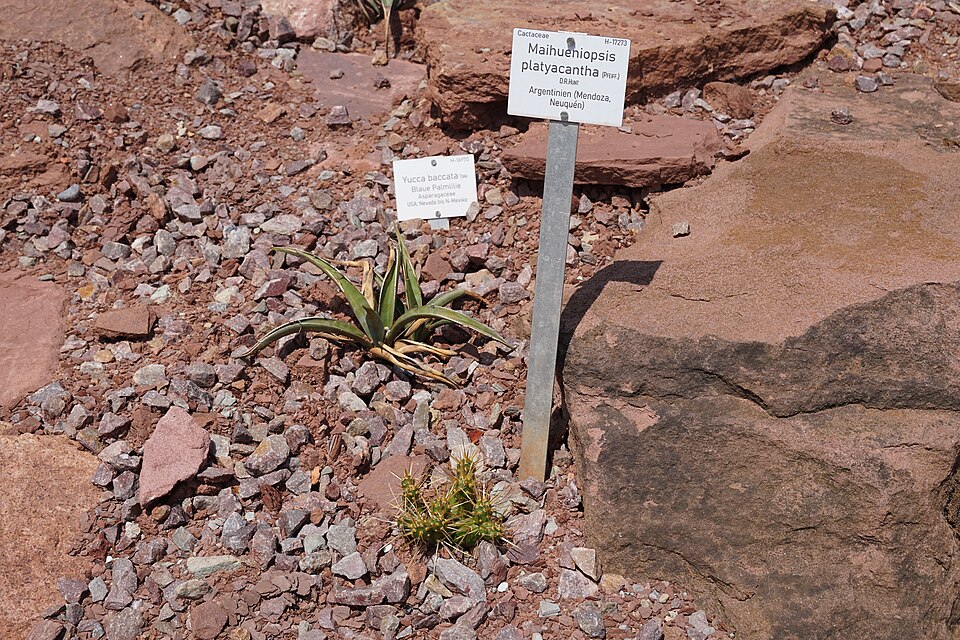
Yucca baccata, commonly called Banana Yucca, Datil Yucca, or Blue Yucca, is one of the most widespread and ecologically important succulent shrubs of the American Southwest. The common name “Banana Yucca” refers to the thick, banana-shaped fleshy fruit pods that hang from the plant after flowering — among the largest and most palatable of any yucca species. This rugged member of the Asparagaceae family thrives across a broad swath of desert and semi-desert terrain, from the Sonoran and Chihuahuan Deserts north into the Great Basin and Colorado Plateau, and from sea level to above 8,000 feet elevation.
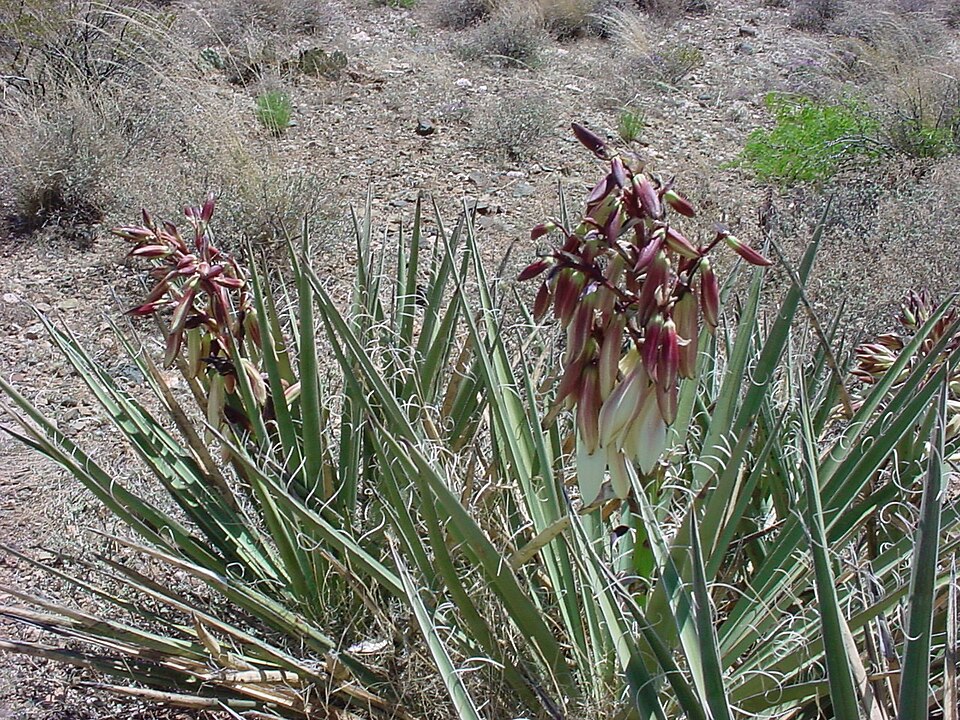
Banana Yucca is truly one of nature’s most self-sufficient plants. Requiring nothing more than full sun and well-drained soil, it endures baking summer heat, punishing drought, and winter cold that would devastate most ornamental plants. Its architectural rosette of bold, blue-green leaves — each tipped with a formidable spine — creates a dramatic silhouette in any landscape. In late spring and early summer, the plant erupts in a stunning floral display: a single tall stalk crowned with large, creamy-white to purple-tinged bell-shaped flowers that attract specialized pollinators in one of nature’s most beautifully co-evolved relationships.
For centuries, Banana Yucca was a cornerstone resource for Indigenous peoples across the Southwest. The large, sweet fruit pods — edible raw, roasted, or dried — were a critical food source. The tough leaf fibers were woven into rope, sandals, baskets, and mats. The roots provided soap. Today, Banana Yucca remains an outstanding choice for xeriscape landscapes, rock gardens, and native desert restorations across Arizona, New Mexico, and neighboring states, providing exceptional wildlife value with minimal maintenance requirements.
Identification
Banana Yucca forms a ground-level or short-trunked rosette typically 2 to 4 feet tall and 3 to 5 feet wide, though in sheltered spots it may develop a short woody trunk over many years. Plants typically grow as solitary rosettes or in small clumps of 2 to 4 stems. The overall appearance is bold, geometric, and unmistakable in the desert landscape.
Leaves
The leaves are the most striking feature: stiff, sword-shaped, blue-green to gray-green, typically 1 to 2 feet long and 1 to 2 inches wide, with fine white fibers along their margins and a sharp terminal spine. The leaf margins are finely toothed and often peel into long, curling, thread-like fibers — a characteristic that distinguishes Banana Yucca from the similar-looking Yucca elata (Soaptree Yucca). The leaves are notably thick, concave on the upper surface, and rigid enough to cause injury. Plants are evergreen, maintaining their rosette year-round.
Flowers
Banana Yucca’s floral display is among the most spectacular of any desert plant. In late spring to early summer (typically May–June), a stout flowering stalk rises from the center of the rosette to 2 to 5 feet tall. The stalk bears dozens of large, nodding, bell-shaped flowers, each 2 to 3 inches long, creamy-white to tinged with purple. The flowers are pollinated almost exclusively by yucca moths (genus Tegeticula) in a remarkably specialized mutualistic relationship: the moth deliberately pollinates the flowers while laying her eggs inside, and the developing seeds provide food for the moth’s larvae.
Fruit
The fruit is Banana Yucca’s most distinctive and valuable feature. Each fertilized flower develops into a large, fleshy, banana-shaped pod 3 to 9 inches long — by far the largest yucca fruit in North America. When ripe (late summer to early fall), the pods turn from green to yellow-green and soften considerably, with a sweet, slightly starchy pulp surrounding numerous flat, shiny black seeds. Unlike most yucca fruits, which are dry and woody, Banana Yucca pods remain fleshy and edible. They are avidly consumed by deer, coyotes, bears, and other wildlife, and were a staple food for numerous Indigenous cultures.
Quick Facts
| Scientific Name | Yucca baccata |
| Family | Asparagaceae |
| Plant Type | Evergreen Succulent Shrub / Rosette |
| Mature Height | 4 ft |
| Sun Exposure | Full Sun |
| Water Needs | Low (Drought Tolerant) |
| Bloom Time | May – June |
| Flower Color | Creamy white, often tinged purple |
| USDA Hardiness Zones | 5–10 |
Native Range
Banana Yucca is one of the most widely distributed yucca species in North America, ranging from the Mojave Desert of California and Nevada east through the Sonoran and Chihuahuan Deserts of Arizona, New Mexico, and Texas, and north into the Great Basin of Utah and Colorado. It is especially common in Arizona and New Mexico, where it occurs across a broad range of elevations from the desert floor to montane woodland zones.
The species is a defining component of the Chihuahuan Desert flora, where it grows alongside Ocotillo, Sotol, Prickly Pear, and Desert Marigold. At higher elevations, it transitions into oak-juniper and pinyon-juniper woodland communities, often forming the understory of these dry woodland zones. Banana Yucca’s wide elevational range — from 1,000 to over 8,500 feet — reflects its exceptional cold tolerance relative to other desert succulents.
Rocky slopes, canyon walls, and bajadas (alluvial fans at the base of desert mountain ranges) are the classic Banana Yucca habitats. The species is frequently encountered along roadsides and in disturbed desert areas, where its drought tolerance and deep root system allow it to persist long after other vegetation has been stripped away. It is also a common component of the Sky Islands — isolated mountain ranges rising from the Sonoran and Chihuahuan Deserts — where it serves as an important food source for wildlife moving between higher and lower elevations.
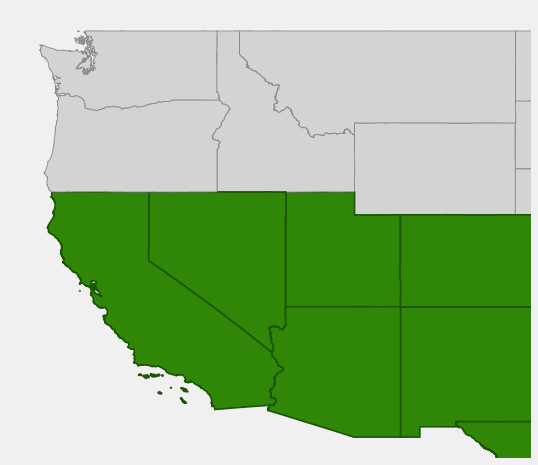
📋 Regional plant lists featuring Banana Yucca: Arizona
Growing & Care Guide
Banana Yucca is one of the easiest and most rewarding native plants for xeriscape gardens throughout the American Southwest. Once established, it is virtually indestructible — tolerating extreme heat, drought, poor soil, and neglect that would kill most landscape plants. The key to success is simply providing sharp drainage and full sun.
Light
Banana Yucca demands full sun — at least 6 to 8 hours of direct sunlight daily. In its native range, it grows on open, south- and west-facing slopes that receive intense sunlight throughout the day. Shade causes the plant to etiolate (elongate unnaturally) and reduces both vigor and flowering. Plant it in the sunniest spot available for best results.
Soil & Water
Excellent drainage is non-negotiable for Banana Yucca. In nature, it grows almost exclusively on rocky slopes, sandy arroyos, and gravelly desert flats where water drains away quickly after rainfall. Heavy clay soils that hold moisture will cause root rot and kill the plant within a season. In garden settings, amend heavy soils with gravel and coarse sand, or plant in raised beds or slopes. Once established (typically after 1–2 years), Banana Yucca is exceptionally drought tolerant — thriving with little to no supplemental irrigation throughout Arizona and New Mexico. During the first establishment season, water once every 1–2 weeks; after that, rainfall alone is typically sufficient in most of the Southwest.
Planting Tips
Plant Banana Yucca in fall or early spring when temperatures are mild. Handle with care — the leaf spines are genuinely dangerous. Choose a permanent location away from foot traffic paths, play areas, and pet areas. Space plants at least 5 to 6 feet apart to allow for their full spread. Mulch with 2–3 inches of gravel or decomposed granite rather than organic mulch, which retains excess moisture. Container-grown plants transplant well; bare-root or collected plants require extra care and may take 2–3 years to fully establish.
Pruning & Maintenance
Banana Yucca requires almost no maintenance once established. Remove spent flower stalks after blooming by cutting them off at the base with loppers (wear gloves and protective clothing). Dead lower leaves may be removed for aesthetics, but the plant naturally sheds them over time. Never cut into the living rosette. In some landscapes, you may wish to remove “pups” (offsets) that develop around the base to control spread — these can be transplanted to new locations in spring.
Landscape Uses
Banana Yucca is a versatile accent plant for Southwestern landscapes:
- Xeriscape anchor plant — dramatic focal point in low-water gardens
- Rock gardens — thrives among boulders and rocky outcrops
- Slope stabilization — deep roots hold soil on steep, dry slopes
- Barrier planting — formidable leaf spines deter intruders and large animals
- Wildlife gardens — flowers, fruit, and leaves provide food and habitat for desert wildlife
- Desert restoration — a keystone species for Chihuahuan and Sonoran Desert revegetation
- Container growing — works in very large containers for patio gardens in colder climates
Wildlife & Ecological Value
Banana Yucca is a keystone plant in Southwestern desert ecosystems, providing irreplaceable food, shelter, and ecological services that support dozens of wildlife species across multiple seasons.
For Birds
The dense rosette of stiff leaves provides secure nesting sites for several bird species, including the Cactus Wren, which builds its bulky dome nest among yucca leaves. The large flowers attract hummingbirds, particularly during spring migration. Woodpeckers and other cavity-nesting birds sometimes excavate nest cavities in the dead, woody stalks of old flowering stems. The fleshy fruit is consumed by a variety of desert birds including Gambel’s Quail and various thrushes.
For Mammals
The large, sweet fruit pods are among the most calorie-rich food sources available in the desert landscape. Mule Deer, Pronghorn, Coyotes, and Black Bears consume the ripe pods in late summer and fall. Javelinas (Collared Peccaries) dig up and eat the roots and base of the plant. The leaves and stalks provide shelter for small desert mammals including kangaroo rats, mice, and lizards, which shelter in the dense leaf litter that accumulates beneath the rosette.
For Pollinators
Banana Yucca has one of the most exquisitely specialized pollination relationships in nature. The yucca moth (Tegeticula spp.) is the plant’s sole pollinator — the only insect capable of and motivated to deliberately transfer pollen between flowers. The female moth collects pollen into a ball and carries it to another flower, where she lays eggs in the ovary and deliberately deposits pollen on the stigma — ensuring her larvae will have seeds to eat while also ensuring the plant’s reproduction. Without the yucca moth, Banana Yucca cannot set seed; without Banana Yucca, the yucca moth cannot reproduce. This obligate mutualism is one of the most celebrated examples of co-evolution in North American ecology.
Ecosystem Role
Beyond its direct role as food and shelter, Banana Yucca plays an important structural role in desert ecosystems. The rosette creates a microhabitat — a sheltered, humid zone at its base where moisture-loving insects, spiders, lizards, and small mammals find refuge from the desert’s extremes. The long-lived leaf litter beneath established plants builds soil organic matter over time, creating a zone of enhanced fertility in otherwise nutrient-poor desert soils. After fire, Banana Yucca resproutes from its deep root crown, helping to stabilize and revegetate burned desert landscapes.
Cultural & Historical Uses
Few plants in the American Southwest are as intimately woven into Indigenous cultural history as Banana Yucca. For thousands of years, it was one of the most important multi-use plants for Native peoples across the Southwest, including the Navajo, Hopi, Apache, Zuni, Tohono O’odham, and many others. The Navajo name for Banana Yucca is “tsá’ászi’,” and it figures prominently in ceremonial and daily life.
The large, fleshy fruit pods were a major food source, eaten raw when ripe, or roasted in earth ovens and dried into “yucca cakes” or “yucca leather” for storage and trade. Dried pods were ground into a flour used to make sweet cakes and porridge. In times of hardship, the roasted flower stalk and the flowers themselves were also eaten. The seeds were ground into meal or used as a coffee substitute when roasted. Because the fruit is one of the most palatable and nutritious of any desert plant, Banana Yucca was actively harvested and may have been semi-cultivated near settlements.
The leaf fibers were among the most valuable plant materials available in the pre-contact Southwest. Strong, flexible, and abundant, yucca fiber was used to make cordage, rope, sandals, mats, baskets, hairbrushes, and paintbrushes. Entire robes and blankets were sometimes made from yucca fiber combined with rabbit fur. The roots contain high concentrations of saponin — a natural soap — and were pounded and worked into lather for washing hair and body, a use still practiced by many traditional communities today. The sharp leaf spines served as awls, needles, and pins, with the attached leaf fiber providing a built-in thread.
Frequently Asked Questions
Can you eat Banana Yucca fruit?
Yes — the ripe fruit pods of Banana Yucca are edible and sweet. They were a major food source for Indigenous peoples throughout the Southwest. Eat them raw when fully ripe and soft, or roast them in coals for a caramel-like sweetness. The flowers are also edible raw or cooked. Note: the raw seeds can cause digestive upset in large quantities.
How often does Banana Yucca bloom?
Banana Yucca typically blooms once per year in late spring to early summer (May–June), but some plants may skip a year between bloom cycles, especially in very dry conditions. Each rosette blooms multiple times over its lifespan, unlike some agave species which die after a single bloom.
Is Banana Yucca deer resistant?
Partially. The sharp leaf spines protect the rosette from most browsing, but Mule Deer and Pronghorn do consume the ripe fruit pods in fall. In areas with high deer pressure, the fruit stalks and emerging flower buds may also be eaten. Overall, established Banana Yucca is largely resistant to deer damage on its foliage.
How do I propagate Banana Yucca?
The easiest method is to dig and transplant “pups” — the small offset rosettes that develop around the base of mature plants. Do this in fall or early spring. Seeds can also be sown in spring in well-drained mix, but germination is slow and irregular without yucca moth pollination. Purchased container plants establish most reliably.
How cold-hardy is Banana Yucca?
Banana Yucca is one of the hardiest southwestern yuccas, tolerating temperatures as low as -10°F to -20°F (-23°C to -29°C) when dormant in dry soil. It is successfully grown in USDA Zones 5–10, making it suitable for gardens well beyond the Sonoran Desert — including Colorado, Utah, Kansas, and even portions of the Great Plains.

Looking for a nursery that carries Banana Yucca?
Browse our native plant nursery directory: Arizona