Parry’s Agave (Agave parryi)
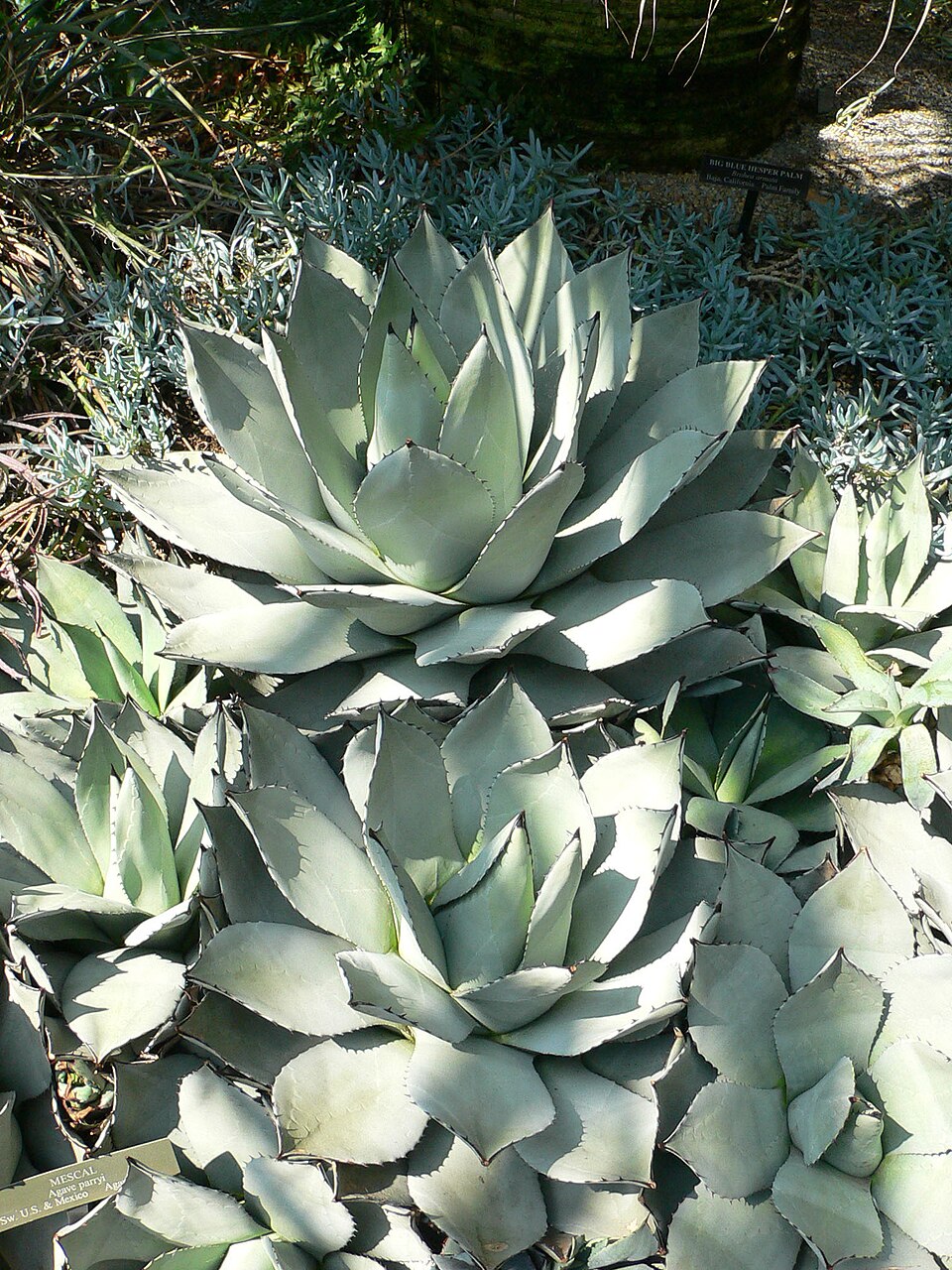
Agave parryi, commonly known as Parry’s Agave, Mescal Agave, or Artichoke Agave, is one of the most celebrated and widely cultivated agave species in North American horticulture. Named for the American botanist Dr. Charles Christopher Parry, who collected it in the 1850s–1870s in the mountains of Arizona and New Mexico, this compact, cold-hardy succulent forms a striking architectural rosette of broad, blue-gray to blue-green leaves, each elegantly tipped with a dark brown to black terminal spine. The batch notes this as “one of the most cold-hardy agave plants” — an important distinction that has made it a landscape favorite far beyond its native desert Southwest range.
Parry’s Agave is native to the montane grasslands, oak woodlands, and rocky slopes of the Sky Islands and Transition Zone mountains of southeastern Arizona, southern New Mexico, and adjacent Sonora and Chihuahua in Mexico, typically growing at elevations of 4,000 to 8,000 feet. Unlike many desert agaves, it experiences regular winter snowfall and hard freezes in its native habitat — a factor that accounts for its exceptional cold hardiness, surviving temperatures as low as 0°F (-18°C) and even lower in some populations. This cold tolerance, combined with its ornamental compact form, has made it one of the most widely planted native plants in the American Southwest.
Like all agaves, Parry’s Agave is monocarpic — it blooms once, spectacularly, and then dies. The flowering stalk can rise 15 to 20 feet above the modest 2-foot rosette, bearing thousands of yellow flowers that attract hummingbirds, bats, native bees, and numerous other pollinators in one of the most dramatic floral displays in the plant kingdom. Before the parent rosette dies, it typically produces numerous offsets (pups) around its base, ensuring the colony’s continuity. The period from seed germination to flowering varies widely — typically 15 to 25 years under good conditions.
Identification
Parry’s Agave forms a compact, nearly spherical rosette 1.5 to 3 feet tall and 2 to 4 feet wide — quite small compared to many agave species. The overall shape has been compared to an artichoke or a large, spiky globe. The symmetry and compactness of the rosette are among its most admired ornamental features, with leaves arranged in precise spiral whorls around the central growing point.
Leaves
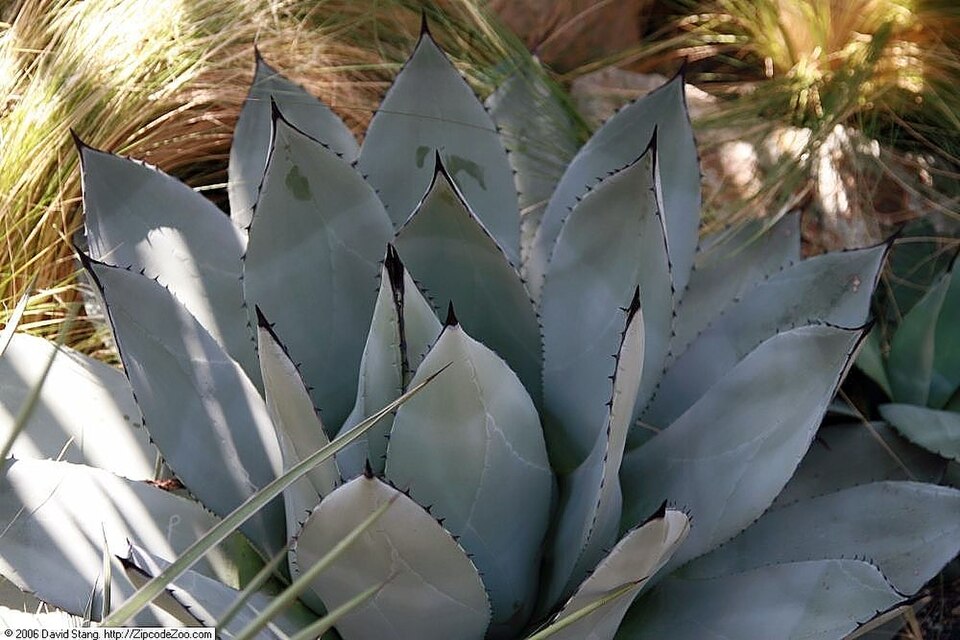
The leaves are broad, thick, rigid, and distinctly glaucous — covered with a powdery blue-gray bloom that gives the plant its characteristic cool color. Each leaf is 12 to 18 inches long and 2 to 4 inches wide, broadest in the middle and tapering toward both the base and the terminal spine. The margins have irregular teeth that are brown to gray in color. The terminal spine is stout, dark brown to black, 1 to 1.5 inches long, and can cause serious injury. A distinctive feature of Parry’s Agave is the “bud imprint” — the compressed terminal spine and marginal teeth of inner leaves leave permanent impression marks on the outer surfaces of adjacent leaves during the formation of the tight bud, creating a beautiful decorative pattern on mature leaves.
Flowers
When Parry’s Agave finally blooms (after 15–25 years), the spectacle is unforgettable. A stout flowering stalk erupts from the center of the rosette and grows rapidly — sometimes several inches per day — eventually reaching 15 to 20 feet. The stalk branches in the upper third, bearing large clusters of yellow, tubular flowers that are rich in nectar. Blooming occurs from May to July, and each flower opens for only a few days. The flowers are pollinated by a combination of hummingbirds (the yellow tubular shape with no landing platform is a classic hummingbird flower), nectar-feeding bats (especially at night), and numerous native bees and butterflies. After the flowers fade, seed capsules develop that provide food for birds and other wildlife.
Quick Facts
| Scientific Name | Agave parryi |
| Family | Asparagaceae |
| Plant Type | Evergreen Succulent Rosette (Monocarpic) |
| Mature Height | 2 ft (rosette); flowering stalk 15–20 ft |
| Sun Exposure | Part Shade |
| Water Needs | Low (Drought Tolerant) |
| Bloom Time | May – July (once in plant’s lifetime) |
| Flower Color | Yellow |
| USDA Hardiness Zones | 5–9 |
Native Range
Parry’s Agave is native to a relatively restricted range in the mountains and plateaus of southeastern Arizona, southern New Mexico, and the adjacent Mexican states of Sonora and Chihuahua. Within this range, it is most abundant on the Sky Island mountain ranges — the isolated mountain complexes including the Huachuca, Santa Rita, Rincon, Pinaleño, Chiricahua, and Catalina Mountains of southeastern Arizona — where it grows on open, rocky slopes and in mountain grasslands and oak woodland understory.
The species typically grows at elevations of 4,000 to 8,000 feet, placing it in a climatic zone that experiences significant winter cold — including freezing temperatures, frost, and occasional snowfall. This high-elevation origin accounts for its exceptional cold hardiness compared to lowland desert agave species. In its native habitat, Parry’s Agave grows in shallow, rocky, well-drained soils, often on south- and west-facing slopes that maximize solar warming during cold months.
Several recognized varieties of Parry’s Agave exist, with var. parryi (the typical form from Arizona and New Mexico) and var. truncata (a stockier, more compact form native to Durango, Mexico) being the most commonly cultivated. The typical variety is native to the Sky Islands and Transition Zone mountains of Arizona and New Mexico, while var. truncata is more compact and arguably even more ornamental, widely available in the horticultural trade.
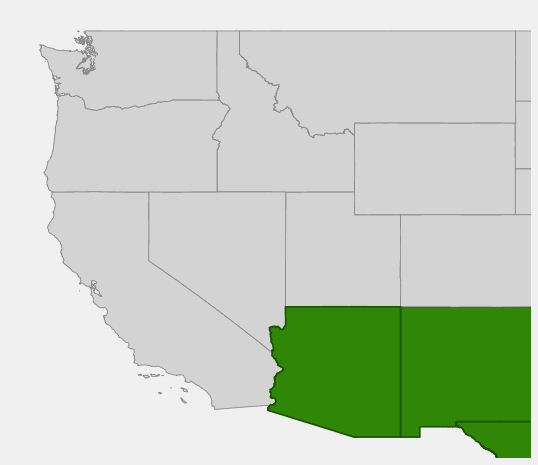
📋 Regional plant lists featuring Parry’s Agave: Arizona
Growing & Care Guide
Parry’s Agave is one of the most rewarding and low-maintenance succulents available for gardens throughout the Southwest and beyond. Its cold hardiness, compact form, and stunning visual impact make it applicable in a far wider range of garden settings than most agave species. The primary care requirements are excellent drainage and full sun to partial shade — once those conditions are met, the plant is essentially self-sufficient.
Light
In the batch data, Parry’s Agave is listed as preferring Part Shade — reflecting its native habitat beneath the canopy of oak trees and on partially shaded mountain slopes. In practice, it grows equally well in full sun (where it develops the most compact, glaucous form) and in significant partial shade (where it grows somewhat larger and may be slightly less glaucous). In areas with hot summers, afternoon shade is beneficial, particularly in the Sonoran Desert lowlands well outside its native elevation range.
Soil & Water
Excellent drainage is non-negotiable. Parry’s Agave is a high-elevation plant accustomed to rocky, fast-draining substrates. Heavy clay soils or waterlogged conditions will cause crown rot within a season. In garden settings, amend soil with generous amounts of coarse gravel and grit, or plant in raised berms or rocky outcrops. Once established, the plant is very drought tolerant — surviving in many Arizona gardens on rainfall alone. During establishment (1–2 years), water every 2–3 weeks in hot weather, then taper off substantially.
Planting Tips
Plant in spring or fall. Handle with extreme caution — the terminal spines are needle-sharp and will puncture skin easily. Wear thick gloves and protective clothing. Avoid planting near walkways, play areas, or areas where pets or children might encounter the sharp spines. Space plants at least 3 to 4 feet apart to allow for full spread. Offsets (pups) that develop around the base can be removed and transplanted to new locations when they reach 4–6 inches in size.
Pruning & Maintenance
Parry’s Agave requires almost no maintenance. Remove dead outer leaves if desired for aesthetics; otherwise they dry naturally and fall away. After the plant blooms and begins to die (a process that takes 1–2 years), the spent rosette can be removed, but the offsets around the base will continue to grow and replace it. The tall flowering stalk can be cut off after seeds have fallen; the dead stalk provides perching posts and insect habitat if left in place.
Landscape Uses
- Bold specimen accent — the most spectacular single-plant statement in xeriscape design
- Rock and crevice gardens — naturally suited to planting among boulders
- Cold-climate succulent gardens — suitable in USDA Zone 5, far beyond most agave species
- Container gardening — works in large containers for patios and rooftop gardens
- Deer-resistant planting — the terminal spines deter browsing
- Wildlife gardens — essential hummingbird and bat flower in the Southwest
- Sky Island restoration — authentic native component of Madrean grassland communities
Wildlife & Ecological Value
Parry’s Agave is a keystone plant for wildlife in the Sky Islands and surrounding mountain ranges, particularly during the brief but spectacular blooming event that provides the largest single pulse of nectar in its community.
For Birds
The yellow tubular flowers of Parry’s Agave are perfectly adapted for hummingbird pollination. Black-chinned Hummingbirds, Broad-tailed Hummingbirds, and Rufous Hummingbirds during migration are regular and enthusiastic visitors. Scott’s Orioles, Hooded Orioles, and House Finches also pierce the base of the flowers for nectar. The tall flowering stalks serve as conspicuous perches for raptors and flycatchers, and the seed capsules provide food for doves and finches.
For Mammals
Lesser Long-nosed Bats and Mexican Long-tongued Bats — both federally listed species — rely heavily on Agave flowers as a nectar corridor during their northward migrations through the Arizona Sky Islands. Parry’s Agave flowers at a critical period for these bats, providing fuel for the migration. White-tailed Deer and Mule Deer occasionally browse the emerging flower stalk in spring. Javelinas consume the heart (piña) of the plant, though the spiny leaves limit their access.
For Pollinators
Beyond hummingbirds and bats, the Parry’s Agave flower spike supports a diverse community of native bees, hawk moths, and butterflies. The scale of a single blooming agave — thousands of flowers over several weeks — creates a significant pollinator resource in the open, often sparse mountain grassland environment. Honey bees and native bumblebees are frequent visitors during daylight hours.
Ecosystem Role
Parry’s Agave plays an important structural role in Sky Island grassland communities. Its compact rosette creates a microhabitat — a sheltered zone of accumulated dead leaves and fibrous material where lizards, small mammals, and numerous invertebrates find protection. The deep root system stabilizes rocky mountain slopes and contributes to soil development over the plant’s long lifespan. As a source of both nectar and food (for bat species), it links the plant community to the wider ecosystem of migratory wildlife that depends on the Arizona Sky Islands.
Cultural & Historical Uses
Agave parryi, like other large agave species, was one of the most important plants in the cultural landscape of southwestern Indigenous peoples. The Apache peoples of Arizona and New Mexico called this plant “mescal” — a term encompassing several agave species used for food — and the roasting of agave hearts was a central cultural and culinary practice for Apache, Mescalero, and neighboring groups. Archaeological evidence of agave roasting pits (called mescal pits or agave roasting pits) has been found throughout the Sky Islands and surrounding ranges, demonstrating thousands of years of intensive use.
The roasting process involved harvesting the entire plant just before or during the flowering stage, when the heart contains maximum stored carbohydrates. The piña (heart) was placed in a large pit lined with heated stones, covered with agave leaves and dirt, and cooked for 1–3 days. The resulting product — sweet, fibrous, and highly caloric — was eaten fresh, dried into cakes for storage, or fermented into an alcoholic beverage. Agave mescal was traded widely among Southwestern peoples and was a significant item in regional economic networks. The cooked agave stalks were also eaten, and the leaf fibers were used for rope, nets, sandals, and other materials.
The Tohono O’odham people had extensive knowledge of Parry’s Agave as well, using the flower stalks as food (roasted before the flowers opened), the leaf fibers for weaving, and the leaf spines as needles. The sap from cut leaves was used medicinally for wound treatment and skin conditions. Modern mezcal production in Mexico uses several agave species including varieties of Agave parryi, and the traditional knowledge of agave use continues to be a living cultural practice in Indigenous communities throughout the Southwest and Mexico.
Frequently Asked Questions
How cold-hardy is Parry’s Agave?
Parry’s Agave is one of the hardiest agave species in the world, tolerating temperatures to 0°F (-18°C) when in dry, well-drained soil. Some populations and cultivars may survive even colder conditions. It is reliably hardy in USDA Zone 5, and is successfully grown outdoors in Colorado, Utah, Kansas, and even parts of the mid-Atlantic region with winter protection. The key to winter survival is dry soil — wet, cold soil causes crown rot even in cold-hardy plants.
Does Parry’s Agave die after blooming?
Yes — like all agaves, Parry’s Agave is monocarpic and dies after its single bloom event, which occurs once after 15–25 years of growth. The parent rosette dies over 1–2 years following bloom, but the plant typically produces multiple offset rosettes (pups) around its base that continue to grow. These pups will eventually bloom in their own time, ensuring the colony’s long-term persistence.
How do I propagate Parry’s Agave?
The easiest method is to remove and replant “pups” (offset rosettes) that develop around mature plants. Do this in spring or fall when temperatures are mild, and allow the cut surface to callous for several days before planting in well-drained medium. Seeds from bloomed plants can also be sown in spring, though seedlings grow very slowly.
Is Parry’s Agave safe around pets and children?
The terminal leaf spines are needle-sharp and can cause serious puncture wounds. Plant Parry’s Agave away from high-traffic areas, play zones, and dog runs. The sap can also cause contact dermatitis in sensitive individuals. If you must work around established plants, wear thick leather gloves and protective clothing, and consider tipping the spines with rubber caps if the plant is near a high-traffic area.
What is the difference between Parry’s Agave and Century Plant?
“Century Plant” is a common name applied to several large agave species, most notably Agave americana. Parry’s Agave is much smaller and more compact (2–3 feet vs. 4–6 feet for Century Plant), with broad blue-gray leaves versus the narrower, yellowish-green leaves of A. americana. Parry’s Agave is far more cold-hardy, native to mountain environments, and has an artichoke-like symmetry that makes it more suitable for most residential landscapes.

Looking for a nursery that carries Parry’s Agave?
Browse our native plant nursery directory: Arizona