Arizona Cottontop (Digitaria californica)
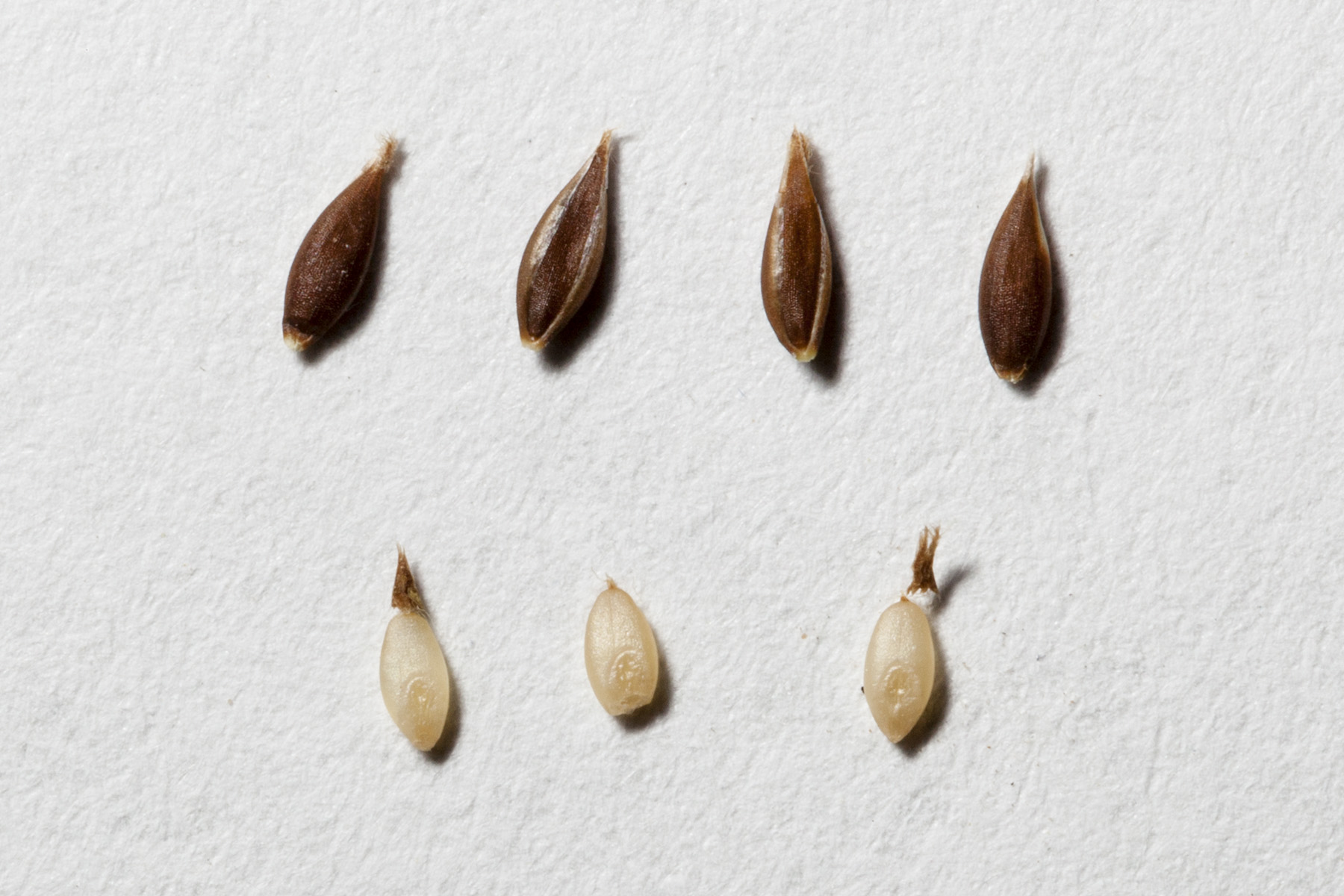
Digitaria californica, known as Arizona Cottontop or Tortoise Grass, is a warm-season perennial bunchgrass native to the desert grasslands and arid open ranges of the American Southwest and northern Mexico. This graceful, clump-forming grass earns its descriptive common names from its distinctive cottony, fluffy seedheads that emerge in late summer and fall, creating a soft, silvery display across open rangeland. The name “Tortoise Grass” reflects its importance as cover and forage in the same habitats favored by desert tortoises.
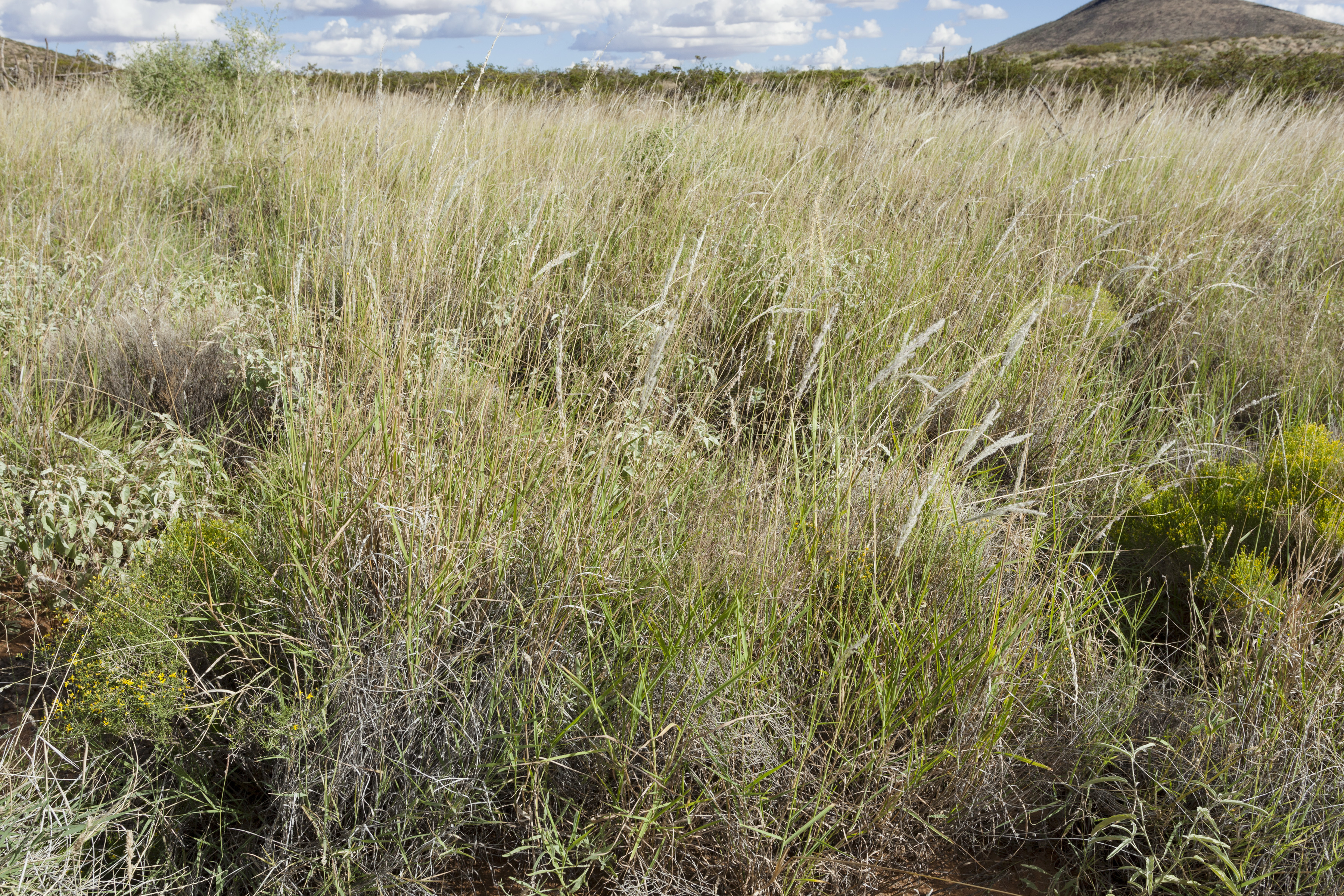
Arizona Cottontop is a highly drought-tolerant grass ideally suited to the challenging conditions of the Sonoran and Chihuahuan desert grasslands. Growing to around 3 feet tall, it forms dense clumps that provide important structural habitat for small animals, ground-nesting birds, and insects. Its deep root system helps stabilize desert soils and prevent erosion on slopes and disturbed sites. This grass is an important component of native desert grassland plant communities, growing alongside sacaton, black grama, and blue grama.
As a native bunchgrass, Arizona Cottontop plays an important ecological role in the desert Southwest. It produces abundant seed that sustains quail, dove, and many songbirds, while its dense clumps shelter lizards, small mammals, and invertebrates. For gardeners and land managers in Arizona and New Mexico seeking low-water, low-maintenance native plantings, Arizona Cottontop is an excellent choice for restoration, wildlife gardens, and naturalistic landscaping.
Identification
Arizona Cottontop is a warm-season perennial bunchgrass forming dense, upright clumps 2 to 3 feet tall and wide. The plant grows vigorously from late spring through fall, going dormant in winter. Its most distinctive feature is the fuzzy, cottony seedhead that appears in late summer and persists well into autumn — giving the plant its characteristic silhouette and common name.
Stems & Growth Form
The stems (culms) are erect and slender, arising from a central clump base. They are often softly hairy (pubescent), especially near the nodes. The overall growth form is distinctly clump-forming or cespitose, with upright stems that arch gracefully under the weight of their seedheads. Plants expand slowly by tillering but do not spread aggressively by rhizomes.
Leaves
The leaf blades are flat, 4–8 inches long and up to ¼ inch wide, soft, and often hairy on both surfaces. They are a medium to grayish-green color that blends naturally with the desert landscape. The leaf sheaths are also hairy. In autumn, the foliage turns golden-tan before winter dormancy, adding warm color to the landscape.
Flowers & Seedheads
The flowers appear in late summer (August–October), emerging as open, loosely branched panicles (flower clusters) 4–6 inches long. As seeds mature, the spikelets develop conspicuous, long, white to silvery hairs that give the seedhead a distinctly cottony, fluffy appearance. These cottony seedheads persist on the plant well into winter, providing excellent winter interest and a continuous food source for seed-eating birds. The cottony texture is what makes this grass so distinctive and recognizable in the field.
Quick Facts
| Scientific Name | Digitaria californica |
| Family | Poaceae (Grass Family) |
| Plant Type | Warm-Season Perennial Bunchgrass |
| Mature Height | 3 ft |
| Sun Exposure | Full Sun |
| Water Needs | Low (Drought Tolerant) |
| Bloom Time | August – October |
| Flower Color | Silvery-white cottony seedheads |
| USDA Hardiness Zones | 7–10 |
Native Range
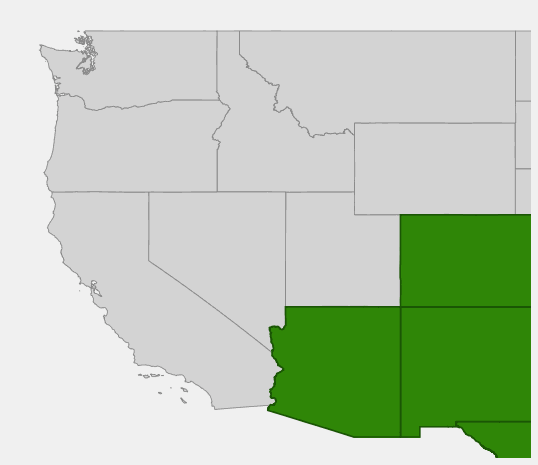
Arizona Cottontop is native to the arid grasslands and desert ranges of the southwestern United States and Mexico, growing across Arizona, New Mexico, Texas, and southern Colorado. It is a characteristic species of the semi-arid grassland transition zones between the Chihuahuan and Sonoran deserts, typically found at elevations from 2,000 to 6,000 feet where summer monsoon rains support warm-season grasses.
In Arizona, this grass is particularly abundant in the southeastern sky island grasslands, the upper Sonoran Desert, and the Mogollon Rim transition zone. It grows in open, well-drained soils that receive 10–18 inches of annual precipitation, most falling as summer monsoon rain. In New Mexico and Texas, it occupies similar grassland habitats on the Chihuahuan Desert grasslands and oak savanna zones. The plant is an important component of black-grama dominated rangeland communities across the region.
Arizona Cottontop is also native to parts of northern Mexico, where it remains an important forage and rangeland grass. The species’ range reflects its adaptation to the unique summer-monsoon climate of the Southwest, where reliable summer rainfall fuels growth during the hottest months of the year — precisely when cool-season grasses are dormant.
📋 Regional plant lists featuring Arizona Cottontop: Arizona
Growing & Care Guide
Arizona Cottontop is a tough, adaptable native grass that thrives with minimal care once established. Its natural drought tolerance and preference for well-drained, even rocky soils make it ideal for low-maintenance desert gardens and restoration plantings throughout the Southwest.
Light
Arizona Cottontop requires full sun for best growth and flowering. It is naturally adapted to open, exposed desert grassland habitats with intense, direct sunlight. Planting in shaded or partially shaded locations will result in weak, floppy growth and poor seedhead production. Choose the sunniest spot in your garden or landscape for this species.
Soil & Water
This grass thrives in rocky, sandy, or gravelly well-drained soils with low fertility — exactly the kind of soil that challenges many other plants. Rich, heavily amended soils can actually reduce its vigor and drought resistance. Water deeply but infrequently during establishment (first season). Once established, supplemental irrigation is rarely needed in areas receiving summer monsoon rains. In hotter, drier locations, occasional summer deep watering mimics the monsoon pattern that fuels natural growth.
Planting Tips
Plant container-grown Arizona Cottontop in late spring or early summer to take advantage of the warm-season growth period. Seeds can be sown in spring after the last frost. Space plants 2–3 feet apart for a naturalistic bunchgrass effect, or plant singly as specimen clumps. Avoid overwatering during establishment — this species is prone to root rot in overly wet conditions. Top-dress with a thin layer of gravel mulch to improve drainage and conserve moisture.
Pruning & Maintenance
Arizona Cottontop requires very little maintenance. Cut back old stems to about 4–6 inches in late winter or early spring before new growth emerges. This encourages fresh growth and prevents the clump from becoming overly dense and thatchy. Do not cut back in fall — the cottony seedheads provide excellent winter interest and important bird food through the cold months. Divide clumps every 3–5 years if they become congested in the center.
Landscape Uses
Arizona Cottontop is excellent for:
- Desert meadow gardens — plant in sweeps with other native grasses and wildflowers
- Wildlife gardens — seeds feed quail, doves, and songbirds; clumps shelter lizards and insects
- Erosion control on slopes, arroyos, and disturbed desert soils
- Dry streambeds and washes — tolerates periodic flooding and flash flooding
- Naturalistic restoration plantings to help revegetate degraded desert grasslands
- Container planting in large desert pots for patios
Wildlife & Ecological Value
Arizona Cottontop is a cornerstone grass species of desert grassland ecosystems, providing year-round food, cover, and habitat structure for a wide range of wildlife.
For Birds
The abundant, persistent seedheads of Arizona Cottontop are a critical food source for seed-eating birds in the desert Southwest. Gambel’s Quail, Mourning Doves, Inca Doves, and numerous sparrows — including Rufous-winged, Grasshopper, and Vesper Sparrows — consume the seeds in large quantities. The dense clumps also provide ground-level nesting cover for Gambel’s Quail and other ground-nesting species. Because the seedheads persist through winter, this grass continues to feed birds long after most other seed sources have been depleted.
For Mammals
Arizona Cottontop provides important forage for pronghorn, deer, and javelina. Desert tortoises — hence the common name “Tortoise Grass” — use the dense clumps as shelter and consume the stems and seeds. Kangaroo rats and other small rodents cache the seeds as winter food stores, while the clumps provide hiding cover for lizards, snakes, and small mammals escaping predators and intense desert heat.
For Pollinators
While grasses are wind-pollinated and do not produce nectar-rich flowers, the dense clumps of Arizona Cottontop provide important shelter and overwintering habitat for many native ground-nesting bees and beneficial insects. The soft, fuzzy seedheads also provide nesting material for some cavity-nesting bee species.
Ecosystem Role
Arizona Cottontop plays a critical soil-stabilization role in desert grassland ecosystems. Its deep, fibrous root system binds sandy and gravelly soils, reducing wind and water erosion. The accumulated leaf litter and organic matter from dead stems improves soil structure over time, creating conditions favorable for soil microorganisms and other desert plants. In degraded desert grasslands, Arizona Cottontop is often one of the first native grasses to reestablish after disturbance, making it valuable in rangeland restoration and revegetation projects.
Cultural & Historical Uses
Arizona Cottontop has long been important to the Indigenous peoples of the desert Southwest, particularly the Tohono O’odham (Papago), Pima, and Apache peoples who inhabited the Sonoran and Chihuahuan desert grasslands. The seeds were traditionally harvested by hand-threshing the cottony seedheads into baskets, then ground into meal or added to stews and porridges. The process was labor-intensive but the grass provided a reliable, storable food source during the lean dry season between monsoons.
Spanish and later Anglo ranchers recognized Arizona Cottontop as one of the most valuable native forage grasses of the desert Southwest. Historical accounts describe vast grasslands dominated by cottontop, sacaton, and black grama stretching across what is now southern Arizona and Sonora, Mexico. Unfortunately, decades of overgrazing, drought, and mesquite encroachment severely reduced cottontop populations across much of its historical range. Today, rangeland managers and restoration ecologists actively work to reestablish Arizona Cottontop as part of native grassland restoration projects throughout the region.
The Tohono O’odham also used bundles of the stems for thatching and basket-making, while the cottony seedheads were reportedly used as fire-starting tinder. The plant’s common name “Tortoise Grass” reflects its co-evolution with the Sonoran Desert Tortoise, a threatened species that depends heavily on native bunchgrasses for both food and shelter. Restoring cottontop populations is now recognized as important for desert tortoise conservation efforts in Arizona.
Frequently Asked Questions
Is Arizona Cottontop the same as California Cottontop?
Yes — the scientific name Digitaria californica refers to both Arizona Cottontop and California Cottontop. Despite the “californica” species name, the grass is primarily associated with Arizona and the desert Southwest. The name reflects the location where it was first formally described by botanists, not its primary range.
How much water does Arizona Cottontop need?
Once established, Arizona Cottontop requires very little supplemental watering — it is truly drought tolerant and adapted to the summer monsoon rainfall pattern of the desert Southwest. Water deeply but infrequently during the first season to encourage deep root development. After establishment, rainfall alone is usually sufficient in most Arizona locations.
When do I cut back Arizona Cottontop?
Cut back to 4–6 inches in late winter or very early spring (February–March in Arizona) before new growth emerges. Do NOT cut back in fall — the cottony seedheads are beautiful winter ornamental features and important bird food.
Is Arizona Cottontop good for preventing erosion?
Yes — its deep, fibrous root system makes it one of the best native grasses for stabilizing sandy, gravelly, and disturbed desert soils. It is widely used in erosion control, roadside revegetation, and desert grassland restoration projects across the Southwest.
Does Arizona Cottontop spread aggressively?
No. Arizona Cottontop is a well-behaved bunchgrass that slowly expands by tillering but does not spread by rhizomes or become invasive. It reseeds naturally but not aggressively in typical garden conditions, making it easy to manage while still allowing natural spread in restoration settings.

Looking for a nursery that carries Arizona Cottontop?
Browse our native plant nursery directory: Arizona