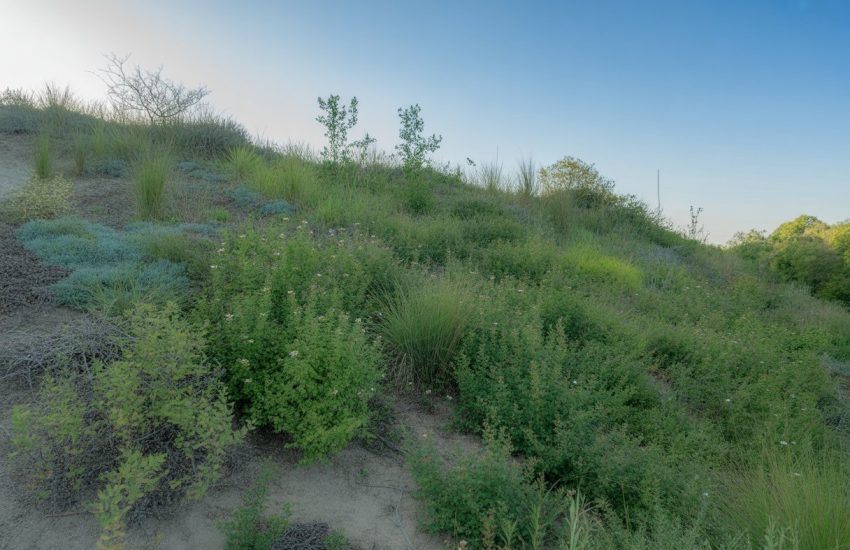
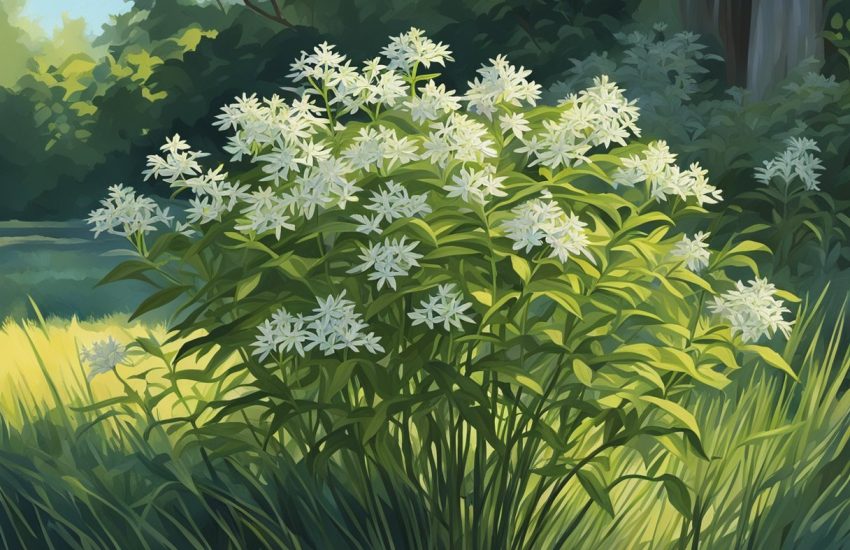
Camphorweed (Heterotheca subaxillaris)
Heterotheca subaxillaris, commonly known as Camphorweed or Camphor Daisy, is a vigorous native annual or biennial wildflower belonging to the Asteraceae (daisy) family. Producing masses of cheerful yellow-orange daisy-like blossoms atop aromatic, camphor-scented stems, this widespread plant is one of the first colonizers of disturbed ground, old fields, roadsides, and sandy soils across a vast range stretching from the desert Southwest east to the Atlantic coast. Despite being considered a “weed” by some, Camphorweed is a true ecological performer — providing critical nectar and pollen resources for pollinators and supporting numerous specialist insects throughout its broad range.
Growing to about 5 feet in height under favorable conditions, Camphorweed produces an impressive display from midsummer through fall, when its golden flowers blanket disturbed and open habitats. The plant earns its common name from the strong camphor-like fragrance released when its sticky, resinous leaves and stems are crushed — a chemical defense that deters many herbivores but attracts specialist insects adapted to exploit it. In the Southwest, it thrives in the full Arizona sun on the leanest, driest soils where other plants struggle to persist.
Camphorweed’s ecological role as a pioneer species makes it particularly valuable in habitat restoration. Its rapid growth, prodigious seed production, and extreme drought tolerance allow it to quickly stabilize bare ground, reduce erosion, and provide an initial layer of vegetation that shelters and nurtures the slower-growing native plants that will eventually replace it. For gardeners seeking a low-maintenance, wildlife-friendly native that thrives in challenging sites, Camphorweed is hard to beat.
Identification
Camphorweed is a multi-branched annual or biennial herb with a distinctive upright-to-sprawling habit and sticky, hairy stems. It can be recognized at a distance by its masses of small yellow composite flowers and its pungent camphor odor when any part of the plant is disturbed. Its overall appearance resembles a smaller, shaggier version of a goldenrod or golden aster.
Stems & Leaves
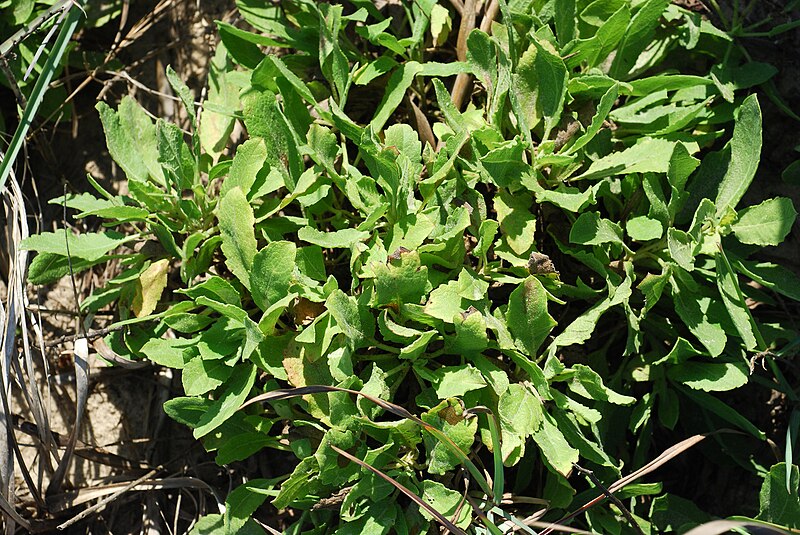
The stems are erect, branching extensively from the base, and reach 2 to 5 feet tall. Both stems and leaves are densely covered with sticky, gland-tipped hairs (glandular pubescence) that give the plant a resinous feel and produce the characteristic camphor scent. The basal leaves are oblong to spatula-shaped, 1 to 3 inches long, with wavy or shallowly toothed margins. Upper stem leaves are smaller, clasping the stem with ear-like lobes (auriculate-clasping) — a key identification feature distinguishing Heterotheca subaxillaris from similar species. Leaves are bright green on the upper surface and paler below.
Flowers & Seeds
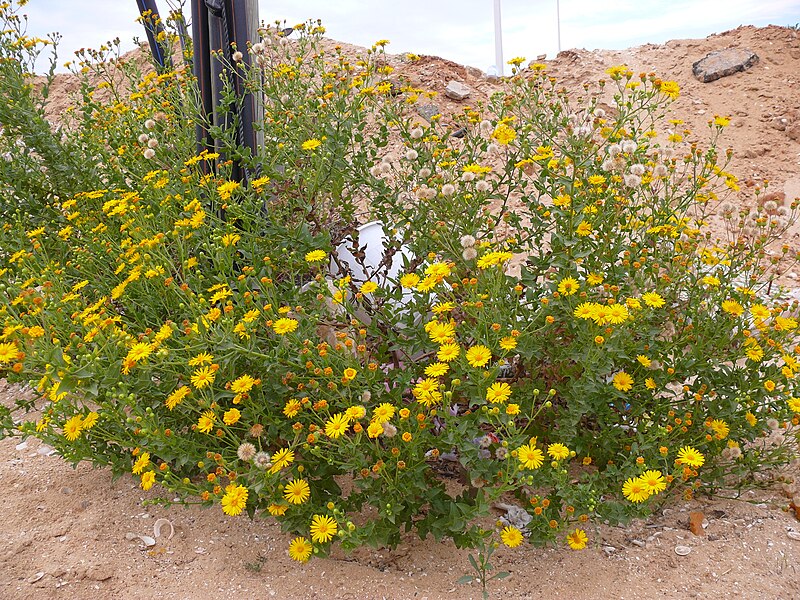
The flower heads are typical of the Asteraceae family: each composite head consists of 15–30 bright yellow ray florets surrounding a central disc of yellow to orange-yellow disc florets. Individual heads are 1 to 1.5 inches in diameter and appear in branching clusters at stem tips and leaf axils from July through October and sometimes into November. The two seed types produced — achenes from ray and disc florets — differ in their pappus structure, a botanical curiosity unique to Heterotheca and related genera. Seeds are wind-dispersed with a feathery pappus.
Quick Facts
| Scientific Name | Heterotheca subaxillaris |
| Family | Asteraceae (Daisy / Sunflower) |
| Plant Type | Annual or Biennial Herb |
| Mature Height | 5 ft |
| Sun Exposure | Full Sun |
| Water Needs | Low (Drought Tolerant) |
| Bloom Time | July – October |
| Flower Color | Yellow to yellow-orange |
| Notes | Yellow/orange blossoms. Grows well in disturbed areas. Reseeds freely. |
| USDA Hardiness Zones | 5–10 |
Native Range
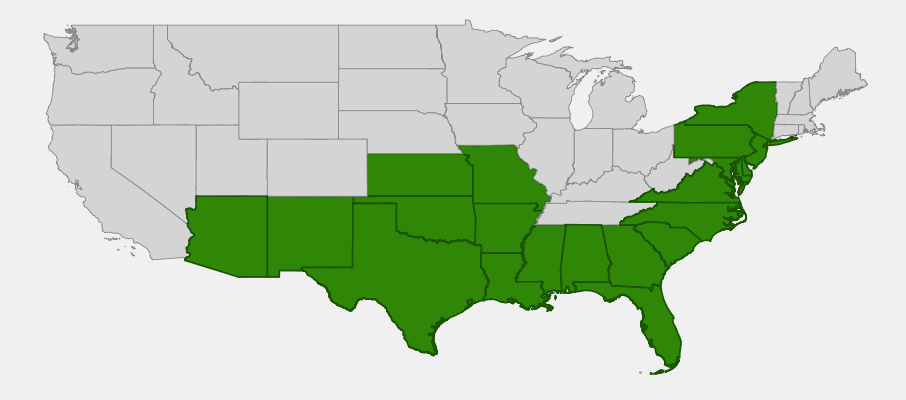
Camphorweed has one of the broadest native ranges of any Southwestern wildflower, spanning from the deserts of Arizona and New Mexico eastward across the Great Plains and the entire Southeast United States to the Atlantic coast. It is found in virtually every state east of and including Arizona, reaching its northern limits around the Great Lakes and New England. This remarkable range reflects the plant’s extreme ecological flexibility and its affinity for open, disturbed, and often sandy habitats that are abundant across this vast geographic area.
In the Southwest, Camphorweed is most abundant in the Sonoran and Chihuahuan desert regions of Arizona and New Mexico, where it commonly colonizes roadsides, washes, overgrazed pastures, abandoned agricultural land, and other disturbed sites. It is equally at home on sandy coastal dunes in Florida, old-field habitats in the Carolinas, and prairie remnants in Kansas — a testament to its adaptability. Camphorweed is generally absent from arid cold-desert regions of the Great Basin and the highest mountain elevations.
The plant typically grows as an annual in the northern parts of its range, completing its entire life cycle in a single growing season. In warmer areas like southern Arizona and Texas, it often behaves as a biennial, surviving mild winters as a rosette before bolting and flowering in its second year. This life history flexibility is another key to the species’ broad distribution success.
📋 Regional plant lists featuring Camphorweed: Arizona
Growing & Care Guide
Camphorweed is one of the easiest native plants to establish — perhaps too easy, as it may self-sow aggressively in favorable conditions. Its primary role in the garden is as a fast-cover pioneer plant, and understanding this role helps set appropriate expectations for where and how to use it.
Light
Full sun is essential. Camphorweed grows leggy and flowers poorly in shade. In the Southwest, it thrives in the intense summer sunshine that would challenge many plants, making it ideal for south-facing exposures, reflective heat pockets, and open desert garden areas. Give it the hottest, sunniest spot you have.
Soil & Water
Camphorweed is superbly drought-tolerant once established, requiring only natural rainfall in most parts of its native range. It strongly prefers well-drained, even sandy or gravelly soils — the poor, disturbed ground where it naturally occurs. Rich, moist soils promote excessive growth and floppiness without improving flowering. In Arizona, established plants typically need no supplemental irrigation once the monsoon season begins.
Planting Tips
Direct seeding is the easiest establishment method. Scatter seeds on the soil surface in fall or early spring — just press them lightly into the soil without covering deeply. Seeds germinate readily after rain or irrigation. Container transplants work well if planted early enough to establish before summer heat peaks. Camphorweed resents root disturbance, so handle transplants gently. Space plants 18–24 inches apart to allow full development.
Pruning & Maintenance
Camphorweed requires virtually no maintenance. Deadheading (removing spent flowers) will reduce self-seeding if desired. However, in a wildlife garden, leaving the seed heads provides food for goldfinches and other seed-eating birds throughout winter. Cut plants back hard in early spring to encourage fresh, compact growth. As an annual or biennial, individual plants die after flowering and setting seed — but self-sown progeny will ensure continuous coverage.
Landscape Uses
- Disturbed area reclamation — ideal for revegetating bare soil quickly
- Roadside and slope planting — tolerates compacted, poor soils
- Pollinator garden — profuse late-season blooms fill a critical nectar gap
- Dry meadow or prairie mix — adds height and color to wildflower plantings
- Nurse plant — shelters slower-growing native perennials during establishment
Wildlife & Ecological Value
Camphorweed provides exceptional ecological services, particularly for pollinators during the important late-summer and fall bloom season when other native plants are winding down.
For Birds
The small achene seeds of Camphorweed are consumed by goldfinches, sparrows, and other seed-eating birds during fall and winter. The plant’s dense, sticky foliage can trap small insects that become food for foraging warblers and other insectivores during migration. The robust plant structure also provides cover and nesting material for ground-nesting birds in open habitats.
For Mammals
The camphor compounds in Camphorweed’s foliage deter most mammalian herbivores, making this plant naturally deer-resistant. However, small mammals such as mice and ground squirrels harvest the seeds as winter food stores. Rabbits will sometimes browse young plants in early spring before resinous compounds fully develop.
For Pollinators
Camphorweed is a pollinator powerhouse. Its late-season flowers (July–October) provide critical nectar and pollen when most other plants have finished blooming and pollinators are building winter food stores. It supports numerous native bee species including mining bees, sweat bees, and specialist Heterotheca bees. Monarch butterflies, painted ladies, sulfurs, and skippers all nectar heavily on Camphorweed during their fall migrations through the Southwest.
Ecosystem Role
As a pioneer species, Camphorweed is ecologically valuable precisely because of its “weedy” nature. It rapidly colonizes bare, disturbed ground — preventing erosion, building organic matter, and creating conditions that favor the eventual establishment of longer-lived native plants. Its abundant biomass decomposes to enrich depleted soils, and its root activity loosens compacted ground, improving water infiltration.
Cultural & Historical Uses
Camphorweed has been used medicinally by various Indigenous peoples throughout its range. In the Southwest, several tribes used the aromatic leaves as an insect repellent — placing them in clothing storage areas to deter moths and beetles, much as commercial camphor has long been used. The strong scent was also employed ceremonially and as a smudge in some traditions. Cherokee people used the plant to treat colds and as a general tonic, taking advantage of the plant’s aromatic oils which have documented antimicrobial properties.
Early European American settlers in the Southeast used Camphorweed as a home remedy, applying poultices of crushed leaves to skin irritations and minor wounds. The camphor-like compounds in the plant have genuine antiseptic properties, lending some scientific validity to these traditional uses. Herbalists in the 19th century documented its use as an expectorant and bronchial treatment, though these applications are no longer in clinical use today.
In more recent times, ecologists and land managers have come to appreciate Camphorweed’s role in the restoration of degraded habitats. Its ability to rapidly colonize and stabilize bare ground makes it a valuable component of seed mixes used for mine reclamation, highway revegetation, and post-fire recovery in the southeastern United States. What was once dismissed as a common weed is now understood as an important player in ecosystem recovery dynamics across a remarkable swath of North American landscape.
Frequently Asked Questions
Is Camphorweed a weed or a native plant?
Camphorweed is a true native plant across most of its range in the United States, including Arizona and the Southeast. While it often grows in disturbed, weedy habitats, it provides important ecological services as a pollinator plant and soil stabilizer. Its “weedy” behavior is a natural adaptation that makes it ecologically valuable in habitat restoration.
Why does Camphorweed smell like camphor?
The camphor-like scent comes from volatile aromatic compounds (terpenes and sesquiterpenes) produced in glandular hairs on the leaves and stems. These compounds deter many herbivores and may have antimicrobial properties that protect the plant from pathogens. The scent is released when the plant is brushed or the leaves are crushed.
Will Camphorweed take over my garden?
Camphorweed can self-sow prolifically in favorable conditions. To manage it, deadhead spent flowers before seeds ripen, or simply pull unwanted seedlings. In a naturalistic or wildlife garden, its self-sowing behavior is generally desirable as it ensures persistent coverage and continuous pollinator support season after season.
Is Camphorweed good for monarch butterflies?
Yes. Camphorweed is an important fall nectar source for monarch butterflies as they migrate through the Southwest toward their Mexican wintering grounds. Its late blooming season (peak August–October) aligns well with the monarch migration window, making it a valuable addition to any Southwest monarch waystation garden.
How do I tell Camphorweed from goldenrod?
Camphorweed can be distinguished from goldenrods (Solidago spp.) by its clasping stem leaves (which wrap around the stem), its stronger camphor odor, and its somewhat larger individual flower heads. Camphorweed also tends to have a coarser, stickier texture and grows in drier, more disturbed habitats than most goldenrods.

Looking for a nursery that carries Camphorweed?
Browse our native plant nursery directory: Arizona