American Sweet Olive (Osmanthus americanus)
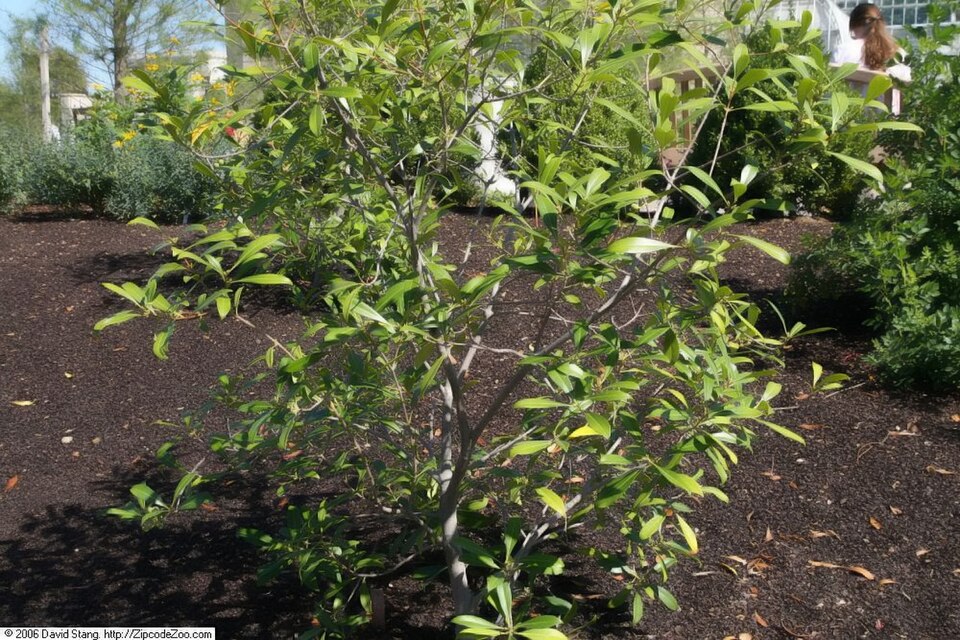
Osmanthus americanus, commonly known as American Sweet Olive, Wild Olive, or Devilwood, is a native evergreen shrub or small tree of the southeastern United States with a quiet but unmistakable elegance. A member of the olive family (Oleaceae), it is the only native North American species of its genus — making it a botanical rarity worth celebrating in any wildlife garden or naturalistic landscape. Despite being less well-known than its Asian relatives such as the famous fragrant tea olive (Osmanthus fragrans), the American Sweet Olive has its own subtle beauty: small, creamy-white flowers that perfume the late-winter or early-spring air with a delicate, sweet fragrance, followed by attractive dark blue-black fruit that nourishes a wide array of wildlife throughout the fall and winter months.
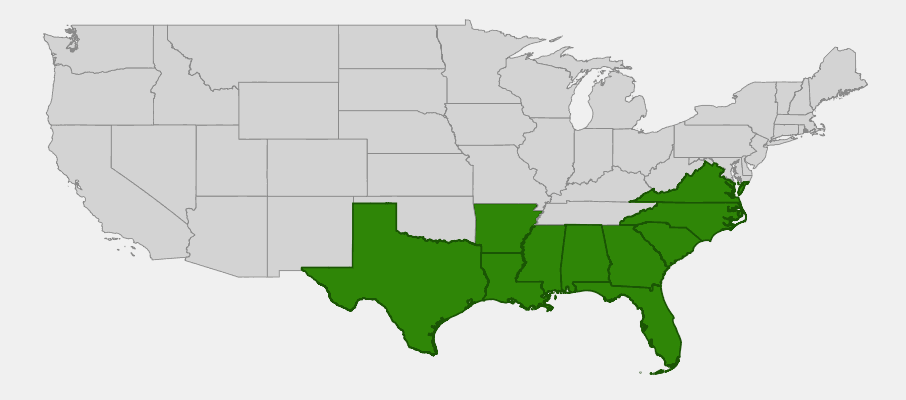
Growing naturally in coastal plain forests, sandy woodland edges, bay forests, and moist bottomlands from southeastern Virginia south through the Carolinas, Georgia, and Florida, and westward into Alabama, Mississippi, Louisiana, and east Texas, American Sweet Olive thrives in the warm, humid climate of the Deep South. It is a remarkably adaptable plant — tolerating everything from full sun to moderate shade, and growing in soils ranging from well-drained sandy uplands to damp, organically rich lowlands. Its drought tolerance once established, evergreen foliage, and compact mature form make it an excellent candidate for year-round interest in Southern gardens where reliable, native, fragrant evergreens are always in demand.
Though seldom found in mainstream nurseries outside the Southeast, American Sweet Olive deserves far wider planting. It provides exceptional value as a large screen or hedgerow plant, a specimen shrub, or an understory plant beneath tall pines and oaks. The fragrant spring flowers attract bees and other early pollinators, while the olive-like drupes are consumed by thrushes, mockingbirds, waxwings, and dozens of other bird species. For native plant enthusiasts in the Gulf and South Atlantic states, American Sweet Olive represents one of the finest and most underused native shrubs available for the warm-temperate landscape.
Identification
American Sweet Olive typically grows as a large upright shrub or small multi-stemmed tree, reaching 10 to 20 feet tall with a spread of 8 to 12 feet. The overall habit is upright-oval to broadly columnar, with a relatively dense branching structure and attractive year-round evergreen foliage. The plant grows slowly to moderately, making it long-lived and enduring in the landscape when sited appropriately.
Bark & Stems
The bark is thin and smooth on young stems, gray-brown in color, becoming slightly furrowed with age on larger trunks. Young twigs are slender, gray to olive-brown, and often finely pubescent at the tips. The wood itself is remarkably hard and heavy — the common name “Devilwood” refers to the extreme difficulty of splitting the dense wood, which rivals that of dogwood and hornbeam in hardness. This hard, close-grained wood was historically valued for small durable items including tool handles, turned objects, and walking sticks.
Leaves
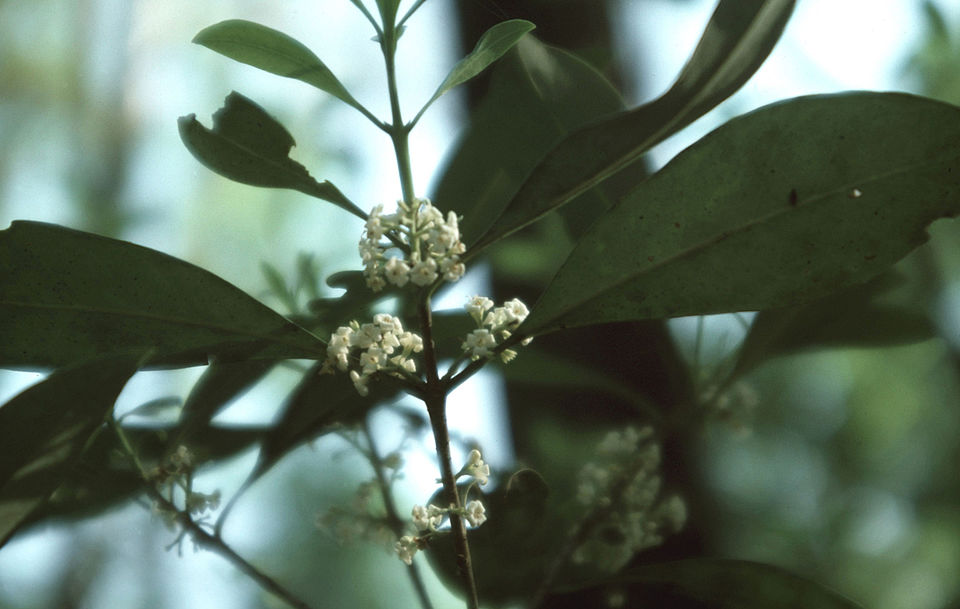
The leaves are the most distinctive feature of American Sweet Olive: simple, opposite, and evergreen, they are thick and leathery with a glossy deep-green upper surface and a paler, matte underside. Each leaf is oblong-elliptic to lanceolate, 2 to 5 inches long and ¾ to 2 inches wide, with an entire (smooth, untoothed) margin — a helpful identification feature, as many similar evergreen species have serrate margins. The leaf base is wedge-shaped and the apex is pointed. When crushed, the leaves emit a faintly pleasant olive-like scent. Leaves persist on the plant for 2 to 3 years before dropping, maintaining dense coverage throughout the year.
Flowers & Fruit
The flowers are produced in small axillary clusters along the previous year’s stems, typically in late winter to early spring (February to April), before or alongside new leaf emergence. Each flower is tiny — about ¼ inch across — with four white or creamy-white petals fused at the base into a short tube. The fragrance is sweet, delicate, and pleasant, carried on warm spring breezes from a surprising distance for such small flowers. The blooms attract early bees, including solitary mining bees and bumblebee queens just emerging from winter dormancy.
The fruit is a small drupe, roughly ½ inch long, closely resembling a miniature olive — appropriately, given the plant’s family relationship to olive trees. It ripens from green to dark bluish-black or purple-black by late fall and early winter, and persists on the plant for months. The persistent fruit is a valuable food source for migratory and resident thrushes, waxwings, mockingbirds, catbirds, and other fruit-eating birds throughout the fall and winter.
Quick Facts
| Scientific Name | Osmanthus americanus |
| Family | Oleaceae (Olive) |
| Plant Type | Evergreen Shrub / Small Tree |
| Mature Height | 20 ft |
| Sun Exposure | Full Sun to Part Shade |
| Water Needs | Low to Moderate |
| Bloom Time | February – April |
| Flower Color | White to creamy-white |
| Fruit | Dark blue-black drupe (olive-like) |
| Foliage | Evergreen; glossy dark green, leathery |
| USDA Hardiness Zones | 7–10 |
Native Range
American Sweet Olive is native to the Coastal Plain and Piedmont of the southeastern United States, with its range centered on the warm, humid lowlands from southeastern Virginia south through North and South Carolina, Georgia, and Florida, and westward through Alabama, Mississippi, Louisiana, and into east Texas. It is also found in scattered populations in Arkansas. This distribution reflects the plant’s deep association with the warm-temperate and subtropical forests of the Southeast — a region characterized by mild winters, abundant summer rainfall, and rich, acidic soils.
Within its range, American Sweet Olive inhabits a variety of coastal plain environments: pine flatwoods, sandy upland forests, bay forests and bayheads, bottomland hardwood edges, and moist sandy-loam woodlands. It is frequently found growing alongside longleaf pine, live oak, laurel oak, American beautyberry, red bay, and sweetbay magnolia. It tolerates the region’s characteristically acidic, sandy, and often seasonally moist soils with ease, making it one of the most adaptable native shrubs of the Gulf Coastal Plain.
Historically, American Sweet Olive was seldom harvested commercially, and its populations remain relatively intact across much of its range. It is not currently considered a species of conservation concern, though like many native plants of the southeastern coastal plain, it faces ongoing habitat pressure from residential development, agriculture, and the suppression of natural fire regimes that historically maintained the open pine-dominated communities it favors.
📋 Regional plant lists featuring American Sweet Olive: Alabama, Georgia & Mississippi
Growing & Care Guide
American Sweet Olive is an excellent low-maintenance native shrub for gardens throughout the Southeast. Once established, it is notably drought-tolerant and requires very little supplemental care. Its evergreen foliage, fragrant spring flowers, and excellent wildlife value make it a year-round asset in any native plant garden that provides appropriate soil conditions.
Light
American Sweet Olive performs best in full sun to part shade. In full sun it develops the densest form and most prolific flowering; in partial shade it grows more openly and lushly, making an elegant understory shrub beneath tall pines or oaks. It does not thrive in deep, constant shade — some direct sun each day promotes healthy growth and abundant fruiting. A site with morning sun and afternoon shade is a good compromise in hot climates.
Soil & Water
This species is very adaptable to soil conditions. It grows naturally in the sandy, acidic, well-drained soils typical of the Coastal Plain, but also thrives in clay loams and organically enriched bottomland soils. It prefers slightly to moderately acidic conditions (pH 5.0–6.5). Once established (after 2–3 growing seasons), it tolerates dry periods well — making it suitable for rain-garden edges and drier upland plantings alike. In heavier clay soils, ensure adequate drainage to prevent root rot during prolonged wet periods.
Planting Tips
Plant in fall or early spring for best root establishment before summer heat. Container-grown stock transplants readily. Space plants 8–12 feet apart for a naturalistic screen or hedge. Mulching with 2–3 inches of pine bark or wood chips helps retain soil moisture, suppresses weeds, and replicates the plant’s natural forest-floor environment. Avoid planting in poorly drained, low-lying areas where water pools after heavy rain.
Pruning & Maintenance
American Sweet Olive requires very little pruning. It has a naturally neat, upright form and does not need regular shaping. Remove any dead or crossing branches in late winter or early spring. If a more compact form is desired, light shearing immediately after flowering is well-tolerated without sacrificing the next season’s buds. Avoid heavy pruning, which can remove flower buds and reduce the following season’s fragrant display. The plant is generally pest- and disease-resistant with no serious issues in its native range.
Landscape Uses
- Evergreen screen or hedge — dense foliage provides year-round privacy and wind protection
- Foundation planting — attractive form and texture complement architectural structures
- Specimen shrub — fragrant blooms and glossy foliage make it a seasonal focal point
- Wildlife garden anchor — persistent fruit draws birds throughout fall and winter
- Woodland edge planting — thrives at the interface of open areas and forest
- Pollinator garden — early spring flowers support mason bees and emerging bumblebees
Wildlife & Ecological Value
American Sweet Olive provides significant ecological value, particularly as a reliable fruit producer through the lean fall and winter months in southeastern ecosystems when other food sources are scarce.
For Birds
The dark bluish-black drupes ripen in late fall and persist well into winter, providing critical nutrition for migratory and resident fruit-eating birds. American Robins, Hermit Thrushes, Cedar Waxwings, Gray Catbirds, and Northern Mockingbirds are among the most frequent visitors. The dense evergreen foliage also provides excellent year-round cover and nesting habitat, particularly valued by small songbirds seeking winter roosting sites protected from wind and cold. The plant is especially valuable in Southern gardens because its fruit is available precisely when other food sources are scarce.
For Mammals
White-tailed deer occasionally browse the foliage, though the thick, leathery leaves are not their preferred food. Raccoons and opossums consume the fruit when accessible. The dense shrub structure provides cover for cottontail rabbits, foxes, and other small mammals in open woodland settings. The persistent fruit can also attract migrant frugivores including Cedar Waxwing flocks in late winter.
For Pollinators
The February–April bloom period is critically important for early-emerging pollinators. The fragrant white flowers attract native bees — including solitary mining bees, sweat bees, and bumblebee queens just emerging from winter dormancy — as well as honeybees and syrphid flies. Early spring nectar sources are precious in the Deep South landscape, and American Sweet Olive fills this role admirably with its abundant, sweetly scented bloom clusters.
Ecosystem Role
As a native evergreen shrub of the coastal plain understory, American Sweet Olive contributes to forest structure and diversity. Its persistent fruit extends the fall-winter food supply into the lean late-winter months, bridging the gap between fall mast crops and spring-fruiting species. The dense, layered foliage provides thermal cover for overwintering insects and small vertebrates. By supporting pollinators and seed-dispersing birds, it participates in the ecological web that sustains broader coastal plain forest ecosystems.
Cultural & Historical Uses
American Sweet Olive has a more modest ethnobotanical history than its more prominent Asian relatives, but it was well-known and used by Indigenous peoples and early European settlers throughout the Southeast. The plant’s common name “Devilwood” references the extreme hardness of its wood — so hard and close-grained that it was considered exceedingly difficult to split or work with standard tools. This same quality made it prized for small, durable items: handles for tools and farming implements, small turned objects, walking sticks, and fence posts where contact with the soil demanded long-lasting material resistant to decay and wear.
Several Indigenous nations of the Southeast recognized the plant’s fragrant flowers and medicinal potential. Some used infusions of the bark or leaves in traditional medicine, particularly for treatments related to skin conditions and fevers, though detailed documentation of specific uses is limited in the historical record. The fruits, while bitter and not particularly palatable to humans, were known to attract game birds and songbirds, which made the plant of practical interest to hunters who knew to seek game near stands of fruiting Sweet Olive in autumn and early winter.
Today, American Sweet Olive is slowly gaining recognition in the horticulture industry, particularly among native plant enthusiasts in the Southeast who seek alternatives to the widely-planted but non-native fragrant tea olive (Osmanthus fragrans). The native species offers similar fragrance, comparable wildlife value, and superior adaptability to local soils and climate conditions — without the concerns associated with introducing non-native Osmanthus species into sensitive coastal plain ecosystems. Native plant nurseries in Georgia, Alabama, and the Carolinas are increasingly stocking this species as demand from conservation-minded gardeners grows.
Frequently Asked Questions
How fragrant is American Sweet Olive compared to the Asian tea olive?
American Sweet Olive has a pleasant, light fragrance — sweet and clean, though generally less intense than the powerful Asian fragrant tea olive (Osmanthus fragrans). The native species’ fragrance is more subtle and delicate, best appreciated close up or on warm, calm days in late winter and early spring when few other plants are in bloom. Many native plant enthusiasts find the subtlety more pleasing than the sometimes overwhelming scent of the Asian species.
Is American Sweet Olive deer-resistant?
It has moderate deer resistance due to its tough, leathery evergreen leaves, which deer find less appealing than many other shrubs. In areas with high deer pressure, however, some browsing may occur, especially on young plants with more tender new growth. Established plants with mature, thick foliage generally recover well from light browsing without permanent damage.
Can I grow American Sweet Olive in a container?
Yes, it grows well in large containers, making it suitable for patios and decks in Zones 7–10. Use a well-draining acidic potting mix, ensure the container is large enough for root development (at least 15-gallon for a mature plant), and water regularly during hot summer months. Bring the container to a protected location if temperatures are expected to drop below 10°F for extended periods.
How fast does it grow?
American Sweet Olive grows slowly to moderately — expect 6–12 inches of growth per year under good conditions. This slow growth contributes to its longevity and dense, compact form over time. Plant it in a permanent location where it can develop undisturbed for decades, and it will reward you with increasing beauty and wildlife value as it matures.
Does it produce fruit without a pollinator nearby?
American Sweet Olive is generally dioecious, with separate male and female plants, though some individuals may have bisexual flowers. For reliable fruiting, it helps to have multiple plants nearby to ensure cross-pollination. Ask your native plant nursery for plants selected or observed for good fruiting performance, and plant them in groups of 2–3 for the best results.

Looking for a nursery that carries American Sweet Olive?
Browse our native plant nursery directory: Alabama · Georgia · Mississippi