Dwarf Palmetto (Sabal minor)
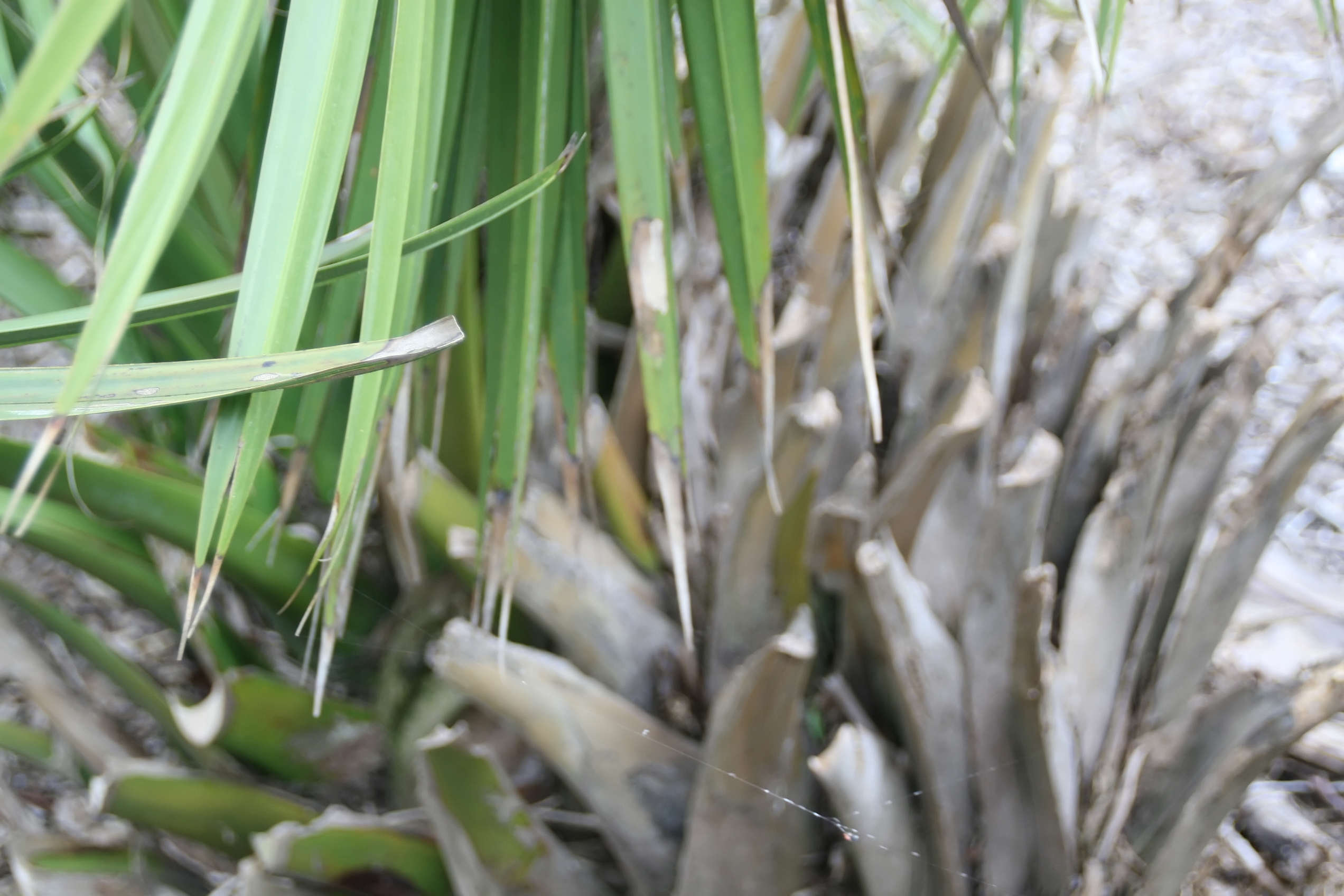
Sabal minor, commonly known as Dwarf Palmetto, is the hardiest of all North American palms — a stocky, trunkless (or short-trunked) fan palm that brings genuine tropical character to the understory of southeastern bottomland forests, floodplains, and bay swamps. Unlike towering Cabbage Palm (Sabal palmetto), Dwarf Palmetto keeps its crown low to the ground, typically reaching just 3 to 6 feet tall, with spectacular costapalmate (fan-shaped) leaves up to 5 feet across that emerge directly from ground level or from a short subterranean trunk. The effect in the landscape is bold, dramatic, and unmistakably subtropical.
Despite its tropical appearance, Dwarf Palmetto is remarkably cold-hardy, surviving temperatures as low as 0°F (−18°C) once established — far colder than most gardeners would expect from a palm. This makes it suitable for landscapes well into USDA Zone 7, extending its range considerably beyond the range of most palms used in cultivation. In its native habitat, Dwarf Palmetto grows along the Gulf and Atlantic coastal plains from North Carolina to Texas, thriving in the dense shade of bottomland hardwood forests, cypress-gum swamps, and wet pine flatwoods where few other palms would survive. In summer, it sends up spectacular plumes of tiny white flowers on panicles that can reach 6 feet tall, followed by clusters of small, round, jet-black drupes that persist through winter.
Dwarf Palmetto is an increasingly popular choice for native plant gardens throughout the Southeast for its striking architectural foliage, exceptional cold hardiness, shade tolerance, and wide adaptability to soil moisture conditions — from seasonally flooded bottomlands to moderately dry upland gardens. Its slow, deliberate growth and low maintenance requirements make it one of the most rewarding ornamental natives for adding bold, tropical texture to landscapes across the southeastern United States.
Identification
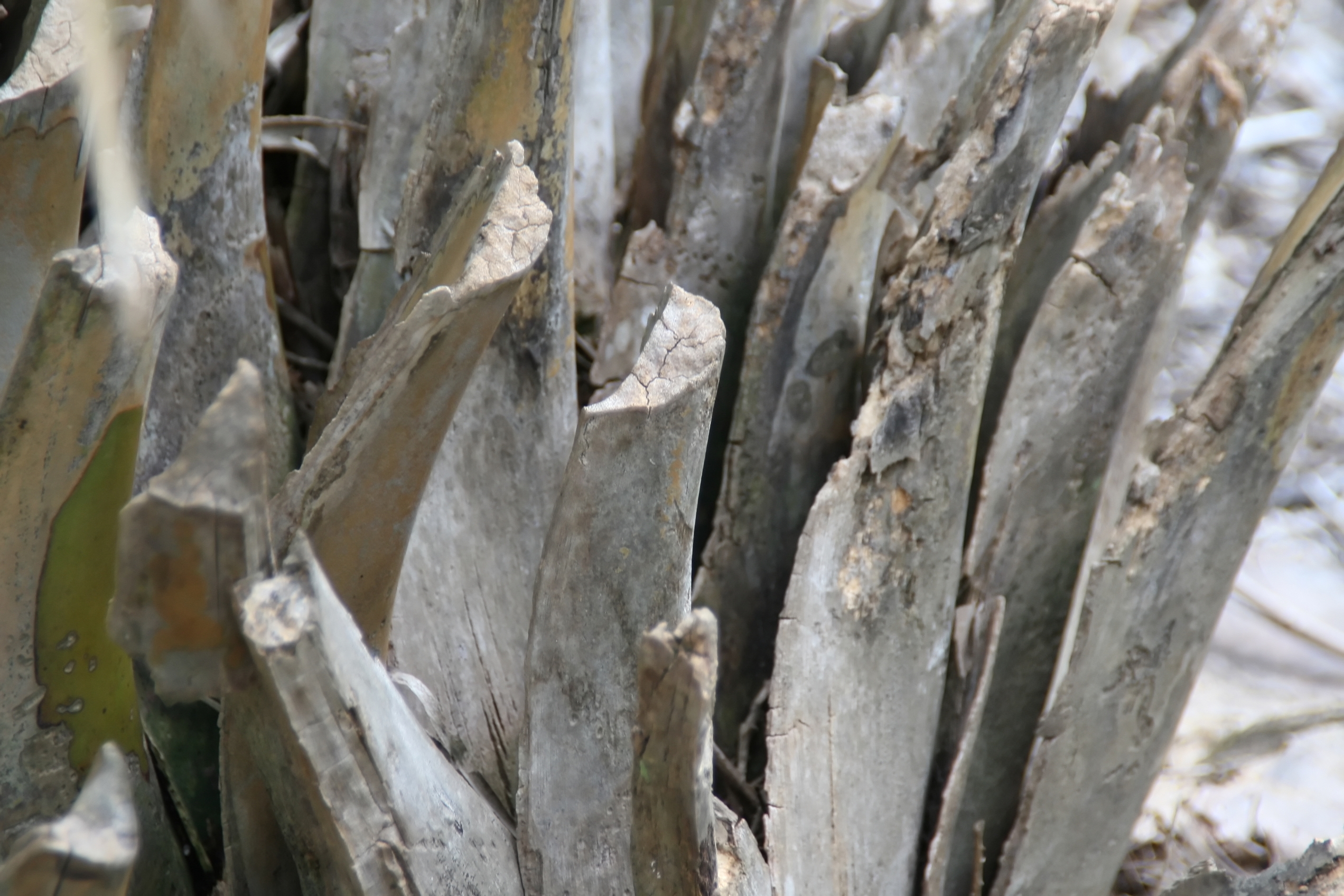
Dwarf Palmetto is a clustering or solitary fan palm that typically develops no visible above-ground trunk, with the stem remaining wholly or mostly underground. Old plants may eventually develop a short trunk up to 3 feet tall above the soil surface, but this is uncommon in the wild. The crown of fan-shaped leaves emerges directly from the ground, giving the plant a dramatic, low-growing, clumping appearance. Mature specimens can spread 8 to 12 feet wide when their leaves are fully extended.
Leaves
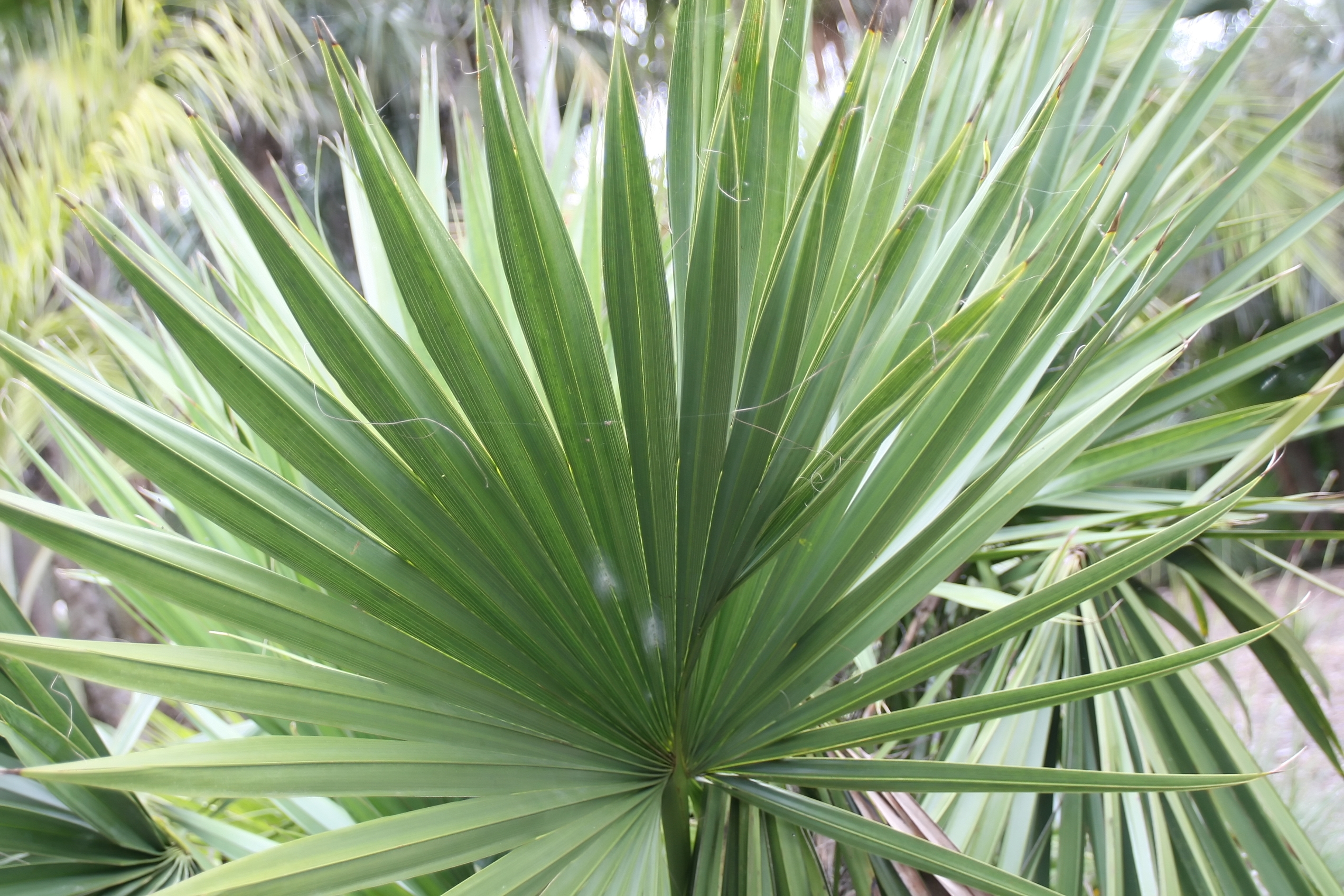
The leaves are the most spectacular feature of Dwarf Palmetto. Each leaf is costapalmate — fan-shaped with a pronounced central midrib (costa) that extends into the blade, causing the fan to fold gently. Individual blades are 3 to 5 feet across and divided into numerous strap-like segments that split at their tips. The color is blue-green to deep green, with younger fronds often more intensely blue-gray than older ones. The petioles (leaf stalks) are unarmed — lacking the sharp teeth found on Saw Palmetto (Serenoa repens) — typically 3 to 6 feet long and arching gracefully outward. Dead fronds tend to persist and hang downward, creating a characteristic skirt of brown leaves around the base of older plants.
Flowers & Fruit
Dwarf Palmetto blooms from June through August, producing branched inflorescences (panicles) that emerge from between the leaf bases and arch upward and outward, reaching 3 to 6 feet tall. Each panicle bears hundreds of tiny, fragrant white to cream-colored flowers, each about ⅛ inch across, with 6 stamens and a single pistil. The flowers are hermaphroditic (containing both male and female parts) and are pollinated primarily by bees and other insects attracted to their sweet fragrance.
Following pollination, the fruit develops as small, round to slightly kidney-shaped drupes, about ¼ to ⅜ inch (6–10 mm) in diameter. They ripen from green to glossy jet-black by October and November, and the fruit clusters can persist on the plant well into winter if not consumed by wildlife. Each drupe contains a single hard seed surrounded by thin, sweet flesh. The persistent black fruit clusters against the bold green foliage create a striking ornamental effect through the fall and winter months.
Quick Facts
| Scientific Name | Sabal minor |
| Family | Arecaceae (Palm) |
| Plant Type | Evergreen Palm |
| Mature Height | 6 ft |
| Sun Exposure | Full Sun to Full Shade |
| Water Needs | Moderate |
| Bloom Time | June – August |
| Flower Color | White |
| USDA Hardiness Zones | 7–11 |
Native Range
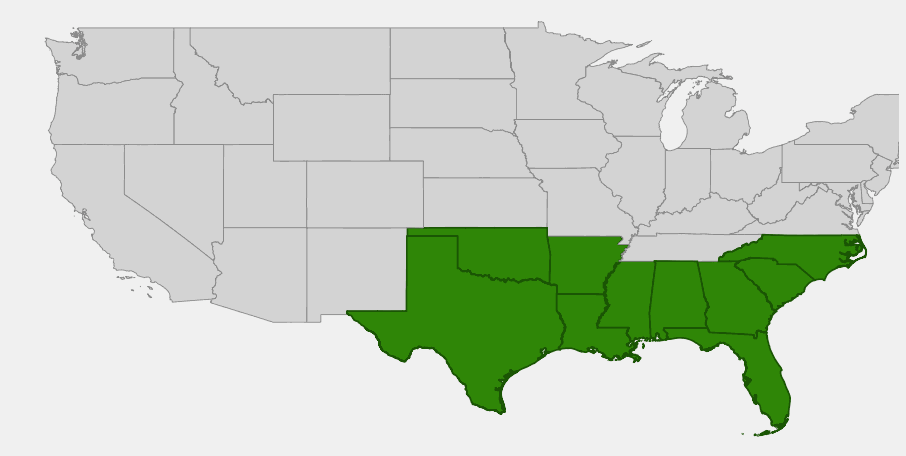
Dwarf Palmetto is native to the coastal plains and river bottomlands of the southeastern United States, with its core range stretching from coastal North Carolina south through South Carolina, Georgia, and Florida, then west along the Gulf Coast through Alabama, Mississippi, Louisiana, and into eastern and central Texas. In the northern parts of its range, it is largely restricted to protected bottomland forests and frost pockets where the overhead canopy moderates winter temperatures; in the Deep South and Gulf Coast, it grows in a much wider variety of habitats from swampy bottomlands to well-drained sandy uplands.
In Arkansas and Oklahoma, Dwarf Palmetto extends into the lower portions of river systems that drain into the Gulf of Mexico, growing in bottomland forests and along stream banks where the influence of the Gulf Coast climate is still felt. These inland populations are particularly notable for their cold-hardiness, surviving temperatures that would be unusual in the plant’s coastal core range. In Louisiana, Dwarf Palmetto is abundant in the understory of cypress-tupelo swamps, bottomland hardwood forests, and the edges of coastal marshes, where it often forms continuous ground-level colonies beneath a canopy of Bald Cypress, Swamp Chestnut Oak, and Overcup Oak.
The habitat preferences of Dwarf Palmetto span a wide moisture gradient — from seasonally flooded bottomlands to moderately dry upland forests — reflecting the species’ remarkable adaptability. In Florida, it occurs across a wide range of habitats including wet flatwoods, hammocks, and the ecotones between upland and wetland plant communities. Its distribution is closely tied to the proximity of river systems and coastal wetlands, and it rarely occurs on sandy uplands far from water in the more northern parts of its range.
📋 Regional plant lists featuring Dwarf Palmetto: Alabama, Georgia & Mississippi
Growing & Care Guide
Dwarf Palmetto is a surprisingly easy and rewarding plant to grow once you understand its preferences. Its combination of shade tolerance, cold hardiness, and adaptability to wet or dry soils makes it one of the most versatile architectural plants available for southeastern native gardens.
Light
One of Dwarf Palmetto’s most valuable traits is its exceptional shade tolerance — it is one of the few palms that genuinely thrives in deep shade. In the wild, it grows in the densely shaded understory of bottomland hardwood forests where little direct sunlight reaches the forest floor. It also grows well in full sun, where it develops more compact, upright growth with richer green coloration. In very exposed, windy, or sunny locations without consistent moisture, the leaf tips can burn, but this is purely cosmetic. The plant’s shade tolerance makes it invaluable for adding tropical texture to shaded garden areas where few other architectural plants survive.
Soil & Water
Dwarf Palmetto is exceptionally adaptable to soil conditions. It grows in wet, poorly drained soils — tolerating periodic flooding — as well as in moderately dry, well-drained sandy or loamy soils. The ideal soil is moist, rich in organic matter, and slightly acidic to neutral (pH 5.5–7.0), matching the bottomland forest soils of its native habitat. However, established plants have demonstrated tolerance for drought, clay soils, and a wide pH range. Mulching with leaf litter or wood chips significantly improves establishment in drier sites and replicates the natural forest floor conditions the plant prefers.
Planting Tips
Dwarf Palmetto is slow-growing and best purchased as a container plant. Plant in spring or fall, digging a hole at least twice the width of the root ball and no deeper. The crown (the growing point at the center of the leaf cluster) must remain above the soil surface. Do not plant too deeply — this is the most common mistake with palms. Water thoroughly at planting and keep consistently moist during the first growing season. Patience is essential: newly planted Dwarf Palmettos may show little above-ground growth for 1–2 years while establishing their root system, then begin growing vigorously.
Pruning & Maintenance
Dwarf Palmetto is very low-maintenance. Remove dead or severely damaged fronds at the base of the petiole; do not cut living fronds as this stresses the plant. The persistent skirt of dead fronds is natural and can be removed if desired for aesthetic reasons, but this is optional — in the wild, the dead frond skirt provides important habitat for lizards, small mammals, and invertebrates. Dwarf Palmetto is naturally pest- and disease-resistant and rarely requires any interventions beyond watering during establishment.
Landscape Uses
Dwarf Palmetto provides dramatic architectural impact in a variety of landscape settings:
- Shade gardens — one of very few palms that thrive in deep shade
- Tropical-effect plantings — bold foliage adds dramatic texture to native gardens
- Wet-area plantings — tolerates seasonal flooding and bog-like conditions
- Understory screening — forms effective low visual barrier beneath trees
- Rain gardens — excellent for wet zones in stormwater management areas
- Wildlife habitat — fruit, cover, and nesting substrate for numerous species
- Coastal gardens — tolerates salt spray and maritime conditions
Wildlife & Ecological Value
Dwarf Palmetto provides a suite of wildlife benefits that make it exceptionally valuable in the native landscape. From its nectar-rich summer blooms to its persistent winter fruit, the plant supports wildlife interactions through most of the year.
For Birds
The small black drupes of Dwarf Palmetto are consumed by a wide variety of birds, including Northern Mockingbird, American Robin, Eastern Bluebird, Cedar Waxwing, Northern Cardinal, and various thrushes and thrashers. The persistent fruit clusters provide food well into winter, when food resources are at their most limited for resident birds in the Southeast. The dense skirt of dead fronds and the interlocking leaf bases create outstanding concealed nesting sites for Carolina Wrens, Painted Buntings, and other small cavity or crevice-nesting birds. In the Gulf Coast states, the plant’s year-round cover is particularly important for resident bird communities.
For Mammals
Raccoons, Black Bears, and White-tailed Deer are known consumers of Dwarf Palmetto fruit. The dense, low-growing palm thickets in bottomland forests provide shelter and escape cover for White-tailed Deer, especially fawns. In Florida and along the Gulf Coast, the plant forms important thickets that serve as daytime refugia for a wide range of small mammals including opossums, armadillos, and swamp rabbits.
For Pollinators
The tall, arching flower panicles of Dwarf Palmetto attract an impressive array of pollinators during their June–August bloom period. Native bees, honeybees, small wasps, and beetles visit the fragrant white flowers for nectar and pollen. Palm flowers are an important nectar source in the summer months, when woodland understory blooms are relatively scarce. The flowers also attract many small fly species that serve as secondary pollinators.
Ecosystem Role
In its native bottomland forest and swamp habitats, Dwarf Palmetto is a key structural component of the understory layer. Its broad, overlapping fronds create dense shade at ground level, moderating soil temperatures and retaining moisture — conditions that are critical for the growth of mosses, ferns, and other shade plants. The plant’s tough, fibrous frond bases and stems provide substrate for epiphytes and invertebrates, and its thickets create microhabitat diversity within otherwise relatively uniform forest floors. In coastal areas, Dwarf Palmetto’s extensive root system helps stabilize stream banks and wetland margins against erosion.
Cultural & Historical Uses
Dwarf Palmetto has a rich history of use by the Indigenous peoples of the southeastern coastal plain. Various Native American groups, including the Seminole, Creek, Choctaw, and other southeastern nations, used the tough, fibrous leaves of Dwarf Palmetto for weaving baskets, mats, and hats — an art form that continues in some communities today. The Seminole people of Florida were particularly skilled weavers of palmetto fronds, creating intricate baskets and thatch roofing from the long, flexible leaf segments. Palmetto-thatched structures, or “chickees,” were the traditional dwelling of the Seminole and remain a symbol of their cultural identity.
The heart of the Dwarf Palmetto — the tender, starchy growing bud at the center of the crown — was consumed as a food by some Indigenous groups, as well as by early European settlers in times of necessity. Harvesting the heart kills the plant, so this practice was used sparingly. The fibrous leaf bases were also used to make rope and cordage, and the hard seeds were sometimes used as buttons or decorative beads. European settlers in the Deep South adopted many of these practices from Indigenous peoples and found the palmetto an indispensable survival plant in the wilderness of the Gulf Coast lowlands.
In 18th- and 19th-century natural history, Dwarf Palmetto attracted the attention of early American botanists including William Bartram, who described encountering it on his famous travels through the Southeast in the 1770s. Bartram was struck by its bold appearance in the understory of Carolina bottomland forests and noted its exceptional cold hardiness relative to other palms he had observed. Today, Dwarf Palmetto is increasingly appreciated by native plant horticulturalists as one of the most striking and cold-tolerant architectural plants available for southeastern gardens, and it is experiencing a significant increase in cultivation as the popularity of native landscaping grows.
Frequently Asked Questions
How cold-hardy is Dwarf Palmetto?
Dwarf Palmetto is one of the hardiest palms in the world. Established plants can survive temperatures down to 0°F (−18°C) or even slightly lower, making it suitable for USDA Hardiness Zone 7 — far colder than most palms used in horticulture. Young plants in their first winter are more vulnerable and benefit from mulching. The underground trunk and root system remain protected even when the fronds are killed back by hard freezes, allowing the plant to resprout from the crown in spring.
Does Dwarf Palmetto grow in shade?
Yes — it is one of the most shade-tolerant palms available. In its natural habitat, it grows in the deep shade of bottomland hardwood forests and cypress swamps, receiving very little direct sunlight. It performs well anywhere from full shade to full sun, making it exceptionally versatile for shaded gardens where few architectural plants can thrive. The best growth is usually achieved in partial shade with consistent moisture.
How fast does Dwarf Palmetto grow?
Dwarf Palmetto is a slow grower, especially when young. Newly planted container specimens may show little visible above-ground growth for 1–2 years while establishing their root systems. After that, expect 3–6 inches of growth per year under average conditions, more in optimal conditions. Patience is essential — this is a long-lived plant that, once established, will provide decades of dramatic foliage with very little care.
Does Dwarf Palmetto have a trunk?
Generally, no — Dwarf Palmetto typically grows without a visible above-ground trunk, with the stem remaining underground or at ground level. This distinguishes it from Cabbage Palm (Sabal palmetto), which develops a tall, visible trunk. Very old specimens of Dwarf Palmetto may eventually develop a short trunk up to 2–3 feet tall above the soil, but this is uncommon in most garden settings.
Can Dwarf Palmetto grow in wet soil?
Yes — it is very adaptable to wet conditions and tolerates periodic flooding, reflecting its natural habitat in floodplains and bay swamps. It can grow in wet, poorly drained soils as well as in drier, well-drained upland conditions, making it one of the most moisture-adaptable palms available. It performs best in moist, organically rich soil but will tolerate a wide range of conditions once established.

Looking for a nursery that carries Dwarf Palmetto?
Browse our native plant nursery directory: Alabama · Georgia · Mississippi