Prickly Rose (Rosa acicularis)
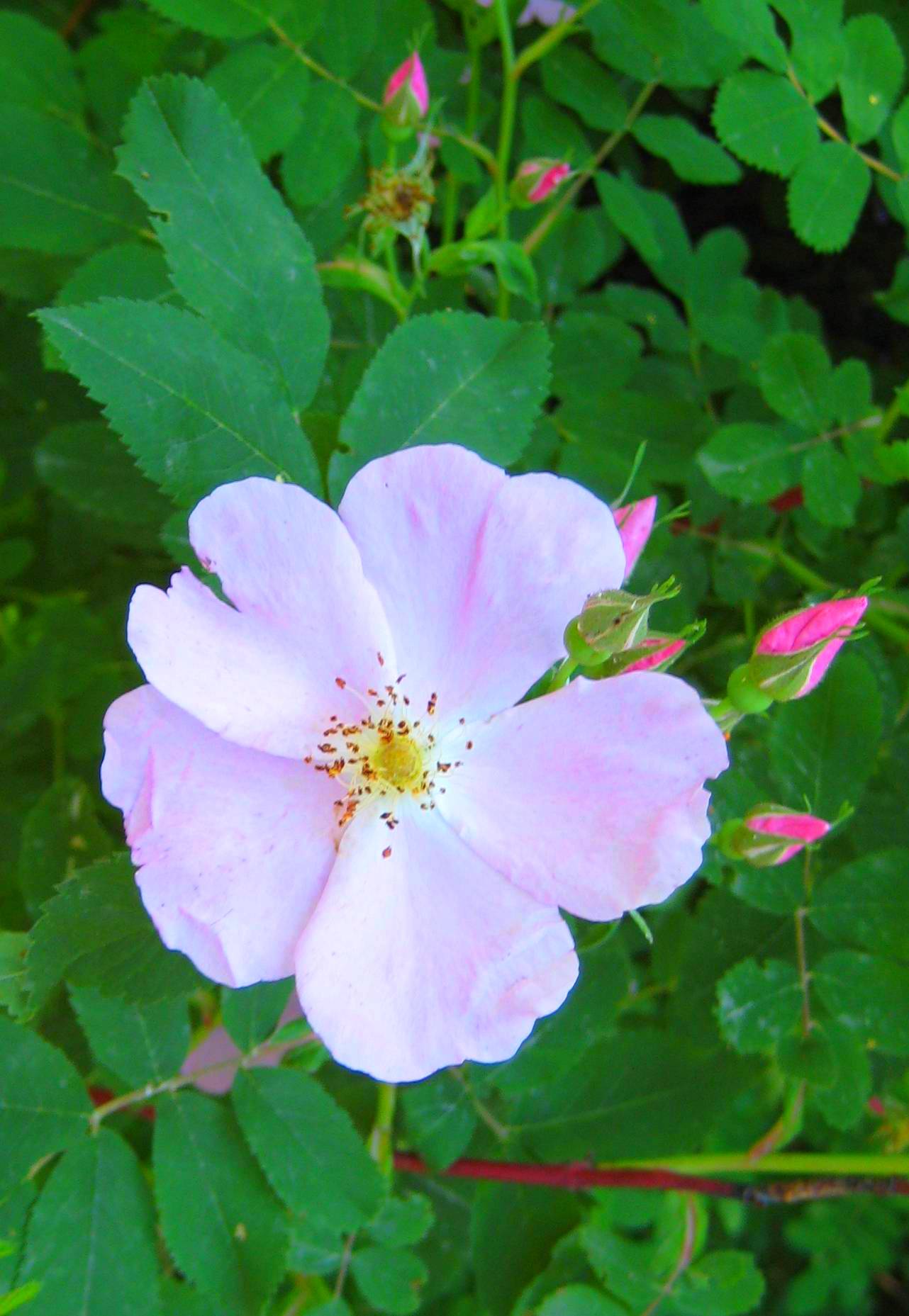
Rosa acicularis, commonly known as Prickly Rose, Bristly Rose, or Arctic Rose, is the most widely distributed wild rose in the world — a remarkable boreal circumpolar species that ranges from northern Europe and Asia across the entirety of northern North America, reaching as far north as the Arctic Circle. In Alaska, it is one of the most beloved wildflowers of the boreal and subarctic landscape: its large, vivid pink flowers illuminate roadsides, forest edges, stream banks, and open hillsides from late spring through midsummer, filling the air with a classic, intoxicating rose fragrance.
The Latin name acicularis — meaning “needle-like” — refers to the plant’s distinctive armature: the stems are densely covered with straight, slender, needle-like prickles (technically not true thorns, but elongated epidermal outgrowths), giving the plant its common name. Despite its forbidding armature, Prickly Rose produces large, showy flowers (up to 2.5 inches across) and bright red, oval to pear-shaped rose hips in late summer and fall that are exceptionally rich in Vitamin C — historically one of the most important nutritional supplements available to northern peoples during the long, fruit-scarce winter months.
In the garden, Prickly Rose is a stunning native shrub that combines ornamental beauty with outstanding wildlife value. Its flowers attract numerous pollinators; its hips feed bears, foxes, birds, and small mammals; its dense, thorny thickets provide impenetrable nesting cover for birds. Requiring only partial shade to part sun and modest moisture, it is adaptable to a range of Alaskan garden conditions — from forest edges to open slopes — and demands minimal care once established. For gardeners seeking a beautiful, ecologically powerful native plant perfectly suited to Alaska’s conditions, Prickly Rose is an exceptional choice.
Identification
Prickly Rose is a deciduous shrub, typically 2 to 6 feet (0.6–1.8 m) tall, though it can occasionally reach 10 feet in sheltered, favorable conditions. It spreads by root suckers, forming loose to dense thickets. The most immediately distinctive feature is the abundant, fine prickles — the stems, especially young growth, are densely covered with straight, slender, needle-like prickles of uniform length, giving branches a bristly, almost fur-like texture distinct from the stout, hooked thorns of many non-native rose species.
Leaves
The leaves are pinnately compound, with 5 to 7 (occasionally 9) leaflets per leaf. Each leaflet is oval to elliptic, 0.8 to 2 inches (2–5 cm) long, with sharply toothed margins. The upper surface is dull green (unlike many ornamental roses with glossy leaves); the underside is paler and may be slightly hairy. Stipules — leaf-like structures at the base of the leaf stalk — are present and relatively broad. In autumn, the foliage turns yellow, orange, or red before dropping, adding a seasonal display.
Flowers
The flowers are Prickly Rose’s crown jewel. Each flower is 1.5 to 2.5 inches (4–6 cm) in diameter, with five broad, rounded, bright pink to deep rose-pink petals surrounding a cluster of numerous bright yellow stamens. They are borne singly or in small clusters at branch ends and bloom from late May through July in Alaska, depending on elevation and latitude. The fragrance is classic rose — sweet, rich, and long-lasting. The petals are delicate and fall quickly in wind or rain.
Hips (Fruit)
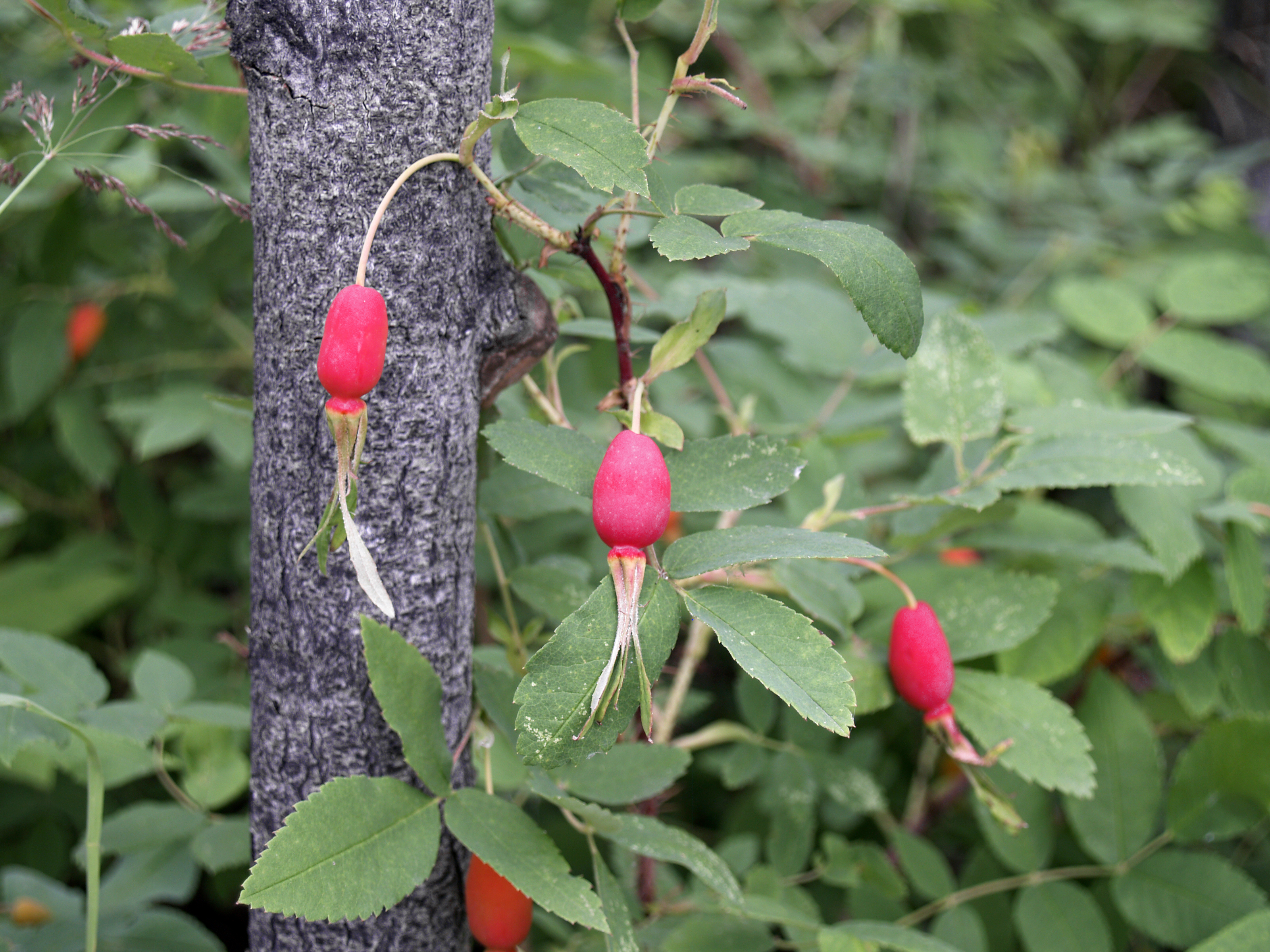
The rose hips are oval to pear-shaped or flask-shaped, 0.5 to 1 inch (1.5–2.5 cm) long, and ripen from green to bright red to dark red by late August through October. They are larger than the hips of many wild rose species and particularly rich in Vitamin C (ascorbic acid), historically making them a critical nutritional resource for northern peoples. The hips persist on the branches through winter, providing food for birds and mammals in the lean cold-season months. Inside are numerous seed-like achenes embedded in fleshy pulp.
Quick Facts
| Scientific Name | Rosa acicularis |
| Family | Rosaceae (Rose family) |
| Plant Type | Deciduous Shrub |
| Mature Height | 10 ft (typical 2–6 ft) |
| Sun Exposure | Part Shade to Full Shade |
| Water Needs | Low to Moderate |
| Bloom Time | Late May – July |
| Flower Color | Bright pink to deep rose-pink |
| Fruit | Bright red rose hips, late August–winter |
| Fall Color | Yellow, orange, red |
| USDA Hardiness Zones | 2–7 (cold-hardy, circumpolar species) |
Native Range
Prickly Rose has one of the largest natural ranges of any wild rose species — it is a true circumpolar plant, native to boreal and subarctic regions of Europe, Asia, and North America. In North America, it ranges from Alaska east across Canada to Newfoundland and Nova Scotia, south through New England and the Great Lakes region, and extends southward in mountain ranges through the Rocky Mountains to Colorado and Wyoming. It is particularly abundant across Alaska’s boreal forest zone — from the Southeast panhandle through the Interior and into the subarctic regions of western and northern Alaska.
In Alaska, Prickly Rose grows from sea level to above 4,000 feet in subalpine zones, occupying forest edges, clearings, stream banks, roadsides, avalanche slopes, and open hillsides. It is particularly characteristic of disturbed habitats — areas recovering from fire, flooding, logging, or construction — where it rapidly colonizes open ground with its root-suckering growth. This colonizing ability makes it valuable for disturbed land restoration and slope stabilization.
The species is remarkably frost-hardy — plants in Alaska regularly experience winter temperatures below -40°F and emerge unscathed in spring. Its cold-hardiness, combined with its partial to full shade tolerance and modest moisture requirements, makes it one of the most adaptable native shrubs for Alaskan landscapes. It is found in association with a wide range of plant communities, from open boreal forest with Black Spruce and Paper Birch to willow thickets, aspen groves, and the margins of subalpine meadows.
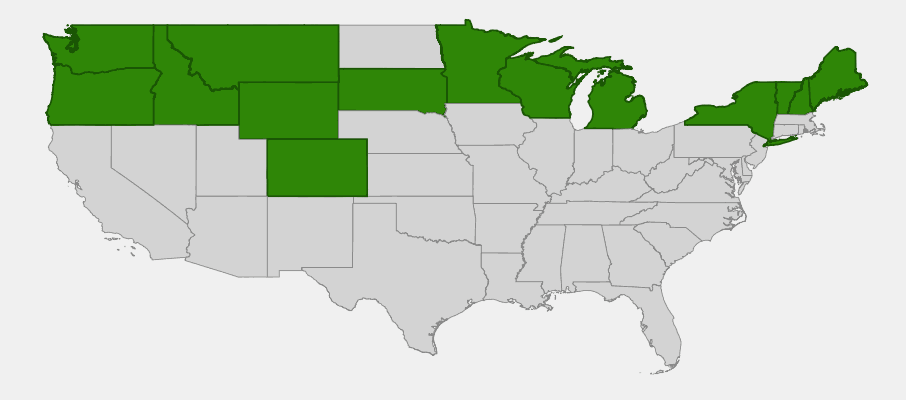
📋 Regional plant lists featuring Prickly Rose: Alaska
Growing & Care Guide
Prickly Rose is a beautiful, low-maintenance native shrub ideally suited to Alaska’s climate and conditions. Its combination of stunning flowers, colorful fall foliage, nutritious hips, and exceptional cold-hardiness makes it one of the most rewarding native shrubs for Alaskan gardeners.
Light
Prickly Rose tolerates a wide range of light conditions — from partial shade to full shade — which allows it to grow at forest edges, in clearings, and even in the relatively shaded understory of open boreal forest. For the most profuse flowering and hip production, provide partial shade with some direct sun each day. In deep, continuous shade, flowering is reduced. In Alaska’s long summer days, even a “shaded” site often receives substantial total light.
Soil & Water
Prickly Rose is adaptable to a range of soil conditions. It grows best in well-drained, moderately moist soils but is drought-tolerant once established — suitable for low-moisture sites (water needs: Low to Moderate). It tolerates poor, rocky, and sandy soils as well as slightly acidic to neutral soil pH. Avoid heavy, waterlogged clay soils. Mulching around the base helps retain moisture and suppress competing weeds during establishment, but is not essential for established plants.
Planting Tips
Plant in spring or early fall. Prickly Rose spreads readily by root suckers — space plants 4–6 feet apart if you want individual specimens, or allow them to spread and naturalize in a larger area. For a hedge or thicket planting, space 3–4 feet apart. Be careful when handling — the needle-like prickles are sharp. Container-grown plants establish more easily than bare-root stock. No fertilizer is needed in most Alaskan soils.
Pruning & Maintenance
Pruning requires care due to the dense prickles — wear thick gloves and use long-handled loppers. Remove old, dead canes at the base in late winter to rejuvenate the shrub. Cut back overly long or crossing branches to maintain desired size. Do not over-prune — the plant flowers on older wood, and heavy pruning reduces blooming. Rose hips can be harvested in fall for tea, jam, and nutritional supplements. Left in place, they provide critical winter food for wildlife.
Landscape Uses
- Wildlife garden shrub providing flowers for pollinators and hips for birds and mammals
- Naturalized forest edge planting along woodland margins and roadsides
- Erosion control on slopes and disturbed ground — spreads quickly by root suckers
- Informal hedge — the dense, prickly growth creates an effective, wildlife-friendly barrier
- Pollinator garden anchor with abundant late spring/summer blooms
- Three-season interest — flowers, foliage, and persistent red hips through winter
Wildlife & Ecological Value
Prickly Rose is one of the most valuable wildlife plants in the boreal and subarctic landscape, providing food, cover, and nesting habitat across all seasons.
For Birds
Rose hips are consumed by over 20 species of birds in Alaska and northern Canada, including American Robins, Bohemian Waxwings, Cedar Waxwings, Ruffed Grouse, Gray-cheeked Thrushes, and various sparrows. The dense, thorny thickets provide outstanding nesting habitat for Lincoln’s Sparrows, White-crowned Sparrows, Yellow Warblers, and other shrub-nesting birds. The prickly stems discourage predators from approaching nests, making Prickly Rose thickets among the safest nesting environments in the boreal landscape.
For Mammals
Rose hips are a favorite food of Black Bears, Grizzly Bears, and Brown Bears — who consume them in quantity in fall while preparing for hibernation. Red Foxes, Arctic Foxes, coyotes, and wolves also eat rose hips, particularly in winter when other food is scarce. Moose browse the foliage and stems in winter. Snowshoe Hares graze on young stems, and Beavers occasionally harvest rose canes. The dense thickets provide hiding cover for many small mammals including voles, shrews, and weasels.
For Pollinators
Prickly Rose is a premium pollinator plant. The large, open flowers with abundant pollen and nectar attract a wide variety of native bees, including mining bees (Andrena spp.), bumble bees (Bombus spp.), mason bees (Osmia spp.), and sweat bees. Butterflies — including Fritillaries, which use wild roses as larval host plants — visit the flowers frequently. In boreal Alaska, Prickly Rose blooms coincide with peak pollinator season, making it one of the most productive pollen and nectar sources of the summer.
Ecosystem Role
Prickly Rose plays an important structural role in boreal ecosystem succession. As a pioneer species on disturbed ground, it rapidly establishes dense thickets that stabilize soil, accumulate organic matter, and create the shrub-layer habitat needed for woodland succession to progress. Its root systems are highly effective at erosion control on slopes and stream banks. The species also supports numerous specialist insects, including gall-forming wasps and sawflies that use rose leaves and stems as hosts — these invertebrates form the base of food webs supporting insectivorous birds during breeding season.
Cultural & Historical Uses
Prickly Rose is one of the most ethnobotanically significant plants of the boreal North, used by virtually every Alaska Native and northern Indigenous culture within its vast circumpolar range. The rose hips are the species’ most important practical product — they contain extraordinarily high levels of Vitamin C (ascorbic acid), with concentrations often 10–100 times higher than oranges. For northern peoples who faced a fruit-scarce winter diet, rose hips were a critical nutritional supplement. Hips were eaten fresh in fall, dried and stored for winter, cooked into sauces and soups, and mixed with other foods to enhance nutritional value. Rose hip tea remains a traditional and popular beverage throughout Alaska and northern Canada today.
The flowers, petals, and leaves were also used medicinally. Petal poultices and leaf infusions were applied to skin rashes, insect bites, and minor wounds. Rose hip tea was used for sore throats, colds, and general debility. The inner bark of rose canes contains salicylates with analgesic properties and was used for pain relief and fever reduction by some northern groups. Athabascan communities used rose hips in the traditional diet extensively, particularly during berry-scarce years when other fruit crops failed.
Prickly Rose also has cultural significance beyond nutrition and medicine. The beautiful pink flowers are widely appreciated aesthetically and are referenced in Alaskan and Canadian folklore and art. In modern times, Prickly Rose is increasingly used in ecological restoration projects across its range, where its rapid establishment, erosion-control ability, and exceptional wildlife value make it a cornerstone of revegetation programs on disturbed land, roadsides, and mine reclamation sites.
Frequently Asked Questions
Are Prickly Rose hips safe to eat?
Yes — the hips are not only safe but highly nutritious. They are rich in Vitamin C, antioxidants, and other beneficial compounds. The fleshy outer layer (hypanthium) is sweet and edible fresh or cooked. The seeds inside are surrounded by irritating hairs — strain these out if making tea or jam. Rose hip tea, jam, syrup, and soup are all traditional and modern uses of this nutritious wild food.
How do I tell Prickly Rose apart from other wild roses in Alaska?
Prickly Rose is distinguished by its uniformly dense, fine, needle-like prickles covering the entire stem (not just at the nodes), its relatively large pink flowers (1.5–2.5 in. across), and its relatively large, oval to pear-shaped hips. In Alaska, it is the most common wild rose and most likely to be encountered across the state. The combination of fine, uniform prickles and large flowers is diagnostic.
Will Prickly Rose grow in my Alaska garden in part shade?
Yes — it naturally grows in partially shaded forest edge conditions and is well adapted to part shade in garden settings. It tolerates low to moderate moisture and does not need full sun to thrive, though flowering is most prolific with some direct sunlight each day. It’s one of the best-adapted native shrubs for Alaska’s partial-shade garden conditions.
Does Prickly Rose spread aggressively?
It spreads by root suckers and can expand its footprint over time, particularly in favorable conditions. In a naturalized or wildlife garden setting, this spreading is desirable. For more controlled gardens, remove suckers regularly to keep plants within bounds. The spread is generally moderate — not as aggressive as some garden plants — and easily managed.
When should I harvest Prickly Rose hips?
Harvest after the first frost, when the hips have fully ripened to deep red and the cell walls have softened slightly — this develops the sweetest flavor and highest Vitamin C content. In Alaska, this is typically late August through September. Hips that remain on the plant through winter become sweeter as they freeze and thaw repeatedly, and are still edible and wildlife-valuable throughout the winter months.

Looking for a nursery that carries Prickly Rose?
Browse our native plant nursery directory: Alaska