Sugar Maple (Acer saccharum)
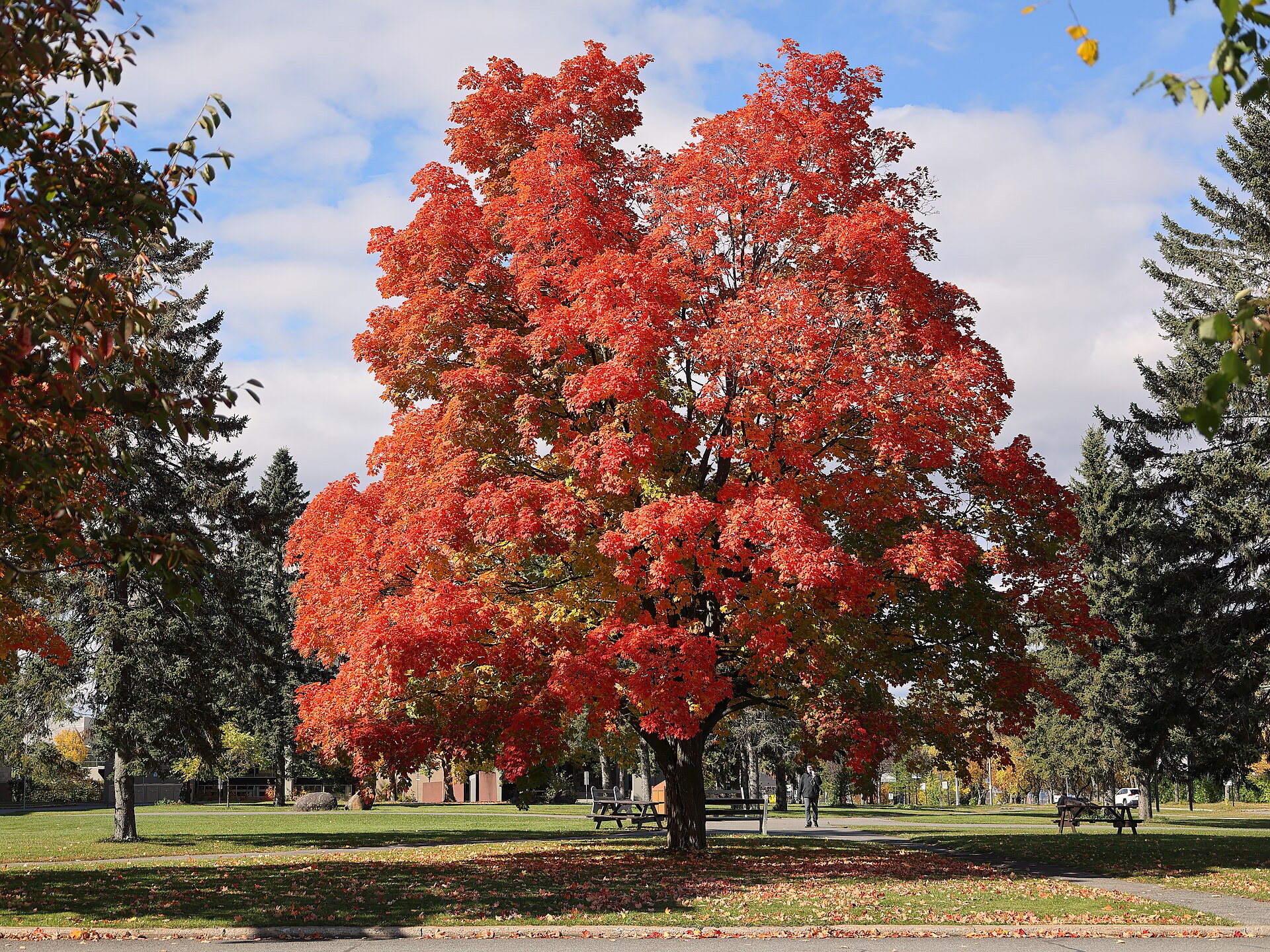
Acer saccharum, commonly known as Sugar Maple, Rock Maple, or Hard Maple, is one of the most iconic and economically important native trees in North America. Renowned for producing the finest maple syrup, delivering the most spectacular fall color display of any temperate tree, and yielding prized hardwood lumber, Sugar Maple holds a place of distinction in both the natural landscape and American culture. This stately member of the Sapindaceae (soapberry) family typically reaches 60 to 80 feet in height with a dense, rounded to oval crown, and is instantly recognizable by its classic five-lobed leaves, brilliant orange-red-gold autumn foliage, and distinctive gray, furrowed bark.
Sugar Maple is the tree most closely associated with the northeastern United States and southeastern Canada, where vast forests of this species have defined the character of the landscape for thousands of years. It is the official state tree of New York, Vermont, West Virginia, and Wisconsin, and the maple leaf that graces the Canadian flag is modeled after the Sugar Maple leaf. In autumn, entire mountainsides blaze with the orange, scarlet, and gold of Sugar Maple foliage, drawing millions of visitors to witness the annual spectacle of fall color that has become a cultural and economic phenomenon throughout New England and the upper Midwest.
Beyond its ornamental and cultural value, Sugar Maple is the primary source of maple syrup, a tradition that dates back centuries to the indigenous peoples of northeastern North America. The tree’s sap, which flows most actively during the freeze-thaw cycles of late winter and early spring, contains approximately two to three percent sugar, and roughly 40 gallons of sap must be boiled down to produce a single gallon of pure maple syrup. This centuries-old harvest remains an important agricultural enterprise in the northern states and provinces, with Vermont, Quebec, and Ontario leading production. The tree’s dense, fine-grained wood is equally valued, sought after for furniture, flooring, musical instruments, bowling alleys, and butcher blocks.
Identification
Sugar Maple is a large deciduous tree that typically grows 60 to 80 feet tall, though specimens exceeding 100 feet have been recorded in old-growth forests. The trunk can reach 2 to 4 feet in diameter, supporting a dense, symmetrical crown that is oval to rounded in open-grown trees and more narrow and columnar in forest settings. The overall form is stately and well-proportioned, with ascending to spreading branches that create a canopy dense enough to cast heavy shade, a characteristic that profoundly influences the composition of the forest understory.
Bark
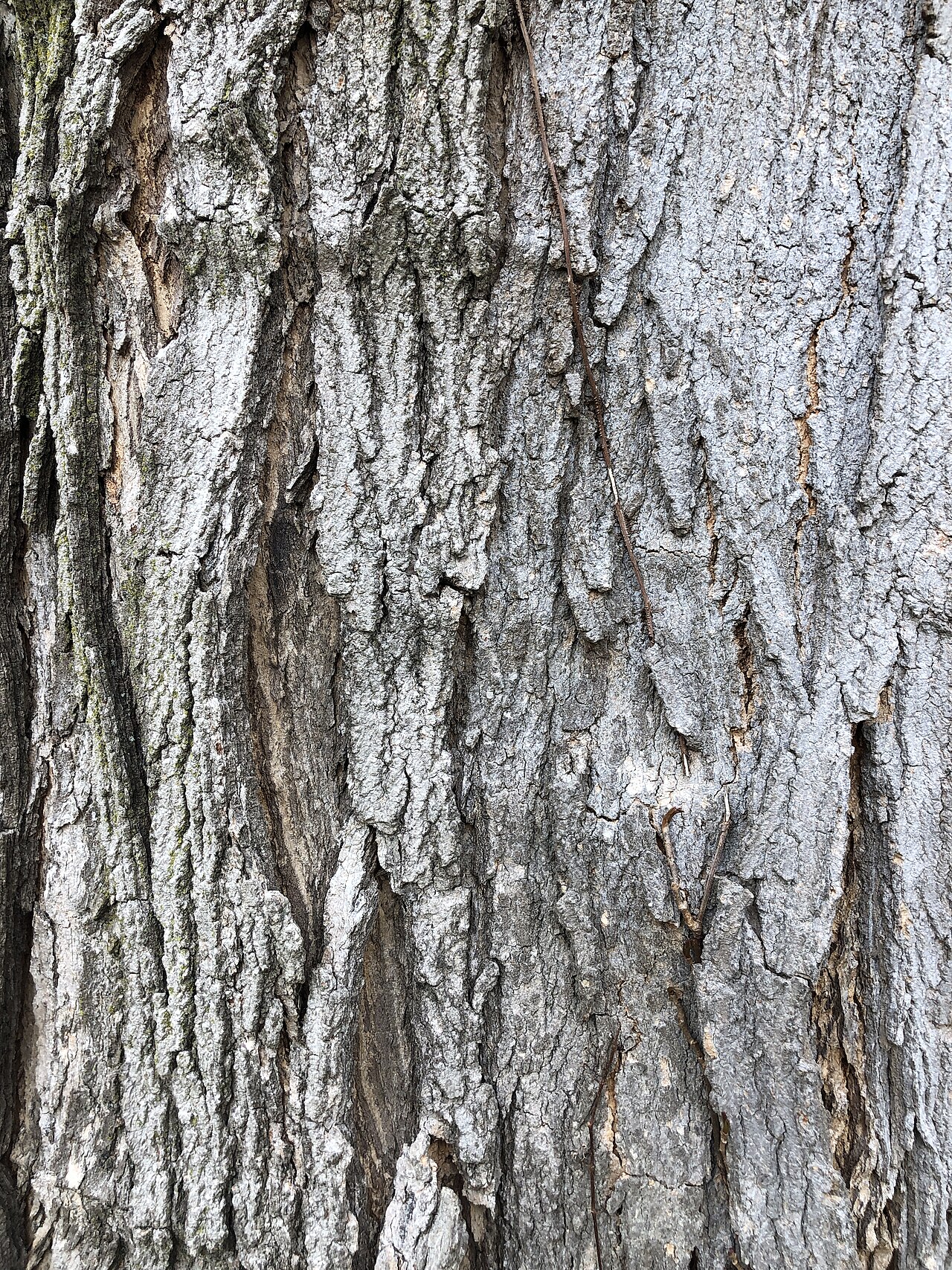
Young Sugar Maple bark is smooth and gray, similar in appearance to that of American Beech. As the tree matures, the bark develops long, irregular vertical ridges and furrows, creating a distinctive pattern of thick, platy strips that curl outward along one edge. On old trees, the bark becomes deeply furrowed with dark gray to gray-brown ridges that are rough and somewhat shaggy in appearance. This bark pattern is one of the most reliable identifying features of mature Sugar Maples, distinguishing them from the smoother bark of Red Maple and the peeling bark of Silver Maple. The bark plates are typically 3 to 6 inches wide and may appear to be loosely attached on very old trees.
Leaves
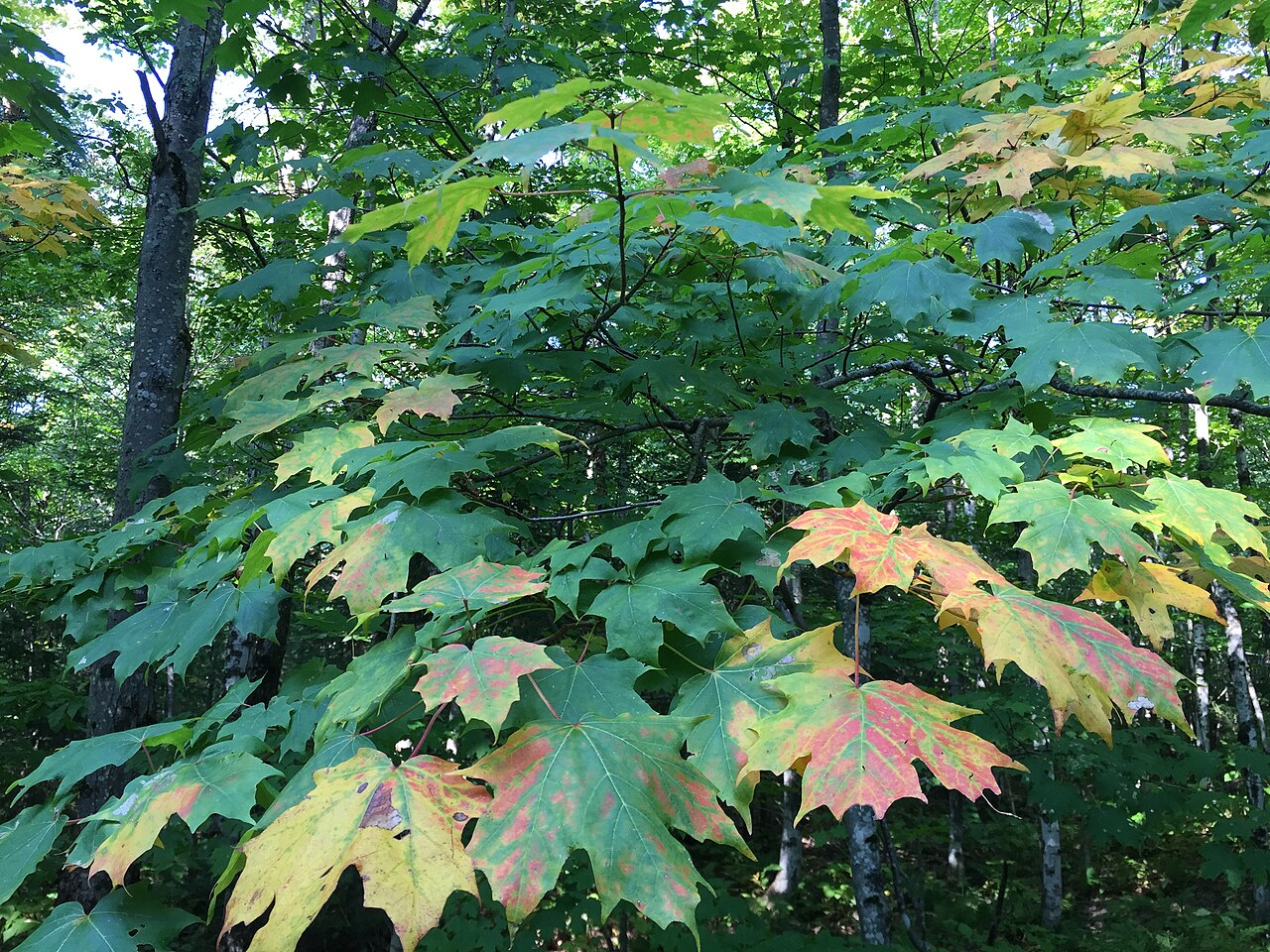
The leaves of Sugar Maple are simple, opposite, and palmately veined with five distinct lobes separated by smooth, U-shaped sinuses. This is a key identification feature, as the sinuses of Red Maple are V-shaped and those of Silver Maple are deeply cut. Each leaf is 3 to 6 inches long and equally wide, with a few coarse teeth along the lobe margins but without the fine serrations found on Red Maple leaves. The upper surface is dark green and smooth, while the lower surface is paler green and may be slightly hairy along the veins. The leaf petioles (stems) are long and slender, typically the same length as the leaf blade. When broken, the petiole exudes a clear, milky sap, which distinguishes Sugar Maple from most other maple species whose petioles exude clear, watery sap. In autumn, Sugar Maple leaves undergo a spectacular color transformation, turning brilliant shades of yellow, orange, red, and scarlet, often with multiple colors displayed simultaneously on the same tree or even the same branch.
Buds & Twigs
Winter buds are brown to dark brown, sharply pointed, and arranged oppositely on the twigs. The terminal bud is larger than the lateral buds, typically 6 to 10 millimeters long, with tightly overlapping scales that give it a smooth, conical appearance. Twigs are slender, smooth, and reddish-brown to gray-brown, with small, opposite leaf scars. The buds and twigs of Sugar Maple are more pointed and darker than those of Red Maple, which tend to be blunter and redder. The combination of sharp, brown buds and smooth, slender twigs is a reliable winter identification feature.
Flowers
Sugar Maple flowers appear in April to May, emerging with or just before the leaves on slender, drooping stalks (pedicels) clustered in corymbs. The individual flowers are small, yellowish-green, and lack petals, consisting primarily of a five-lobed calyx, stamens, and a pistil. Trees may produce male flowers, female flowers, or both on the same tree, and the ratio may vary from year to year. While individually inconspicuous, the massed clusters of flowers give the tree a soft, yellowish-green haze in early spring that is quite attractive and provides an important early nectar source for bees and other pollinators.
Fruit & Seeds
The fruits are paired samaras (winged seeds) that mature in autumn, typically September to October. Each samara is approximately 1 to 1.5 inches long, with a wing that forms a roughly 60-degree angle with its pair. The wings are typically green or brown at maturity and spin like tiny helicopters as they fall, carrying the seeds on the wind away from the parent tree. Sugar Maple samaras mature later than those of Red Maple and Silver Maple, which ripen in spring or early summer. The seeds require a period of cold stratification before they will germinate, and seedlings are remarkably shade-tolerant, capable of surviving for years in the deep shade of the forest understory before growing rapidly when a canopy gap provides sunlight.
Quick Facts
| Scientific Name | Acer saccharum |
| Family | Sapindaceae (Soapberry) |
| Plant Type | Deciduous Tree |
| Mature Height | 60-80 ft (occasionally 100+ ft) |
| Sun Exposure | Full Sun to Partial Shade |
| Water Needs | Moderate |
| Bloom Time | April – May |
| Flower Color | Yellowish-Green |
| USDA Hardiness Zones | 3-8 |
Native Range
Sugar Maple is native to the deciduous forests of eastern North America, with a range extending from Nova Scotia and southern Quebec westward to southeastern Manitoba and Minnesota, and southward through the Appalachian Mountains to northern Georgia and the highlands of Tennessee and North Carolina. The species reaches its greatest abundance and largest size in the Great Lakes region and the St. Lawrence River valley, where deep, fertile soils and cool, humid climates create ideal growing conditions.
The tree occurs primarily in mesic (moderately moist) upland forests, particularly on rich, well-drained soils derived from limestone, glacial till, or other calcareous parent materials. It is a dominant species in the northern hardwood forest type, often growing in association with American Beech, Yellow Birch, Eastern Hemlock, and White Ash. In the central Appalachians, Sugar Maple is a key component of cove hardwood forests, while in the upper Midwest, it dominates the mesic forests of Wisconsin, Michigan, and Minnesota.
Sugar Maple is less tolerant of heat, drought, and poor soils than Red Maple, which is why its range does not extend as far south or into as many marginal habitats. The species is generally absent from coastal plains, poorly drained lowlands, and dry ridgetops. Climate change poses a particular concern for Sugar Maple, as warming temperatures and altered precipitation patterns may shift its optimal range northward and reduce maple syrup production in traditional sugaring regions.
Growing & Care Guide
Sugar Maple is a long-lived, rewarding shade tree that thrives when planted in conditions that mimic its native habitat: cool, moist, well-drained soils with protection from extreme heat, drought, and road salt. While it requires more specific growing conditions than the highly adaptable Red Maple, a well-sited Sugar Maple will reward the gardener with decades of spectacular fall color, dense shade, and stately beauty.
Light
Sugar Maple grows best in full sun to partial shade. Young trees are remarkably shade-tolerant and can persist for years under a forest canopy, but they develop their best form and most vibrant fall color when given full sun exposure. In the southern portion of its range, some afternoon shade can help protect the tree from heat stress. Avoid planting in locations with intense reflected heat from pavement or buildings, as Sugar Maple is sensitive to heat island effects.
Soil & Water
This species strongly prefers deep, rich, well-drained soils with a slightly acidic to neutral pH (5.5 to 7.3). It performs best on loamy soils with good moisture-holding capacity but will not tolerate waterlogged or poorly drained conditions. Sugar Maple is moderately drought-sensitive and benefits from consistent moisture, particularly during establishment and hot summer months. A 3 to 4-inch layer of organic mulch around the root zone helps maintain soil moisture and cool root temperatures. Avoid compacted soils and sites with heavy foot or vehicle traffic near the root zone, as Sugar Maple roots are sensitive to soil compaction. The tree is notably intolerant of road salt, both from soil contamination and salt spray, making it a poor choice for street plantings along salted roads.
Planting Tips
Plant Sugar Maple in spring or early fall when temperatures are moderate and rainfall is reliable. Choose a permanent location, as this long-lived tree does not transplant well once established. Allow at least 30 to 40 feet from buildings, power lines, and other large trees to accommodate the mature crown spread. Dig the planting hole two to three times wider than the root ball but no deeper than the root flare. Backfill with the native soil, water thoroughly, and apply 3 to 4 inches of mulch, keeping it several inches away from the trunk to prevent bark rot. Sugar Maple establishes more slowly than Red Maple or Silver Maple, so patience during the first few years is essential. Once established, growth rates are moderate at 12 to 24 inches per year.
Pruning & Maintenance
Sugar Maple has a naturally strong branch structure and typically requires minimal pruning. When needed, prune in late summer or fall after the leaves have fully expanded, as pruning in late winter or early spring causes heavy sap bleeding from the wounds. While this bleeding rarely harms the tree, it can be alarming and unsightly. Remove dead, damaged, or crossing branches as needed, and address any co-dominant leaders early in the tree’s life by removing the weaker stem. Avoid heavy pruning or topping, which destroys the tree’s natural form and creates entry points for decay. Sugar Maple is susceptible to several pests and diseases, including Asian longhorned beetle, maple decline, verticillium wilt, and tar spot (a cosmetic fungal disease that causes black spots on leaves). Maintaining good growing conditions and avoiding stress are the best defenses against these problems.
Landscape Uses
Sugar Maple is among the finest large shade trees for residential and park landscapes where conditions suit its needs. Its dense, rounded crown provides exceptional summer shade that can reduce cooling costs significantly when planted on the south or west side of a building. The tree’s spectacular fall color display, which typically features a progression of yellows, oranges, and reds over several weeks, makes it the premier autumn ornamental tree in North America.
Common landscape applications include specimen trees in large yards and estates, shade trees for parks and campuses, naturalized woodland plantings, and reforestation projects on appropriate sites. Sugar Maple also performs well as a lawn tree, provided the soil is not compacted and the tree receives adequate moisture. Its dense shade can make it challenging to maintain turfgrass beneath the canopy, so mulching the root zone or planting shade-tolerant groundcovers is recommended.
Several cultivars have been developed for improved fall color, growth form, or heat tolerance. Notable selections include ‘Green Mountain’ (good heat tolerance, orange-red fall color), ‘Legacy’ (drought-tolerant, red-orange fall color), ‘Commemoration’ (rapid growth, reliable red fall color), and ‘Bonfire’ (brilliant orange-red fall color, rounded form). These cultivars may perform better than the straight species in challenging urban and suburban conditions.
Sugar Maple is not recommended for street plantings along salted roads, parking lot islands, confined urban spaces with compacted soils, or sites in the southern United States where summer heat and drought are prolonged. In these situations, Red Maple, Freeman Maple (Acer x freemanii), or other more adaptable species are better choices.
Wildlife & Ecological Value
Sugar Maple plays a central role in the ecology of the northern hardwood forest, supporting a diverse community of wildlife through its flowers, seeds, foliage, bark, and the overall structure and microclimate it creates. As a long-lived, dominant canopy species, a single Sugar Maple can influence its immediate ecosystem for centuries.
For Pollinators
Sugar Maple flowers, while small and individually inconspicuous, appear in early to mid-spring when many pollinator species are actively foraging. Honeybees, native bees, and various flies visit the flowers for nectar and pollen. The tree is wind-pollinated as well, but insect visitors contribute to cross-pollination. The early bloom time makes Sugar Maple a valuable component of the spring nectar flow, particularly for honeybees building up colony strength after winter.
For Birds
Sugar Maple forests provide critical habitat for a wide variety of bird species. The dense canopy supports nesting by wood warblers, vireos, tanagers, and other neotropical migrants, while cavity-nesting species such as woodpeckers, nuthatches, and chickadees use older trees with heartwood decay. The seeds are consumed by evening grosbeaks, pine grosbeaks, and various finches, while the bark crevices harbor insects that are gleaned by woodpeckers, brown creepers, and nuthatches. The dense shade and cool microclimate beneath Sugar Maples create habitat conditions favored by ovenbirds, wood thrushes, and other forest-interior species.
For Mammals
Squirrels, chipmunks, and other rodents consume Sugar Maple seeds and store them for winter food. White-tailed deer browse young shoots, seedlings, and low branches, and heavy deer browsing can significantly impact Sugar Maple regeneration in some forests. Porcupines feed on the inner bark, sometimes girdling branches or trunks. Black bears have been documented feeding on the cambium layer of Sugar Maples in spring. The tree also supports large populations of insects, particularly moth and butterfly larvae, that serve as food for insectivorous mammals such as bats.
Cultural & Historical Uses
Sugar Maple holds a uniquely prominent place in North American culture, with connections to indigenous traditions, colonial history, modern agriculture, and national identity. No other tree species on the continent is as deeply woven into the cultural fabric of its native region.
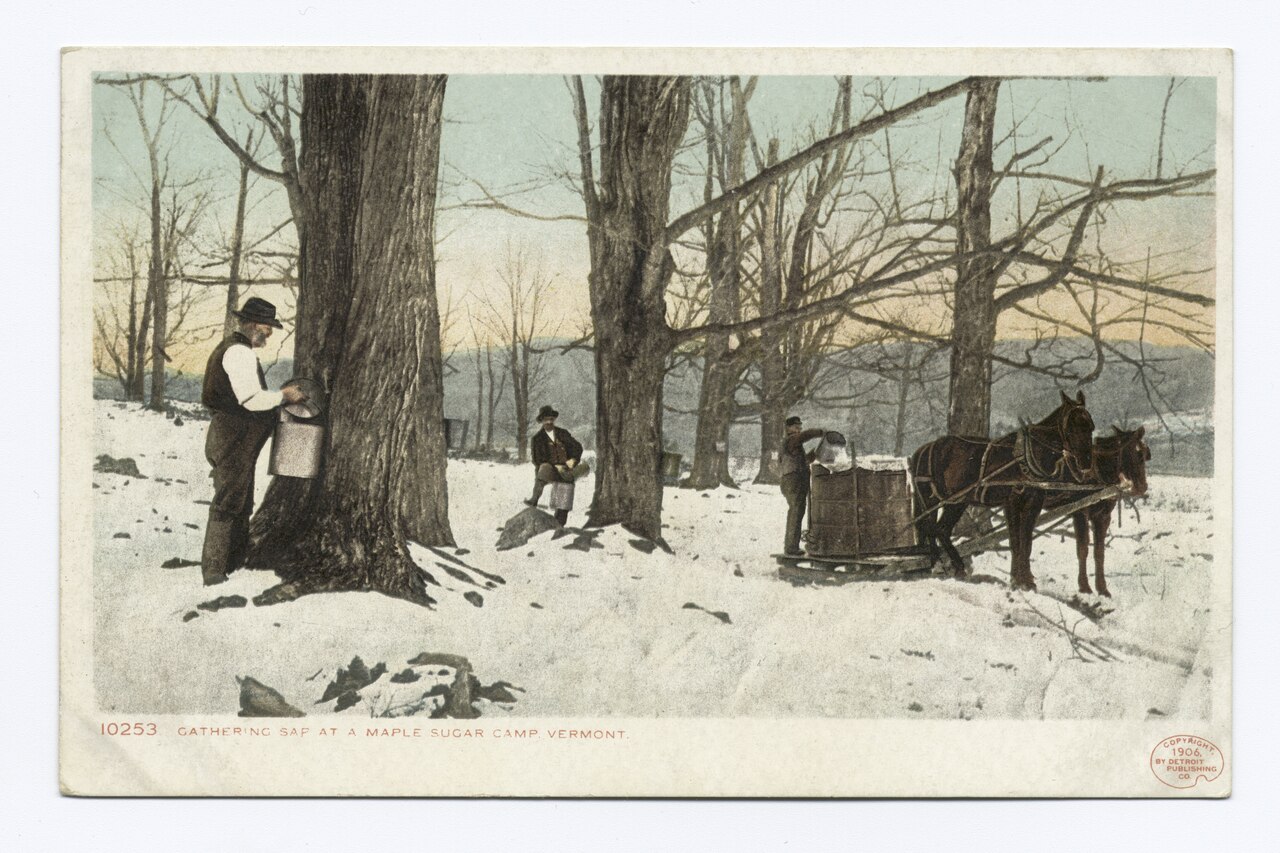
The practice of collecting and boiling maple sap to produce syrup and sugar was developed by indigenous peoples of the northeastern woodlands, including the Algonquin, Iroquois, Abenaki, and Ojibwe nations, long before European contact. These peoples recognized the annual sap flow as one of the first signs of spring, and the “sugar moon” or “maple moon” was an important seasonal marker. The methods of sap collection evolved from gashing the bark and collecting sap in birch bark containers to the use of wooden and later metal spiles (taps) and buckets. Maple sugar was a primary sweetener for indigenous communities and an important trade item.
European colonists quickly adopted maple sugaring practices, and by the 18th and 19th centuries, maple sugar production was a significant agricultural enterprise throughout the northeastern states and southeastern Canada. Thomas Jefferson and Benjamin Franklin both advocated for maple sugar as a domestic alternative to imported cane sugar. Today, the maple syrup industry produces over 4 million gallons annually in the United States alone, with Quebec contributing roughly 70 percent of the world’s supply. Vermont leads U.S. production, and the sugar house remains an iconic symbol of rural New England life.
Sugar Maple wood, marketed as “hard maple,” is one of the most valuable hardwoods in North America. The wood is extremely dense, hard, and fine-grained, making it ideal for flooring, furniture, cabinetry, cutting boards, butcher blocks, bowling lanes, and musical instruments. Figured varieties, including bird’s-eye maple and curly (tiger) maple, are highly prized by woodworkers and command premium prices. The wood’s excellent acoustic properties make it the standard material for the backs, sides, and necks of violins, violas, cellos, and guitars.
The Sugar Maple leaf has become a powerful cultural symbol. It appears on the national flag of Canada, adopted in 1965, and is widely used in logos, emblems, and artwork throughout northeastern North America. Fall foliage tourism, driven largely by the brilliant autumn display of Sugar Maple and other hardwood species, generates billions of dollars in economic activity annually across New England and the upper Midwest. The tree’s image appears on Vermont license plates, maple syrup bottles, and countless regional products.
Frequently Asked Questions
How much syrup does one Sugar Maple tree produce?
A healthy, mature Sugar Maple with a crown diameter of at least 30 feet can support one to three taps, depending on trunk diameter. Each tap yields approximately 10 to 20 gallons of sap per season, and it takes roughly 40 gallons of sap to produce one gallon of maple syrup. A single tree typically produces about one-half to one and a half gallons of syrup per year, depending on weather conditions and tree health.
What is the difference between Sugar Maple and Red Maple?
Sugar Maple and Red Maple are both native maples, but they differ in several key ways. Sugar Maple has five-lobed leaves with smooth, U-shaped sinuses, while Red Maple has three to five lobes with V-shaped, serrated sinuses. Sugar Maple bark develops thick, platy ridges with age, while Red Maple bark remains smoother. Sugar Maple sap has higher sugar content (2-3%) compared to Red Maple (1-2%). Red Maple is far more adaptable to different soil and moisture conditions, while Sugar Maple requires well-drained, rich soils and is intolerant of road salt and soil compaction.
Can Sugar Maple grow in the southern United States?
Sugar Maple can grow in the upper South, particularly in the Appalachian highlands of Virginia, North Carolina, Tennessee, and northern Georgia, where cooler temperatures at higher elevations mimic its preferred climate. However, it struggles in the lowland South where summer heat, humidity, and drought stress are prolonged. The subspecies Acer saccharum subsp. floridanum (Florida Maple or Southern Sugar Maple) is better adapted to warmer southern climates and is sometimes used as a substitute in southern landscapes.
Why are Sugar Maple trees declining in some areas?
Sugar Maple decline is a complex issue driven by multiple stressors, including acid rain and soil acidification that depletes calcium and magnesium from forest soils, road salt contamination, Asian longhorned beetle infestations, drought stress exacerbated by climate change, soil compaction from development, and heavy browsing by overabundant white-tailed deer populations. Forest managers are addressing these issues through liming programs to restore soil chemistry, pest monitoring, and deer management initiatives.
How long does a Sugar Maple tree live?
Sugar Maple is a long-lived species, with trees commonly reaching 200 to 300 years of age in undisturbed forests. Some exceptional specimens have been documented at over 400 years old. In landscape settings, well-maintained Sugar Maples can easily live 150 to 200 years, making them true legacy trees that can be enjoyed by multiple generations. The combination of longevity, beauty, and cultural significance makes planting a Sugar Maple one of the most rewarding long-term investments a property owner can make.

Looking for a nursery that carries Sugar Maple?
Browse our native plant nursery directory to find a supplier near you.