How to Pick the Best Bird Netting for Your Fruit Trees: A Guide to Effective Protection
We independently select all products and services. If you click through links we provide, Plant Native may earn a commission with no extra cost to you. As an Amazon Associate I earn from qualifying purchases.
Last updated: September 7, 2026
Bird netting is an essential tool for protecting fruit trees from avian pests. It serves as a physical barrier, preventing birds from accessing and damaging ripening fruit.
Properly installed netting can significantly reduce crop losses and ensure a bountiful harvest for gardeners and orchardists alike.
When choosing bird netting for fruit trees, several factors come into play.
The material, mesh size, durability, and ease of installation are crucial considerations.
Netting made from high-density polyethylene is popular due to its strength and weather resistance. The mesh size should be small enough to keep out common fruit-eating birds while allowing beneficial insects to pass through.
Durability is paramount when selecting bird netting. UV-stabilized options resist degradation from sunlight exposure, extending the netting’s lifespan.
We researched and tested various bird netting products to determine which ones offer the best protection and longevity for fruit trees.
Best Bird Netting for Fruit Trees
We’ve carefully evaluated various bird netting options to protect fruit trees from avian visitors. Our top picks balance effectiveness, durability, and ease of use to help gardeners safeguard their harvests.
These products offer reliable protection against birds while allowing sunlight and airflow for healthy fruit production.
Our top pick

- Ultra-fine mesh allows air, water, and light through
- Convenient zipper and drawstring design
- Reusable and durable construction
Cons
- Drawstring may deteriorate over time
- Limited size options
- Can be challenging to secure on very large trees
We found the Homoda Tree Netting to be an excellent solution for safeguarding our fruit trees and garden plants.
The ultra-fine mesh effectively keeps birds and insects at bay while still allowing essential elements like sunlight, rain, and air to reach the plants. This feature ensures that our trees and plants continue to thrive under protection.
The zipper and drawstring design proved to be incredibly user-friendly. We appreciated how easy it was to place the netting over our trees and secure it tightly.
This design element is particularly useful on windy days, as it prevents the netting from blowing off and exposing the plants to potential pests.
Durability is a key factor in garden products, and this netting doesn’t disappoint. We’ve used it for multiple growing seasons, and it has held up well.
The ability to fold and store it easily between uses makes it a cost-effective choice for long-term garden protection.
While the netting performs admirably overall, we did notice that the drawstring tends to wear out faster than the rest of the product. It’s a minor inconvenience, but worth noting for those planning long-term use.
Additionally, while the available sizes cover most common needs, those with very large or unusually shaped trees might find it challenging to achieve a perfect fit.
Best runner-up

- Large coverage area
- Includes ties and tacks for installation
- Durable nylon construction
Cons
- May require additional support for larger trees
- Mesh size might allow smaller birds through
- Green color may be visible in landscaping
We recently tested the JZGEL Bird Protection Net in our orchard, and it proved to be a reliable defense against hungry birds.
The 13 x 33 foot size covered several of our smaller fruit trees with ease. We appreciated the included cable ties and plastic tacks, which made securing the netting much simpler than expected.
The nylon material felt sturdy in our hands and withstood the elements well during our trial. We noticed that sunlight and rain passed through the 0.59-inch mesh openings without issue, allowing our trees to thrive.
However, we did observe that very small birds could occasionally slip through, so it may not be perfect for all situations.
Installation was straightforward, though we found that larger trees required additional support to keep the netting taut. We cut the netting to fit our needs without any fraying, which was a plus.
The green color blended reasonably well with our foliage, but it was still visible upon close inspection.
Best budget option

- Large size covers dwarf trees completely
- Fine mesh allows air and sunlight through
- Drawstring closure for secure protection
Cons
- May be too heavy for some delicate branches
- Limited size options for larger trees
- Potential pollination interference
We recently tried out the Klxuyuo Tree Netting on our dwarf peach tree. The 7×6 ft size was perfect, enveloping the entire tree with ease.
The fine mesh impressed us with its ability to keep birds and insects at bay while still allowing ample sunlight and air circulation.
The drawstring feature proved particularly useful. We cinched it tight around the trunk, creating a sealed environment that effectively deterred squirrels and other ground-based pests. This added layer of protection gave us peace of mind about our developing fruit.
During our use, we noticed the netting’s durability. It withstood light winds and didn’t tear when brushed against branches.
However, on our younger trees with more flexible limbs, the netting’s weight slightly bent some branches. We’d suggest extra care when using it on very young or delicate trees.
Best premium choice
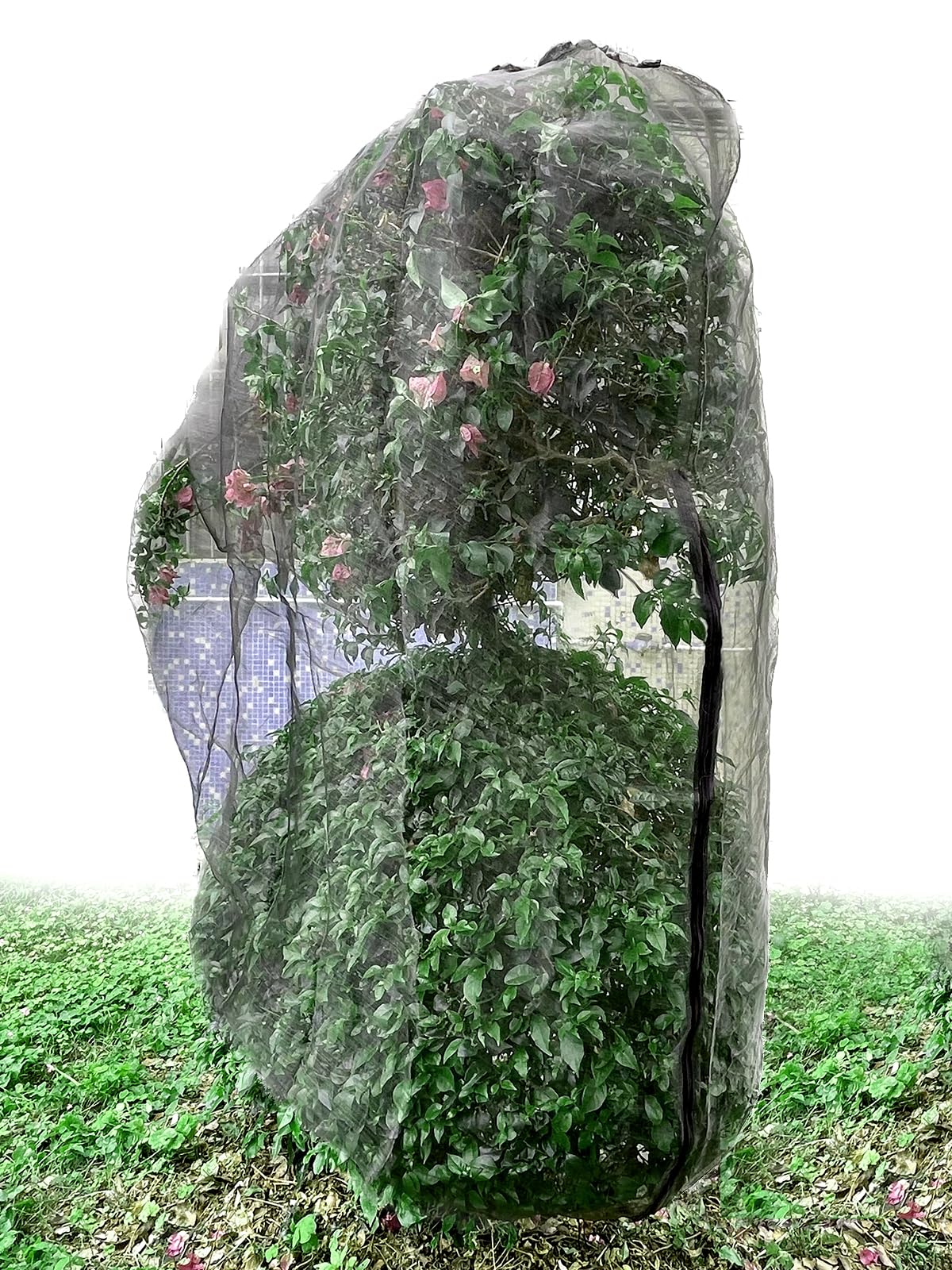
- Double zippers and drawstring for easy use
- Large size covers various plants
- Allows air, water, and light through
Cons
- Thin material may tear easily
- Drawstring cord could be sturdier
- May not withstand determined pests
We found the BiirBlue Fruit Tree Netting to be a practical solution for protecting our fruit trees and garden plants.
The 6×6 ft size provided ample coverage for our medium-sized trees and bushes. We appreciated the double zipper design, which made accessing our plants for watering and harvesting much simpler than traditional netting.
The ultra-fine mesh effectively kept birds and insects at bay while still allowing sunlight, air, and water to reach our plants. We noticed our fruits developing nicely without any pest damage.
The drawstring at the bottom was helpful in securing the netting around the trunk, preventing any gaps for critters to sneak through.
Despite its effectiveness, we did notice some potential durability issues. The material, while lightweight, felt a bit thin and we worried it might tear if snagged on sharp branches.
We were careful during installation and removal to avoid any damage. Overall, this netting served its purpose well, protecting our fruit trees throughout the growing season and proving to be a cost-effective solution for our garden’s pest problems.
Also great

- Easy to cut and install
- Allows sunlight and rain through
- Reusable and UV-resistant
Cons
- Can be challenging to untangle initially
- May require additional support for larger areas
- Mesh size may not deter very small pests
We found this 13×20 foot garden netting to be a practical solution for safeguarding our fruit trees and vegetable patches.
The flexible PE material strikes a good balance between strength and ease of use. We appreciated how simple it was to cut the netting to fit our specific needs without compromising its integrity.
During installation, we noticed the mesh doesn’t snag on branches or leaves, making it much easier to drape over our plants.
The netting allows ample sunlight and water to reach the foliage while keeping birds and larger pests at bay. This feature ensures our plants continue to thrive under protection.
In our experience, the BKNUBERW netting held up well against UV rays and weathering.
We’ve successfully used it to shield peaches, pears, and even tomatoes from hungry visitors. Its ability to catch falling fruit was an unexpected bonus, preventing damage and reducing cleanup time in our orchard.
When choosing bird netting for fruit trees, we need to consider several key factors. Let’s explore the most important features to look for:
The mesh size should be small enough to keep out the target birds. For most fruit trees, a 5/8-inch mesh works well.
Nylon and polyethylene are common materials. Nylon is durable but may stretch. Polyethylene resists stretching and UV damage.
Look for UV-stabilized netting that can withstand sun exposure. This ensures longevity and continued effectiveness.
Black netting is less visible and blends with surroundings. Green can be a good choice for aesthetics in garden settings.
Measure your trees to determine the amount of netting needed. Choose a size that allows full coverage with some extra for securing.
Look for netting that comes with fasteners or clips for easy setup. Some products offer pre-cut sizes for convenience.
Opt for netting that can be easily removed and stored for future seasons. This provides better value over time.
By considering these factors, you can select bird netting that effectively protects fruit trees while meeting specific needs.
Buying Guide
When choosing bird netting for fruit trees, we need to consider several key factors. Let’s explore the most important features to look for:
Mesh Size
The mesh size should be small enough to keep out the target birds. For most fruit trees, a 5/8-inch mesh works well.
Material
Nylon and polyethylene are common materials. Nylon is durable but may stretch. Polyethylene resists stretching and UV damage.
Durability
Look for UV-stabilized netting that can withstand sun exposure. This ensures longevity and continued effectiveness.
Color
Black netting is less visible and blends with surroundings. Green can be a good choice for aesthetics in garden settings.
Size and Coverage
Measure your trees to determine the amount of netting needed. Choose a size that allows full coverage with some extra for securing.
Ease of Installation
Look for netting that comes with fasteners or clips for easy setup. Some products offer pre-cut sizes for convenience.
Reusability
Opt for netting that can be easily removed and stored for future seasons. This provides better value over time.
| Feature | What to Look For |
|---|---|
| Mesh Size | 5/8-inch for most applications |
| Material | UV-stabilized nylon or polyethylene |
| Color | Black for low visibility, green for aesthetics |
| Installation | Included fasteners or clips |
By considering these factors, you can select bird netting that effectively protects fruit trees while meeting specific needs.