
Kauila (Colubrina oppositifolia)
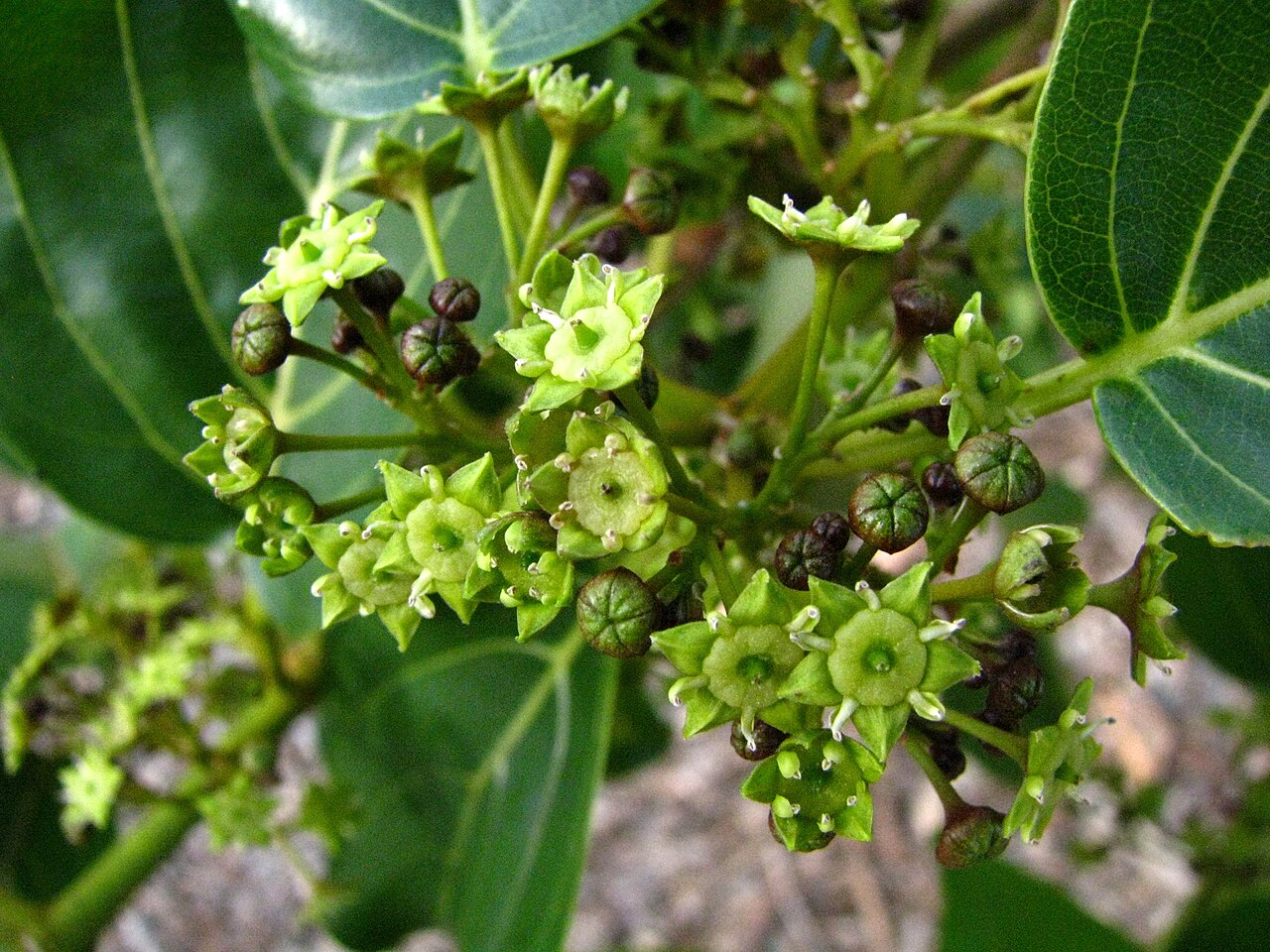
Kauila (Colubrina oppositifolia) is a Hawaiian native tree with opposite leaves, small greenish flowers, and a history closely tied to exceptionally hard wood. It can be an attractive specimen in a suitable dry or mesic garden, but it is also a rare, federally listed species whose wild populations deserve careful protection. A landscape planting should begin with documented nursery material and a site chosen for the tree’s actual needs.
The name kauila, also spelled kauwila, is shared with Alphitonia ponderosa. Both are native Hawaiian trees in the buckthorn family, but they are not the same species. This page concerns Colubrina oppositifolia. Confirm the full botanical label before comparing care instructions, conservation status, or historical uses.
The University of Hawaiʻi profile describes kauila as useful in xeric and mesic landscapes after establishment, with full sun and very good drainage. It also emphasizes a serious practical concern: black twig borer. Selecting a good site is only the first step; regular observation of twigs and new growth is part of growing this tree well.
Quick Facts
| Scientific Name | Colubrina oppositifolia |
| Family | Rhamnaceae |
| Plant Type | Native tree or large shrub |
| Mature Height | 15–30 ft commonly; larger forest trees occur |
| Mature Spread | Variable; reserve room for a spreading tree crown |
| Growth Rate | Site dependent |
| Sun Exposure | Full sun |
| Water Needs | Dry after establishment; excellent drainage |
| Soil Type | Well-drained soil matched to native habitat and nursery provenance |
| Soil pH | Assess local soil and nursery performance before amending |
| Bloom Time | Variable with source and conditions; observe local seasonality |
| Flower Color | Small greenish-white to yellowish flowers |
| Fall Color | Evergreen; seasonal new growth may contrast with older foliage |
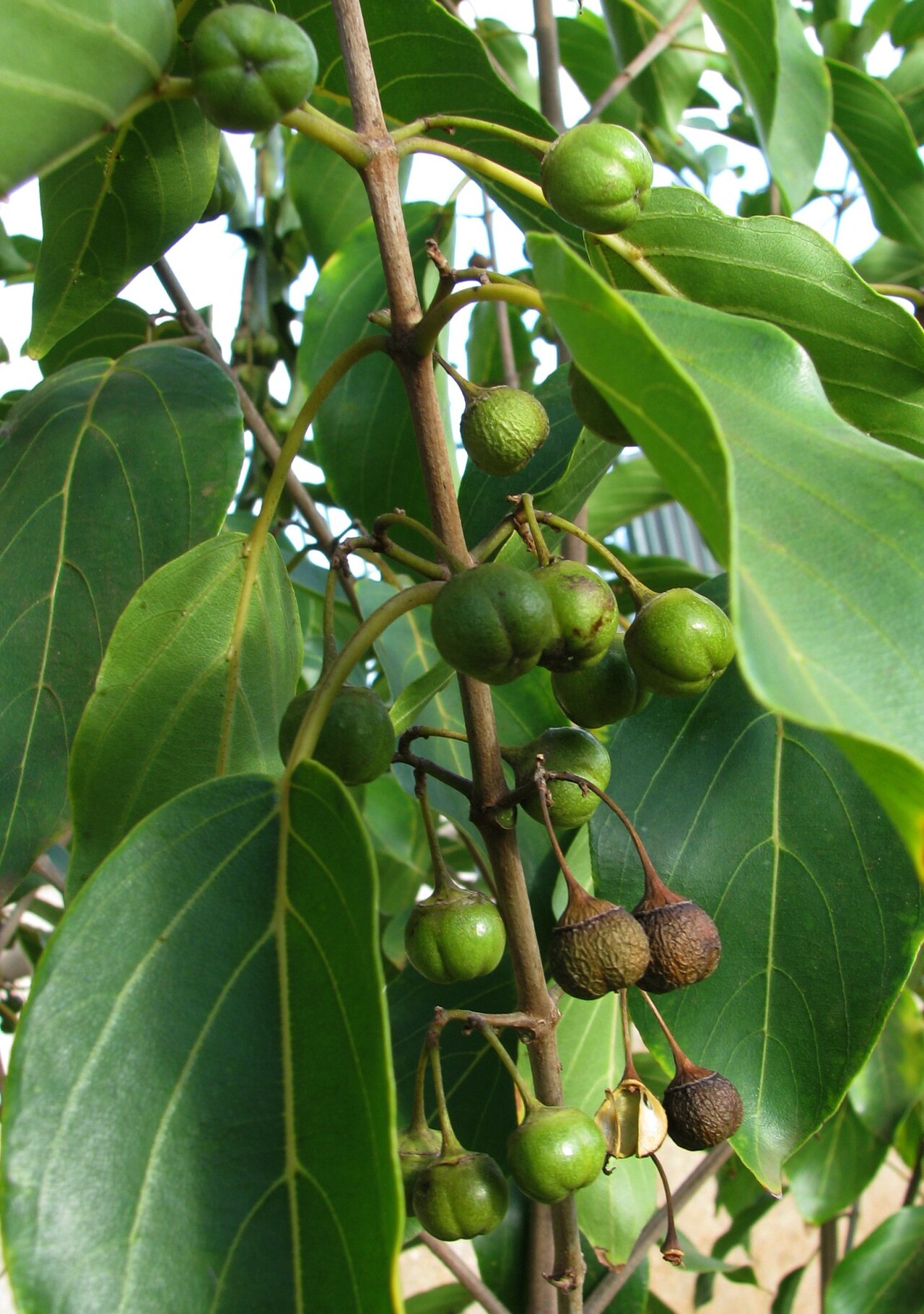
| Fruit | Woody capsules that open to release seeds |
| Deer Resistant | Not a browse-proof planting; protect young trees where needed |
| USDA Hardiness Zones | Use Hawaiian island, elevation, and exposure guidance for site selection |
Identification and Form
The opposite arrangement of the leaves is reflected in the species epithet oppositifolia. Leaves face one another along the twig, and their texture gives the crown a medium-to-coarse appearance. Examine an intact branch rather than identifying the tree from a single fallen leaf.
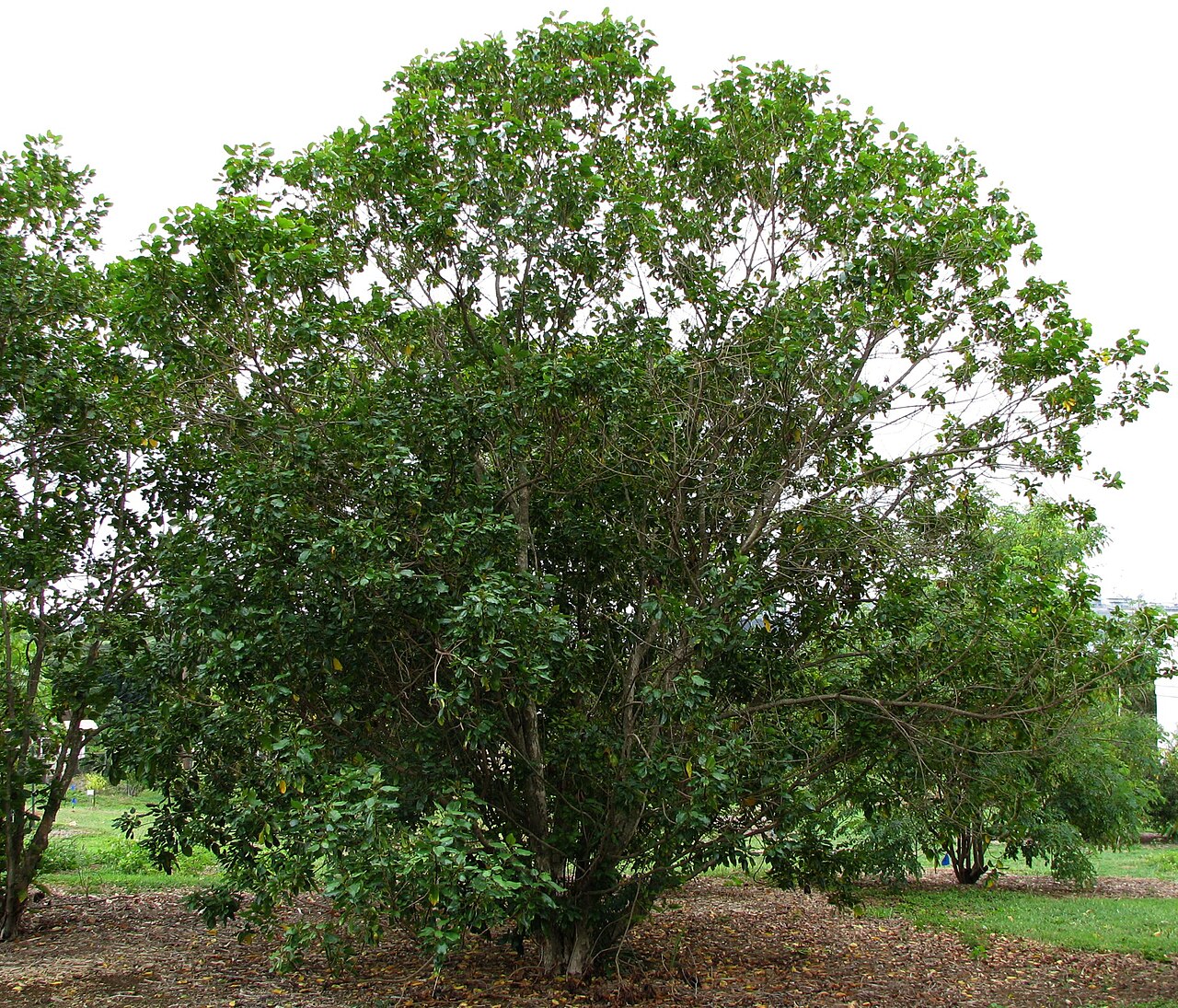
Kauila can develop into a substantial tree. The regional list gives a common landscape range of 15–30 feet, while the University of Hawaiʻi profile includes larger medium-tree dimensions. Reserve space for a real crown and root system rather than treating a compact nursery specimen as a permanent shrub.
Small Flowers and Woody Capsules
The flowers are small, greenish white to yellowish, and not considered showy at a distance. They become more interesting when viewed closely among the leaves. In cultivation, flowering and fruiting may recur through much of the year, but the pattern depends on the individual and conditions.
The mature fruits are woody capsules that open and scatter seeds. Capsules may remain on the tree for months. This differs from a soft berry crop, and it is useful both for identification and for planning observation or seed collection within an authorized nursery or conservation program.
Native Range and Dry-Forest Habitat
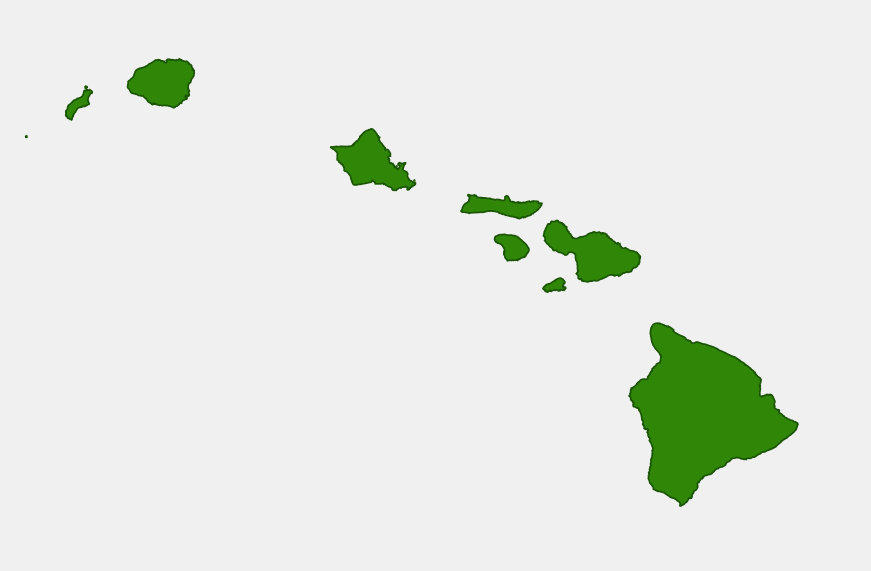
Kauila is endemic to Hawaiʻi. The University of Hawaiʻi profile records it from Oʻahu, Maui, and Hawaiʻi, particularly in remnant dry to mesic forest. Its habitat account gives elevations from roughly 785 to nearly 3,020 feet and discusses populations in the Waiʻanae Mountains, West Maui, and leeward Hawaiʻi Island.
Older accounts may give very small population counts for particular places. Such numbers are observations from a specific period, not a current census. The consistent message is that wild populations are limited and vulnerable, while conservation requires more than ornamental cultivation away from their habitat.
Native Range
| U.S. States | Hawaii |
| Hawaiian Islands | Oʻahu, Maui, Hawaiʻi |
| Mexico / Canadian Provinces | Not included in the verified native range used here |
| Ecoregion | Hawaiian tropical forest and woodland |
| Elevation Range | About 785–3,020 ft in the UH habitat account |
| Habitat | Remnant dry to mesic forest |
| Common Associates | Site-appropriate native forest canopy and understory |
USDA PLANTS profile (COOP). Species identity verified; this link is not a guarantee of county-level distribution data.
The map is a Hawaii state overview, not a map of every surviving population. It does not establish that the species is native to every island shown. For restoration, consult local botanical records and the project’s provenance requirements. For a garden, use the dry-to-mesic habitat as a guide to sunlight, drainage, and watering after establishment.
Choosing a Site
Full Sun and Room to Grow
Full sun is the published recommendation. Select a location where the developing crown will continue to receive useful light as nearby plants mature. A small sunny opening beneath larger trees may become unsuitable when their branches expand.
Allow clearance from buildings, boundaries, and access routes. Kauila can serve as an accent, specimen, shade tree, or part of a loose screen, but each role requires adequate space. If constant severe pruning would be necessary to keep the tree in bounds, reconsider the placement while it is still easy to change.
Drainage Before Irrigation Design
The University of Hawaiʻi guidance strongly emphasizes good drainage. Observe the proposed site after rain and consider whether compacted soil or runoff creates a persistent wet pocket. Dry-forest origin does not mean roots need no water, but it does make chronic saturation a poor assumption for garden care.
Assess the surrounding soil, not only the planting hole. A rich, amended pocket inside dense ground can still trap water or confine roots. Site choice and broad root-zone conditions are more important than a small quantity of material added around the nursery root ball.
Planting and Establishment
Obtain a healthy, correctly identified nursery plant and ask about its island source. The University of Hawaiʻi profile notes variation between Oʻahu and Hawaiʻi Island forms. That information may help explain appearance and performance, and it is particularly important for conservation-oriented planting.
Prepare the site before exposing the roots, handle the root ball carefully, and keep it from drying in sun or wind. Plant at the appropriate original soil level and avoid burying the stem base. Water to settle the surrounding soil, then check that the plant has not sunk below its intended level.
Keep weeds manageable around the young tree and use mulch without piling it against the trunk. Maintain enough access to inspect the stem, twigs, and soil moisture. A dense ring of competing plants can make both establishment and pest monitoring more difficult.
Watering After Planting
A new tree needs water while roots establish, even if the mature species tolerates drought. Check moisture inside the nursery root ball and in the adjacent ground, which may dry at different rates. Apply water according to the actual soil and weather rather than a fixed schedule copied from a wetter garden.
Once established, reduce supplemental watering to suit the dry-to-mesic setting. The University of Hawaiʻi account warns against overwatering and notes that excessive water can encourage shoots near the base, giving the tree a shrubbier appearance. Such shoots are a reason to reassess conditions, not a complete diagnosis by themselves.
Broaden the watered area as roots spread and avoid maintaining a continuously wet spot against the trunk. During drought, monitor the tree rather than assuming tolerance means invulnerability. During rainy periods, check that irrigation is not adding unnecessary water to already wet ground.
Black Twig Borer: Inspect Early
Black twig borer is highlighted as a serious threat in the University of Hawaiʻi profile. Dying twigs or stems should prompt timely inspection and local diagnostic advice. Do not wait for extensive crown decline before investigating a pattern of dieback.
Several problems can cause a twig to die, so confirm the cause before treatment. Examine the affected material, note whether damage is spreading, and consider the tree’s overall condition. A targeted response to an identified pest is more useful than applying a general product without knowing what is happening.
Keep observations and photographs of affected branches. They can help a knowledgeable nursery or extension specialist assess the problem and determine whether the response is working. The source’s emphasis on vigilance is particularly relevant to a tree whose conservation value makes preventable losses important.
Other Care and Pruning
Whiteflies may gather beneath leaves and can become troublesome on small trees. Inspect leaf undersides when growth looks poor or insects are apparent. Match any intervention to the scale of the problem and avoid unnecessary treatment of an otherwise functioning native planting.
Kauila tolerates some pruning, including management of basal shoots. Prune with a purpose and preserve a balanced crown. Repeated hard shaping can obscure the tree’s natural form and may remove the small flowers and capsules that make it interesting to observe.
Use nutrition according to the soil and the young tree’s condition. A published fertilizer schedule is not a substitute for checking drainage, irrigation, and root health. Slow or uneven growth can reflect site conditions rather than a simple need for more nutrients.
Conservation and Nursery Sourcing
The University of Hawaiʻi account identifies Colubrina oppositifolia as federally listed and describes it as endangered. That status applies to this species, not automatically to every plant called kauila. Accurate names matter when discussing conservation and when obtaining material.
Choose nursery-propagated stock from a reliable source. Do not remove wild seedlings, branches, or wood for a garden project. A home specimen can support appreciation and education, but it is not a substitute for protecting remnant dry forest and maintaining appropriately sourced conservation populations.
For restoration, work within the project’s guidance on provenance, genetic material, and monitoring. A tree that grows well in a garden may still be inappropriate for a particular wild locality. The purpose of the planting should determine the sourcing standard, not simply availability.
Hard Wood and Hawaiian Cultural History
Kauila is associated with exceptionally dense, durable wood. Hawaiian uses recorded in the University of Hawaiʻi account include tools, digging sticks, carrying poles, implements for kapa work, and other objects requiring strength. Musical and sporting uses are also part of the historical record.
Because Colubrina oppositifolia and Alphitonia ponderosa share the name kauila or kauwila, not every historical object can be assigned confidently to one species. The source itself notes that dried wood can make distinctions difficult. A careful account preserves that uncertainty instead of claiming every use uniquely for this tree.
The wood’s cultural importance is a reason to understand and conserve the living plant, not a reason to treat rare trees as an available timber resource. A planted specimen can become a place to teach the relationship between botanical identity, material properties, and Hawaiian knowledge without being harvested.
Questions Before Buying
Is this the same as Alphitonia ponderosa? No. Both can be called kauila, but this page is specifically about Colubrina oppositifolia.
Will it tolerate a dry garden? Established plants are suited to dry-to-mesic conditions when sunlight and drainage are appropriate. Newly planted trees still need establishment water.
What problem deserves especially close attention? Twig and stem dieback, because black twig borer is a serious known threat. Obtain an accurate diagnosis promptly.
Does extra irrigation make it grow better? Not necessarily. The published guidance warns against overwatering established plants and notes increased basal shoot growth under excessive watering.
Can a garden tree replace conservation work? No. Cultivation can be valuable, but wild habitat, local provenance, and coordinated management remain essential.
A Rare Tree for an Informed Gardener
Kauila can bring a handsome crown and a rich cultural story to a suitable native garden. Its best care is straightforward but attentive: correct identity, responsible nursery sourcing, full sun, excellent drainage, sensible establishment water, and regular inspection for dieback. Those choices give a rare Hawaiian dry-forest tree a more durable place in the landscape.
Sources & Further Reading
Botanical range, identification, and cultural information are based on these sources. Garden-management advice should be adapted to local soil, exposure, and nursery provenance.
Find Native Plants Near You
Look for correctly identified, nursery-propagated plants with documented Hawaiian provenance. Visit our Hawaii native plant nursery directory and ask about stock suited to your island, elevation, and rainfall. Compare other trees in our Hawaii native plant list.