
Round-lobed Hepatica (Hepatica americana)
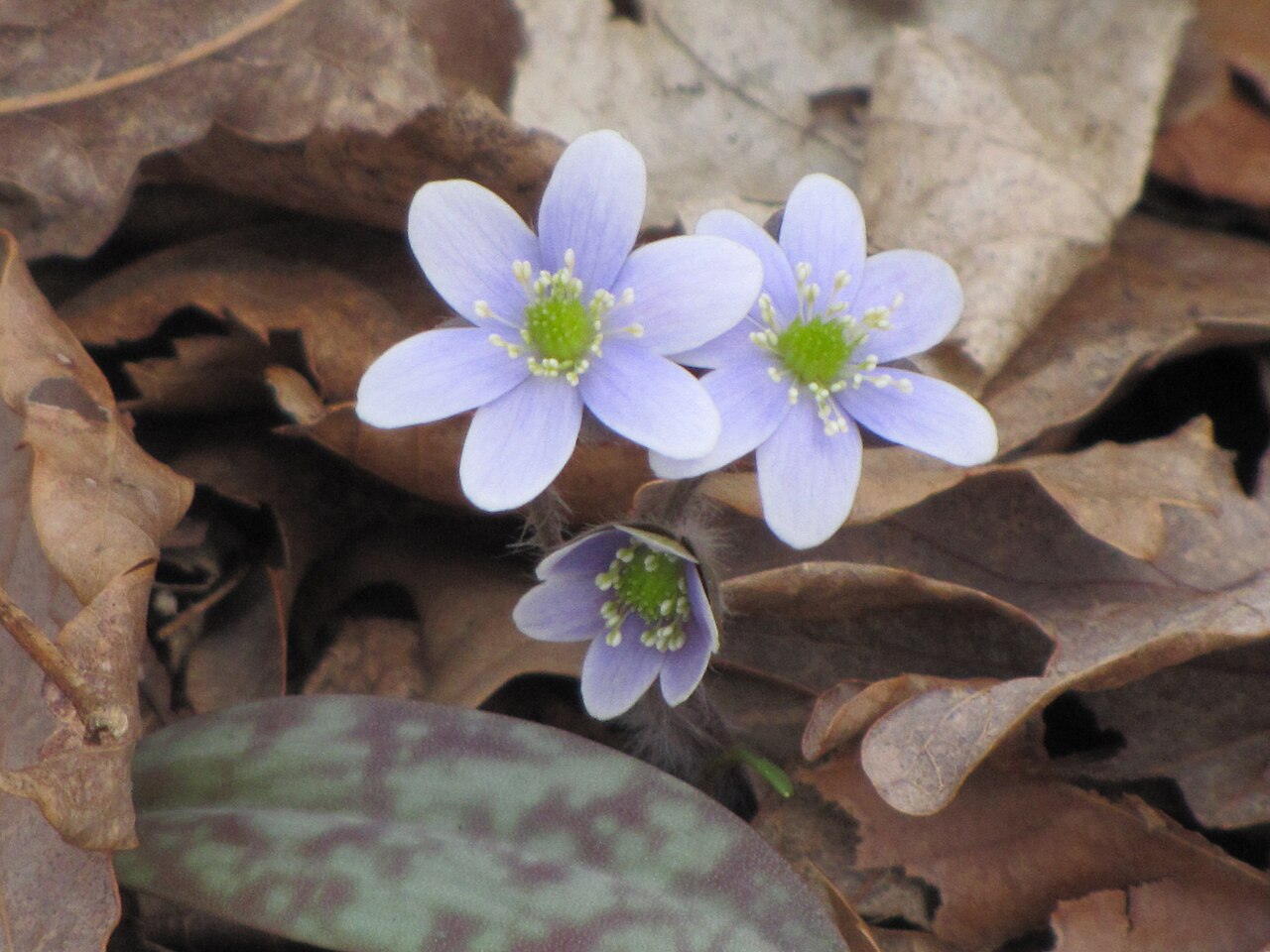
Round-lobed hepatica (Hepatica americana) offers one of the most intimate displays of the woodland spring. Small blue, lavender, white, or pink flowers appear among last year’s leathery leaves, often before the deciduous canopy has filled in. The new leaves that follow are divided into three rounded lobes. A few plants beside a woodland path can be more rewarding than a broad swath hidden beyond easy viewing distance.
This eastern North American native is a long-term addition to a shade garden, not a fast solution for bare ground. It grows slowly, appreciates a stable root environment, and does best where leaf-derived organic matter and drainage resemble a woodland floor. In Maryland, Virginia, and West Virginia, a lightly shaded, humus-rich pocket is a better starting point than a heavily mulched bed under dry eaves.
Botanical references may call the same round-lobed plant Anemone americana, Anemonoides americana, or Hepatica nobilis var. obtusa. Nursery labels should make clear that it is the rounded-leaf native, rather than a sharp-lobed hepatica or a Eurasian garden selection. The leaves and green bracts below the flowers are more useful identifiers than the flower color, which overlaps among hepaticas.
Identification
Rounded Basal Leaves
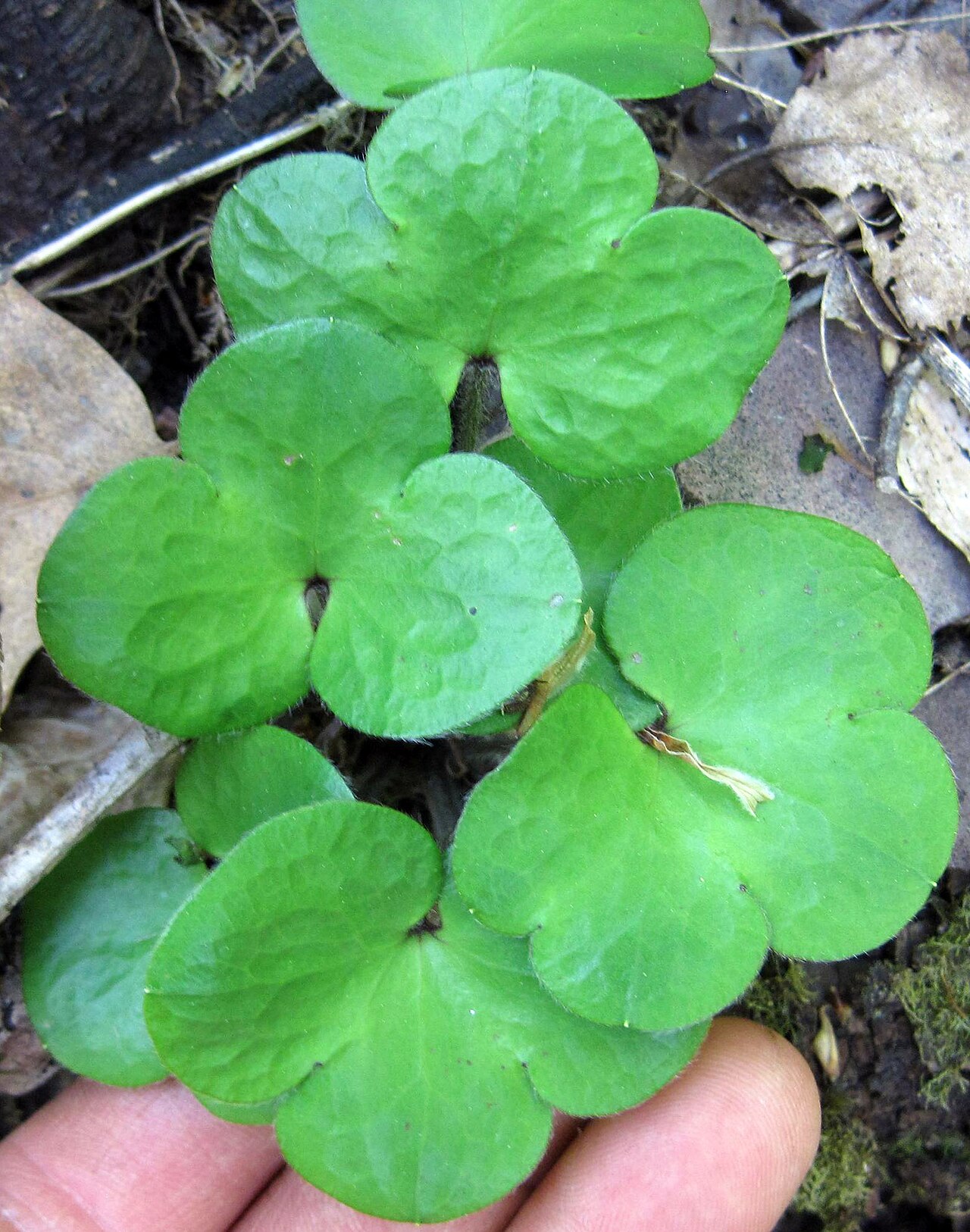
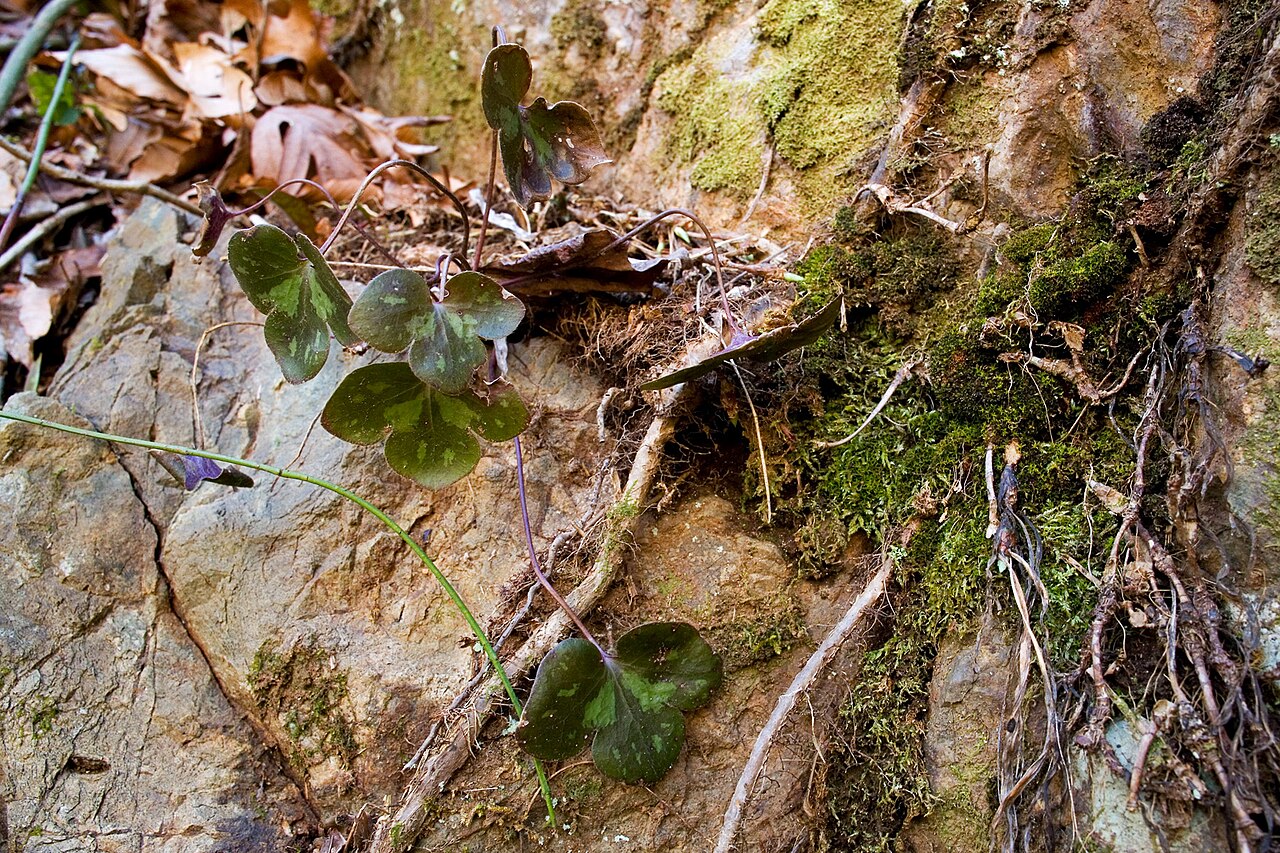
The leaves arise from the base on stalks and have three broad, rounded lobes. Their outline can suggest a small shamrock, but the leathery, often mottled blade and the plant’s woodland habit distinguish it from clover. New leaves are fresh green; older leaves darken and can become reddish brown through winter. That persistent foliage lets the clump remain visible when many spring wildflowers have disappeared.
Flower Stalks
Soft hairs cover the slender, leafless flower stalks. Each carries a solitary bloom above the low leaf cluster. Plants commonly stand around 4–6 inches in the regional list, while broader horticultural descriptions include roughly 3–9 inches. The scale is always small. A planting is easily obscured by deep bark mulch or by vigorous neighbors, so use a location where the stalks can rise into an open viewing space.
Flowers and Bracts
Several colored, petal-like sepals surround a center with numerous pale stamens. Three green hairy bracts immediately below the display have rounded or blunt tips. Those bracts, together with rounded leaf lobes, help distinguish this plant from sharp-lobed hepatica. Blooming often occurs in March and April in the Mid-Atlantic, with later timing in cooler places. White and blue-flowered plants can occur in the same general taxon; color alone does not establish a variety or a separate species.
Fruit and Leaf Renewal
Small dry achenes follow the flowers. Each contains one seed rather than a fleshy berry. New leaves expand around the flowering period and gradually replace the previous season’s foliage. When the old leaves look tired, inspect for fresh growth before cutting anything. A small clump depends on its limited leaf area, so routine hard cleanup after flowering is counterproductive.
Quick Facts
| Scientific Name | Hepatica americana (DC.) Ker Gawl. |
| Names in Other Treatments | Anemone americana; Anemonoides americana; Hepatica nobilis var. obtusa |
| Family | Ranunculaceae (buttercup family) |
| Plant Type | Small woodland herbaceous perennial |
| Mature Height | Typically 4–6 in locally; broader descriptions 3–9 in |
| Mature Spread | About 3–9 in, expanding slowly |
| Growth Rate | Slow |
| Sun Exposure | Partial shade, dappled woodland light, or shade |
| Water Needs | Average woodland moisture; some seasonal dryness tolerated after establishment |
| Soil Type | Humus-rich, well-drained woodland soil |
| Soil pH | Acidic to neutral; often associated with acidic woodland soils |
| Bloom Time | Early spring, commonly March–April in the Mid-Atlantic |
| Flower Color | Blue, lavender, white, sometimes pink |
| Fall Color | Older leaves can become red-brown and persist through winter |
| Fruit | Small hairy one-seeded achenes |
| Deer Resistant | No; protect where browsing pressure is high |
| USDA Hardiness Zones | 3–8 |
Native Range
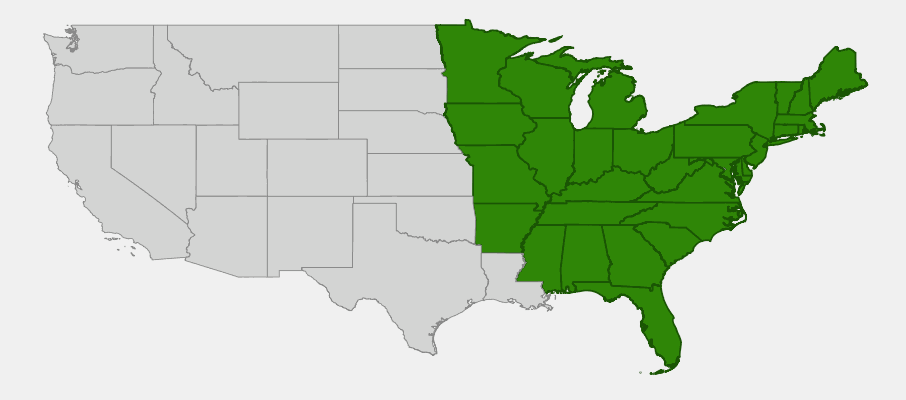
Round-lobed hepatica is native to eastern and central Canadian regions and much of the eastern United States. It occurs in a range of woodland settings, including deciduous and some conifer-associated woods, with acidic, organic soils a recurring theme. It is not restricted to one state or one narrow elevation band, but suitable woodland conditions determine where a population actually occurs.
The state map follows the native distribution summarized by NC State for the rounded-leaf taxon. USDA and older references may place it under Hepatica nobilis var. obtusa; that is the name associated with the linked USDA symbol. Broad maps using Hepatica without a taxon distinction can mix sharp-lobed and round-lobed plants, so check the name carefully when comparing sources.
For a regional garden, aim to reproduce the root environment of a stable woodland floor rather than its appearance alone. A layer of decorative bark over compacted construction fill does not provide the same habitat as well-drained, leaf-enriched soil. Use nursery-propagated stock and a suitable local or regional provenance when available. Wild plants should remain in their natural communities.
📋 Regional plant list: Maryland, Virginia & West Virginia
Growing & Care Guide
Light
Choose a site with dappled or partial shade and some spring light. Deciduous trees can provide the seasonal pattern that suits an early-flowering woodland perennial. Avoid strong reflected afternoon heat. Deep shade is not automatically fatal, but a dark site combined with dense competition and accumulating debris may leave little opportunity for growth. Observe the area after the canopy fills in, not just during the flowering season.
Soil and Water
The best soil is moist enough for steady growth but drains freely. Leaf-derived humus helps create that balance. Round-lobed hepatica often favors more acidic conditions than the sharp-lobed form, so do not apply lime indiscriminately to a mixed woodland planting. If soil chemistry is uncertain, test before amending. The regional dry-to-average code describes some tolerance after establishment, not a promise that a newly planted clump will thrive without water in a drought.
Planting Tips
Plant at the nursery crown level and disturb the roots as little as possible. Choose a spot that will not be dug over for annuals later in the season. Water the original root ball carefully while roots extend into surrounding soil. A light layer of deciduous leaf litter around, rather than on top of, the crown helps maintain the woodland surface. Keep the label in place: a small dormant or weathered clump can be easy to overlook.
Pruning and Maintenance
Leave healthy leaves in place after flowering. Remove smothering material with fingers or a small tool rather than raking vigorously through the planting. Avoid repeated lifting and division simply to check roots. If deer browse the new leaves, temporary protection may be necessary because a slow-growing plant recovers less quickly than a vigorous summer perennial. Monitor weeds before their roots become entangled with the hepatica’s small crown.
Propagation
Fresh seed should be handled promptly under a suitable species-specific protocol. Seedlings can be slow, and the first season’s small leaves are not a failure. Keep them protected from drying, washout, and accidental weeding. Division is another option for a sufficiently mature garden clump, preferably retaining several buds and sound roots in each portion. The Wildflower Center notes that clumps increase slowly; patience and careful sourcing are more useful than trying to multiply a small specimen every year.
Using It in a Woodland Garden
Place it with restrained companions and leave an open foreground for viewing. A small fern or woodland sedge nearby can provide later texture without covering the hepatica, while aggressive groundcovers can overwhelm it. If both hepatica types are grown together, keep labels and note leaf shape in photographs. A garden collection can be useful for learning, but its divisions should not be placed into wild habitat where provenance and taxonomic boundaries matter.
Landscape Uses
- Create an early-spring focal point beside a shaded path or low stone.
- Plant small groups in humus-rich woodland beds with stable, undisturbed soil.
- Use in a native educational garden to demonstrate leaf persistence and spring renewal.
- Combine with modest woodland companions that do not obscure the flowers or crown.
Wildlife & Ecological Value
For Pollinators
Bees and flies visit the early flowers for pollen. NC State lists sweat bees, carpenter bees, honeybees, and flies among visitors. Activity varies with weather: a cold, wet flowering week can look very different from a sunny one. Provide other early native flowers nearby and avoid pesticide exposure, rather than evaluating the plant only by the number of insects seen during one brief visit.
For Birds
The plant’s role is in the woodland ground layer, not as a major berry producer. Its foliage, litter context, and associated invertebrates contribute to the broader habitat. A diverse planting with shrubs, trees, and other herbs offers birds a range of resources that a single low perennial cannot provide alone.
For Mammals
Deer can browse this plant, and the Wildflower Center does not rate the rounded-leaf taxon as deer resistant. Protect new clumps when local browsing is persistent. Small mammals may also disturb soil while foraging nearby. Keep expectations realistic: wildlife value does not mean that every interaction will leave a specimen looking pristine.
Ecosystem Role
The plant uses the seasonal light pattern of woodland habitats, flowering early and retaining leaves beyond the brief bloom period. It helps illustrate why a native garden should include more than large summer flowers. Undisturbed soil and leaf litter support the conditions on which these small perennials depend. Purchasing propagated plants avoids removing that established layer from natural woods.
Cultural & Historical Uses
The liverleaf name arose from the lobed leaves and their brownish winter color. Historical herbal traditions linked the resemblance to liver remedies, an example of appearance being used to infer medicinal purpose. That history is not evidence that a tea or extract is safe or effective, and no such use is recommended here.
The several scientific names reflect changing botanical classifications. A field guide may use Anemone americana while a nursery uses Hepatica americana and USDA uses a variety of H. nobilis. Matching those names to the rounded leaf lobes and rounded bracts is more reliable than assuming that different labels necessarily mean different plants.
In a modern native garden, the species is valued for its early bloom, attractive low foliage, and connection to local woodland seasons. Its slow pace encourages a different kind of gardening: place it well, protect its root environment, and observe it across years rather than constantly rearranging the bed. Share propagated plants with accurate labels, not wild-collected clumps.
Frequently Asked Questions
Does flower color tell me which hepatica I have?
No. White, pink, blue, and lavender occur across hepatica taxa. Rounded versus pointed leaf lobes and the shape of the bracts beneath the flower are more useful.
Does it need lime?
Not as a routine treatment. Round-lobed hepatica often grows in acidic to neutral woodland soils. Test soil before changing its chemistry, especially if a garden also contains sharp-lobed hepatica.
Why are there brown leaves when the flowers open?
The previous season’s leaves can persist through winter and turn reddish brown. New leaves expand around flowering. Inspect the plant before removing old foliage so emerging growth is not damaged.
Is it a good deer-resistant groundcover?
No. It grows slowly and can be browsed. Use it as a small woodland perennial and protect it where deer pressure is high, rather than expecting it to cover large areas quickly.
Can I move a wild clump into my garden?
Use nursery-propagated stock instead. Wild woodland populations and their surrounding soil should remain intact, and slow-growing plants may not recover well from removal.
Sources & Further Reading
- NC State Extension: Hepatica americana
- Lady Bird Johnson Wildflower Center: Hepatica nobilis var. obtusa
- USDA PLANTS: round-lobed hepatica
Find Native Plants
Ask growers about nursery propagation and regional provenance. Browse our Maryland native plant nurseries, Virginia native plant nurseries, West Virginia native plant nurseries directory for suppliers.