
Hame (Antidesma platyphyllum)
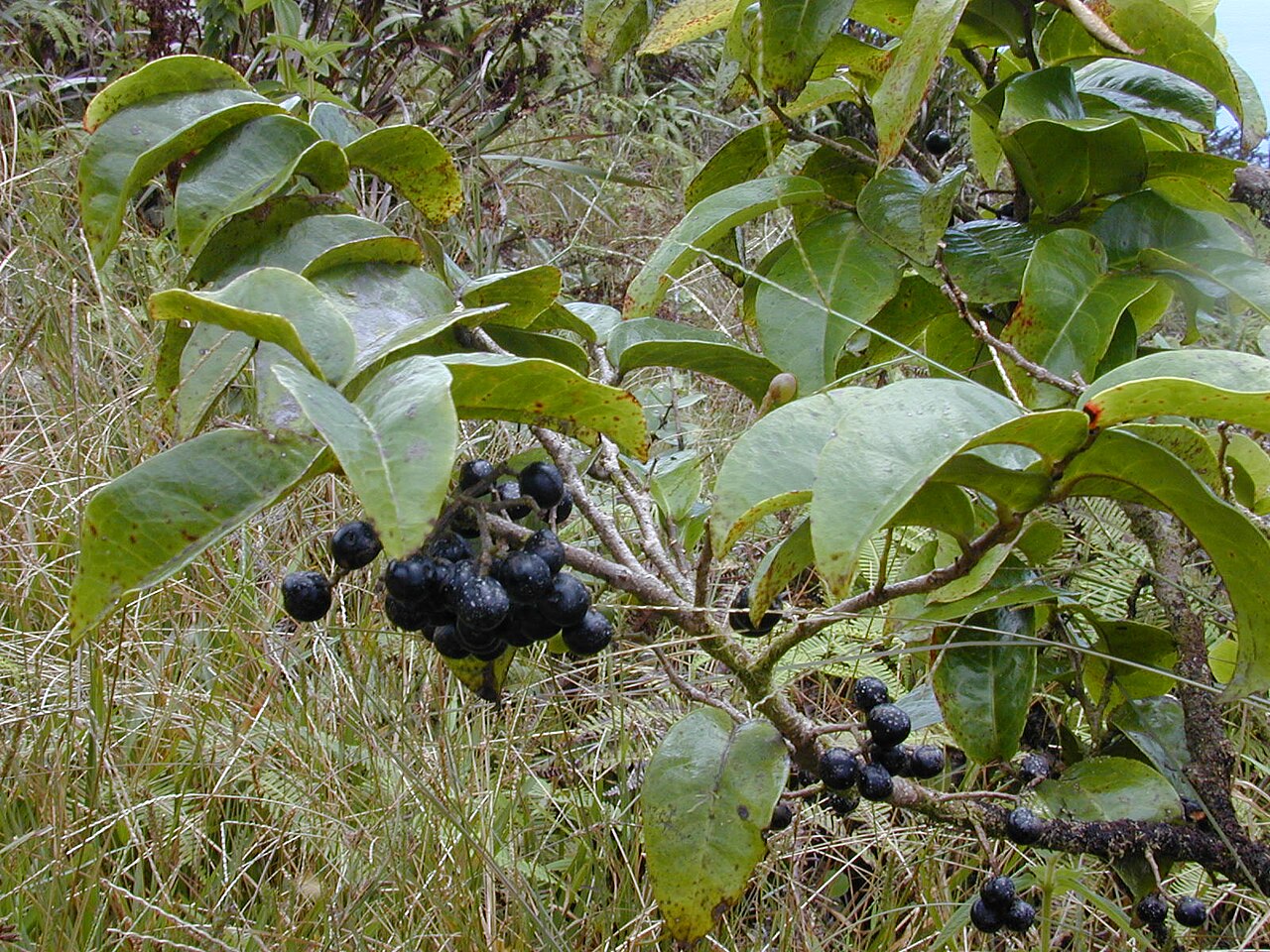
Hame (Antidesma platyphyllum) is a native Hawaiian forest tree with broad, often glossy leaves and small fruits that turn from reddish tones to dark purple. Its foliage can be colorful in new growth, and its fruit has a documented place in Hawaiian dye use. In a suitable moist garden, it offers the quieter character of a forest tree rather than a large, showy floral display.
The species is endemic to Hawaiʻi and belongs to Phyllanthaceae. Several similar common names occur in the literature, and another native species, Antidesma pulvinatum, is also called hame. The very rare mēhamehame, Flueggea neowawraea, is a different tree again. Complete scientific identification is important before selecting stock or comparing care.
Partial sun with some protection during the brightest part of the day is a useful garden starting point. The University of Hawaiʻi account allows full sun but notes that plants often look and perform best with partial sun. Combine that exposure with reliable moisture, drainage, and enough space for a tree crown to develop.
Quick Facts
| Scientific Name | Antidesma platyphyllum |
| Family | Phyllanthaceae |
| Plant Type | Native tree or large shrub |
| Mature Height | 15–30 ft commonly; larger trees possible |
| Mature Spread | Variable; allow space for a forest-tree crown |
| Growth Rate | Site dependent |
| Sun Exposure | Partial sun preferred; full sun possible in suitable conditions |
| Water Needs | Average to moist with good drainage |
| Soil Type | Well-drained soil matched to native habitat and nursery provenance |
| Soil pH | Assess local soil and nursery performance before amending |
| Bloom Time | Variable with source and conditions; observe local seasonality |
| Flower Color | Tiny white to greenish-white flowers |
| Fall Color | Evergreen; seasonal new growth may contrast with older foliage |
| Fruit | Small fruits turning red to dark purple on female trees |
| Deer Resistant | Not a browse-proof planting; protect young trees where needed |
| USDA Hardiness Zones | Use Hawaiian island, elevation, and exposure guidance for site selection |
Identification: Leaves and Petioles
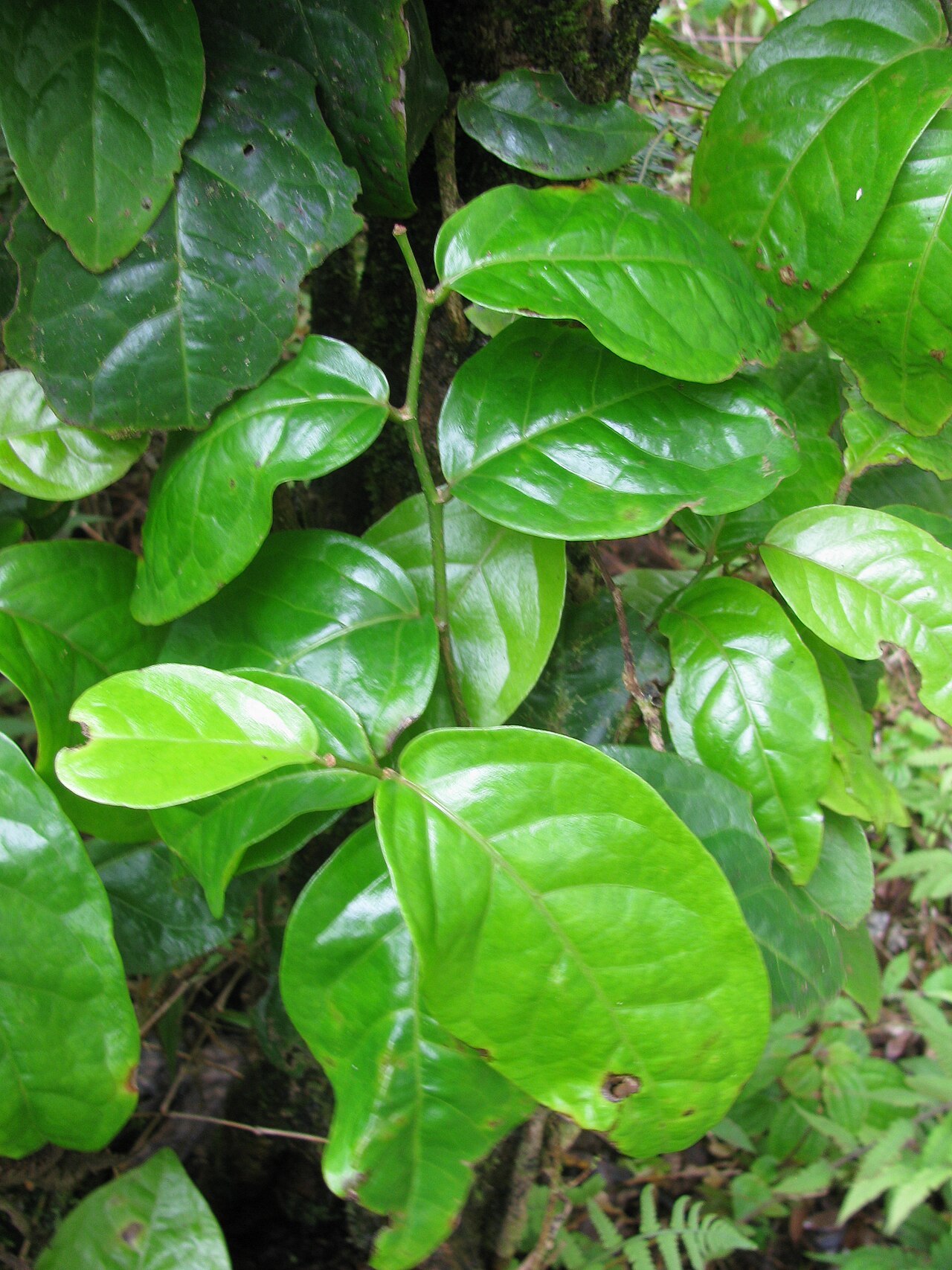
The broad leaves may have a glossy upper surface and can show shades of green, red, or orange in different growth stages. Look closely at the petiole, the short stalk connecting a leaf to a twig. The University of Hawaiʻi profile describes the petioles of A. platyphyllum as short and strongly curved, sometimes approaching a C shape.
That feature helps distinguish it from A. pulvinatum, whose petioles are described as longer and straighter. It is still best to consider several features and the plant’s documented source rather than relying on one leaf. Intermediate plants have been reported where the two species occur near one another.
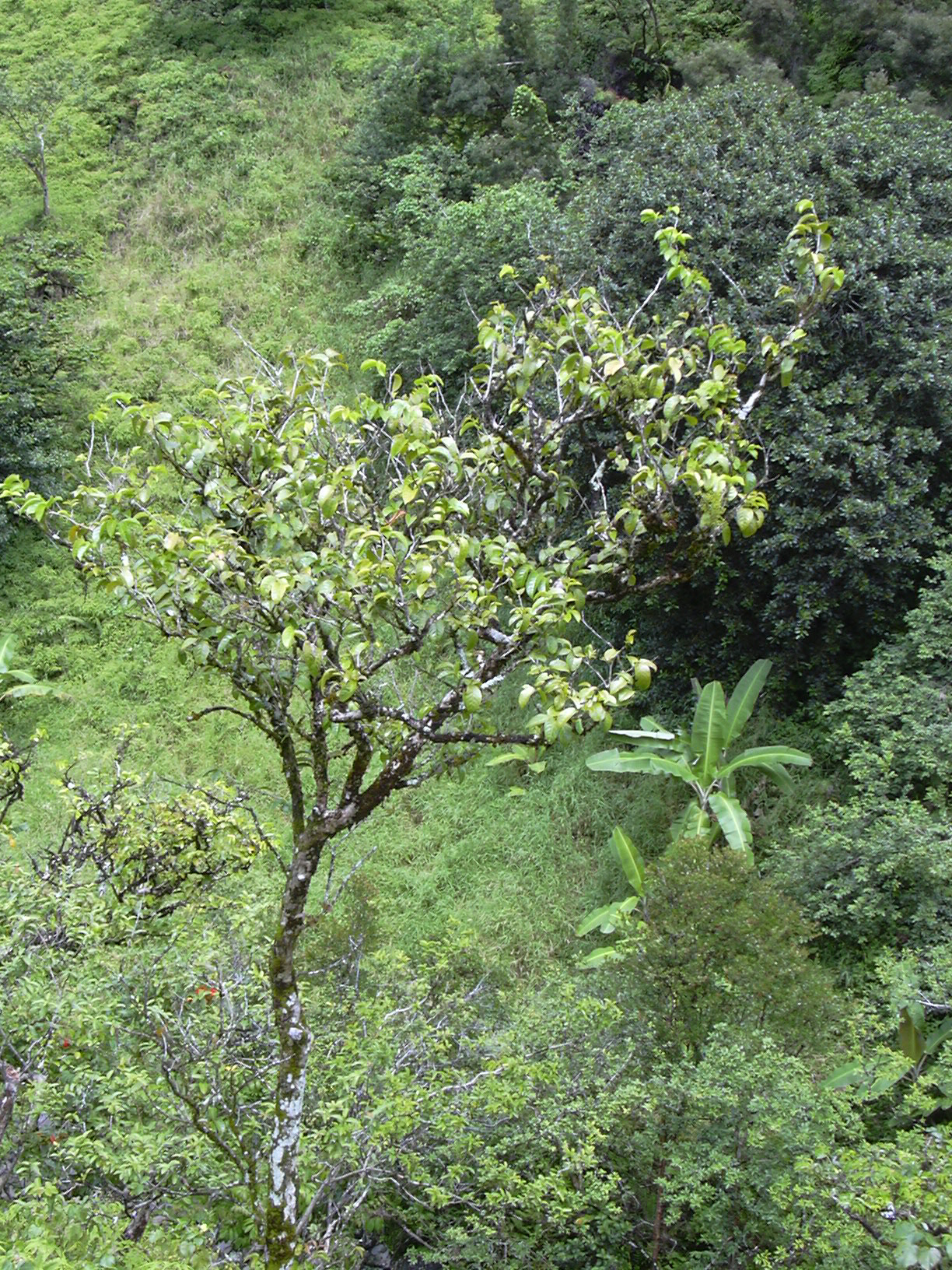
The tree varies in size, with the regional list’s 15–30-foot range representing many useful garden forms rather than a fixed maximum. The University of Hawaiʻi profile includes larger trees as well. A small nursery specimen should be placed with enough room for its eventual crown, not treated as a permanently compact foliage shrub.
Small Flowers and Colored Fruit
The flowers are tiny, white to greenish white, and not conspicuous from a distance. Fruits are more noticeable, becoming reddish and then dark purple. Their juice can stain, which is relevant both to historical dye use and to the placement of a fruiting tree near paving or outdoor furniture.
Individual trees are male or female. A plant without fruit is not necessarily unhealthy; it may be male, too young, or lacking suitable conditions for fruit development. If fruit is an important objective, ask the nursery what is known about the sex and source of its stock.
Native Range and Habitat
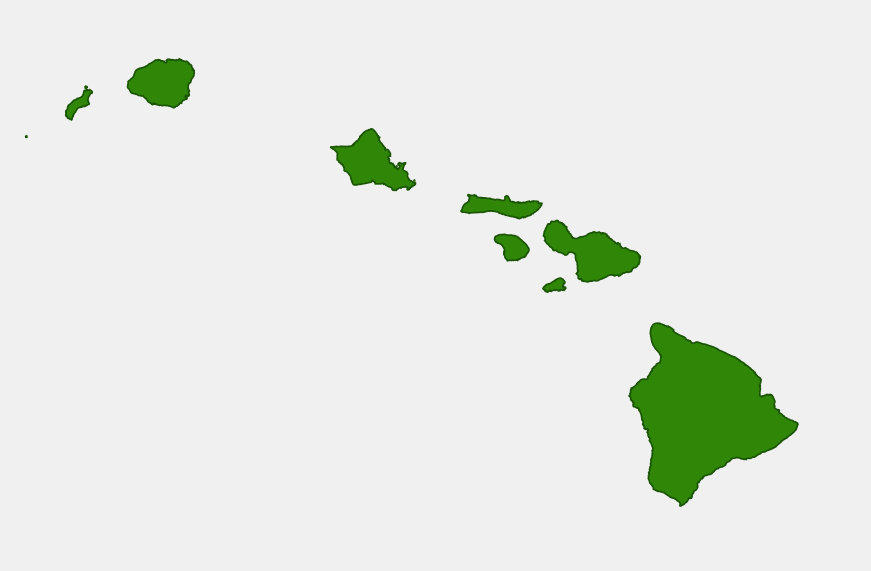
The University of Hawaiʻi profile lists Kauaʻi, Oʻahu, Molokaʻi, Lānaʻi, Maui, and Hawaiʻi. It places hame in mesic to wet forest, often around 1,640 to more than 3,600 feet, with broader local elevation records on Hawaiʻi Island. Such ranges describe observed occurrence, not identical growing conditions across every island.
The account recognizes varieties hillebrandii and platyphyllum, with the former associated with Kauaʻi. Details of varietal distribution and intermediate forms should be resolved with botanical records for conservation work. A garden label that retains the complete nursery identification is more useful than one shortened to “hame.”
Native Range
| U.S. States | Hawaii |
| Hawaiian Islands | Kauaʻi, Oʻahu, Molokaʻi, Lānaʻi, Maui, Hawaiʻi |
| Mexico / Canadian Provinces | Not included in the verified native range used here |
| Ecoregion | Hawaiian tropical forest and woodland |
| Elevation Range | Often about 1,640–3,600 ft; broader local ranges documented |
| Habitat | Mesic to wet forest |
| Common Associates | Site-appropriate native forest canopy and understory |
USDA PLANTS profile (ANPL2). Species identity verified; this link is not a guarantee of county-level distribution data.
The map shows Hawaiʻi at the state level and does not resolve varieties or individual populations. Use local records for restoration and nursery provenance for practical garden decisions. A photograph from a particular place is useful when its identity is documented, but it is not a substitute for a distribution account.
Choosing a Garden Role
A Leafy Forest Accent
Hame is suitable for a landscape that values foliage, seasonal growth, and fruit rather than a continuous display of large flowers. It can be a specimen within a mixed native planting or part of a developing forest-like layer. Give it a position where leaves and fruit can be observed without squeezing the crown into a narrow space.
Allow access around the tree for inspection and maintenance. Fruit staining may matter near pale paving, parked vehicles, or seating. The best position balances close observation with enough distance that normal fruit fall does not become a recurring conflict.
Compatible Companions
Choose neighboring plants that share its partial-sun and moisture needs. A tree associated with mesic to wet forest should not be placed in the same irrigation zone as a group intended to remain dry once established unless the site naturally supplies both conditions.
Develop the planting gradually. Dense competition around a newly installed hame can make establishment harder and hide problems at the stem or root zone. Allow the tree to begin rooting into the site before filling every available space with vigorous understory plants.
Light and Moisture
Partial sun is a useful default, especially with shelter during the hottest part of the day. Full-sun performance depends on the site and the nursery source. Observe the proposed location for reflected heat and drying wind, not just the number of sunny hours.
Maintain moisture while providing drainage. The published guidance calls for moist soil and explicitly requires drainage, so a saturated, compacted hollow is not equivalent to suitable wet-forest habitat. Check the location after rain and consider whether roof runoff or hardscape changes the root environment.
Use elevation as one clue rather than a complete prescription. Rainfall, cloud cover, slope, soil, and exposure can differ greatly at the same elevation. Advice from a nursery growing the same material under comparable conditions is particularly useful.
Planting and Establishment
Prepare the destination before removing the plant from its container. Handle the root ball gently, keep it protected from drying, and plant at the appropriate original soil level. Avoid burying the stem base beneath backfill or later mulch.
Water after planting to settle the soil and check that the tree remains at the intended level. During the early establishment period, inspect moisture within the nursery root ball and in the surrounding ground. Their different textures can cause one to dry while the other remains damp.
Mulch can reduce evaporation and weed competition, but leave a clear space around the trunk. Maintain access for soil checks and stem inspection. A stable, manageable root zone supports establishment more effectively than frequent disturbance to add or remove neighboring plants.
Watering Through Changing Weather
Adjust irrigation according to rainfall, wind, and root development. A humid, cloudy period and a dry, windy week may require different attention even in the same season. The goal is reliable moisture at the roots, not an unchanging number of watering days.
As the tree establishes, widen the irrigated area so roots can occupy the surrounding soil. Avoid concentrating water continually at the stem. Check drainage when weather becomes wetter, and reduce unnecessary supplemental water if the soil is already adequately moist.
If foliage wilts or discolors, investigate before simply increasing irrigation. Dry roots, saturated soil, root damage, and other stresses can produce overlapping symptoms. The recent history of the site often provides useful clues.
Pruning and Nutrition
Preserve a natural tree form where space permits. Remove damaged or conflicting branches with a clear purpose, and avoid repeated hard shearing if flowers and fruit are part of the planting’s value. A broad foliage tree is best placed where its crown can develop rather than permanently reduced to fit a small opening.
Assess nutrition through the soil and the plant’s condition. The University of Hawaiʻi profile includes fertilizer guidance, but a fixed feeding schedule should not replace attention to light, water, and root health. Slow growth or yellow leaves do not identify a single nutrient problem.
Keep a record of major amendments and changes in care. Making several adjustments at once can obscure the cause of improvement or decline. A simple record of new growth, leaf condition, and fruiting also helps distinguish normal seasonal behavior from an emerging problem.
Fruit, Wildlife, and Garden Observation
The fruits are a distinctive part of hame’s appearance. The University of Hawaiʻi account describes summer into autumn fruiting observations, but local timing can vary. Watch the actual tree and note when fruit changes color, rather than assuming every island or elevation follows the same schedule.
Because trees are male or female, a planting intended to produce fruit needs more thought than choosing a single attractive seedling. Ask what is known about the nursery stock and whether compatible flowering plants occur nearby. Do not promise a crop from an unsexed plant.
The source records the fruits as edible and sweet, but this page is not a foraging identification guide. Hame common names overlap with other plants, and garden stock may have uncertain labels or treatment histories. The practical landscape information here concerns fruit appearance, staining, and ecological interest.
Hawaiian Uses and Similar Names
Historical uses of hame include hard wood for tools and structural purposes, along with fruit juice used in dye. The University of Hawaiʻi account describes red fruit juice in a preparation for coloring kapa. These uses connect the living tree with material knowledge and craft.
Names such as hame, mehame, and related spellings appear in different accounts. Mēhamehame, with its specific spelling and botanical identity, may refer to Flueggea neowawraea, not this species. Careful naming prevents cultural and conservation information from being transferred to the wrong plant.
Historical medicinal references are cultural records, not directions for self-treatment. Likewise, the value of the wood does not mean a garden tree needs to be harvested. A living specimen can support education and appreciation while maintaining its long-term landscape role.
Responsible Nursery Sourcing
Obtain propagated stock with a documented scientific name and, where possible, island source. Ask about the parent plants’ habit and growing conditions. That information helps set expectations for size, foliage, moisture needs, and potential fruiting.
For restoration, follow local guidance on provenance and taxonomic identity, especially where intermediate forms or varieties are relevant. A general native-plant label is not sufficient for every conservation purpose. For home gardens, retaining the same information still improves care and interpretation.
Common Questions
Is hame the same as mēhamehame? Similar names can refer to different trees. This page concerns Antidesma platyphyllum, not Flueggea neowawraea.
How can it be distinguished from Antidesma pulvinatum? The University of Hawaiʻi profile emphasizes the short, curved petioles of A. platyphyllum, contrasted with longer, straighter petioles in A. pulvinatum. Confirm with multiple features and reliable source information.
Why does my tree not fruit? It may be male, immature, or lacking appropriate reproductive conditions. Do not diagnose poor health from the absence of fruit alone.
Is full sun required? No. Full sun is possible, but partial sun with some shelter during the brightest part of the day is favored in the published horticultural discussion.
Will fruit stain surfaces? The juice stains, so consider fruit fall when placing the tree near paving or furniture.
A Thoughtful Addition to a Moist Native Garden
Hame brings glossy foliage, colored fruit, and a connection to Hawaiian forest and craft traditions. Its successful use begins with correct identification, a suitable source, partial-sun conditions, and a moist but aerated root zone. Given room and attentive establishment care, it can become a distinctive long-term tree rather than a short-lived ornamental experiment.
Sources & Further Reading
- University of Hawaiʻi, Native Plants Hawaiʻi species profile
- USDA Forest Service: identification and ecology
Botanical range, identification, and cultural information are based on these sources. Garden-management advice should be adapted to local soil, exposure, and nursery provenance.
Find Native Plants Near You
Look for correctly identified, nursery-propagated plants with documented Hawaiian provenance. Visit our Hawaii native plant nursery directory and ask about stock suited to your island, elevation, and rainfall. Compare other trees in our Hawaii native plant list.